7 min read

Baruch Sent an Eagle Over the Euphrates With His Last Letter

God told Baruch the city was already finished. He begged to die first, watched angels bury the vessels, then wrote to the tribes across the river.

Curated by Arthur · Told by Maggid ·
Table of Contents
  1. The Scribe Asked to Die Before the Walls Fell
  2. The Prayers Were Holding Up the Masonry
  3. The City That Was Older Than Paradise
  4. The Angels Reached the Vessels First
  5. Mercy and Peace, Written in the Ash
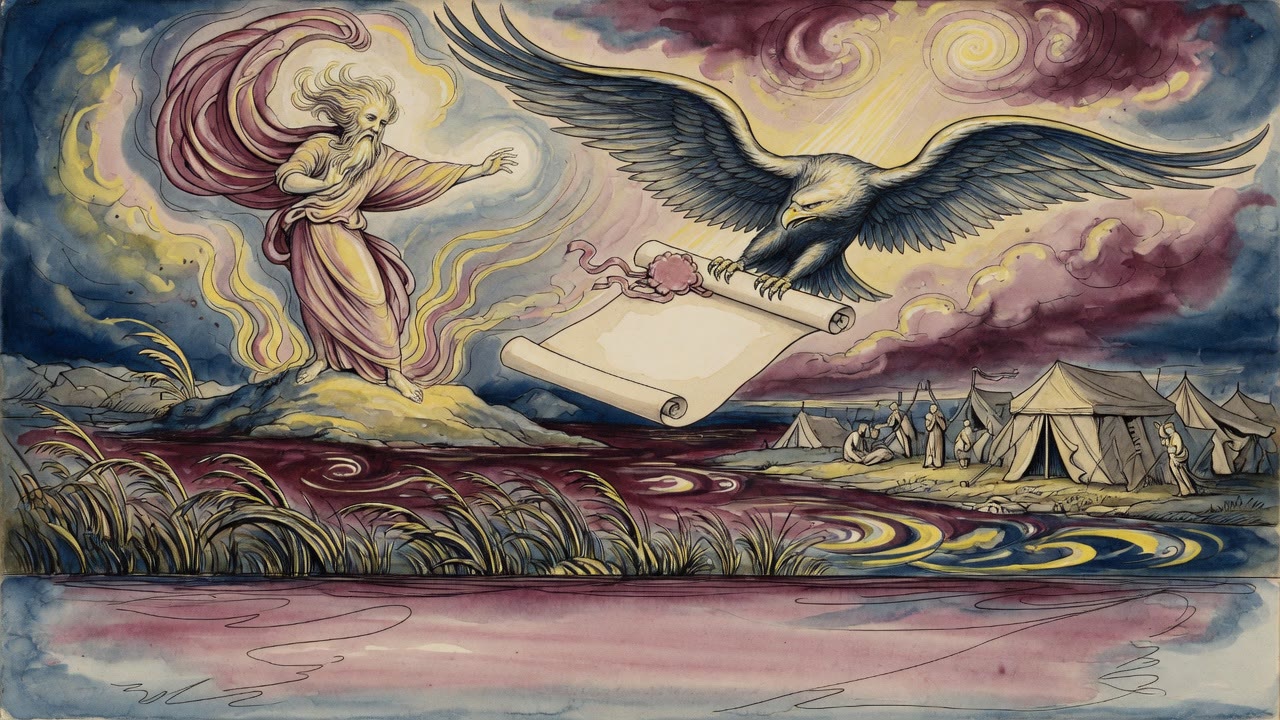
  6. The Eagle Went East Over the Water
Baruch Sent an Eagle Over the Euphrates With His Last Letter Click for full size

The Scribe Asked to Die Before the Walls Fell

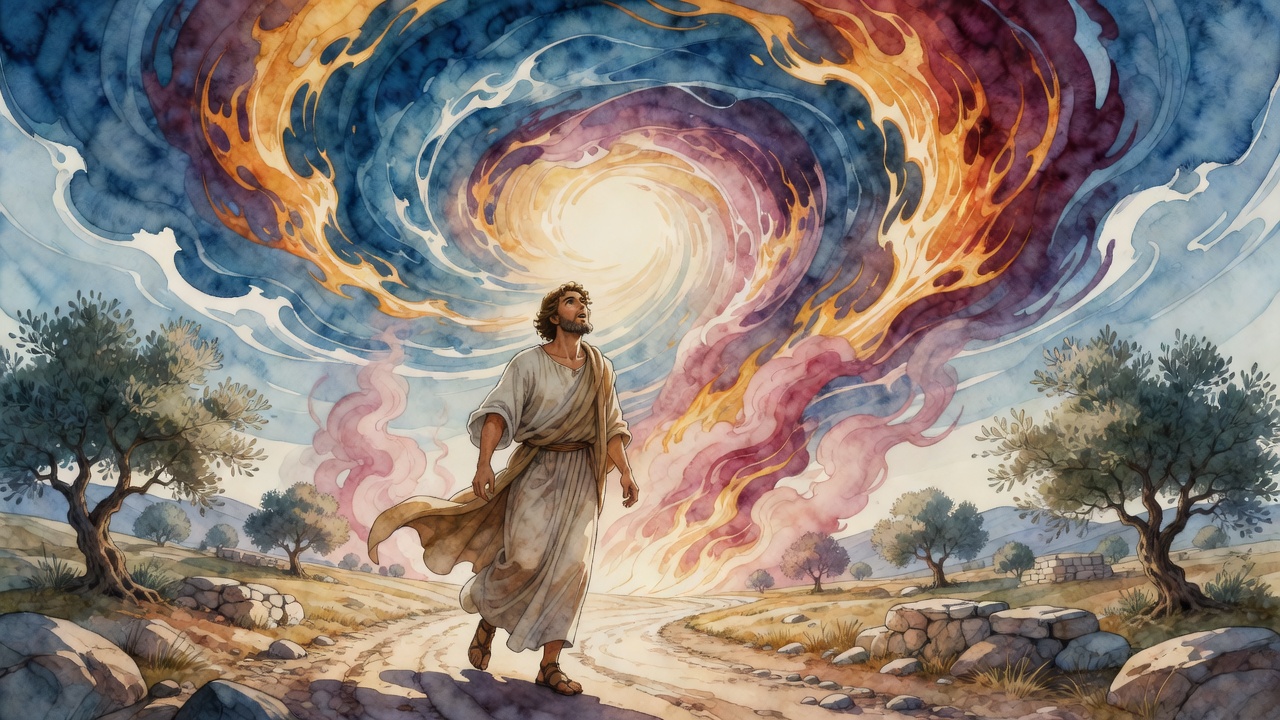
The city was still standing when God told Baruch son of Neriah that it was finished.

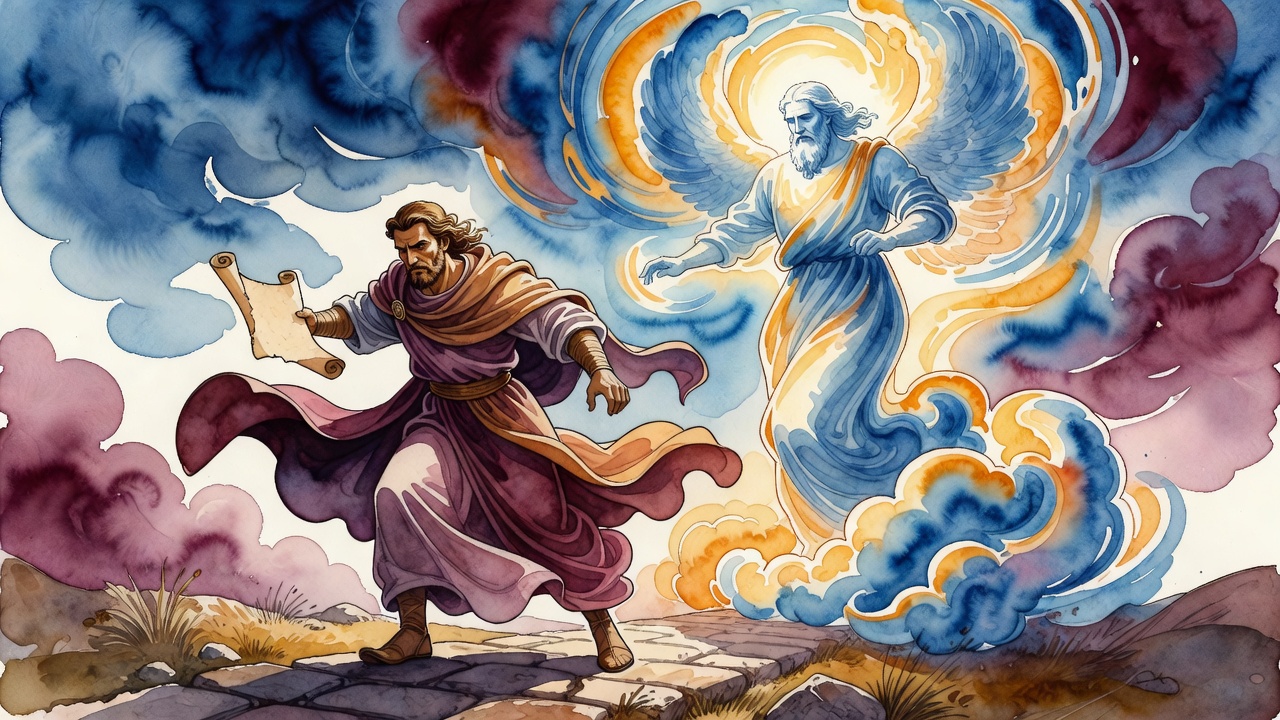
It was the twenty-fifth year of Jeconiah. Baruch had spent his life taking down another man's words, every oracle Jeremiah spoke, ink in the cracks of his fingers. This time the voice came with no prophet in between, and it opened with a question. "Have you seen what this people is doing to Me?"

The ten tribes in the north had been dragged off long before, pushed into idols by kings who left them no room to refuse. Judah and Benjamin had managed something worse. They had forced their own kings to sin. The rot climbed up from the streets to the throne instead of falling from the throne down.

Then the sentence, flat as a clerk reading it out. "I bring evil upon this city and upon its inhabitants. It shall be removed from before Me for a time. I will scatter this people among the nations."

Baruch went down on the floor.

"Have I come into the world for this purpose, to see the destruction of my mother? Take my spirit first. Let me go to my fathers rather than watch this."

Nothing took his spirit. He stayed on the floor, breathing, in a condemned city that did not know it.

The Prayers Were Holding Up the Masonry

What came next sounded like an evacuation order. Warn Jeremiah. Warn the righteous. Get them out of Jerusalem.

"Your works are to this city as a firm pillar," God said. "Your prayers as a strong wall."

The stone circuit, the towers, the iron-braced corners, all of it ornament. The load was carried by a handful of men who kept praying. Once they walked out the gate, the masonry was only masonry.

Baruch heard the arithmetic and pushed back. "How shall the name of Israel be remembered?" he asked. "To whom shall Your law be explained?" Then he said the worst of it out loud. Would the world go quiet again, back to the silence before anything was made, as if no people had ever stood here.

The City That Was Older Than Paradise

The answer did not defend the walls. It moved them.

The Jerusalem Baruch could see from his window was not the one God had meant. The true city was prepared before Paradise was planted. Adam was shown it before the first transgression and lost the sight of it with everything else. Abraham was shown it at night, standing between the halves of his split animals. Moses was handed its pattern on the mountain like a builder's plan.

"On the palms of My hands have I engraved you."

Baruch did not argue. He got up and went to find the men.

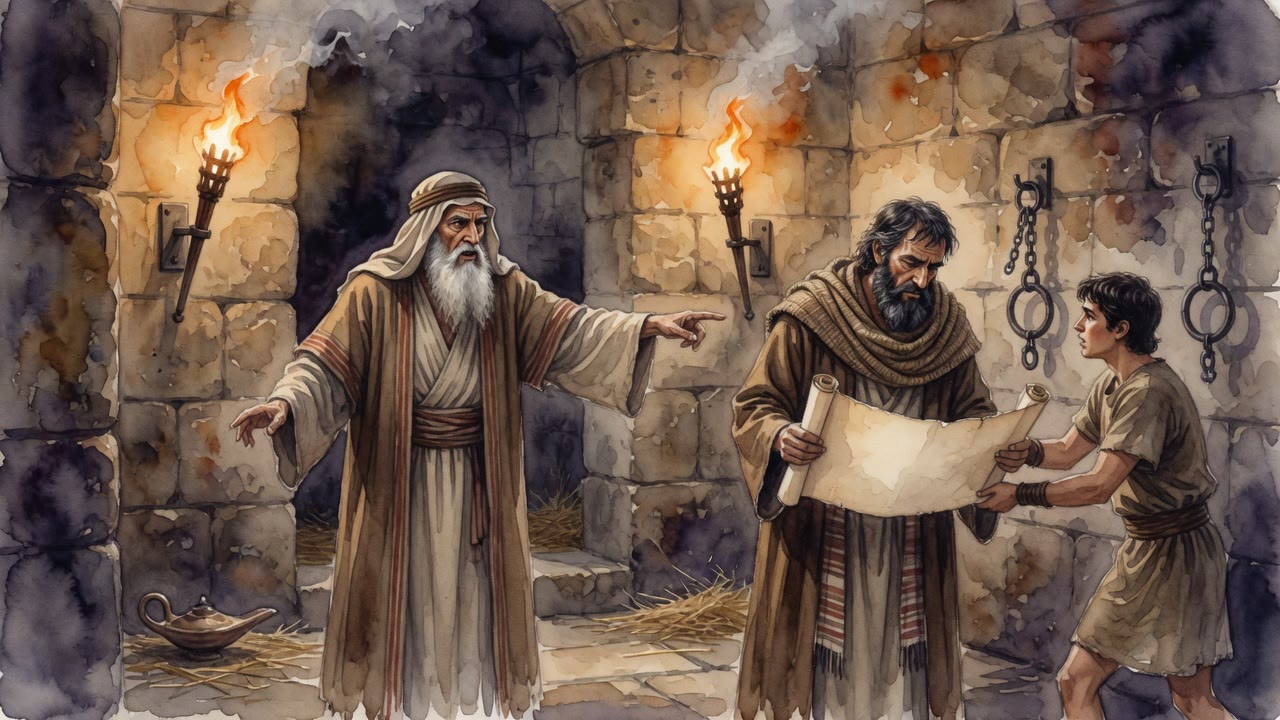
Jeremiah came. So did Adu and Seriah and Jabish and Gedaliah, men with property in a town that had weeks left. Baruch walked them down into the Valley of Kidron, below the walls, where the ground is stone and graves, and repeated all of it. The verdict. The scattering. The promise.

They cried out together, then sat there fasting until evening while the doomed city above them waited for its angels.

The Angels Reached the Vessels First

When the siege ring closed, the first thing over the wall was not a Babylonian.

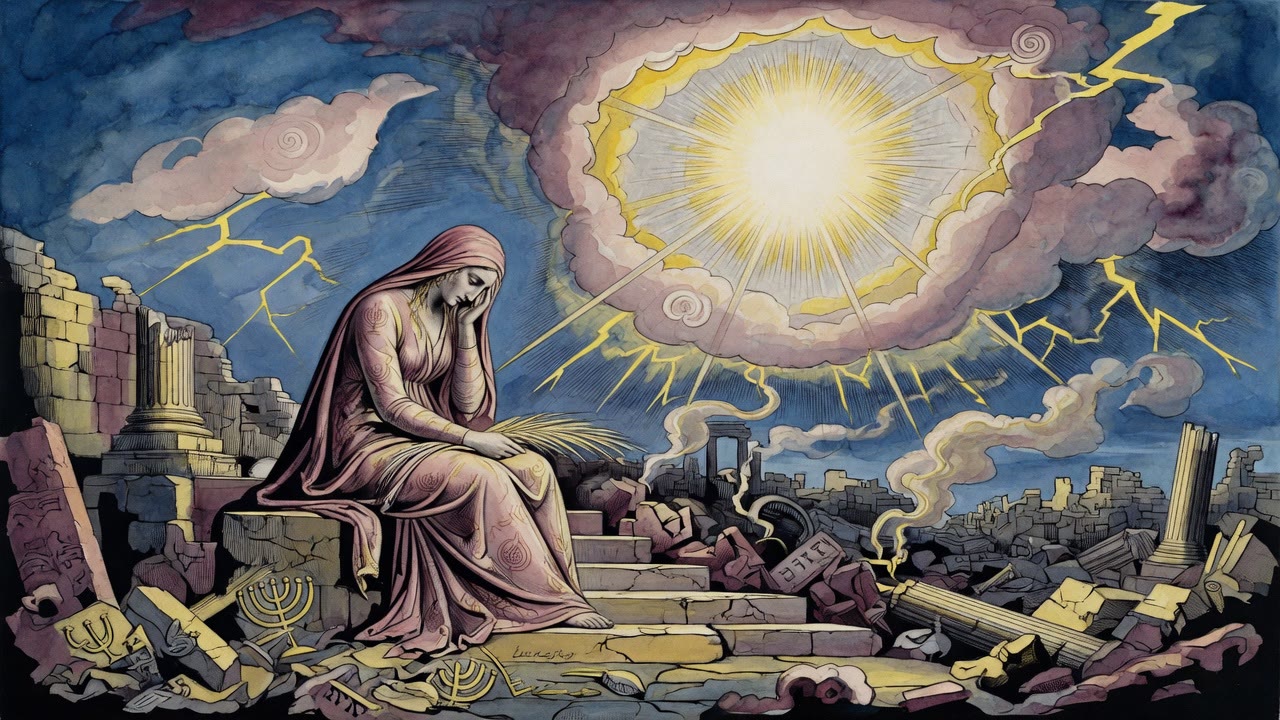
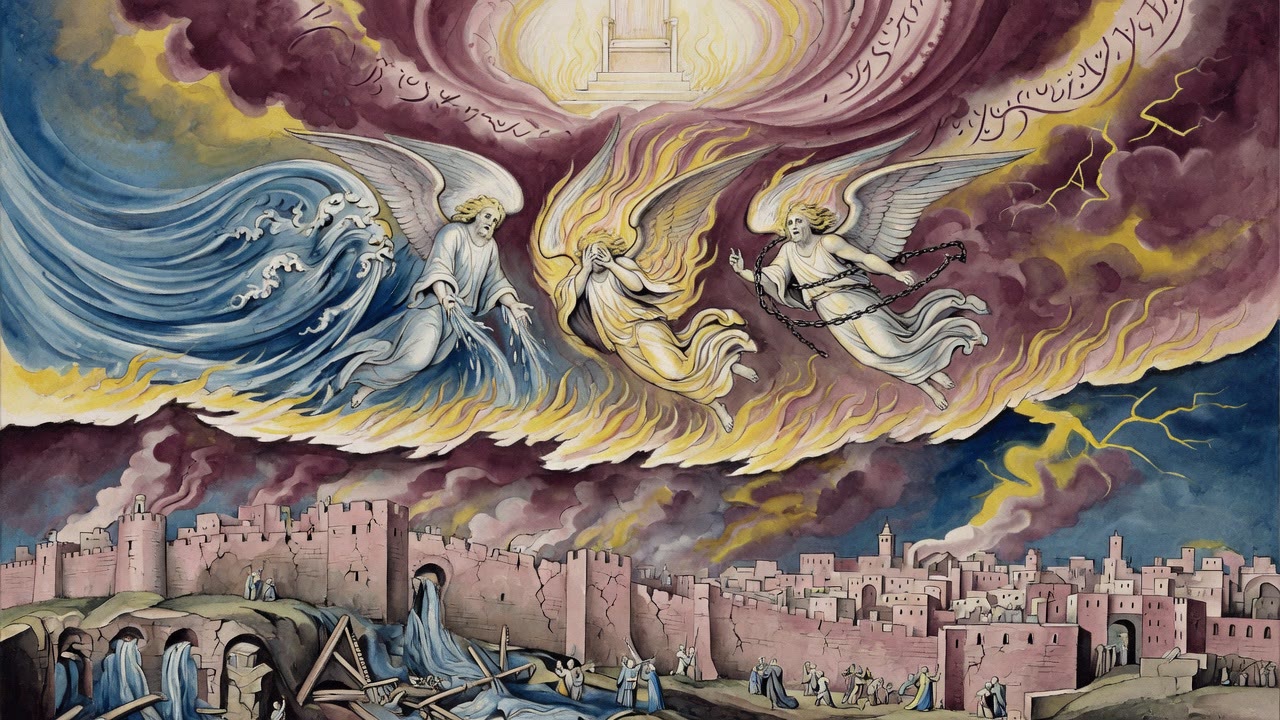
The angels of the Most High came down onto the fortifications and took them apart, pulling up the iron corners no ram and no sapper could have shifted. But they did not let the wall drop yet. First they went into the sanctuary and gathered the vessels, the lamps and the basins and the censers, and put them into the earth where no hand could reach.

Only then did heaven let go. The wall came in. The house was stripped, the Temple burned, the survivors roped together and counted.

The Chaldeans walked through the gap believing they had made it. They tallied their plunder in a sanctuary already emptied of everything worth carrying, and never learned the difference.

Mercy and Peace, Written in the Ash

Baruch knew his own death was close. Nine and a half tribes of his brothers were scattered past the water, with no city left to write home to.

So the scribe did the one thing a scribe can do with a ruin. He sat down and wrote.

"Mercy and peace," it began, which is a strange greeting from a man sitting in rubble. Then: "I bear in mind, my brethren, the love of Him who created us, who loved us from of old, and never hated us, but above all educated us."

Twelve tribes out of one father, he reminded them, tied by one bond however far the empires had thrown them. Then he asked for the hardest thing a beaten people can be asked. Accept that the sentence was just. What they had suffered was less than what they had earned, and affliction taken as correction turns hope permanent.

And then he took the empires apart, one clause at a time.

"We see the prosperity of the nations, though they act wickedly. But they shall be like a vapor. We consider their cruelty, though they remember not its end. But as a wave that passes they shall be broken."

Vapor, and a wave that breaks. The man writing that had watched his own Temple burn, and he was the one calling the winners temporary.

The Eagle Went East Over the Water

The last of the letter was a list of things not to lose.

Remember the law and Zion. Remember the holy land and your brothers in it. Remember the covenant of the fathers. Do not let the festivals and the Sabbaths go. Hand this letter to your children the way your fathers handed you the traditions of the law.

He closed with no comfort in it at all. "For if He judge us not according to the multitude of His mercies, woe unto all of us who are born."

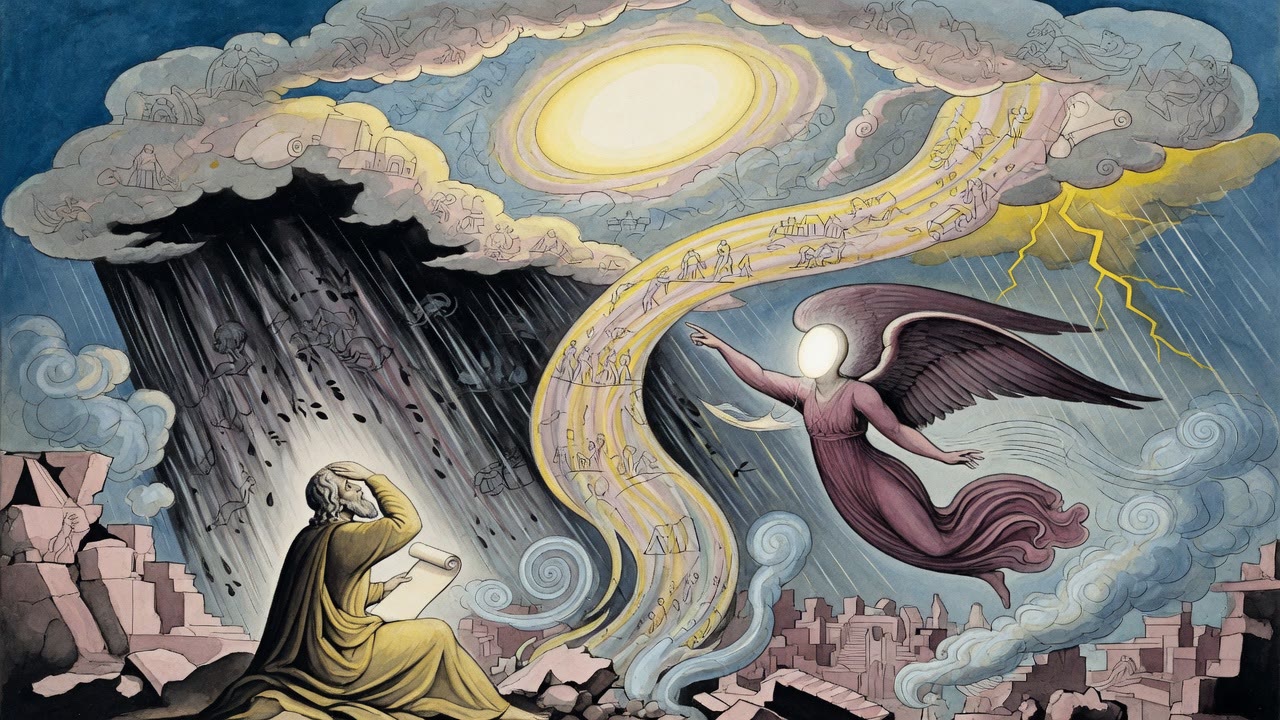
Then he rolled the sheet, bound it, and carried it out to an eagle.

The bird took the weight and went up off his arm, east, toward the Euphrates and the tribes on the far bank, gone so long that most had stopped expecting news from home. Baruch stood in the ash and watched the wings shrink until the river swallowed the shape of them.

Then he went back into the broken city, still breathing, still not permitted to die, kept back for something that had not happened yet.


← All myths
From the tradition

Sources

2 sources

The texts behind this telling. Some cards carry a translation of the source; others are our own retelling of it, and each card says which. Every card links out to the original.

2 Baruch 1-52 Baruch

Retold in our words. Read the original at the link below.R. H. Charles public-domain English translation (1913) · Public Domain

The city was already dead. It just hadn't fallen yet.

In the twenty-fifth year of King Jeconiah's reign over Judah, the word of God came to Baruch son of Neriah, the faithful scribe, the man who had written down every word the prophet Jeremiah ever spoke (Jeremiah 36:4). And what God said shattered him.

"Have you seen what this people is doing to Me?"

God's voice carried the weight of centuries. The ten northern tribes had been dragged away into exile long ago, forced into sin by their kings, compelled into idolatry by tyrants who left them no choice. But these two remaining tribes, Judah and Benjamin, they had done something worse. They had forced their own kings to sin. The corruption ran upward from the people to the throne, not the other way around.

And so the verdict fell: "I bring evil upon this city and upon its inhabitants. It shall be removed from before Me for a time. I will scatter this people among the nations."

But then God said something strange. He told Baruch to warn Jeremiah and all the righteous to leave the city. "Your works are to this city as a firm pillar," God said. "Your prayers as a strong wall." The righteous had been holding Jerusalem together. Their presence was the only thing between the city and annihilation. Once they left, nothing could save it.

Baruch broke. He fell before God in anguish. "Have I come into the world for this purpose, to see the destruction of my mother? Take my spirit first. Let me go to my fathers rather than watch this." Two forces tore at him: he could not resist God's will, and he could not bear to witness what was coming.

Then he asked the question that would haunt every generation of exiles after him: "If You destroy Your city and deliver Your land to those who hate us, how shall the name of Israel be remembered? To whom shall Your law be explained? Will the world return to primeval silence, as if we never existed?"

God's answer was unlike anything Baruch expected. The city would fall, yes. The people would suffer, yes. But the world would not be given over to oblivion. And then God revealed a secret: the Jerusalem that stood before Baruch's eyes was not the real one. The true Jerusalem existed with God, prepared from the moment He created Paradise. He had shown it to Adam before the first transgression. He had revealed it to Abraham in the night, among the divided sacrifices. He had displayed its pattern to Moses on Mount Sinai. The earthly city was a shadow. The heavenly one was eternal.

"On the palms of My hands have I engraved you," God declared.

Baruch wept, but obeyed. He gathered Jeremiah and the honorable men of the people, Adu, Seriah, Jabish, Gedaliah. And led them to the Valley of Kidron. There he told them everything. Every word God had spoken. Every terrible promise.

They lifted their voices and wept together. And they sat there in the valley, fasting until evening, while above them the doomed city waited for its angels.

Full source
2 Baruch 78-872 Baruch

Retold in our words. Read the original at the link below.R. H. Charles public-domain English translation (1913) · Public Domain

This is the letter that Baruch son of Neriah sent across the river Euphrates to the nine and a half tribes in exile. It may be the most hopeful document ever written from the rubble of a destroyed civilization.

"Mercy and peace," he began. Then: "I bear in mind, my brethren, the love of Him who created us, who loved us from of old, and never hated us, but above all educated us."

Baruch wrote knowing he would die soon. He wanted to leave the exiles something to hold onto, something stronger than grief. He reminded them that all twelve tribes were bound by one bond, born from one father. And he asked them to do the hardest thing a suffering people can do: accept that their punishment was just.

"What you have suffered is disproportionate to what you have done," he wrote, meaning their suffering was actually less than they deserved. But if they understood this, if they considered their afflictions as correction rather than cruelty, they would receive eternal hope. "If you destroy from your heart vain error, on account of which you departed. He will continually remember you. He who always promised that He will never forget or forsake us, but with much mercy will gather together again those who were dispersed."

Then Baruch told them the secret that the Babylonians would never know.

When the enemy surrounded Jerusalem, the angels of the Most High were sent first. They overthrew the fortifications of the strong wall. They destroyed the iron corners that no human army could have rooted out. But before they let the walls fall, they hid all the vessels of the sanctuary, lest the enemy get possession of them. Only then did they deliver the broken wall, the plundered house, the burned Temple, and the conquered people to the Chaldeans.

The enemy believed they had won by force. The truth was that God's own angels had done the destroying. And had saved everything that mattered before a single Babylonian soldier set foot inside.

Baruch then shared what God had revealed to him through visions: the mystery of the times, the advent of the hours, the coming consolation. "Our Maker will assuredly avenge us on all our enemies," he wrote. "The consummation which the Most High will bring is very near."

And then he delivered one of the most powerful passages of defiance in ancient literature, a litany that dismantled the illusion of the nations' power:

"We see the prosperity of the nations, though they act wickedly. But they shall be like a vapor. We behold their power, though they do evil. But they shall be made like a drop. We see the firmness of their might, though they resist the Mighty One every hour. But they shall be accounted as spittle. We consider the glory of their greatness, though they keep not the statutes of the Most High. But as smoke they shall pass away. We meditate on their gracefulness, though they deal in pollutions. But as grass that withers they shall fade. We consider their cruelty, though they remember not its end. But as a wave that passes they shall be broken. We remark the boastfulness of their might, though they deny God who gave it. But they shall pass away as a passing cloud."

Vapor. A drop. Spittle. Smoke. Withering grass. A passing wave. A cloud that dissolves. Seven images of impermanence for seven dimensions of imperial power. And every one of them would prove true.

Baruch closed his letter with a final charge. Remember the law and Zion. Remember the holy land and your brethren. Remember the covenant of your fathers. Do not forget the festivals and the Sabbaths. Deliver this letter and the traditions of the law to your children, as your fathers delivered them to you. Pray with your whole heart that the Mighty One may be reconciled to you.

"For if He judge us not according to the multitude of His mercies," Baruch wrote in his final line, "woe unto all of us who are born."

The letter was sent by eagle across the Euphrates. It arrived in the hands of a scattered people who had lost everything, their Temple, their city, their land, their freedom. What Baruch gave them back was the one thing no empire could confiscate: the certainty that the God who destroyed Jerusalem had not abandoned the people who once lived there.

Full source