A War Above, a War Below, and the Angels Reassigned to Ruin
Jerusalem's guardian angels boasted of walls of water, fire, and iron. Then heaven turned their offices, and their old names answered no one.
Table of Contents
 Click for full size
The War That Broke Open the Heavens
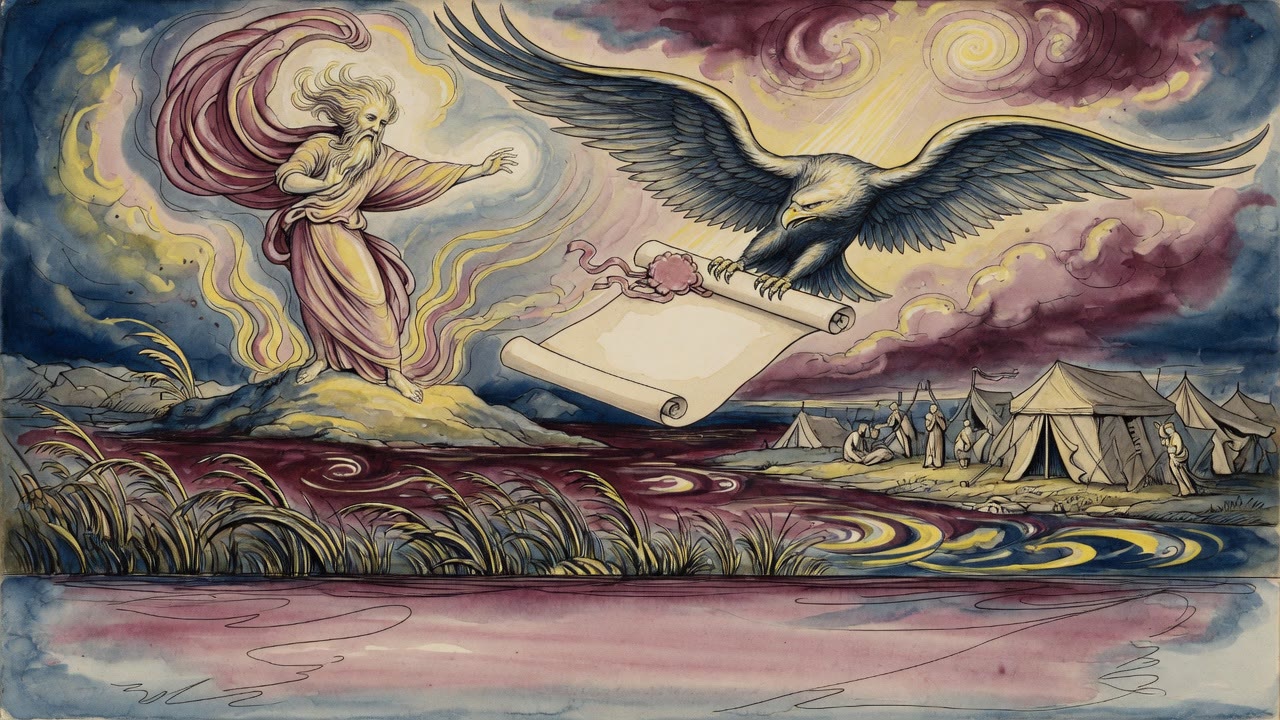
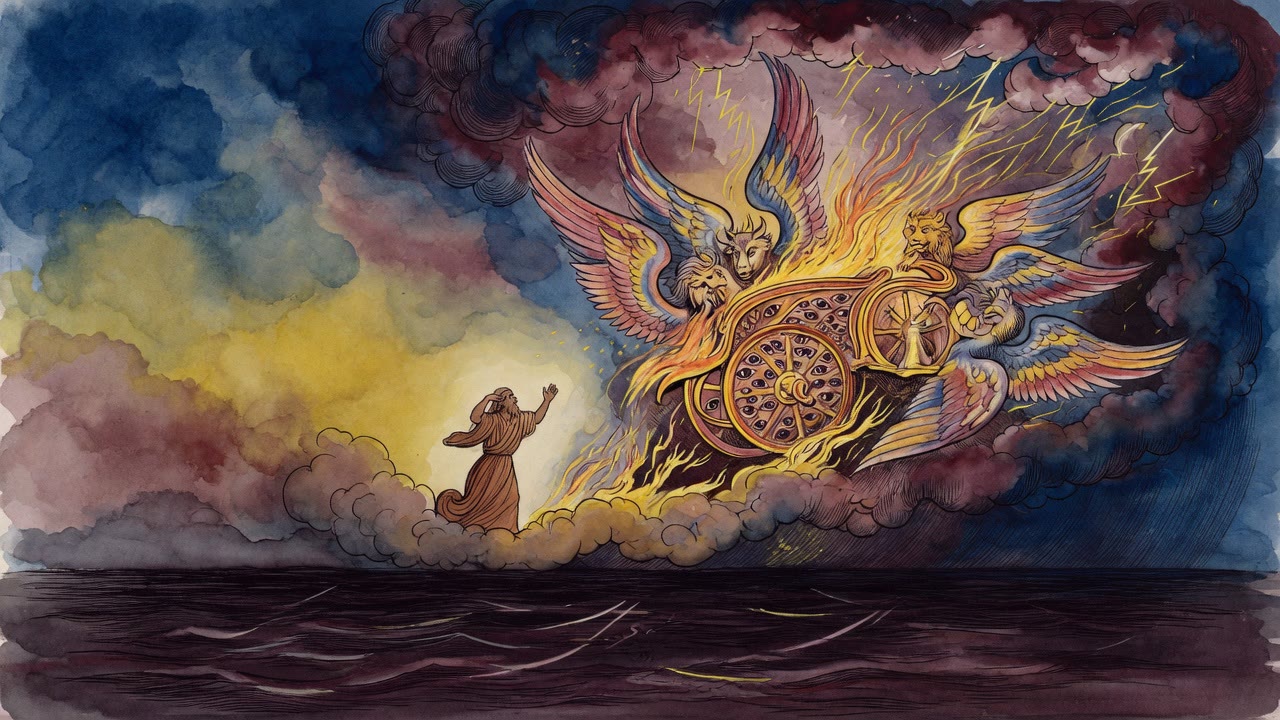
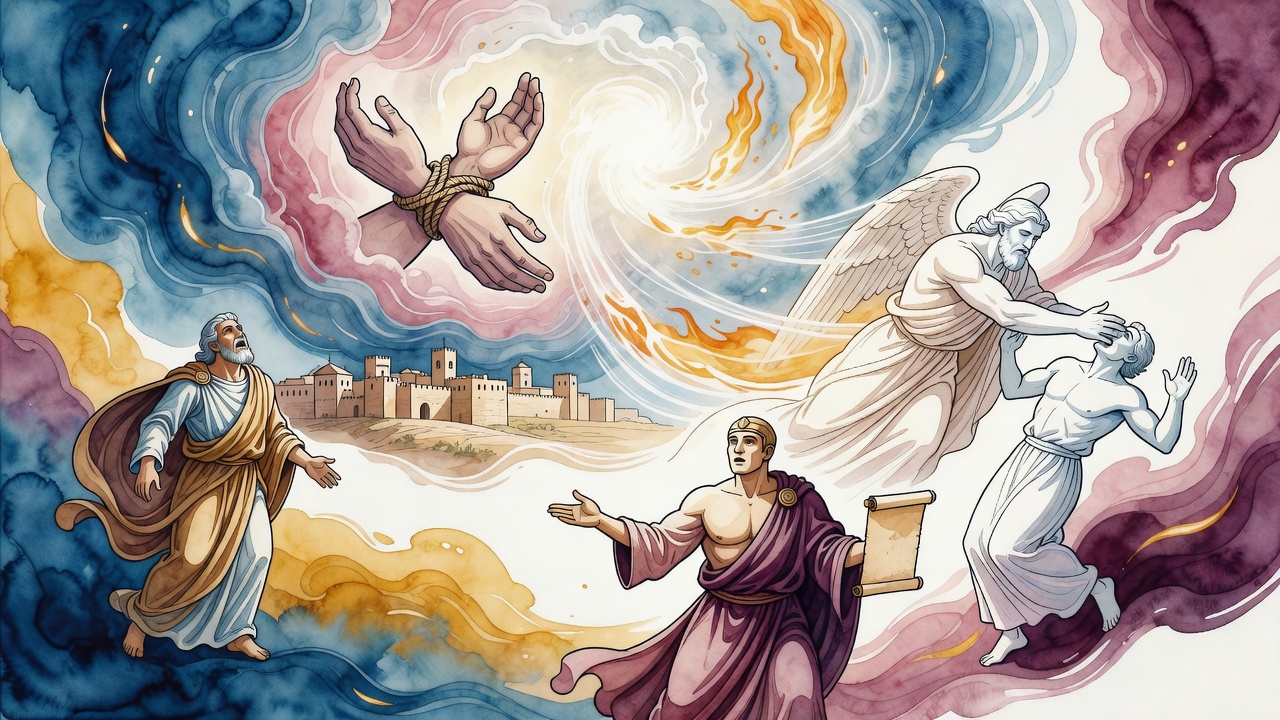
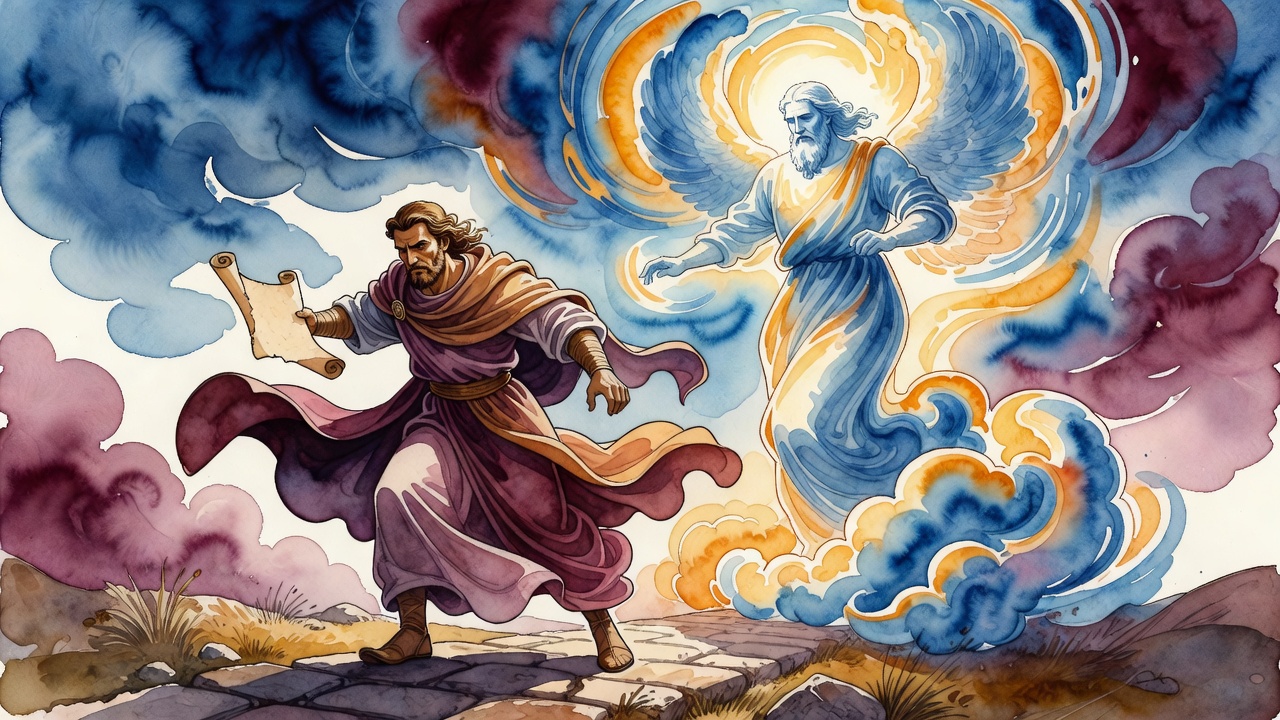
High above the world, where the light has no source and the beings do not die, a war broke open. Not a skirmish. Not a quarrel settled by morning. A war without floor or ceiling, eternal against eternal, boundless because the ground it was fought on had no borders to hold it in.
And the terrible thing was that it did not stay up there. Every blow struck above landed again below. As the powers clashed in the heights, a matching war tore across the mortal world, and human beings who had never seen the combatants, who could not have named a single one of them, were caught in the middle of it. Cities that thought themselves safe woke to armies at the gate. Roads filled with people carrying whatever they could hold. The exile that men laid at the feet of kings and generals had a second cause they could not see, a battle overhead whose ash fell on the streets of the living.
At the center of the earthly half of that war stood one city. Jerusalem.
The Three Princes Who Promised a Wall
Jeremiah walked her streets with a warning that made him hated. Turn back, he told them. Repent, or the enemy will come and you will go out into exile. They heard him and laughed. "If the enemy comes," they said, "what can they do to us?"
They had their reasons. Rabbi Yudan taught that no fortress in Jerusalem could be taken in fewer than forty days of siege, and Rabbi Pinhas said fifty. Stone like that does not fall to one season's army. But the walls the city truly trusted were not made of stone.
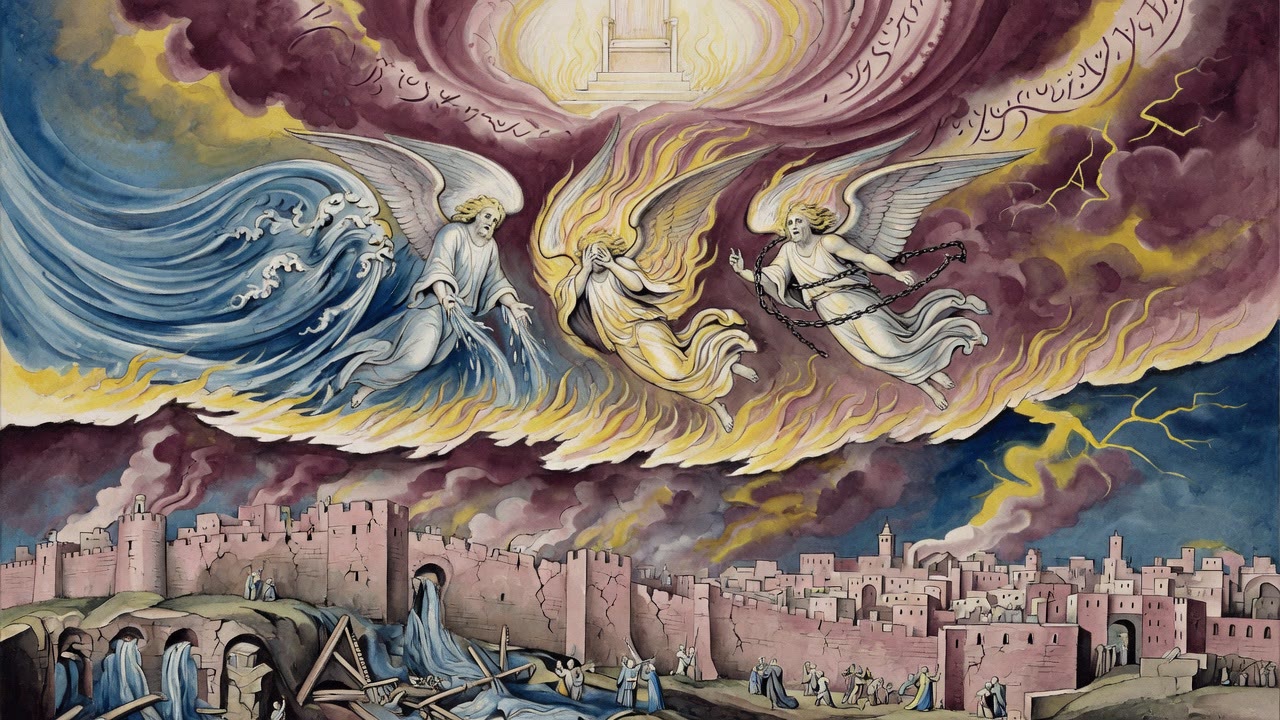
Over Jerusalem stood princes, the angelic officers set above the elements themselves, and when they saw the enemy massing they each boasted of what they would do. The first, whose office was water, said, "I will surround her with a wall of water." The second, set over fire, said, "I will surround her with a wall of fire." The third, whose charge was iron, said, "I will surround her with a wall of iron." Let the Babylonian come. He would break himself on ramparts no mortal hand had raised.
The Rebuke at the Throne
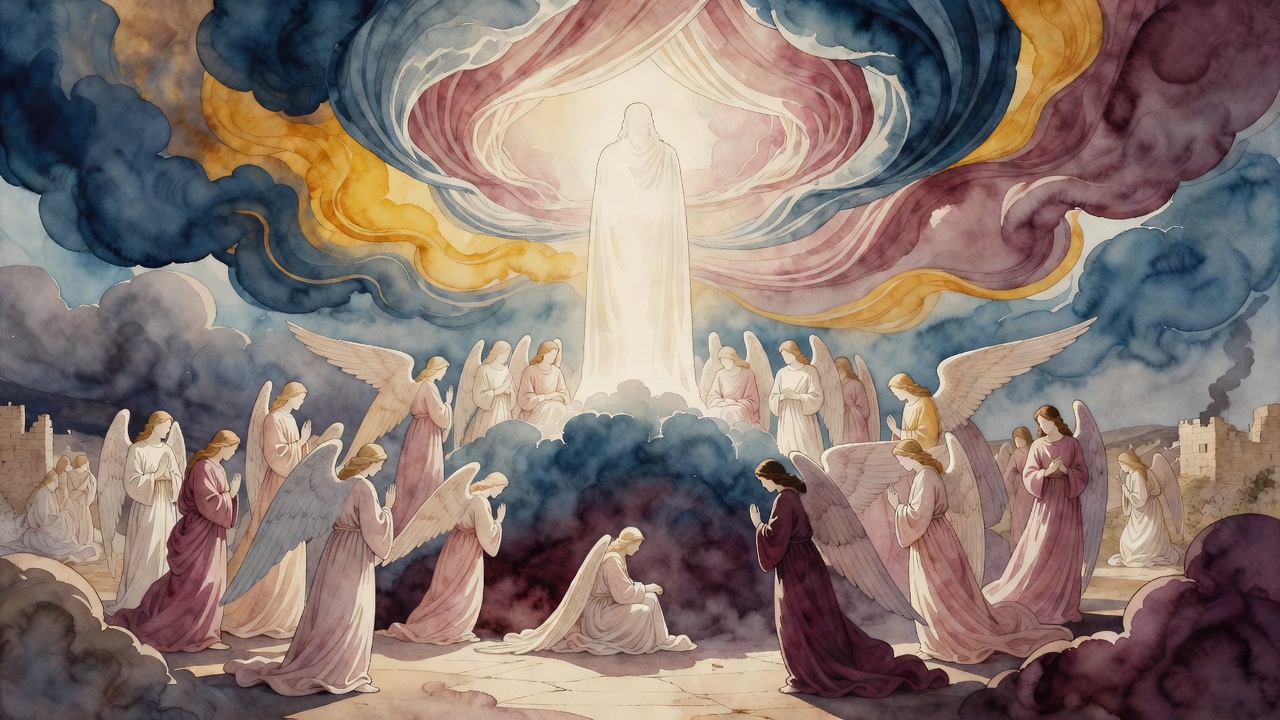
The Holy One heard the princes boast, and He was not pleased. "It is with what is Mine that you make use," He said. The water was His water. The fire was His fire. The iron was His iron. They had promised to spend powers that were never theirs, as though the elements answered to angelic names and not to the One who made them.
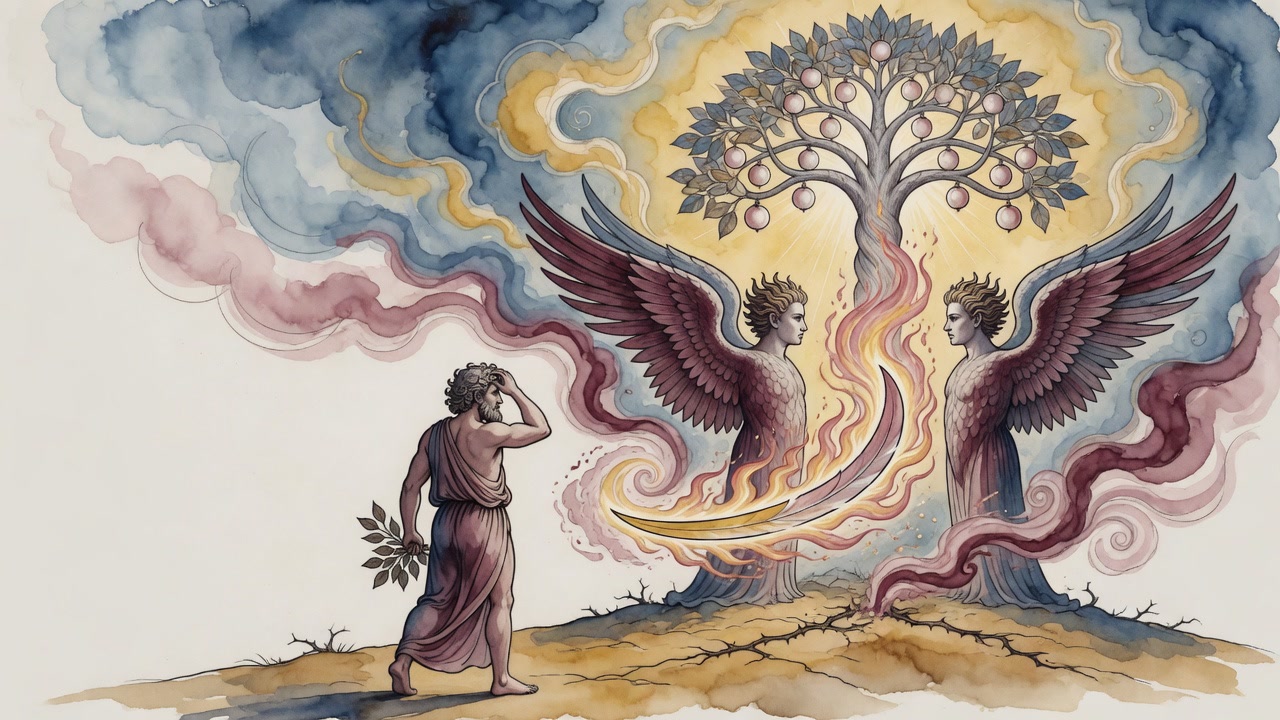
So God arose, and He did a thing that unmade the order of heaven. He changed the names of the angels. The prince who had ruled water He set over fire. The prince who had ruled fire He set over iron. Every office was pulled from the one who held it and handed to another, the whole chain of command above the world turned in an instant, so that no angel stood any longer where the city expected to find him.
When the Old Names No Longer Answered
Then the iniquities did their work, and the enemy came.
Down in the doomed city, men who knew the secret names began to call them. They cried upward the way their fathers had taught them, naming the prince of water, begging for the promised wall. Nothing came. They named the prince of fire. Silence. The names were real. The angels were real. But the one who had once answered to a name answered to it no longer, and the one who now held the office had never been called by it.
"Prince so and so," a man cried into the smoke, "come and do for us such and such." And the voice that finally answered him said only, "It is not in my power to lift anything from it."
This was the meaning of the hard word spoken through the prophet, "I have profaned the holy princes." Heaven had not merely withdrawn its help. Heaven had rearranged itself so that help could no longer be found, and the guardians of the city were made strangers to their own posts.
The Guardians Turned to Ruin
What fell on Jerusalem next was worse than absence. The same heaven that had turned its face now turned its hand. The angels of destruction went out with permission, and their permission had a name written on it, and the name was Israel. They came not to punish one more city among cities but to seek out this people for ruin, to drag the exile wider and press it deeper, to make the scattering ache. The powers that thrive on wreckage grew bold, and they held the galut open like a wound they meant never to let close.
With the ruin came a confusion worse than the ruin. When the walls of stone are down and the walls of heaven have been reassigned against you, men begin to doubt whether their faith was ever true. The temptation is not to grief. Grief is easy. The temptation is to let go, to decide the covenant was only a story told to children, and to walk out of it the way a man walks out of a burning house.
The Ones Who Would Not Let Go
In those same streets, others did not. They had no wall of water, no wall of fire, no wall of iron, no prince who answered to his name. They had only the refusal to walk out. In cellars and on the long roads of the exile they held the covenant the way a man holds a rope in the dark, not because he can see where it leads but because letting go is the one death he will not choose.
The war above did not end when Jerusalem fell. Eternal still strikes eternal, and the blows still fall on the world below. But those who keep their grip in the dark are promised the far shore of that war, the rest that waits past the last blow, the peace kept in reserve for the ones who would not let go of the rope.
← All myths