Nebuchadnezzar Saw Michael's Hands Tied Above Jerusalem
Nebuchadnezzar had victories stacked like bricks and Jerusalem still gnawed at him. When he finally came, the walls held for three years.
Table of Contents
 Click for full size
The Vision That Unlocked a Siege
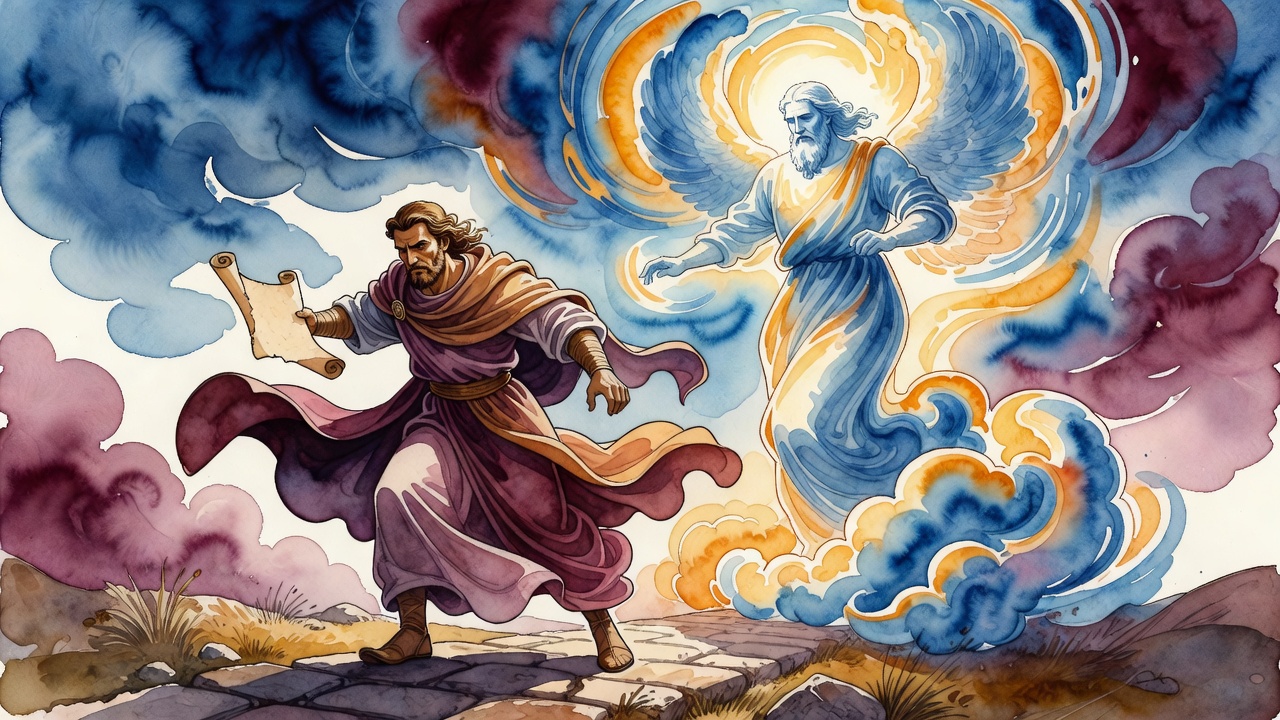
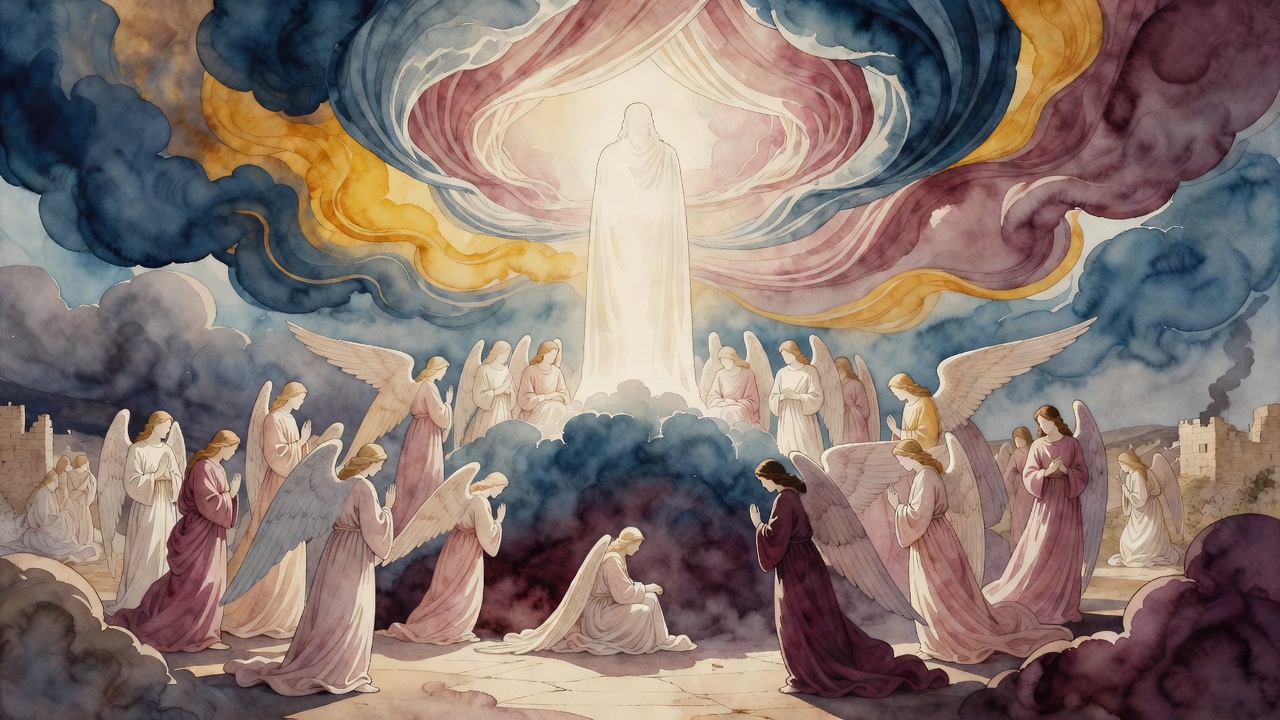
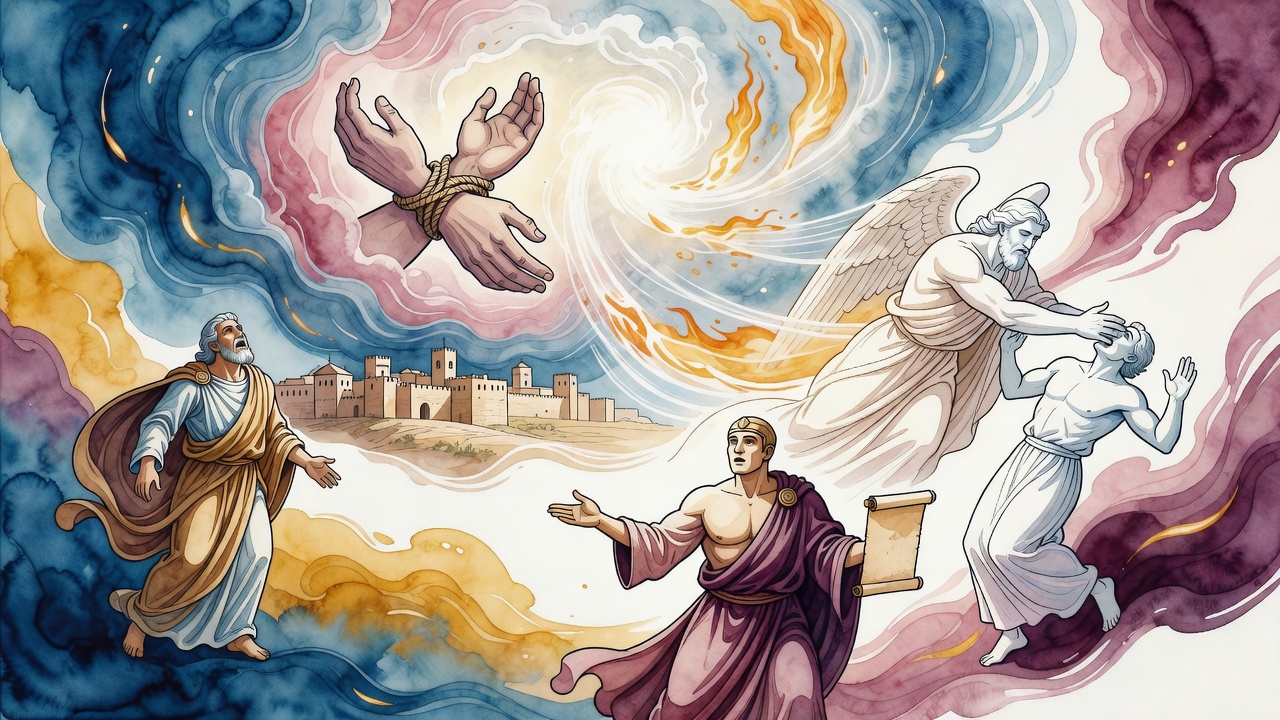
Nebuchadnezzar had victories stacked like bricks, yet Jerusalem still gnawed him. Legend says God finally showed him a cosmic signal: the hands of Michael, guardian angel of Israel, were bound. Resistance in heaven looked tied. Only then did the king move from appetite to campaign.
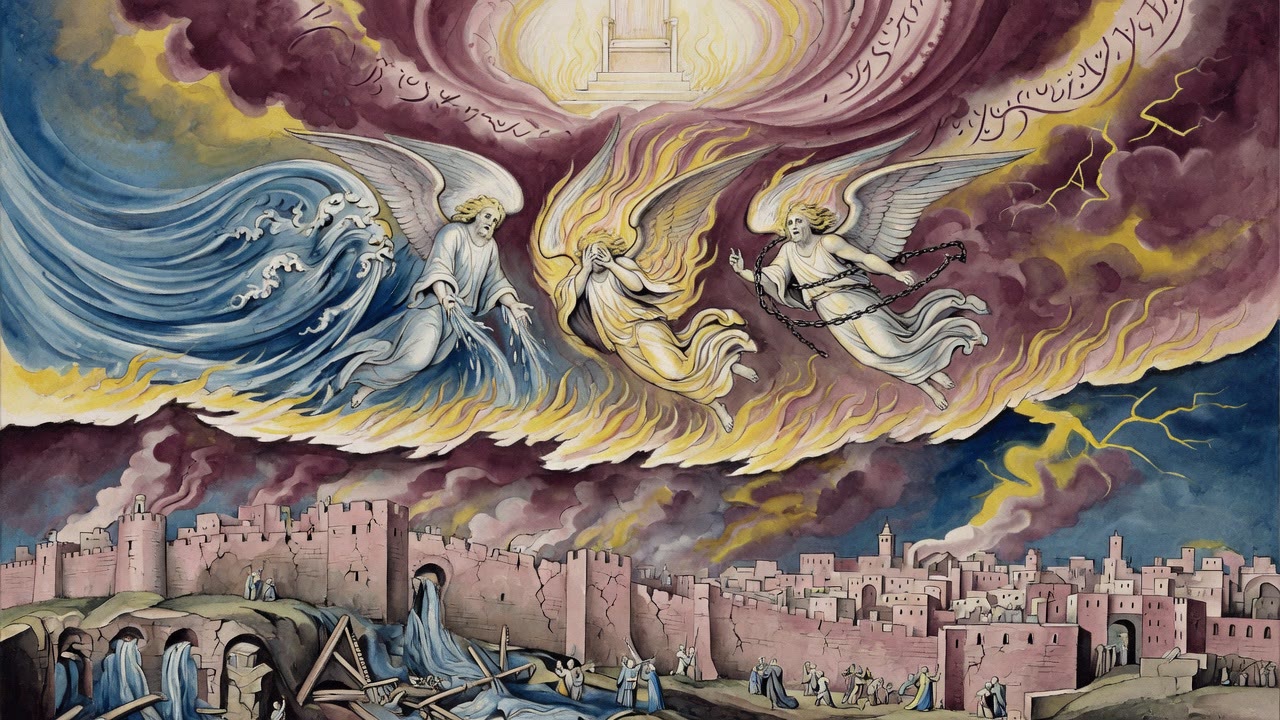
The siege was not a quick cut. Three years the city held while Babylon hammered the walls. Heaven delayed the fall, waiting for repentance, for a turn from evil ways and godless conduct. Mercy stretched the calendar. The people did not fill that stretch with return. When the end came, it came after patience had spoken and been refused.
An Angel's Slap for a Stolen Title
Another strand places a wicked mouth near divine beauty. Someone saw a glory and called it "similar to the son of God." An angel descended and slapped the speaker across the mouth. "Is it appropriate for you to speak in this manner and call Him 'Son'?" The rebuke is grammar and theology in one blow.
The man doubled down, twisting language about "His angels." Rabbi Levi reads Nebuchadnezzar's error into the scene: the king imagined angels derived from him the way a son derives from a father. Jewish teaching answers with creation from nothing. Stars and gnats alike are made by kindness, not budded from God's essence. No emperor fathers the host of heaven.
Sancheriv the Foolish Salesman
Before Babylon's long knife, Assyria tried a softer theft. Sancheriv (Sennacherib) offered Israel "a land like your land" (2 Kings 18:32). Rabbi Shimon ben Yochai in Sifrei Devarim calls him a fool who did not know how to entice. Who leaves a father's house because another man claims to be equally a king, equally rich?
Real enticement would promise upgrade: from commoner to king, from greens to meat, from walking to a sedan chair. Sancheriv offered sameness and called it salvation. Even villains, the midrash notes, sometimes avoid insulting the Land when they praise their own. The Land's worth shows in the clumsiness of those who try to replace it.
Three Years, One Bound Guardian, One Bad Pitch
Set the tyrants in one frame. Sancheriv fails at persuasion because he cannot outshine Eretz Yisrael. Nebuchadnezzar waits for a vision of Michael bound, then spends three years learning that a city can hold while heaven still hopes for teshuvah (the turn back from wrongdoing). A slap in the mouth answers anyone who drafts God into a family tree of kings and demigods.
Jerusalem's fall is never only engineering. It is a courtroom where angels, emperors, and salesmen of exile all testify, and only one testimony matches the Maker of nothing-into-being.
What Bound Hands Demand of the Living
If Michael's hands can be bound when sin fills the streets, then military walls are not the last defense. If an angel will strike a mouth for stolen sonship language, then imperial theology is a capital crime. If Sancheriv's "land like yours" is folly, then homesickness for the true Land is wisdom, not nostalgia.
The drama ends with dust on Babylon's boots and a people who must remember why heaven ever tied a guardian's hands. Repentance was the unbought key. They left it on the table for three years.
Michael bound is a terrifying mercy of explanation. It tells the wounded that Jerusalem's fall was not proof that heaven lacked a guardian. It was proof that sin can suspend protections the righteous assume are automatic. Three years of siege were three years of unanswered invitation. The invitation was teshuvah. The answer was delay without change.
The slapped mouth protects Jewish speech about God. No king, however gilded, may draft the Holy One into a genealogy of sons and derived angels. Creation from nothing leaves no umbilical cord between divine essence and creature. Nebuchadnezzar's theology of descent is empire talking. The angel's hand is monotheism answering.
Sancheriv's failed advertisement still instructs. Do not trade the Land for a copy. Do not call exile an upgrade when the pitch only promises resemblance. Rabbi Shimon's mockery keeps desire honest: if the offer is not better, it is a leash. Between Assyria's tongue and Babylon's engines, Israel learns that survival requires more than walls and more than clever treaties. It requires a heart that returns before Michael's hands are tied.
Nebuchadnezzar's career in legend is a ladder of misreadings. He misreads Michael's binding as permanent license. He misreads angels as offspring of power. He misreads three years of divine patience as weakness. Each misreading builds the next cruelty. When the city falls, the misreadings become policy for an empire.
Sancheriv's earlier folly is the comic version of the same disease: treat Israel's inheritance as interchangeable real estate. Babylon's version is tragic and heavier. Between the fool's pitch and the bound archangel, the tradition teaches one vigilance. Guard the Land in desire. Guard the mouth in theology. Guard the heart in repentance while the walls still stand.
← All myths