6 min read

Michael and Gabriel Defend Israel Before the Heavenly Throne

When the angel of a rival nation rises to accuse Israel before the throne, Michael and Gabriel step forward to argue the other side.

Curated by Arthur · Told by Maggid ·
Table of Contents
  1. The Accuser Reads the Ledger
  2. Michael Steps Out of the Fourth Heaven
  3. Gabriel Takes the Floor
  4. The Two Advocates Against the Court
  5. What the Throne Decided

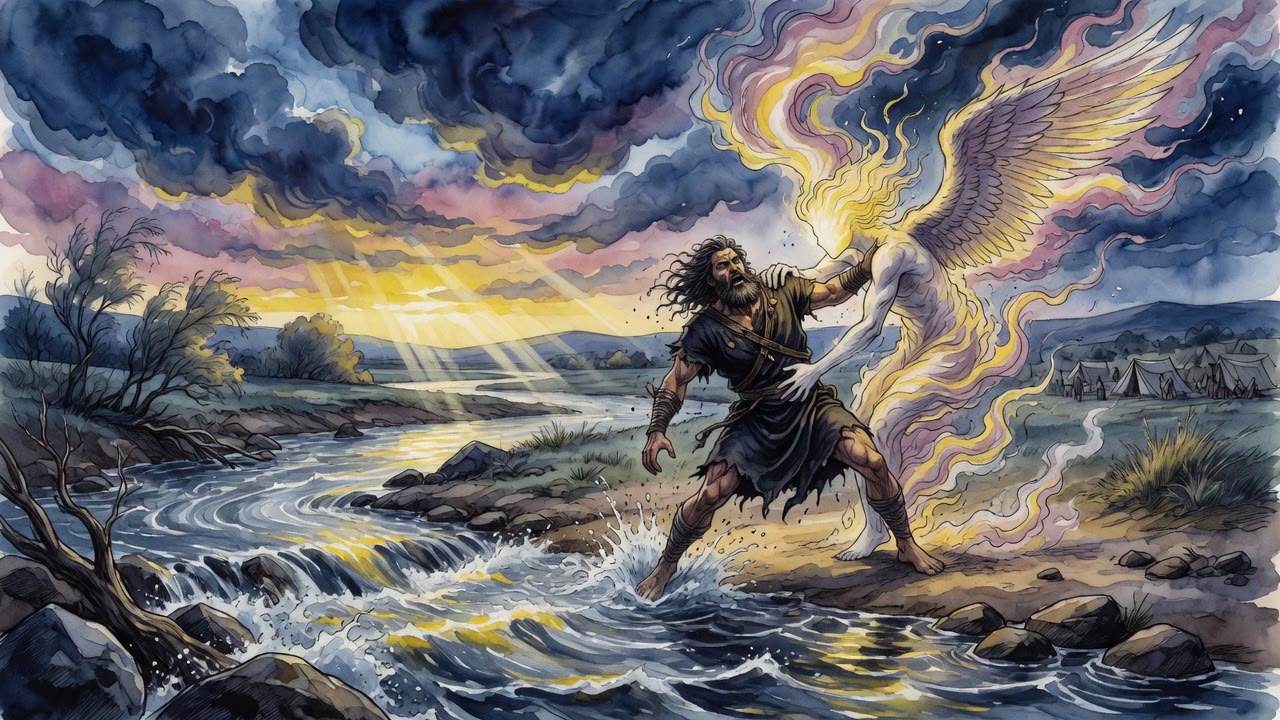
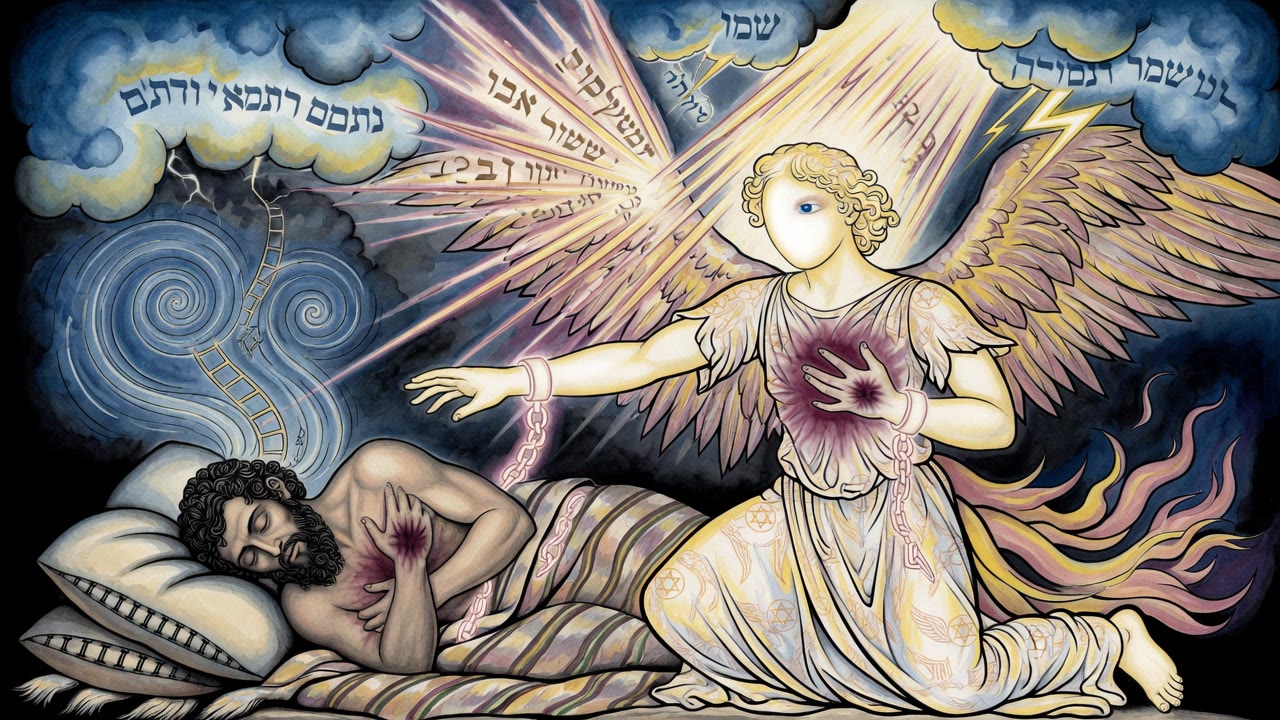
The court was already full when the accusation began. Lamps of fire hung in the air without chains. Far above the throne sat wrapped in a brightness no one looked at directly, and ranged around it stood the representatives, one for every nation under the sun. Each of them spoke for a people. Each of them had come to speak.
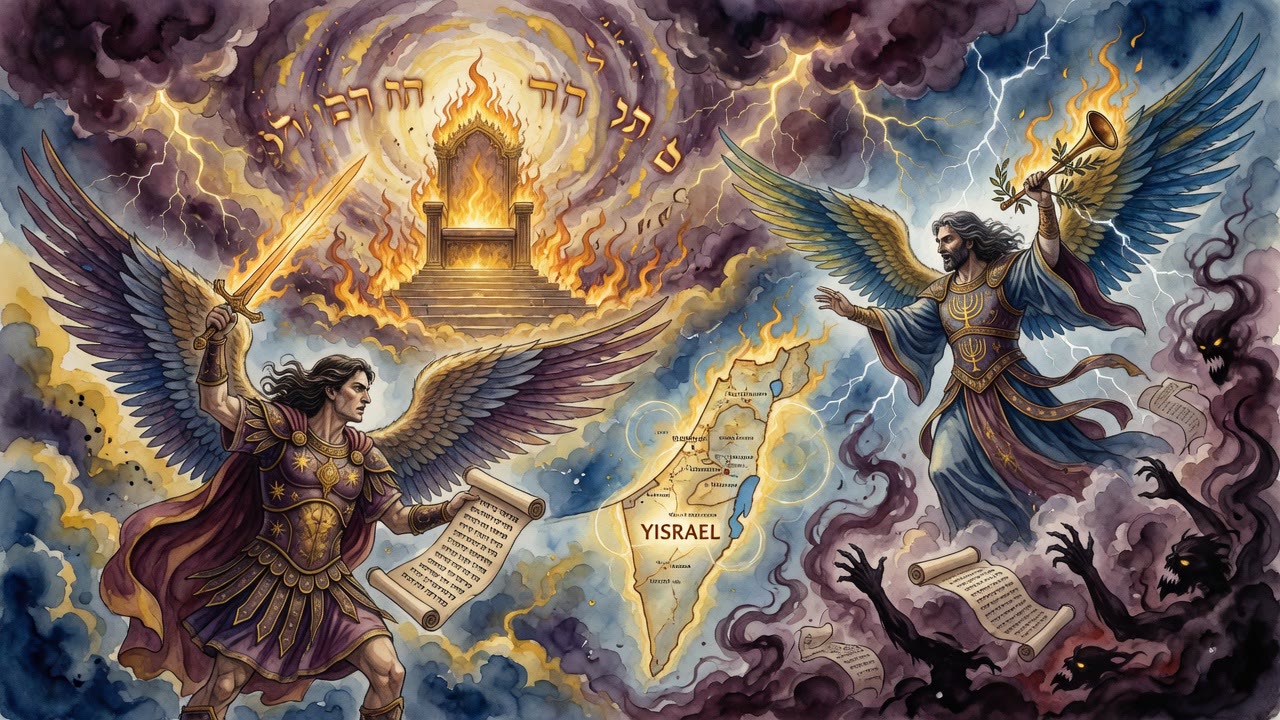
One of them rose now. He spoke for a great empire, a kingdom of horses and walls and many gods, and he had a scroll, and the scroll was long. He unrolled it toward the throne and began to read.

The Accuser Reads the Ledger

"This people," he said, and did not need to name them, because everyone in the court knew which people he meant. "This people was given more than any other. A law from the mountain. A covenant in fire. And look." He turned the scroll. "At the foot of the very mountain, while the smoke still hung on it, they made a calf of gold and bowed to it and called it their god (Exodus 32). The metal was barely cool."

No one interrupted him. The charges were true, and a true charge needs no help.

"They were fed bread out of the sky and they wept for meat. They were carried out of bondage and within a month they wanted to go back to it. They forgot. They built altars to the Baals and burned offerings on them and forgot again, and again, across every generation You gave them." He let the scroll fall open to its full length, and it reached the floor of heaven. "Why should this people stand? Every other nation here has kept faith with its own gods more steadily than this one has kept faith with You. Cancel them. Let them be scattered into the others and end."

The brightness on the throne said nothing. The empire's angel rolled his scroll back up, satisfied, and waited.

Michael Steps Out of the Fourth Heaven

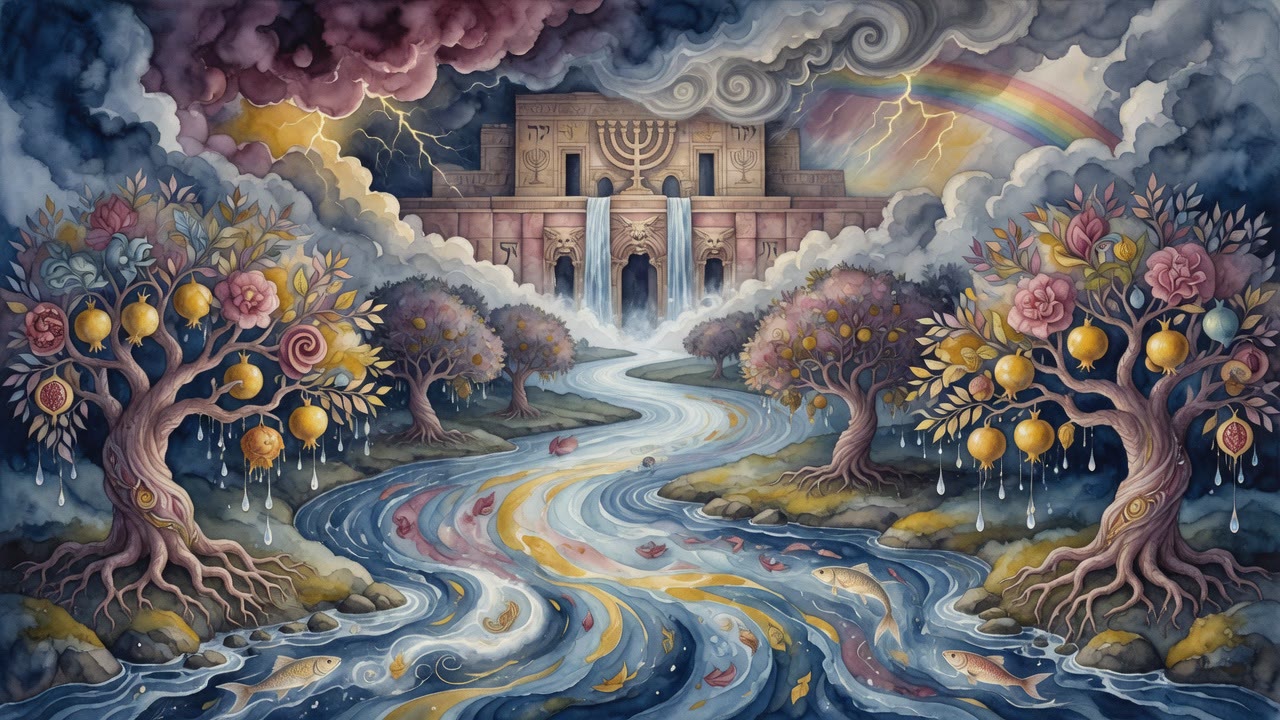
Then a movement at the side of the court. Michael had been standing where he always stood, in the fourth heaven, beside the Temple that does not burn. Down here the Temple below had its smoke and its priests and its eventual ruin, but the one he guarded stood whole and would always stand, its lamps lit, its altar clean. He left it now and came forward, and the lesser representatives gave him room without being told.

"He read the ledger well," Michael said. "He left nothing out. He is right that they made the calf. He is right that they wept for meat and forgot the sea that had opened for them." He turned toward the empire's angel. "Read me the rest of it, then. Read me where they stood at the mountain before any of that and said, we will do, and we will hear (Exodus 24:7). They said it first. They answered yes before they knew what was being asked. Has your nation ever said that? Has any nation in this room ever said yes to a law it had not yet heard?"

The empire's angel said nothing.

Gabriel Takes the Floor

"And consider the count," Michael went on. "He calls them a people. They are barely a people. They are smaller than the least of the nations standing here. By the arithmetic of the court they should have vanished a hundred times. Famine, sword, exile, every empire that has ever wanted them gone. Tell me, accuser, where are the empires that wanted them gone? Name one still standing." He looked around the bright floor at the rows of representatives. Several of them had no people left to speak for and stood there only out of old habit. "Their nations are dust and these still answer the morning. That is not arithmetic. That is something holding them up."

Beside him Gabriel had come forward too, and where Michael spoke for mercy Gabriel spoke for the hard accounting of it.

"You want them scattered into the others," Gabriel said. "Then who carries the law? It was not given to be admired and shelved. It was given to be lived in the open, by people who fail at it and stand back up and try it again. Your empire never carried anything it could not also drop. These carry the heaviest thing in the world and keep dropping it and keep bending to pick it up. The dropping is in the ledger. So is the bending. You read only half."

The Two Advocates Against the Court

The empire's angel found his voice again. "Two of you," he said. "Two against the whole court. Every nation here has one representative. They have two of the strongest in heaven. Where is the justice in that?"

"There is no rule that says one," Michael answered. "There is only the question of who is willing to stand. You are all welcome to stand for them too." He waited. None of the others moved. "Then it is two, because two were willing, and the rest of you were not."

Gabriel set it down plainly. "The accusation stands as read. The calf, the weeping, the Baals, all of it, true. We do not erase one word. We answer it. A people is not the worst hour in its ledger. It is the whole scroll, the yes at the mountain and the bending after every fall, and the whole scroll is what we lay before the throne."

What the Throne Decided

The brightness moved. It did not speak in words the court could repeat afterward, but the empire's angel rolled his scroll and stepped back into his place among the rows, and the lamps of fire steadied, and the verdict was understood by everyone present without a single one of them being able to say later how.

Michael returned to the fourth heaven and the Temple that does not burn, to his post beside its clean altar. Gabriel kept the floor a moment longer, watching the other representatives file out to carry word back to their nations. Down below, in a small and stubborn country, a people that had no idea any of this had happened got up the next morning and tried the law again, and failed at part of it, and bent to pick it up.


← All myths
From the tradition

Sources

2 sources

The texts this telling draws on, in full. Open a card to read inline, or expand it for a wider, quieter read.

Legends of the Jews 1:6Legends of the Jews

They knew the people of Israel had faced, and would continue to face, incredible challenges. But they also believed in something powerful protecting them: divine intervention.

How else, they wondered, could this relatively small group of people have survived, thrived even, despite centuries of, let's be honest, outright hostility?

The answer, according to many Jewish traditions, lies in the idea that God appointed special protectors, mighty archangels, to watch over Israel. Think of them as divine bodyguards.

Specifically, we're talking about Michael and Gabriel. Names you probably recognize! They’re not just pretty faces in stained glass windows; they're powerful figures deeply invested in the fate of the Jewish people.

But it's not a simple "good guys versus bad guys" scenario. The ancient texts paint a much more nuanced picture. according to some traditions, each nation has its own angelic representative. And these angels? Well, they sometimes act like cosmic prosecutors, pointing out Israel's flaws and misdeeds before the heavenly court.

Imagine it: the angels of other nations lining up to accuse Israel of wrongdoing. Sounds a little unfair. That's where Michael and Gabriel step in. They become Israel's defense attorneys, arguing their case, highlighting their virtues, and advocating for mercy. The Talmud (tractate Sukkah 52b), for example, speaks of Michael's role as a defender of Israel.

And apparently, they're pretty darn good at their jobs!

The result, according to these legends? The accusing angels become fearful of Michael and Gabriel. And once they're intimidated, the nations they represent become hesitant to act on their malicious intentions toward Israel. It’s a fascinating chain of command, isn’t it? A divine deterrent, if you will.

So, the next time you hear someone talk about the survival of the Jewish people, remember this: it's not just about historical events or political maneuvering. According to a rich vein of Jewish tradition, there's a whole other dimension to the story, a celestial drama playing out behind the scenes, with mighty angels battling on behalf of a chosen people. A comforting thought, perhaps, in a world that often feels chaotic and unpredictable. A reminder that, even when we feel alone, we might just have some powerful advocates watching over us.

Full source
Legends of the Jews 1:15Legends of the Jews

Jewish tradition has always been rich with layered realities, and the concept of multiple heavens is no exception. Forget one sky; imagine seven! Each with its own purpose, its own character, its own story.

The simplest, the one we see every night? According to the legends, its sole job is to hide the light of day, to give us night. It's a temporary curtain, drawn each evening and whisked away each morning. Then things get interesting. The second heaven is where the planets are anchored. Makes you think differently about astronomy, doesn't it?

The third? Well, that's where the manna, that miraculous food from the desert, is made… not for us, but for the righteous souls in the world to come. It’s a celestial bakery preparing delicacies for the ultimate feast.

The fourth heaven is something else entirely. It houses the celestial Jerusalem, a shining mirror of our own beloved city. Within it stands the Temple, not ruined, not lost, but vibrant and eternal. And there, Michael, one of the most important archangels, serves as high priest, offering the souls of the righteous as sacrifices. It’s a powerful image, connecting earthly devotion with heavenly service.

In the fifth heaven, we find the angel hosts, singing God's praises. But here's a beautiful twist: they only sing at night! Why? Because during the day, it's our job, here on Earth, to give glory to God. It's a partnership, a cosmic call and response. We praise down here, they praise up there, a continuous harmony of devotion.

But hold on, because the sixth heaven takes a darker turn. It's described as an "uncanny spot," the source of trials and tribulations destined for Earth. Snow, hail, noxious dew, storms, smoke… all these are stored there, in celestial lofts and cellars. Think of it as a cosmic weather control room, but for the difficult things in life. The Zohar, the central text of Kabbalah, delves deeply into the nature of good and evil, and this image reflects that constant tension. Doors of fire guard these chambers, overseen by the archangel Metatron, a figure of immense power and mystery.

These “pernicious contents,” as the text calls them, actually defiled the heavens until the time of King David. Can you imagine? Even the heavens could be tainted by the potential for evil. So, David, in his great piety, prayed to God to cleanse His dwelling place. He felt it was unfitting for such negativity to exist so close to the Merciful One.

And what happened then? The negative forces were removed… to the Earth. A sobering thought, isn’t it? The trials and tribulations, the storms and the smoke, they didn't vanish. They were simply relocated, becoming part of our earthly experience. As we find in Midrash Rabbah, stories like these are often used to explain the complexities of our world and the presence of suffering.

This journey through the seven heavens, drawing from sources like Ginzberg's retelling in Legends of the Jews, offers a glimpse into a rich and imaginative cosmology. It's a reminder that what we see is only a fraction of the story. And it prompts us to consider: what role do we play in this cosmic drama? Are we contributing to the celestial harmony, or are we adding to the earthly storms?

Full source