The Shekhinah Went Into Exile With Israel
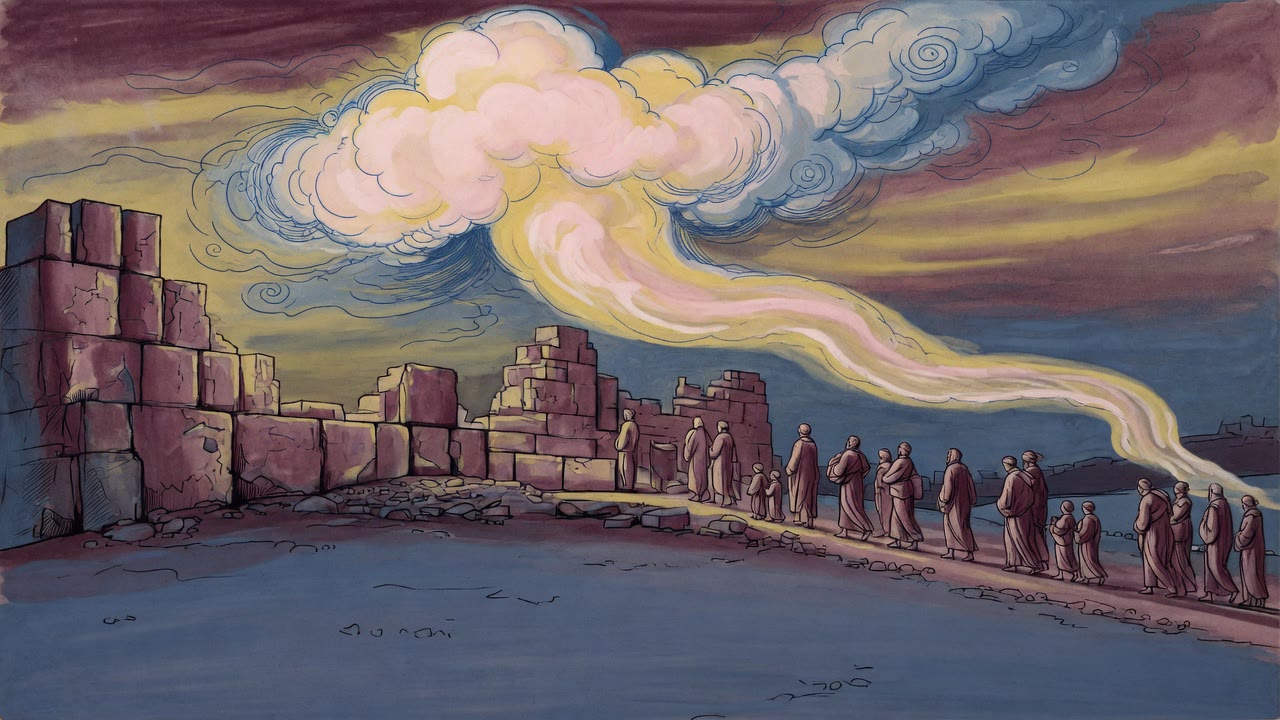
When the Temple burned the Presence wept at the last wall and walked out with Israel, as she had walked into Egypt, Babylon, Eilam, and Edom.
Table of Contents
 Click for full size
The Fire in the Inner Courts
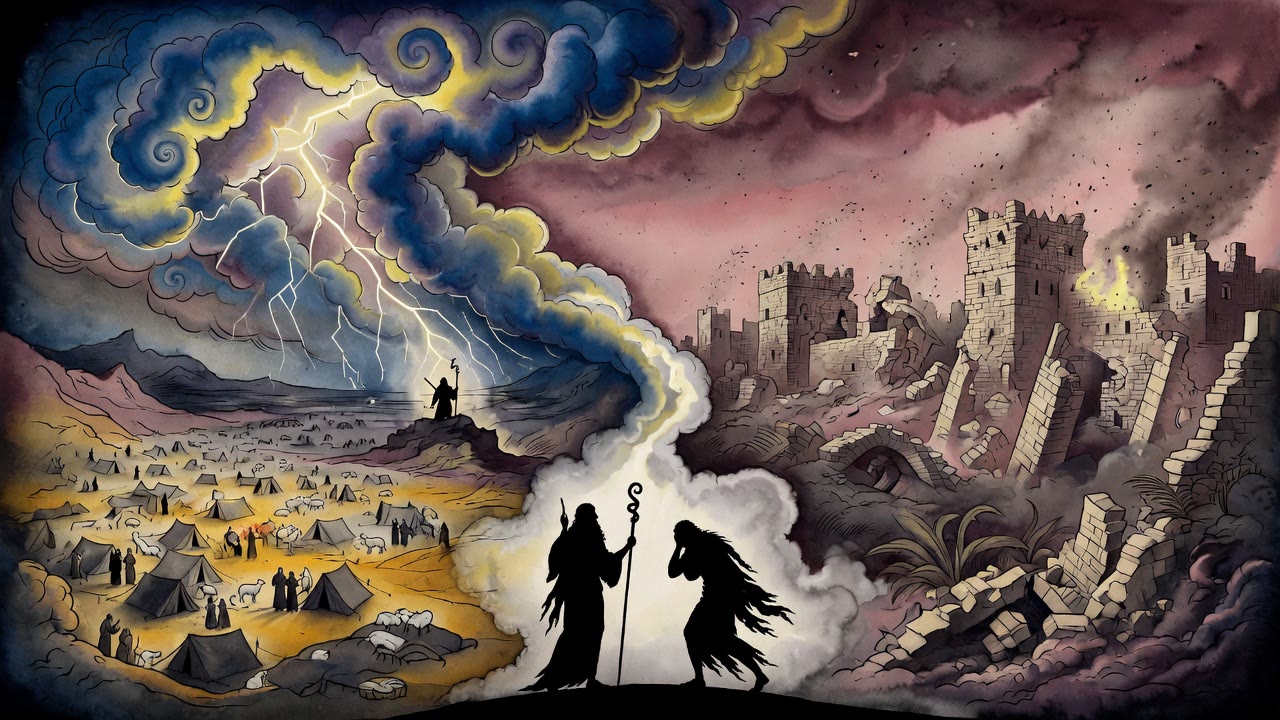
The fire had reached the inner courts. The priests were dead or already marching north in chains. The bronze pillars Solomon had cast were being broken up for transport, and the curtain that kept the Holy of Holies apart from the world was ash. And the Shekhinah (שכינה), the indwelling Presence that had settled into the sanctuary the way light settles into a room, still had not left.
She had been at home on earth once, at the very beginning, before Adam's sin drove her upward. Abraham, Isaac, and Jacob had drawn her back down by degrees, their bodies a seat for her, until Solomon built the house where she could finally rest: "This is My resting-place for all time" (Psalm 132:14). All time was ending in smoke. The leaving was slow, and the tradition insists on the slowness.
Ten Stations of Leaving
She had been withdrawing for years, stage by stage, as the sins piled up. From the cover of the Ark to the first cherub. From the cherub to its brother. From the cherubim to the threshold of the house, from the threshold to the court, from the court to the altar, from the altar to the roof, from the roof to the wall, from the wall into the city, from the city to the Mount of Olives. At each station she paused, like someone leaving a room they love, waiting to be called back.
On the Mount of Olives she waited three and a half years, crying out three times a day, "Turn back, O rebellious children" (Jeremiah 3:22). No one turned back. Then she said, "I will return to My abode" (Hosea 5:15), and went out through the eastern gate, the Gate of Mercy. The gate, they say, later sank into the earth to wait, because she is expected to come home through the same door.
The Wall She Touched
One wall did not fall. The western wall, the outer boundary of what had been most holy, stood while everything around it came down, and the tradition heard a promise in its standing: whatever falls around this wall, this wall does not fall. Long afterward, Rabbi Nathan came to the ruin and heard a voice tell him to press his ring against the stone. The wall was trembling. He looked up and saw God bowing at the wall, straightening, bowing again, weeping. Rabbi Tzadok, dozing on the ruined mount, saw the same thing: God standing in the wreckage of His own house, lamenting, with the ministering angels weeping around Him.
In heaven the mourning ran the way it runs in a human house. God hung sackcloth over His doorway, rent the royal purple, went barefoot, and put out the lights of sun, moon, and stars. "Woe is Me," He said. "What have I done? I set My Presence below for Israel's sake, and now the house is burnt." Metatron, the Prince of the Presence, fell on his face: "Master of the universe, do not weep. Let me weep instead of You." "If you do not let Me weep now," God answered, "I will go into a place you have no permission to enter, and I will weep there." Behind the Pargod, the innermost curtain, where only He and the Shekhinah (the Divine Presence) may go.
The mystics told it as a parable. A king had a queen and sons, and the sons went wrong. The king raged at the children and at their mother together. But the queen went out after her children. "My children are in exile and the Sanctuary is burnt," she said. "Why should I remain here?" Wherever the children were driven, she went.
The Road She Already Knew
She had done this before. When Israel went down to Egypt, the Presence went down with them, into the mud and the brickyards: "Did I not reveal Myself to your father's house when they were in Egypt?" (1 Samuel 2:27). Now, with Jerusalem burning behind her, she took the road with the chained captives, and the old pattern held. "For your sake I was exiled to Babylon" (Isaiah 43:14). God speaking in the first person: not watching the column from above, walking in it. To Eilam, farther east: "I set My throne in Eilam" (Jeremiah 49:38), the seat of cosmic government relocated to wherever the people were scattered. And to Edom at the end of days: "Who is this coming from Edom, his garments crimsoned?" (Isaiah 63:1). There is no place Israel can be sent that the Presence has not already arrived.
In Babylon she took up residence where the exiles prayed. Ten Jews gathered, and she was there. Torah studied at midnight, and she was there. The fixed house was gone; the wandering Presence remained, carrying the memory of her house the way any exile carries it.
Clouds Out, Clouds Home
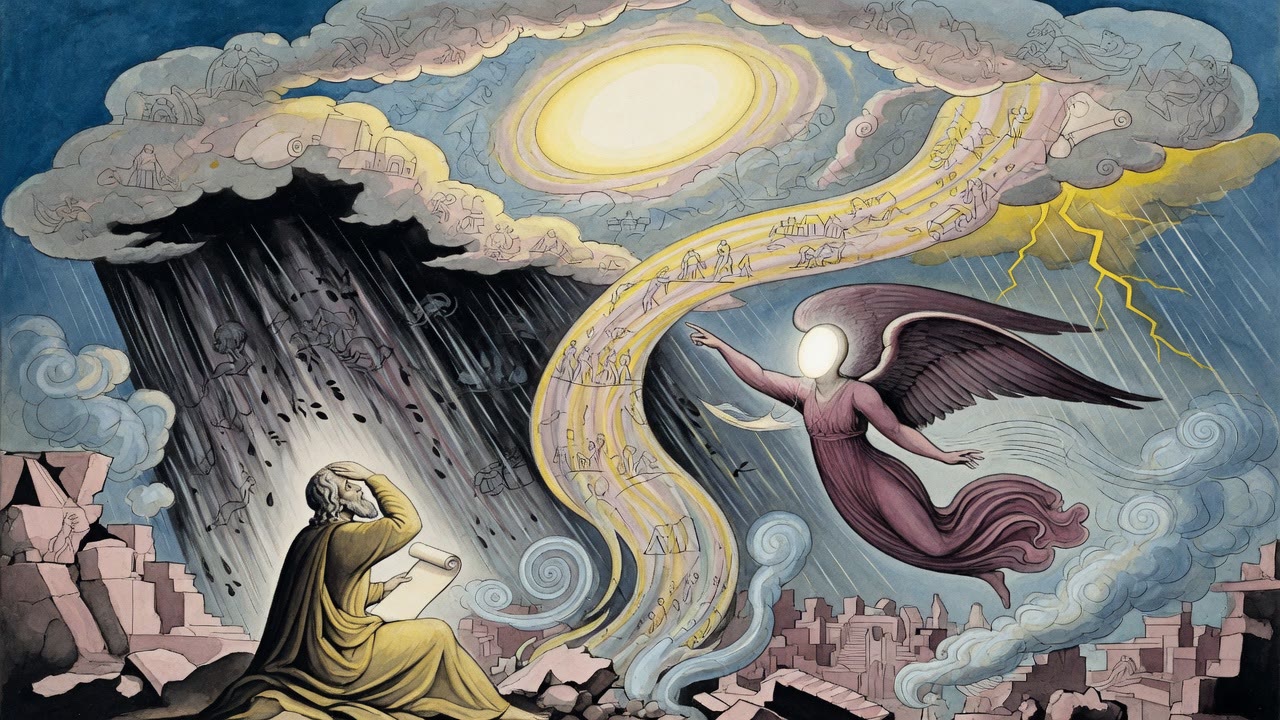
The teachers noticed something about how God strikes and heals. Flesh and blood smites with a knife and heals with a plaster. The Holy One heals with the very thing He smites with. He exiled Israel with clouds, "How the Lord has beclouded the daughter of Zion in His wrath" (Lamentations 2:1), and He will gather them with clouds, "Who are these that fly like a cloud, like doves to their cotes?" (Isaiah 60:8). He scattered them like doves, and like doves He will bring them home. The road out is the road back.
That is the promise folded inside the grief. The wandering has an itinerary, and the itinerary has an end. When Israel returns, she returns; the exile of the Presence and the exile of the people are one sentence, and one release. Until then, travelers press their hands where she pressed hers. The western wall is the address she left behind, and the Gate of Mercy is the door she will use when the doves come home.
← All myths