Shekhinah Walks the Ruins of Her Own House
Night after night the Shekhinah, the Divine Presence, descends to the empty Holy of Holies, calling for the husband who vowed never to leave her arms.
Table of Contents
 Click for full size
Descent After Dark
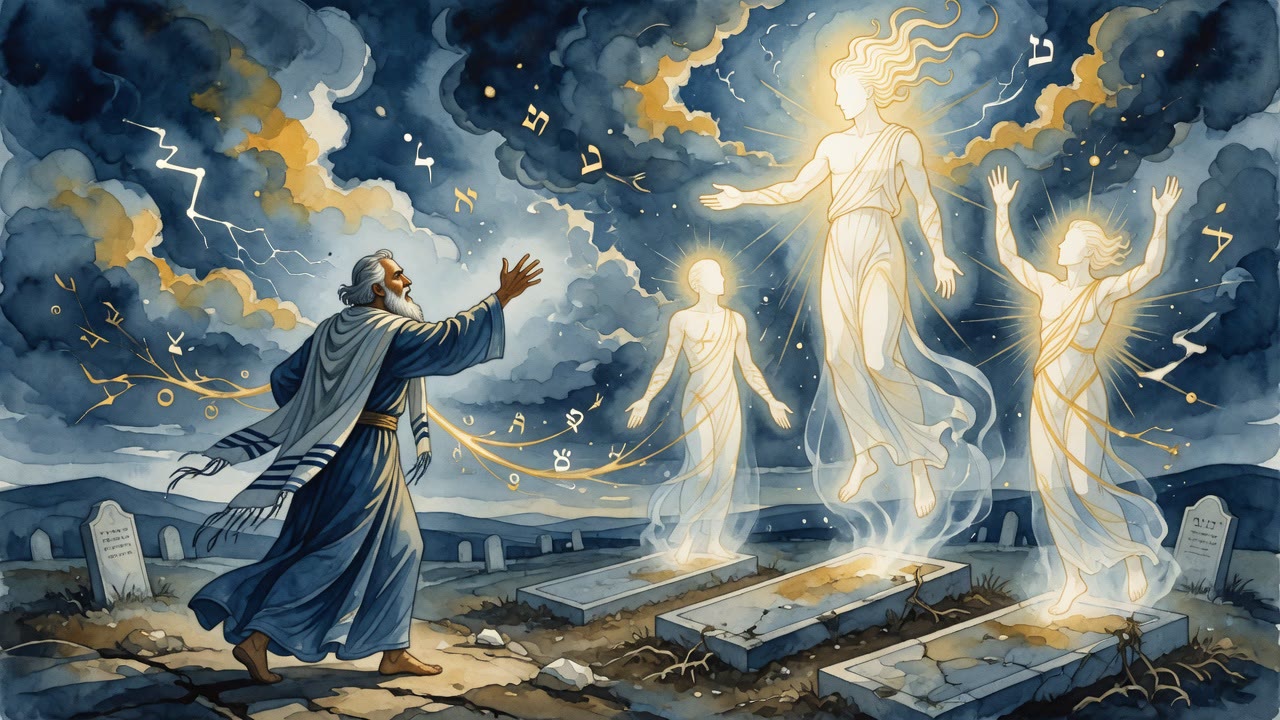
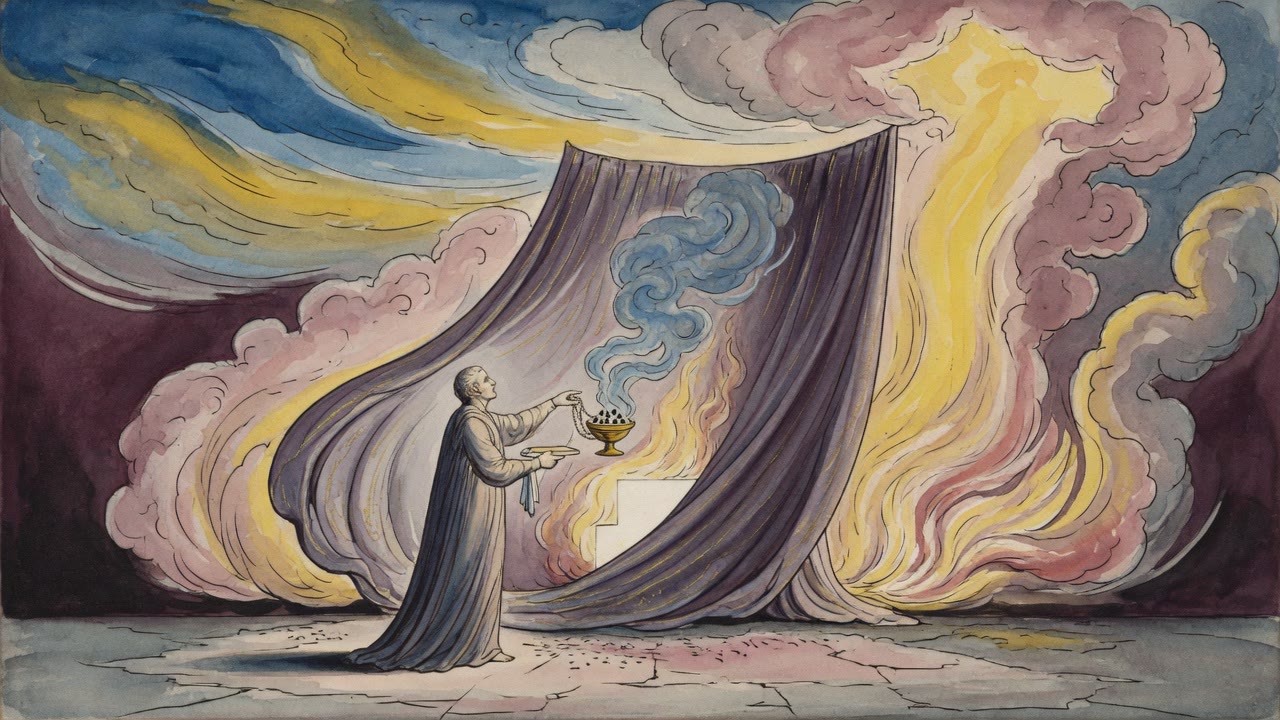
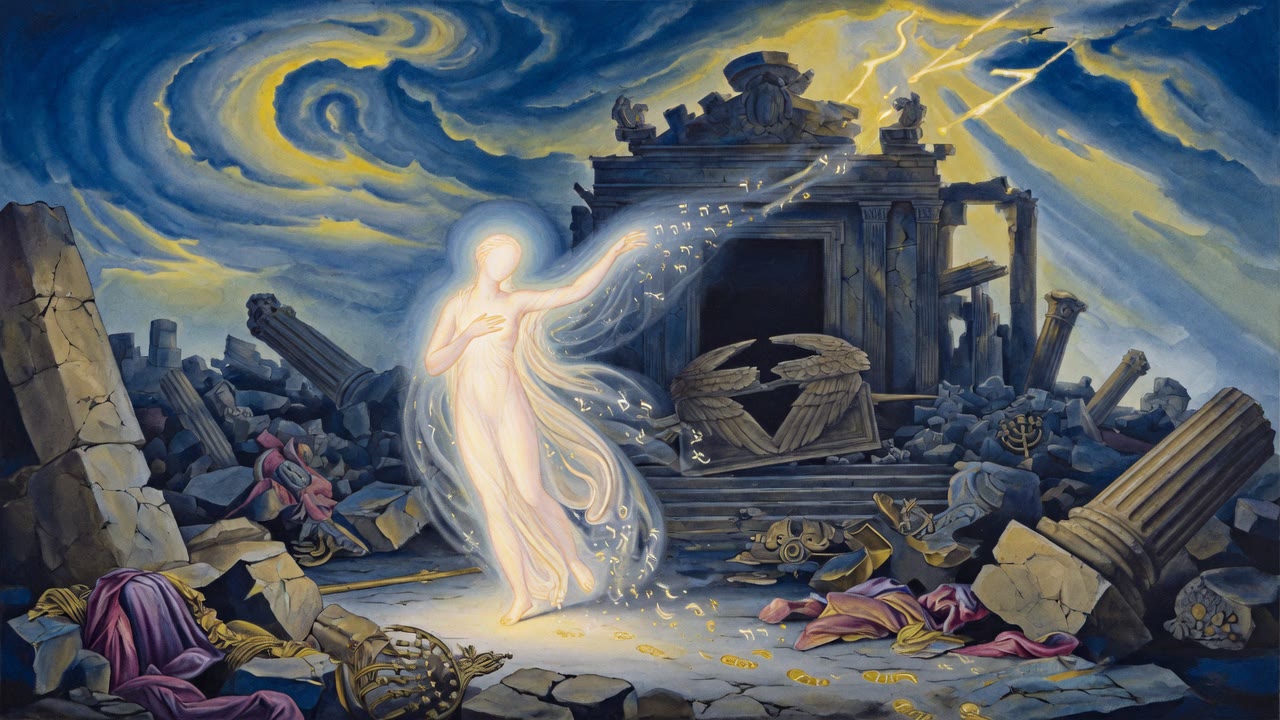
Night settles on the Mount and the Shekhinah (שכינה), the indwelling Presence, comes down again. She does not wait for pilgrims. She does not wait for a repaired wall or a permit from any empire. She moves through the place where the Holy of Holies once held its quiet, and her feet find only broken stone and wind.
The air still remembers incense if she does. The ground does not. She walks the ruin the way a woman walks a house after fire, touching doorposts that no longer hold doors, listening for a hinge that will not answer.
The Couch That Is Gone
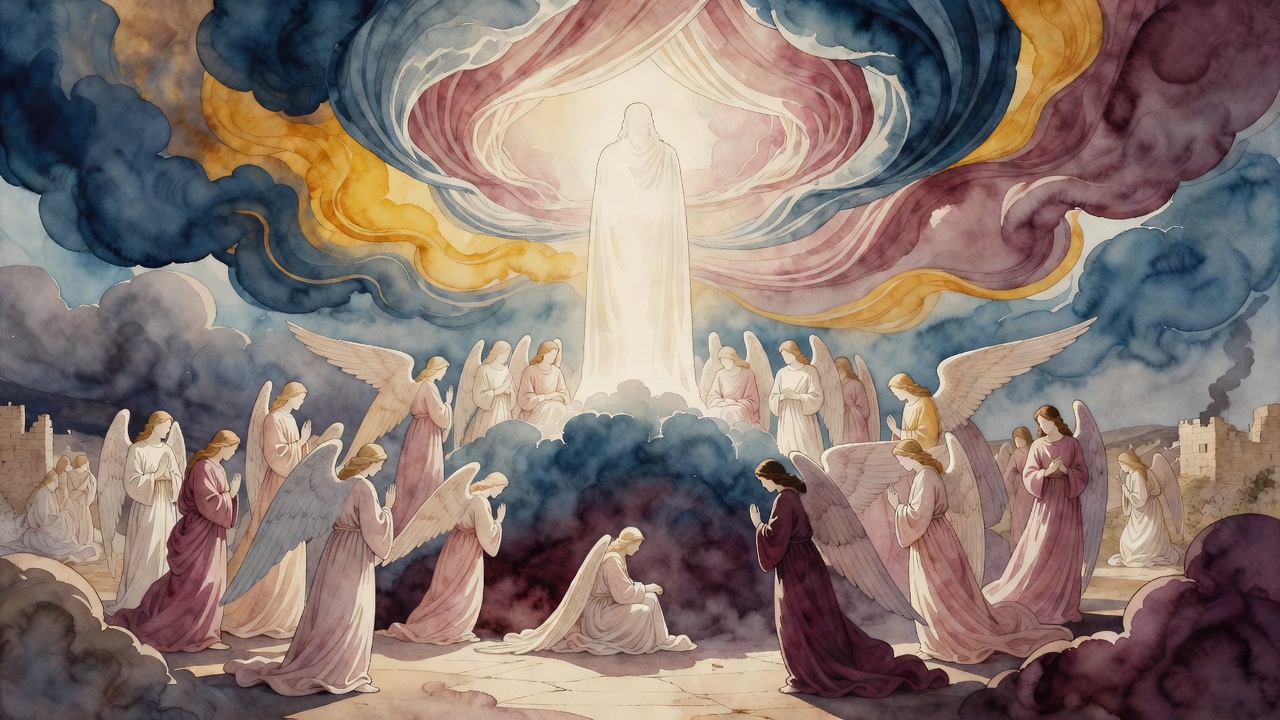
She stops where the cherubim used to stand, wings stretched toward one another over the Ark. Their greeting was the beat of feathers when she entered, a living door of gold and air. Now there is no wood, no gold leaf, no mercy seat, no Ark. Her voice goes into the empty chambers anyway, because grief does not need furniture to speak.
"My couch, my dwelling-place, where my husband would come to me and lie in my arms, and all that I asked of him, he would give me."
From this spot light and nourishment once flowed out to the world like a spring under the floor. She looks for the covenant box that stood here and cannot find even its shadow on the dust. "How has the Ark of the Covenant which stood here come to be forgotten?" The question is not scholarship. It is grief with a legal name, a title deed spoken into rubble.
Search Without Answer
"My husband, my husband, where have you gone?" She searches every corner the way memory searches a room after the furniture is sold. Niches that held vessels. Steps that held priests. A silence that held song.
"Do you not remember how you held your left arm beneath my head and your right arm embraced me, and you vowed that you would never cease loving me? And now you have forgotten me."
The vow still sounds true in her mouth. The absence answers louder. Exile is not only Israel's road across foreign maps. It is the Presence walking a demolished bedroom and calling a name that does not come back across the stones. The left arm and the right arm are gone. The promise stays, stubborn as a ring on a hand that no longer has a partner.
The House Seen Before It Stood
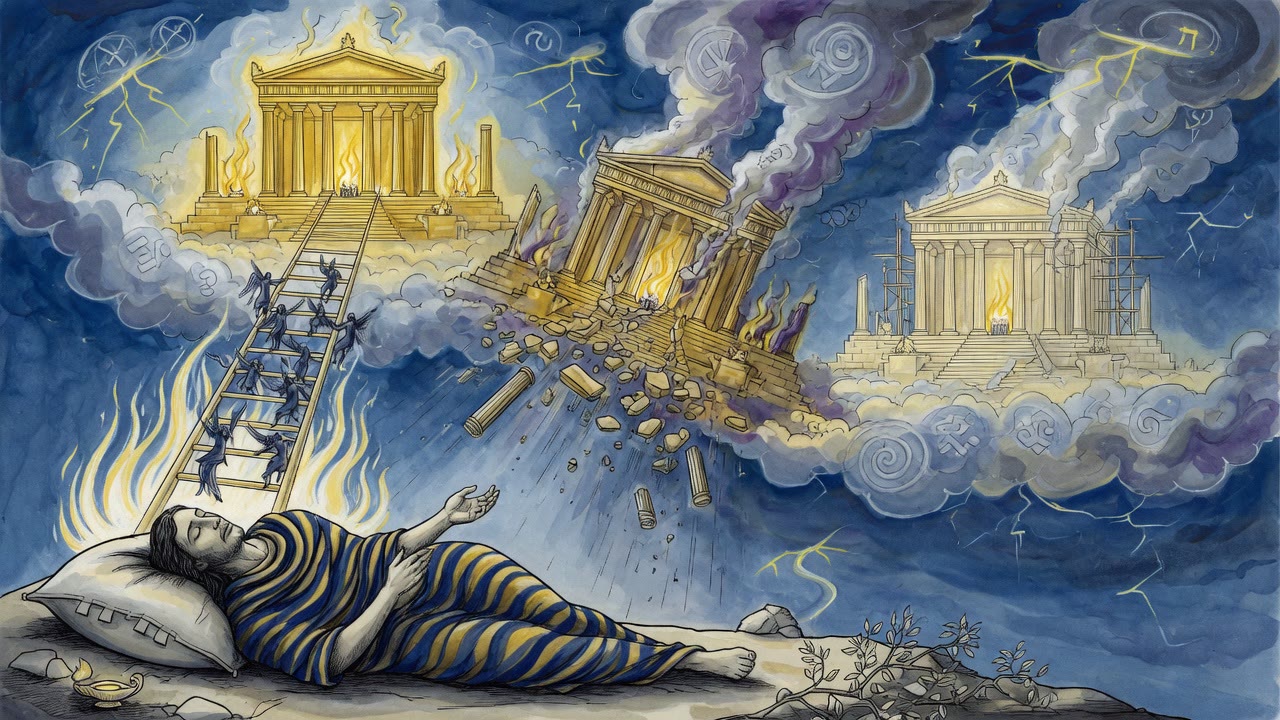
Long before stone met stone, the Temple lived in God's knowledge as a thing that would rise, fall, and rise again. At Beth El, Jacob slept with a stone under his head and saw more than a ladder of angels. In the dream the House appeared in glory, then crumbled into dust, then stood again against the sky. The patriarch woke on ground that was already future and ruin and hope at once, and he poured oil on the stone as if to seal a secret he did not fully own.
David later begged to see the altar's place with the hunger of a king who had finished too many wars. An angel stood in Jerusalem and pointed to the spot. Then the same command cut him off mid-joy. You cannot build it. Too much blood from too many campaigns clung to his hands. The House wanted peace in its beams. David accepted the refusal without a public quarrel and began stockpiling gold, silver, copper, cedar, and cypress for a son who had not yet sat the throne.
So the Shekhinah's (the Divine Presence) nightly walk is not an accident of history alone. The House was always going to know both wedding and widowhood. The dream at Beth El already carried the empty floor she now paces.
Solomon's Lot and the Empty Floor
Solomon inherited the stores and the duty. He gathered princes and priests, rich and poor, and cast lots for the walls so no tribe could claim the House as private glory. North, south, east, west. Shared work for a single Name. For a time the cherubim had a room again. For a time the Presence had a couch and a schedule of offerings that matched the hours.
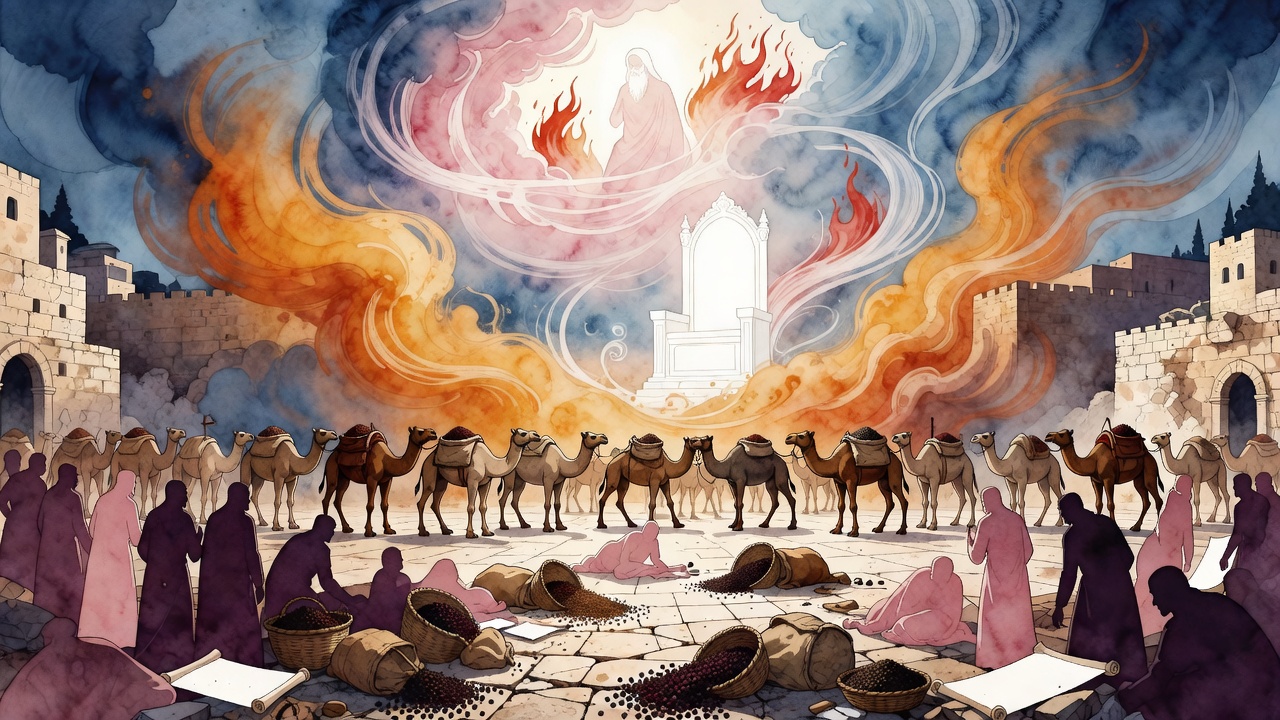
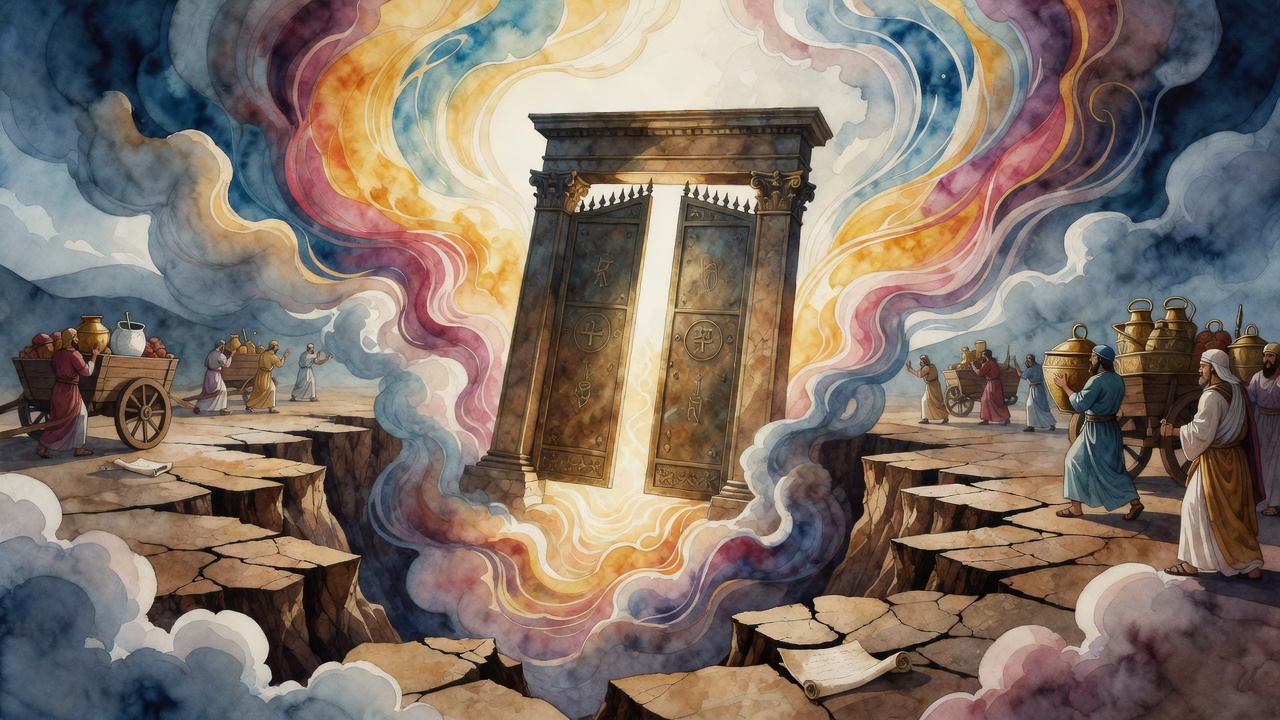
Then the fire of empire came. The lots meant nothing. The wings were gone. The gold left in carts. The Shekhinah kept the schedule the builders could not keep. Night after night she returns to a floor that no longer holds furniture and speaks as if the furniture might answer out of loyalty.
What Still Listens
Those who tell this scene do not offer a quick repair or a neat moral ribbon. They leave her on the Mount with her questions and her vow. Israel in exile is not only a people missing a capital. It is a Presence missing a room, still walking the coordinates of love after the architecture fails.
Somewhere under later stones the old place waits. She already knows the third rising was shown to Jacob in his sleep. Knowing does not stop the weeping. It only keeps her coming back after dark, when human traffic thins and the ruin can hear her without interruption.
← All myths