5 min read

Jacob Dreamed of the Temple Rising, Falling, and Rising Again

For a long stretch only God knew what would become of the House. Then He told a fugitive asleep on a rock, who woke at dawn and poured oil over the stone.

Curated by Arthur · Told by Maggid ·
Table of Contents
  1. Stone for a Pillow
  2. A Secret God Had Carried Alone
  3. David's Pointing Angel
  4. Solomon's Lots and One Name
  5. When the People Become Zion
  6. The Dream Still Working
Jacob Dreamed of the Temple Rising, Falling, and Rising Again Click for full size

Stone for a Pillow

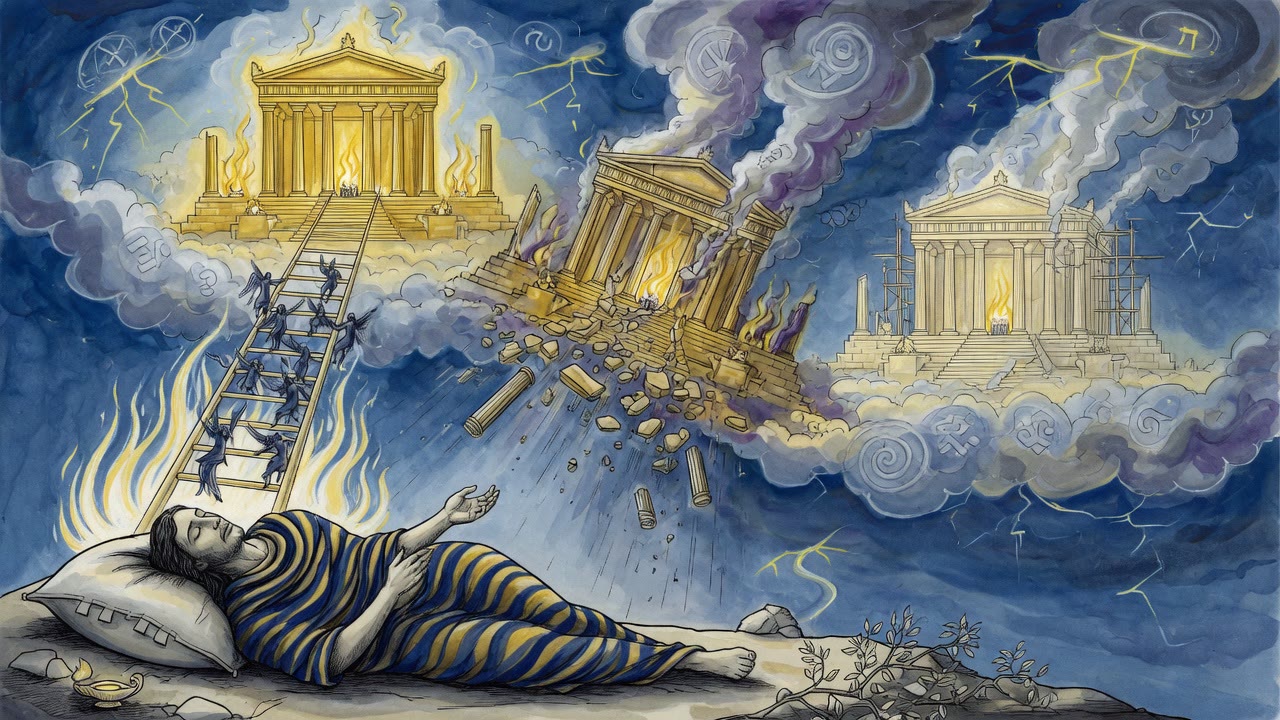
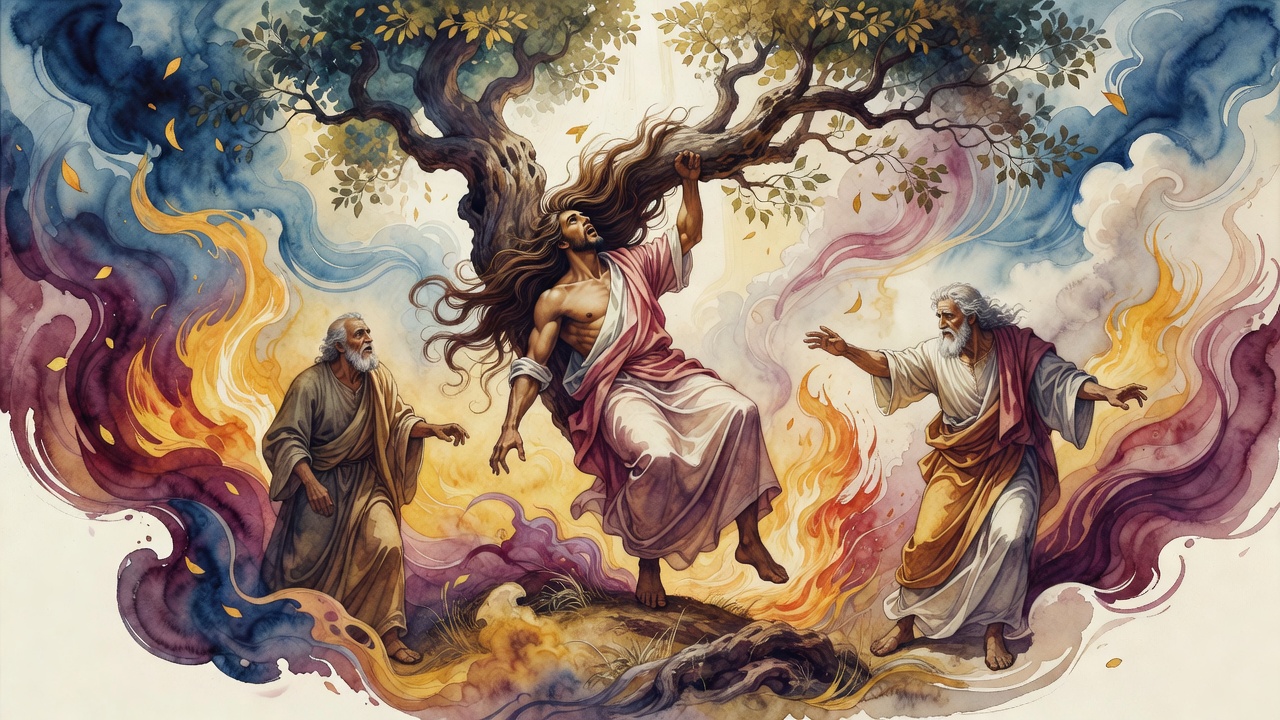
Jacob set a stone under his head at Beth El and slept like a man who had run out of road. The ladder rose in his dream with angels climbing and descending, traffic between earth and a God who had not abandoned the chase. Then the dream widened past the ladder. A House appeared, bright as a finished vow. Walls stood. Courts opened. Glory sat inside like a guest who owned the keys.

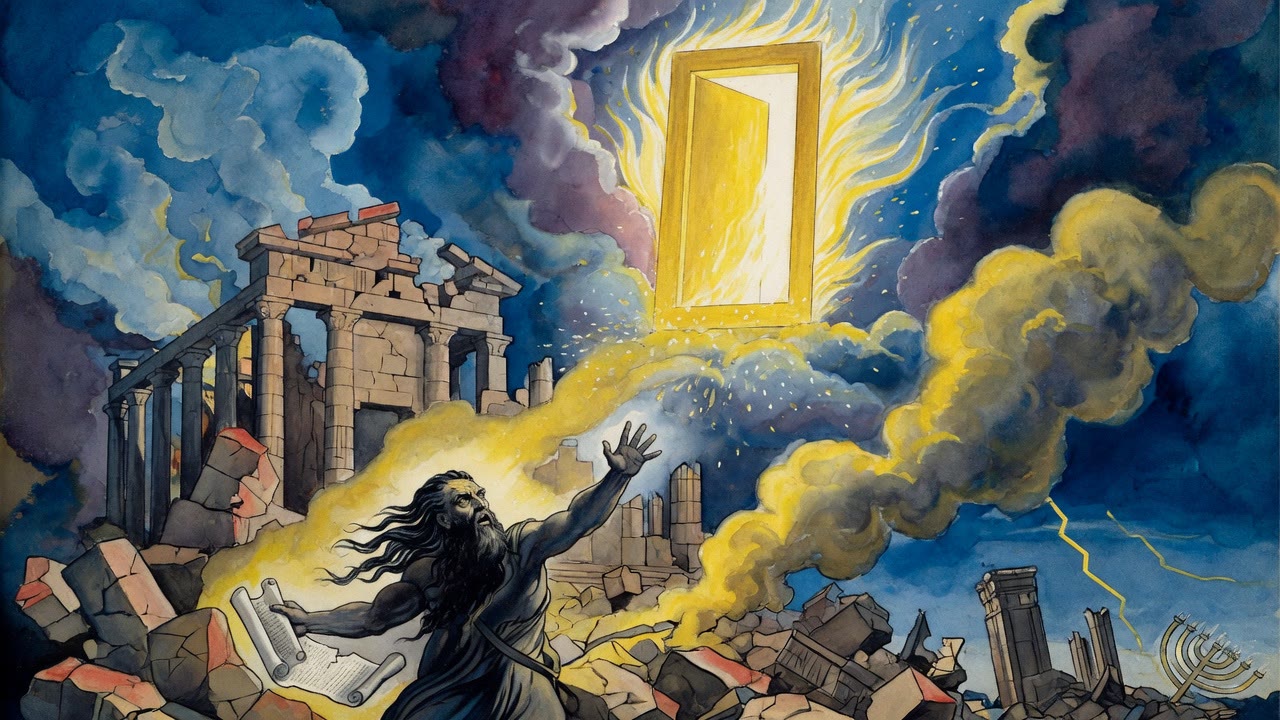
Then the House crumbled. Dust took the courts. Stones that had been cut for holiness fell into ordinary rubble. Jacob's sleeping body tightened on the ground. The dream was not finished. The House rose again, against the sky, as if ruin had been a stage and not an ending.

A Secret God Had Carried Alone

Before any king lifted a hammer, the Temple lived in God's knowledge as a thing that would be built, destroyed, and rebuilt. For a long stretch of time that knowledge stayed with the Holy One alone. At Beth El he shared it with a fugitive who had cheated and been cheated, who was not yet Israel in the full sense of the name.

Jacob woke into dawn with oil in his hand and a stone that had been a pillow and was now a pillar. He did not yet have blueprints. He had a scar of vision. Rise, fall, rise. The ground under him was already future capital and future ruin and future hope, and he marked it because a man who has seen three tenses of one House cannot treat the dirt as ordinary.

David's Pointing Angel

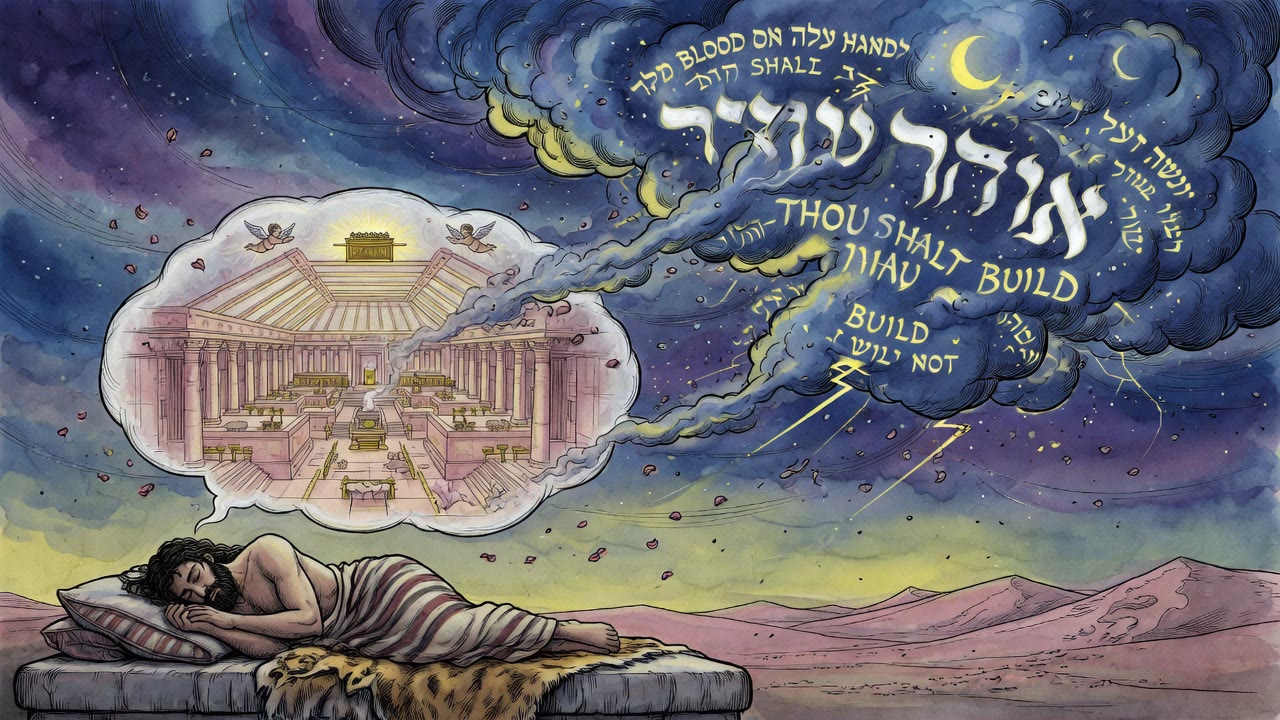
Centuries later David burned to build what Jacob had only seen. He pleaded for the spot of the altar the way a fighter pleads for one clean task after too many unclean ones. An angel stood in Jerusalem and pointed. Here. The place was fixed. The king's joy lasted long enough to taste.

Then the command cut him off. You cannot build the Temple. Too much blood from too many wars clung to his hands. The House wanted peace in its beams, not the residue of campaigns. It was not a sneer at his crown. It was a recognition of what the courts were for. David accepted without a public revolt and turned his hunger into logistics. Gold, silver, copper, cedar, cypress. He stockpiled for a son who had not yet reigned, a warehouse of someone else's mitzvah (a commandment).

Solomon's Lots and One Name

Solomon inherited the stores and the duty. He gathered princes and priests, rich and poor, and cast lots for the walls so that north, south, east, and west would not become private property of a single pride. Shared work for a single Name. For a time the cherubim had a room. For a time offerings rose on schedule. For a time the dream's first panel was stone you could touch.

Josephus, arguing later to a hostile world, would insist there should be one Temple for one God, likeness as the foundation of agreement, one center open in principle to all who seek the One, led by priests who guard law and justice. The architecture was theology you could walk into. Many altars scatter the mind. One House trains the people toward one Lord.

When the People Become Zion

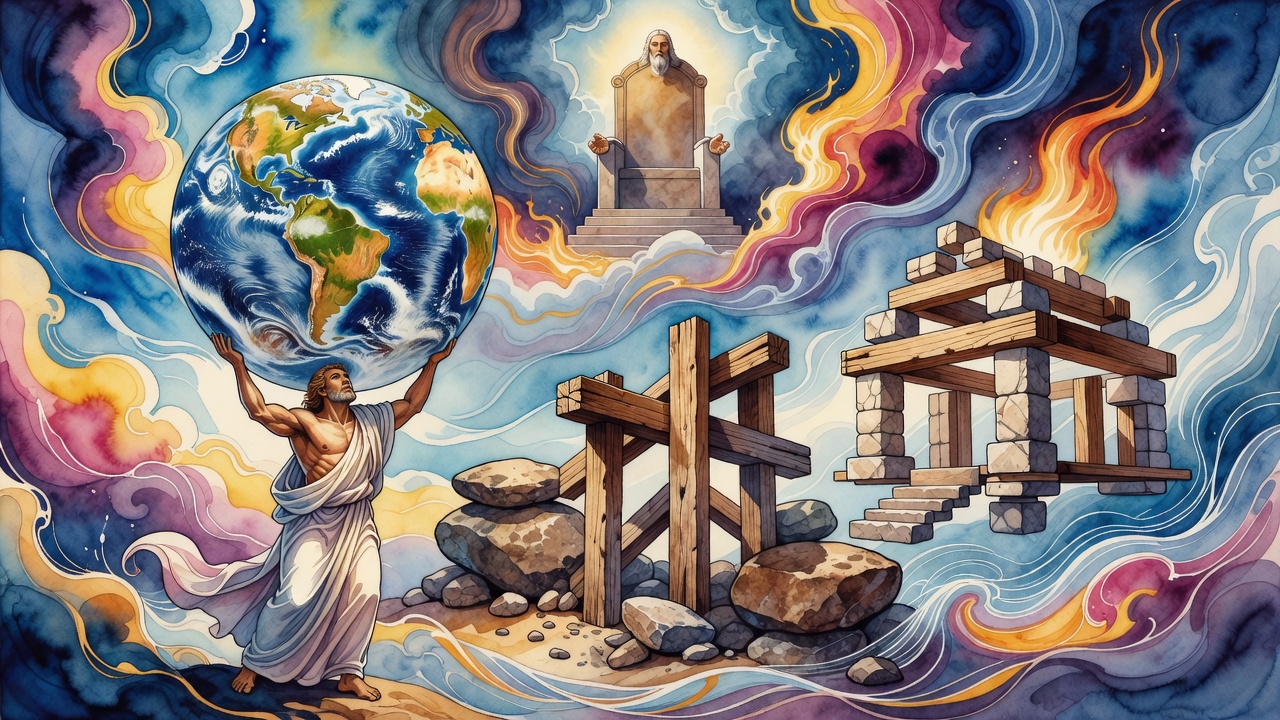
The midrash pushes further than masonry. Shimon the Righteous said the world stands on Torah, service, and acts of loving kindness. At the sea, Israel's song held kindness and Torah, and still the world trembled until the song reached "Your holy habitation," the place of service. Without the House-dimension, even good deeds left the cosmos unfinished.

Isaiah's strange line names Israel itself as Zion. "To say to Zion, You are My people." The sages searched and found no other place where the people receive the city's name so directly. Torah, kindness, and service do not only hold up the world. They turn Israel into Zion when the stones are gone. Jacob's third panel, the rising after the fall, lives also in bodies that keep the three pillars when the courts are ash.

The Dream Still Working

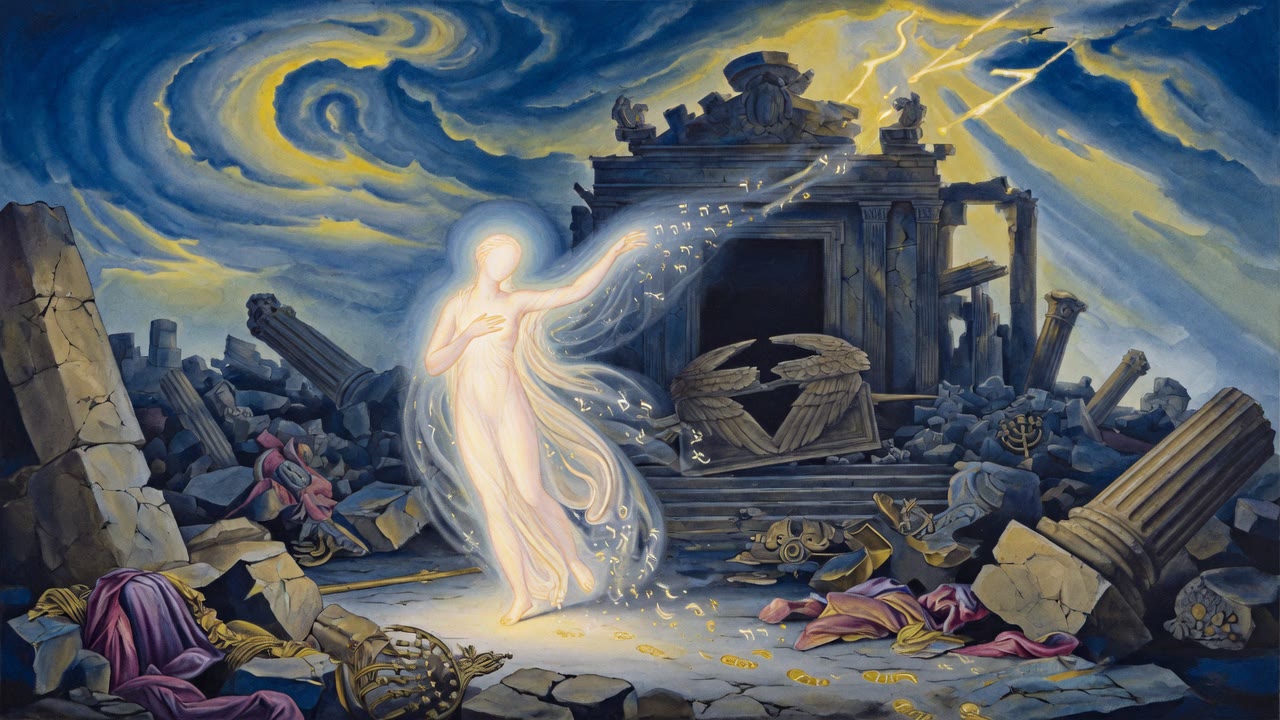
Jacob slept once and saw the whole plot. David gathered timber he would never raise. Solomon built. Empire burned. Exiles carried the Name without the rooms. The Shekhinah (God's indwelling presence) would later walk the empty floor at night. Through all of it the dream at Beth El keeps its three beats. Rise. Fall. Rise.

A man with a stone pillow became the first human witness to a House that outlasts its own walls. He poured oil and went on toward the next trouble of his life, carrying a secret larger than his staff.


← All myths
From the tradition

Sources

3 sources

The texts behind this telling. Some cards carry a translation of the source; others are our own retelling of it, and each card says which. Every card links out to the original.

Tanchuma, Vayakhel 7Midrash Tanchuma

Translation of the source text.Midrash Tanchuma -- Torat Emet · Public Domain

Rabbi Natan says: Beloved is the work of the Ark, like the Throne of Glory above, as it is said: "The place for You to dwell in, You have made, O LORD; the Sanctuary," and so forth (Exodus 15:17). For the Sanctuary above is set directly opposite the Temple below, and the Ark is set directly opposite the Throne of Glory above, as it is said: "A throne of glory, exalted from the first" (Jeremiah 17:12). And in what place was the site of our Sanctuary? This is the meaning of "You have made, O LORD; the Sanctuary, O Lord, which Your hands have established" (Exodus 15:17). Do not read "the place" [makhon] but rather "set directly opposite" [mekhuvan] the Throne of Glory; it is made above it, for they are atonement.

He made above it a cover, for the seraphim stand above it. And he made on it two cherubim, which are beloved to Him, corresponding to heaven and earth, in which was the dwelling of the Holy One, blessed be He, as it is said: "And I will speak with you there from above the cover, from between the two cherubim which are upon the Ark of the Testimony" (Exodus 25:22).

See how beloved the Ark is, for the whole Tabernacle was made only for the sake of the Ark, in which the Divine Presence dwelt. And all the miracles that were performed for Israel were performed by the Ark, because the Divine Presence was within it.

Full source
Yalkut Shimoni on Torah 251:7Yalkut Shimoni on Torah

Translation of the source text.Torat Emet (Yalkut Shimoni) + Sefaria Community Translation · CC-BY-NC

There we learned: Shimon the Righteous was among the last members of the Great Assembly. He would say: On three things the world stands: on Torah, on the service, and on acts of loving kindness. Rav Huna said in the name of Rabbi Aha: Those who crossed the sea explained it. "You guided them in Your kindness" (Exodus 15:13) - this is acts of loving kindness. "You led them in Your strength" - this is Torah. Still the world was tottering. And when was it established? When they came "to Your holy habitation" - this is the service.

Rabbi Yehoshua of Sikhnin said in the name of Rabbi Levi: "And I placed My words in your mouth" (Isaiah 51:16) - this is Torah. "And in the shadow of My hand I covered you" - this is acts of loving kindness. This teaches that anyone who occupies himself with Torah and with acts of loving kindness merits to take shelter in the shadow of the Holy One, blessed be He. This is what is written (Psalms 36:8), "How precious is Your kindness, O God, and the children of man take refuge in the shadow of Your wings." "To plant the heavens and to found the earth" - these are the offerings. "And to say to Zion: You are My people" (Isaiah 51:16). Rabbi Huna bar Pappa said: We searched through all Scripture and found no place where Israel is called Zion. And where did we find it? Here: "And to say to Zion: You are My people."

Full source
Against Apion 23:1Against Apion

Retold in our words. Read the original at the link below.Against Apion, trans. William Whiston · Public Domain

Josephus, in his work Against Apion, gives us a glimpse into the Jewish understanding of this concept, and it’s surprisingly profound.

Josephus argues that there should be one central temple for the worship of one God. Why? Because, as he puts it, "likeness is the constant foundation of agreement.” The idea is that a single, unified place of worship reflects the singular, unified nature of God. This temple should be open to all people, because God is the God of all people. Sounds pretty inclusive. And who should lead the worship? According to Josephus, it’s the high priests, with the firstborn among them as their perpetual leader. His role isn't just ceremonial; it's also about ensuring the laws are observed, settling disputes, and punishing injustice. This leader’s authority is paramount; to defy him is akin to defying God Himself. Quite the responsibility!

What about the sacrifices? Josephus is very clear on this: they aren't about gluttony or drunkenness. It's not about indulging in excess, which goes against God's will. Instead, it's about maintaining sobriety, order, and readiness to fulfill our daily obligations. We should be more temperate than others, setting a high standard.

Here’s a fascinating point. When we offer sacrifices, we should first pray for the common welfare of everyone, and then for our own needs. Why? Because, as Josephus emphasizes, "we are made for fellowship one with another." Placing the common good before our personal desires makes us more acceptable to God. It's a beautiful reminder of our interconnectedness.

Our prayers should be humble. We shouldn’t be begging God for good things, because He has already given them freely to everyone. Instead, we should pray that we may be worthy to receive these blessings and that we can preserve them once we have them. It's a shift in perspective from asking to being grateful and responsible. It reminds me a little of the Amidah, the central prayer in Jewish worship, where we express gratitude for God's gifts.

Josephus also touches upon the concept of purification. The law prescribes various purifications after events like attending a funeral, experiencing nocturnal emissions, or being intimate with one's wife. These rituals, though perhaps strange to modern ears, highlight the importance of ritual purity in ancient Jewish practice.

It's interesting to note that while the Temple in Jerusalem was the central place for sacrifices, Solomon's prayer at its dedication, as described in 1 Kings 8 and 2 Chronicles 6, focuses on prayer rather than the sacrifices themselves. This emphasizes the significance of prayer in Jewish worship, a concept echoed in phrases like "the sacrifice of prayer, the sacrifice of praise, the sacrifice of thanksgiving," as noted in the text [22].

So, what's the takeaway here? Josephus paints a picture of a religion centered on a singular, universal God, emphasizing communal responsibility, personal temperance, and the importance of both ritual and prayer. It's a vision of a society striving for righteousness and unity, guided by divine law and a commitment to the common good. And it's a vision that, thousands of years later, still resonates with many of us today. How can we apply these ancient principles to our modern lives?

Full source