Abraham Asked God for the Temple as Throne
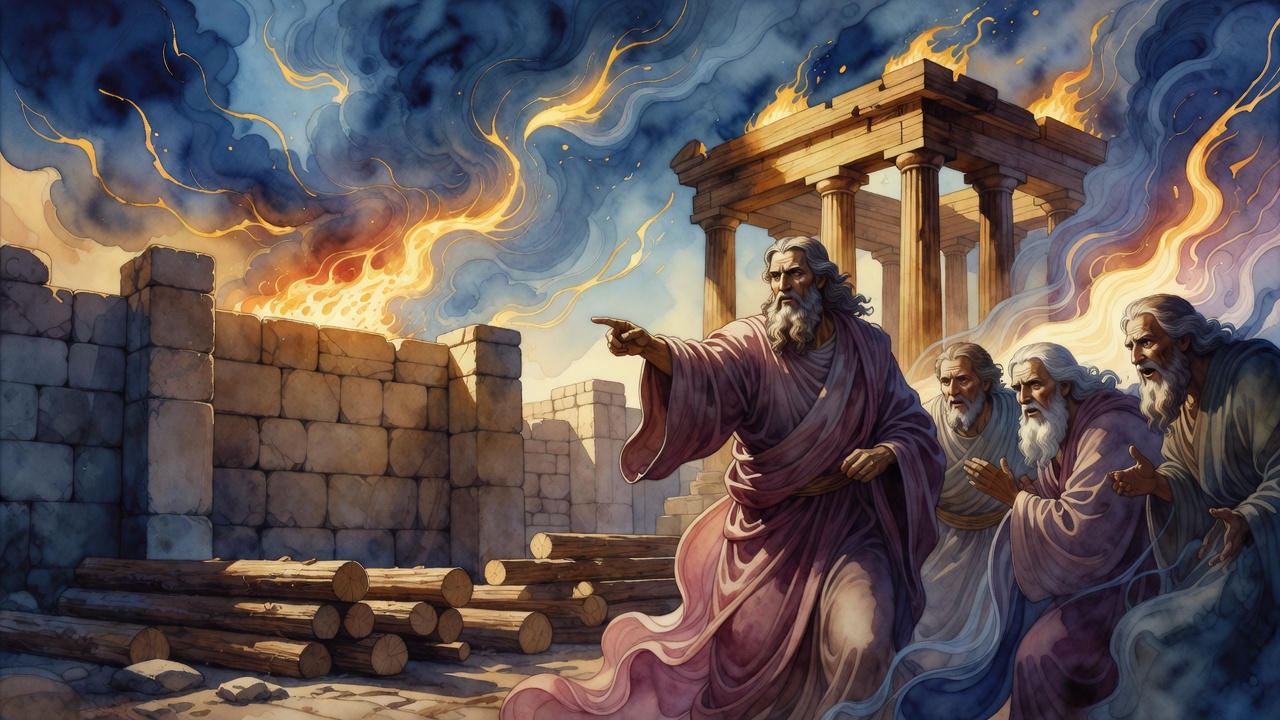
Abraham held the world and still asked for the Temple. Jacob's pillow stones became beams. Solomon's house built itself.
Table of Contents
A king loved his son and entrusted him with every possession. The son still felt a void. "If you truly love me," he said, "if you want everyone to know the depth of your affection, you must give me your throne." Property is not the seat of power. The throne is.
 Click for full size
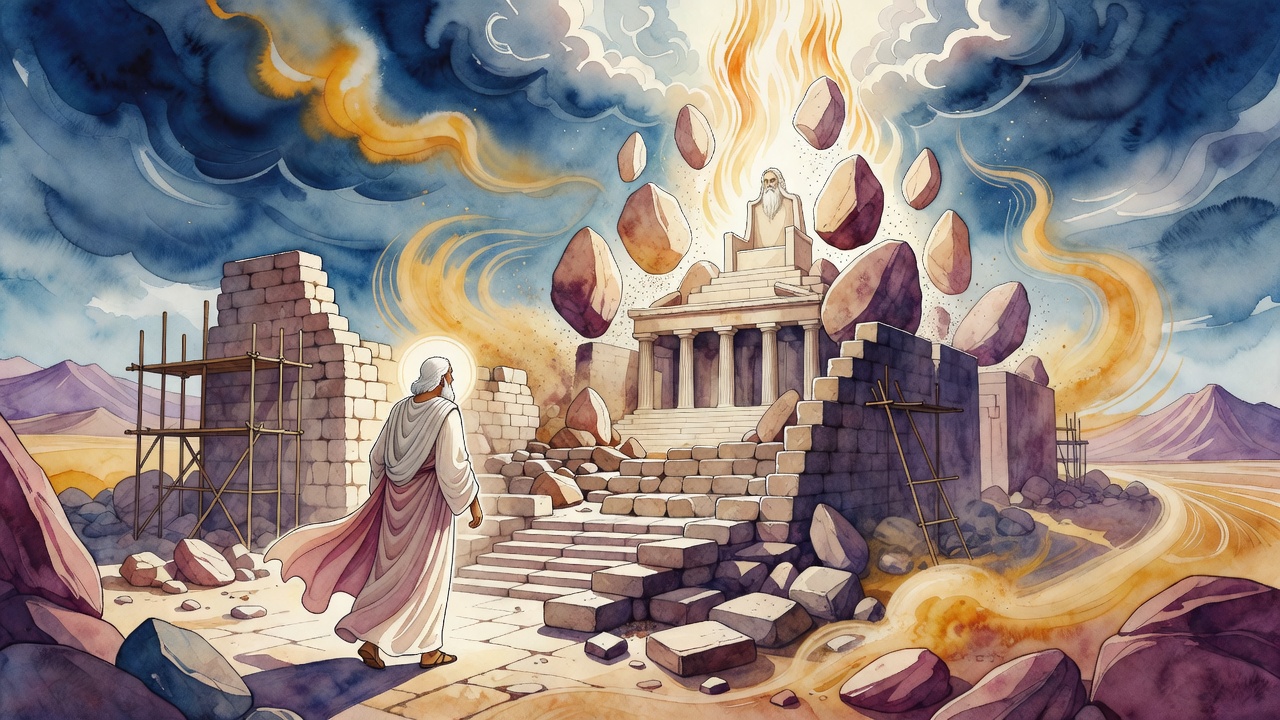
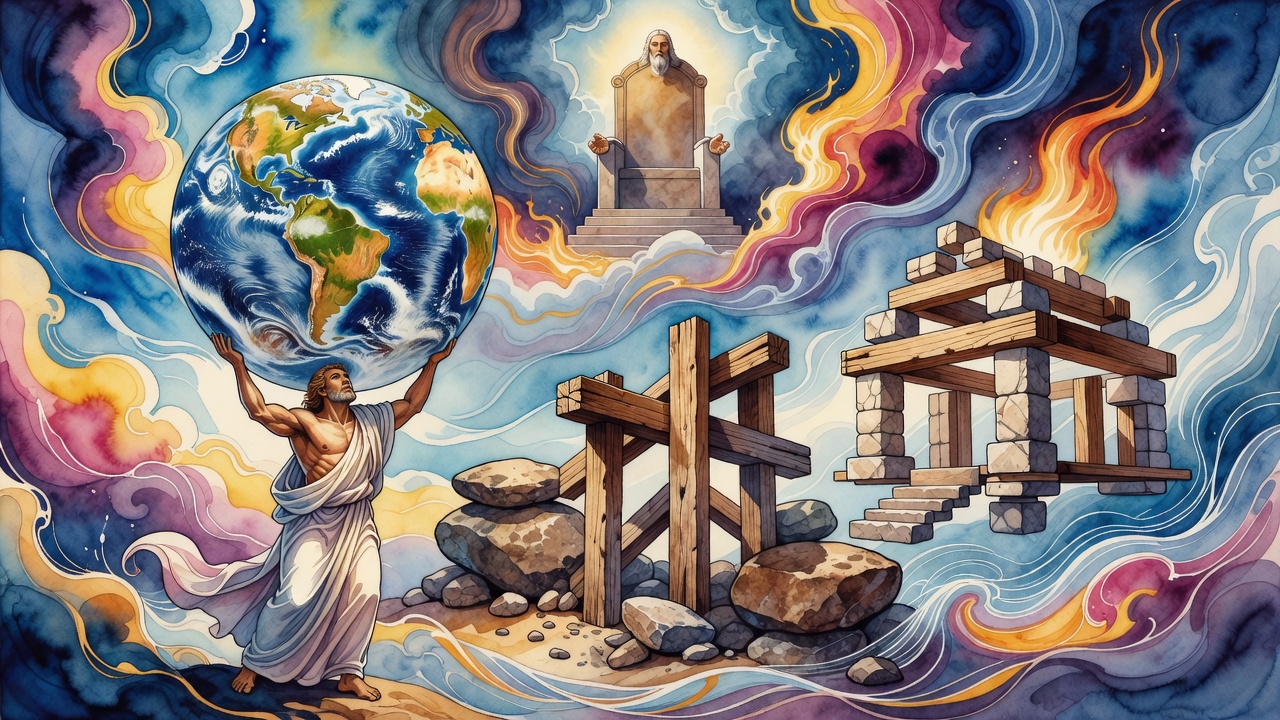
So the rabbis cast Abraham before God. The Holy One had already shared plans with him. "Will I conceal something from Abraham?" (Genesis 18:17). Dominion sat in his hands. Still Abraham pressed for the one portion that would prove the bond: the Temple Mount, five hundred cubits by five hundred, the place where heaven and earth lean toward each other.
One Portion More
"If You have not given me the Temple, You have not truly given me anything." The boldness is not greed. It is hunger for a fixed meeting place. God grants the request. "I have given you one portion more than your brothers" (Genesis 48:22) is read as the mountain itself. Abraham hears and exults: "God spoke in His holiness, I exulted!" (Psalms 60:8).
Love that shares goods but withholds the sacred seat still feels incomplete. Abraham asked for the throne of presence, not another field of flocks. The world without a house for the Presence is a gift missing its center. He wanted the square of land where sacrifice and prayer would climb on a schedule older than any single tent.
Stones That Softened Under Jacob
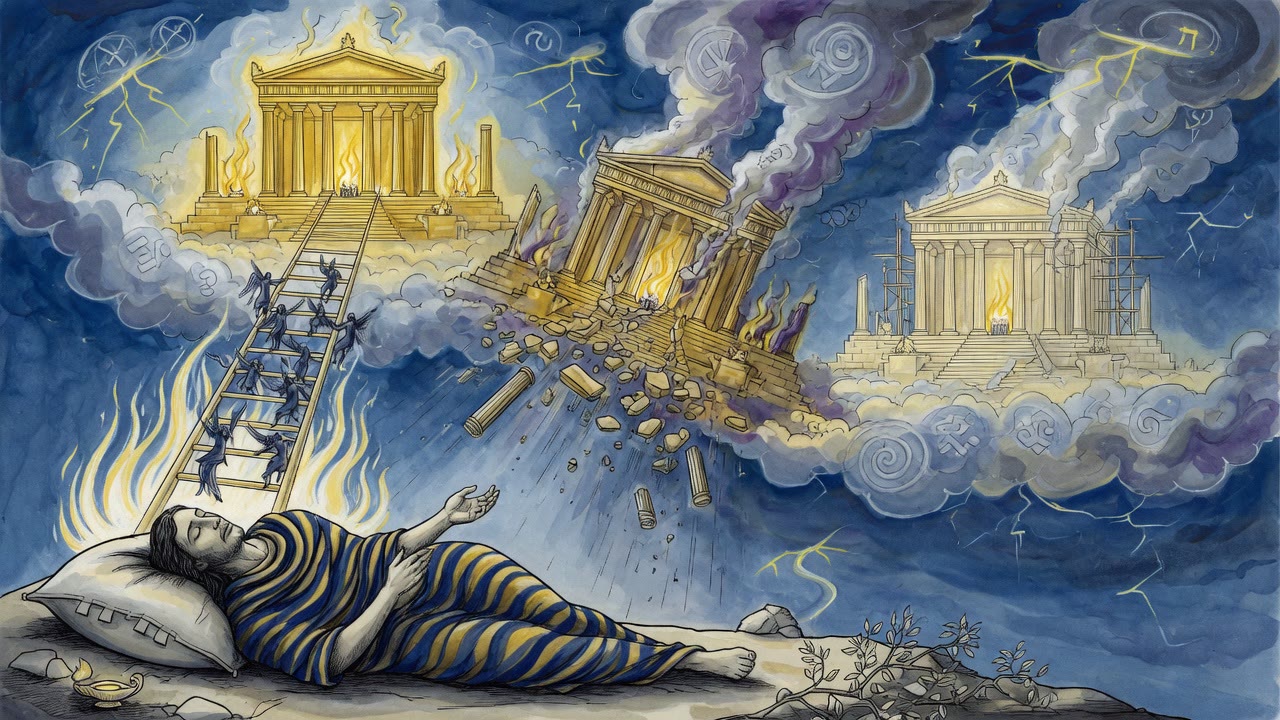
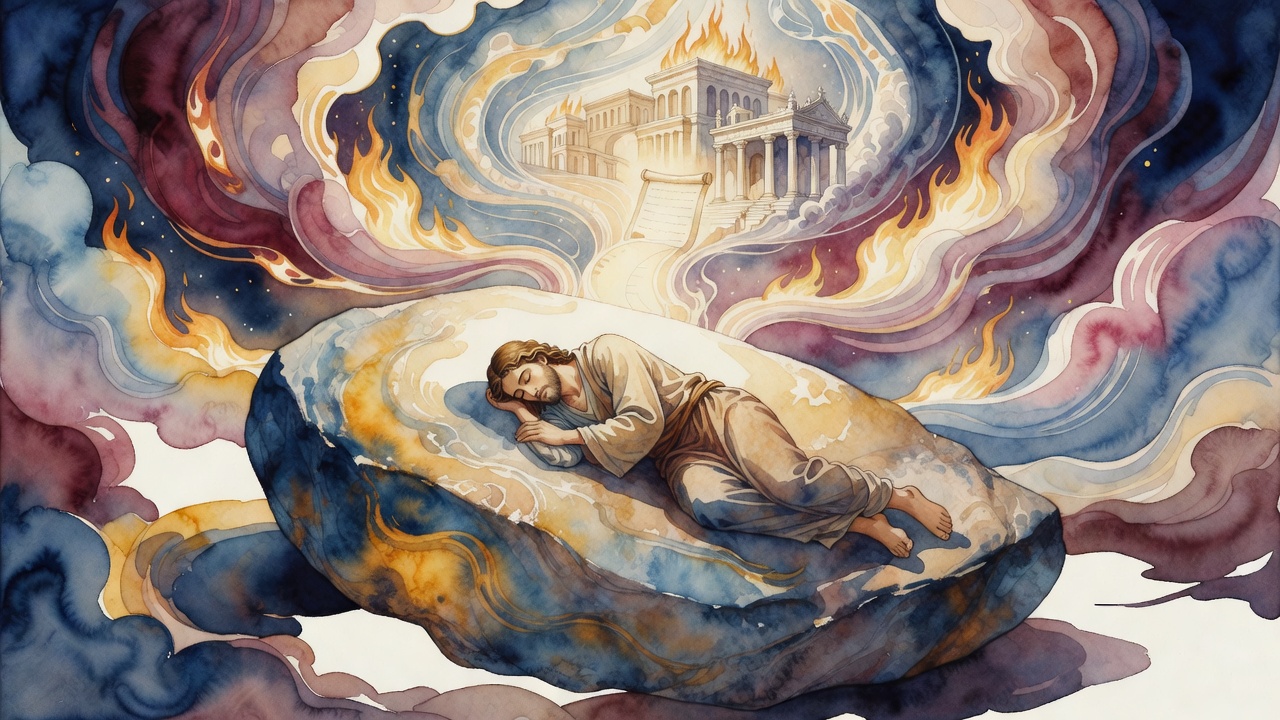
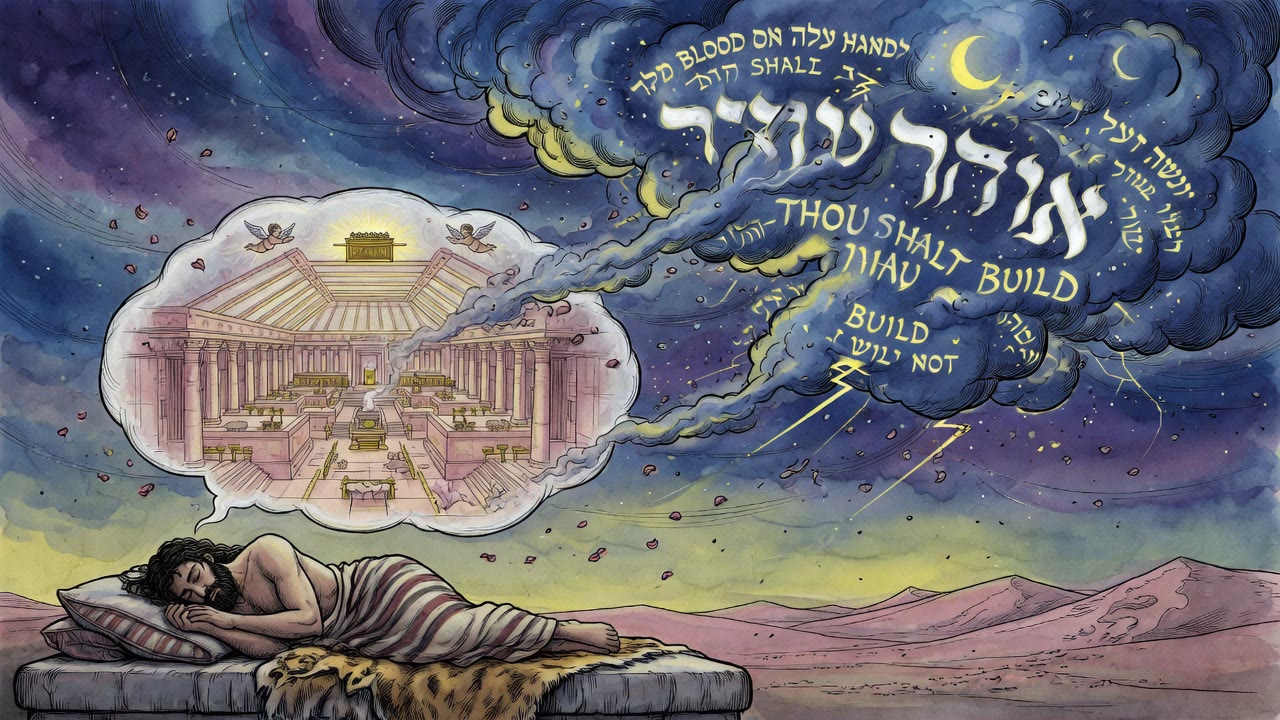
Generations later Jacob fled Esau and laid his head on a pile of stones. In the dream a ladder rose. The stones under him softened like a bed and duvet. From that spot, Rabbi Menachama taught in the name of Rabbi Berekhya, grew the beams of houses: "The beams of our houses are cedars, and our panels are cypresses" (Song of Songs 1:17).
Those stones became foundation for Solomon's Temple. The pillow of a fugitive turned into cedar and cypress for the house of God. Another reading hears the cedars as the righteous who descend from Jacob, living beams that hold a people upright. The dream does not stay a dream. It hardens into architecture and lineage. A night on hard rock becomes the understory of a holy house.
A House That Built Itself
Solomon was diligent in the labor of the Temple. He built it in seven years. His own palace took thirteen. The contrast bites. Was the king more careful with his comfort than with God's house?
Huna, quoting Rav Yosef, answers that for his palace Solomon could be sluggish, but for the Temple everyone lends a hand to the King of kings. Spirits, demons, and ministering angels would have hurried to assist. The verse says the House "in its construction" was built, nivna, as if it built itself. Stones lifted themselves into place.
Do not be astonished, said Rav. A stone flew to seal the lions' den for Daniel in a land without such rock. If heaven moves stone for the righteous, it moves stone for the Temple. When sages once considered stripping Solomon of his portion in the World to Come, a Divine Voice cut in: "Do not touch My anointed ones" (Psalms 105:15). The spirit that wrote Proverbs, Song of Songs, and Ecclesiastes still rested on him. Human delay on a palace does not cancel divine haste on a sanctuary.
From Throne-Ask to Standing Stone
Abraham asked for the seat. Jacob slept on the future beams. Solomon watched the house rise faster than pride could claim. The Temple is not only a building Abraham wanted. It is a chain of asks, dreams, and miracles that refuse to let the bond stay abstract.
Five hundred cubits by five hundred begins as a son's demand for the father's throne. It continues as a pillow that softens. It finishes as stone that climbs without a scaffold of doubt. The measure of love is not how much land changes hands. It is whether the Presence has an address the son can name.
What the Mountain Still Holds
Every later exile that faces that mountain faces Abraham's request still hanging in the air. Give me the place where You meet us, or the world You already gave feels unfinished. Jacob's stones still underwrite the claim. Solomon's self-building house still answers that human hands alone never complete the seat.
The king who shared everything learned to share the throne. The fugitive who slept on rock learned rock can love him back. The builder who finished in seven years learned that seven years can still be a miracle. Between them the mountain keeps the original ask: not more property, but the seat where love becomes a house.
The son who held the world still pointed at a square of mountain and called it the real gift. That pointing runs through Jacob's softened stones and Solomon's self-lifting walls. The throne was never only wood or gold. It was the claim that love without a meeting place is not yet finished speaking.
← All myths