5 min read

Cyrus Set Timber Where Fire Could Reach the Temple

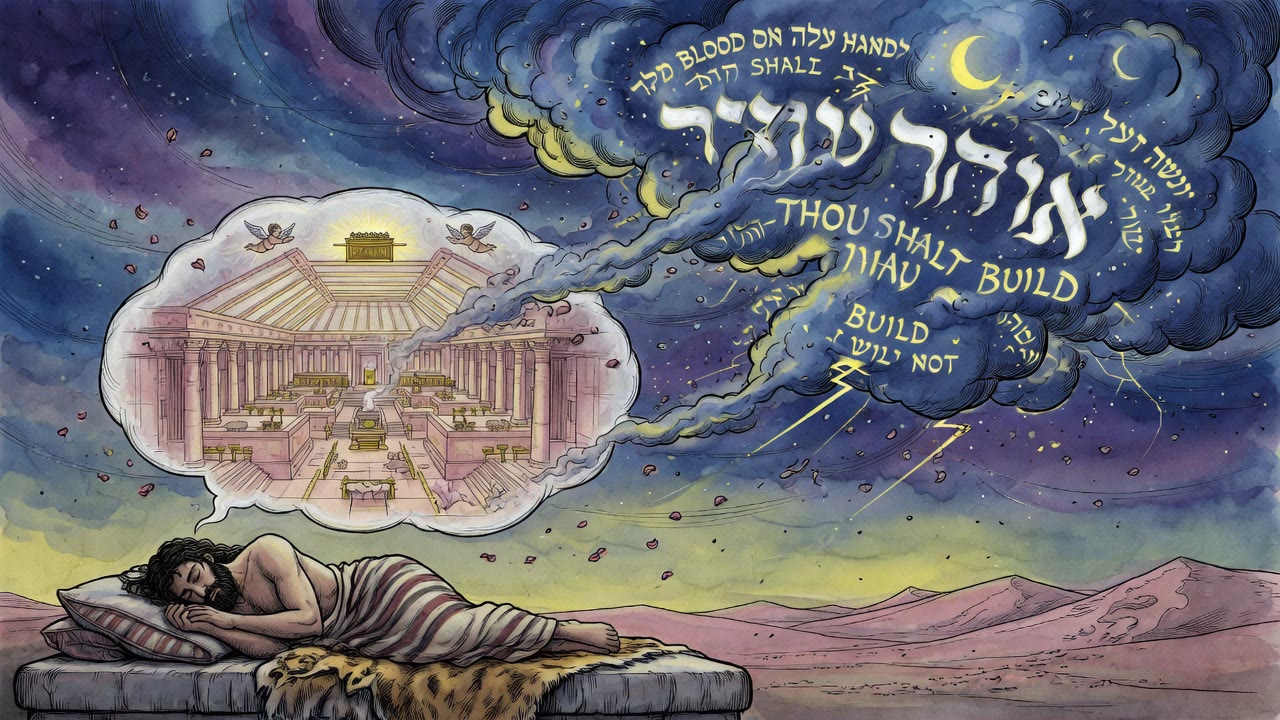
Cyrus funded Jerusalem's house and ordered wood set low in the walls. Solomon had set cedar high. The sages heard a king planning for a future fire.

Curated by Arthur · Told by Maggid ·
Table of Contents
  1. Years Counted Like Israel's
  2. Wood High and Wood Low
  3. Blessing on the Bread, Plague Off the Land
  4. Offerings That Bring Near

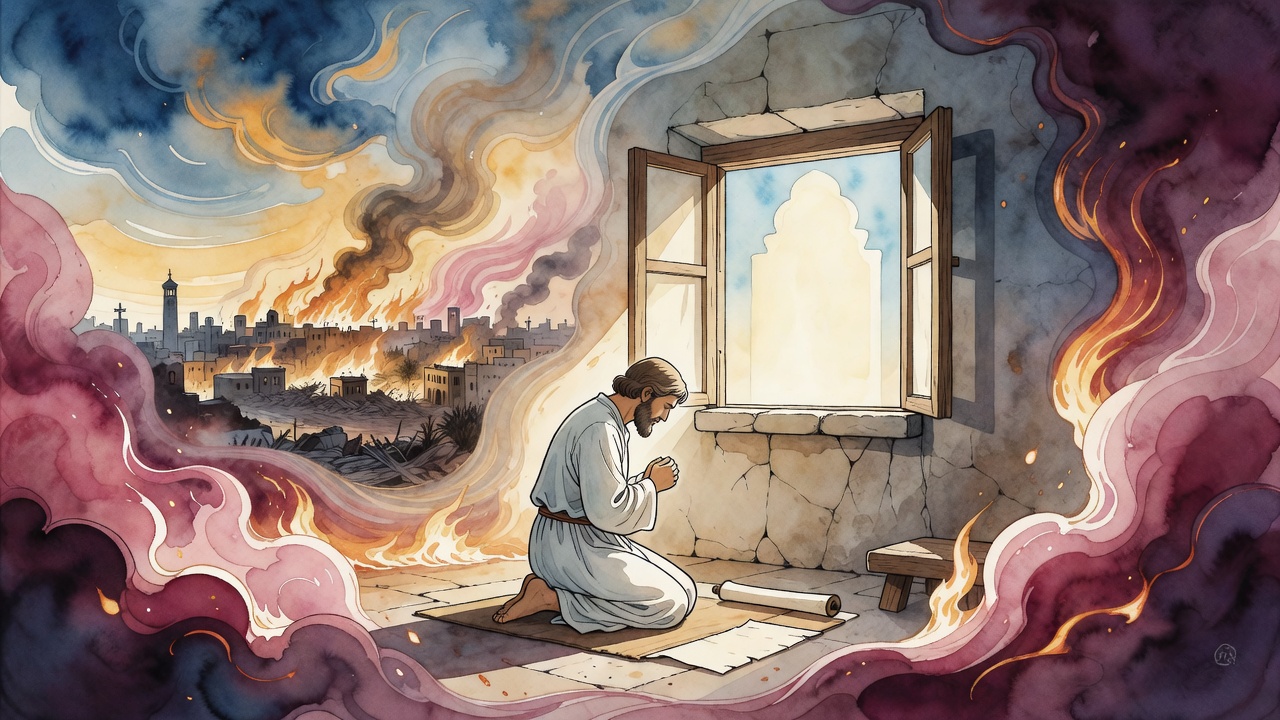
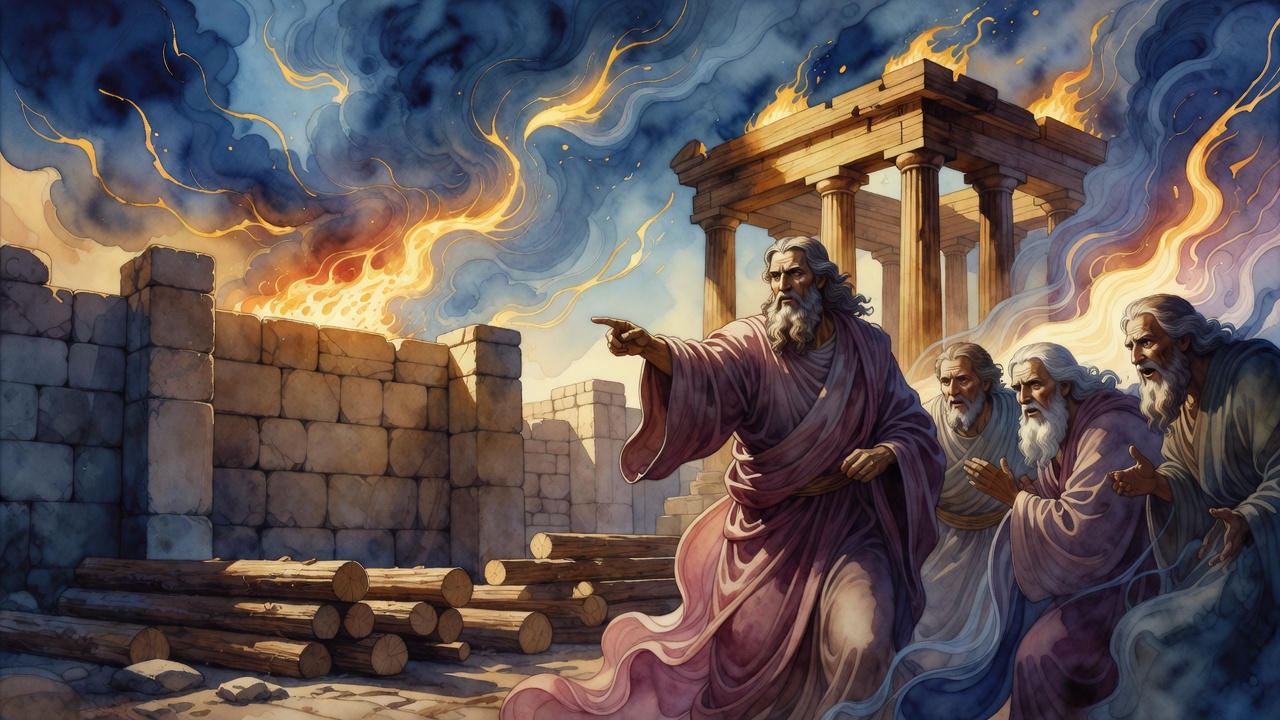
Cyrus signed the orders that would raise a house for the God of heaven in Jerusalem. Bullocks, rams, lambs, wheat, salt, wine, oil, whatever the priests needed, day by day without fail. Couriers carried the generosity west. Builders lifted stone. Then the king ordered timber set into the courses of the wall, low enough that a torch could find it.
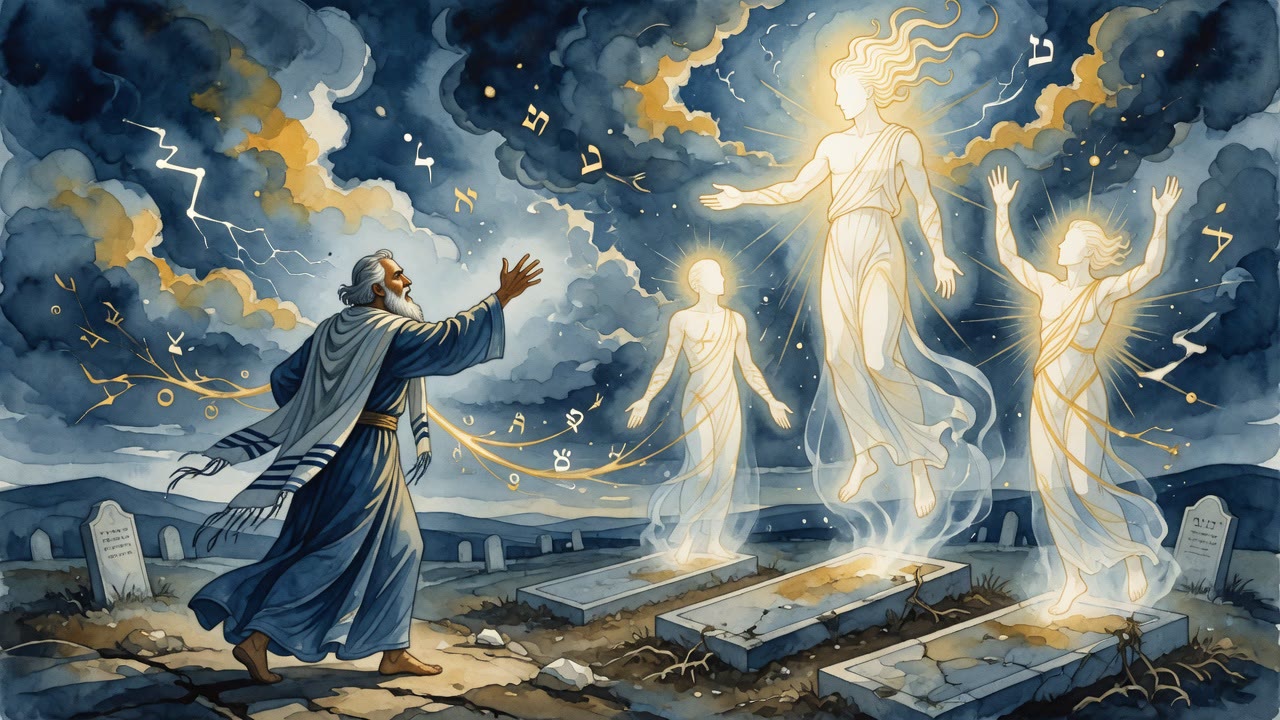
Cyrus Set Timber Where Fire Could Reach the Temple Click for full size

The gift came with a hinge.

Years Counted Like Israel's

Rabbi Abahu said Cyrus was a worthy king, so his royal years were counted the way Israel's kings were counted, beginning from Nisan. The compliment did not last the whole debate. Passages clashed. One stretch of history seemed to honor him. Another seemed to mark a fall. The academy sorted the years into before and after, as if a foreign king could cross an invisible line from ally to threat while still funding sacrifices.

Rabbi Cahana protested. How can we call him wicked when he ordered daily offerings and supplies without fail? Rabbi Isaac answered from the same decree. The animals were to rise as a sweet savor, and the priests were to pray for the life of the king and his sons. The generosity had a return address. It was piety with a petition attached.

An Israelite who gives charity so that a son may live is still called righteous. The academy was less sure about an idolater whose gifts always circled back to his own crown.

Wood High and Wood Low

Then came the timber. Cyrus ordered three rows of great stones and a row of new wood. Solomon had also set hewn stone with a row of cedar. The difference, the sages said, was height and intention. Solomon set the wood high, where fire could not easily feed. Cyrus set it low, where flame could climb. Solomon tucked wood inside. Cyrus left a path for arson if Israel ever rebelled.

The Temple rose with a secret exit for empire. Every beam low in the wall was a contingency plan. Bless the God of heaven. Keep a fuse in the architecture.

A house built that way is never only a house of prayer. It is also a hostage.

Blessing on the Bread, Plague Off the Land

Service before the Lord, the Targum hears in Exodus, brings blessing on food and drink and lifts the bitter plague from among the people. The promise is not only more grain. It is grain that nourishes. A full table without blessing can still starve a household. A blessed morsel can steady a camp.

Cyrus understood that worshippers need animals and oil. He did not understand, or would not accept, a service that refused to pray first for the emperor. The covenant's health runs through obedience and presence, not through foreign insurance policies written in cedar.

When Israel serves, the land's bitterness loosens. When a king funds service to keep a nation tame, the wood remembers who paid for it.

Offerings That Bring Near

Peace offerings once filled the courts with smoke that meant nearness, not merely menu. The people brought what they brought, and the Holy One's pleasure was not a tax receipt. Cyrus's schedule of daily animals looked devout on parchment. The low timber told another midrash of the heart. He wanted prayers for his sons more than he wanted a house that could outlast his fear.

Solomon's cedar, set high, trusted the building to stand under judgment that did not come from a Persian torch. Cyrus's wood, set low, trusted the empire's future more than the God of heaven he claimed to honor.

The house was finished in the days of Darius. The argument about Cyrus's worth never quite finished. Some years still count him among the worthy. Other years smell smoke in the blueprints.

Builders in Jerusalem may never have read the king's private thought. They set stone on stone and thanked heaven for Persian silver. Deep in the courses, the new timber waited like a sentence with a blank date. Solomon's older cedar, set high, had trusted the house to face judgment without a built-in torch path. Cyrus's low wood trusted empire more than prayer.

In the academy the argument ran hot. Was a gift still a gift if the giver demanded prayers for his own sons? Was a builder of the Temple wicked if he also drafted its arson plan? The questions did not cancel the animals he sent. They smelled the smoke in the kindness. A people returned from exile learned again that foreign favor can raise walls and still keep a match in its sleeve.

Years later, when politics shifted, anyone who remembered the low timber understood the architecture of conditional mercy. A Temple can be funded by a hand that still plans how to burn it.


← All myths
From the tradition

Sources

3 sources

The texts behind this telling. Some cards carry a translation of the source; others are our own retelling of it, and each card says which. Every card links out to the original.

Ein Yaakov, Rosh Hashanah 1:3Ein Yaakov, Rosh Hashanah

Retold in our words. Read the original at the link below.En Jacob, Agada of the Babylonian Talmud, S. H. Glick (1916-1921) · Public Domain

(2) (Fol. 3b) R. Abahu said: "Cyrus was a worthy king, and therefore were his royal years counted in accordance with those of the kings of Israel [beginning with Nissan]." R. Joseph raised the following question: If this be so, the passages would contradict each other, for it is written (Ezra 6, 15) And this house was finished on the third day of the month Adar, which was in the sixth year of the reign of Darius the king, etc. This is not difficult to explain; one passage refers to the time prior to his becoming wicked, and the other refers to the time after he had become wicked. R. Cahana raised the following objection: 'How can we assume that Cyrus became wicked? Behold (Fol. 4), it is written (Ib. ib., 9), And that which they have need of both young bullocks, and rams, and lambs, for burnt-offerings to the God of heaven, wheat, salt, wine and oil, according to the word of the priests that are at Jerusalem, let it be given them day by day without fail." Whereupon R. Isaac said to him: "Rabbi, I shall borrow from your own argument; [i.e., I will prove the contrary, from the very passage on which you base your inference]. That they may offer sacrifices of sweet savour unto the God of heaven, and pray for the life of the king, and of his sons, hence he did it for his own benefit." But do you mean to say that if one acts in this way, it is not considered proper? Behold, we are taught in a Baraitha, that if one says: "This dollar shall go for charity in order that my son shall remain alive, or that I shall merit the reward of the future world," he is considered perfectly righteous. This is not difficult to explain. The latter deals with an Israelite, and the former with an idolator. And if you please, I will say that although there is no difference between an Israelite and a nonIsraelite, it can be proved from the following passage that Cyrus became wicked (Ib. ib., 4) With three rows of great stones, and a row of new timber, etc. For what purpose did he order it to be constructed in this way; viz., with timber? Was it not for the purpose that he entertained the thought: In case Israel will rebel against me, I shall put the Temple on fire. But has it not so been done also by Solomon? Behold, it is written (I Kings 6, 36) Of three rows of hewn stone and one row of cedar beams! Solomon inserted the wood in the upper part, where it could not be affected; but Cyrus set it in the lower part, which could he put on fire; Solomon also inserted it inside, while Cyrus inserted it outside the wall. And if you please, I say that Solomon covered the wood with cement, hence it became harmless; but Cyrus did not cover it with cement.

Full source
Targum Pseudo-Jonathan on Exodus 23:25Targum Pseudo-Jonathan on Exodus

Retold in our words. Read the original at the link below.The Targum of Jonathan ben Uzziel, trans. J. W. Etheridge, London, 1862 · Public Domain

Targum Pseudo-Jonathan on Exodus (Exodus 23:25) gives a promise that ties worship to health: you shall do service before the Lord our God and He will bless the provision of thy food and thy drinks, and remove the bitter plague from among thee.

The Blessing Is on the Food Before You Eat

Notice the Torah does not promise more food, it promises blessed food. There is a difference between abundance and sustaining nourishment. A full table can still leave you hungry. A blessed morsel can satisfy a multitude. The Torah here is speaking about the second kind of plenty.

The blessing touches the provision of thy food and thy drinks, not only what you grow, but what reaches your mouth. This is the Torah's vision of the covenant reaching into the smallest detail: the water in your cup, the grain in your bowl.

The Bitter Plague Removed

The second promise is the lifting of the bitter plague. The Targum uses sharp language, not merely disease, but something sour and corrosive. The word suggests the slow, bitter illness that eats away at a household from inside.

Divine service, the verse says, pushes this back. A people that prays together has an immune system the medical world cannot measure. Not magic, covenant. The Torah is not promising miraculous exemption from all sickness but a settled presence of divine care that turns even hardship into something the community can bear.

The Takeaway

The Torah links worship to wellbeing. Not as superstition, as architecture. A life oriented to God has room in it for blessing that a life oriented elsewhere cannot accommodate.

Full source
Midrash Tanchuma, Tzav 5Midrash Tanchuma

Retold in our words. Read the original at the link below.Townsend 1989 translation of Midrash Tanhuma, S. Buber Recension · CC-BY

(Lev. 7:11:) “This is the law of the sacrifice for peace offerings." When they offered the sacrifice of the peace offerings, the Holy One, blessed be He, would lift up His face to (favor) them, as stated (in Numb. 6:26), “The Lord lift up His face unto you and grant you peace.” Is it possible for the Holy One, blessed be He, to [favor] mortals? Two verses contradict each other. One text says (in Ezek. 33:11), “Do I desire the death of the wicked?” The other text says (in I Sam. 2:25), “for the Lord took pleasure in slaying them.” How has He not taken pleasure in the death of the wicked? It is simply that before their verdict was sealed, He did not take pleasure; after a verdict was sealed, the Lord took pleasure in slaying them. And so Daniel said (in Dan. 10:21), “However, I will tell you what is inscribed in the record of truth.” Our masters have said, “There was a story about our Holy Rabbi (i.e., about R. Judah the Prince) that when he was passing through Simonia (where he lived), all the people of the city came out to meet him. They wanted an elder from him to teach Torah. He gave them R. Levi ben Sisi. They said to him, ‘Our teacher, what is the meaning of what is written in Daniel (10:21), “However, I will tell you what is inscribed in the record of truth?” Is there something false in the Torah that it [must specifically] say truth [here]?’ [When] he did not find an answer to give them, he immediately went away [from there and came] to Rabbi. He said to him, ‘I could not stand up before them. They asked me one thing, and I could not find out what to answer them.’ He said to him, ‘What was the [one] thing?’ He said to him, ‘”However, I will tell you what is inscribed in the record of truth.” Is there something false in the Torah?’ He said to him, ‘There was a great answer for you to give them.’ He said to him, ‘You had something to tell them: When someone sins, the Holy One, blessed be He, inscribes death for him. [And if] he repents, the record is canceled. [But if] he does not repent, it is inscribed in the record of truth.’” Here also one text says (in Numb. 6:26), “The Lord lift up His face unto you”; while another text says (in Deut. 10:17), “who does not lift up His face.” If He lifts it up, why does He not lift it up? It is simply that for the idolaters, [He is one] “who does not lift up His face,” but for Israel, “The Lord lift up His face unto you.” The Holy One, blessed be He, said, “Just as Israel [favors] me, so do I [favor] them. And how do they [favor] Me? [When] someone poor from Israel has four children, he takes one loaf. They sit down and eat all that loaf, but they are not satisfied from what there is in it, [yet] they recite a blessing. But the verse [only] says (Deut. 8:10), ‘When you shall eat and be full, you shall bless.’ I shall also favor them, [as stated] (in Numb. 6:26), ‘The Lord lift up His face unto you.’” It is therefore stated (in Lev. 7:11), “This is the law of the sacrifice for peace offerings.”

Full source