5 min read

Temple Gates Sank Rather Than Serve Babylon

The gold had gone out on carts by midday. When the soldiers came back with chains for the doors, there was nothing above ground left to tie them to.

Curated by Arthur · Told by Maggid ·
Table of Contents
  1. Nothing Left to Load
  2. The City the Fire Started In
  3. Six Things Not Yet Made
  4. Open for Us the Gate

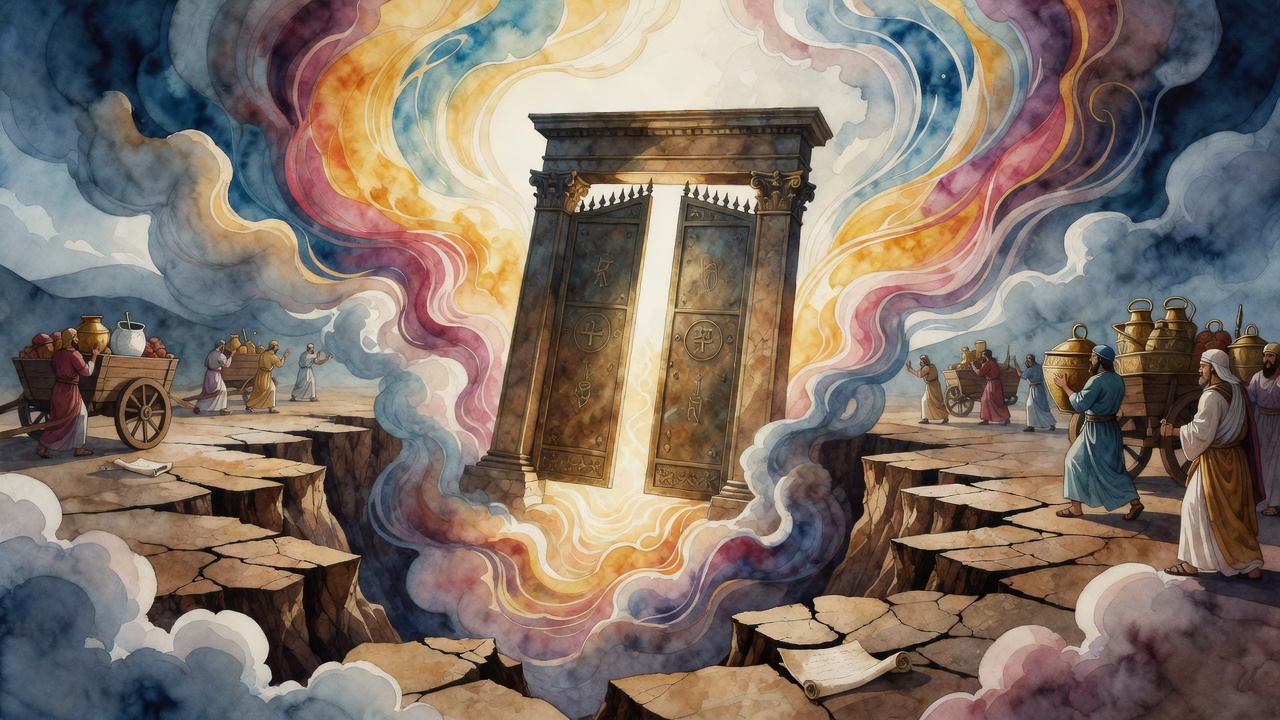
They came back for the doors last. The vessels had gone north at midday, the basins and the fire pans and the lamps roped onto carts under guard, and what was still standing in the smoke of the Temple court were the gates. A Babylonian officer looked up at them and saw the best prize in the city. Timber and bronze, tall enough to hang across a triumphal road at home, doors that every pilgrim in Judea had walked through with a basket on his shoulder.

Temple Gates Sank Rather Than Serve Babylon Click for full size

He sent men with chains.

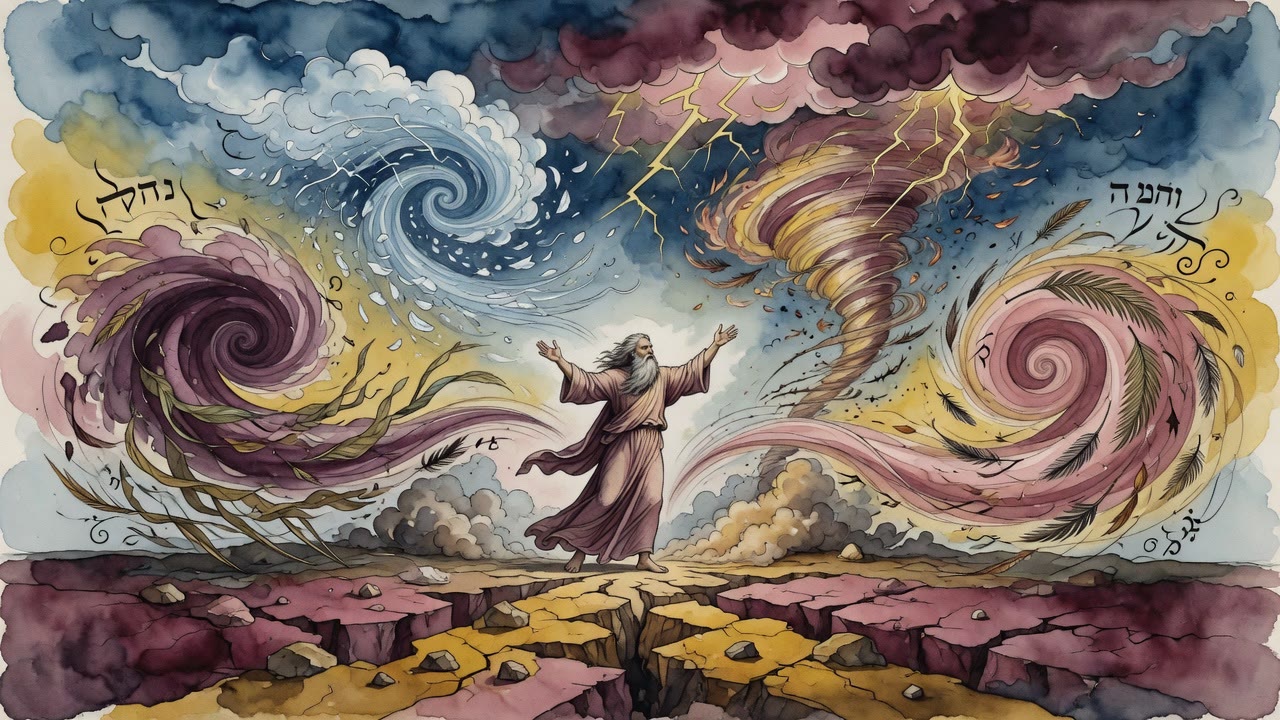
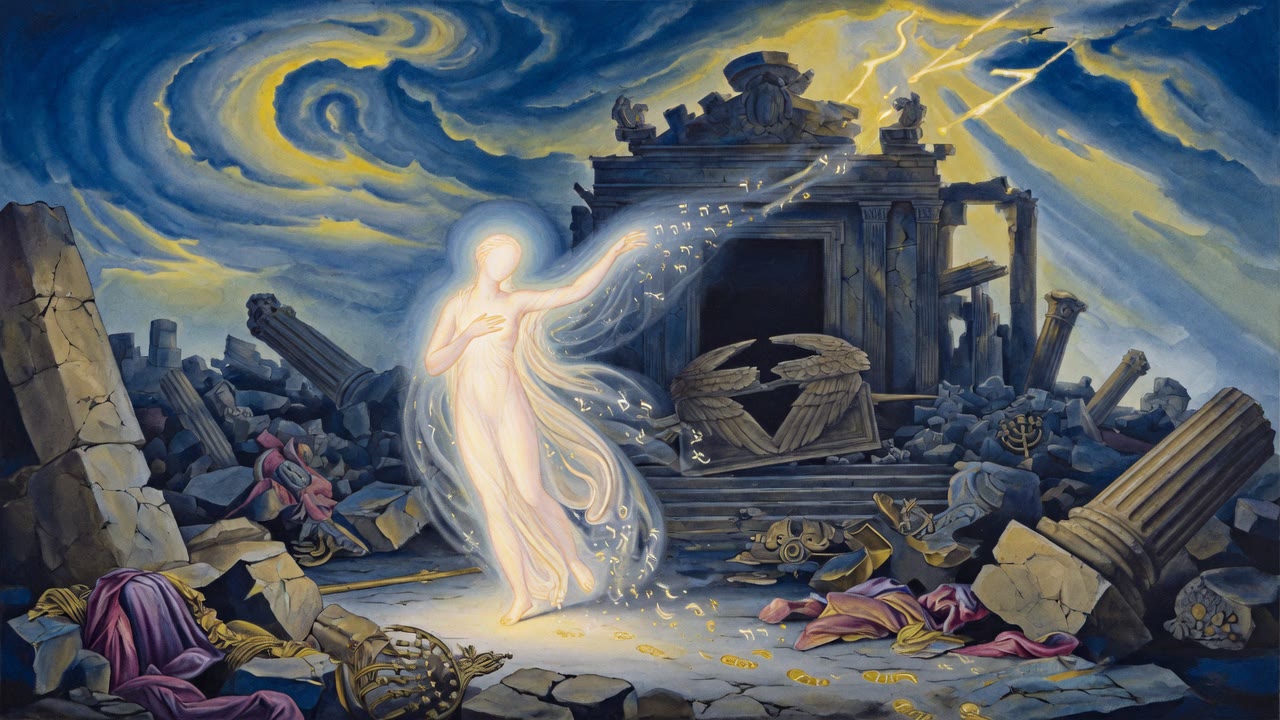
The gates sank. Not thrown down, not levered off their pins. They sank. The posts slid into the paving as though the courtyard had turned to water under them, the bars with them, the hinges after that, until there was nothing above the stone but a seam of loose dirt and the smell of burning cedar drifting off the ruined roof.

Nothing Left to Load

The officer drove a spear butt into the seam and got dirt. He set men digging and they found more dirt, and under that, stone. They dug until the light went and then they stopped, because there is a point at which a soldier decides not to report what he has been doing all afternoon.

Everything else in the House had allowed itself to be carried. The gold had gone. The vessels had gone. Only the doors had refused, and they had refused for the honor of the Holy One, which is a strange reason for a hinge to have. They would not serve a foreign capital, would not stand in one with a general's name painted across them and idols set on either side.

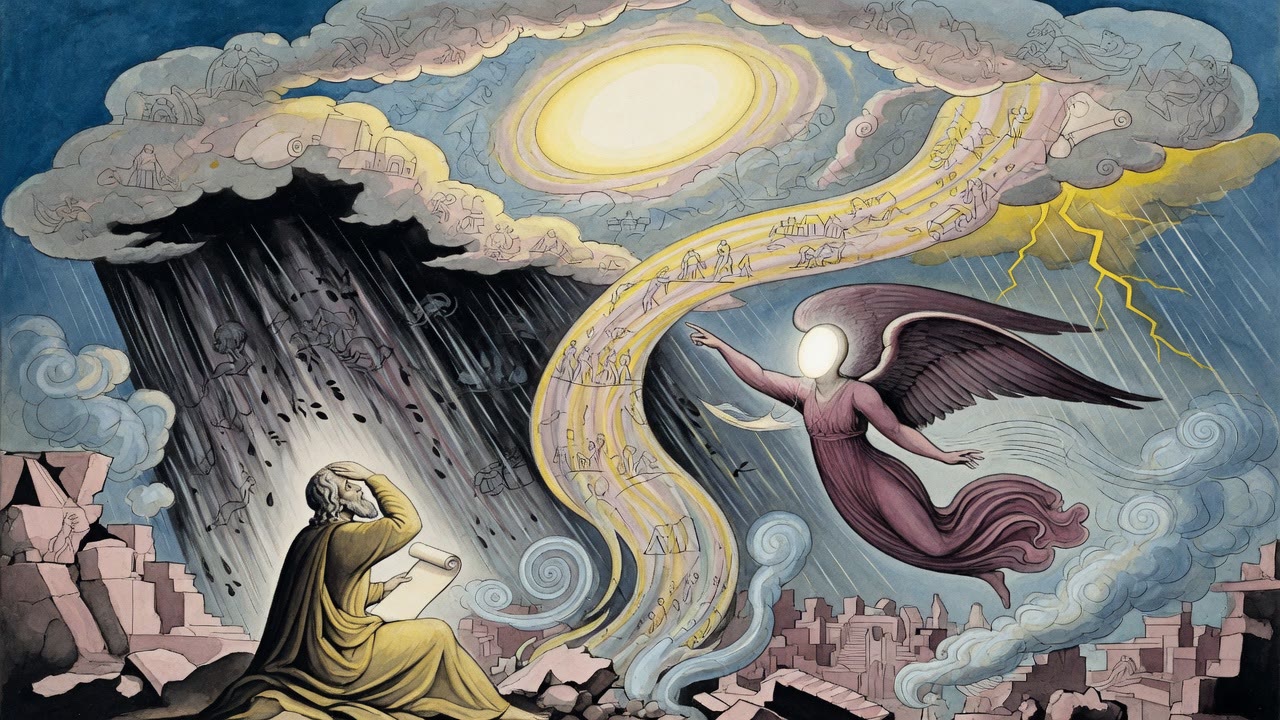
Jeremiah found the line for it while the ash was still warm. Her gates have sunk into the ground. He has ruined and broken her bars. It sounds like the last word in a catalogue of losses. It is also, read a second way, the only object in the city that got to choose.

The City the Fire Started In

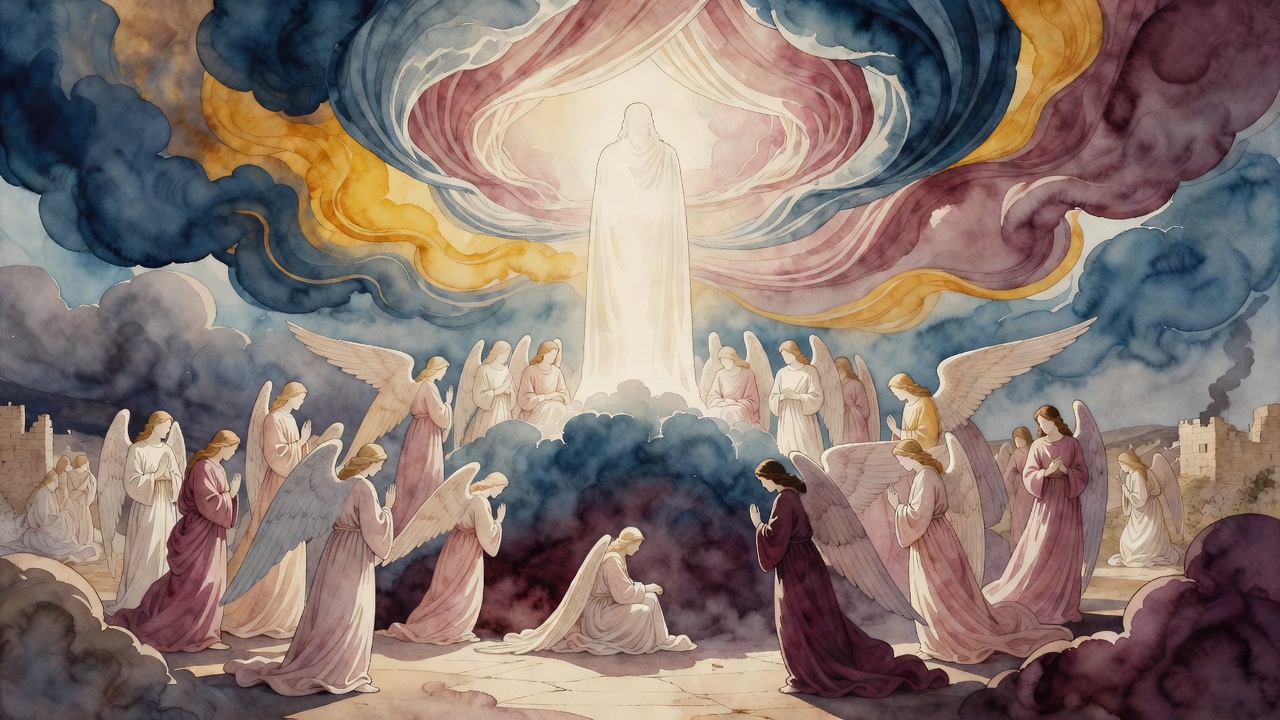
The sons of Korah had sung about that ground for centuries. Great is the Lord and greatly to be praised, they sang, and great in His city, and they meant the city and nothing else. What God had done in Jerusalem he had not done anywhere among the nations. The praise was not portable.

Neither was the reckoning. Jeremiah had already carried the other half of it to anyone who would sit still: the evil begins at the city called by My name, and do you imagine you will go unpunished? You will not. Where the concentration is highest, the accounting starts.

So the fire started in the one place on earth that had been singled out, and the doors of the singled-out House put themselves in the dirt rather than be evidence for the other side.

Six Things Not Yet Made

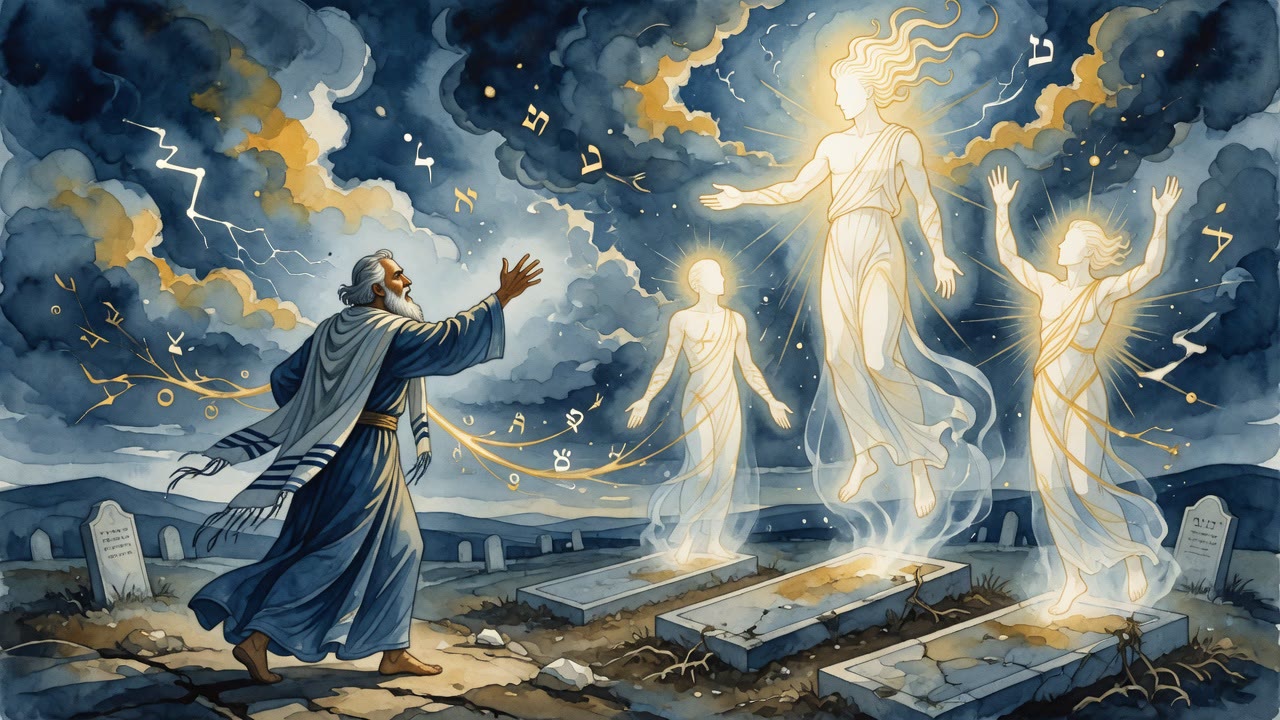
Isaiah had promised more than repairs. New heavens and a new earth, not patched but made. A new heart and a new spirit handed to people who had run out of both. A new name for the Messiah. And a new name for the city, which is the strangest of the six, because Rabbi Levi drew the obvious conclusion from it: in this world a man who pronounces the explicit Name of God is liable to death, and in the world to come the same guard will stand over the name of Jerusalem.

Six things unmade and waiting to be remade. Heavens. Earth. Heart. Spirit. The name of the Messiah. The name of the city.

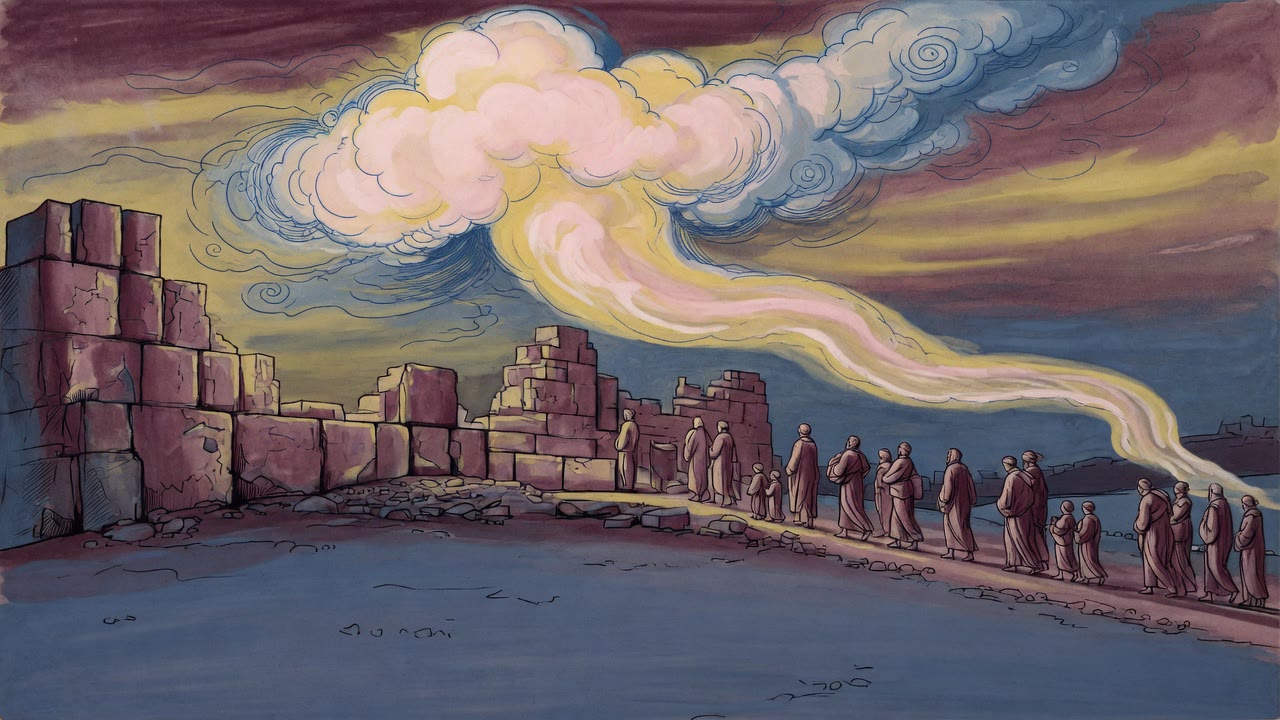
Between the buried doors and that list runs the whole length of the exile. The people carried memory north. The ground kept the bronze.

Open for Us the Gate

The doors are still down there. That is the claim, held for a great many centuries without embarrassment: buried in place, waiting, and when the House stands again they will come up out of the dirt and find their posts and know the footsteps coming toward them.

Once a year the congregation says so out loud without quite saying it. At the end of the Day of Atonement, in the last hour, when the light has gone orange and everyone in the room has been standing too long, they cry out together: open for us the gate, at the hour of the closing of the gate. It sounds like a plea about a day running out.

It is also a message sent downward, to timber and bronze under the paving of a courtyard that no longer exists, from people who have not stopped expecting an answer.


← All myths

From the tradition

Sources

3 sources

The texts behind this telling. Some cards carry a translation of the source; others are our own retelling of it, and each card says which. Every card links out to the original.

Hebraic Literature (1901), Midrash Rabbah (Deuteronomy), chapter ref unresolvedHebraic Literature (1901)

Retold in our words. Read the original at the link below.Project Gutenberg eBook #14368, Hebraic Literature · PD-US-pre-1929

Midrash Rabbah on Deuteronomy preserves a strange detail about the fall of the First Temple. When the Babylonian conquerors carried away the holy vessels, they did not carry away the gates. The gates refused to be taken.

The tradition says the gates were so zealous for the honor of the Holy One that they sank into the earth on the spot where they stood, burying themselves rather than letting foreign hands drag them into Babylon to be set up as trophies. The prophet Jeremiah alluded to this when he wrote in Lamentations, "Her gates are sunk into the ground; He has destroyed and broken her bars" (Lamentations 2:9).

The gates are still buried there, waiting. When Israel is restored to Jerusalem in the fullness of redemption, the gates will rise again from the earth and return to their posts, recognizing the footsteps of the rebuilt sanctuary.

The Jewish people keep this tradition alive in the closing service of Yom Kippur, when the congregation calls out at the last hour, "Open for us the gate, at the time of the closing gate." The plea is not only about the present day's forgiveness. It is a memory of gates that chose exile in the soil over exile in a conqueror's capital, and a hope that those gates will rise on the day the Temple is rebuilt.

Full source
Pesikta DeRav Kahana 22:5Pesikta de-Rav Kahana

Translation of the source text.Sefaria-hosted English translation · CC-BY

[5] In ten places Israel is called a bride: six by Solomon, three by Isaiah, and one by Jeremiah. Six by Solomon: "Come with me from Lebanon, my bride" (Song of Songs 4:8); "You have ravished my heart, my sister, my bride" (there, 9); "How fair is your love, my sister, my bride" (there, 10); "Your lips drip honey, my bride" (there, 11); "A locked garden is my sister, my bride" (there, 12); "I have come into my garden, my sister, my bride" (there, 5:1). And three by Isaiah: "For you shall put them all on as an ornament and bind them on as a bride" (Isaiah 49:18); and this one, "As a bridegroom acts as a priest with a turban, and as a bride adorns herself with her vessels" (there, 61:10); "And as a bridegroom rejoices over a bride" (there, 62:5). And one by Jeremiah: "The voice of joy and the voice of gladness, the voice of the bridegroom and the voice of the bride" (Jeremiah 33:11).

And corresponding to them, the Holy One, blessed be He, put on ten garments. On the day of the creation of the world, the first garment that the Holy One, blessed be He, put on was of majesty and splendor, as it is said, "You are clothed in majesty and splendor" (Psalms 104:1). The second garment that the Holy One, blessed be He, put on, to exact punishment from the generation of the Flood, was of grandeur, as it is said, "The LORD reigns, He is clothed with grandeur" (there, 93:1). The third garment that the Holy One, blessed be He, put on, to give the Torah to Israel, was of strength, as it is said, "The LORD is clothed, He has girded Himself with strength" (there). The fourth garment that the Holy One, blessed be He, put on, to exact punishment from the kingdom of Babylon, was white, as it is said, "His garment was white as snow" (Daniel 7:9). The fifth and sixth garments that the Holy One, blessed be He, put on, to exact punishment from the kingdom of Media, were of vengeance, as it is said, "He put on garments of vengeance for clothing and wrapped Himself in zeal as in a cloak" (Isaiah 59:17); that makes two. The seventh and eighth garments that the Holy One, blessed be He, put on, to exact punishment from the kingdom of Greece, were of righteousness, as it is said, "He put on righteousness like a coat of mail and a helmet of salvation on His head" (there); that makes two. The ninth garment that the Holy One, blessed be He, is destined to put on, to exact punishment from the kingdom of Edom, is red, as it is said, "Why is Your clothing red?" (there, 63:2). The tenth garment that the Holy One, blessed be He, is destined to put on, to exact punishment from Gog and Magog, is glorious, as it is said, "This One, glorious in His apparel" (there, 1). The Assembly of Israel said before the Holy One, blessed be He: Of all the garments, none is as fitting as this one, as it is said, "This One, glorious in His apparel" (there).

"For as the earth brings forth its growth" (Isaiah 61:11). Rabbi Pinhas and Rabbi Hilkiah in the name of Rabbi Simon: Like a man who says to his fellow, "May the Holy One, blessed be He, make your acquittal sprout forth in your judgment." "And the nations shall see your righteousness" (there, 62:2). Rabbi Levi said: Just as in this world anyone who pronounces explicitly the name of the Holy One, blessed be He, is liable to death, as it is said, "And he who blasphemes the name of the LORD shall surely be put to death" (Leviticus 24:16), so too in the time to come, anyone who pronounces explicitly the name of Jerusalem will be liable to death, as it is said, "And He will call you by a new name," and so forth (Isaiah 62:2). Rabbi Levi said: Six things the Holy One, blessed be He, is destined to renew in the time to come, and these are they: heaven and earth, and heart and spirit, and the name of the Messiah, and the name of Jerusalem. Heaven and earth, from where? "For behold, I create new heavens and a new earth" (there, 65:17). And heart and spirit, from where? "And I will give you a new heart and a new spirit" (Ezekiel 36:26). And the name of the Messiah, from where? "May his name endure forever; before the sun may his name be continued" (Psalms 72:17). And the name of Jerusalem, from where? "And He will call you by a new name" (Isaiah 62:2). Rabbi Levi said: Happy is the city whose name is like the name of the king, and the name of the king is like the name of God. Whose name is like the name of the king: "And the name of the city from that day shall be 'The LORD is there'" (Ezekiel 48:35). And the name of the king is like the name of God: "In his days Judah shall be saved and Israel" (Jeremiah 23:6). The portion "I will greatly rejoice" is concluded.

Full source
Midrash Tehillim 48:1Midrash Tehillim

Retold in our words. Read the original at the link below.Rabbi Mike Feuer, Jerusalem Anthology · CC-BY

The sons of Korah, whose story we find woven throughout the Book of Psalms, certainly pondered this. In Midrash Tehillim, a collection of rabbinic interpretations on the Psalms, we find a fascinating take on Psalm 48, a song attributed to them. The Psalm begins, "Great is the Lord and greatly to be praised." Simple enough. But the sons of Korah take it a step further, adding a crucial qualification: "And our God is great only in His city alone."

That might sound a bit… exclusive. Is God's greatness confined to a single location? Is Jerusalem, the "city" in question, the only place where God's presence is truly felt?

The Midrash (rabbinic interpretive commentary) explores this tension. It acknowledges that God's greatness is particularly evident in Zion, another name for Jerusalem. As (Psalm 99:2) states, "The Lord is great in Zion, and He is high above all the peoples." The implication is that what God accomplished in Jerusalem, God did not do for all nations. There’s something unique, something unparalleled, about God’s relationship with this specific place.

Why? Why would God seemingly favor one city over all others?

The Midrash doesn’t shy away from the difficult questions. It quotes (Jeremiah 25:29): "For, lo, I begin to work evil at the city which is called by My name; and should ye be utterly unpunished? Ye shall not be unpunished." This is a stark warning. The very city that bears God’s name, the city that should be a beacon of righteousness, is also subject to divine judgment. In fact, it might even be judged more harshly. With great power comes great responsibility. Maybe the same applies to sacred places. Jerusalem's special status means it is held to a higher standard. Its failures are all the more glaring, its potential for corruption all the more devastating.

The Midrash concludes with a somber reflection: "Woe to our God's city..." It’s a poignant reminder that even the most sacred places are not immune to suffering, to destruction, to the consequences of human actions.

So, what does this all mean for us? Is God only "great" in Jerusalem? Of course not. But this Midrash challenges us to consider the unique responsibility that comes with being associated with the sacred, whether it's a physical place, a community, or even a set of values. And it begs us to ask: what does it mean to create sacred space, and what is our responsibility to that space, wherever we are?

Full source