5 min read

A Mother of Seven Answered Abraham from Death

A mother of seven builds seven altars in one day, rebukes Abraham's single test, and God claps His hands to His heart and weeps in secret.

Curated by Arthur · Told by Maggid ·
Table of Contents
  1. Two Sages Who Would Not Watch Each Other Fall
  2. God Claps His Hands to His Heart
  3. Rachel Refuses the Permanent Exile
  4. Signs Given Away on a Wedding Night
  5. Apple of the Eye and Snapped Cords

The nations stood over the bodies of seven sons and tore at their hair, baffled. What kind of Father is this, that children die for Him?
A Mother of Seven Answered Abraham from Death Click for full size

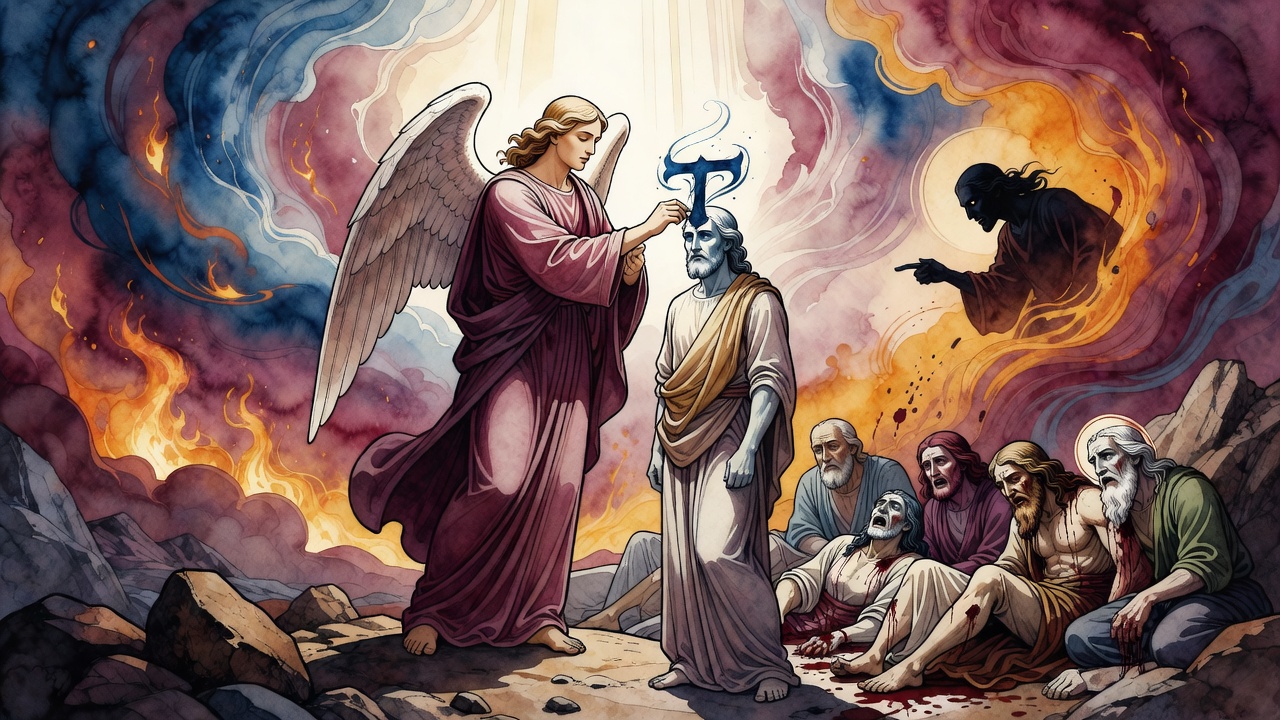
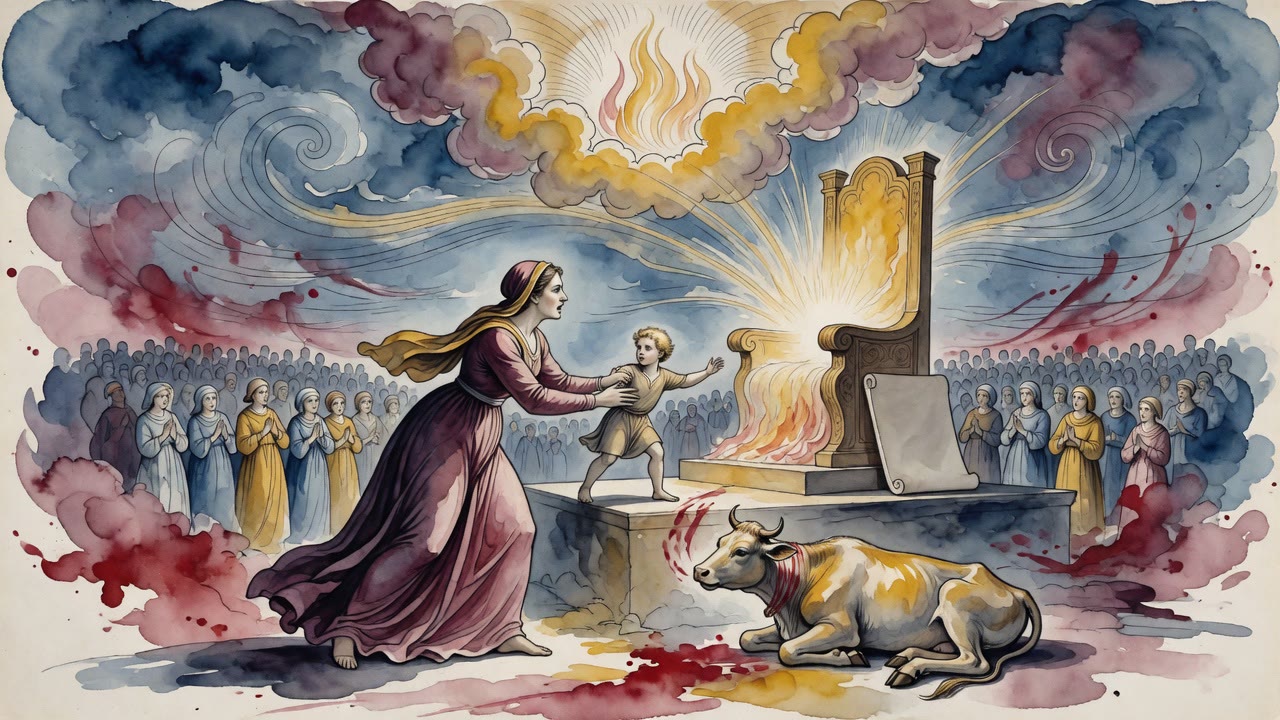
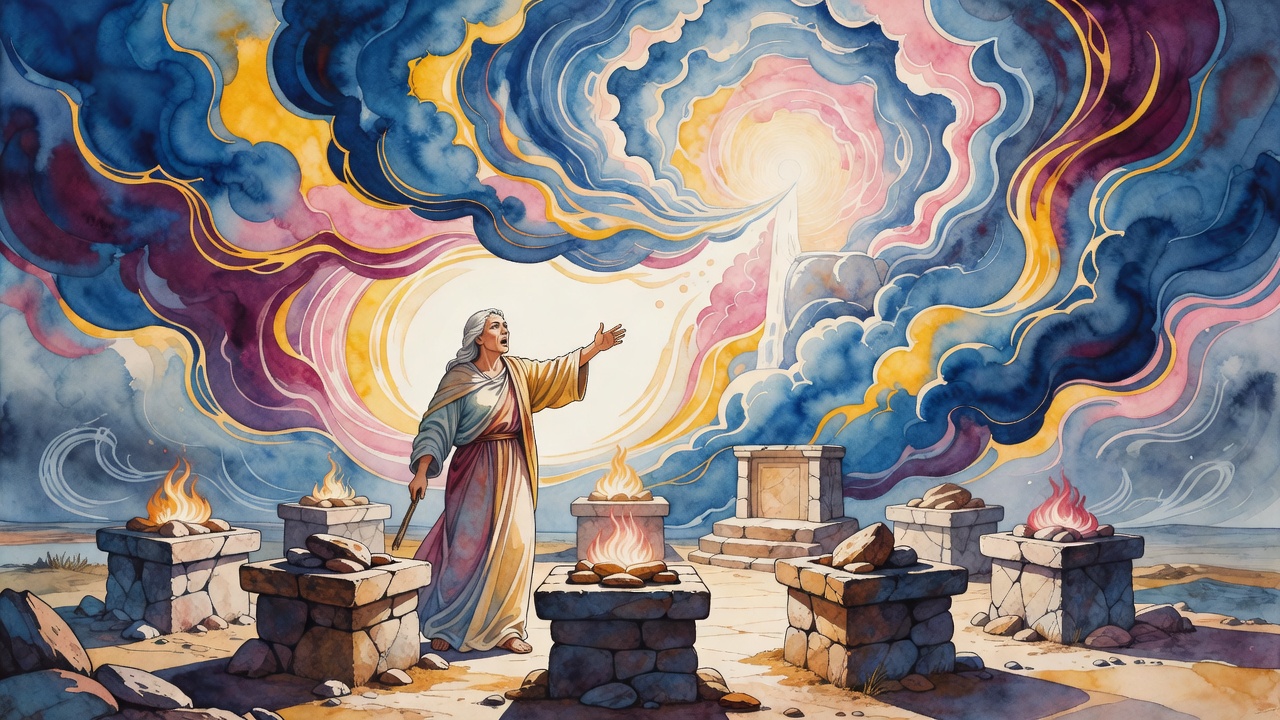
Their mother answered before she followed them in death. She sent word to Abraham himself: do not be proud that you bound one son on one altar as a test. I built seven altars and gave seven sons in a single day, and mine was no test but the deed.

A heavenly voice named her a joyful mother of children.

Two Sages Who Would Not Watch Each Other Fall

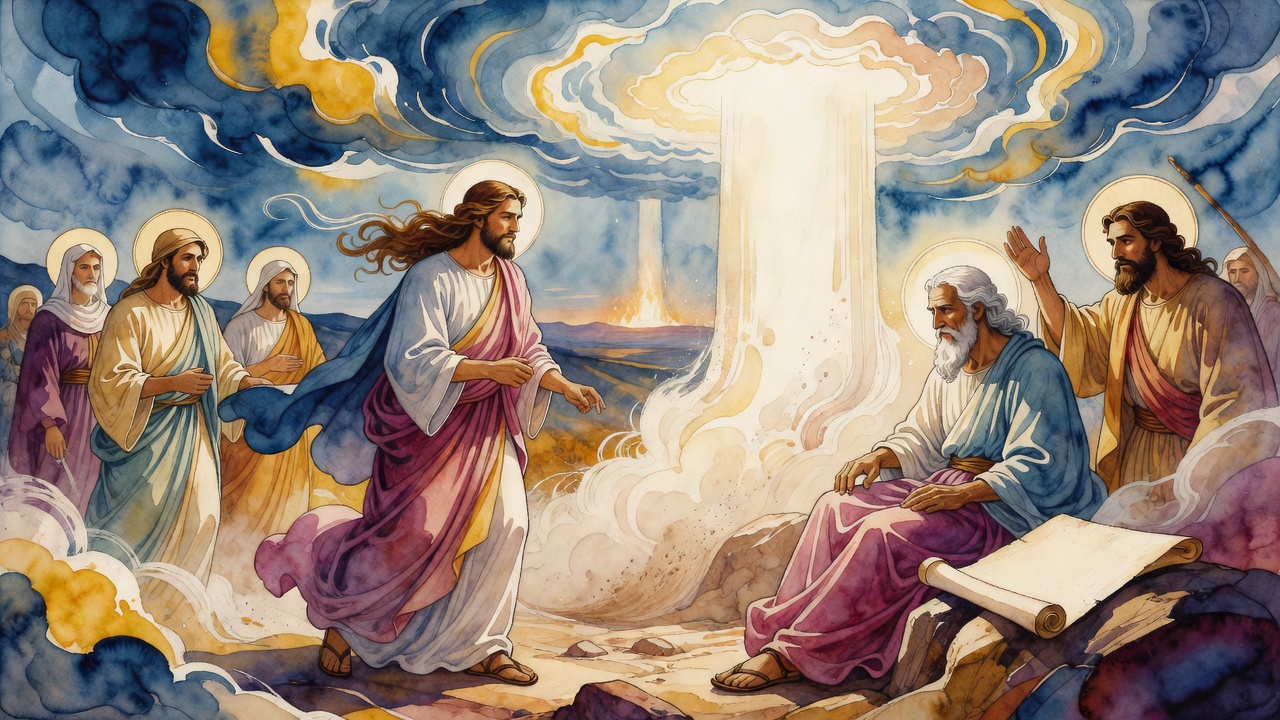
The martyrdoms continued with Rabban Shimon ben Gamliel and Rabbi Ishmael. They refused to die before reasoning out their guilt, down to the orphan and widow once turned away while they ate. Going to the sword, each begged to die first so as not to watch the other fall.

The school of Elijah will not let their deaths become only spectacle for empire. It opens the deepest secret of the book after their blood is already on the ground.

God Claps His Hands to His Heart

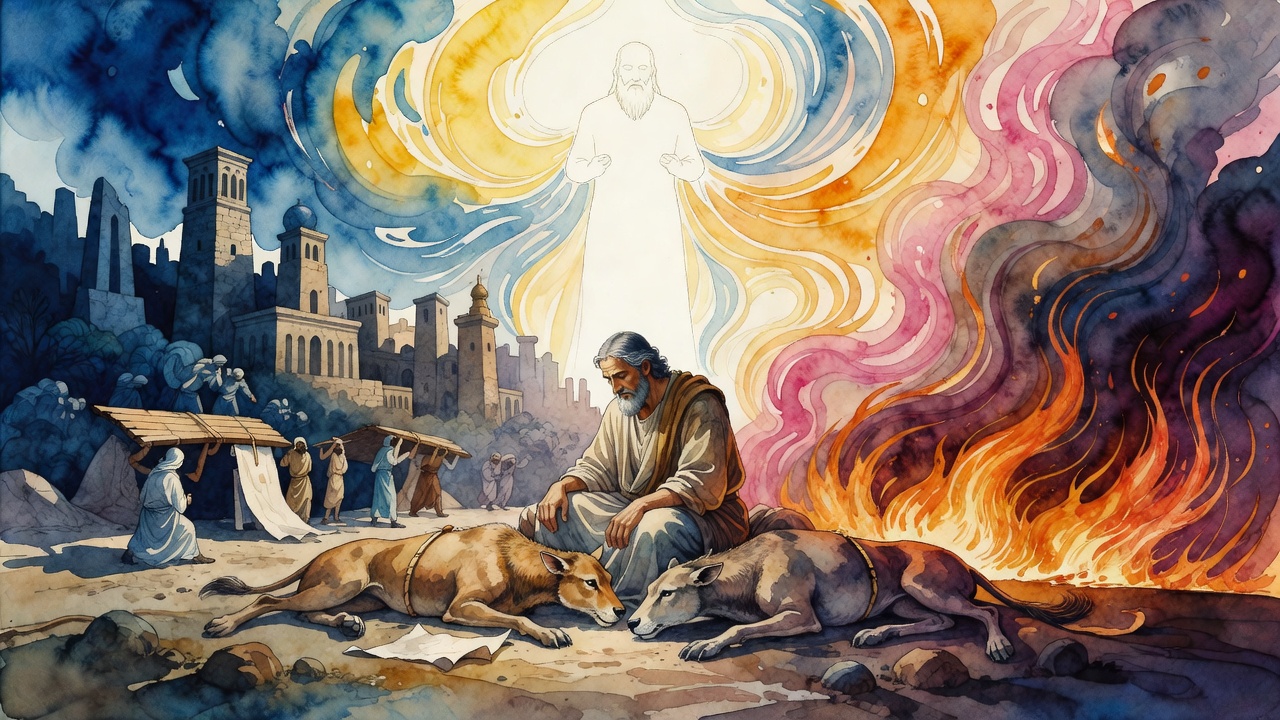
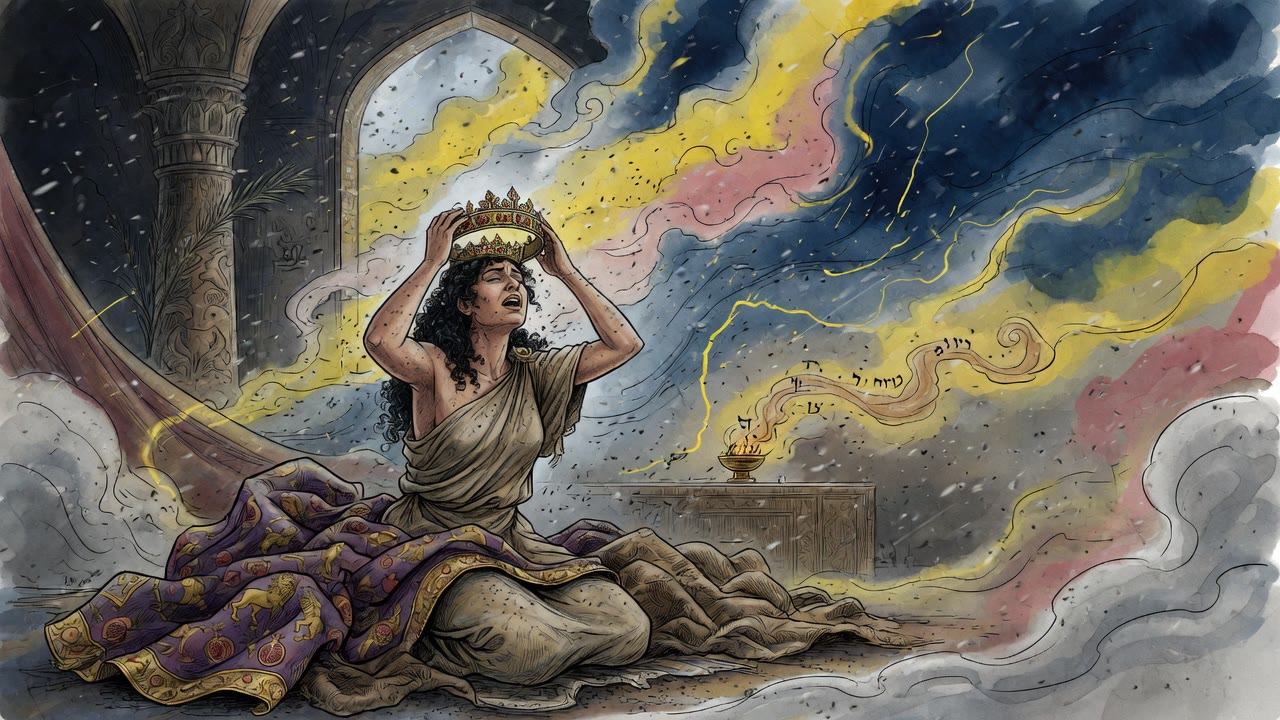
God claps His two hands together, presses them against His heart, and weeps over the righteous of every generation. He weeps in secret, because it shames a lion to cry before a fox, a king before his servants, a householder before his workers.

He even comes down from the highest heaven to lament His exiled people Himself. His mercy is so wide that even after a lifetime of idolatry, the smallest turn of repentance makes Him weep at once.

He is the king who, year after year, returns to the place he drove out his wife and children and bows full-length to the ground, crying like a father, clucking like a hen over her chicks.

Rachel Refuses the Permanent Exile

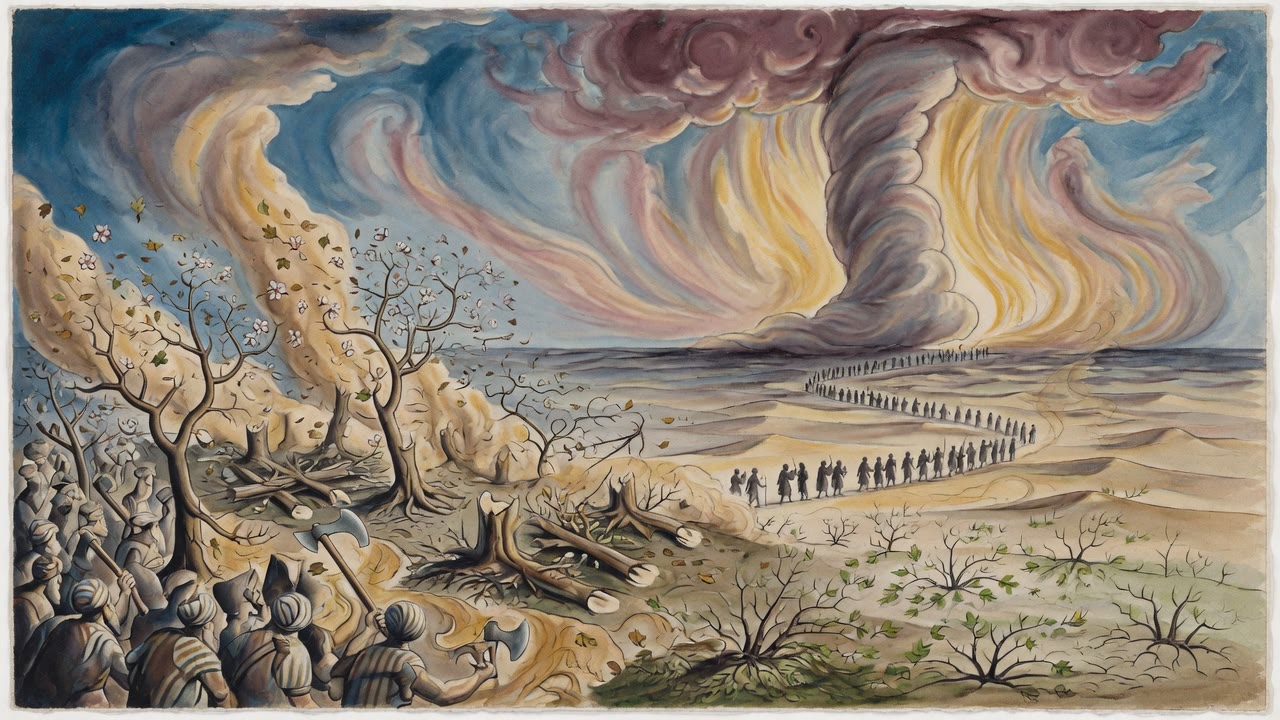
Asaph opens with the wound itself. Nations have poured into God's own inheritance, fouled the Temple, and left Jerusalem a heap of stones. The Tanna insists that God never forgets this city for a single hour, even when Jeremiah hears Him speak as though His tent were ravaged and His power to rescue gone.

That "tent" is read four ways at once: the place of the Divine Presence, the Temple itself, the synagogues and study houses burned by fire, and the snapped cords that are the Torah scholars who hold the people upright like ropes on a tent. Whoever touches Israel touches the very apple of God's eye.

Still the exile threatened to become permanent. It was in God's mind never to bring Israel home, until Rachel rose to pray.

Signs Given Away on a Wedding Night

Rachel made her case from her own life. She was not jealous of her sister Leah. On her own wedding night she gave away the secret signs and stayed silent so her sister would not be shamed. If I, flesh and blood, could swallow my jealousy, how can You stay jealous over idols of silver and gold that cannot even speak?

God's mercy broke open, and He swore to return her children to their border.

The mother of seven answered Abraham from the edge of the grave. Rachel answered God from the roadside of exile. Between them, heaven presses its hands to its heart and weeps where the foxes of empire cannot gloat over a lion's tears.

Apple of the Eye and Snapped Cords

When the nations fouled the Temple and left Jerusalem a heap of stones, the teaching refused the idea that God had simply walked away. The tent He spoke of as ravaged was Presence, Temple, burned study houses, and scholars snapped like ropes that once held a canopy tight. Touch Israel and you touch the apple of God's eye. Egypt learned that when the Tabernacle first rose and the nations trembled, reasoning that the God who judged the Nile would answer anyone who harmed His people.

Still Rachel had to rise. The mother's seven altars and Rachel's silent wedding night are two forms of the same courage: giving what costs the body so another is not shamed or so a people is not erased. Abraham's single test is not mocked. It is answered by women who did not get to stop at the edge of the knife.

God's secret weeping is not weakness performed for foxes. It is the lion's grief kept from empire's theater, the householder who will not cry for the amusement of workers who do not love the house. He comes down anyway. He bows full-length in the place of exile. He clucks like a hen over chicks that still run toward fire. The mother of seven is called joyful. Rachel is answered with a border and a return.

Rabban Shimon and Rabbi Ishmael arguing over who dies first is not a small courtesy. It is love refusing to turn a friend's last sight into a friend's murder. The orphan and widow they once delayed return as the measure of their guilt. Even righteous ones go to the sword counting unpaid kindnesses.

God's hands pressed to His heart answer both the mother of seven and the sages who would not watch each other fall. Secret tears are still tears. Empire does not get to own them. Rachel's children are still promised a border, and the apple of the eye still blinks when a nation is touched.


← All myths
From the tradition

Sources

2 sources

The texts behind this telling. Some cards carry a translation of the source; others are our own retelling of it, and each card says which. Every card links out to the original.

Tanna Debei Eliyahu Rabbah 30:4Tanna DeBei Eliyahu Rabbah

Translation of the source text.Tanna debei Eliyahu Rabbah, Warsaw 1880 · Public Domain

At that hour the idolaters were tearing at their hair and at their beards and weeping a great weeping, and they said, "What is the deed of the father of these, and what is his praise, that they are slain for him in this way?" Concerning that hour it says (Song of Songs 5:9), "What is your beloved more than another beloved, O fairest among women? what is your beloved more than another beloved, that you so adjure us?" At that hour their mother said to them, "My sons, go and say to Abraham our father: Let not your mind be lifted up over you, that you say, I built an altar and offered up Isaac my son; for I built seven altars and offered up my seven sons upon them in one day, and his was only a test and not a deed, but mine was a deed." Again she said to them, "My sons, happy are you that you did the will of your Father in heaven, and you came into the world only to sanctify His great name through you, as it is said (Leviticus 10:3), 'Through those near to Me I will be sanctified.'" Immediately she went up to the roof and fell and died. A heavenly voice went forth and said, "a joyful mother of children" (Psalms 113:9). And when they seized Rabban Shimon ben Gamliel and Rabbi Ishmael the high priest for execution, Rabban Shimon ben Gamliel was weeping and said to Rabbi Ishmael, "For what reason are we being slain like idolaters and like profaners of Sabbaths and like eaters of carrion and torn beasts and detestable and creeping things, that such should be our death?" Rabbi Ishmael said to him, "I will reason before you: at times we had to judge a case and did not judge it truly; and at times false witnesses came and testified before us and we did not investigate and inquire well, and we transgressed what is written in the Torah (Deuteronomy 19:18), 'and the judges shall inquire diligently, and behold, if the witness is a false witness, he has testified falsely against his brother,' and so forth, therefore we have become liable to death. Or at times we entered the bathhouse, or at times we turned aside to eat and drink, and at that very time widows and orphans came to demand their sustenance, and our attendant said to them, 'The time is not free for us,' and the widow and the orphan were found afflicted. Come and see how great is the punishment of the matter, as it is said (Exodus 22:21-22), 'You shall not afflict any widow or orphan. If you afflict him at all, then if he cries out at all to Me, I will surely hear his cry, and My wrath shall be kindled, and I will kill you with the sword,' and so forth." Come and see: even though they were going out to execution, they were honoring one another; this one says, "I am not greater than my fellow; rather, my fellow is greater than I; therefore slay me first, so that I may not see the death of my fellow," and this one says, "Slay me first, that I may not see the death of my fellow." And they cast lots, and the lot fell upon Rabban Shimon ben Gamliel. First they took the head of Rabban Shimon ben Gamliel, and Rabbi Ishmael the high priest took it and placed it in his lap, and was embracing it and hugging it and kissing it, and said to it, "Rabbi, how has your tongue been hidden in the dust, and how has your mouth been filled with stones and dust, like idolaters and like profaners of Sabbaths!" And he did not manage to finish saying the words before they took the sword and cut off his head. At that hour the Holy One, blessed be He, said, "I will bring the heavens and clap them one against the other and lay My world waste before them," as it is said (Ezekiel 21:22), "And I too will strike My hands together and satisfy My fury," and so forth. And not this alone, but when the wicked Nebuchadnezzar came to surround Jerusalem, all Israel who were dwelling in the cities of Judah and Benjamin were gathering to him, and they were dwelling within Jerusalem in companies and companies, as it is said (Jeremiah 8:14), "Why are we sitting still? Gather together, and let us enter the fortified cities." And when Nebuchadnezzar afterward exiled them, and they reached the waters of the Euphrates and drank from them, the waters killed among them more than the Chaldeans killed among them. And when they were going on the way, they were saying, "O God, do not keep silence" (Psalms 83:2). The Holy Spirit answered them and said to them, "Fools of the world, when you worshiped idolatry upon the mountains and upon the hills, did you not say, 'Who is the God who dwells in the world?', and now you say, 'O God, do not keep silence'?" And even so, immediately the mercies of the Holy One, blessed be He, were stirred, and He aroused over them the sons of Korah who had already died, and they wrapped themselves in their garments and sat before them and recited a dirge over them. And not only that, but the Holy One, blessed be He, Himself in His glory descended from the upper heaven of heavens, from the place of His greatness and His glory and from the holiness of His great name, and He Himself took up a dirge over them, as it is said (Isaiah 22:1), "The burden of the valley of vision," and so forth; "And the Lord God of Hosts called on that day for weeping and for mourning, and for baldness and for girding with sackcloth." Come and see how abundant are the mercies of the Holy One, blessed be He, over Israel forever: even if all their days they were worshiping idolatry, yet when they do even a slight repentance, He weeps over them immediately. According to your reasoning you learn that in every single generation, when the Holy One, blessed be He, finds among men those who are righteous and pious, He claps His two hands one upon the other and places them against His heart and weeps over them, whether in secret or in the open. And for what reason does He weep over them in secret? Because it is a disgrace for a lion to weep before a fox, and it is a disgrace for a king to weep before his servants, and it is a disgrace for a householder to weep before his laborers, as it is said (Jeremiah 13:17), "And if you will not hear it, My soul shall weep in secret places for pride, and My eye shall weep sore and run down with tears, because the Lord's flock is taken captive." And what is the meaning of "for pride"? That the angels who stand before the Holy One, blessed be He, above should not be proud and say, "What enjoyment does the Holy One, blessed be He, have from flesh and blood, that He gave the Torah to Israel?" And for what reason is it not said here as it is said elsewhere (Jeremiah 9:16-18), "Thus says the Lord of Hosts: Consider, and call for the wailing women, that they may come; and send for the wise women, that they may come; and let them make haste and take up a wailing for us, that our eyes may run down with tears, and our eyelids gush out with water; for a sound of wailing is heard from Zion, How are we ruined!" and so forth? So here too Scripture might say, "and you shall surely weep, and our eyes run down with tears", but, as it were, no creature has mercy upon Israel except the Holy One, blessed be He, alone, who from the beginning apportioned His world to them; and it is said (Lamentations 1:2), "She weeps sore in the night." Another interpretation: "She weeps sore in the night", and do they weep at night and not weep by day? Rather, from that hour the boughs of Israel were shattered, when the decree was issued upon Rabbi Akiva for execution. And what is the meaning of "and my eye shall run down with tears"? A parable: to what is the matter like? To a king of flesh and blood whose wife and children offended against him, and he arose and thrust them out and brought them forth from his house; and every single year he goes to the place to which he thrust them out and bows his full height to the ground and weeps; and were it not that Scripture is written, it would be impossible to say it, like a father who says in weeping, "Alas, my son," and like a hen that clucks over her chicks, as it is said (Isaiah 22:5), "For it is a day of tumult and trampling and confusion for the Lord God of Hosts in the valley of vision, breaking down walls," and so forth. And when Israel were going into exile, the offense of Israel was hidden from every creature, until the Holy One, blessed be He, came and said to them: "Rather, in reward of the two tears that Esau shed before his father, therefore I have come to do the will of Seir," as it is said (Isaiah 21:11-12), "The burden of Dumah. One calls to me out of Seir, Watchman, what of the night? Watchman, what of the night? The watchman said, Morning comes, and also night; if you will inquire, inquire; return, come." Why is it said, "Watchman, what of the night? Watchman, what of the night?" Rather, because all the good of Israel is only by day, and all the evil of Israel is only at night; and even those seventy years that are between the First Temple and the Second Temple are only night; therefore it is said, "Watchman, what of the night?"

Full source
Tanna Debei Eliyahu Rabbah 30:1Tanna DeBei Eliyahu Rabbah

Translation of the source text.Tanna debei Eliyahu Rabbah, Warsaw 1880 · Public Domain

"A psalm of Asaph. O God, nations have entered Your inheritance, they have defiled Your holy temple, they have laid Jerusalem in ruins; they have given the corpses of Your servants as food to the birds of the sky" (Psalms 79:1-2). Blessed is the Omnipresent, blessed is He, who remembers Jerusalem at every time and in every hour; yet before Him there is no injustice, no forgetting, and no favoritism. And so it is set forth by tradition through David, king of Israel, who said, "Awesome is God from Your sanctuaries; the God of Israel, He gives strength and might to the people" (Psalms 68:36).

What does "Awesome is God from Your sanctuaries" teach? From here they said: when Moses set up the Tabernacle, the nations of the world were shaken and afraid before the Holy One, blessed be He, and said, "Since miracles were done for these in Egypt and at the Sea" - as it says, "He did great things in Egypt, wonders in the land of Ham, awesome deeds at the Sea of Reeds" (Psalms 106:21-22) - "perhaps, just as the Holy One executed judgment in Egypt and on their firstborn, so He will do to all the nations," and all the more so that He will exact punishment from anyone who touches them for harm, as it says, "for whoever touches you touches the apple of His eye" (Zechariah 2:12). As it were, Israel is before the Holy One, blessed be He, like a man who has but one eye; therefore it says, "touches the apple of His eye."

And so it is set forth by tradition through Jeremiah the prophet: "My tent is ravaged and all my cords are snapped; my children have gone out from me and are no more; there is no one to pitch my tent again or to set up my curtains" (Jeremiah 10:20). As it were, He made Himself as though He had no power to save, God forbid. The Holy One said: These plunderers came and plundered My city and My house and My temple. And who are these plunderers of whom the Holy One spoke? They are the officers of the king of Babylon, as it says, "and all the officers of the king of Babylon came and sat in the middle gate" (Jeremiah 39:3).

Another interpretation of "My tent is ravaged": "tent" means none other than the place of the Divine Presence, as it says, "Moses would take the tent and pitch it outside the camp... and he called it the Tent of Meeting" (Exodus 33:7). Another interpretation: "tent" means none other than the Temple, as it says, "And let them make Me a sanctuary that I may dwell among them" (Exodus 25:8). Another interpretation: "My tent is ravaged," as it says elsewhere, "Suddenly my tents are ravaged, my curtains in a moment" (Jeremiah 4:20) - these are the synagogues and study houses, as it says, "And he burned the house of the LORD and the house of the king and all the houses of Jerusalem, and every great house he burned with fire" (2 Kings 25:9). Another interpretation: "My tent is ravaged and all my cords are snapped" - just as a tent cannot stand without pegs and without cords, so Israel cannot stand without Torah scholars; therefore it says, "all my cords are snapped." "My cords" are the Torah scholars in Israel, who permit the permitted and forbid the forbidden, and who are to Israel like the cords of the world; therefore it says, "all my cords are snapped; my children have gone out from me and are no more."

And since Israel was exiled, it was in the mind of the Holy One, blessed be He, never again to return Israel to their place, until Rachel stood in prayer before the Holy One, blessed be He, and said before Him: Master of the universe, remember on my behalf that I was not jealous of my rival. Not only that, but my husband served seven years for me, and when I was to enter the wedding canopy they substituted Leah my sister, and I said nothing to Jacob, so that he would not tell my voice from my sister's voice. Now is this not an a fortiori argument? If I, who am flesh and blood, was not jealous of my rival, and You are a merciful and gracious King, how can You be jealous over idolatry, which has no substance, as it says, "their idols are silver and gold, the work of human hands; they have mouths but do not speak" (Psalms 115:4-5)? At once the mercy of the Holy One, blessed be He, was stirred, and He swore to Rachel to return her children to their place, as it says, "A voice is heard in Ramah... Rachel weeping for her children, refusing to be comforted for her children, for they are gone. Thus says the LORD: Restrain your voice from weeping and your eyes from tears, for there is reward for your work, says the LORD, and they shall return from the land of the enemy; and there is hope for your future, says the LORD, and the children shall return to their own border" (Jeremiah 31:15-17). Do not read "Rachel weeping for her children" but "the spirit of God weeping for her children."

Full source