Abraham Counted Years Then Planted for Fruit
Dread fell between the split animals when Abraham was seventy. Four hundred and thirty years of exile already had a starting hour.
Table of Contents
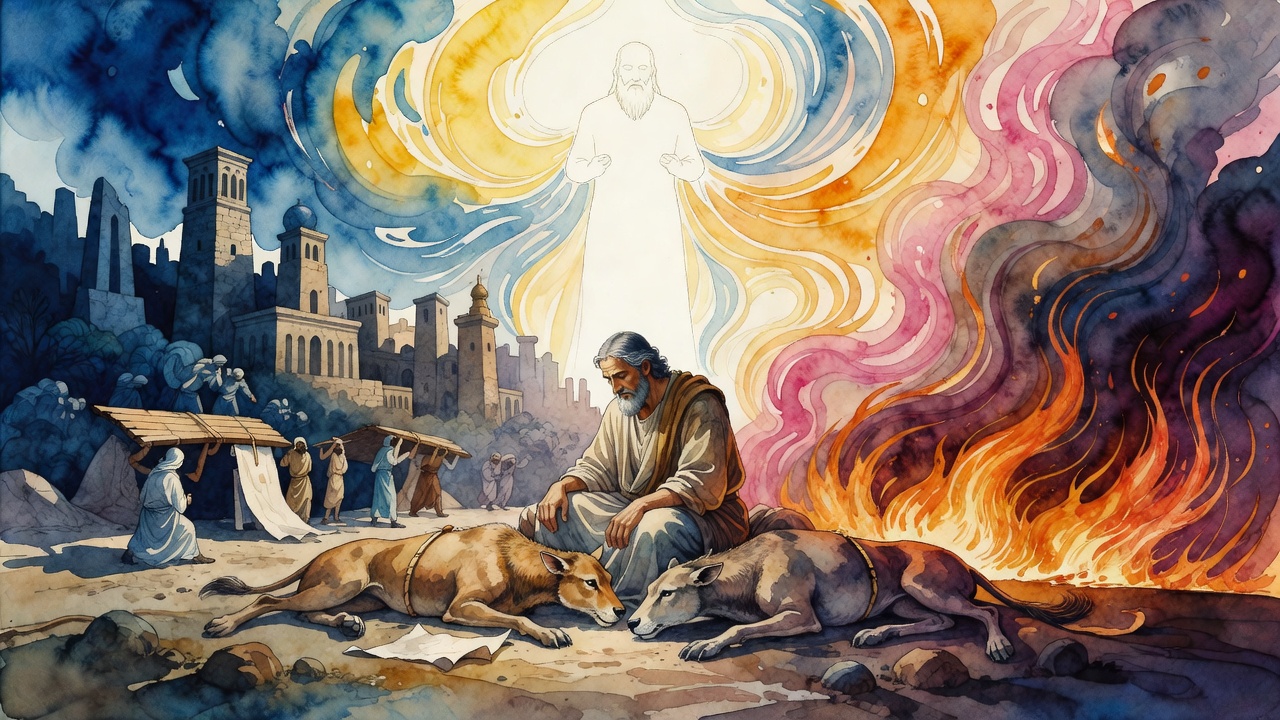
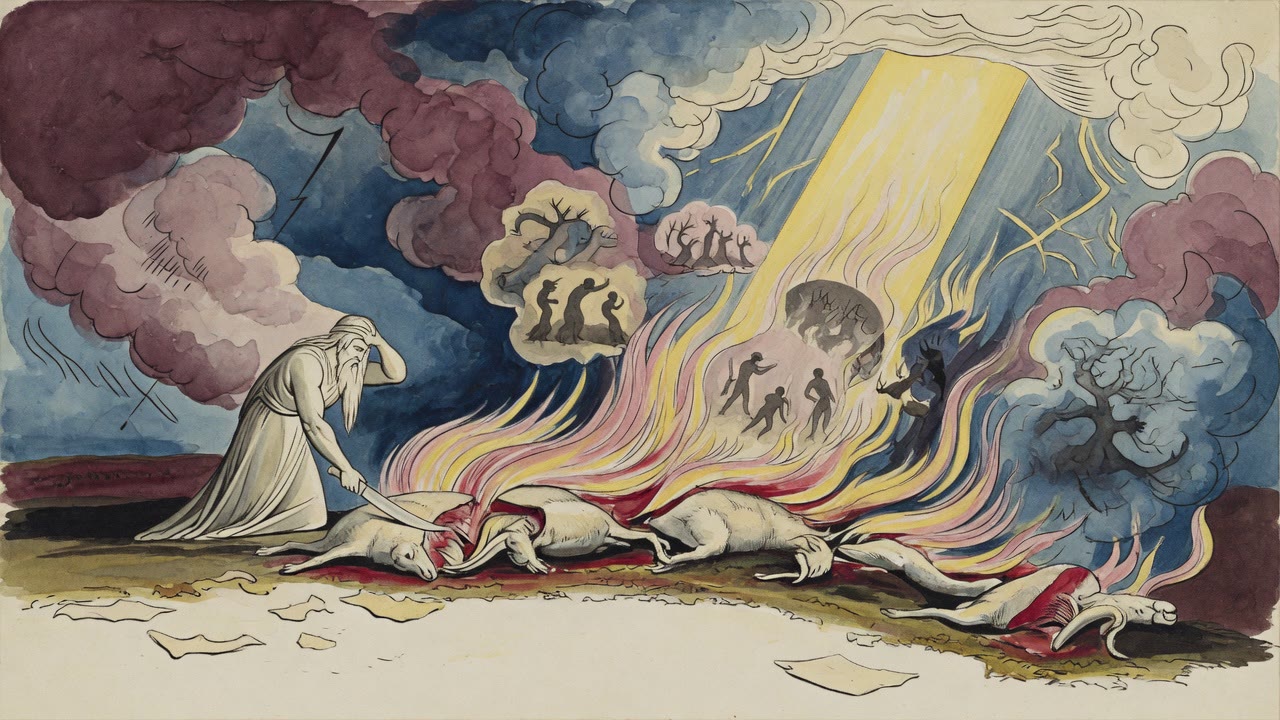
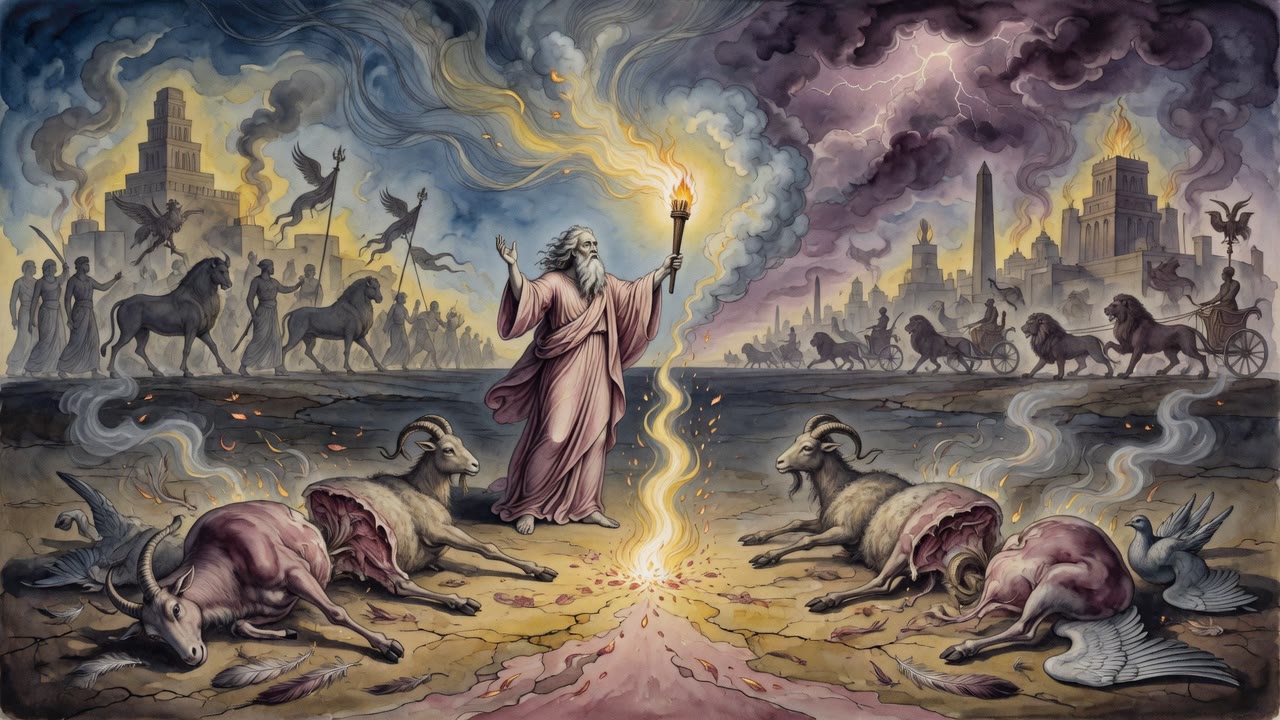
Abraham walked between the split animals while the sun went down and dread fell on him like a second night. The pieces lay in two rows. Blood in the dust. A smoking firepot and a flaming torch would pass between them, but first the dark arrived, and with the dark a clock.
 Click for full size
He was seventy. The Covenant Between the Pieces was not only promise. It was a length. Four hundred and thirty years would run from this night until a people walked out of Egypt. Abraham stood in the middle of carcasses and heard exile timed in advance. He counted the years the way a man counts while he is still able to stand.
Seventy Between the Pieces
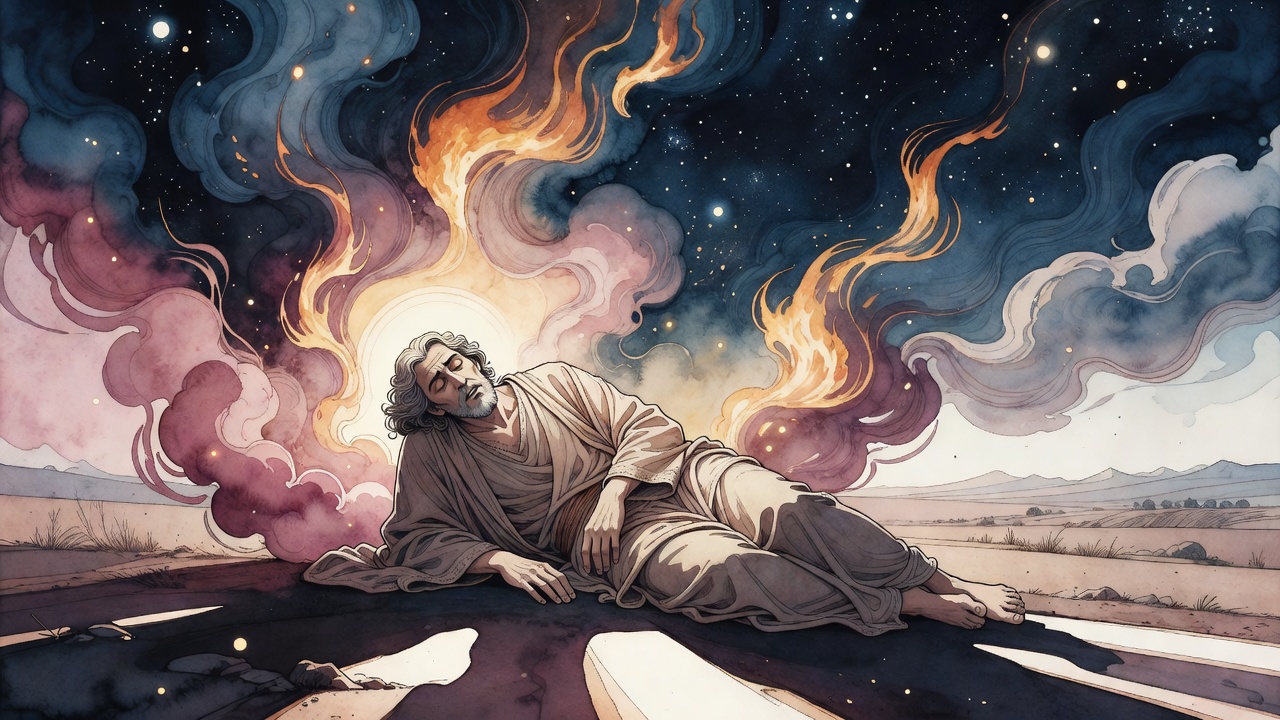
Birds of prey came down on the bodies. Abraham drove them off. His arms grew tired doing it. The sun sank. A deep sleep and a terror of great darkness settled on him, and inside that terror the numbers kept arriving. Sojourners. Affliction. A land that was not yet his except as a sentence spoken over meat.
He wanted seed and ground. What he received first was a span. He would not live the whole of it. He would carry the start of it under his ribs for the rest of his life.
When the firepot finally moved between the pieces, the deal was sealed in heat and blood. Abraham rose from the dread with a number living in him. Four hundred and thirty is a long shadow for a man of seventy to walk back into ordinary days.
Five Years Back in Haran
After the covenant he returned to Haran. Five more years. The Torah can say he was seventy-five when he finally left because those years happened, slow and unspectacular, after the night of the pieces. He packed. He unpacked. He waited on a father who was not ready to be left. The clock did not pause because the packing was dull.
The arithmetic even touches the Tower generation's dispersion, twenty-six years before that last departure. Abraham did not need a chart on a wall. He had stood between halves of animals. That was chart enough. When he finally lifted his feet out of Haran for good, the number went with him.
He was seventy-five, and the exile he had heard at seventy had already been running for five years without a brick laid in Egypt. Promise can start before the suffering looks like suffering. He walked anyway.
One Crowded Year
The year he left Haran for good was a year of famine. The ground failed. Abraham went down to Egypt, stayed only three months, came up, and settled in Hebron. That same year he rode out with his household and defeated the four kings to rescue Lot.
Famine, descent, return, and war pressed into a single crowded span. He still had to walk. He still had to fight. The clock did not replace courage. It framed it. A man who has heard exile timed in advance does not plant the same way as a man who thinks the ground is simply his. He plants knowing the ledger includes someone else's brick and someone's delayed return.
Lot came back alive. Hebron took them in. The famine year closed. Abraham had counted years in the dark and then spent a bright, brutal twelve months proving that a counted life is still a life lived by hand.
Figs That Ripened in a Day
Generations later the command lands differently. "When you come into the land and plant any tree for food" (Leviticus 19:23). In the wilderness God had brought manna, quail, and the well. Each tribe made a conduit from the well. They planted figs, vines, and pomegranates that yielded fruit the same day, as at the creation of the world when fruit trees bore according to their kind (Genesis 1:11).
Children reached and ate. No waiting. Instant fruit was a mercy of the wilderness years, not the permanent law of settled soil. When Adam sinned, he sowed wheat and it sprouted thorns and thistles. When the well disappeared, the bounty vanished with it. They complained of a place with no seeds, figs, vines, or pomegranates (Numbers 20:5). The mouth that had known same-day sweetness learned a desert with empty hands.
God told Moses to tell them that the land would restore the bounty. Streams. Wheat and barley. Vines, figs, pomegranates. Bread without stint (Deuteronomy 8:7-9). Restoration, when it came, would not be the wilderness trick repeated forever. It would be harvest with a calendar.
Three Years Before the First Free Bite
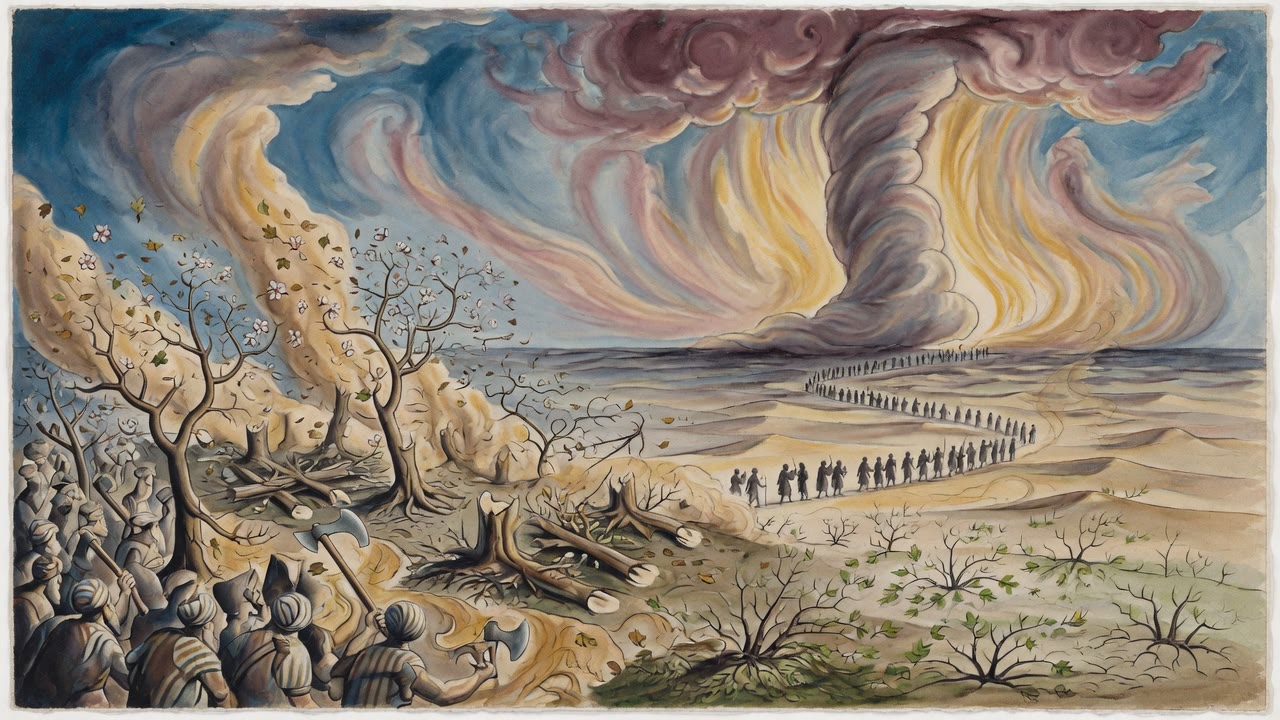
In the land the tree must wait. The first three years the fruit is orlah (ערלה), off limits, counted and left on the branch. Patience becomes part of the planting. Abraham's clock taught that redemption has a length. The orchard law teaches that belonging to the land has a length too. A planter does not grab the first sweet bulge on the branch. The tree learns the soil while the household learns restraint.
Children watch fruit redden and are told not yet. The wilderness memory of same-day figs becomes a story of mercy, not a demand. They planted much wheat later and brought in little, because they ceased the firstfruits and defiled the land. The wait was never only agriculture. It was a people learning not to snatch what a clock has not released.
Night falls again over Hebron's hills. Somewhere a man still walks between halves of a promise. Somewhere a planter still waits out the third year before the first free bite. Abraham at seventy heard centuries. Abraham at seventy-five walked. Israel in the land digs holes for saplings and marks years on the trunk with memory rather than knife. The same God who timed Egypt also timed the fruit. Between the pieces and the orchard runs one discipline. The count that was given has to be trusted. Tomorrow's sweetness does not belong in today's mouth.
← All myths