Parshat Emor6 min read

A Mother Brings Her Son Before the Judge

The onlookers told each other she had come to have the boy killed. She heard them. Then she stood up and told the judge he had kicked her.

Curated by Arthur · Told by Maggid ·
Table of Contents
  1. The Crowd Came to Watch a Boy Be Killed
  2. Three Times the Nations Bought Seats
  3. The King Who Cleared the Matron's Name
  4. Ninety-Nine Screams for Death and One for Life
  5. What the Nations Never Digest
A Mother Brings Her Son Before the Judge Click for full size

The Crowd Came to Watch a Boy Be Killed

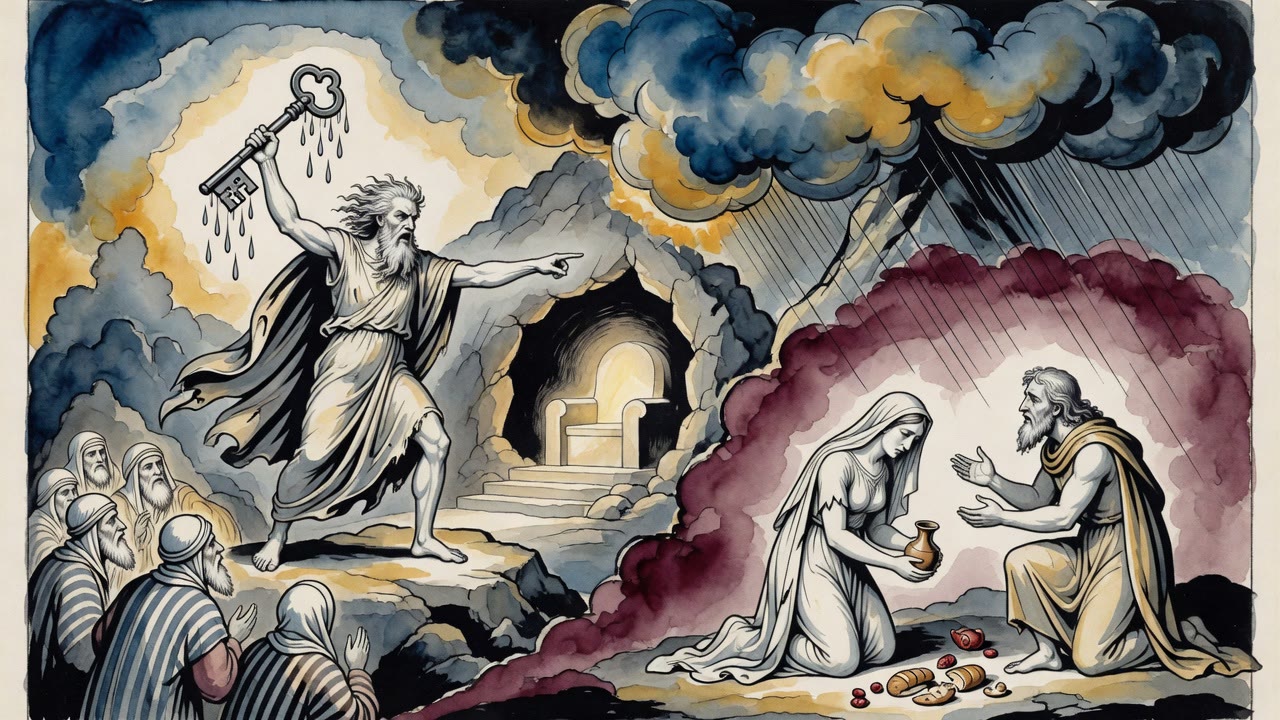
The woman walked to the courthouse with her son beside her, and by the time she reached the door a crowd had already gathered. Word travels fast in a small town. A mother had a grievance against her own child and had brought him in to answer for it, and every idle person within reach of that news came to stand where the view was good.
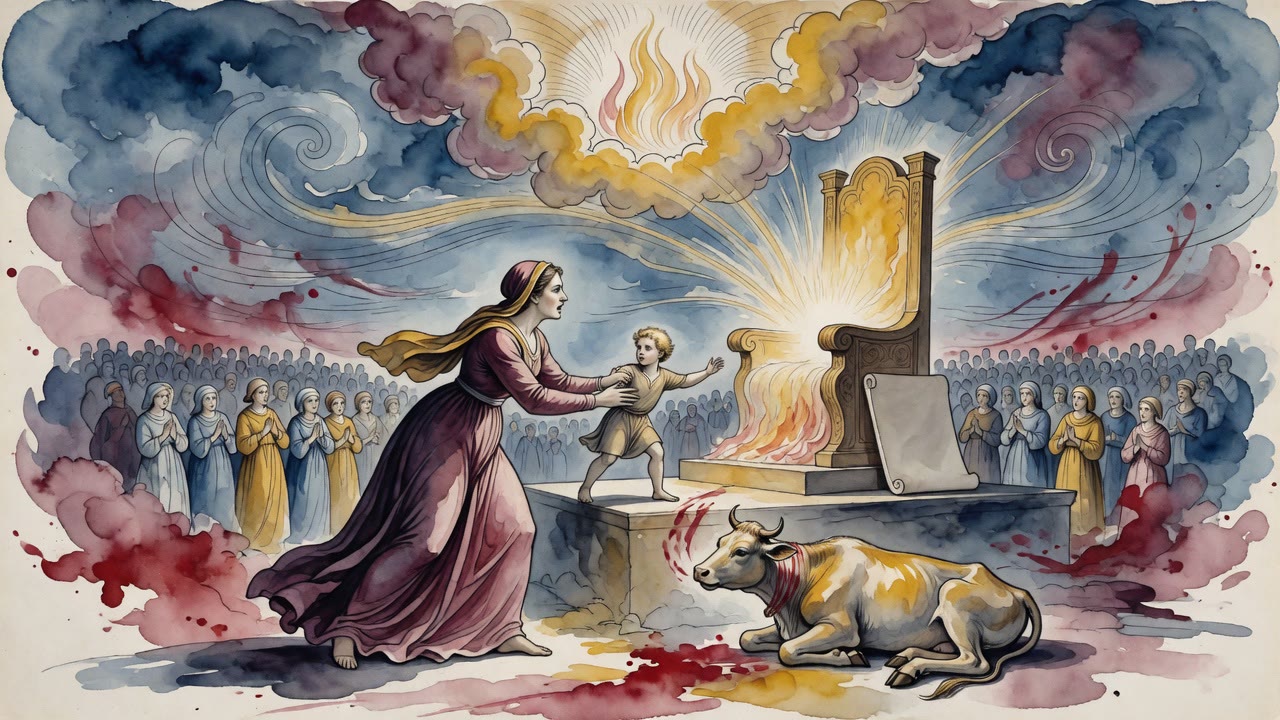
They talked while they waited. "Look at her," one said. "She has brought her own son here to have him killed."

The boy heard it. So did she.

Something turned in her at the threshold. She had come in with a speech ready and she swallowed it whole.

The judge looked up when they were brought forward. "What has your son done to you?"

"When he was in my womb," she said, "he kicked me."

The room waited for the rest of it. There was no rest of it.

"Has he done anything else to you?"

"No."

The judge sat back. "Then there is no offense here at all."

The crowd came apart slowly, the way a crowd does when it has been cheated. Is that an answer, they asked each other on the way out. Is that a rebuke? She only came here to amuse herself with her son. They walked home with their faces burning.

Three Times the Nations Bought Seats

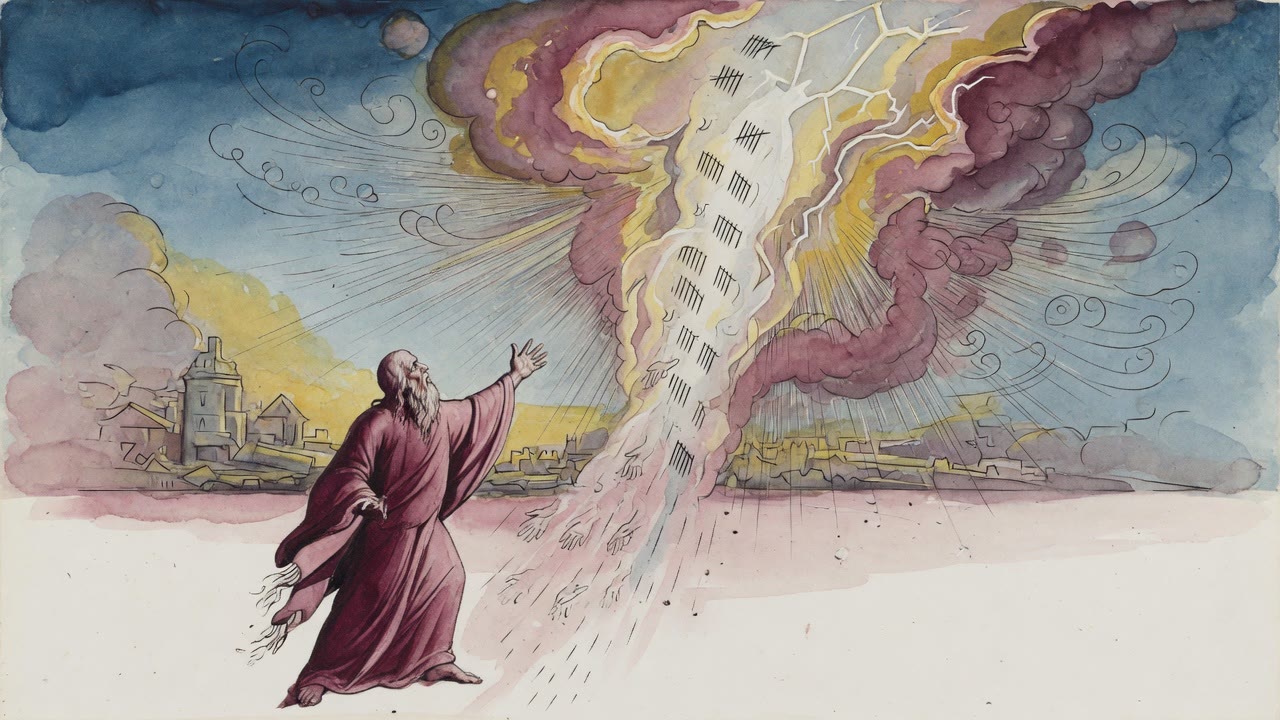
Three times God called Israel into court, and three times the nations of the world heard the summons and came running.

The first time the words were, "Come now, and let us dispute together." The nations elbowed one another. Now He will finish them off, they said. They had waited a long while for this. Then the sentence landed: though your sins be as scarlet, they shall become as white as snow. The spectators stood there with their mouths open. Is that an answer? Is that a rebuke? He has only come to amuse Himself with His children.

The second summons went out through the mountains, a claim entered against His people. The nations came back. Now, surely. And the claim opened into a memory of Balak plotting on a hillside in Moab and Balaam answering him, which is not the speech of a judge disposing of a defendant. The third summons named Judah, and the nations gathered a third time, and the charge dissolved into a recollection of a hand gripping a heel in the womb.

Three times they came for a killing. Three times they went home embarrassed.

The King Who Cleared the Matron's Name

There was a rumor once about a matron and one of the great men of the kingdom. It ran through the corridors the way those rumors do, and it reached the king, and the king looked into it. He found nothing under it. Not a witness, not a date, not a room.

So he threw a banquet. He seated the accused man at the head of the couches, in front of everyone who had repeated the story, and let them watch him eat.

The nations had a rumor of their own. You made the calf, they said to Israel, and they said it for centuries. The Holy One looked into that too. Rabbi Huna taught in the name of Rabbi Samuel bar Nahman that the strangers who had come up out of Egypt with Israel were the ones who cast it, and the words they used give them away: they said, these are your gods, O Israel. Your gods. Not ours.

Then came the seating at the head of the table. Of all the animals that could lead the offerings, the bull was placed first. The calf that had been Israel's disgrace was walked back to the altar as Israel's honor, in front of everyone who had told the story.

Ninety-Nine Screams for Death and One for Life

A woman on the birthing chair screams a hundred times. Ninety-nine of those screams belong to death and one belongs to life. That is the arithmetic, and nobody softened it.

What comes out at the end of the hundred screams is a small filthy thing, wet and slick and unlovely. And every single person in the room wants to hold it. They pass it around and kiss it, and if it is a boy they kiss it twice.

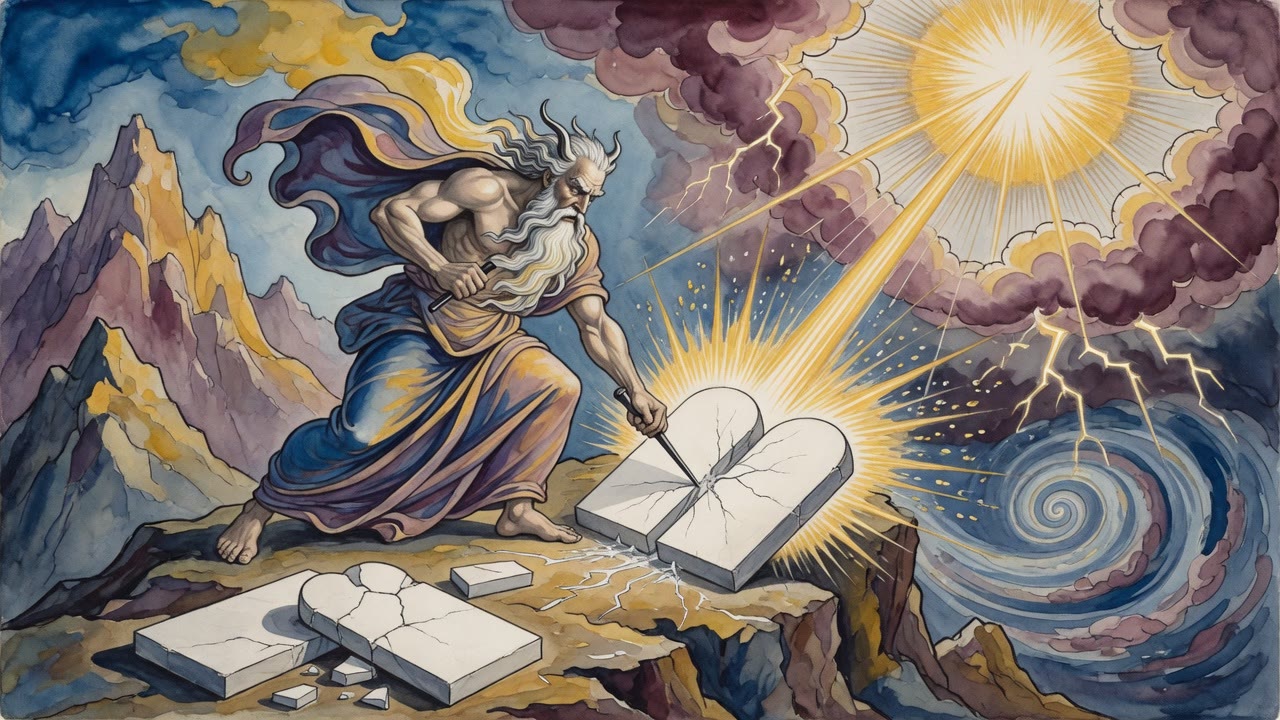
Rabbi Levi counted up everything good that heaven still intends for Israel, all of it, the whole account, and set it against one shout at the foot of a burning mountain: all that the Lord has spoken we will do and we will obey. One shout. That is the collateral.

God did not ask for the deer or the gazelle or the wild goat, the seven creatures a man would have to climb into the mountains to hunt. He asked for the bull, the sheep, the goat, the three that were already standing at the feeding trough, warm, familiar, a few steps from the door.

What the Nations Never Digest

A king once sent a proclamation into a province, and the people of that province took the covers off their heads and stood up straight and read it aloud, shaking. Nothing in the document told them to. They were simply that frightened of the man who had signed it.

The Shema (Hear O Israel) is the proclamation of the Holy One, and it comes with no such instructions. Sitting in your house. Walking on the road. Lying down. Getting up. A man reads it with his head covered, half asleep, one sandal on.

The mother is still standing in the room. That is the part the empires cannot swallow. She brought the boy in herself, she meant every word of the complaint, and when she heard what the crowd wanted she went in and told the judge that the child had kicked her before he was born and nothing else had ever happened.

The court is still open. The crowd is still outside, waiting for a verdict it has been promised for three thousand years.


← All myths

From the tradition

Sources

2 sources

The texts behind this telling. Some cards carry a translation of the source; others are our own retelling of it, and each card says which. Every card links out to the original.

Midrash Tanchuma, Emor 10Midrash Tanchuma

Retold in our words. Read the original at the link below.Townsend 1989 translation of Midrash Tanhuma, S. Buber Recension · CC-BY

(Lev. 22:27:) “When a bull or a sheep or a goat […].” This text is related (to Micah 6:3), “My people, what have I done to you and how have I wearied you; testify against Me.” R. Aha said, “Testify against Me (i.e., prove me wrong by keeping the commandments), and receive a reward. And do not testify (against your neighbor falsely), and receive a settlement of accounts.” R. Samuel bar Nahman said, “On three occasions the Holy One, blessed be He, came to dispute with Israel, when the nations of the world rejoiced: At that time, when He said to them (in Is. 1:18), ‘Please come and let us dispute together,’ they rejoiced and said, ‘Now He will finish them off.’ When the Holy One, blessed be He, saw that they were rejoicing, He reversed [the punishment] for the better. He said (ibid.), ‘though your sins be as scarlet, they shall become as white as snow […].’ When the nations of the world heard this, they were astonished and said, ‘Is this an answer; is this a rebuke? He has only come to amuse Himself with His children (and not to dispute with them seriously).’ In the second [occasion], when He said to them (in Micah 6:2), ‘[Hear, O mountains, the claim of the Lord …] for the Lord has a claim with His people, and He will dispute with Israel,’ they rejoiced and said, ‘Now He will finish them off.’ When the Holy One, blessed be He, saw that, He reversed [the punishment] for the better and said (in Micah 6:5), ‘My people, please remember what King Balak of Moab plotted and what Balaam answered him….’ When the nations of the world heard this, they were astonished and said, ‘Is this an answer; is this a rebuke? He has only come to amuse Himself with His children.’ The third [occasion] when He said (in Hos. 12:3), ‘The Lord has a claim with Judah,’ they rejoiced and said, ‘Now He will finish them off.’ When the Holy One, blessed be He, saw that, He reversed [the punishment] for the better and said (in Hos. 12:4) ‘In the womb he grabbed his brother by the heel […].’” [The situation] is similar to a woman who complained to the judge about her son and brought him for trial. Everyone came to see. They said, one to another, “See that this woman has brought her son to be killed in the case.” When the woman saw this and heard what they said, she reversed [her mind] to speak with different words. When she came before the judge, he said to her, “What has your son done to you?” She said to him, “When he was in my womb, he kicked me.” He said to her, “Has he done anything else to you?” She said, “No.” He said to her, “There is no legal offense at all.” Everyone was astonished and said, “Is this an answer; is this a rebuke? She only came to amuse herself with her son.” So they left with embarrassment on their faces. So too did the Holy One, blessed be He, go back and reverse His rebuke to love, and the nations of the world left confounded. (Micah 6:3:) “And how have I wearied you?” R. Berekhyah said, “[The situation] is similar to a king who sent his proclamation to a province. What did the people of the province do? When they received it, they uncovered their heads, and read it in fear, in awe and in trembling. So did the Holy One, blessed be He, say to Israel, ‘The reading of the Shema is My proclamation. I did not burden you and I did not tell you that you were to read it either standing upon your feet or with your heads uncovered, but (according to Deut. 6:7) “when you are sitting in your house, when you are walking on the road, when you are lying down, and when you are getting up.”’” Another interpretation (of Micah 6:3), “and how have I wearied you”: R. Judah bar Simon said, “The Holy One, blessed be He, said, ‘I have delivered ten [kinds of] beasts to you (for food). Three are in your possession, and seven are not in your possession. Now these are those which are in your possession (according to Deut. 14:4), “the bull, the sheep, and the goat.” And these are those which are not in your possession (according to Deut. 14:5), “The deer, the gazelle, the roebuck, the wild goat, the ibex, the antelope, and the mountain sheep.” I did not burden you, nor did I tell you to go up into the mountains or tire yourselves out in the fields in order to bring Me a sacrifice from those [which are not in your possession]. Rather [your sacrifices come] from those which are in your possession, which grew up at your feeding trough. This is what is stated (in Lev. 22:27), “A bull or a sheep or a goat.”’”

Full source
Midrash Tanchuma, Emor 11Midrash Tanchuma

Retold in our words. Read the original at the link below.Townsend 1989 translation of Midrash Tanhuma, S. Buber Recension · CC-BY

(Lev. 22:27:) “A bull or a sheep or a goat.” This text is related (to Is. 41:24), “Behold (hen), you are nothing (me'ayin), and your work is naught (me’afa’); an abomination shall He choose among you.” “Behold, you are nothing,” full of nothing, from a putrid liquid. “Naught (me’afa’)”; from the hundred screams (meah puot), that a woman screams when she sits on the birthing chair, ninety-nine are for death and [only] one is for life. “An abomination shall He choose among you.” What is the meaning of, “an abomination shall He choose among you?” [It is] speaking about this baby; even though it comes out from its mothers womb dirty, defiled and full of mucous, everyone kisses it and everyone hugs it, and especially if it is a male. Another interpretation: That (hen) is Greek. Hen [in Greek] means "one." You (Israel) are the one for Me, from (min) the nations of the world, who are called "nothing ('ayin)," as stated (in Is. 40:17), “All the nations are as nothing ('ayin) before Him.” (Is. 41:24, cont.) “And your work is naught.” R. Levi said, “All the good works and consolations which the Holy One, blessed be He, is going to bring about with Israel are only as reward for a single shout which they shouted on Sinai, when they said (according to Exod. 24:7), ‘All that the Lord has spoken we will carry out and obey.’” (Is. 41:24, cont.) “An abomination shall He choose among you.” That is the abomination which you made as a molten calf. Of that very abomination, bring Me sacrifice, and I will choose you. And what is it? (As in Lev. 22:27), “A bull or a sheep or a goat.” [This text is related (to Hos. 7:3),] “They make a king glad with their evil.” What did He see in the bull for making it first among the sacrifices? R. Levi said, “[The situation] is similar to a matron concerning whom there went forth an evil report in connection with one of the notables in the kingdom. The king looked into the rumors and found no substance in them. What did the king do? He made a great banquet and sat him at the head of those reclining in order to show that the king had looked into the rumors and found no substance in them. [Similarly,] because the nations of the world were saying to Israel, “You made the calf,” the Holy One, blessed be He, examined the rumors and found no substance in them. Therefore the bull was made first among the sacrifices. How is this shown? From that which they read about the matter (in Lev. 22:27), “A bull or a sheep or a goat.” R. Huna and R. Idi [said] in the name of R. Samuel bar Nahman, “Israel was saved from that act. Because if they had made the calf, it would have been [natural] for them to say (in Exod. 32:8), ‘These are our Gods, O Israel.’ However, it was the proselytes who came up with them from Egypt that made it, and they directed Israel [by saying] (in Exod. 32:8), ‘These are your Gods, O Israel.’” R. Judah bar Simon said, “It is written (in Isaiah 1:3), ‘An ox knows its owner, and an ass.., Israel does not know [...].’ And did they not know? It is simply that they trampled [the notion] with their heel.” And similar to it is (Hos. 2:10) “And she did not know that it was I who bestowed on her the grain...” And did she not know? It is simply that she trampled it with her heel.

Full source