5 min read

Elijah at Horeb Was Sent to Anoint Not Accuse

Elijah seizes the key of rain and accuses Israel at Horeb, while Hosea learns on his own marriage why a prophet must plead before he condemns.

Curated by Arthur · Told by Maggid ·
Table of Contents
  1. Wind, Earthquake, Fire, and a Wait
  2. Four Hundred Ten Years, Three Hundred Ninety of Baal
  3. Hosea's Mouth Learns on His Own House
  4. Share the Stone, Not the Cushion
  5. Decrees Fall When a Mouth Changes

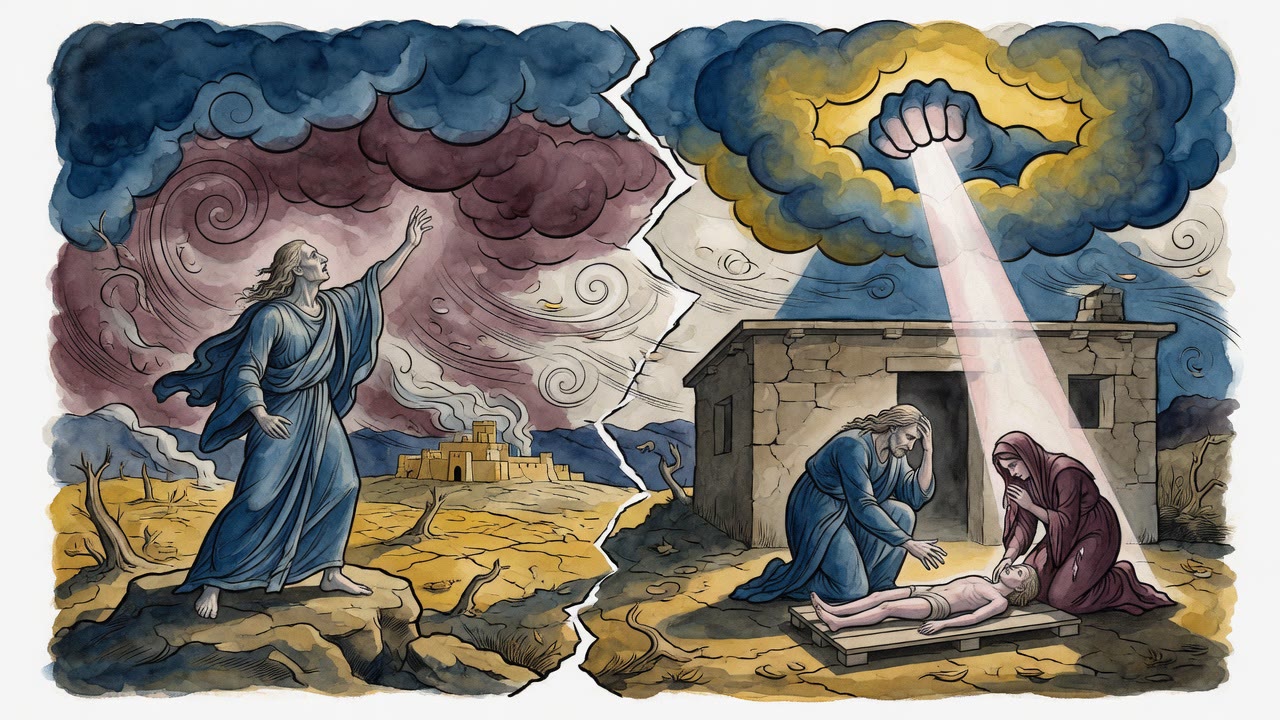
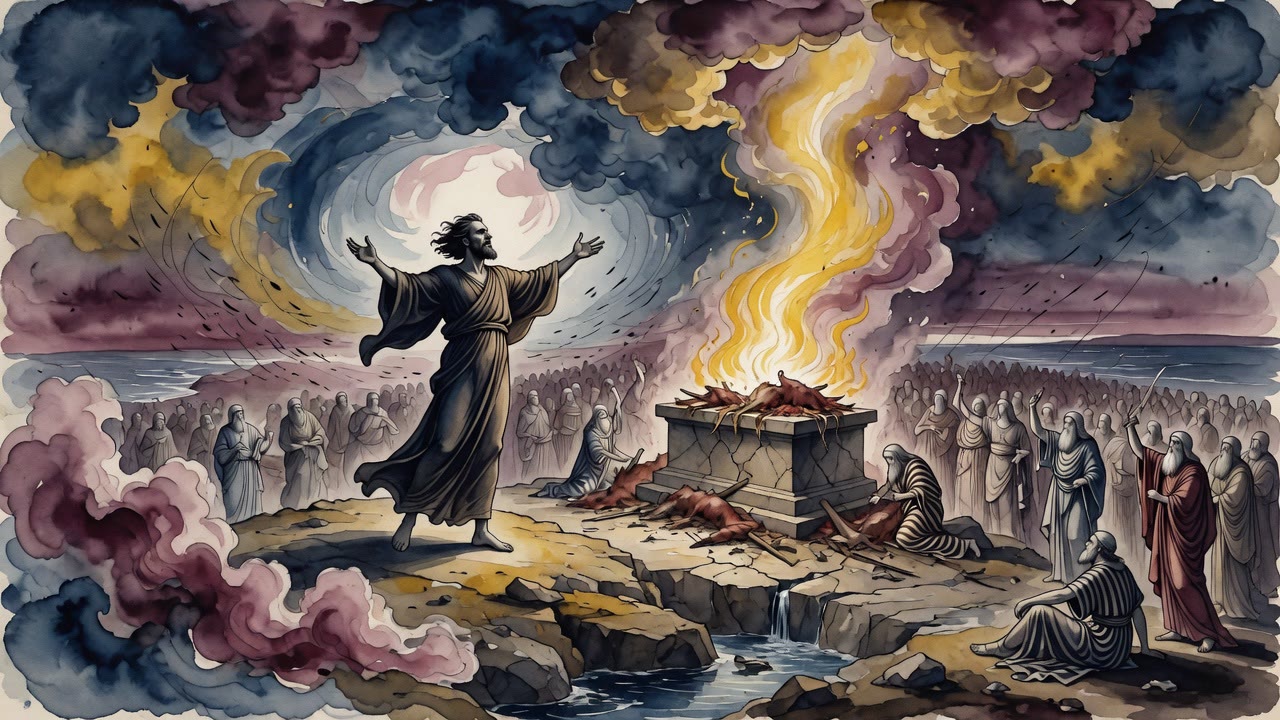
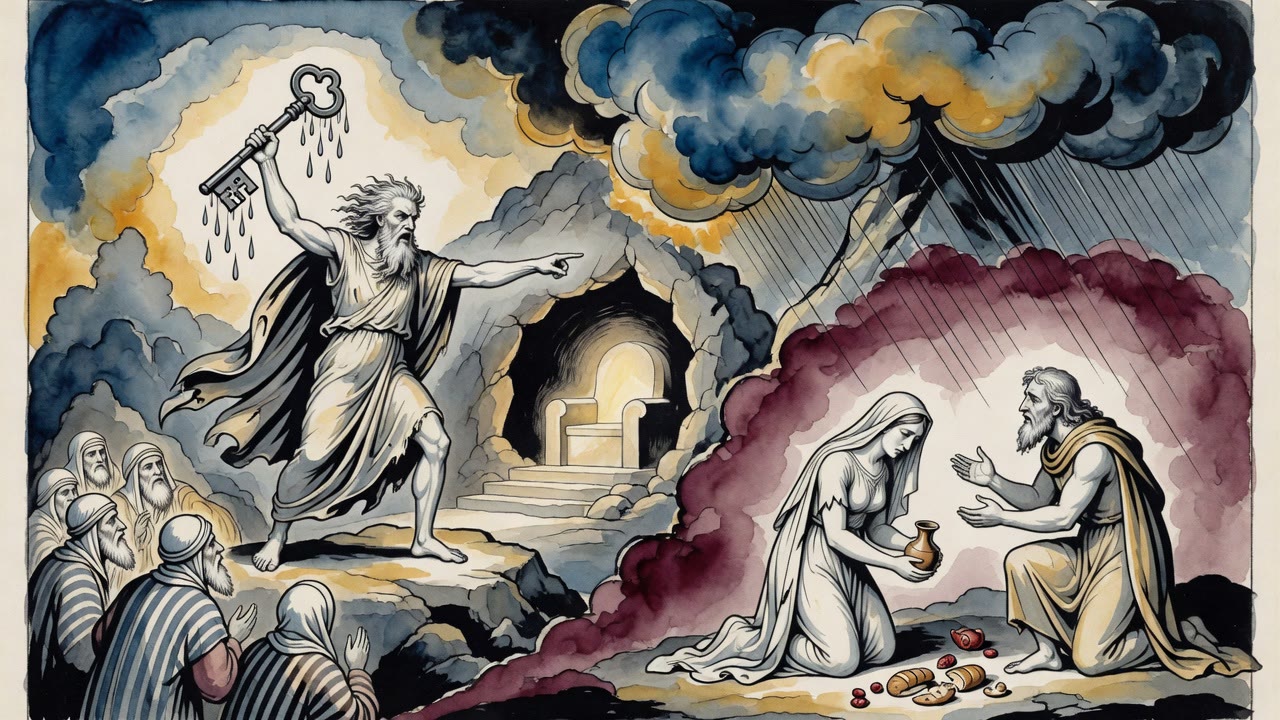
Ahab taunted Elijah that Israel worshiped idols and yet the rains still fell. Filled with wrath, Elijah swore there would be neither dew nor rain except by his word, and seized the key of rain.

Elijah at Horeb Was Sent to Anoint Not Accuse Click for full size

Drought answered him. The land cracked. Then God found him at Horeb and asked, "What are you doing here, Elijah?"

The prophet should have pleaded for his people as children of Abraham, Isaac, and Jacob. Instead he accused them, twice declaring his zeal while charging Israel with forsaking the covenant.

Wind, Earthquake, Fire, and a Wait

God answered with wind, earthquake, fire, and a still small voice, and waited three hours. Elijah held his ground. So the Holy One told him to anoint Jehu and Elisha, and that the punishment Elijah wanted for Israel, God would not carry out.

Zeal without pleading had reached its limit. The mountain that once gave Torah now gave a reassignment: stop prosecuting the people you were sent to save, and pour oil on the next hands that will work inside history.

Four Hundred Ten Years, Three Hundred Ninety of Baal

The school of Elijah opens the longer wound behind that cave. A man before he marries and has children is at peace in his house. Once children come and provoke him, grief enters his heart. So it was, as it were, with God, content before He made humanity, then grieved when people rebelled.

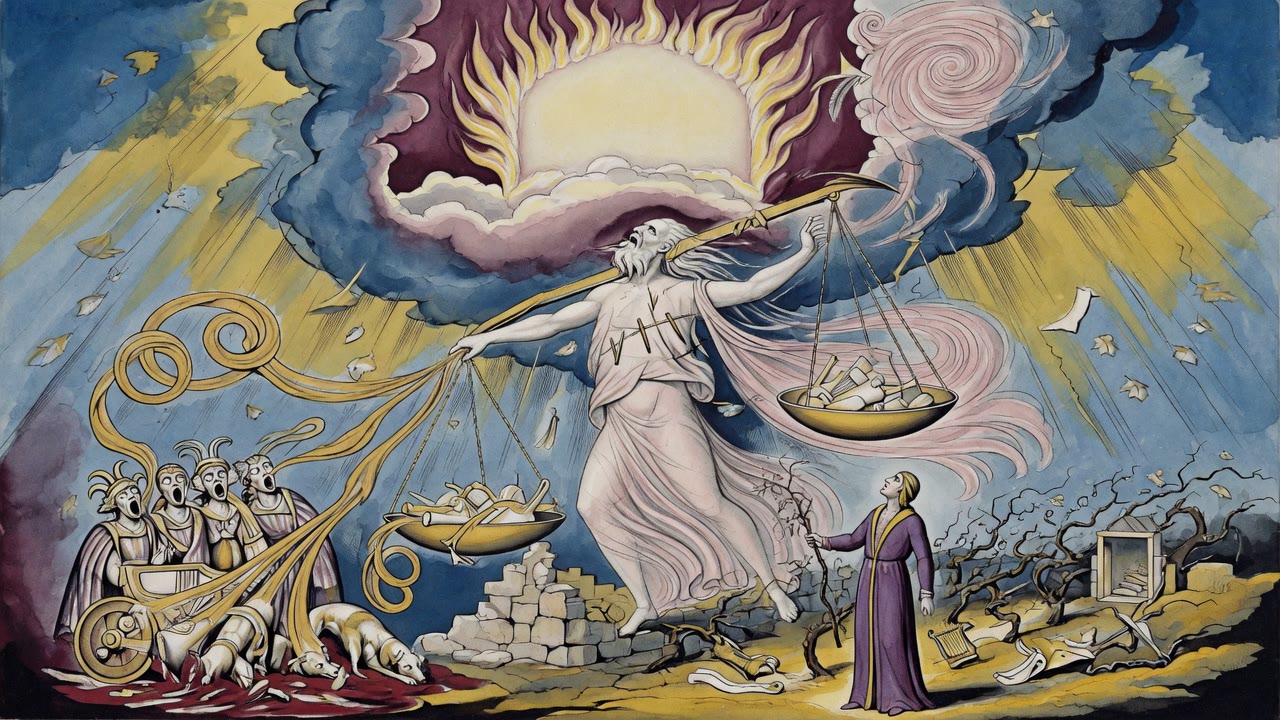
Through the days of the judges and into the First Temple, Israel served the Baalim and the gods of every surrounding nation, was delivered into hostile hands, cried out, repented, and was redeemed again and again, because God cannot bear Israel's distress once they repent. Of the four hundred and ten years of the First Temple, three hundred and ninety were spent in idolatry by this reckoning. Still the cycle of cry and rescue did not snap.

Hosea's Mouth Learns on His Own House

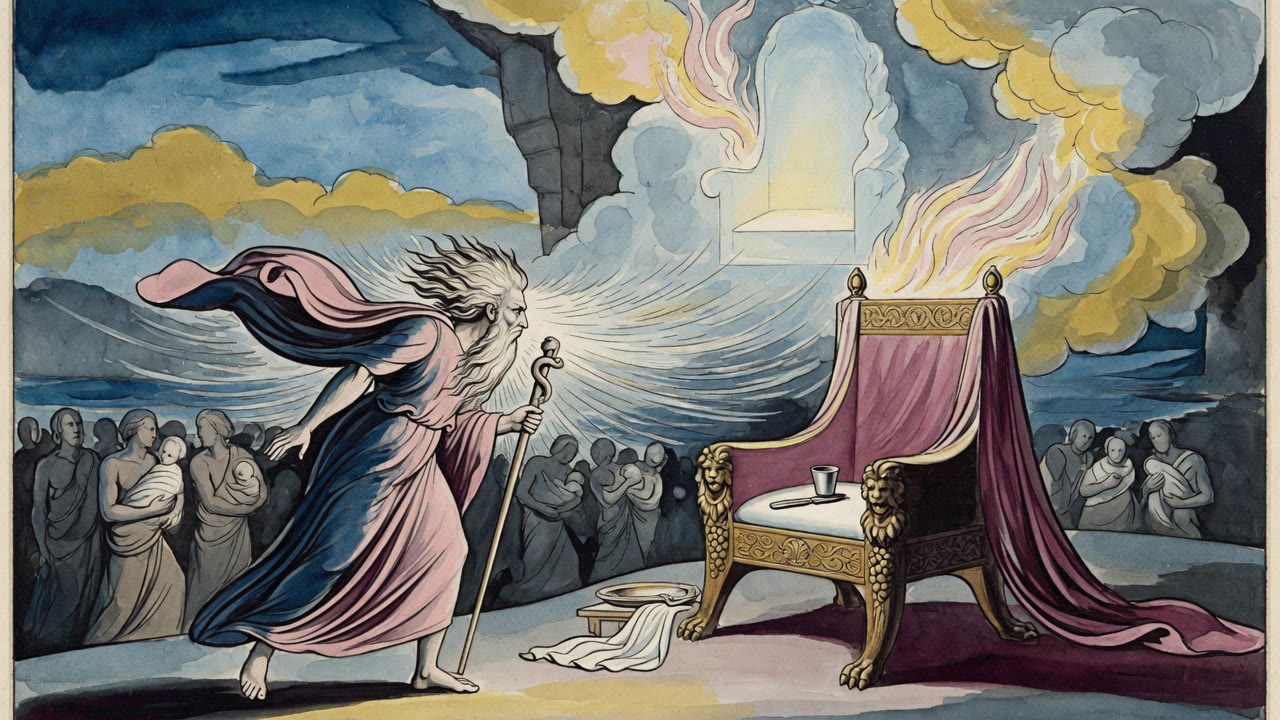
Four elder prophets spoke in the days of King Uzziah, and Hosea was the eldest of them. When the Holy One showed him Israel's sins, Heaven waited to see how the prophet would answer. He should have begged: these are Your children, turn Your mercy upon them. Instead Hosea said something terrible. The whole world is Yours, he told God, so bring some other people in their place.

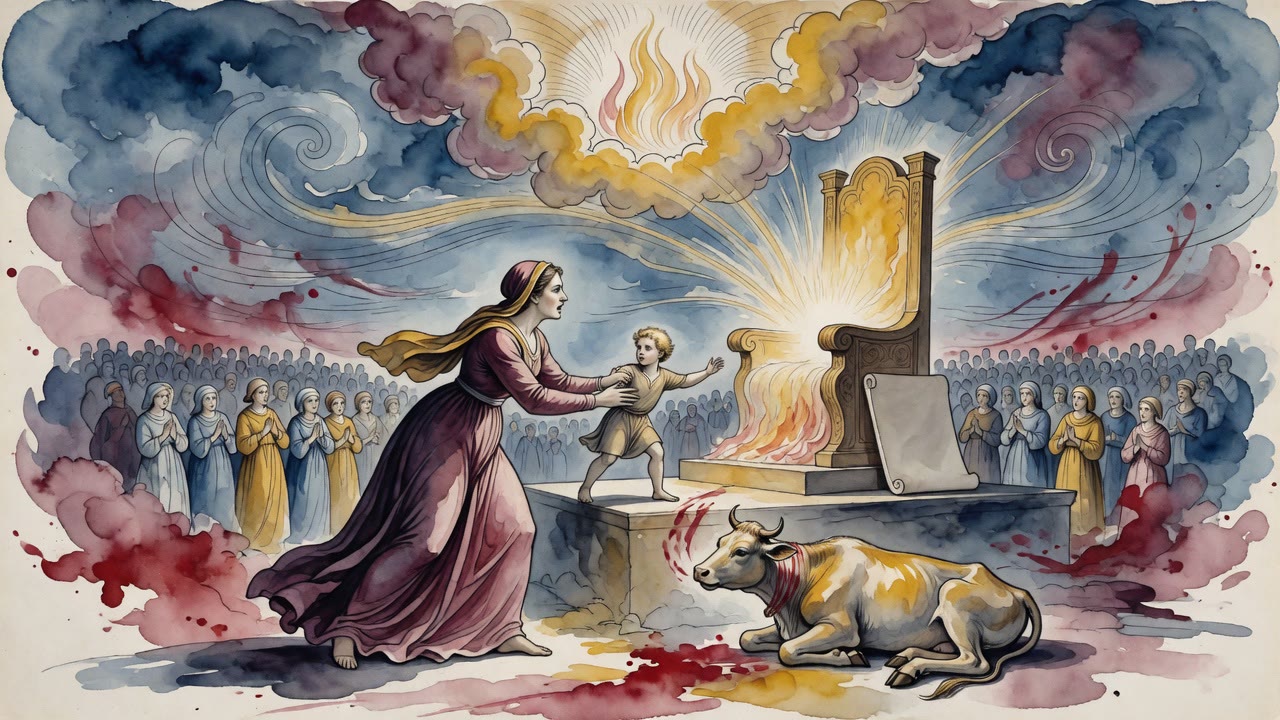
God taught him with his own life. Take a wife of harlotry, He said, and raise children of harlotry. When the time came to send her away, Hosea pleaded that he could not, for he loved the children she had borne him. If you cannot abandon a household built on uncertainty, God said, how could I abandon Israel, who are one of the five things I acquired in My world, alongside the Torah, Abraham, the Temple, and heaven and earth?

Hosea began to pray for himself. God stopped him. Before you pray for yourself, pray for Israel, against whom I issued three decrees because of your words. Hosea rose, pleaded, and the decrees fell away. His mouth that had condemned them now blessed them: their number would be like the sand of the sea, and those once called Not-My-People would be called children of the living God.

Share the Stone, Not the Cushion

Elijah's school also teaches the body how to stand with a people in trouble. When the community suffers, no one may say, I will eat and drink and keep my own soul at peace. Angels follow the one who walks away and declare that he should never live to see the community's comfort.

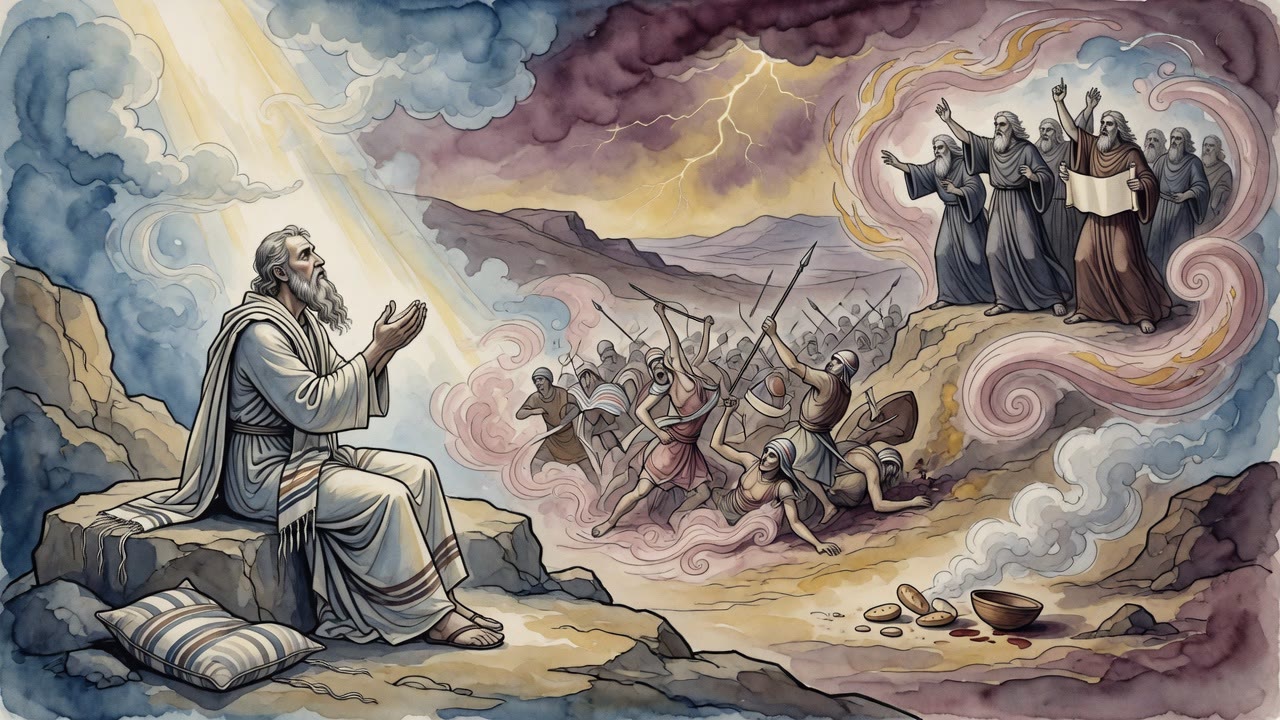
Moses showed the opposite. When his hands grew heavy against Amalek, he sat on a bare stone rather than a cushion, saying that since Israel dwelt in hardship, he would share it. Elijah himself, settling a rabbinic quarrel, stepped forward to claim descent from Rachel's seed. A great official once dismounted to bow before a sick Israelite girl cast on a refuse heap, telling furious officers that the rulers of the nations are destined to bow before this despised and chosen people.

At Horeb Elijah learned that accusation is not the last word a prophet is allowed. Hosea learned it in a marriage he could not dissolve. Both were sent back to plead.

Decrees Fall When a Mouth Changes

Hosea's three decrees fell when he turned from self-prayer to people-prayer. Elijah's rain key returned to heaven's own timing when accusation would not bend into intercession. The school of Elijah keeps both scenes because prophets fail in the same place politicians fail: they love the purity of the charge more than the stubborn life of the charged.

God's grief over children who provoke is not the end of the story. The four hundred ten years of the First Temple, with three hundred ninety counted to idolatry, still held cycles of cry and rescue. Ahab could taunt. Elijah could dry the sky. The still small voice after wind and fire still asked for a different posture than zeal alone.

When Elijah is sent to anoint, the work moves from drought theater to succession. When Hosea blesses the people he once offered to replace, the mouth that wounded becomes the mouth that multiplies sand and restores the name children-of-the-living-God. Moses on bare stone remains the body-lesson under both: share the hardship, or the angels will mark your private table as a place that never sees comfort return.


← All myths

From the tradition

Sources

3 sources

The texts behind this telling. Some cards carry a translation of the source; others are our own retelling of it, and each card says which. Every card links out to the original.

Tanna debei Eliyahu Zuta 8:1Tanna DeBei Eliyahu Zuta

Translation of the source text.Tanna debei Eliyahu Zuta, Warsaw 1880 · Public Domain

By these measures the Holy One, blessed be He, rejoices over one who does good and is angry over one who does evil. And whence do you know that this is so? Go and learn from the way of the world: for a man, until he has married a wife and until he has had children, his mind is content with him, he has no grief or sighing in his heart, and he has tranquility in his house; but after he has married a wife and has children, his mind is not content with him, he has grief and sighing in his heart, and he has no tranquility in his house, because his children provoke him with their ways and their deeds and their evil doings. So too people acted before the Holy One, blessed be He, rebelling against His sight; for until the Holy One, blessed be He, created man upon the earth, His mind was content, as it were; but after He created people, they provoked the Holy One, blessed be He, with their evil doings and their evil ways, with children who shortened their father's mind by their ways and their evil doings; then He brought, as it were, grief and sighing into His heart, and He had no tranquility in all the world.

Know that this is so: for three hundred years Israel worshiped idolatry in the days of the judges who judged, until the Holy One, blessed be He, delivered Israel into the hand of Cushan-rishathaim and into the hand of Jabin king of Hazor, and likewise into the hand of other nations; and when Israel turned back and repented, immediately the Holy One, blessed be He, turned back and redeemed Israel from their hand. And so Israel worshiped foreign worship, whether in the Land of Israel or outside the Land, and so from generation to generation they continued to sin with idolatry, until the Holy One, blessed be He, delivered Israel into the hand of the nations, as it is said, "And the children of Israel again did evil in the sight of the LORD, and served the Baalim and the Ashtaroth, and the gods of Aram, and the gods of Sidon, and the gods of Moab, and the gods of the children of Ammon, and the gods of the Philistines, and they forsook the LORD and served Him not; and the anger of the LORD was kindled against Israel, and He sold them into the hand of the Philistines and into the hand of the children of Ammon, and they crushed and shattered the children of Israel" (Judges 10:6-8).

And when they turned back and repented, immediately the Holy One, blessed be He, turned back and accepted their repentance and redeemed Israel from the hand of those nations into whose power they had been delivered, because the Holy One, blessed be He, cannot bear the distress of Israel if they have repented; and were it not a verse written, it would be impossible to say it, as it is said, "And the children of Israel cried out to the LORD, saying, We have sinned against You, because we have forsaken our God and served the Baalim... and they put away the foreign gods from among them and served the LORD; and His soul was grieved for the misery of Israel" (Judges 10:10,16). And so Israel reviled and provoked their Creator and worshiped idolatry three hundred and ninety years in the days of the First Temple.

And whence do you know that this is so? For indeed Israel dwelt in the First Temple four hundred and ten years; subtract from them twenty years in which the kings of Judah and Israel did not worship idolatry, and there remain three hundred and ninety years in which the kings of Israel and the kings of Judah worshiped idolatry. And every single prophet who spoke with Israel and reproved them that they should return in repentance, they did not desire the good of the prophet, but would say to him, "I have no desire for your prophecy, and we do not want your prophecy."

And whence do you know that this is so? For Ahab king of Israel asked Elijah the Tishbite and said to him, "It is written in your Torah, 'Take heed to yourselves, lest your heart be deceived, and you turn aside and serve other gods and worship them, and the anger of the LORD be kindled against you, and He shut up the heavens that there be no rain, and the ground not yield its produce' (Deuteronomy 11:16-17); yet we worship idolatry, and the rains are not withheld!" But come and see how much good came his way, as it is said, "And Ahab son of Omri reigned over Israel... and did evil in the sight of the LORD... and reared up an altar for Baal... in his days Hiel the Bethelite built Jericho; he laid its foundation with Abiram his firstborn, and set up its gates with Segub his youngest, according to the word of the LORD which He spoke by the hand of Joshua son of Nun" (I Kings 16:29-34).

Immediately Elijah was filled with great wrath against Ahab, and said to Ahab, "Empty one, you have despised the One who created the whole world for His glory and the One who gave the Torah for His glory. By your life, I will judge you only out of your own words," as it is said, "And Elijah the Tishbite, of the inhabitants of Gilead, said to Ahab, As the LORD God of Israel lives, before whom I have stood, there shall not be dew nor rain these years, except according to my word" (I Kings 17:1). Immediately Elijah took the key of rain and went his way, and there was a great famine, until the Holy One, blessed be He, said to Elijah, "Go, show yourself to Ahab, and I will give rain."

Moreover, the Holy One, blessed be He, drove Elijah to the place where the fathers of Israel had sought mercy for their children, as it is said, "And he lay down and slept under a certain juniper tree; and behold, an angel touched him and said to him, Arise and eat. And he looked, and behold, at his head was a cake baked on hot stones and a jar of water; and he ate and drank and lay down again. And the angel of the LORD came again the second time and touched him and said, Arise and eat, for the journey is too great for you. And he arose and ate and drank, and went in the strength of that food forty days and forty nights to Horeb the mountain of God; and he came there to the cave and lodged there. And behold, the word of the LORD came to him and said, What are you doing here, Elijah?" (I Kings 19:5-9).

When the Holy One, blessed be He, said to Elijah, "What are you doing here, Elijah?" Elijah should have said before the Holy One, blessed be He, "Master of the universe, they are Your children, they are the children of those You tested, they are the children of Abraham, Isaac, and Jacob, who did Your will in the world." But not only did he not say so; rather he said, "I have been very zealous for the LORD God of hosts, because the children of Israel have forsaken Your covenant" (I Kings 19:10).

Immediately the Holy One, blessed be He, began to speak words of consolation to Elijah and said to him, "When I revealed Myself to give the Torah to Israel, none revealed themselves with Me except the ministering angels, who desire the good of Israel," as it is said, "And He said, Go forth and stand upon the mountain before the LORD. And behold, the LORD passed by, and a great and strong wind tore the mountains and shattered the rocks before the LORD; but the LORD was not in the wind. And after the wind an earthquake; but the LORD was not in the earthquake. And after the earthquake a fire; but the LORD was not in the fire. And after the fire a still small voice" (I Kings 19:11-12).

What did the Holy One, blessed be He, do? He waited for Elijah three hours, and he still stood by his earlier words and said yet a second time, "I have been very zealous for the LORD God of hosts" (I Kings 19:14). At that hour the Holy One, blessed be He, said to Elijah, "Go, return on your way to the wilderness of Damascus... and Jehu son of Nimshi you shall anoint to be king... and Elisha son of Shaphat of Abel-meholah you shall anoint to be prophet in your place" (I Kings 19:15-16), and what is in your mind I cannot do.

Full source
Tanna debei Eliyahu Zuta 9:1Tanna DeBei Eliyahu Zuta

Translation of the source text.Tanna debei Eliyahu Zuta, Warsaw 1880 · Public Domain

In the days of Uzziah king of Judah, four elder prophets prophesied, and Hosea son of Beeri was the eldest of them all. The Holy One, blessed be He, watched over them all, to see who would seek mercy for His children and who would not. The Holy One, blessed be He, said to Hosea: See for Israel what sins they are committing. Hosea ought to have said before the Holy One, blessed be He: Master of the universe, they are Your children, the children of those You tested, the children of Abraham, Isaac, and Jacob, who did Your will in the world; turn upon them Your attribute of mercy and have compassion on them and pardon their iniquities. Not only did Hosea fail to say this, but he said before the Holy One, blessed be He: Master of the universe, the whole world is Yours; exchange them for another people.

As it is said, "The beginning of the word of the LORD by Hosea" (Hosea 1:2). Were there not many prophets who prophesied to Israel? Rather, of the four elder prophets prophesying in that period, the word of the LORD came first to Hosea. At that moment the Holy One, blessed be He, said: What shall I do with that old man? I will say to him: Go, take a wife of harlotry, and you shall have children of harlotry; and afterward I will say to him: Go, separate yourself from her. If he is able to send her out and divorce her and dismiss her, then I too will send Israel away from off the face of the earth. As it is said, "And the LORD said to Hosea, Go, take you a wife of harlotry and children of harlotry, for the land has greatly committed harlotry, departing from the LORD" (Hosea 1:2). And he went and took Gomer the daughter of Diblaim, an evil report, the daughter of an evil report, and she conceived and bore him a son. And the LORD said to him, "Call his name Jezreel, for in a little while I will visit the blood of Jezreel upon the house of Jehu" (Hosea 1:4). And she conceived again and bore a daughter, and He said to him, "Call her name Lo-ruhamah [Not-pitied], for I will no longer have pity on the house of Israel" (Hosea 1:6). And she conceived and bore a son, and He said, "Call his name Lo-ammi [Not-my-people], for you are not My people and I will not be yours" (Hosea 1:9).

After two sons and one daughter had been born, and three decrees had been decreed against Israel on their account, the Holy One, blessed be He, said to him: Hosea, why did you not learn from Moses your teacher? When I spoke with him, he separated from his wife. Why do you dwell with the woman? Separate yourself from her. He said before Him: Master of the universe, I cannot send her out nor divorce her, for I already have children from her. The Holy One, blessed be He, said to Hosea: If you, who married a wife of harlotry, whose children are children of harlotry, and you do not even know whether those children are yours or another's, say you cannot send her out nor divorce her because you already have children from her, how much more so these children of Israel, who are My beloved, the children of My beloved, the children of Abraham, Isaac, and Jacob, and who are one acquisition out of the five acquisitions I acquired for Myself in My world. These are they: the Torah is one acquisition, Abraham is one acquisition, the Temple is one acquisition, heaven and earth are one acquisition, and Israel is one acquisition. Yet you said, Exchange them for another nation. How could I send them away from before Me?

When Hosea knew that he had sinned, he began to seek mercy for himself. The Holy One, blessed be He, said to Hosea: Hosea, before you seek mercy for yourself, seek mercy for Israel, against whom I decreed three decrees on your account. Go back and heal them of those three decrees. Immediately Hosea arose and sought mercy for them, and the decrees were annulled, and he began to bless Israel, as it is said, "Yet the number of the children of Israel shall be as the sand of the sea, which cannot be measured nor numbered; and it shall come to pass that in the place where it was said to them, You are not My people, it shall be said to them, You are the children of the living God. And the children of Judah and the children of Israel shall be gathered together and appoint themselves one head... Say to your brethren, Ammi [My people], and to your sisters, Ruhamah [Pitied]... And I will sow her to Me in the earth, and I will have pity on Lo-ruhamah, and I will say to Lo-ammi, You are My people" (Hosea 2).

In the days of Ahaz king of Judah, Israel were doing the words of the Torah and the commandments. Ahaz arose and sealed up the Torah and decreed against Israel that they should not occupy themselves with Torah and commandments, as it is said, "Bind up the testimony, seal the Torah among My disciples" (Isaiah 8:16), until the Holy One, blessed be He, said to Isaiah: Go, say to Ahaz: Are you not a mortal? Ask for yourself a sign from the LORD, as it is said, "And the LORD spoke again to Ahaz, saying, Ask for yourself a sign from the LORD your God; ask it either in the depth, or in the height above. But Ahaz said, I will not ask, neither will I test the LORD. And he said, Hear now, O house of David: Is it a small thing for you to weary men, that you weary my God also?" (Isaiah 7:10-13).

In the days of Manasseh son of Hezekiah king of Judah, Israel arose and made an image of four faces and set up that image in the Sanctuary so that no one should pray to the Holy One, blessed be He, there, until the Holy One, blessed be He, said to Isaiah: Go, say to that mortal: "Thus says the LORD: The heaven is My throne and the earth is My footstool. Where is the house that you would build for Me, and where is the place of My rest?" (Isaiah 66:1). And not the heaven alone is My throne, but Vilon and Rakia and Shechakim and Zevul and Maon and Aravot, all these are My throne, and I sit above them all; and therefore it is said, "Where is the house that you would build for Me?" When that event befell him, he immediately repented, as it is said, "And when he was in distress, he sought the favor of the LORD his God and humbled himself greatly before the God of his fathers, and prayed to Him; and He was entreated of him and heard his supplication and brought him again to Jerusalem to his kingdom. Then Manasseh knew that the LORD, He is God" (2 Chronicles 33:12-13). Of him, and of his like, and of those resembling him, and of those who do as he did, Scripture says, "You have wearied the LORD with your words. Yet you say, How have we wearied Him? In that you say, Everyone who does evil is good in the sight of the LORD, and He delights in them; or, Where is the God of judgment?" (Malachi 2:17).

In the days of Hoshea son of Elah king of Israel, the land was captured, and the ten tribes went into exile in his days. Now what was different about Hoshea son of Elah from all the kings of Israel before him, that Israel went into exile in his days? Rather, from the time Jeroboam son of Nebat arose until Hoshea son of Elah came, idolatry hung upon the individual alone, and it was hard before their Father in heaven to exile the many of Israel for the sin of the individual. But when Hoshea son of Elah came, he arose and abolished all the guard posts that had stood upon the roads in the days of Jeroboam to prevent Israel from going up to Jerusalem for the festival, and he proclaimed and said: Whoever wishes to go up for the festival to Jerusalem, let him come and go up. Thus he removed the yoke-collar from his own neck and hung it upon the neck of the many. Therefore Scripture says of him, "And he did that which was evil in the sight of the LORD, but not as the kings of Israel who were before him. Against him came up Shalmaneser king of Assyria... and he carried Israel away to Assyria and placed them in Halah and on the Habor, the river of Gozan, and in the cities of the Medes" (2 Kings 17:2-6). From here they said: Whoever begins a commandment and does not complete it is held liable in his own life and in all that he has, and he buries his wife and his children.

In the days of Zedekiah king of Judah, Jeremiah the prophet prophesied to Israel that if they would repent and return to better ways. But Israel rose up against him to kill him, and they cast Jeremiah into a miry pit, and afterward they brought him up out of the miry pit and placed him in the court of the guard. Many times Israel rose up against Jeremiah to kill him, and Jeremiah would curse Israel with many curses; and for each and every curse that Jeremiah cursed Israel, the Holy One, blessed be He, would sigh against it, as it is said, "For you have run with the footmen and they have wearied you" (Jeremiah 12:5). And then, in the days of Zedekiah, the ten tribes went into exile, and the tribes of Judah and Benjamin went into exile with them, and the people of Jerusalem went into exile with them; and the Holy One, blessed be He, sought to go with them into exile.

Immediately the ministering angels gathered before the Holy One, blessed be He, to appease Him and to comfort Him, and they said before Him: Master of the universe, You already have the nations of the world in Your world, while we have neither limit nor number. The Holy One, blessed be He, said to the ministering angels: Am I flesh and blood, that I need comforting? I recognize the beginning and I recognize the end, for so it is said of Me, "Even to old age I am the same, and even to gray hairs I will carry you; I have made, and I will bear; I will carry and will deliver" (Isaiah 46:4). Therefore it is said, "Look away from Me; I will weep bitterly; do not labor to comfort me concerning the ruin of the daughter of My people" (Isaiah 22:4). Why did the Holy One, blessed be He, not say to the angels, Do not gather to comfort Me, or Do not assemble to comfort Me, or Do not come to comfort Me, but said precisely, Do not labor to comfort Me? Rather, the Holy One, blessed be He, said to the ministering angels: These comfortings are insults to Me. Go down from before Me and see My people Israel, how they go into exile with great burdens on their shoulders. Immediately the ministering angels went down from before the Holy One, blessed be He, and went out in alarm and took the burdens of Israel from off their shoulders. And immediately the Divine Presence went out also with Israel into exile, as it is said, "Thus says the LORD, your Redeemer, the Holy One of Israel: For your sake I have sent to Babylon" (Isaiah 43:14).

And if you should say: Since a person commits a transgression, let him die at once -- if so, the whole world would be destroyed. And how do you know it is so? Go and learn from Manasseh son of Hezekiah king of Judah, who left no idolatry in the world that he did not worship, yet the Holy One, blessed be He, had pity on him and did not slay him, because he repented and because of the righteous who were destined to come forth from him. From here they said: Even if a person has piled up many transgressions, one above another, and afterward he returns in repentance, the Holy One, blessed be He, says: Behold, I am with him in mercy, and I accept his repentance. And even if a person stood and reviled and blasphemed against Heaven and afterward returned in repentance, the Holy One, blessed be He, says: Behold, I am with him in mercy, and behold, I pardon him for all his iniquities, as it is said, "Have I any pleasure at all in the death of the wicked? says the Lord GOD; and not rather that he should return from his ways and live?" (Ezekiel 18:23), and it says, "Say to them, As I live, says the Lord GOD, I have no pleasure in the death of the wicked, but that the wicked turn from his way and live. Turn, turn from your evil ways" (Ezekiel 33:11), and it says, "Then you shall return and discern between the righteous and the wicked, between him who serves God and him who does not serve Him" (Malachi 3:18).

And thus the Holy One, blessed be He, says to Israel: Come and bring yourselves into the words of the Torah and see what I wrote for you, to bear your transgressions and to pardon your iniquities and to remove your sins from before Me. Yet now you have not increased in the words of the Torah; speak with Me in the words of the Torah as a man speaks with his fellow, as it is said, "Return, O Israel, to the LORD your God, for you have stumbled in your iniquity. Take with you words and return to the LORD; say to Him, Take away all iniquity and receive us graciously, so will we render the bullocks of our lips. Assyria shall not save us" (Hosea 14:2-3).

Full source
Tanna debei Eliyahu Zuta 15:1Tanna DeBei Eliyahu Zuta

Translation of the source text.Tanna debei Eliyahu Zuta, Warsaw 1880 · Public Domain

Abba Elijah, may he be remembered for good and for blessing, said: I call heaven and earth to witness concerning myself, that any disciple of the wise who reads and studies for the sake of Heaven, and eats of his own and enjoys his own and does not enjoy that of the public, of him Scripture says, "Happy is everyone who fears the LORD, who walks in His ways. When you eat the labor of your hands, happy shall you be, and it shall be well with you" (Psalms 128:1-2), and it says, "How fair and how pleasant you are, O love, in delights" (Song of Songs 7:7).

A person should always be humble in Torah and in good deeds and in the fear of Heaven, with his father and his mother, with his teacher and his wife and with his children and with the members of his household and his neighbors, and with those near and far, and even with a gentile in the marketplace, so that he may be beloved above and pleasant below and acceptable to people, and may fill his days and his years with a good name. For when a person is humble in Torah and in good deeds, then his wife fears him, and so do the members of his household and his neighbors and his relatives, and even the gentiles fear him, as it is said, "And all the peoples of the earth shall see that the name of the LORD is called upon you, and they shall be afraid of you" (Deuteronomy 28:10). And so too a person should not see the multitude dwelling in trouble and say, I will go and eat and drink, and peace be upon my soul; for if he does so, of him Scripture says, "And behold, joy and gladness, slaying oxen and killing sheep, eating flesh and drinking wine: let us eat and drink, for tomorrow we die" (Isaiah 22:13). What is written after it? "And it was revealed in my ears by the LORD of hosts: Surely this iniquity shall not be purged from you until you die" (Isaiah 22:14). Up to here is the measure of the middling; but as for the measure of the wicked, what does it say? "Come, they say, I will fetch wine, and we will fill ourselves with strong drink, and tomorrow shall be as this day, great beyond measure" (Isaiah 56:12). And after it, what is written? "The righteous perishes, and no man lays it to heart, and merciful men are taken away, none considering that the righteous is taken away from the evil to come" (Isaiah 57:1).

For at the time when the multitude is dwelling in trouble and the individual separates himself from them, the two ministering angels who accompany a person from the synagogue and from the house of study to his home say of him: that man who separates himself from the community -- let him not merit to see the consolation of the community. Come and see and learn from the ways of Moses our teacher, peace be upon him, as it is said, "But Moses' hands were heavy, and they took a stone and put it under him, and he sat upon it" (Exodus 17:12). Now did Moses our teacher not have a cushion and a bolster to sit upon? Rather, Moses said in his mind: Since Israel are dwelling in trouble, I too will be with them in trouble. From here they said: happy is the one who afflicts himself together with the community, for they give him much reward from heaven on that account. Happy is the one who sets himself like an ox to the yoke and like a donkey to the burden and like a heifer plowing in the field, as it is said, "Happy are you who sow beside all waters" (Isaiah 32:20). What is "beside all waters"? These are the words of the Torah, which are likened to water. And if a person has read the Torah, let him also read the Prophets; and if he has read the Prophets, let him also read the Writings; if he has read the Writings, let him also study Mishnah, laws, midrash, and aggadot; and let him increase in sitting in study and decrease in commerce. Then immediately the holy spirit rests upon him, and he is a son of the world to come, as it is said, "The spirit of the LORD spoke by me, and His word was upon my tongue" (2 Samuel 23:2). At that moment the Holy One, blessed be He, says: This world and the world to come are Mine and yours; the Temple is Mine and yours, and so forth. Therefore it is written immediately after it, "The God of Israel said, the Rock of Israel spoke to me: He who rules over men must be righteous, ruling in the fear of God" (2 Samuel 23:3).

David the king said: I will declare the greatness and the might and the kingship of the King of kings of kings, the Holy One, blessed be He, for every single day a person is formed, and every single day a person is born, and every day a person lives, and every single day a person dies, and every single day the spirit of a person is taken from him and given to the Owner of the deposit, and every single day a person is sustained like an infant nursing at his mother's breasts; and all is according to the fruit of his deeds.

One time our Rabbis were sitting in the house of study and saying: Elijah, from where does he come? Some of them would say that he comes from the seed of Rachel, and some of them would say that he comes from the tribe of Gad, and some of them would say that he comes from the seed of Leah. And while they were sitting and occupying themselves with this, Elijah, may he be remembered for good and for blessing, came and stood before them and said to them: My masters, why are you troubling yourselves over this? I come only from the seed of Rachel.

Rabbi Yose said: One time I was walking in a great walled city of the province, and I saw [a Caesar who was riding, etc.] the chief, who was riding on a very fine horse, and all the great ones of that place were with him. And the chief saw a certain young girl, a daughter of Israel, stricken with boils and cast onto a refuse heap. When the chief saw her, immediately the chief came down from the horse and bowed down to her. Immediately all the great officers grew angry at him and said to him: To this despised one you bow down? Immediately he said to them: Let it not be evil in your eyes, for all the great ones of the kingdom of the nations are destined to bow down to them, as it is said, "Thus says the LORD, the Redeemer of Israel, his Holy One, to him whom man despises, to him whom the nation abhors, to a servant of rulers: Kings shall see and arise, princes also shall worship, because of the LORD who is faithful, the Holy One of Israel, who has chosen you" (Isaiah 49:7), and it says, "And their seed shall be known among the nations and their offspring among the peoples; all who see them shall acknowledge them, that they are the seed whom the LORD has blessed" (Isaiah 61:9).

Full source