5 min read

Elijah Ran to Horeb and Was Sent Back Again

Jezebel's threat drove Elijah into the wilderness, where an angel fed him and God answered his zeal by sending him back.

Curated by Arthur · Told by Maggid ·
Table of Contents
  1. The Queen Sent One Sentence
  2. The Broom Tree Held His Collapse
  3. Forty Days Led to Horeb
  4. The Mountain Broke Around Him
  5. The Question Came Twice
  6. The Road Turned North Again

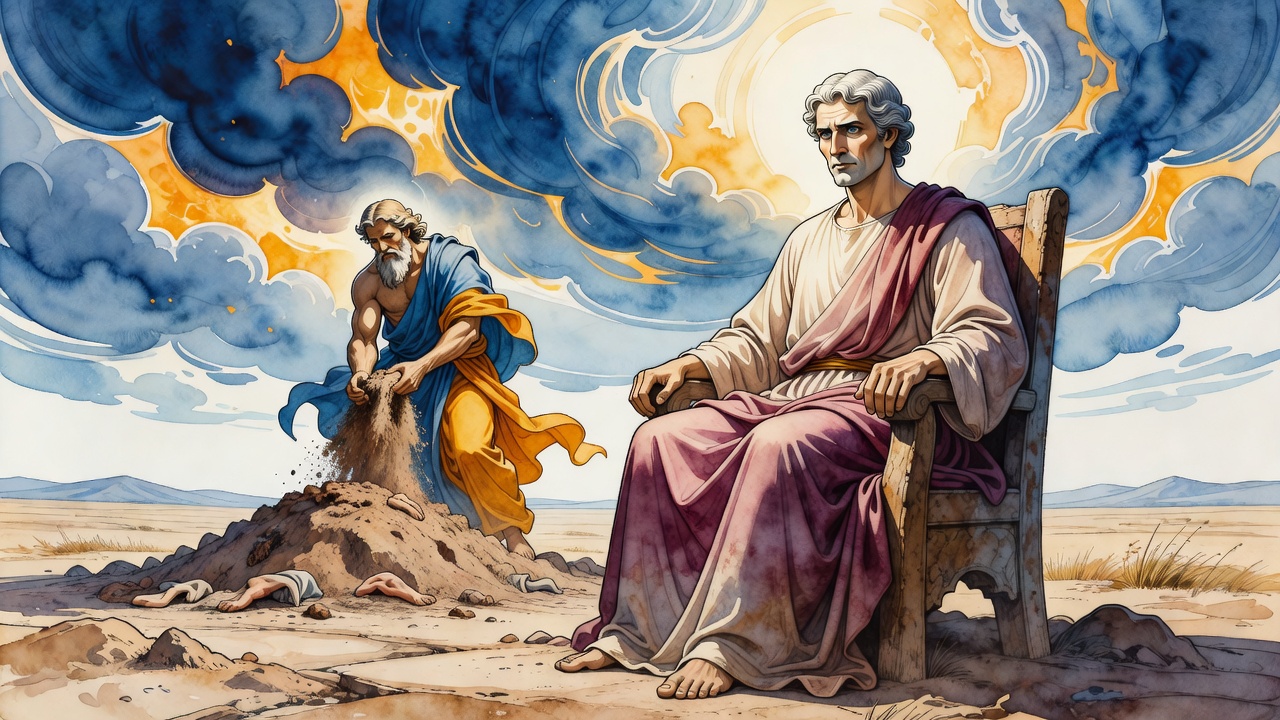
The message was short enough to carry in one breath: by tomorrow, Elijah would be dead.
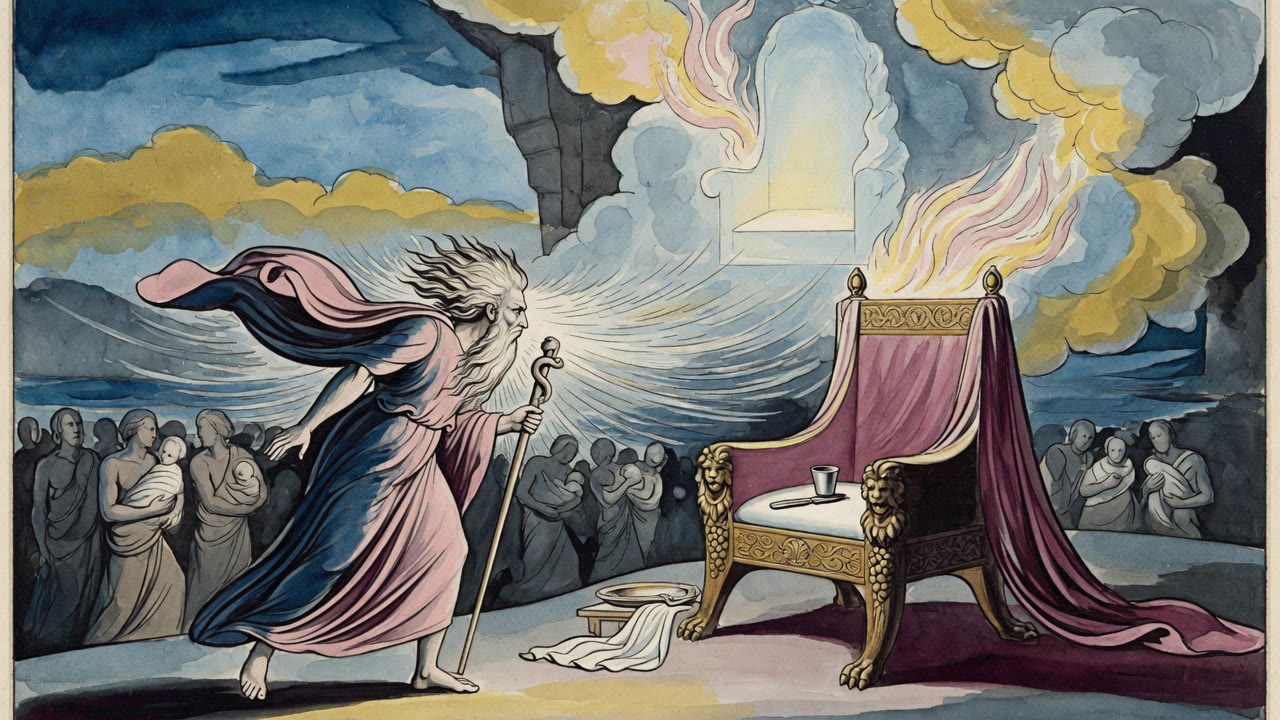
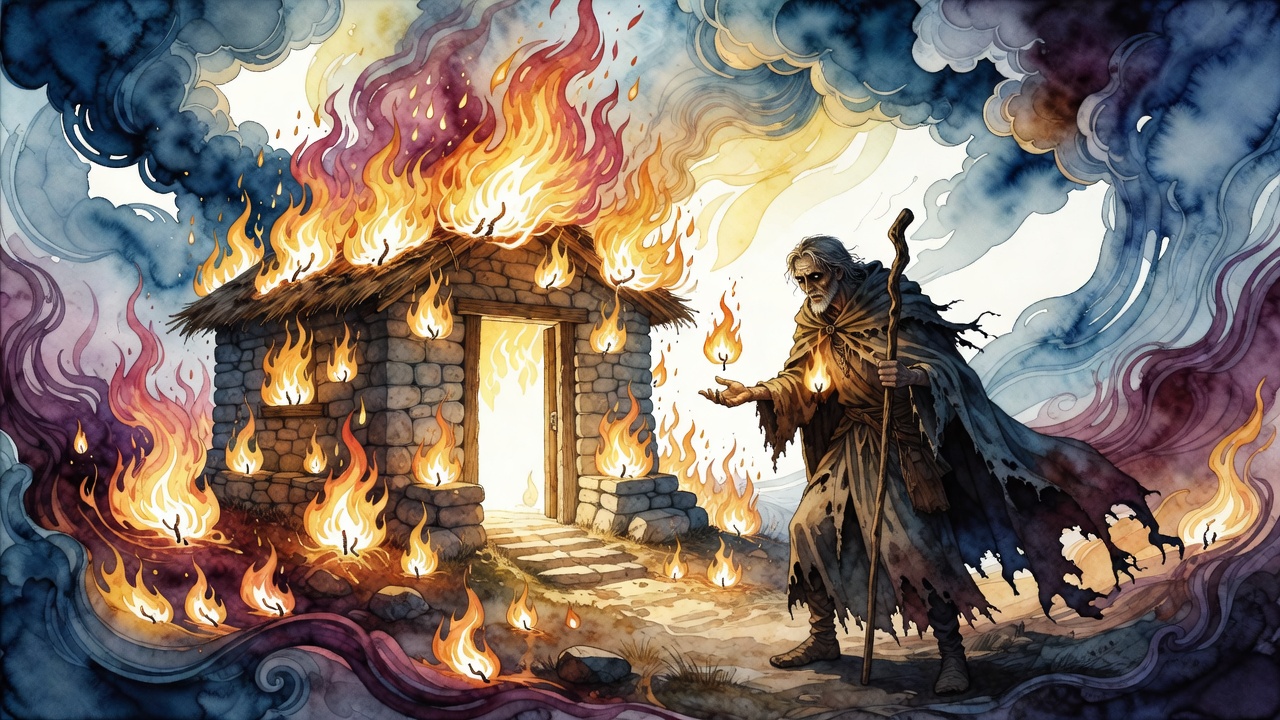
Jezebel had heard what happened on Carmel. Fire had fallen. The prophets of Baal had been cut down. Rain had returned after the long drought. Elijah should have stood taller than any man in Israel. Instead he ran.

The Queen Sent One Sentence

A threat can move faster than a chariot. It crossed the palace threshold and found the prophet still hot from victory. By the next day, Jezebel swore, his life would be like the lives he had taken.

Elijah rose and fled south. Beersheba passed behind him. The land thinned into wilderness. He left his servant and walked on alone until even the shape of company was gone.

He was not the first holy man to run. Jacob had fled with Esau behind him. Moses had fled with Pharaoh behind him. David had slipped away while Saul's house sharpened its hunger for him. The road of flight had saved them. Now Elijah's feet joined theirs in the dust.

The Broom Tree Held His Collapse

Under a broom tree, the prophet stopped wanting the next step.

He sat in the sparse shade and asked God to take his life. Enough. The word had the weight of a stone lowered into a dry well. He had called down fire, faced a king, closed the heavens, opened them again, and still the queen ruled from her house with murder in her mouth.

Sleep took him where courage could not. Then a touch reached him.

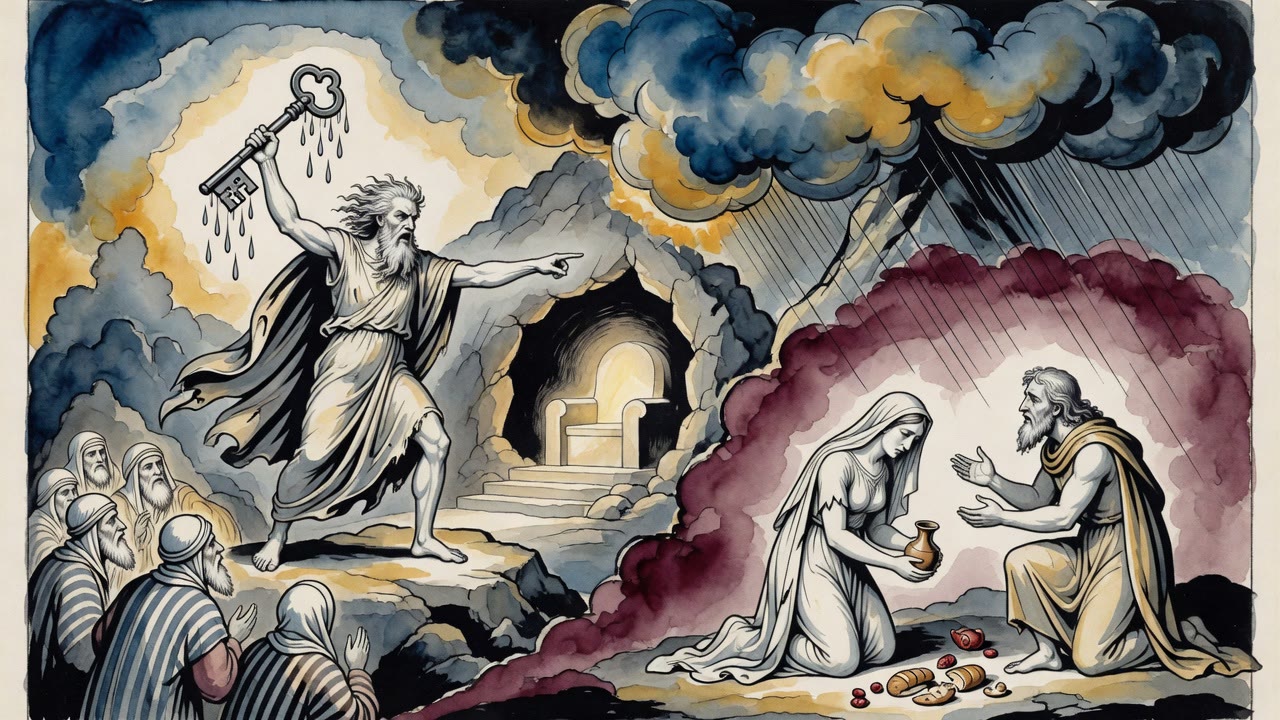
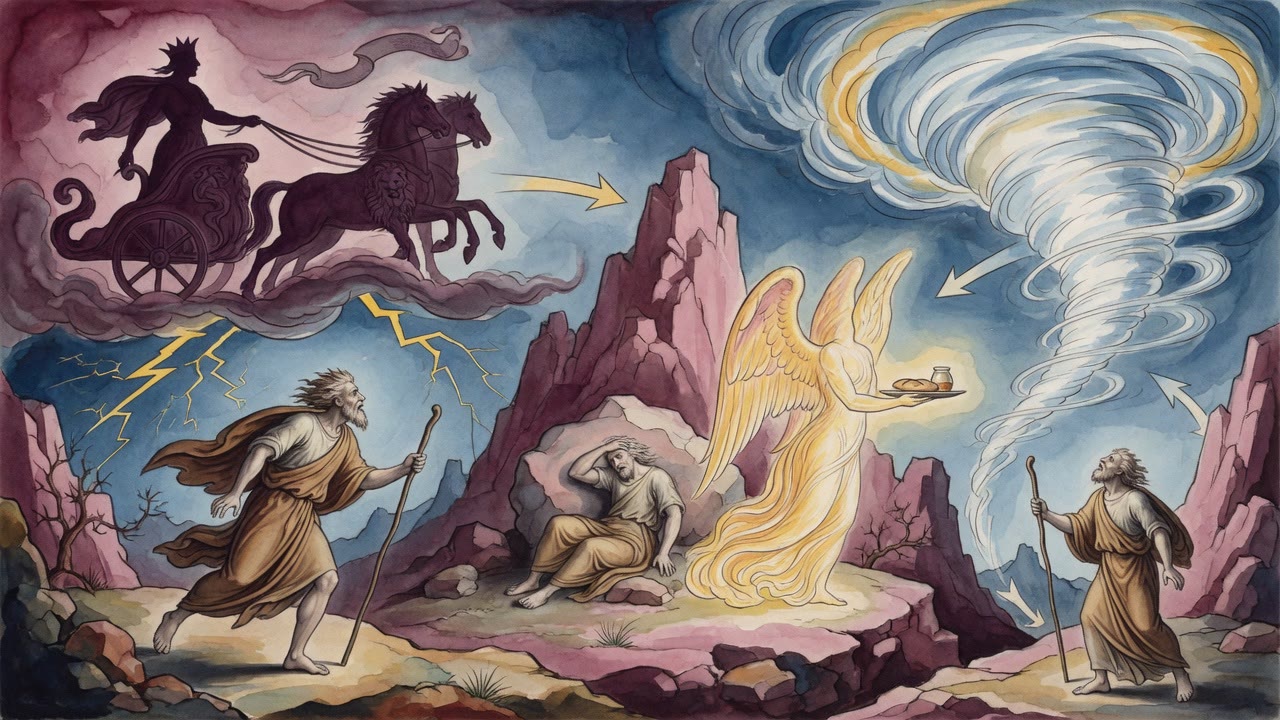
An angel stood near, not with thunder, but with food. A cake baked on hot stones lay by his head, and water waited beside it. Elijah ate and drank and fell back into sleep. The second touch came with command and warning. Rise and eat, because the road is too much for you.

Forty Days Led to Horeb

The food carried him farther than food should carry a man.

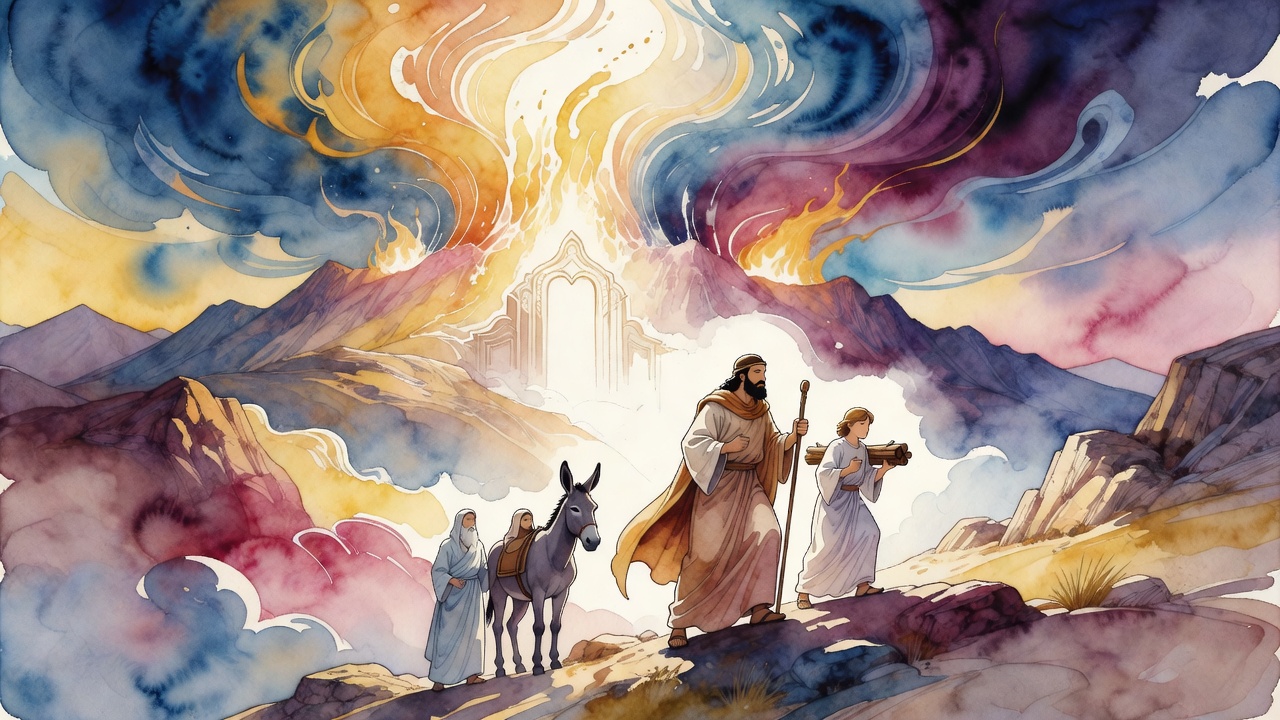
Forty days and forty nights stretched between the broom tree and Horeb. Every step drew him toward the mountain where Moses had stood, where law and fire had once met Israel. Elijah came not with a nation below him, but alone, hollowed out by zeal and fear.

He entered a cave and spent the night there. The stone held its silence around him.

Then the word of God found him in the dark: "What are you doing here, Elijah?"

The prophet answered with the sentence he had carried across the wilderness. He had been zealous for God. Israel had abandoned the covenant, thrown down the altars, killed the prophets. He alone remained, and they sought his life.

The Mountain Broke Around Him

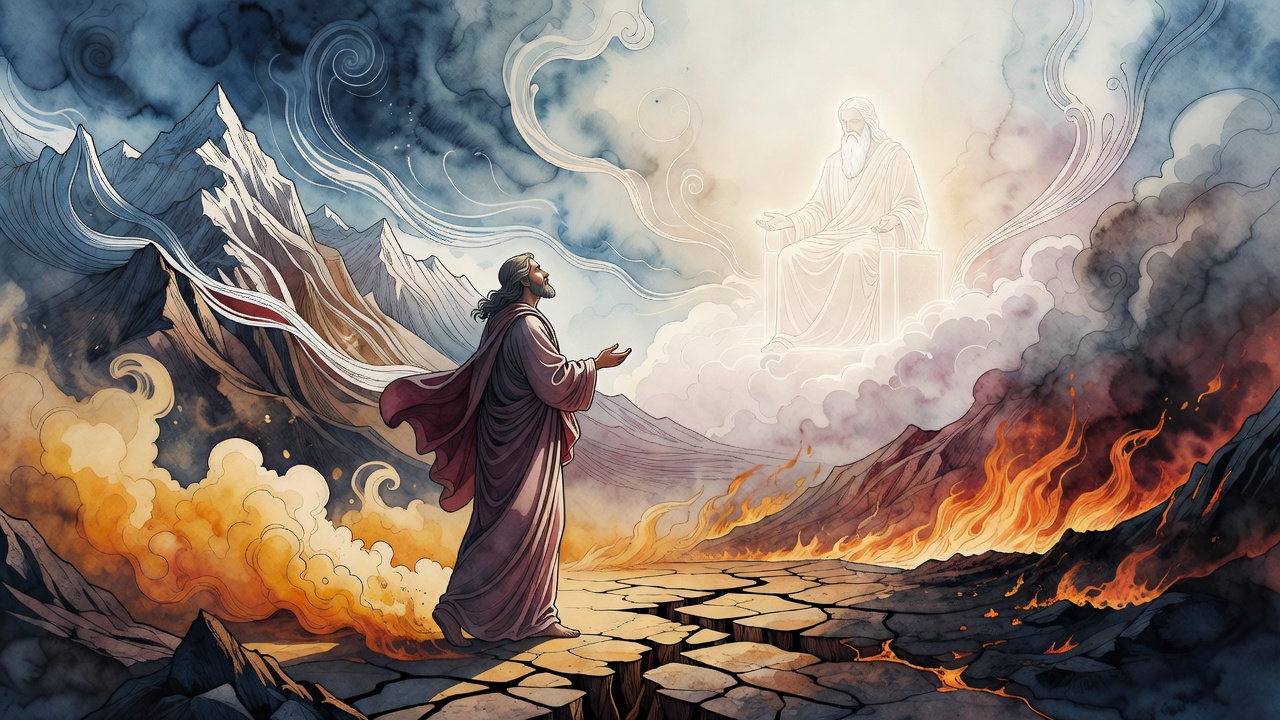
God told him to stand on the mountain.

A wind tore at the heights until rock and mountain seemed ready to split. But God was not in the wind. An earthquake followed and shook the ground under him. God was not in the earthquake. Fire came next, the element Elijah knew well, the sign that had answered him on Carmel. God was not in the fire.

After the fire came a thin voice of silence.

Elijah wrapped his face in his mantle and stood at the mouth of the cave. The man who had called down flame now covered himself before quiet. The mountain had spent its violence. The question returned.

The Question Came Twice

"What are you doing here, Elijah?"

He gave the same answer. Zeal. Abandoned covenant. Broken altars. Slain prophets. One man left. One life hunted.

The answer had truth in it, but truth can harden if no mercy breathes through it. God measured Elijah against the fathers who had fled and survived. Jacob ran and lived. Moses ran and lived. David ran and lived. Flight could save a servant of God, but it could not become his home.

Elijah had come to Horeb with a case against Israel. God listened to the case and gave him an errand.

The Road Turned North Again

Go back.

The command sent him toward the wilderness of Damascus, toward kings to be marked and a prophet to be chosen after him. Hazael, Jehu, Elisha. Names waited on the road like sealed letters.

Horeb did not keep him. The cave did not become a grave. The stillness did not excuse him from the people whose failures had broken his heart. Elijah had fled to the mountain of God, and God returned him to history.

The broom tree had held his collapse. The angel had fed his body. The mountain had stripped thunder, earthquake, and fire away from the voice. When Elijah walked back, the silence went with him.


← All myths
From the tradition

Sources

3 sources

The texts this telling draws on, in full. Open a card to read inline, or expand it for a wider, quieter read.

Legends of the Jews 4:197-199Legends of the Jews

Even the great prophet Elijah, the fiery champion of God, reached that point.

Elijah, fresh from his triumph over the prophets of Baal on Mount Carmel (I Kings 18), is now running for his life from the vengeful Queen Jezebel. He collapses in the wilderness, utterly spent. And what happens next?

He falls asleep under a broom bush – hardly the most comfortable accommodation! (I Kings 19:5).

Then, an angel appears. Not with a booming voice or flashing lights, but with a gentle touch. "Arise and eat," the angel says. And what does Elijah find? A freshly baked cake on hot stones and a jar of water, miraculously appearing beside his head. He eats, he drinks, and, exhausted, he falls back asleep.

It’s a beautiful, intimate moment.

But the angel isn’t done. He returns a second time, again with that gentle touch. "Arise and eat," he urges, "or the journey will be too much for you." (I Kings 19:7). This time, Elijah understands. This isn't just about physical sustenance; it’s about the strength he needs for the road ahead.

And what a road it is! Fueled by that miraculous meal, Elijah walks for forty days and forty nights until he reaches Horeb, the mountain of God, also known as Mount Sinai. (I Kings 19:8).

He finds shelter in a cave. It's there, in the silence, that the word of the Lord comes to him: "Why are you here, Elijah?" (I Kings 19:9).

It’s a deceptively simple question, isn't it?

Elijah’s response is raw, filled with despair and righteous anger. "I am moved by zeal for the Lord, the God of Hosts," he cries, "for the Israelites have forsaken Your covenant, torn down Your altars, and put Your prophets to the sword. I alone am left, and they are out to take my life." (I (Kings 19:1)0).

He feels utterly alone, the last bastion of faith in a world gone wrong.

God's reply? It's not what Elijah expects. "Come out," God calls, "and stand on the mountain before the Lord." (I (Kings 19:1)1). What happens next will challenge everything Elijah thinks he knows about God, about power, and about how God reveals Himself in the world.

We'll continue this story soon. But for now, consider this: When you are at your lowest, what kind of voice do you expect to hear? A booming command? A fiery pronouncement? Or perhaps, like Elijah, you'll find that God speaks in a still, small voice, offering sustenance and guidance for the journey ahead.

Full source
Pirkei DeRabbi Eliezer 29:17Pirkei DeRabbi Eliezer

Elijah fled persecution and found more than shelter. In the silence, he found the next shape of his mission.

Pirkei DeRabbi Eliezer, a fascinating work of Jewish literature, explores this theme in its 29th chapter. It poses a powerful question: Are you better than your ancestors? Because even the greatest among them had to run. Jacob, the father of the Israelite nation, fled from his brother Esau, who sought to kill him. As (Hosea 12:12) tells us, "And Jacob fled into the field of Aram." Then there's Moses, who escaped Pharaoh's wrath. (Exodus 2:15) states plainly, "And Moses fled from the face of Pharaoh." And who could forget David, constantly on the run from Saul? "If thou save not thy life to-night, to-morrow thou shalt be slain," Saul's messengers warned (1 (Samuel 19:1)1), leading David to flee and escape (1 (Samuel 19:1)8).

The lesson seems clear: sometimes, running is not cowardice, but a necessary act of self-preservation that allows for future redemption.

The story doesn't end there. It's not just about escaping danger; it's about what happens after the flight. The text then turns to Elijah the prophet, may his memory be a blessing.

Elijah, a figure of immense power and zeal, also found himself fleeing. He ran from the land of Israel and found himself at Mount Horeb, sustained by divine intervention. "And he arose, and did eat and drink," (1 Kings 19:8) recounts. But what happened next is even more important.

At Horeb, God Himself appears to Elijah and asks, "What doest thou here, Elijah?" (1 Kings 19:9). Elijah's response? "I have been very zealous" (1 (Kings 19:1)0). He's frustrated, feeling like his efforts have been in vain.

But God's response is unexpected. The text implies, "Thou art always zealous!" He reminds Elijah of his past zealotry, specifically referencing his actions in Shittim, where he punished immorality. This is a reference to (Numbers 25:11), which speaks of Phineas, who "turned my wrath away from the children of Israel, in that he was zealous with my zeal among them."

God essentially tells Elijah that his zealotry, while admirable, needs to be tempered. And then comes a fascinating decree: "By thy life! They shall not observe the covenant of circumcision until thou seest it (done) with thine eyes."

What does this mean? It suggests that Elijah, in his zeal, needs to witness the continuation of the covenant, the very foundation of the Jewish people. He needs to see the future, to see that even in his absence, the tradition will endure.

So what can we learn from this? It's not simply about running away from problems. It's about recognizing when flight is necessary, and then using that time of retreat to gain perspective and find renewed purpose. Sometimes, we need to step back, to find our own Mount Horeb, and listen for the voice of the Divine guiding us forward. Maybe, just maybe, our escape is not an end, but a crucial step on the path to fulfilling our own unique role in the grand story.

Full source
Pirkei DeRabbi Eliezer 30:1Pirkei DeRabbi Eliezer

They instituted a custom, a seat of honor specifically for the "Messenger of the Covenant." And who is that messenger? None other than Elijah himself! The Pirkei DeRabbi Eliezer tells us this is because Elijah is referred to as the "messenger of the covenant" in (Malachi 3:1): "And the messenger of the covenant, whom ye delight in, behold, he cometh." It's a beautiful way to keep hope alive, a constant reminder of redemption.This one involves his sons, Ishmael and Isaac. Remember, Abraham faced ten trials, each designed to test his faith and devotion to God.

This particular trial, the ninth one, is a bit unsettling. It all starts with Ishmael, who, as the Pirkei DeRabbi Eliezer recounts, was born with the prophecy of the bow. And he grew up with it, becoming quite the archer. (Genesis 21:20) tells us, "And God was with the lad, and he grew… and he became an archer."

This isn't just about hunting for food. Ishmael, it seems, had darker intentions. One day, he saw Isaac sitting alone and took aim, shooting an arrow at him, intending to kill him! Can you imagine Sarah's horror when she witnessed this?

In Pirkei DeRabbi Eliezer, she immediately went to Abraham, relaying the terrible act Ishmael had committed. She then urged Abraham to write a will, ensuring that Isaac would inherit everything that God had promised him and his descendants. Sarah was adamant: "The son of this handmaid shall not inherit with my son, with Isaac," as she declared in (Genesis 21:10), "Cast out this bondwoman and her son." This was a desperate act of protection, a mother's fierce love for her child in the face of grave danger.

It makes you wonder, doesn't it? What were the tensions simmering beneath the surface in Abraham's household? What drove Ishmael to such a violent act? And what kind of burden did this place on Abraham, torn between his sons and the divine promise? These ancient stories, they're not just history lessons. They're reflections on the complexities of family, faith, and the sometimes painful choices we have to make.

Full source