The Cottage of a Thousand Burning Souls and the Seeker
A man who spent his life hunting true justice finds a cottage where every flame is a soul, and his own has burned almost to the wick.
Table of Contents
He had given his life to a single sentence, "Justice, justice, shall you pursue," and the pursuit had eaten everything else. The seeker left his town young and returned to it never. Town after town, market after market, court after court, he asked the same question and watched men laugh or look away. Decades wore his sandals to nothing. By the end only one place on the map stayed unsearched, a forest so dark that travelers spoke of it the way they spoke of the grave.
 Click for full size
He walked in without slowing.
The Forest That Mocked Him
Fear had burned out of him years before, so he searched the worst of it. He climbed down into the caves where thieves divided their plunder by torchlight, and when he asked them where a man might find true justice, they howled. "Do you expect to find justice here?" He pushed through bramble to the huts of witches stirring their black pots, and they leaned over the steam and grinned the same grin. "Do you expect to find justice here?" He went deeper, where the trees stood so close that day never reached the ground, and the laughter followed him like smoke.
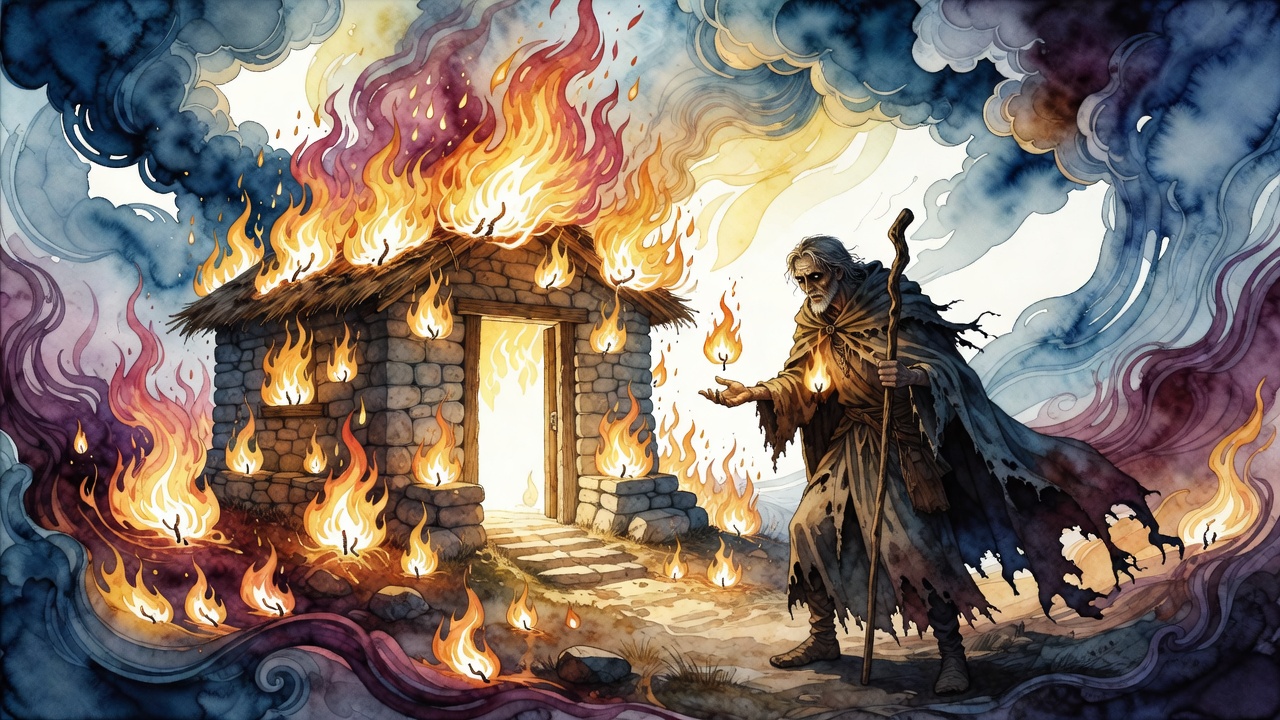
Then the trees opened onto a small clay hut, low and ordinary, the kind a poor man might build in a single season. Light moved in its one window. Not lamplight, something busier, hundreds of small tremblings of flame. He knocked. No answer. He knocked again, and the flames inside went on shivering without a voice to greet him. So he set his hand to the door and pushed.
The Cottage Larger Than the World
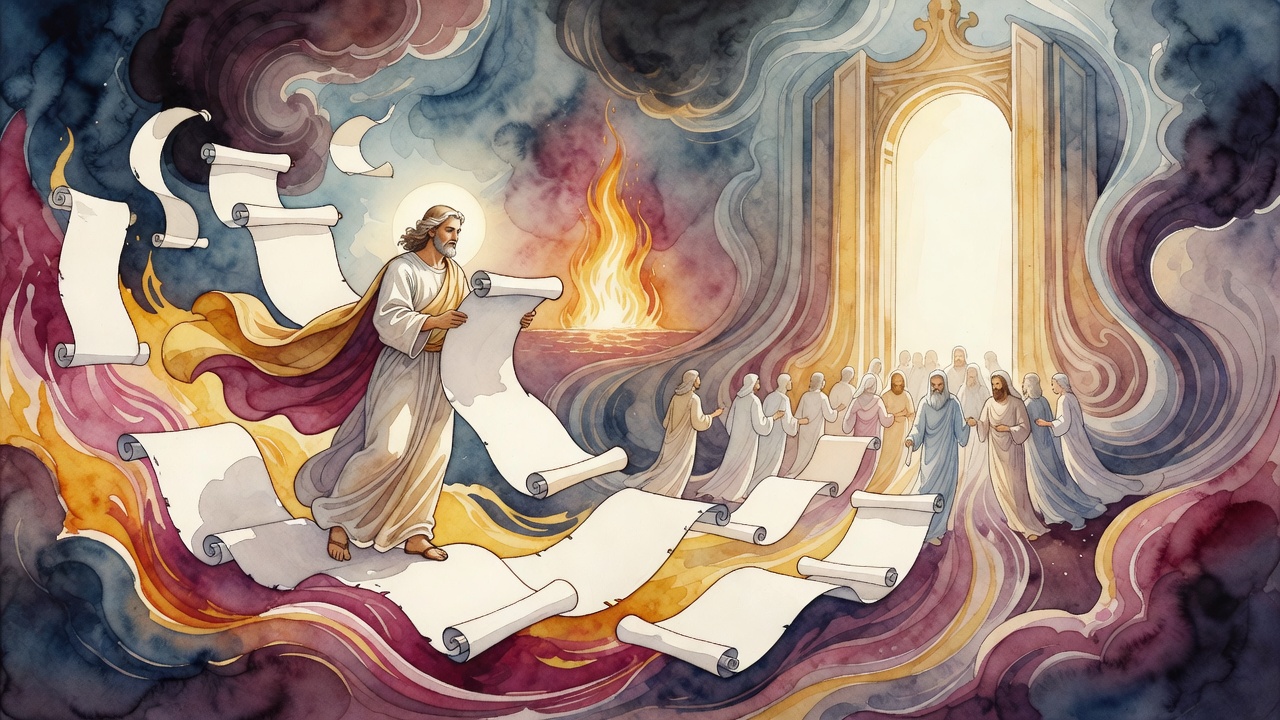
Inside, the hut had no walls he could find. Shelves ran back into a distance no clay shell could hold, hundreds of them, each crowded with oil candles burning. Some stood in holders of gold and silver and polished marble, brimming with oil, their flames standing tall and steady. Others sat in plain clay or dented tin, and many of those had sunk low, the oil down to a glaze, the wick a black curl barely catching.
An old man stood at his elbow where no one had been. Long white beard, a robe so white it seemed lit from within. "Shalom aleikhem, my son," he said. "How can I help you?"
"Aleikhem shalom," the seeker answered. "I have searched the whole earth for justice and never once seen it. Tell me, old man, what are all these candles?"
"Each candle is a living soul," the old man said. "While the flame burns, the person lives. When the oil is gone and the flame dies, that soul leaves the world."
The seeker turned slowly in the trembling light. Somewhere among these shelves, then, stood every person he had ever wronged and everyone who had ever wronged him, reduced to a measure of oil and a thread of fire. "Show me my own," he said.
His Candle Burned Down to the Wick
The old man led him deep into the maze, past flames in gold and flames already smoking out, until he stopped at a low shelf and pointed. "That one is yours."
It sat in a holder of cheap clay. The wick had burned nearly to its root. A last shallow film of oil trembled at the bottom, enough for minutes, perhaps, not hours. The seeker began to shake. A whole life spent demanding the world be set right, and his own flame was guttering out beneath a forest no map admitted, with no court, no verdict, no justice anywhere to be had.
Beside his candle stood another in the same cheap clay. But its bowl brimmed with oil, its wick rose long and straight, its flame burned clean and high. "And whose is that one?" he asked.
"I may reveal each man's candle only to himself," the old man said, and turned to go.
The Hand on His Arm
A sputter came from somewhere down the rows, then a thin string of smoke. The seeker did not have to be told. A flame had failed, an oil had run dry, a person somewhere had stopped. He looked back at his own dying light, then at the full one beside it, so brimming, so steady, so easy to pour. The thought arrived whole and terrible. He looked for the old man. The aisles stood empty.
He lifted the full candle from its place and raised it over his own.
The grip closed on his arm before the oil could tip, fingers like iron out of nowhere, the old man back and close and quiet. "Is this the kind of justice you are seeking?"
The seeker shut his eyes. When he opened them the hut was gone, the shelves gone, the thousand flames gone. He stood alone among black trees, and the wind moved through them so that the leaves seemed to whisper a verdict he could not quite hear. He did not know whether his own candle still burned. He did not know whether he was, even now, still counted among the living.
The Voice That Was Not Fire
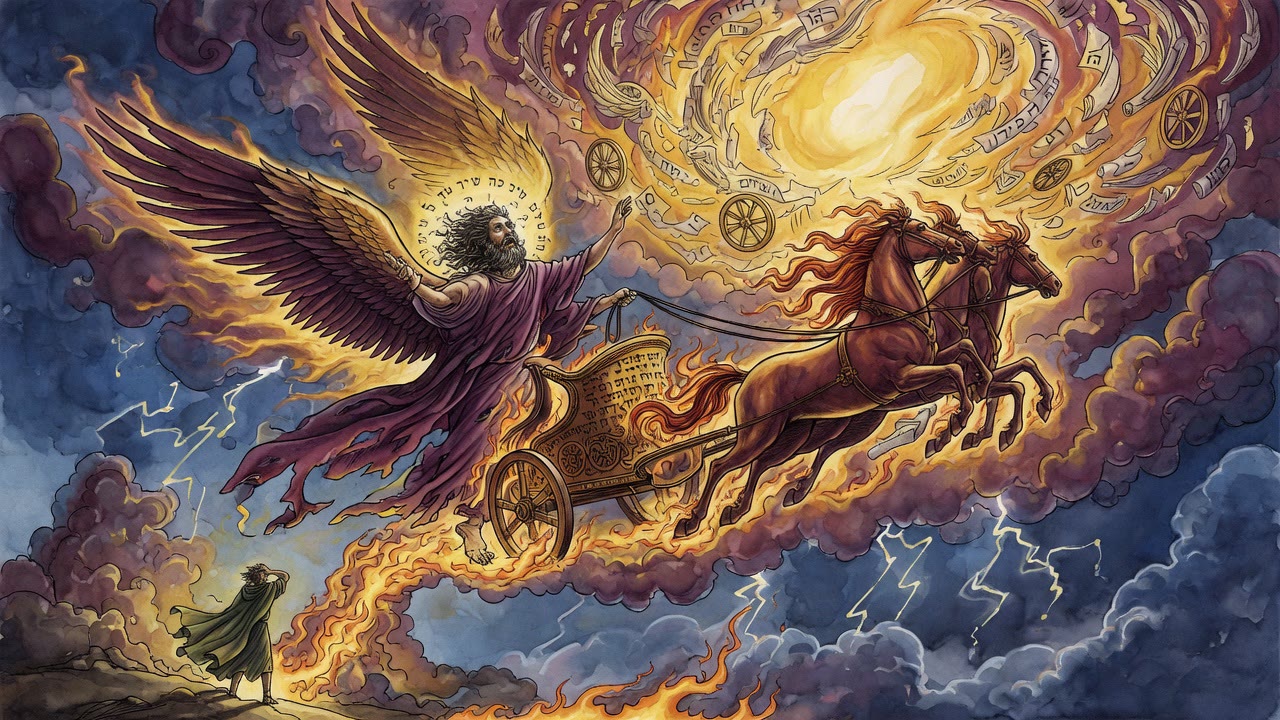
Long before him another man had run into the wilderness sick with the same hunger. Elijah had called down fire on Mount Carmel and then fled the sword of Jezebel until he collapsed under a broom bush and begged to die. An angel touched him twice and fed him bread baked on hot stones, and on that strength he walked forty days to Horeb, the mountain of God, and crawled into a cave.
"Why are you here, Elijah?" the voice asked.
"I am moved by zeal for the Lord, the God of Hosts," he cried, "for the Israelites have forsaken Your covenant, torn down Your altars, and put Your prophets to the sword. I alone am left, and they seek my life."
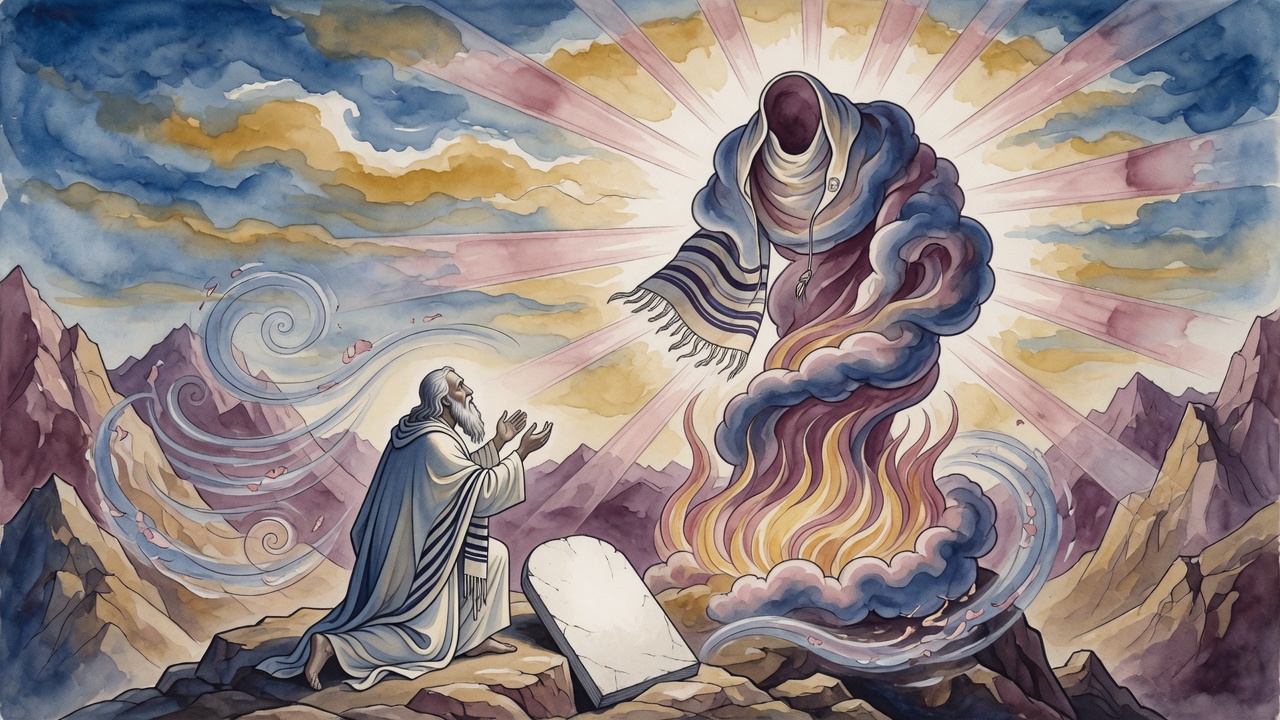
He wanted the world set right, and he wanted it set right loudly. A wind came that split the mountains. God was not in the wind. An earthquake came, then fire. God was not in the fire. After the fire came a still, small voice, and at that thin sound Elijah wrapped his face in his cloak and stood at the mouth of the cave, the last just man, listening for a justice that did not arrive the way he had demanded it.
← All myths