5 min read

Ahab Took Forty Stripes Three Times a Day

Ahab killed Naboth to steal his vineyard. Then he asked King Jehoshaphat to whip him, and he fasted and prayed, and God put off the punishment.

Curated by Arthur · Told by Maggid ·
Table of Contents
  1. Blood on a King's Hands
  2. Forty Lashes Before Dawn, Noon, and Night
  3. Wisdom That Tests Before It Opens
  4. The Verdict That Delayed the Evil
  5. What Humbling Cost a Throne
Ahab Took Forty Stripes Three Times a Day Click for full size

Blood on a King's Hands

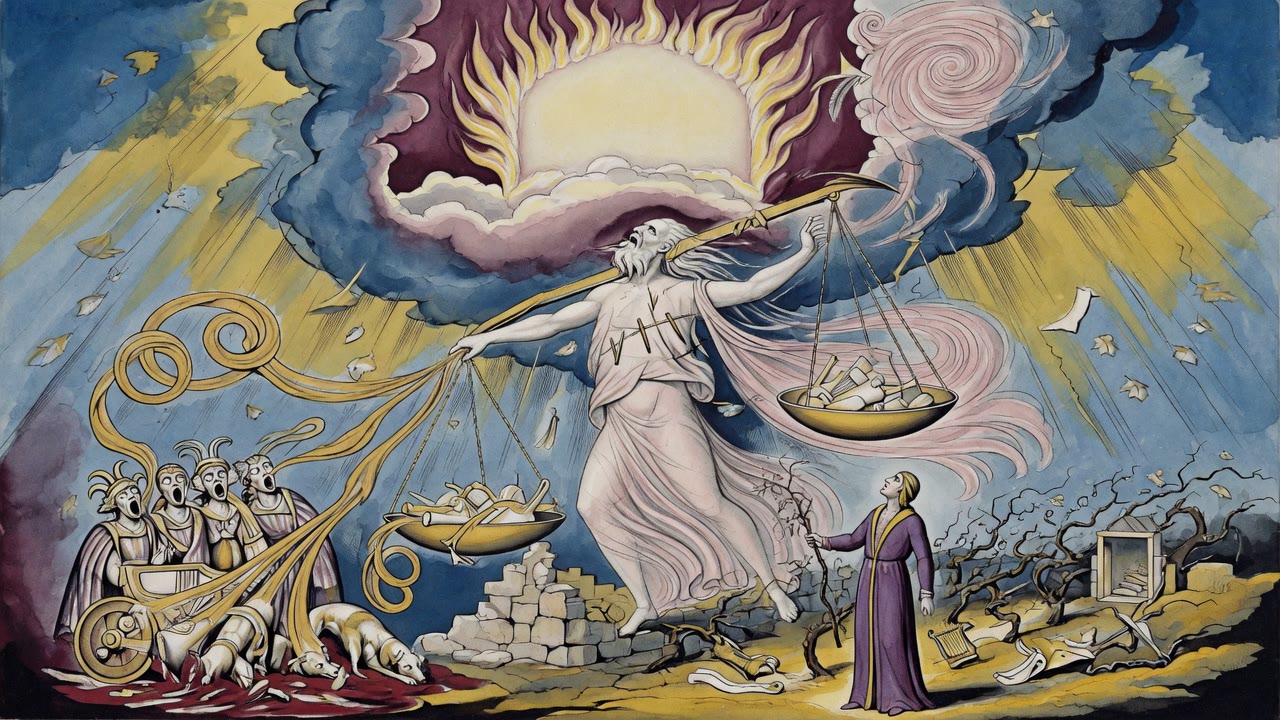
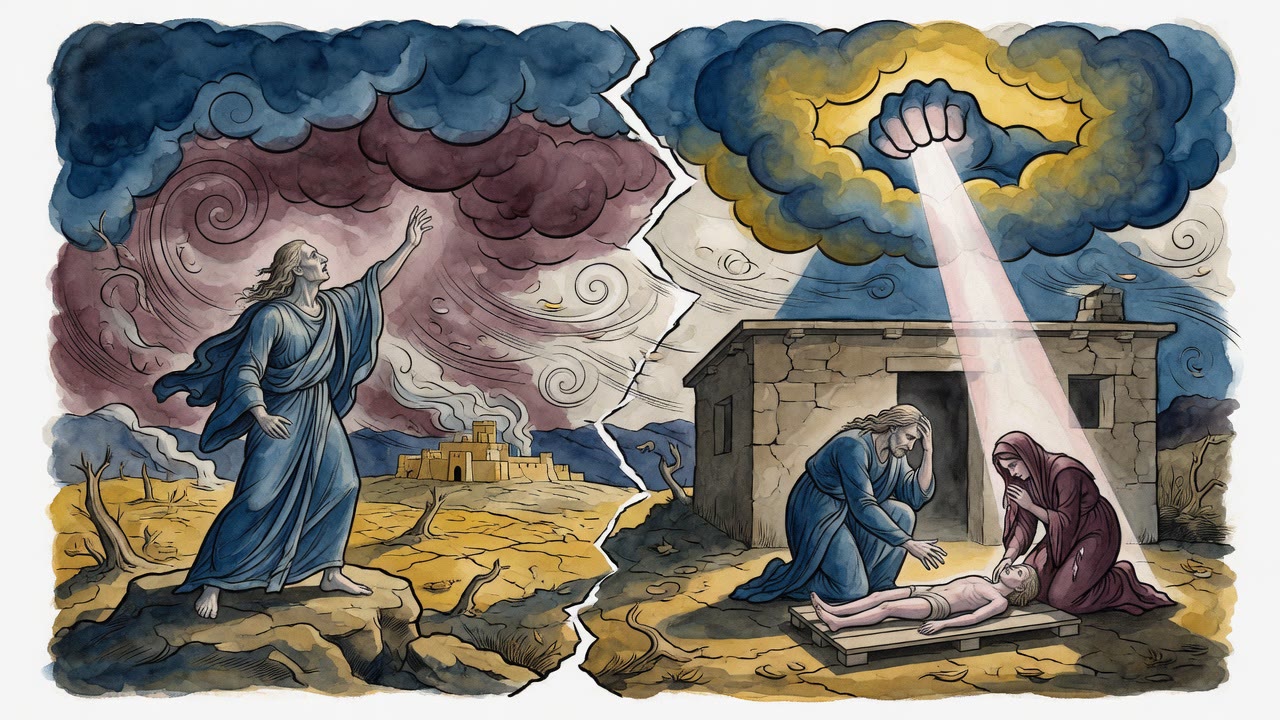
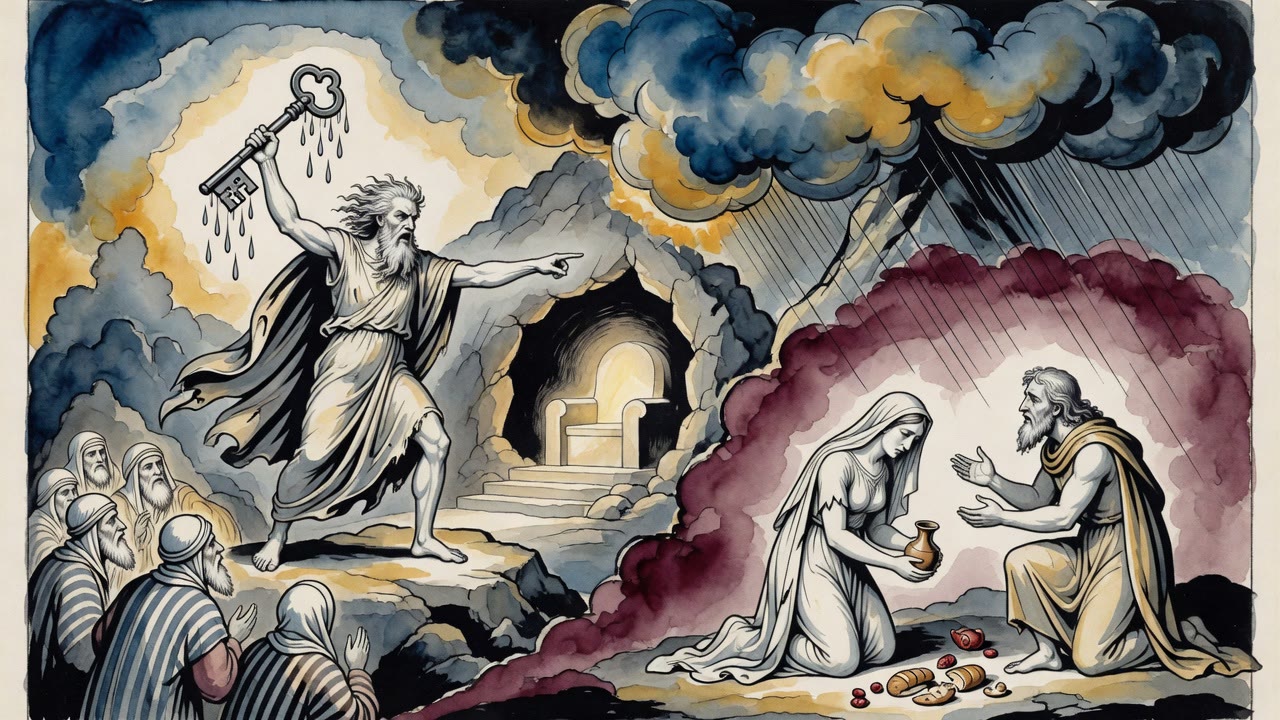
Ahab ruled Israel with a hard appetite. Robbery. Coveting. Murder. The prophet Elijah named the crime without soft edges. "Hast thou killed, and also taken possession?" (1 Kings 21:19). Naboth's vineyard still smelled of the blood that bought it. Heaven had a case file open and a sentence waiting.

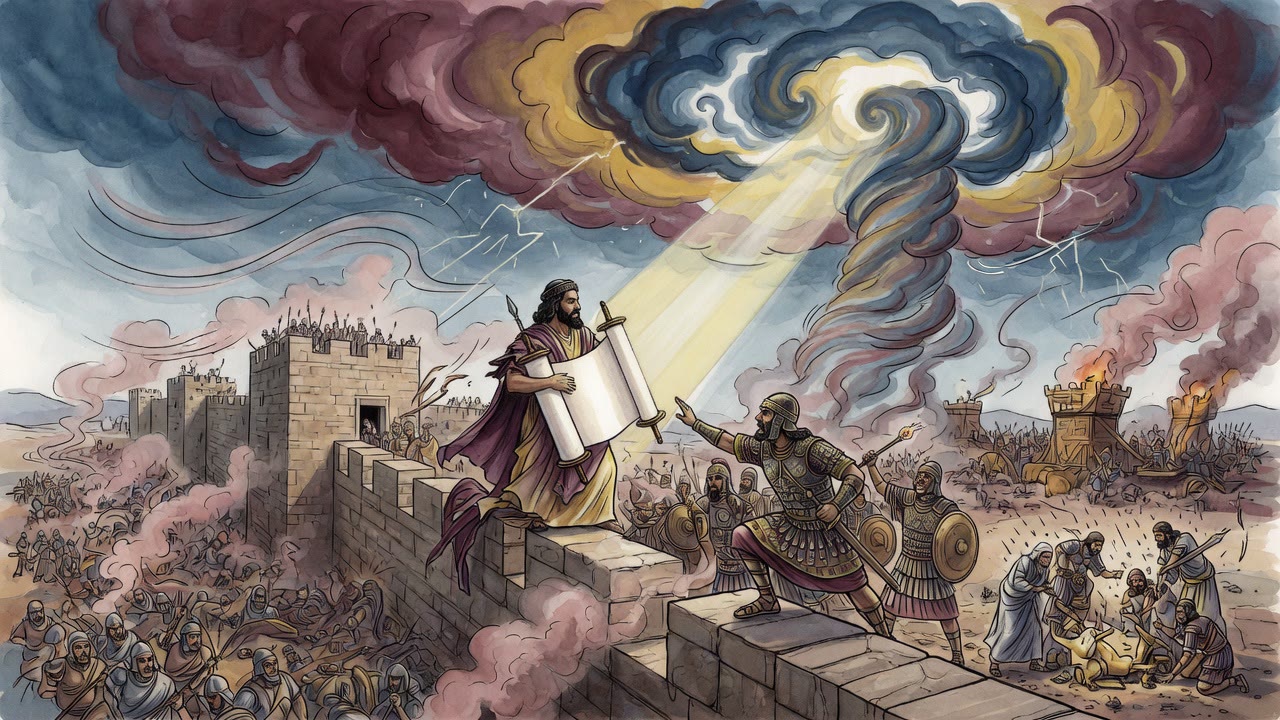
Some kings answer indictment with more steel. Ahab answered with a turn that stunned the midrash that keeps his name. He sought Jehoshaphat, king of Judah, and put his body under another man's discipline. The murderer asked for a schedule of pain.

Repentance and good deeds, the old teaching says, are a shield against punishment. Ahab tested whether a shield could be built from stripes, fasting, and a day that never stopped praying.

Forty Lashes Before Dawn, Noon, and Night

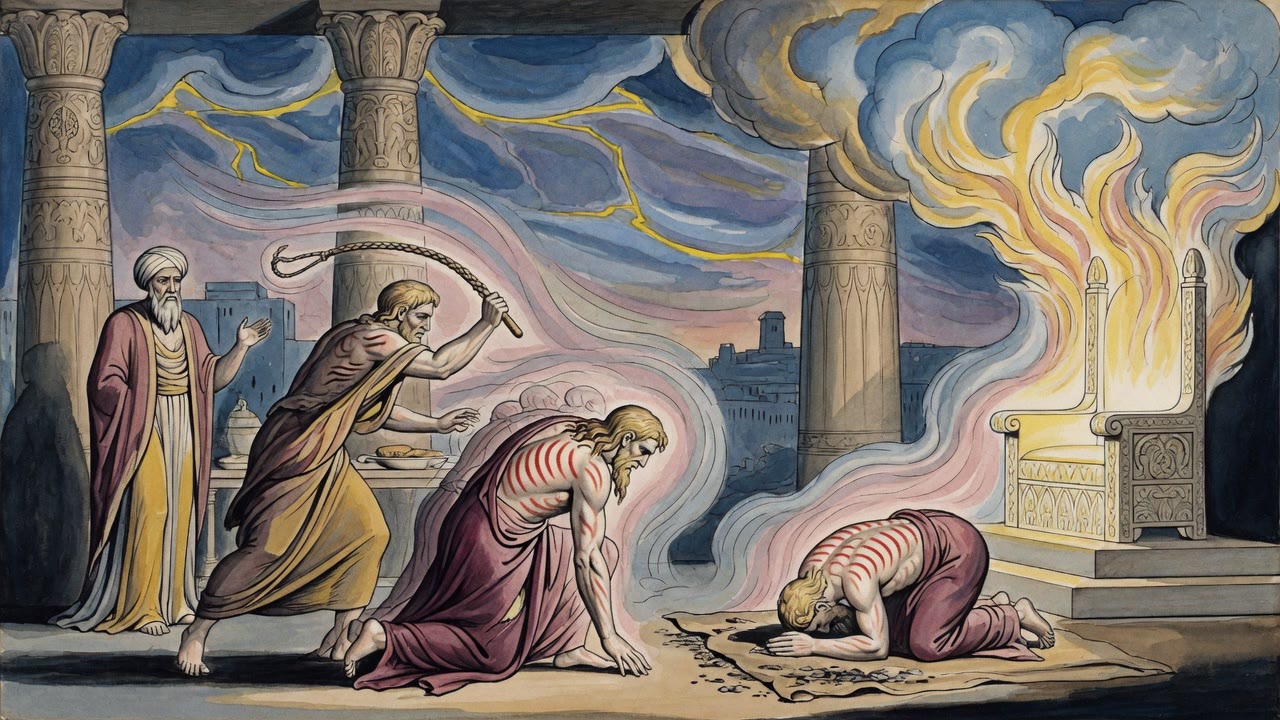
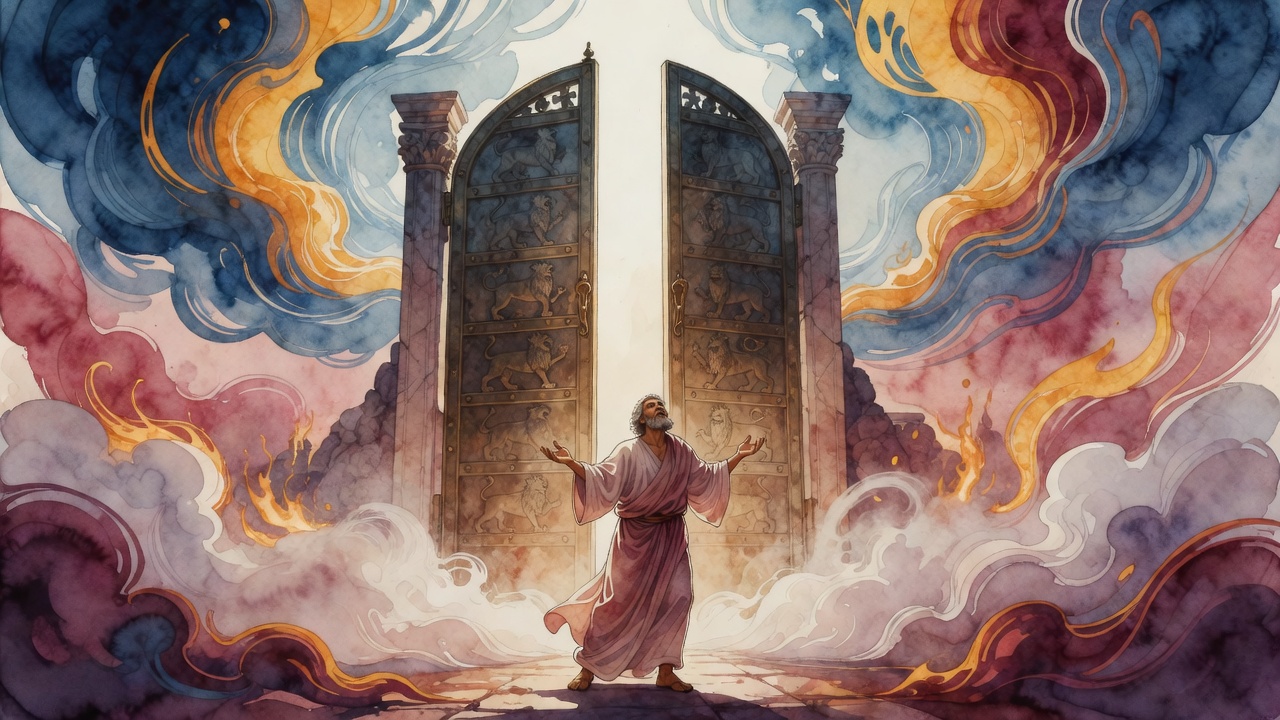
Jehoshaphat gave him thrice daily forty stripes. Morning cut. Midday cut. Evening cut. Between the blows Ahab fasted and prayed from the first light until the last, dedicating the hours to atonement rather than to the old lust for land. Crucially, he did not return to his evil deeds. The vineyard crime stayed in the past as a wound, not as a method.

A hard heart, Ben Sira warns, shall fare ill at the last. Many are the sorrows of a hard heart, and the confident man adds iniquity to iniquity. Ahab had lived that confidence when he took a dead man's field. The thrice-daily lashes were the sound of confidence cracking on purpose.

Without repentance, Rabbi Ishmael said, the world would not stand. The right hand of the Holy One stays stretched forth every day to receive the penitent. Ahab walked toward that hand with a back already counting welts.

Wisdom That Tests Before It Opens

Ben Sira's wisdom voice walks with a seeker and at first makes itself strange, trying him with temptations to learn whether the heart is real. When the heart fills, secrets open. If he turns away, fetters train him. If he declines completely, spoilers receive him.

Ahab's path ran through public humiliation under a rival king's whip. That was the strange face of mercy. The same God who had heard Elijah's charge now watched a king choose restraint over the next convenient murder. Testing did not look like a gentle lesson. It looked like forty and forty and forty again.

He that loveth good things will guide himself therein. Ahab's love was late and rough, but the midrash refuses to call it useless. Guidance can arrive as a schedule of stripes if that is what breaks a royal spine into bowing.

The Verdict That Delayed the Evil

God spoke the astonishing line over the humbled king. "Seest thou how Ahab humbleth himself before me? Because he humbleth himself before me, I will not bring the evil in his days" (1 Kings 21:29). The sentence did not vanish from the world. It moved off Ahab's calendar. Mercy bought time, not a rewritten past.

Naboth stayed dead. The vineyard stayed stained. Heaven still knew the file. What changed was the king's direction and the timing of the blow. Ahab did not erase murder with tears. He stopped adding murder to murder, and God answered the stop.

A scorner, Ben Sira says, is a plant of evil planting with no easy healing. Ahab had been that plant. The thrice-daily discipline was the axe and the water both.

What Humbling Cost a Throne

Picture the court gossip. Israel's king under Judah's whip. Fasting while other men ate. Prayer where plots used to ripen. The man who once took possession now possessed a wounded back and a delayed doom.

Repentance here is not a soft feeling. It is a program that hurts, repeats, and refuses the old crime. The shield against punishment is built from those repetitions until heaven itself points at the humility and holds back the evil for a season.

Ahab's name still carries blood. It also carries the strange honor of a king who let another king beat him three times a day because he finally feared God more than he loved a vineyard. The hard heart had fared ill enough to learn the other road, and for a while the road held.

Elijah's question did not leave the air when the lashes began. Hast thou killed, and also taken possession? Each set of forty answered with skin instead of speech. Jehoshaphat's court became a workshop where a northern king unlearned the ease of taking.

Delay of evil is not erasure of evil. The midrash knows the difference and still calls the humility real. Ahab's days gained length because his neck finally bent. Naboth's blood still cried. Heaven can answer a cry and a bow in different calendars.

Ben Sira's scorner stays a plant of evil planting when he will not open. Ahab opened under whip and hunger. The opening was ugly, public, and enough for God to point at it and hold back the blow for a time. Thrones rarely look more serious than when they consent to be beaten on schedule.

Morning, noon, and night the count began again. Forty. Forty. Forty. Ahab's body became a calendar of teshuvah (תשובה), return. Jehoshaphat did not preach. He struck. Between blows the northern king prayed like a man who had finally met a wall higher than Samaria's.

Without the creation of repentance, the world would not stand. Ahab's story is offered as proof that the claim is not soft. Even a murderer-king can turn hard enough in the right direction that God points and delays. The vineyard stays a crime scene. The criminal becomes, for a season, a penitent with a numbered back.


← All myths
From the tradition

Sources

3 sources

The texts behind this telling. Some cards carry a translation of the source; others are our own retelling of it, and each card says which. Every card links out to the original.

Pirkei DeRabbi Eliezer 43:1Pirkei DeRabbi Eliezer

Retold in our words. Read the original at the link below.Pirke de Rabbi Eliezer, trans. Rabbi Gerald Friedlander, London (1916) · CC-BY

Is it really that powerful?

Pirkei DeRabbi Eliezer, a fascinating text dating back to the early Middle Ages, tackles this very question head-on. In Chapter 43, it states plainly: "Repentance and good deeds are a shield against punishment." A shield. A proactive defense against the consequences of our actions.

Rabbi Ishmael goes even further. He suggests that without repentance, the entire world would crumble! "If repentance had not been created, the world would not stand. The idea is that the possibility of turning back, of correcting our course, is fundamental to the very fabric of existence. Because of repentance, the text says, "the right hand of the Holy One, blessed be He, is stretched forth to receive the penitent every day." A constant invitation to return. A never-ending chance.

Is this just wishful thinking? Does repentance really work? The text offers a compelling example: Ahab, the King of Israel.

Ahab wasn't exactly a model ruler. As (1 (Kings 21:1)9) tells us, he was guilty of some pretty terrible stuff: robbery, coveting, and even murder. "Hast thou killed, and also taken possession?" the prophet Elijah asks him, a devastating indictment. Ahab's hands were stained.

So, what happened? Did he face immediate divine retribution? According to Pirkei DeRabbi Eliezer, Ahab took a different path. He sought out Jehoshaphat, the King of Judah, and subjected himself to a rigorous process of self-correction. The text describes how Jehoshaphat gave him "thrice daily forty stripes," and how Ahab engaged in fasting and prayer, dedicating himself to atonement from morning till night. Crucially, "he did not return any more to his evil deeds."

And here's the truly astonishing part: his repentance was accepted. God acknowledges Ahab's humility, stating, "Seest thou how Ahab humbleth himself before me? Because he humbleth himself before me, I will not bring the evil in his days" (1 (Kings 21:2)9).

Wow.

Ahab, a king who committed terrible atrocities, found a way back. He didn't erase his past, but he changed his future. This story, found within Pirkei DeRabbi Eliezer, highlights the immense power of teshuvah. It suggests that even those who have strayed far from the path can find their way back through sincere remorse, a commitment to change, and the unwavering grace of the Divine.

Are we actively engaging in the process of teshuvah, not just after major missteps, but as an ongoing practice of self-improvement? Perhaps the story of Ahab isn't just a historical anecdote, but a powerful reminder of the transformative potential that lies within each of us.

Full source
Ben Sira 3:29Ben Sira

Retold in our words. Read the original at the link below.The Wisdom of Ben Sira, Cambridge University Press (1899) · CC-BY

Ben Sira knew the feeling. He tells us, "For many are the conceits of the sons of men; And the imaginations of thoughts that make them to err. The idea that our own machshavot, our thoughts, can be the very things that trip us up.

What happens when we let those thoughts harden our hearts? Ben Sira doesn't mince words: "A hard heart shall fare ill at the last." Ouch. But it's not all doom and gloom. He follows it up with a glimmer of hope: "But he that loveth good things will guide himself therein." It's a reminder that we have a choice. We can choose to soften our hearts, to cultivate a love for the good, and that love can be our compass.

What about the consequences of a hardened heart? "Many are the sorrows of a hard heart," Ben Sira warns. And it doesn't stop there. "And he that is confident addeth iniquity to iniquity." That confidence, that unchecked ego, can lead us down a dangerous path, piling mistake upon mistake.

So, how do we avoid this trap? How do we keep our hearts open and receptive? Ben Sira offers a beautiful analogy: "Without the apple of the eye light faileth; And without knowledge wisdom faileth." Just as our eyes need light to see, our minds need knowledge to gain wisdom. We need to be open to learning, to new perspectives, to the wisdom of others.

But what about those who scorn wisdom, who reject guidance? Ben Sira is blunt: "Haste not to heal the stroke of the scorner; For there is no healing it: for he is a plant of evil planting." It's a harsh statement, but it speaks to the futility of trying to reason with someone who has closed themselves off to reason. It’s a plant of evil planting, the damage is already done.

Ben Sira points us back to the power of wisdom. "A wise heart will understand parables of the wise; And the ear that hearkeneth to wisdom shall rejoice." It’s about cultivating a wise heart, one that is open to learning and understanding. When we do that, when we truly listen to wisdom, we find joy. It's a simple, yet profound message: open your heart, seek knowledge, and find joy in the journey.

Full source
Ben Sira 4:19Ben Sira

Retold in our words. Read the original at the link below.The Wisdom of Ben Sira, Cambridge University Press (1899) · CC-BY

Ben Sira turns to Ben Sira on Facing Divine Judgment.

"Ministers of holiness are her ministers; And God loveth them that love her." So, right away, Those who dedicate themselves to the pursuit of something greater. And God, the text says, loves those who love "her" – likely a reference to wisdom itself. It's a beautiful, almost circular idea. Love begets love, and devotion to wisdom finds favor in the eyes of the Divine.

"He that heareth me shall judge truth (G nations); And he that giveth ear to me shall dwell in my chamber within." This suggests that those who truly listen, who truly internalize wisdom, gain the ability to discern truth from falsehood. And more than that, they find a place of intimacy, dwelling within wisdom's "chamber."

Brace yourself, because the path isn't always smooth. "For I will go with him, making myself strange; And at the first I (H he) will try him with temptations." This is where the testing comes in! Wisdom, or the Divine, walks with us, but sometimes appears "strange." At first, there will be trials, temptations. Why? To see if our commitment is real. To refine us, like metal in a fire. It’s a concept we find echoed in many mystical traditions, this idea of facing challenges to prove one's worth.

But there's a reward for perseverance. "And what time his heart is filled with me; I will turn and direct him, And reveal unto him of my secrets." When our hearts are truly filled with wisdom, when we've proven our dedication, then wisdom turns and guides us, revealing profound secrets. It’s a promise of deeper insight, a glimpse behind the veil. Imagine that: the universe confiding in you!

However, the text doesn't shy away from the consequences of straying from the path. "If he turn away and decline from me (?), I will train him with fetters (or restraints)." If we turn away from wisdom, if we decline its guidance, we will be "trained with fetters" – restrained, bound. It's a stark warning about the cost of abandoning truth.

And the final verse drives the point home: "If he turn away from after me, I will cast him off, and deliver him to the spoilers." A harsh but powerful statement. Complete abandonment of wisdom leads to being cast off and delivered to "the spoilers." Those forces that seek to destroy, to corrupt, to lead us astray.

So, what does this all mean for us today?

Perhaps it's a reminder that the pursuit of wisdom, of truth, is a lifelong journey. It's not always easy. There will be challenges, temptations, and moments of doubt. But the rewards – the ability to discern truth, the intimacy with the Divine, the unveiling of secrets – are worth the effort.

And maybe, just maybe, those challenges aren't punishments, but opportunities. Opportunities to prove our dedication, to refine our character, and to ultimately draw closer to the source of all wisdom. What do you think?

Full source