Ahab Would Not Surrender the Torah Scroll
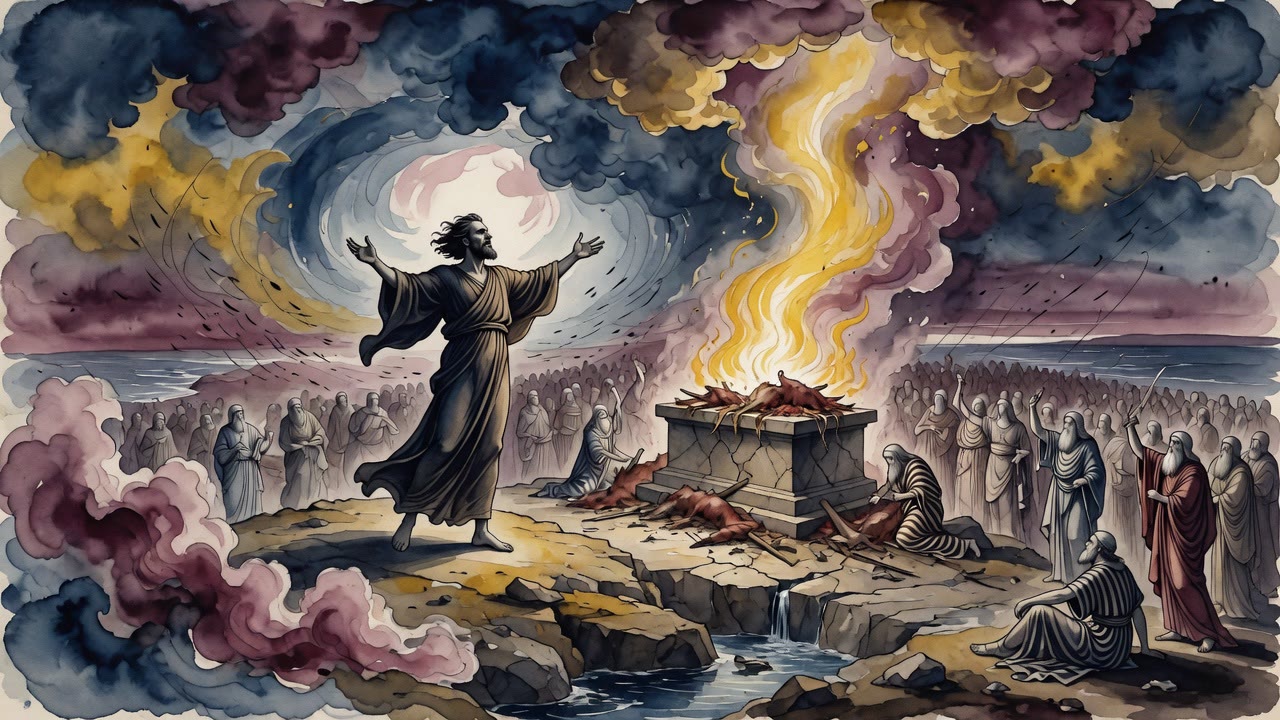
Ben-Hadad asked for silver, gold, wives, and the Torah scroll last. Ahab kept a house for Baal. He still would not hand the scroll over.
Table of Contents
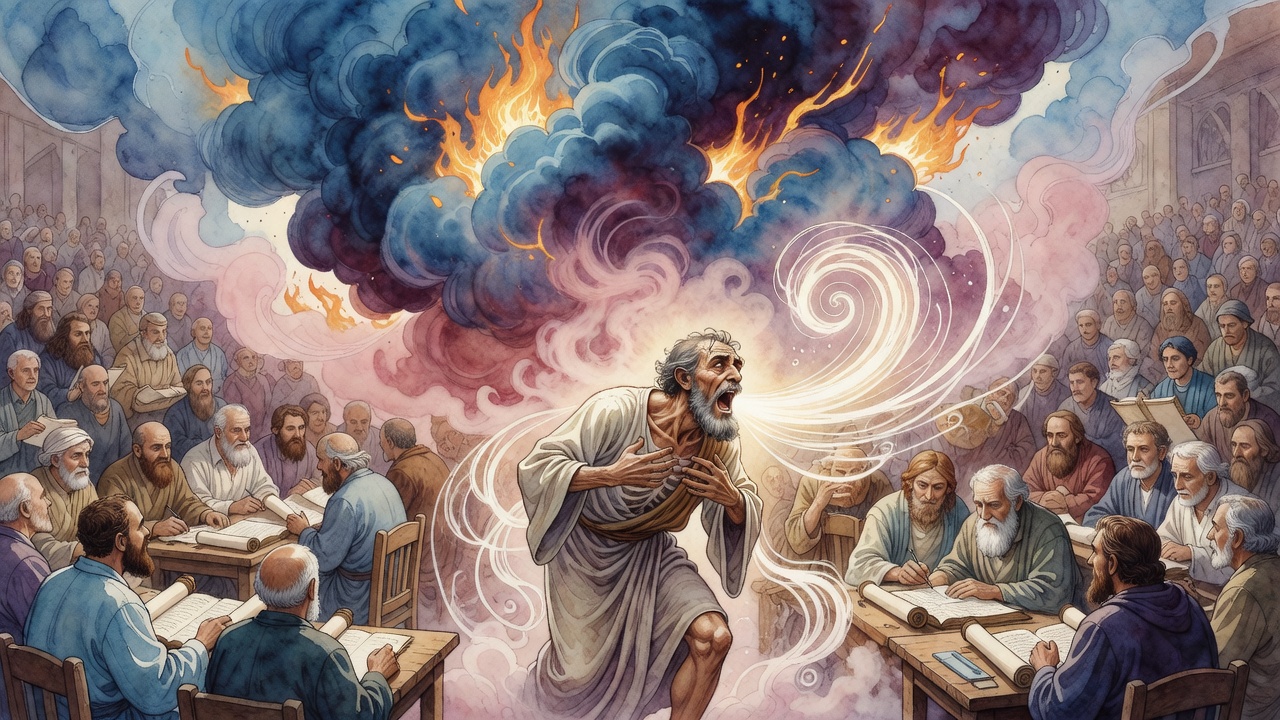
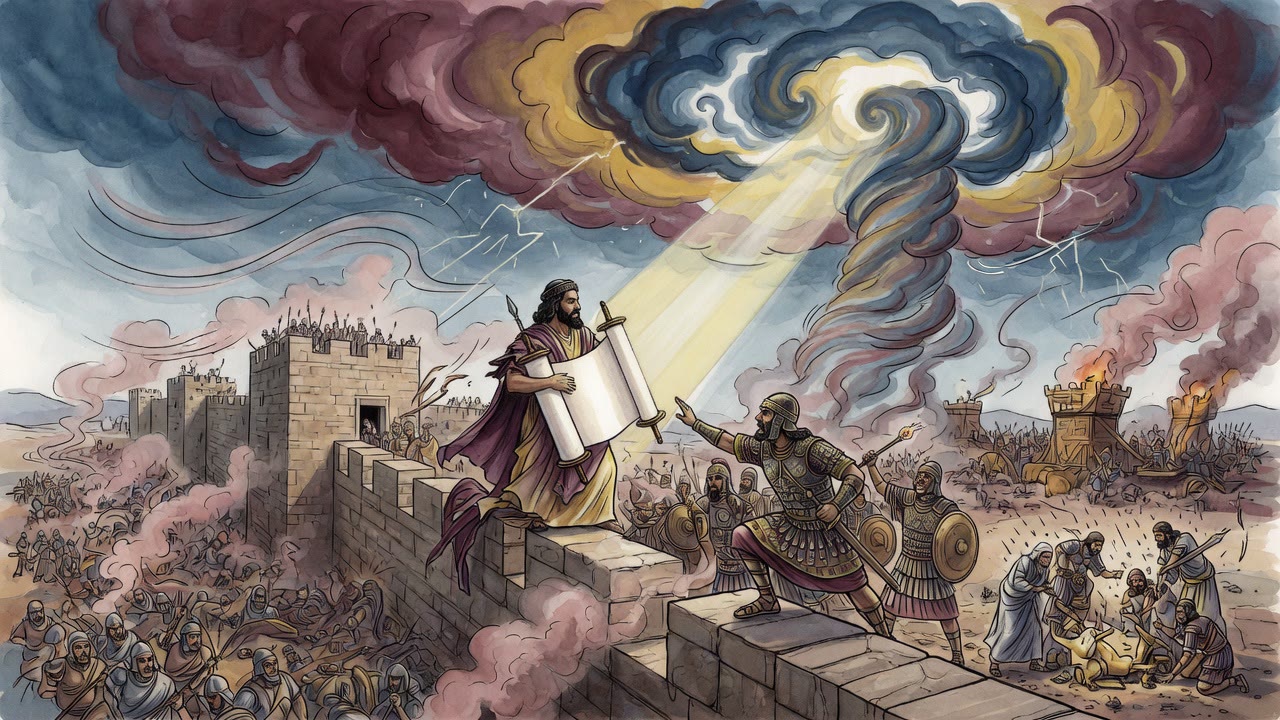
Ben-Hadad of Aram ringed Samaria until the wells tasted of dust. A messenger came through the gate with a list. Silver. Gold. Wives. Children. Treasures. Among the demands sat the Scrolls of the Torah.
 Click for full size
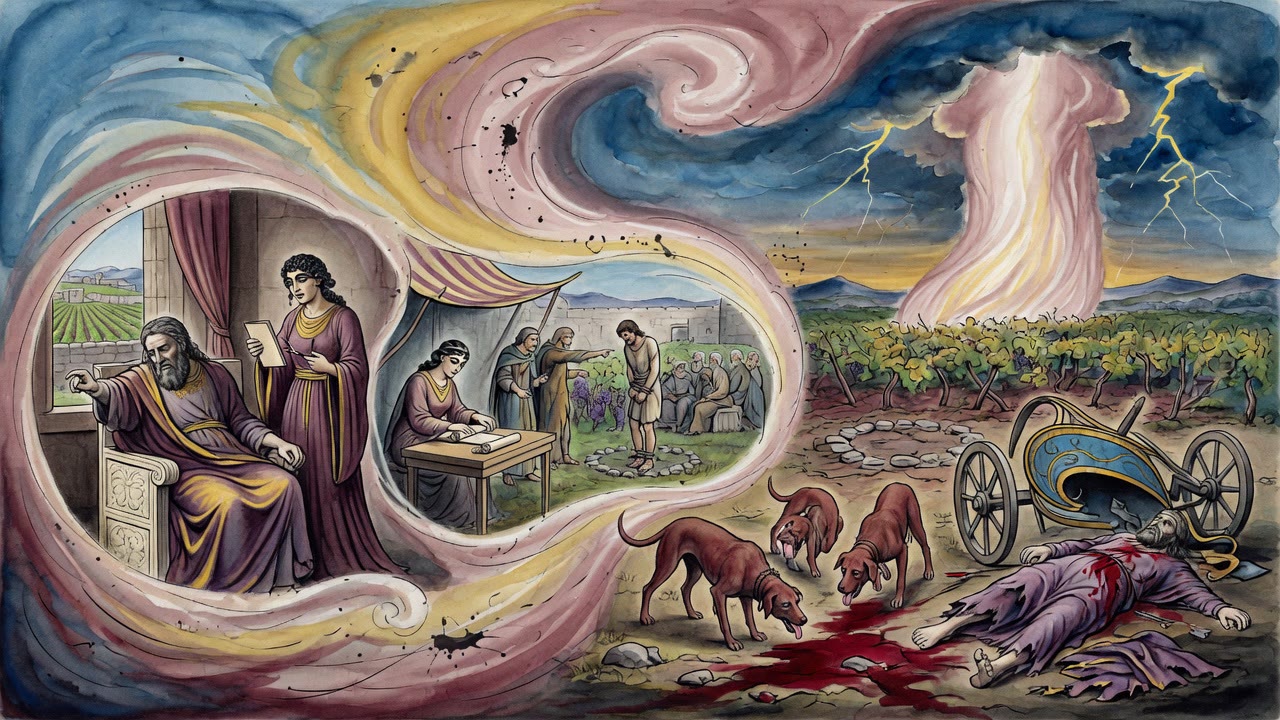
Ahab sat on a chair that still smelled of the house he had built for Baal. He had married Jezebel. He had earned drought from Elijah's mouth and blood on the ledgers of the prophets of the grove. The book of Kings does not waste soft words on him.
The messenger waited. Ahab's officers watched his face.
The Scroll Was Not Aramean Property
Take the silver, he could imagine saying. Take the slaves. You will not take the Torah out of Israel as loot.
He said it aloud. He would not surrender the scroll. The officers stared as if he had grown a second head, one that remembered Sinai while the first still bowed in Baal's doorway. He ignored their faces.
The Scroll was not his favorite book. It was still not Aramean property. That distinction, thin as a blade, cut the siege's logic in a place Ben-Hadad had not armored.
The messenger went back through the gate with a thinner prize than his king had sent him for. On the walls the dust kept rising. Inside the city the Scroll stayed in Israelite hands.
One Refusal Tilted the War
For this alone Ahab was saved in that campaign. Not because idolatry became cute. Because heaven counts even a single uncrossable line in a life otherwise full of crossings. The Scroll stayed. The siege broke.
At night, after the Aramean dust settled, Ahab still walked past Baal's threshold. He did not smash the house he had built. He did not send Jezebel away. He passed the door and kept walking, a king who had locked one gate and left every other door open.
Later his son Jehoram tore royal clothes during famine and showed sackcloth underneath, a private penance against the skin while public policy still staggered. Again the pattern. One hidden right act, remembered, weighing more in a specific hour than a career of failures.
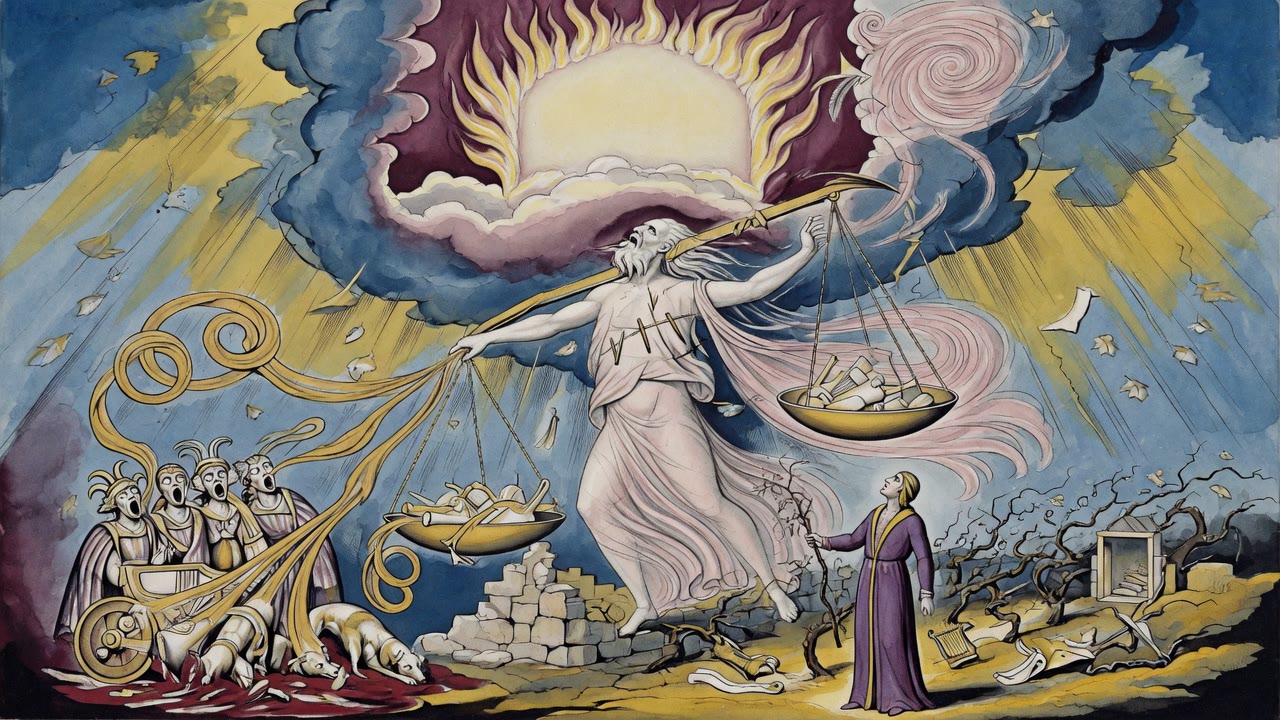
Officers who wanted a blanket pardon for Baal's dining room found none. A single locked gate does not open every other door. Still, when the balance of a siege tips, even a stranded right act can throw its full weight on the scale.
Elijah Handed the Wife a Shame
On another road a man famous for observance took a neighbor's entire savings for safekeeping and then swore he had never received a coin. He had the posture of righteousness. He had the vocabulary. He did not have the deposit.
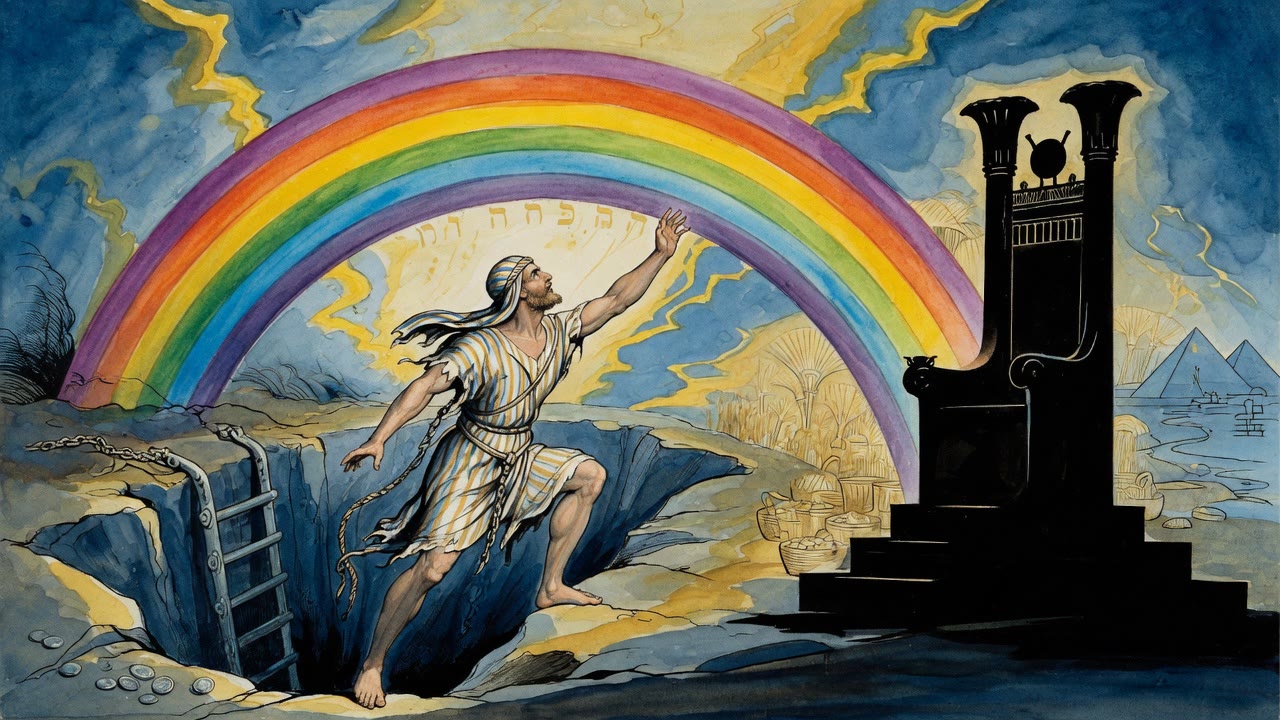
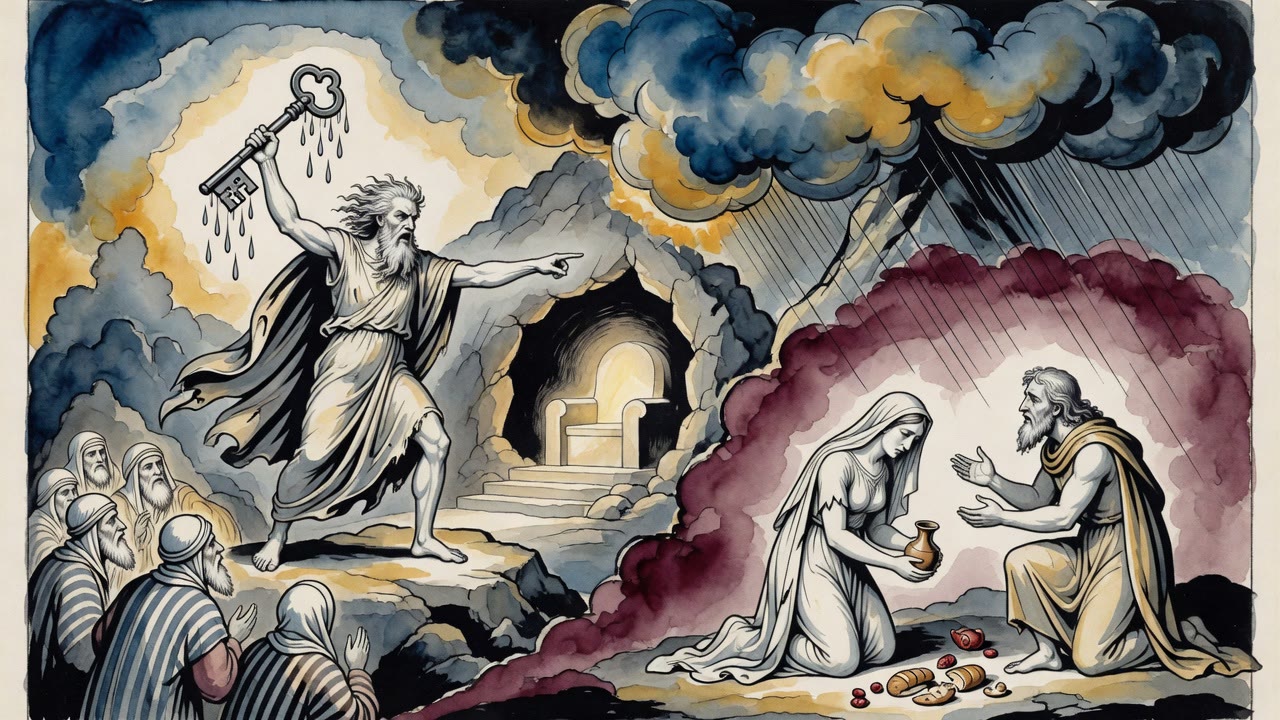
The robbed man met Elijah on the path. The prophet who had starved Ahab's house did not lecture about courts. He handed the man a key shaped like shame.
"Go to his wife," Elijah said. "Tell her you know they ate leaven on Pesach and swine on Yom Kippur. She will understand you are not guessing."
The man walked to the house. He spoke the two sentences. The wife went white. Confession spilled. She opened the chest and put the money in his hands, coin after coin, as if the coins themselves wanted out of that room.
The couple, exposed as proselytes who had kept old practices under a Jewish mask, dropped the mask. They packed. They left the covenant they had only rented. False piety does not always repent when caught. Sometimes it only stops acting.
The Prophet Weighed Both Houses
Ahab's one hard no and the swindler's long performance stood in ugly contrast. A wicked king can still guard a Scroll. A neighbor with blessing-formulas can still steal.
Elijah moved through both neighborhoods: drought-bringer to Ahab's house, secret-unmasker to the couple who faked the calendar of holiness. His job is rarely to confirm what gossip already believes. It is to weigh what is actually on the scale.
In the war council some of Ahab's officers had stared at their king as if Sinai had grown in the wrong skull. He had ignored them. The Scroll was not a book he loved. It was a book he would not let Aram carry out of the gate as loot. Elsewhere a man who said yes to every public mitzvah (a commandment) had said no to a neighbor's coins. Between them Israel received a double warning: do not despair of a sinner who still guards one gate, and do not trust a righteous person who only performs the gates while picking pockets in the alley.
The Scroll Stayed After the Dust
Samaria's walls have fallen more than once. The Scroll Ahab would not surrender became, in that hour, a reason a bad king outlived a worse afternoon. The money the swindler returned became a smaller mercy inside a story that ends without their repentance.
Mercy extended to Ahab and exposure falling on a trusted neighbor do not cancel each other. Comfort is not what either hour offers.
The Scroll remained in Israelite hands. Baal's door remained. Both facts stayed true in the same king. Years on, his crimes still filled the ledgers. The afternoon he guarded the Scroll still sat beside them. Any later scoundrel might still be heard for one right refusal. Any later actor in tallit and lie might still find Elijah knowing the kitchen calendar.
← All myths