Dogs Lick Ahab's Blood at Naboth's Field
Naboth would not sell the vineyard that pressed the palace wall. Ahab turned his face to the wall and left the bread.
Table of Contents
Ahab walked the boundary of a field that was not his. Naboth's vineyard pressed against the royal estate in Jezreel like a green refusal, rows neat, soil old with family names. The king offered silver enough to quiet most men. He offered a better plot, richer earth, a trade that would have looked wise on any merchant's scale.
 Click for full size
Naboth shook his head. The soil was inheritance, not merchandise. It had come from his father. It would not leave his mouth as a bargain for a crown.
"The Lord forbid that I should give you the inheritance of my fathers."
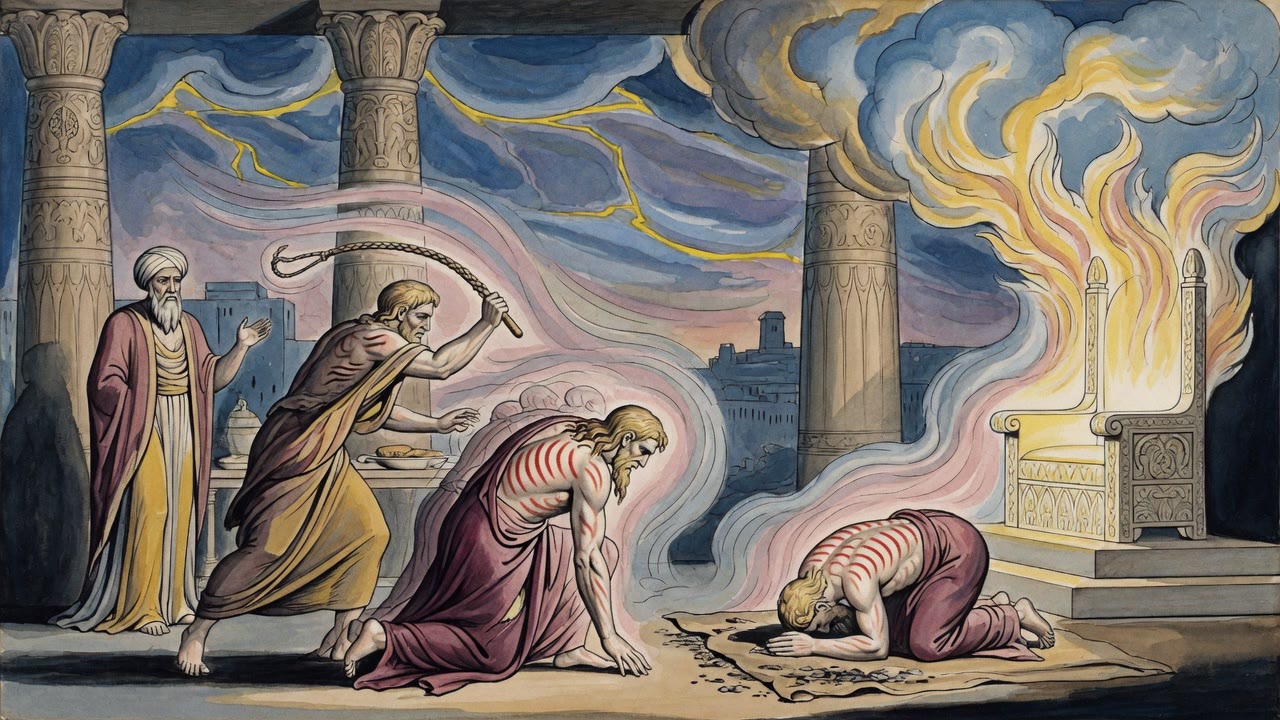
Ahab went home, turned his face to the wall, and would not eat. Bread sat on the table untouched. A king who could command chariots could not command one man's yes.
Letters Under a Stolen Seal
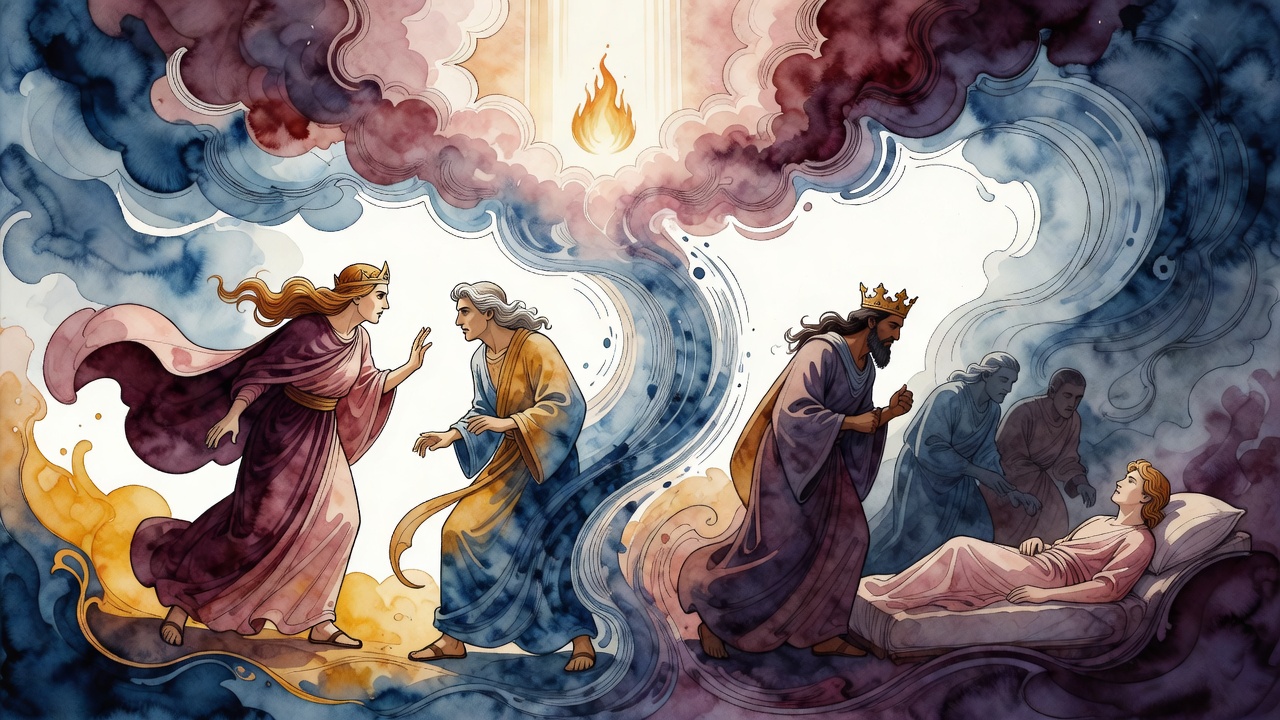
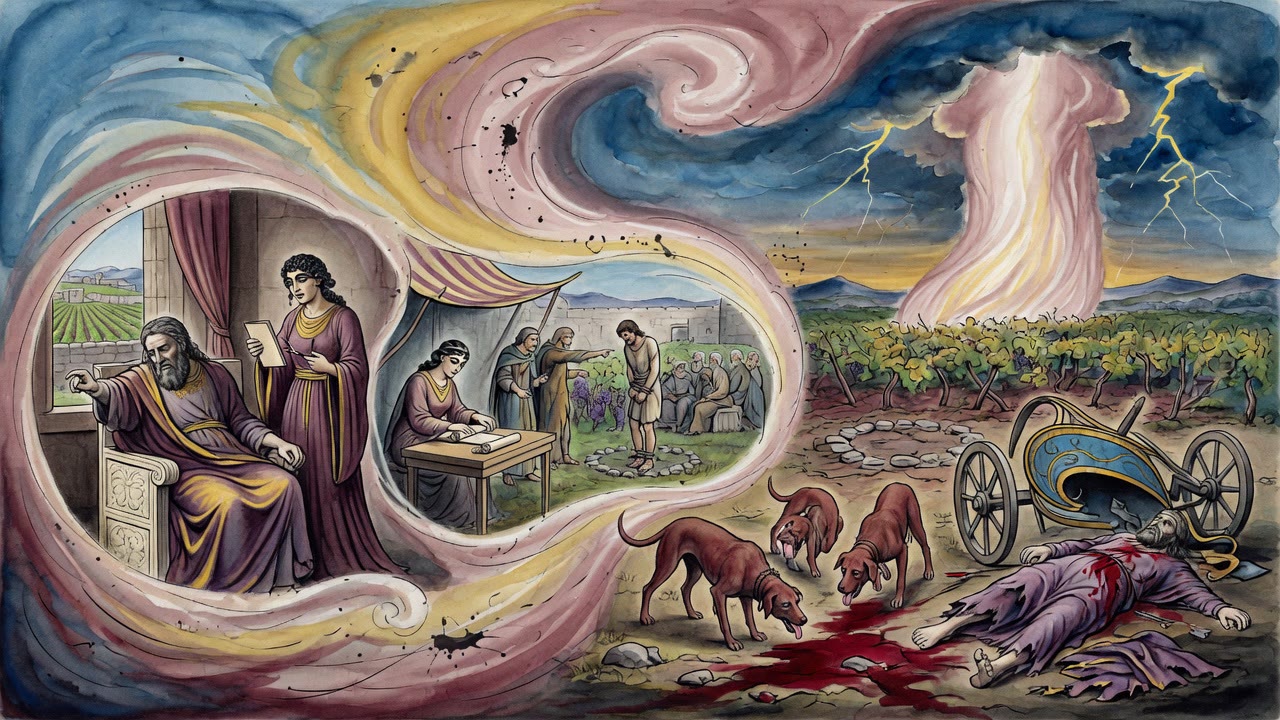
Jezebel did not sulk. She wrote. Letters went out under Ahab's seal to the elders of Jezreel. Declare a fast. Seat Naboth at the head of the people so the city will see him honored before it destroys him. Bring worthless men to swear he has cursed God and the king. Two mouths of lies to satisfy a law that requires witnesses.
The city obeyed the ink more than it obeyed the man who owned the vines. They stoned Naboth outside the walls. Stones found the body that would not sell. Jezebel walked into the bedroom of royal self-pity and said the vineyard was free. Ahab rose, put on his appetite, and went down to claim what blood had bought. The rows that had refused him now had no owner left to refuse.
Elders washed their hands of the matter by calling it justice. The seal had made the murder look like law. That was the deepest theft: not only land, but the shape of a trial.
Elijah Among the Stolen Rows
Elijah met him among the vines that still smelled of a living owner. Grapes hung indifferent to crowns. The word the prophet carried was sharp enough to cut a dynasty at the root.
"In the place where dogs licked Naboth's blood, dogs will lick yours. Jezebel will fall the same way. The house will end."
Ahab tore his clothes. He put on sackcloth and moved softly, a king suddenly small inside the field he had stolen. For a moment contrition looked real. Mercy might delay a generation's edge. It would not erase the map of the crime. The vineyard kept the geometry of the curse even when the king tried to walk gently between the posts.
The Unused Scroll
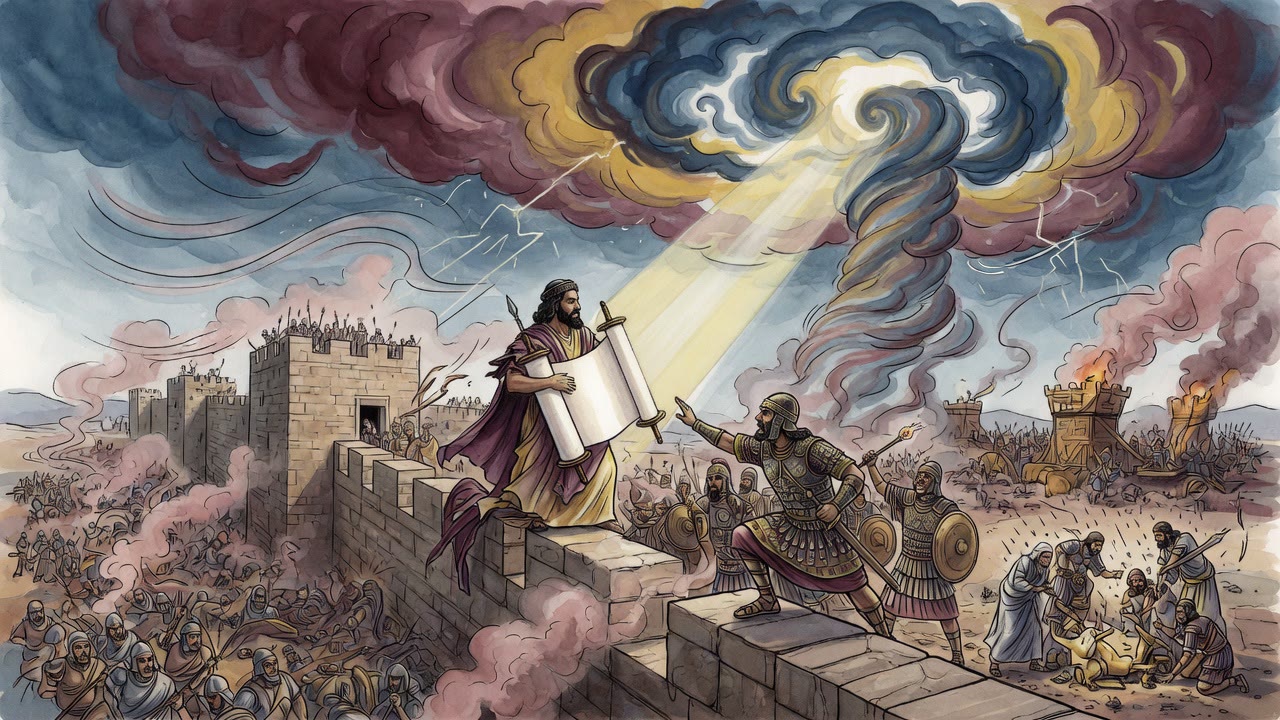
Beside a throne in Israel a king is supposed to keep a copy of the teaching, written for him, read all the days of his life. He is not to multiply horses into a private war machine, or wives into a foreign policy of desire, or silver into a fortress against the God who gave him the seat. If he does what is written, he is worthy to sit. Bloodline is not enough.
Ahab sat anyway. The place where the scroll should have ridden stayed empty. He multiplied desire. He let a queen forge witnesses. He sat on a throne while a neighbor's inheritance was judicially murdered in the name of heaven and kingship both. A chair that ignores the writing under it becomes only furniture in a stolen vineyard, waiting for the arrow that will empty it.
He had climbed the fence meant to keep a king from becoming Pharaoh, and he called the climb royal privilege.
The Arrow Found the Seam
Battle came with Aram at Ramoth-gilead. Ahab laid aside his royal robes and sent Jehoshaphat of Jerusalem into the field wearing the king's proper habit, hoping fate would miss a man without a crown. Benhadad had ordered his men to kill only the king of Israel. They swarmed Jehoshaphat, then pulled back when they knew he was the wrong king.
A young Syrian nobleman named Naaman drew his bow at random. The arrow found the seam of Ahab's armor, the small place where pride cannot plate iron, and pierced him through the lungs. They propped him in the chariot facing the enemy until evening. His blood ran down into the floorboards, pooling where a king's boots had stamped commands. He would not let the army see him fall, lest they flee. He sat and bled until the sun sank. Then he died.
Dogs at the Fountain
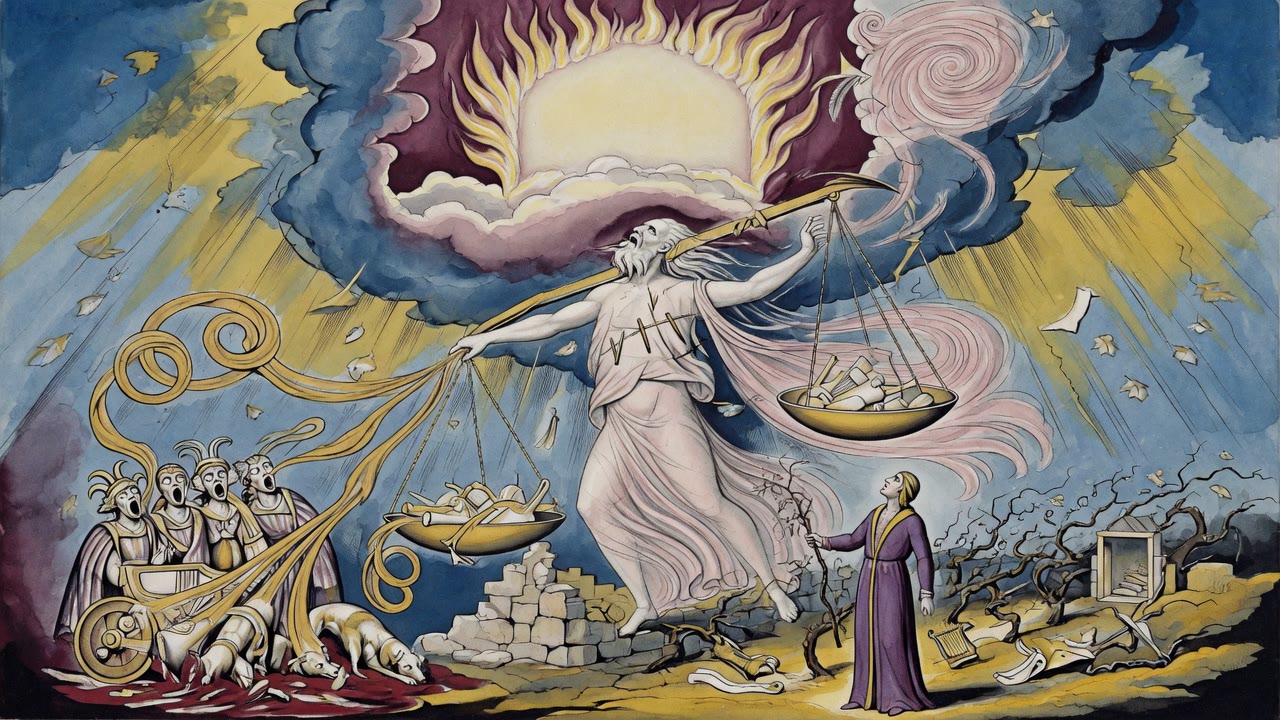
They took the body to Samaria and buried it there. They washed the chariot at the fountain of Jezreel, the same ground that had held Naboth's blood. Dogs came, as dogs do when blood is free, and licked what the prophet had named years before in a quieter field.
Naboth's refusal still stood in the soil like a root the palace could not pull. Sackcloth had bought delay. It had not bought the vineyard clean. Night after the battle, the fountain was still. Somewhere a dog slept with a dark muzzle. Somewhere a scroll of the teaching waited for a king who would read it before he coveted a fence line.
The seat endures only while the writing rules the man who sits. Ahab learned that with his blood in a dog's mouth, in the place where a neighbor had said no.
← All myths