5 min read

Abijah of Judah Left the Golden Calves Standing

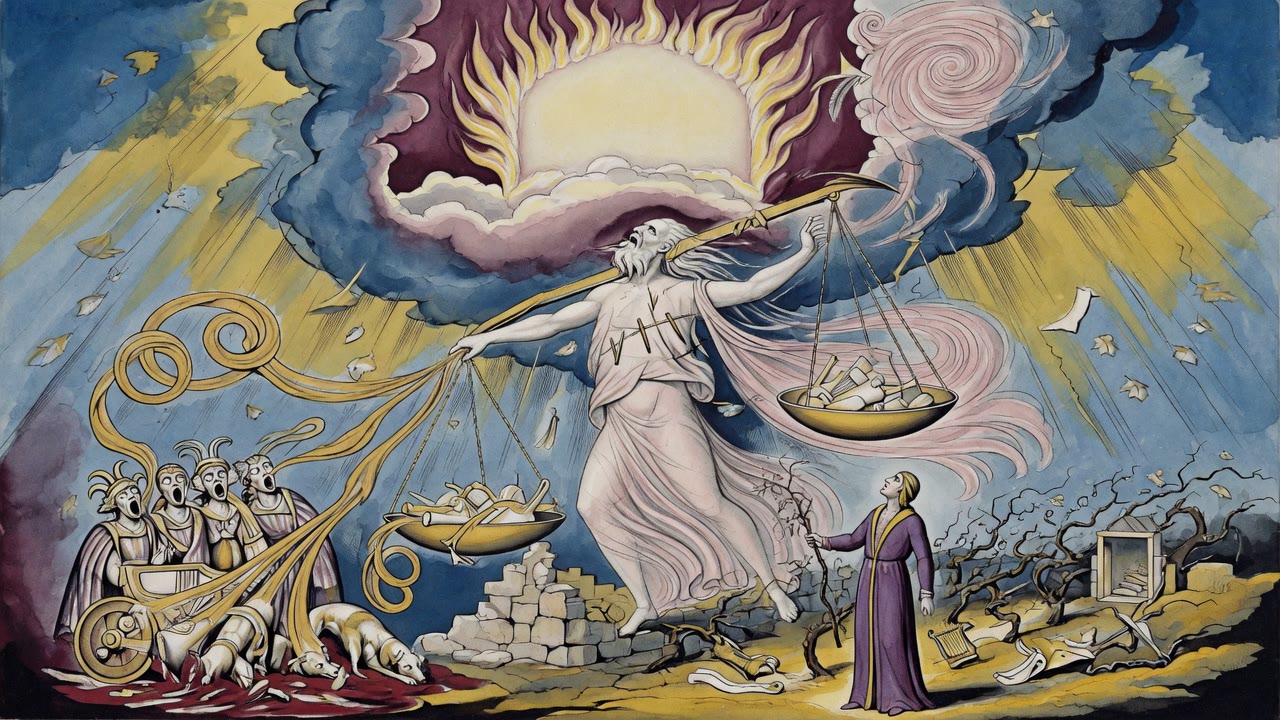
Jeroboam closed the road to Jerusalem and set guards on it, with death for anyone who passed. A second Abijah, his son, took them away and went up himself.

Curated by Arthur · Told by Maggid ·
Table of Contents
  1. The King Who Would Not Smash the Calves
  2. Another Abijah, Another Courage
  3. Ahab's Funeral and the Netherworld
  4. Jezebel's Chariot and the Daily Gold
  5. Two Crowns, One Question
Abijah of Judah Left the Golden Calves Standing Click for full size

The King Who Would Not Smash the Calves

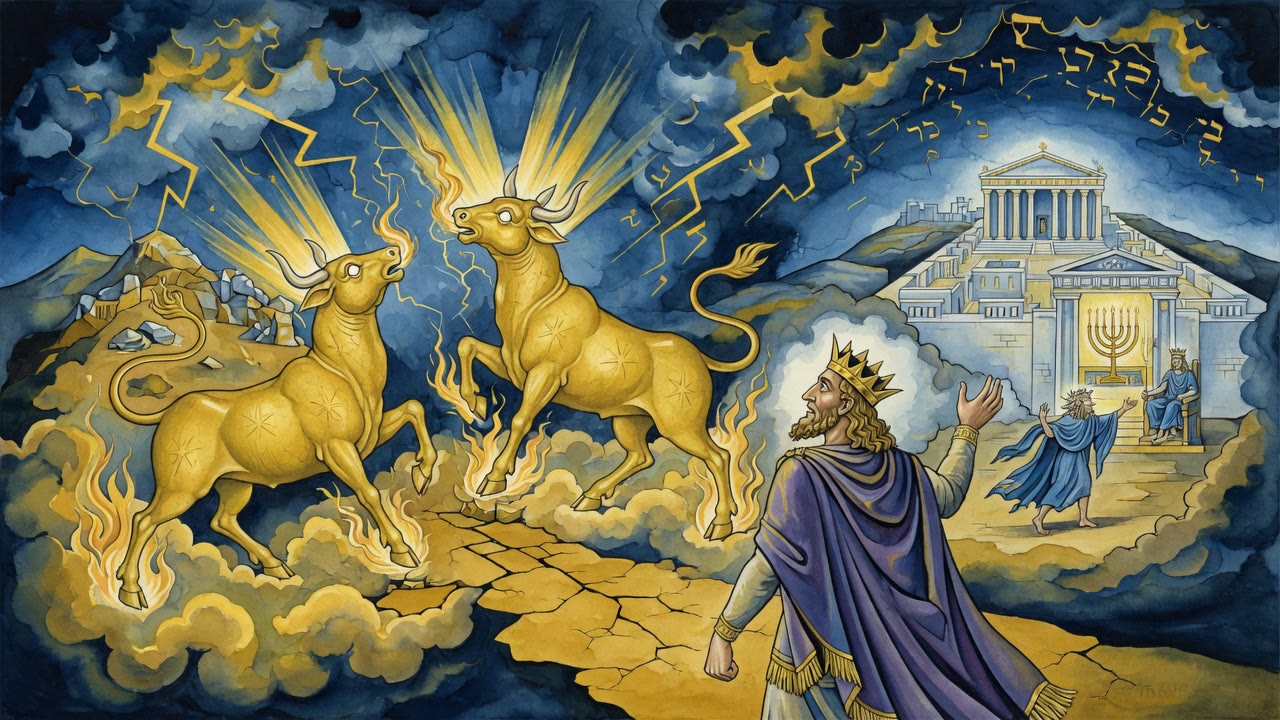
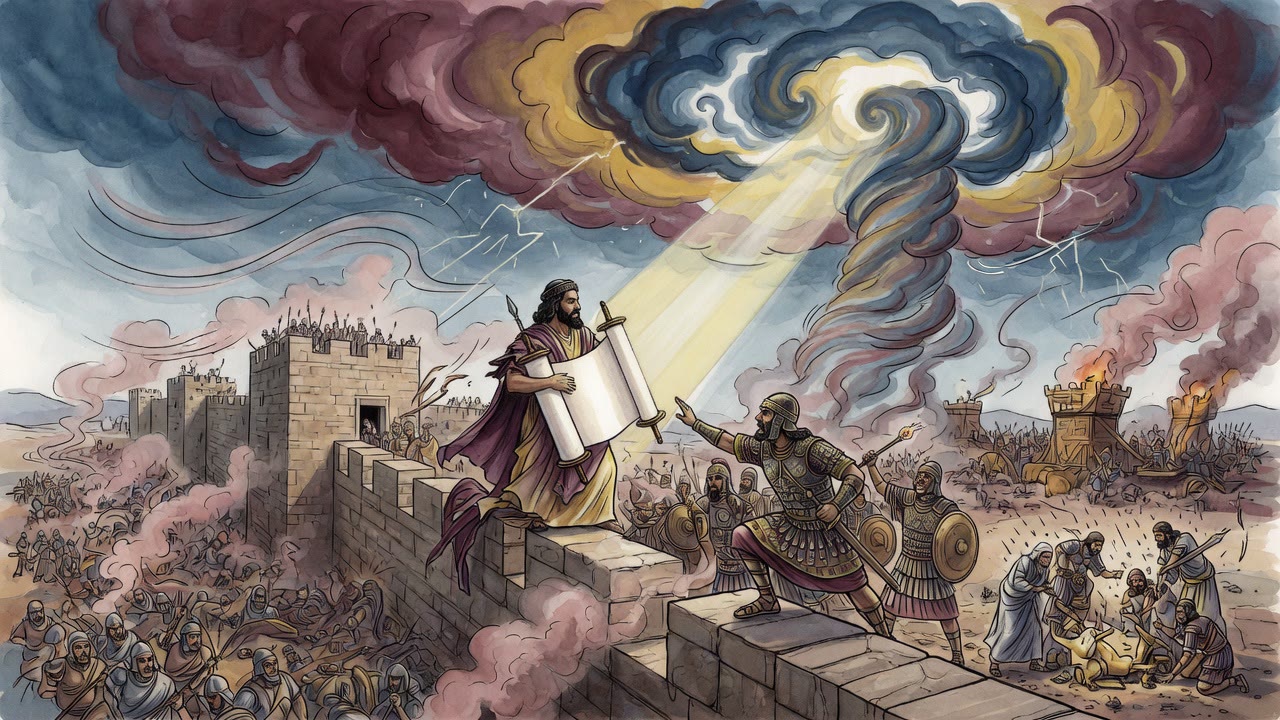
Abijah of Judah went to war against Jeroboam with a speech full of heaven. He claimed the fight was for true worship of God, for the house of David, for priests who still served at the altar the north had abandoned. Then he took Beth-el, the city of the golden calves, and left the idols standing. The tradition does not let that silence pass. A king who names God as his banner and then spares the calves has already told the truth about his war. Politics wore sacred language. The metal gods stayed warm in their shrine.

Victory without iconoclasm is a half sentence. Abijah could break Jeroboam's line and still refuse to break Jeroboam's theology. The midrash of kings asks what the campaign was for if the captured high place kept its gold. Soldiers can die for a cause their commander will not finish with his own hands.

Another Abijah, Another Courage

There was another Abijah, son of Jeroboam in the northern kingdom. His father had forbidden pilgrimages to Jerusalem and set guards on the border with death as the price of disobedience. This son removed the guards. He opened the road south. He went up himself to fulfill what his father had tried to kill. The tradition sets the two Abijahs side by side until the irony cuts. Judah's king, loud for pure worship, left calves in Beth-el. Israel's prince, born under a ban on Zion, risked the death penalty to reach the Temple.

Conviction is not a uniform. It can appear in the wrong court and fail in the right one. The story refuses easy maps of good house and bad house. It watches hands. Who tears down an idol? Who only talks about tearing it down while the gold still gleams?

Ahab's Funeral and the Netherworld

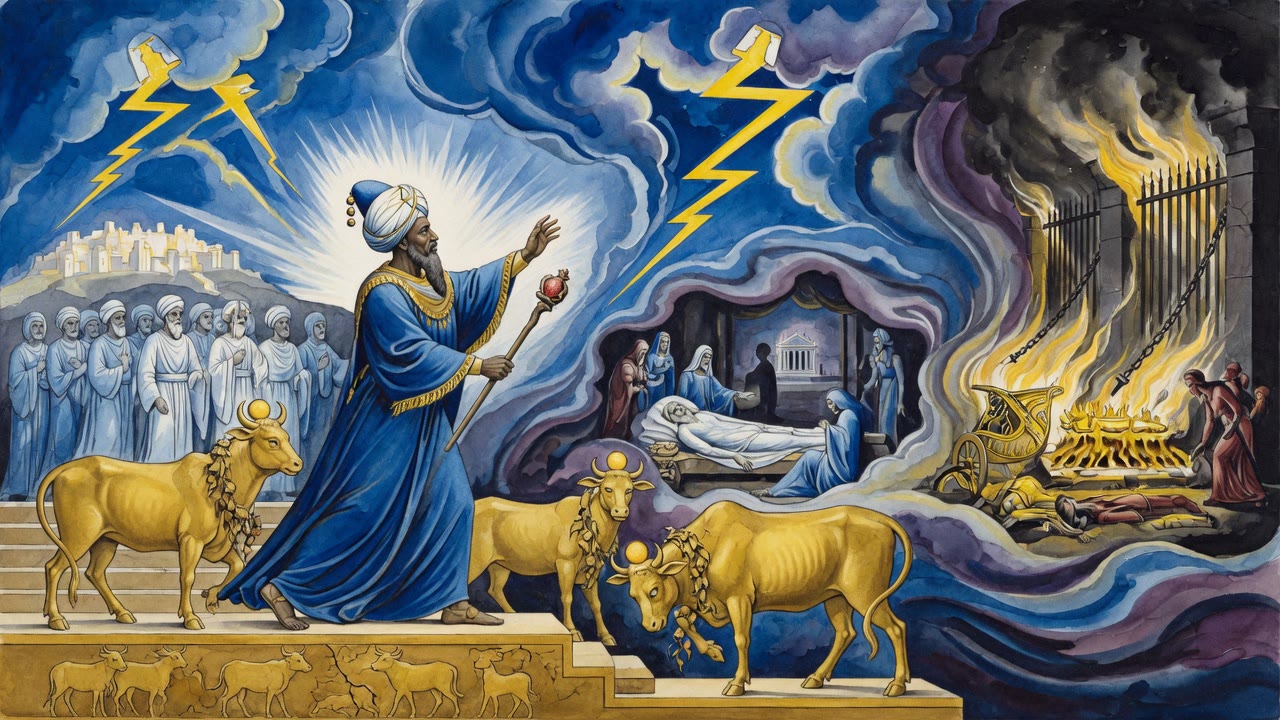
Generations later the north produced a louder ruin. Ahab died, and the mourning was so vast that thirty-six thousand warriors marched before his bier with shoulders bared. Memory kept that procession for ages. Outward grief can be enormous while the soul's account stays poor. Tradition places Ahab among the few Israelites denied a portion in the world to come, housed in a division of the netherworld under the angel Oniel, spared some tortures of the nations yet still shut out of the better life.

How does a king earn both a grand funeral and a closed gate? The legends lay much of the weight on Jezebel. She was daughter of kings, wife of a king, and co-regent in her own right, one of the rare reigning queens beside Athaliah. Power sat in two seats, and the second seat taught the first how to sin with style.

Jezebel's Chariot and the Daily Gold

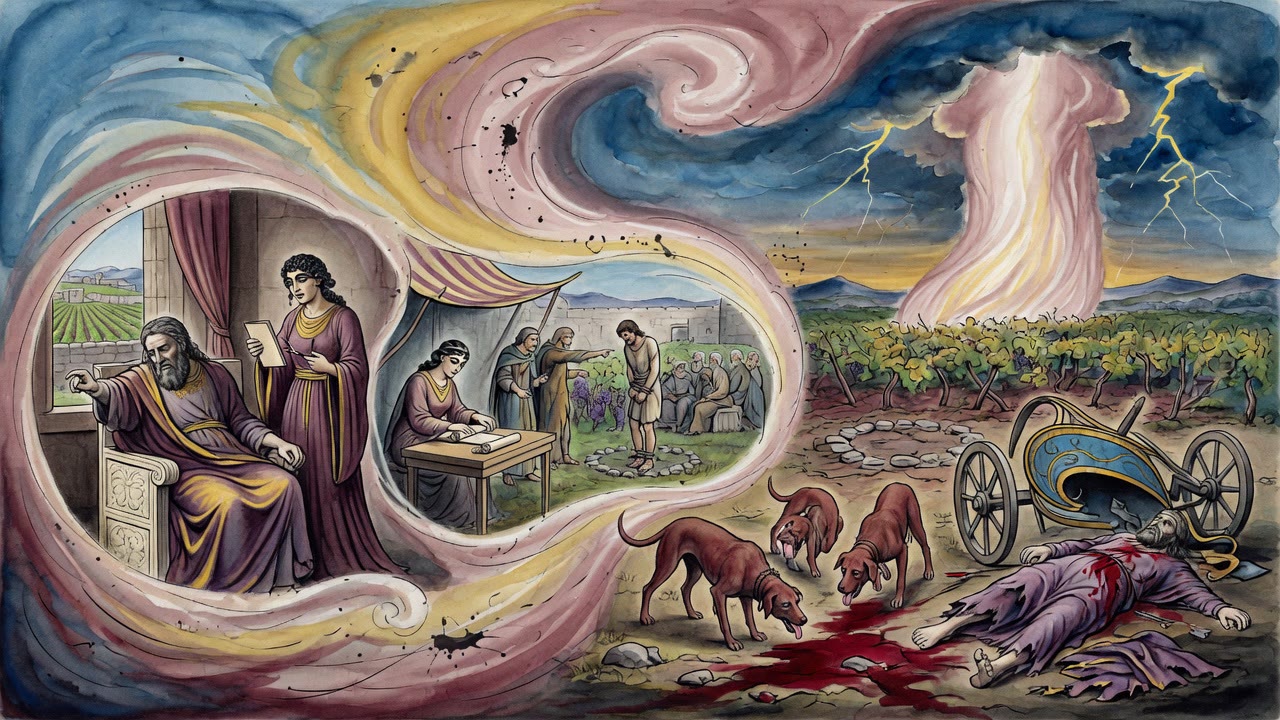
Rabbi Levi spent two months expounding Ahab's wickedness until Ahab came to him in a dream and complained that only half the verse had been taught. So Rabbi Levi spent two more months on Jezebel's share, proving the queen's instigation line by line. The legends add harder pictures. Lewd images fixed to Ahab's chariot to inflame him; those same parts later spattered with his blood in battle. Daily she had him weighed and offered his weight in gold to idols. Desire and gold and foreign gods braided into one reign.

The funeral's thirty-six thousand could not rewrite that ledger. Public sorrow is not the same as divine clearance. Ahab remains a warning that influence can outvote a king's better moments until the better moments stop arriving.

Two Crowns, One Question

Abijah of Judah and Ahab of Israel are not the same man, yet the tradition invites a single question across their stories. What do you smash when you have the power to smash it? Abijah left calves because winning a border mattered more than cleaning a shrine. Ahab built a life where Jezebel's images rode with him into war. Between a spared idol and a decorated chariot runs a straight road of kings who use God's name or God's people as furniture for their own rule.

The northern Abijah who opened the road to Jerusalem stands as a counterstroke inside the same royal family tree. One generation forbids the ascent. The next risks death to make it. That flash of courage does not redeem Jeroboam's calves, but it proves that bloodline is not destiny. Choice still walks into the throne room and can reverse a father's seal on the border.

Read the kings this way and the drama is not antiquarian. It is the pressure of power on worship. A speech at the front of an army. A calf left standing. A queen measuring gold against a husband's body. A funeral that shakes the street while the netherworld keeps its books. Crowns glitter. The midrash keeps counting what the glitter hid, and it will not confuse a parade of mourners with a cleared name before God.


← All myths
From the tradition

Sources

2 sources

The texts behind this telling. Some cards carry a translation of the source; others are our own retelling of it, and each card says which. Every card links out to the original.

Legends of the Jews 6:16Legends of the Jews

Retold in our words. Read the original at the link below.The Legends of the Jews by Louis Ginzberg (1909) · Public Domain

Legends of the Jews turns to Kingdom of Abijah.

It gets more complicated.

Abijah had claimed that his war with Jeroboam was about restoring true worship of God. But did he really mean it? After capturing Beth-el, a city known for its idolatry, he.. just left the golden calves there. He didn't destroy them!

Was it all just political maneuvering dressed up as religious fervor?

Now, here's where it gets really interesting.

There was another Abijah. This one, the son of Jeroboam, was a king of Israel, a kingdom often at odds with Judah. And this Abijah actually showed more religious conviction, at least in one key instance!

His father, Jeroboam, had forbidden pilgrimages to Jerusalem and placed guards at the border to enforce that decree, with the death penalty as punishment. Yet, this Israelite king defied his own father. He removed the guards, opening the way for people to travel to Jerusalem. More than that, he even went to Jerusalem himself to fulfill his religious obligations!

Talk about defying expectations! contrast for a moment. The king of Judah, who claimed to be fighting for true worship, couldn't bring himself to remove idols from a captured city. And the king of Israel, whose father was actively trying to suppress worship in Jerusalem, personally risked his life to go there himself.

And sometimes, the most unexpected people can surprise us with their courage and conviction. What does this story teach us about judging others - or even ourselves? Maybe it's that we should always look beyond the surface and consider the true motivations behind our actions.

Full source
Legends of the Jews 6:26Legends of the Jews

Retold in our words. Read the original at the link below.The Legends of the Jews by Louis Ginzberg (1909) · Public Domain

Not a pleasant thought, I know. But the legends surrounding King Ahab, one of the more notorious figures in the Hebrew Bible, give us a glimpse into that shadowy realm.

Ahab wasn't exactly a model king. The mourning for him, surprisingly, was immense, so great that the memory lingered for generations. Thirty-six thousand warriors, shoulders bared in grief, marching before his funeral bier. A truly impressive, if somewhat unsettling, spectacle.

Here's the kicker: despite the outward show of mourning, Ahab's fate in the afterlife, according to tradition, isn't so rosy. In fact, some texts say he's one of the few Israelites denied a portion in olam ha-ba, the world to come. He's said to reside in the fifth division of the netherworld, overseen by the angel Oniel. Though, he's spared the tortures inflicted on his pagan counterparts. Perhaps a small mercy?

So, what landed him there? Well, much of the blame, at least according to legend, falls on his infamous wife, Jezebel.

The rabbis certainly thought so. There's a story about Rabbi Levi who spent two whole months expounding on a verse that detailed Ahab's wickedness and Jezebel's influence. Then, Ahab appeared to him in a dream, upset that the rabbi focused only on the first half of the verse. So Rabbi Levi, ever the diligent scholar, spent the next two months lecturing on the second half, meticulously demonstrating how Jezebel instigated Ahab’s sins. Talk about a course correction!

The Hebrew Bible already recounts her misdeeds, but the legends add another layer. Apparently, she attached lewd images to Ahab's chariot to inflame his desires. Yikes. It's said that those very parts of the chariot were spattered with his blood when he eventually fell in battle.

There's more. According to some accounts, Jezebel had Ahab weighed every day, and she'd sacrifice the equivalent of his weight in gold to idols. The Zohar, the central text of Kabbalah, and other sources paint a pretty damning picture.

And consider this: Jezebel wasn’t just the daughter and wife of kings, she was also a co-regent, a reigning queen in her own right. The only other one in Jewish history, apart from Athaliah. power, and how she wielded it. It's a potent, if cautionary, tale about influence, power, and the consequences of our actions.

The legends surrounding Ahab and Jezebel serve as a stark reminder. We have a choice about how we live, about the kind of influence we exert. And those choices, according to these stories, echo far beyond our earthly existence.

Full source