5 min read

Jeroboam Chose Golden Calves Over Standing in the Temple

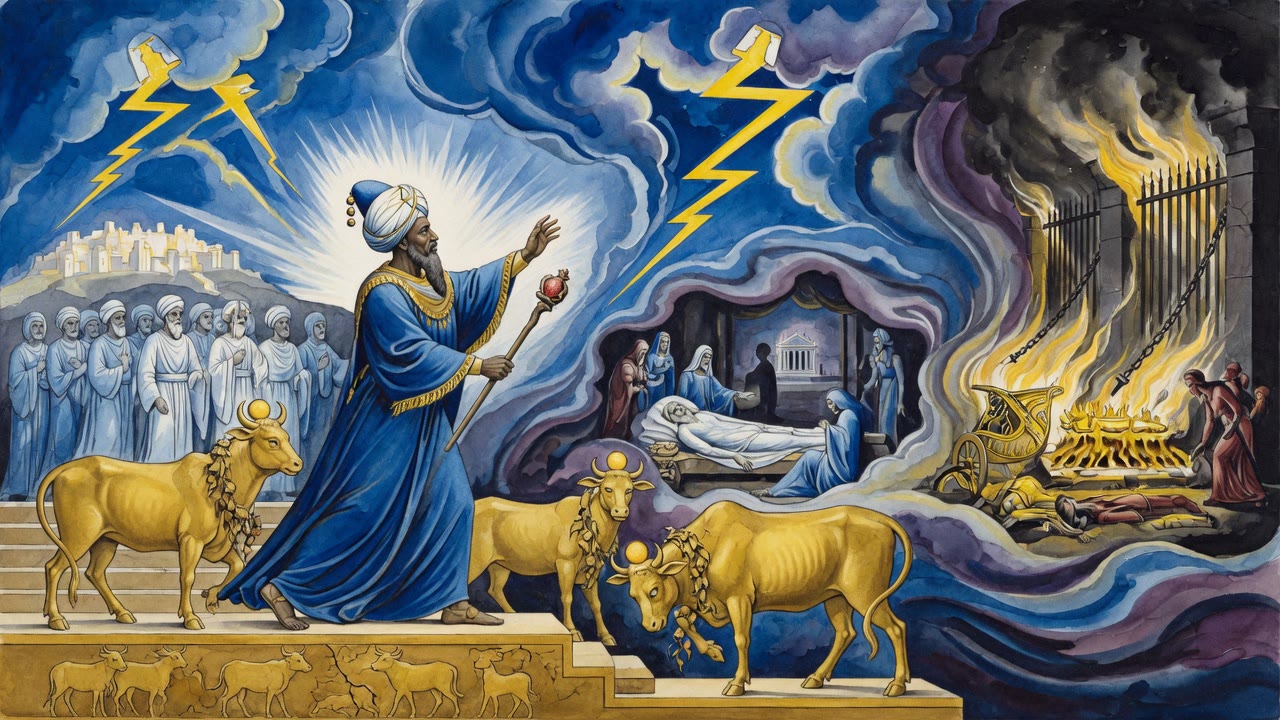
Ahijah promised Jeroboam a throne equal to David's if he stayed worthy. Pride refused to stand while Rehoboam sat, so calves rose at Bethel and Dan.

Curated by Arthur · Told by Maggid ·
Table of Contents
  1. The Toll Gates and the Public Insult
  2. Ahijah's Tear and the Hidden Torah
  3. The Chair He Would Not Stand Beside
  4. When the Danites Refused Brother-Blood
  5. Sheba's Son and the Timing of the Split
Jeroboam Chose Golden Calves Over Standing in the Temple Click for full size

The Toll Gates and the Public Insult

Solomon ordered gaps in Jerusalem's wall sealed. David had cut those openings so pilgrims could enter the city with less friction. Solomon closed them and funneled traffic through gates that took a toll. The money, the legends say, went as pin money to his wife, Pharaoh's daughter.

Jeroboam, rising in the court, said the quiet part aloud. He questioned the king in public. He failed to pay the respect owed to royal position. The quarrel looked small: masonry, fees, a foreign wife's purse. Under it ran a fight over what Jerusalem was for. Pilgrims or revenue. David's ease or Solomon's control.

Anger found Jeroboam. He left the city with a pounding heart, and destiny met him on the road before his pulse had slowed.

Ahijah's Tear and the Hidden Torah

Ahijah of Shiloh found him. The prophet was Levi by tribe and ancient beyond ordinary reckoning, born, the tradition claims, at least sixty years before the exodus. His merit was so heavy that later sages paired him with Simeon bar Yochai as enough, together, to atone for sinners from Abraham to the Messiah.

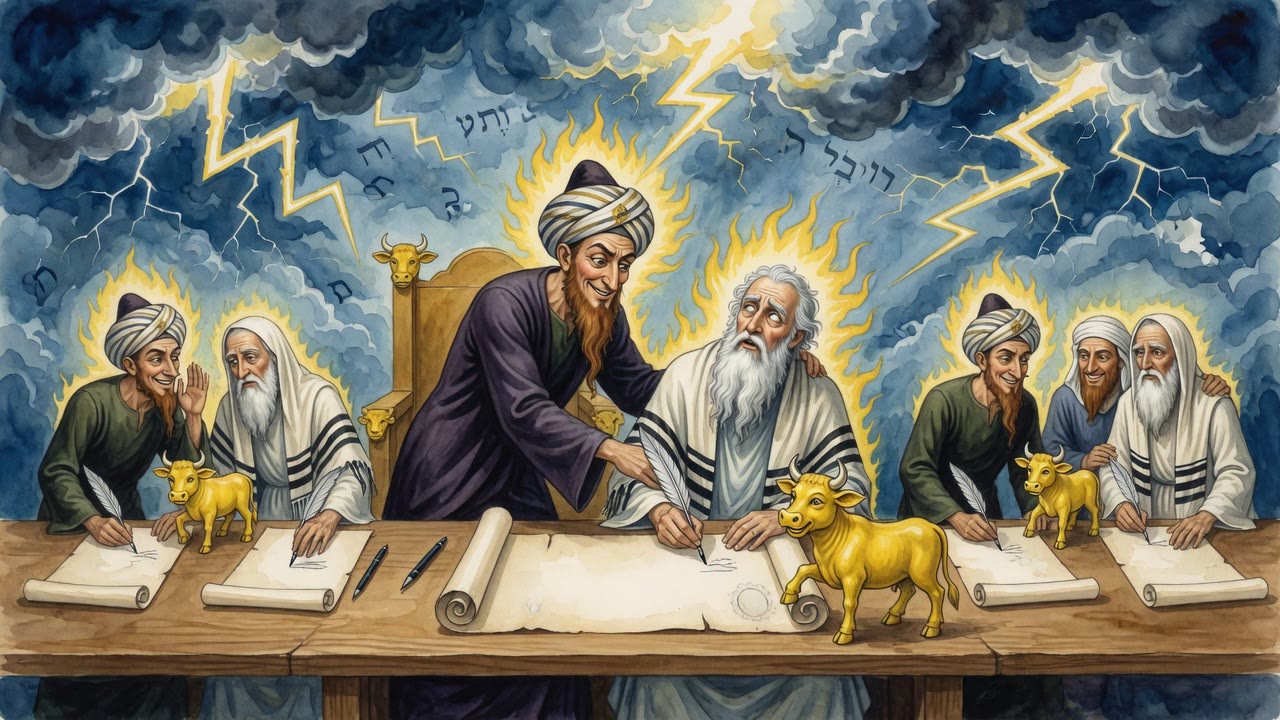
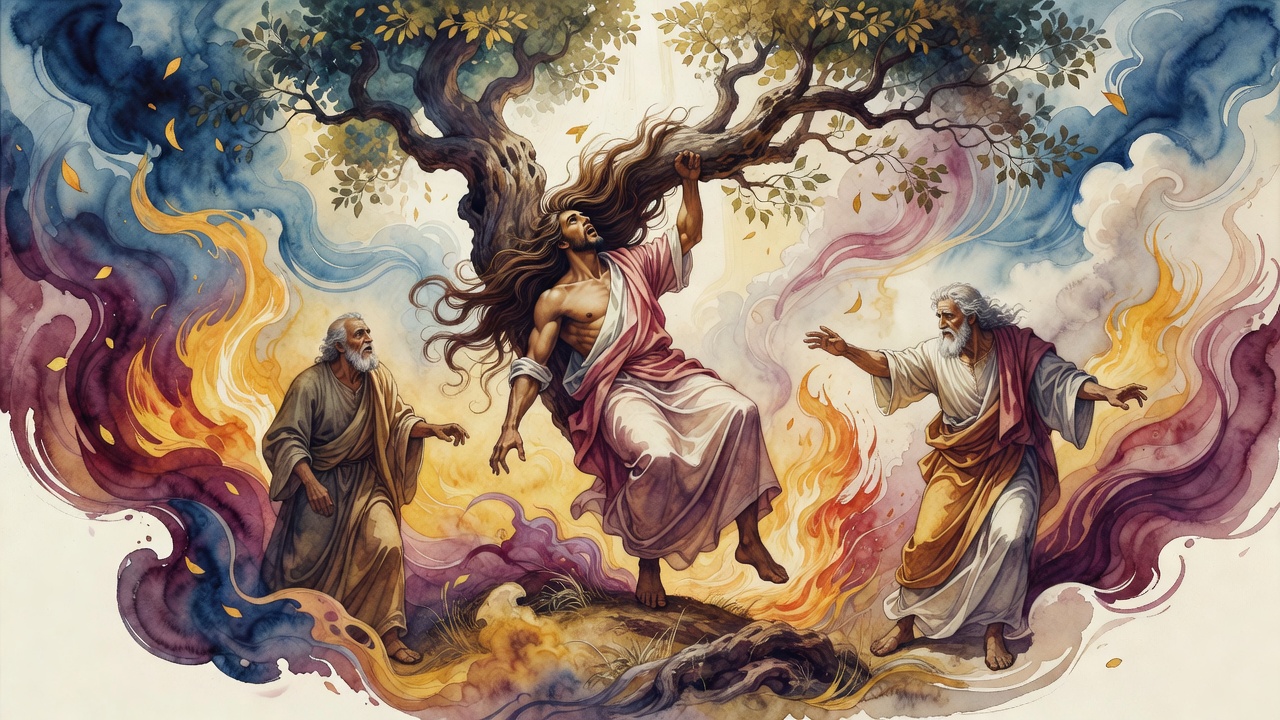
Ahijah tore a garment into twelve pieces and gave Jeroboam ten. Kingship over the north. Not a curse first. A promise. Jeroboam had been Ahijah's star disciple, second only to the master in knowledge, partner even in sitrei Torah, the hidden layers of the teaching. Had he remained worthy, his reign could have matched David's in length.

The man who would later cast calves once sat in the deepest room of Torah with a prophet older than the desert march. That memory makes the later fall colder, not softer.

The Chair He Would Not Stand Beside

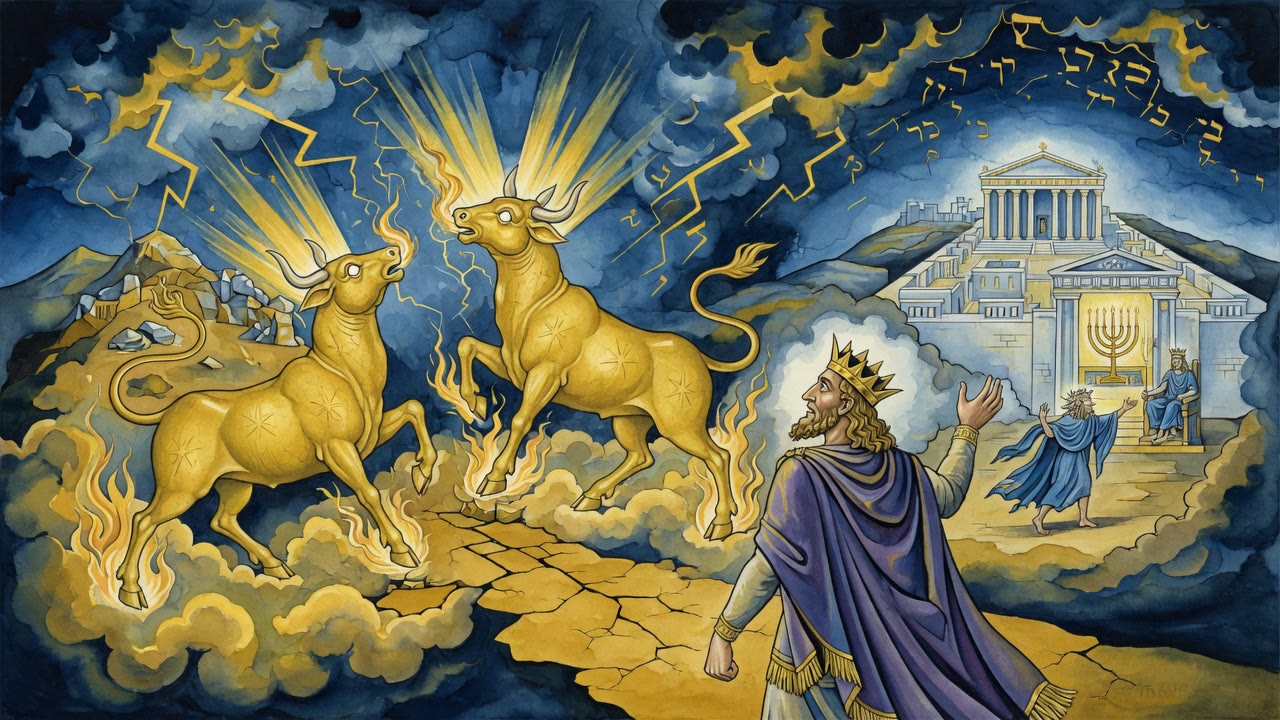
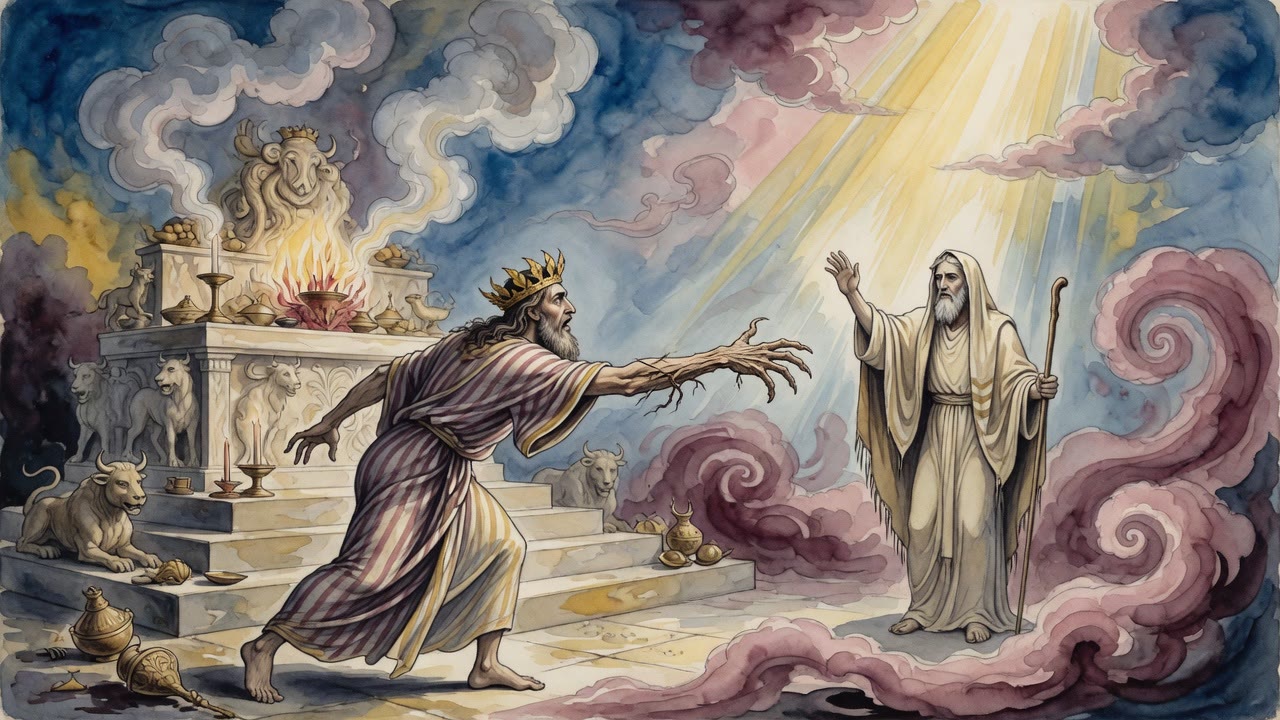
Pride finished what prophecy began. After the split, Jeroboam feared pilgrimages to the Temple would reunite hearts under Rehoboam. He set golden calves at Bethel and Dan. The political excuse was unity of the north. The personal nerve, Ginzberg preserves, was status. In the Temple, only the house of David sat. Jeroboam as northern king would have to stand in Rehoboam's presence.

He could not bear the posture. Better an altar he controlled than a visit where his legs confessed a second rank. Idolatry became furniture for wounded rank. Ambition that once challenged tolls for pilgrims now built substitutes for the Presence so a king would never have to stand.

The disciple of hidden Torah became the architect of public idols because standing in the Temple felt like kneeling in his bones.

When the Danites Refused Brother-Blood

Jeroboam pushed further. He tried to drive the ten tribes into war against Judah and Jerusalem. The people refused to raise arms against the house of David. He turned to the elders. They pointed him to the Danites, the sharpest warriors in the land.

The Danites swore by the head of their ancestor Dan that they would not shed their brothers' blood. They nearly rebelled against Jeroboam rather than march south. Heaven, the legends say, then prompted the Danites to leave the land altogether rather than become the tool of civil slaughter.

Division of kingdoms was permitted after the Temple stood. Fratricide as policy was blocked. Even the fiercest tribe would not rent Israel for a king's insecurity about chairs and processions.

Sheba's Son and the Timing of the Split

Jeroboam's father-line carried an older itch for fracture. Sheba son of Bichri had tried to split the people in David's day and failed. God wanted the Temple built before any such tear could hold. Timing was a divine wall. Jeroboam arrived after the house was up, and the tear held.

Sheba misread signs of royalty as his own; they belonged to a later son. Jeroboam received real signs from Ahijah and still spent them on calves and civil war dreams. False reading and true appointment both end badly when pride steers the hand.

The road out of Jerusalem began with a fair complaint about pilgrim tolls. It ended with gold animals and a throne that could not survive the humility of standing. That is how a star student of Ahijah became a caution carved into Kings.

Walk the road again from the sealed pilgrim gaps to Bethel's gold. A man who once defended easy entry to Jerusalem ends by inventing altars so his people will never enter Jerusalem at all. Ahijah's ten cloth pieces promised a reign that could have equaled David's years. Pride spent the promise on the problem of a chair. When the Danites refused brother-blood and nearly turned on their own king, heaven's answer was exile for the warriors rather than civil war. The split of kingdoms remained. The dream of killing Judah for status did not. Jeroboam kept the calves and lost the hidden Torah he had once studied with a prophet older than the desert.

That is the full arc the legends insist on. Not a simple rebel against taxes, and not a pure idealist of northern freedom. A brilliant student who could not stand to stand.


← All myths

From the tradition

Sources

4 sources

The texts behind this telling. Some cards carry a translation of the source; others are our own retelling of it, and each card says which. Every card links out to the original.

Legends of the Jews 6:5Legends of the Jews

Retold in our words. Read the original at the link below.The Legends of the Jews by Louis Ginzberg (1909) · Public Domain

He was about to leave Jerusalem, probably with his heart pounding, trying to get away from Solomon's anger.

Then, out of nowhere, he meets Ahijah of Shilo.

Ahijah wasn't just anyone. He was a prophet, a navi. And he didn't bring bad news. Quite the opposite! Ahijah revealed to Jeroboam that he was destined for greatness, destined to be king. The relief?

Ahijah himself was a figure of immense respect. He was from the tribe of Levi. But more than that, he was incredibly old. In fact, his birth happened at least sixty years before the exodus from Egypt!

But age wasn't the only thing that made Ahijah special. It was his piety, his deep and unwavering devotion. We're told that even a righteous person as high-ranking as Simon ben Yohai, or Simeon bar Yochai, considered Ahijah an equal.

And that's saying something.

According to Ginzberg's retelling in Legends of the Jews, Simon even exclaimed, and I quote, "My merits and Ahijah together suffice to atone for the iniquity of all sinners from the time of Abraham until the advent of the Messiah."

Think about the weight of that statement. To be considered so righteous, so powerful, that your merit, combined with another's, could absolve all sins… it speaks volumes about the character of Ahijah of Shilo.

So, what does this little snapshot of Jeroboam and Ahijah tell us? Perhaps it's a reminder that even in moments of fear and uncertainty, destiny can still find you. And sometimes, it comes in the form of an unexpected encounter with someone truly extraordinary. Someone like Ahijah, a prophet whose wisdom and piety resonated through generations.

Full source
Legends of the Jews 6:8Legends of the Jews

Retold in our words. Read the original at the link below.The Legends of the Jews by Louis Ginzberg (1909) · Public Domain

As retold by Ginzberg, Jeroboam was no ordinary guy. He was a star student, a true disciple of the prophet Ahijah. His knowledge was said to surpass all the scholars of his time, second only to Ahijah himself. They delved into the deepest secrets of the Torah together, exploring mysteries unknown to others.

It’s said that Jeroboam and Ahijah even discussed sitrei Torah, "hidden Torah," esoteric interpretations and mystical aspects of the text that were not widely known. This suggests Jeroboam was not just a political figure, but also deeply involved in the spiritual and intellectual currents of his time.

He had the potential to be truly great. We read that had he remained worthy, Jeroboam's reign could have equaled David's in length.! But alas, it was pride – ga'avah – that became his downfall.

So, what happened? Why did he stumble? He became king of the Northern Kingdom of Israel after the split with the Southern Kingdom of Judah, ruled by Rehoboam. Jeroboam, fearing that pilgrimages to the Temple in Jerusalem would reunite the people under Rehoboam's rule, decided to create alternative worship sites. He introduced the infamous golden calves, setting them up in Bethel and Dan as objects of worship.

Why calves, you might ask? Well, some scholars suggest it was a throwback to ancient Near Eastern imagery, connecting the divine to strength and fertility. Whatever the reason, it was a direct violation of the commandments, a move that cemented his image as a rebellious figure in Jewish history.

But Ginzberg offers a fascinating insight into Jeroboam's motivations. It wasn't just about power; it was about status. in the Temple, only members of the House of David were allowed to sit. Jeroboam, as king of the north, would have to stand in the presence of Rehoboam. The thought of appearing subordinate, of being seen as less than, was unbearable. So, rather than submit to what he perceived as humiliation, he chose idolatry, securing his royal prerogatives but ultimately sacrificing his spiritual standing.

A reminder that ambition, unchecked by humility and a sense of something greater than oneself, can lead to ruin. Jeroboam's story forces us to ask: What are we willing to sacrifice to maintain our position? And is it truly worth the cost?

Full source
Legends of the Jews 6:10Legends of the Jews

Retold in our words. Read the original at the link below.The Legends of the Jews by Louis Ginzberg (1909) · Public Domain

The split of the kingdom into Judah and Israel is definitely one of those. It wasn't just a political squabble; it was a seismic event with echoes that still resonate today.

The man at the center of it all? Jeroboam. Now, Jeroboam wasn’t the first to try and cause division. His own father, Sheba the son of Bichri, had attempted something similar during David's reign, but he failed. Why? The Legends of the Jews tells us it was because God wanted the Temple built before any such split could occur (Ginzberg). Timing is everything. But Jeroboam? He was persistent. He wasn't content with just the division; he wanted war. He tried to instigate the Ten Tribes – the northern kingdom of Israel – to fight against Judah and Jerusalem.

Thankfully, the people weren't having it. They refused to raise arms against their brethren, especially against the descendant of David who ruled over them. Jeroboam, however, wasn’t one to give up easily.

He then turned to the elders of Israel, hoping they could sway the people. But they, in turn, pointed him to the Danites. Now, these weren't your average Joes. The Danites were known as the most efficient warriors in the land. If anyone could be convinced to fight, it would be them. Wrong! The Danites, fierce as they were, swore by the head of their ancestor, Dan, that they would never shed the blood of their own brothers. In fact, they were so opposed to Jeroboam's plan that they were on the verge of rebelling against him!

Jeroboam, desperate for war, facing down the most powerful warriors in the kingdom, who were ready to turn on him rather than fight their brethren. A clash seemed inevitable, a bloody internal conflict that could have torn the kingdom apart even further.

But then, something extraordinary happened. According to the Legends, God intervened. God prompted the Danites to leave Palestine altogether.

What does this tell us? Perhaps that even in moments of deep division and conflict, the bonds of kinship and shared heritage can be stronger than political ambition. Or perhaps, it's a reminder that divine intervention can work in mysterious ways, preventing catastrophe even when it seems unavoidable.

Full source
Legends of the Jews 6:4Legends of the Jews

Retold in our words. Read the original at the link below.The Legends of the Jews by Louis Ginzberg (1909) · Public Domain

It's about the little things, the daily grind of governing. And sometimes, those little things can spark big trouble.

Our tale involves Jeroboam, a rising figure in Solomon's court, and a seemingly minor decision about..city walls. Sounds boring. Stay with me.

In Legends of the Jews, Solomon, in a move that seems more about finances than faith, ordered his men to close up some openings in the city wall of Jerusalem. These weren't just any holes. They were originally made by David, Solomon's father, to make it easier for pilgrims to come to Jerusalem. Making access to the holy city easier?

Solomon had other plans. With the openings closed, pilgrims had to go through the gates, and that meant paying a toll. And where did that money go? To Solomon's wife, the daughter of Pharaoh, as.pin money.

Jeroboam was not happy. He publicly questioned Solomon's decision. The audacity! The tension! It wasn't just about the money; it was about respect, about the legacy of David, and about what Jerusalem meant to the people.

And it wasn’t just this one issue. That Jeroboam "failed to pay Solomon the respect due to royal position." He was walking a dangerous line.

This whole situation reminds me of another story, that of Sheba the son of Bichri. He too, had rebelled, but against David. As Legends of the Jews recounts, Sheba was misled by interpreting certain signs as promises of royalty for himself. But, as it turned out, those signs weren't about him at all. They were about his son.

So, what's the connection? Both Sheba and Jeroboam, in their own ways, challenged the established order. Sheba through rebellion, Jeroboam through public dissent. Were they driven by ambition? By a genuine concern for the people?

How easily can ambition and good intentions become twisted? And what happens when those in power forget the reasons they were given that power in the first place?

Full source