King Hagag Tore the Verse and a Demon Took His Throne
Hagag left the torn page under his heel and rode to hunt. In the thicket the deer stood up wearing his face and took the horse.
Table of Contents
The priest's mouth was still moving when King Hagag stopped hearing anything but one sentence. Riches do not last forever. A crown does not endure to every generation (Proverbs 27:24).
 Click for full size
He looked at the open book on the lectern. Someone had copied those letters by hand. The line was not a blessing. It was not a law. It pointed at him.
The King Who Tore the Page
"Cease," Hagag said.
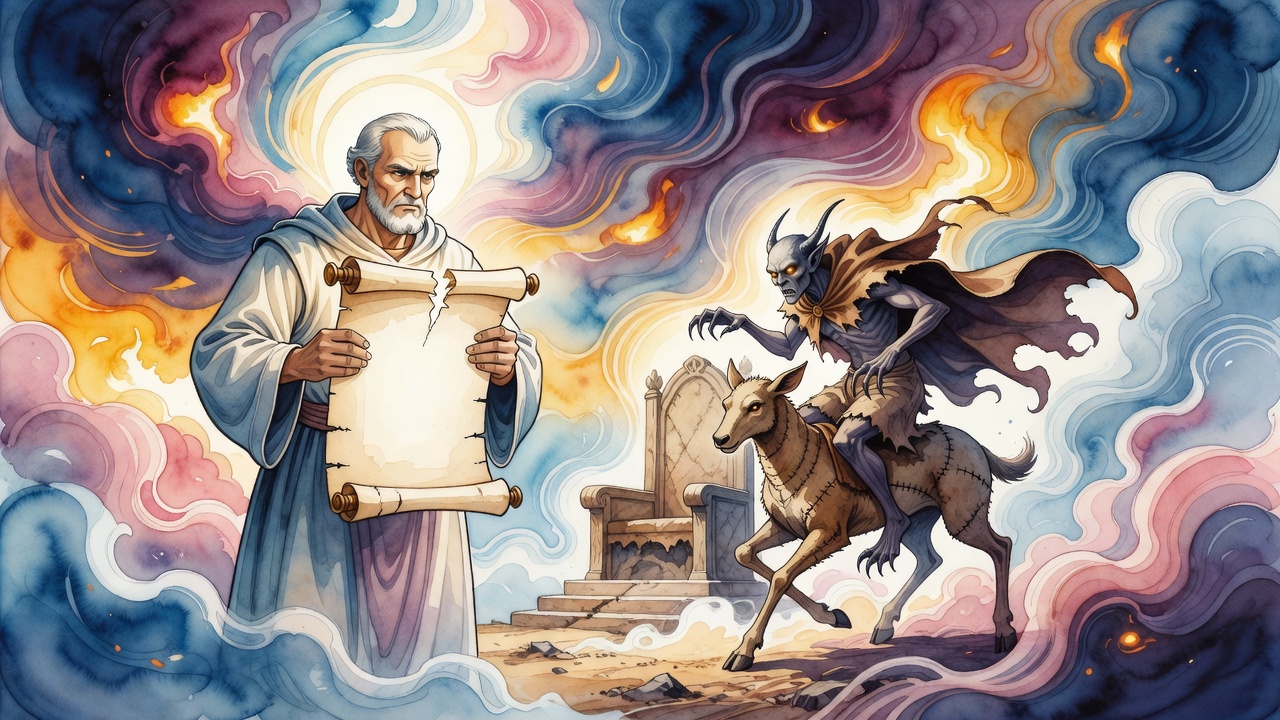
The priest stopped mid-word. The king came down the steps, found the verse with his finger, gripped the parchment, and tore it free. The rip was small and dry. The whole court heard it. He let the page fall and set his heel on it.
"From this day," he announced, "any verse that offends me will be torn out as this one was. I will not sit and be insulted by my own holy book."
The priest stared at the gap in the binding. Nobles looked at their hands. A man had just placed himself above the text Israel called sacred, and no fire came down, and no voice spoke. That silence was the most frightening thing in the room. Hagag, satisfied, called for his horse. A king did not brood over parchment.
The Stag That Stood Up as a Man
He sighted a stag at the forest edge and gave chase. The joy of the hunt burned the morning out of his mind. He outran his nobles. He swam a cold river with his sword held above the water and nothing else. He crashed through a thicket on the far bank where the deer had vanished.
There was no deer. A young man in a deerskin rose from the wet ground, breathing hard, as though he had been the one running on four legs.
"I am the deer," the young man said.
He was a shed (שד), a demon of the kind Solomon once bound and set to work, the spirits Asmodeus reigned over until the wise king chained their prince beside the Temple. This one had not come to torment Hagag for sport. He had come to teach him the verse he had ripped from the page.
The shed pulled the deerskin from his shoulders. Underneath he wore the king's own face.
The Demon Who Rode Home as King
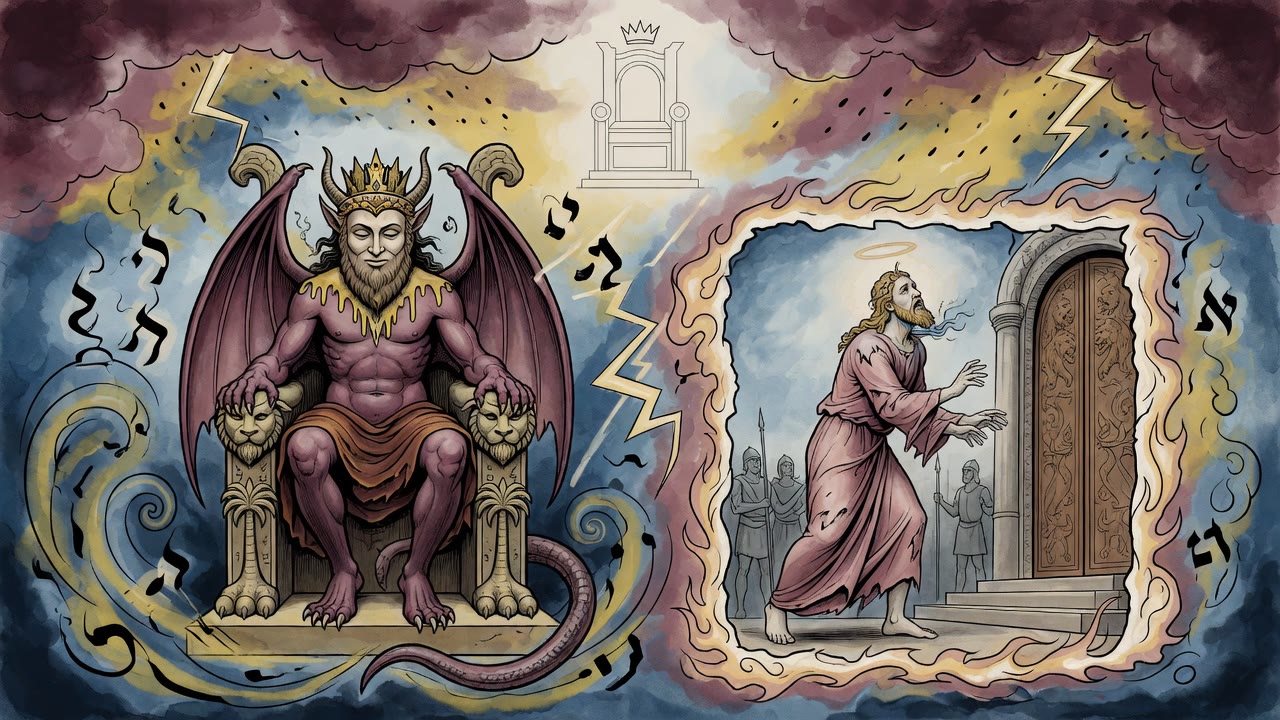
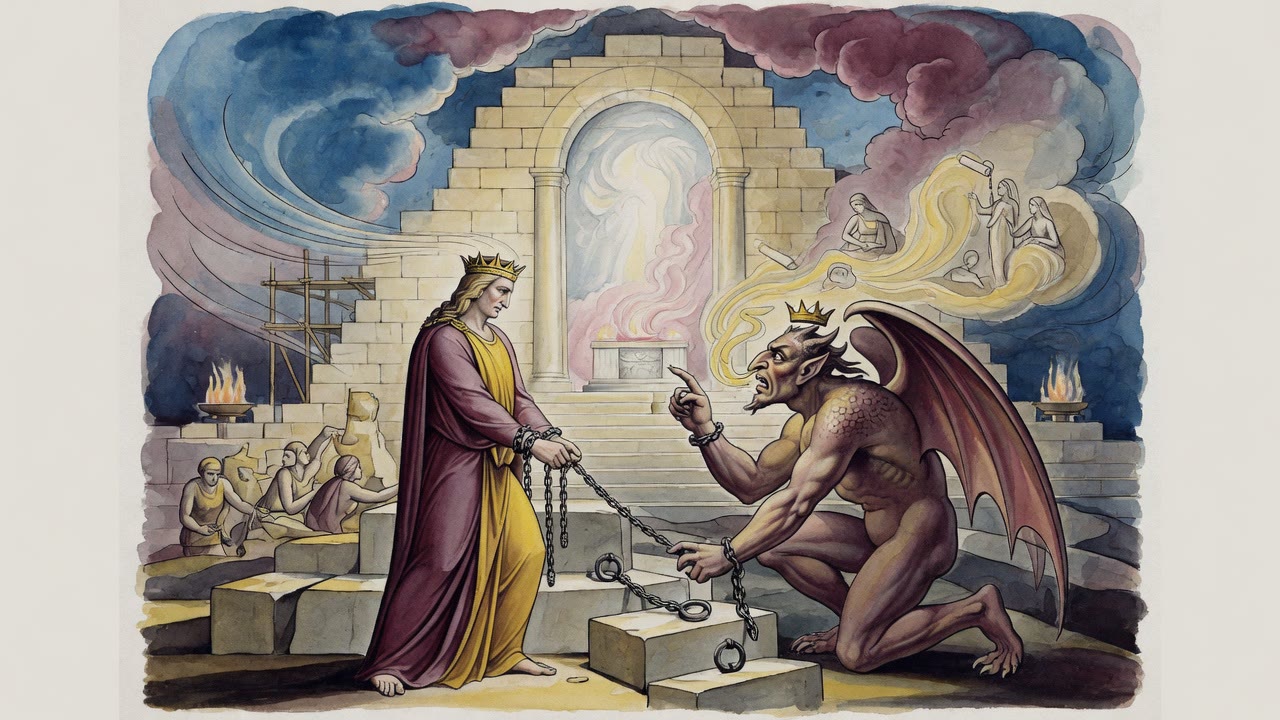
He took Hagag's clothes while the king stood dumb in the brush. He swam back across the river in the royal garments, mounted the royal horse, and rode to the palace. The guards bowed. The nobles bowed. No one saw a demon where their king had been. The shed climbed the throne Hagag had stepped down from to tear the page.
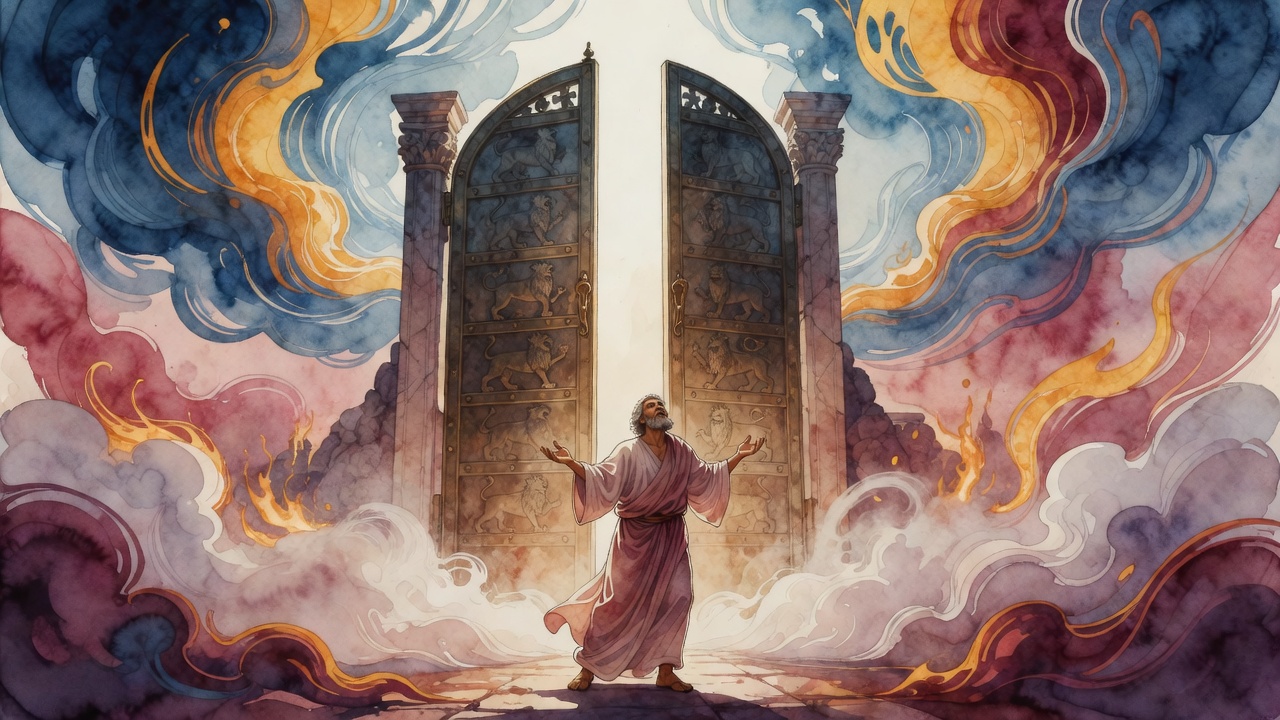
On the far bank the real Hagag came out of the thicket naked and shaking. A woodcutter found him first and laughed in his face when he said he was the king, then beat him for the insolence of the claim. Hagag limped to his own palace gate. The guards drove him off into the road like a dog.
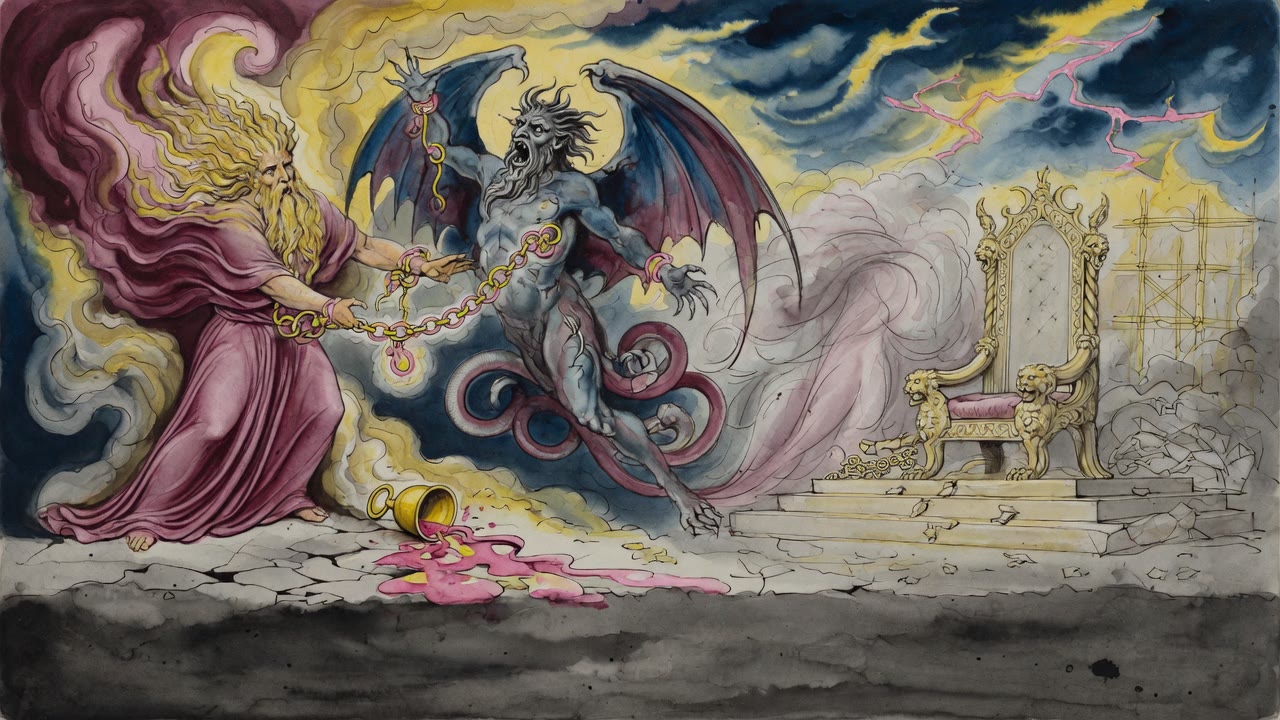
Solomon had already paid this price. Asmodeus stretched one wing to heaven and one to the earth, flung the wise king four hundred leagues, and sat in his place. Solomon wandered the kingdom of Ammon begging bread and crying that he was the true king. The people called him mad. Hagag, with no ring and no staff, learned the same road in a single afternoon.
The Months of Bread Begged from the Blind
Hagag starved. No household believed a beggar could be a monarch, and the more he insisted, the more they drove him off. In the end the only people who would keep him were the blind, who could not see the wildness in his face and judged him only by his hands at the rope. He became a guide for blind beggars, leading them from door to door, eating what they were given.
His feet bled. He learned the weight of a crust handed down by people poorer than any subject he had ever taxed. The verse he had torn out repeated itself in his body every cold night. Riches do not last forever. A crown does not endure to every generation. He had heard it once and ripped it. Now he was living inside it.
Winter came. He stopped naming himself king except in his sleep. The rope wore a groove in his palm. When a door slammed, he flinched the way his own guards had once made beggars flinch.
The Beggar Who Confessed Before His Own Throne
Word went out that the king, the false king on the borrowed throne, would feast every beggar in the land. Hagag came with the rest, leading his blind men by the rope, and was set before the high seat he had once owned.
He looked up at his own face wearing his own crown and he broke. He confessed everything. The verse. The tearing. The heel set on the holy page. The pride that had made him think a man could edit God's book to spare his own feelings. He did not ask for the throne back. He asked only to be forgiven for what he had done to the page.
The shed studied him a long moment.
"I see you have repented," the demon said.
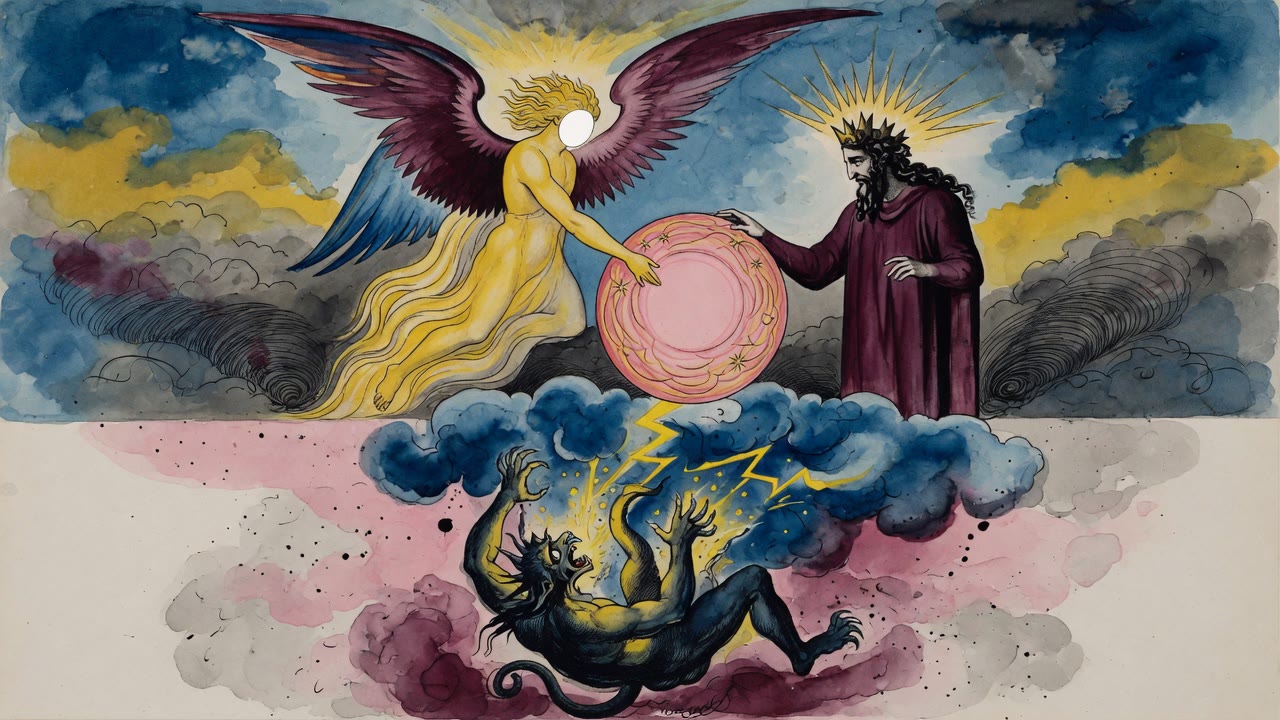
He rose. With his own hands he lifted the royal robe from his shoulders and laid it back on Hagag's. He set the crown back on the head it belonged to. Then he walked out of the hall dressed as a beggar, and was gone.
Hagag sat down on the throne a second time. He ruled long after, and no king in that land ever showed his subjects more mercy, because he had been one of them at the bottom of the rope. The verse he had tried to silence had proven itself true on his own skin. He never again touched the holy book except to bow to it.
← All myths