Jeroboam Filled a Page With the Names of Pious Men
He sat a scoffer beside every honest man in the room and asked the pair the same four questions. The fourth one was the trap.
Table of Contents
 Click for full size
The Seat Beside Every Honest Man
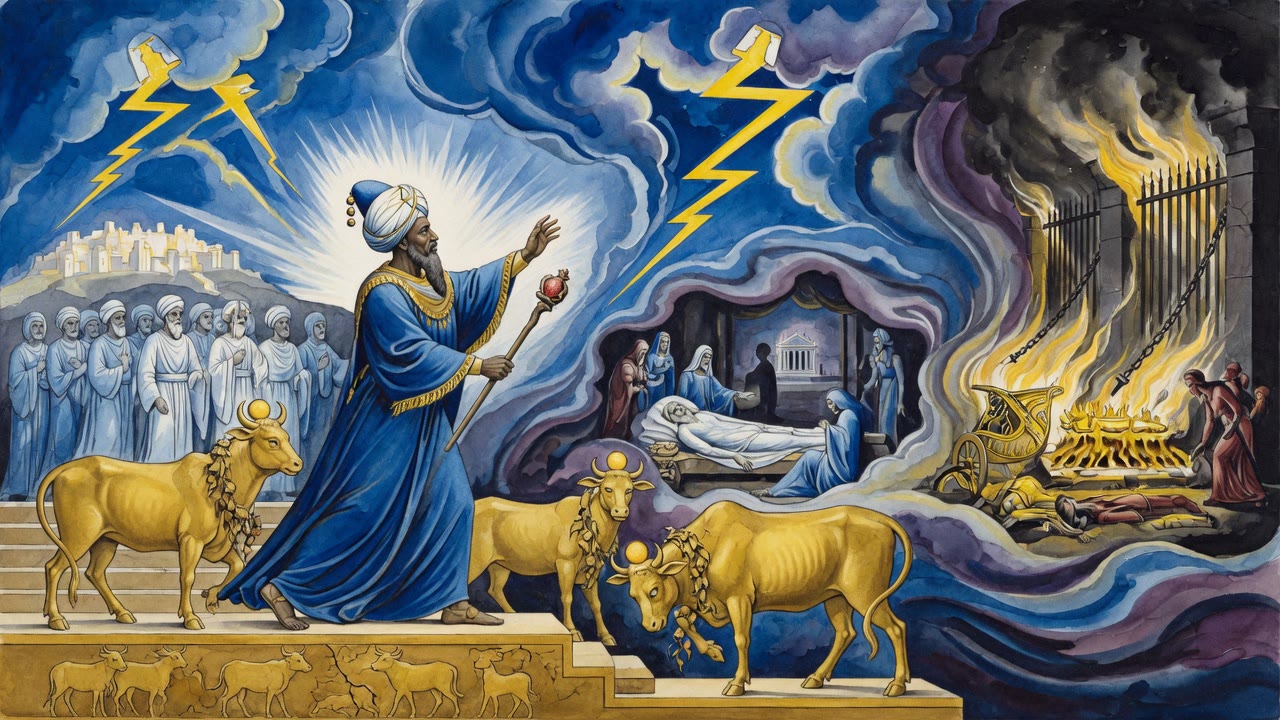
What Jeroboam had, before he had anything else, was a reputation. A deep scholar. A genuinely pious man. Nobody in the northern towns had heard a word against him, and he spent that reputation the way other men spend an army.
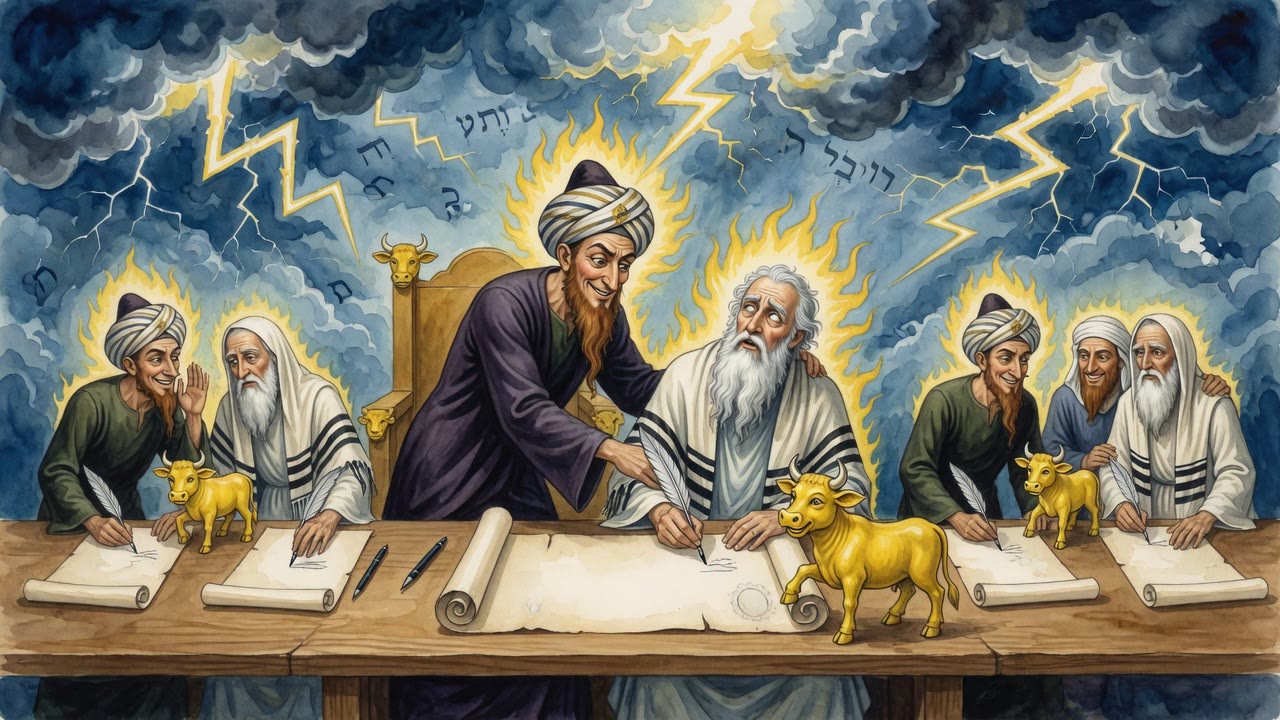
He did the work in pairs. One decent man and one of his own, seated together on the same bench, and the same four questions put to both of them.
"Will you put your signature to anything I intend to do?"
Yes. Of course yes. A signature costs nothing and the man asking is a righteous man.
"Do you want me as king?"
Yes.
"And you will do whatever I order?"
Yes.
"I am to infer, then, that you will even pay worship to idols if I command it?"
"God forbid!"
That was the honest man, out of his seat, loud, exactly on cue. And the man planted beside him turned around, not toward the king but toward his neighbor, with the wounded look of somebody defending a friend.
"Canst thou really suppose for an instant that a man like Jeroboam would serve idols? He only wishes to put our loyalty to the test."
Now there was one person in the room who had said something ugly about the king, and it was not the king. The pious man signed. He signed to prove he had not meant it.
Even Ahijah Signed
The page filled up with the names you would want on a page. Teachers. Elders. Men whose word settled arguments in their own towns, every one of them delivered into it by the same bench, the same four questions, the same smiling neighbor.
Ahijah signed it. The prophet from Shiloh who had met Jeroboam out on the road, torn his new garment into twelve pieces, and put ten of them into Jeroboam's hands as the word of God. That name went onto the page with the rest.
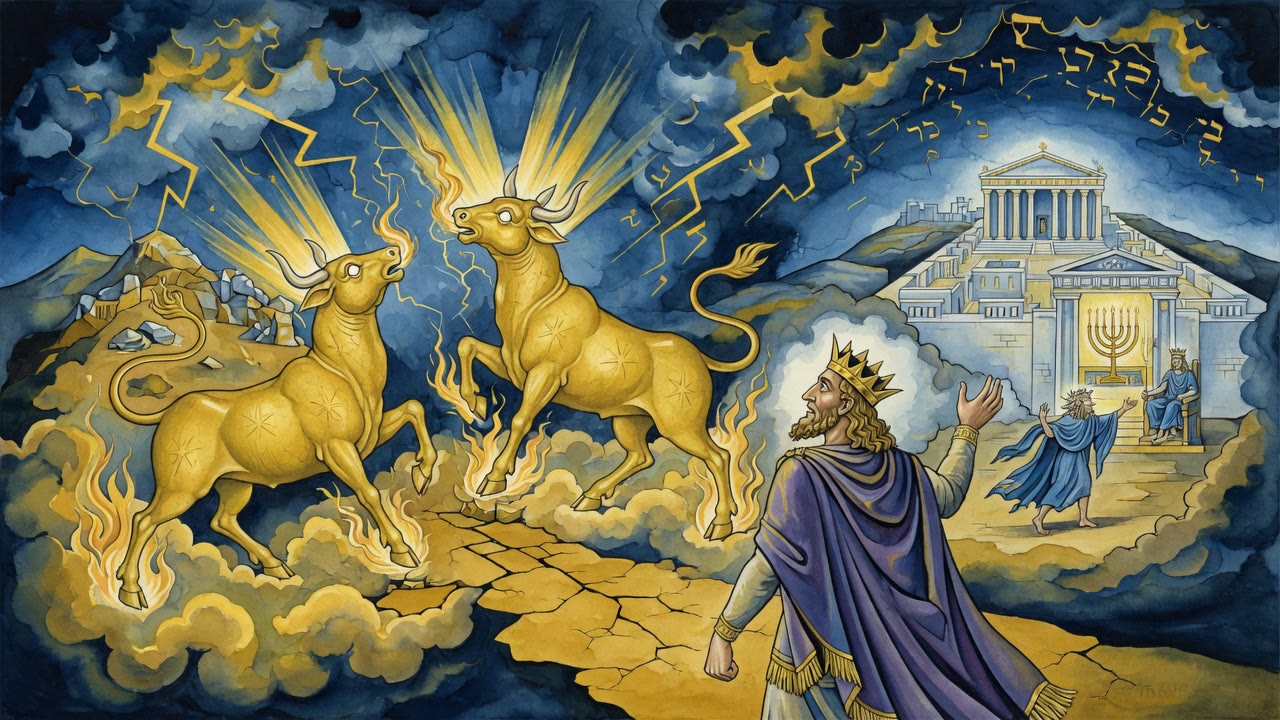
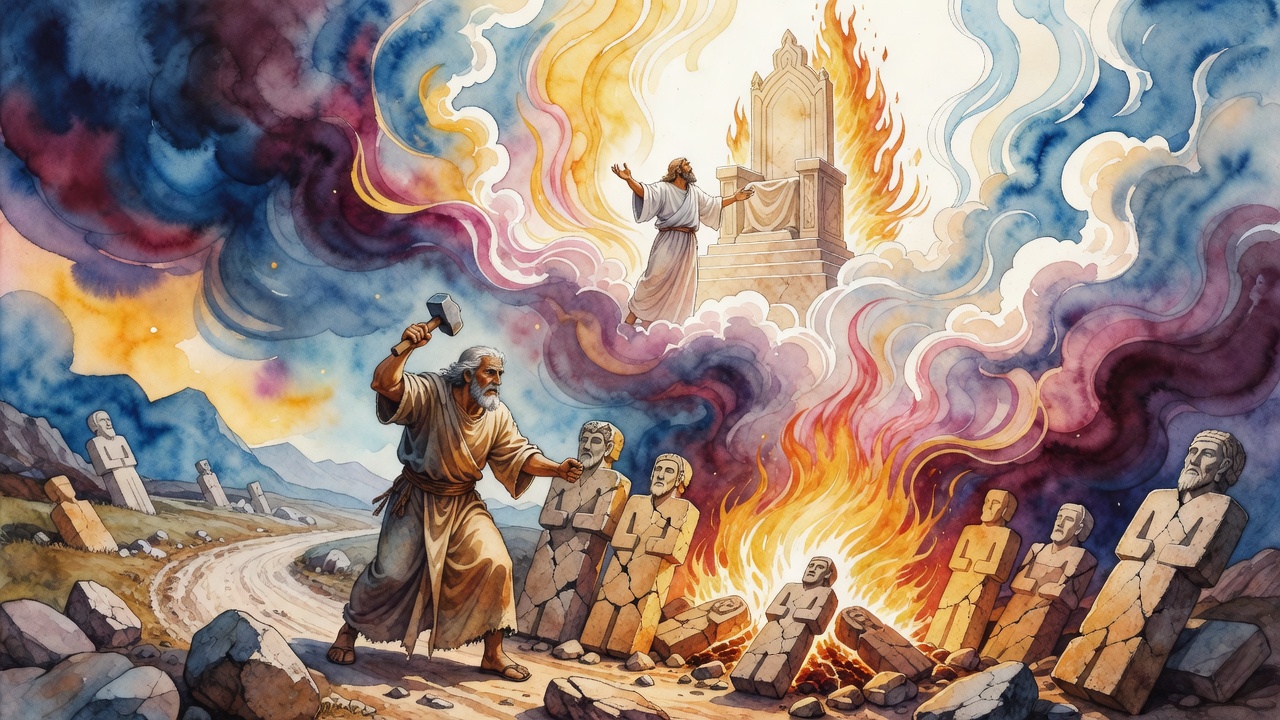
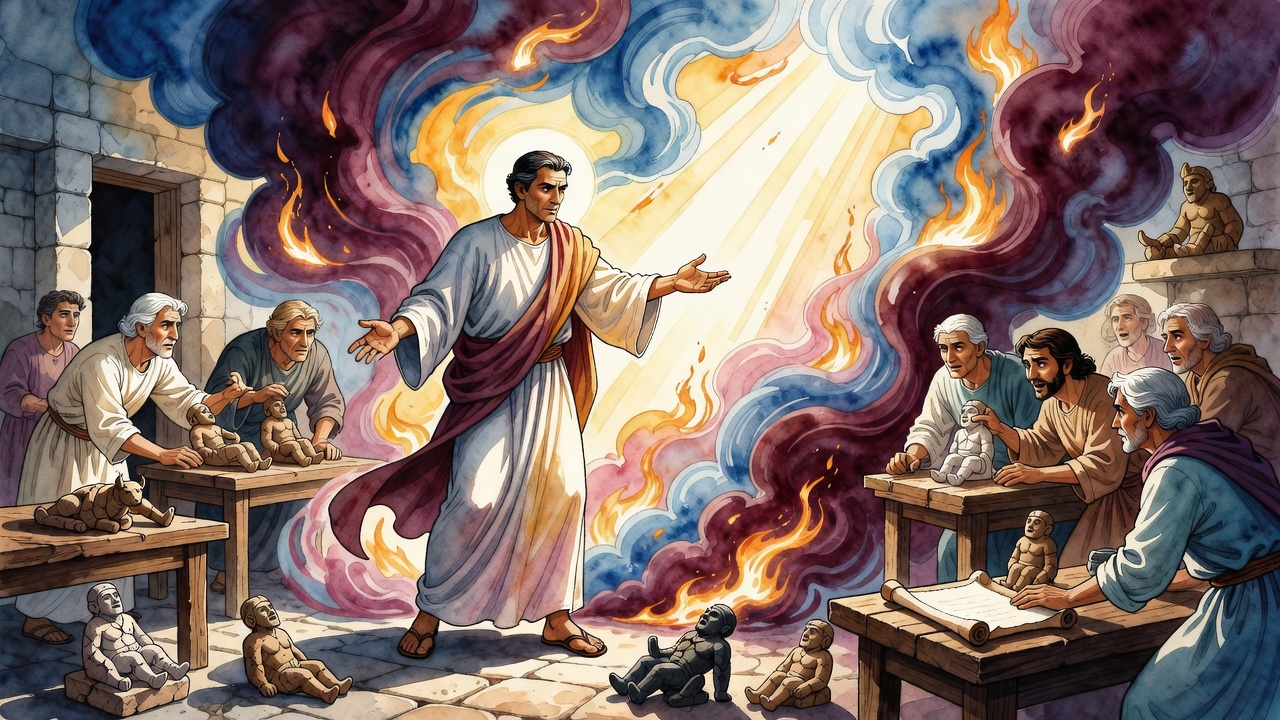
After that the king did not need to persuade anyone of anything. He had the people. He could ask them for the filthiest thing he could think of and hold up the parchment when they hesitated, and the calves went up at Bethel and at Dan in front of a nation that had already put its hand to whatever he intended to do.
The Crown That Would Not Sit on Adonijah
Two generations before any of this, in Jerusalem, a different man had gone after a throne with a different kind of theater.
Adonijah, son of Haggith, had fifty men to run in front of him as heralds, and those fifty had qualified for the work in the manner of the time. Each of them had had his spleen taken out, and the flesh cut away from the soles of his feet, so that he could run without tiring and without feeling the road. Fifty men mutilated in advance for a coronation that had not happened yet.
Then they brought out the crown of David.
That crown had one peculiarity. It fit the rightful king of David's house and it fit nobody else. They put it on Adonijah's head, and it did not fit, and there was nothing anybody in the room could do about that.
Ahaziah Scraped the Name Out of the Scrolls
The kings of Judah were not better than the kings of the north, only quieter about it.
Ahaziah went after the scrolls themselves. Every passage where the Name of God stood, he had the Name taken out, and the name of an idol written into the gap. Jeroboam had needed a room, a bench, and a paid neighbor. Ahaziah needed a knife and a scribe.
Jehu killed him, and Athaliah took the throne and began killing the house of David, and that was an old bill coming due. David had brought the priests of Nob down on himself, and of that whole priestly town only Abiathar had walked out. Now the sword went the other way, through David's own descendants, and this time it looked as if not even one would walk out.
Six Years in the Holy of Holies
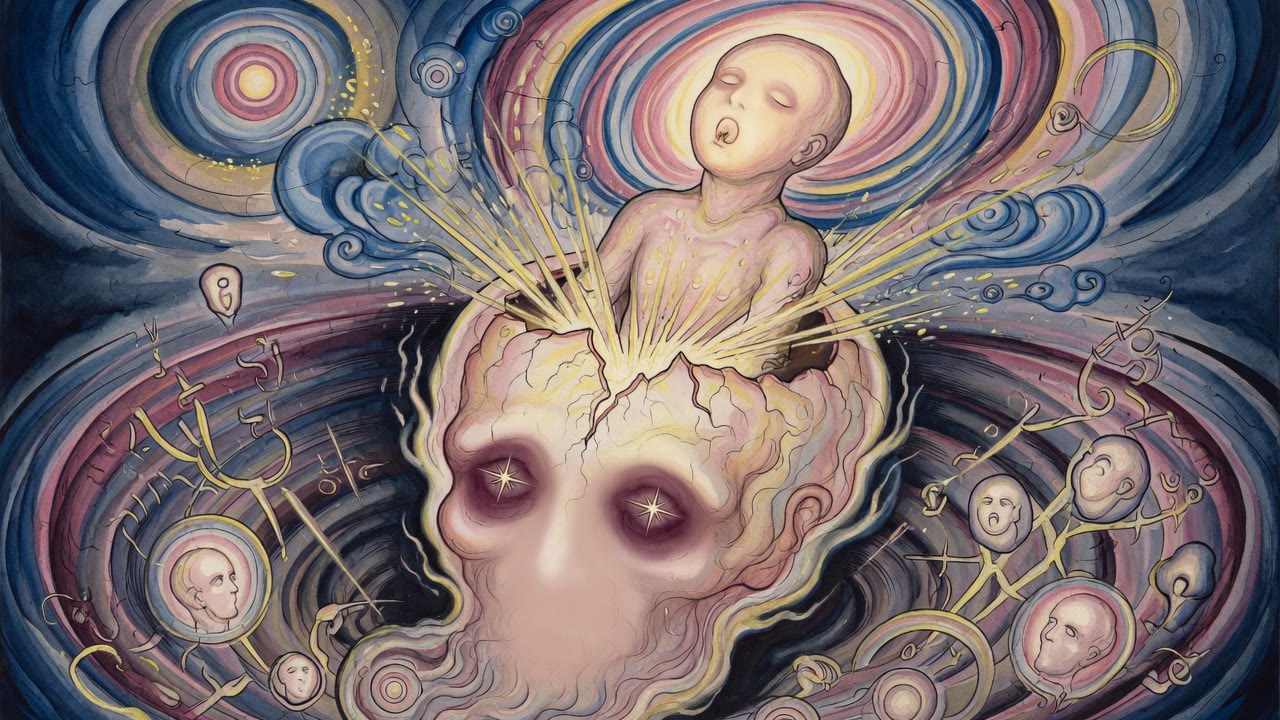
One did. Joash, a baby, carried out of the massacre by Jehosheba and hidden by her husband the high priest Jehoiada in the Holy of Holies, the one room in the world that nobody walks into.
He lived there six years. A child learning to speak inside the room where God's presence sat, while a queen who believed she had killed every claimant ruled the country outside the curtain.
In the seventh year Jehoiada brought him out into the courtyard in front of the guard and the captains and put David's crown on his head.
It fit. It settled onto a head that had spent six years in the dark, in front of men who remembered what that gold had done to Adonijah, and nobody was asked to sign anything.
← All myths