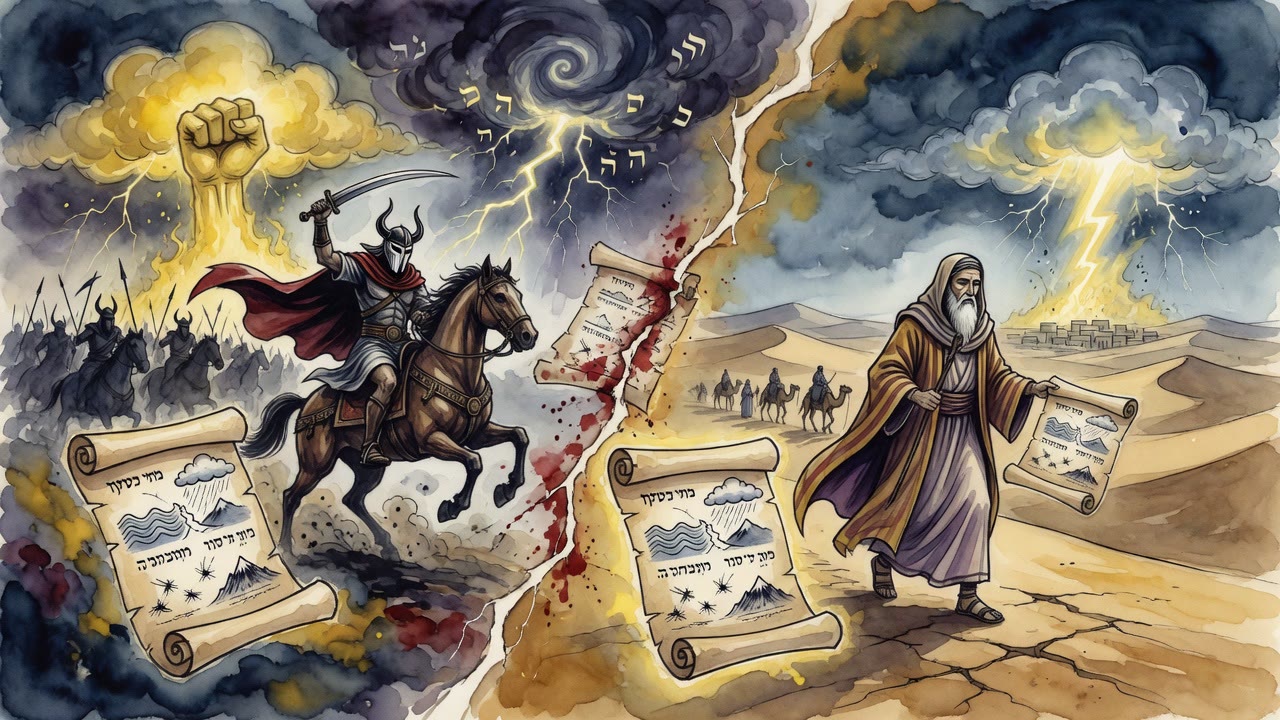
Translation of the source text.Tanna debei Eliyahu Zuta, Warsaw 1880 · Public Domain
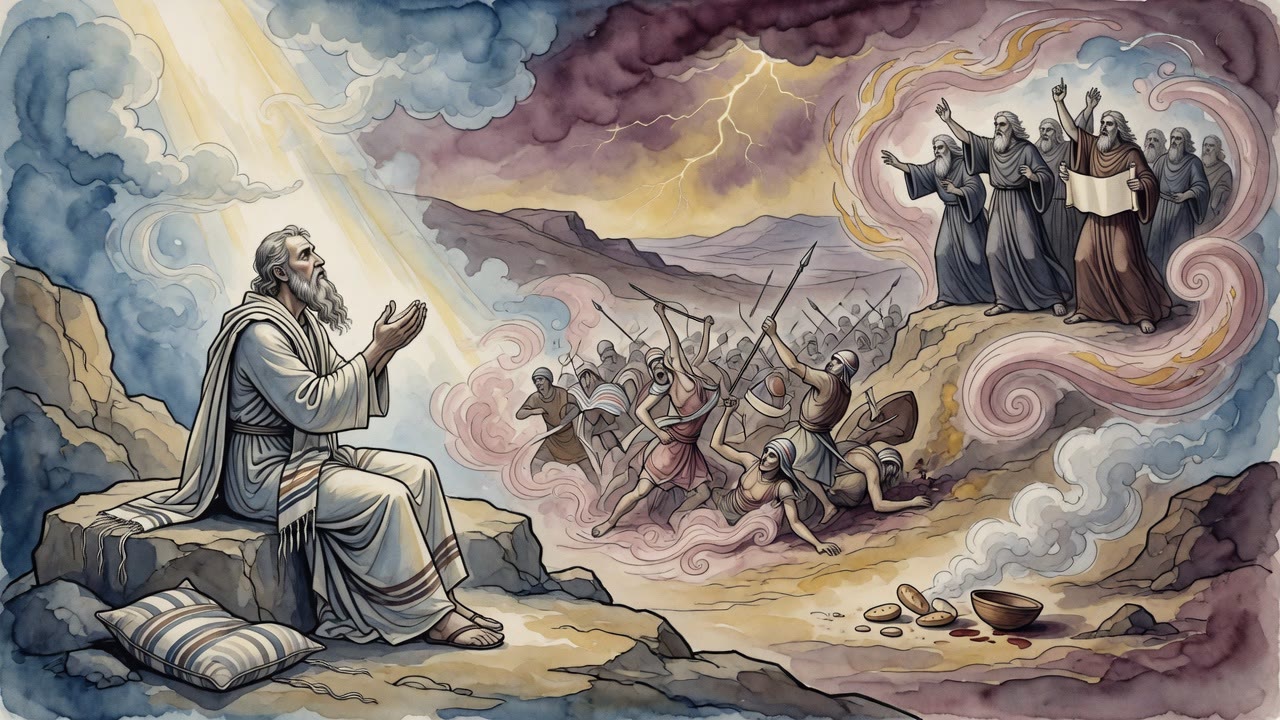
An account from the school of Elijah the prophet. Our Rabbis, of blessed memory, said (another version: they said of him): let a man always be cunning in the fear of Heaven, and of soft answer, and turning away wrath, and increasing peace with his father and his mother, and with his teacher, and with his fellow, and even with a gentile in the marketplace, so that he may be beloved above and esteemed below, and so that he may be acceptable to people, and so that all his days may be filled with good. (Another version: "The righteous perish, and no man lays it to heart." From here they said: everyone who distresses himself together with the community merits and sees the consolation of the community, as it is said, "And Moses' hands were heavy." Did Moses not have a cushion or a bolster to sit upon? Rather, thus said Moses: since the community dwells in distress, I too will be with them in distress. And happy is he who distresses himself together with the community. Let no man see the community dwelling in distress while he goes to his house and eats and drinks and says, "Peace be upon you, my soul." And if he does so, of him Scripture says, "And behold joy and gladness, slaying," and so forth. What is written after it? "And it was revealed in the ears of the Lord of Hosts." This is the matter of the average ones. And as to the matter of the wicked, what does it say? "Come, I will fetch wine, and let us fill ourselves with strong drink." From the school of Elijah, and so forth.) And our Rabbis, of blessed memory, said: at a time when Israel dwell in distress and one of them separates himself, two ministering angels come and place their hands upon his head and say, "This so-and-so who separated himself from the community shall not see the consolation of the community." Rather, at a time when the community dwells in distress, let no man say, "I will go to my house and eat and drink, and peace be upon you, my soul." And if he does so, of him Scripture says (Isaiah 22:13), "And behold joy and gladness, slaying oxen and killing sheep, eating flesh and drinking wine," and so forth. What is written after it? "And it was revealed in the ears of the Lord of Hosts: Surely this iniquity shall not be atoned for you until you die." Up to here is the measure of the average ones. But as to the measure of the wicked, what is written there? (Isaiah 56) "Come, I will fetch wine, and let us fill ourselves with strong drink; and tomorrow shall be as this day, great beyond measure." What is written after it? "The righteous perish, and no man lays it to heart," and so forth. Rather, let a man distress himself together with the community, for so we found regarding Moses our teacher, peace be upon him, that he used to distress himself together with the community, as it is said (Exodus 17:12), "And Moses' hands were heavy; and they took a stone, and put it under him, and he sat upon it." Did Moses not have one cushion or one bolster to sit upon? Rather, thus said Moses: since Israel dwell in distress, I too will be with them in distress; and everyone who distresses himself together with the community merits and sees the consolation of the community. And lest a man say, "Who testifies about me?", the stones of a man's house and the beams of a man's house testify about him, as it is said, "For a stone shall cry out from the wall, and a beam from the timber shall answer it" (Habakkuk 2:11). The school of Rabbi Shila said: the two ministering angels that accompany a man, as it is said (Psalms 91:11), "For He will command His angels concerning you, to guard you in all your ways", they testify about him. Rabbi Chidka says: a man's soul testifies about him, as it is said (Micah 7:5), "from her who lies in your bosom, guard the doors of your mouth." And some say: a man's limbs testify about him, as it is said (Isaiah 43:10), "You are My witnesses, says the Lord." From the school of Elijah they said: let a man always be like an ox to the yoke and like a donkey to the burden, and like a beast that plows in the valley and in the field; so let a man occupy himself and plow in words of Torah every single day continually, as it is said (Isaiah 32), "Happy are you who sow beside all waters"; and "waters" are none other than words of Torah, as it is said (Isaiah 55), "Ho, everyone who thirsts, come for water." Happy are Israel at a time when they occupy themselves with Torah and with acts of lovingkindness: then their inclination is given into their hand, and they are not given into the hand of their inclination, as it is said, "Happy are you who sow beside all waters," and so forth. And "sowing" is none other than charity, as it is said (Hosea 10:12), "Sow for yourselves in charity, reap according to lovingkindness"; and "waters" are none other than Torah, as it is said (Isaiah 55:1), "Ho, everyone who thirsts, come for water." And once a man has read Torah, Prophets, and Writings, and studied Mishnah, Midrash, laws, and aggadot, and studied the Gemara, and studied the dialectic for its own sake, immediately the Holy Spirit rests upon him, as it is said (II Samuel 23:2), "The spirit of the Lord spoke by me, and His word was upon my tongue." Once I was passing from place to place, and a certain officer met me; he greeted me but did not recognize me, and said to me, "Rabbi, from what place are you?" And I said to him, "I am from a great city of sages and scribes and rabbis." And he said to me, "Rabbi, come and dwell with me in my place, and I will show you favor, and I will give you wheat and barley and beans and lentils and all kinds of legumes." And I said to him, "My son, even if you give me a thousand thousand gold dinars, I will not abandon a place of Torah, and I will not dwell in a place that has no Torah in it." And he said to me, "Rabbi, why?" And I said to him, "Because the world was destroyed only on account of the neglect of Torah, and the Land of Israel was destroyed only on account of the neglect of Torah, and all the troubles that come upon Israel are only on account of the neglect of Torah, because the neglect of Torah is great and weighty before the Holy One, blessed be He (another version: for it is weighed against all the transgressions), as it is said (Micah 1:5), 'For the transgression of Jacob is all this'; and 'this' is none other than Torah, as it is said (Jeremiah 9:11), 'Who is the wise man that he may understand this? and to whom the mouth of the Lord has spoken, that he may declare it: why has the land perished?' and so forth. 'And the Lord said: Because they have forsaken My Torah which I set before them, and have not hearkened to My voice, nor walked therein.'" Immediately he said to me, "Blessed is the Omnipresent who chose you out of all the peoples and out of all the tongues and gave you the Torah, because you trust in Him in every place." In the days of Rabbi Dosa ben Harkinas, the co-wife of a daughter was permitted to the brothers, and the matter was difficult for the sages, because he was a great sage and a great elder and his eyes were too dim for him to come to the study house. They said, "Who will go and inform us?" Rabbi Yehoshua said, "I will go." "And after him, who?" "Rabbi Elazar ben Azariah." "And after him, who?" "Rabbi Akiva." Immediately they went and sat at the entrance of his house. His maidservant entered and said to him, "Rabbi, the sages of Israel are coming to you." He said to her, "Tell them to enter." When they entered, he took hold of Rabbi Yehoshua and seated him upon a bed of gold. He said to him, "Rabbi, tell your other disciple to sit also." He said to him, "Who is this?" He said to him, "He is Rabbi Elazar ben Azariah." He said, "And does our colleague Azariah have a son?" He recited over him this verse (Psalms 37:25), "I have been young and now am old, yet I have not seen the righteous forsaken, nor his seed begging bread." And further he said to him, "Tell your other disciple to sit also." He said to him, "Who is this?" He said to him, "He is Akiva ben Yosef." He said, "Are you Akiva the expounder, whose name goes throughout the whole world, from one end of the world to the other? Sit, my son, sit; may such as you increase in Israel." He recited over him this verse (Psalms 34), "The young lions lack and suffer hunger, but those who seek the Lord shall not lack any good." They began to surround him with laws until they reached the co-wife of a daughter. When they reached the co-wife of a daughter, they said to him, "Rabbi, what is the law of the co-wife of a daughter?" He said to them, "It is a dispute between Hillel and Shammai." They said to him, "And the law is according to whom?" He said to them, "The law is according to the words of the House of Hillel." They said to him, "But have they not said in your name that the law is according to the words of the House of Shammai, who said the co-wife of a daughter is permitted?" He said to them, "Did you hear 'Dosa,' or did you hear 'ben Harkinas'?" They said to him, "By the life of our master, we heard it unattributed." He said to them, "I have a younger brother, and he is a firstborn fool, and Yonatan is his name, and he is among the disciples of the House of Shammai; and beware of him, lest he overwhelm you with laws and tell you the co-wife of a daughter is permitted, for he has with him three hundred answers that she is permitted. But I testify upon myself heaven and earth that upon this very mortar sat Haggai the prophet and said three things: that the co-wife of a daughter is forbidden; and that Ammon and Moab tithe the poor man's tithe in the seventh year; and that converts are accepted from the Tarmodites and from the Karmites." When they entered, they entered by one door; when they went out, they went out by three doors. And Yonatan met Rabbi Akiva and raised difficulties against him, and Akiva refuted him and established his position. He said to him, "Are you Akiva ben Yosef, whose name goes from one end of the world to the other? Happy are you that you have merited a name, yet by the Temple service you have not yet reached even a cattle-herder." Rabbi Akiva said to him, "Not even a sheep-herder. But converts are not accepted from the Cutheans, on account of the ten tribes that were swallowed up among them, until Elijah the prophet and the son of David come and set them apart, as it is said (Malachi 3:23-24), 'Behold, I will send you Elijah the prophet before the coming of the great and terrible day of the Lord; and he shall turn the heart of the fathers to the children, and the heart of the children to their fathers.'" From the school of Elijah they said: great is charity, for from the day the world was created until now the world stands upon charity, and everyone who gives much charity is praiseworthy and delivers himself from the judgment of Gehinnom, as it is said (Ecclesiastes 11:10), "And remove vexation from your heart, and put away evil from your flesh," and it is said (Psalms 41:2), "Happy is he who considers the poor; in the day of evil the Lord will deliver him." And "evil" is none other than the day of the judgment of Gehinnom, as it is said (Proverbs 16:4), "and even the wicked for the day of evil"; and it says (Psalms 106:3), "Happy are those who keep justice, who do charity at all times." Our first fathers, why did they merit this world, and the days of the son of David, and the World to Come? Because they conducted themselves with charity. Abraham, Isaac, and Jacob, Moses and Aaron, David and Solomon his son, they were praised only for charity. Abraham, from where? As it is said, "For I have known him, to the end that he may command his children and his household after him, that they may keep the way of the Lord, to do charity and justice" (Genesis 18:19). Isaac was praised only for charity. From where? As it is said (Genesis 26), "And Isaac sowed in that land," and so forth; and "sowing" is none other than charity, as it is said (Hosea 10:12), "Sow for yourselves in charity." Jacob was praised only for charity. From where? As it is said (Genesis 32:11), "I have become small from all the kindnesses"; and "I have become small" (katonti) is none other than "a little" (me'at); and "a little" is none other than charity, as it is said (Proverbs 16:8), "Better is a little with charity." Aaron and Moses were praised only for charity. From where? As it is said (Malachi 2:6), "The Torah of truth was in his mouth"; and "truth" is none other than charity, as it is said (Psalms 85:12), "Truth springs out of the earth, and charity looks down from heaven." David was praised only for charity. From where? As it is said (II Samuel 8:15), "And David did justice and charity." Solomon was praised only for charity. From where? As it is said (Psalms 72:1), "and Your charity to the king's son." And even the Holy One, blessed be He, is praised for charity, as it is said (Isaiah 5:16), "And the holy God is sanctified through charity." And even the Throne of Glory is praised for charity, as it is said (Psalms 97:2) (another version: "clouds and thick darkness are round about Him; charity," and so forth) "charity and justice are the foundation of His throne." Great is charity, which rescues a man from the way of death. Great is charity, which lengthens a man's days and years. Great is charity, which brings a man to the life of the World to Come. Great is charity, which is equal to the Torah. Great is charity, to which the Torah is made equal. Great is charity, which hastens the day of the son of David and the days of our redemption. Great is charity, which raises up the soul and seats it and places it beneath the Throne of Glory. And from where do we know that charity rescues a man from the way of death? As it is said (Proverbs 11:4), "Wealth does not profit in the day of wrath, but charity delivers from death." Come and see that by the measure with which a man measures, they measure to him: a man gives charity in this world and intends thereby that the poor man should live and not die, even so the Holy One, blessed be He, intends concerning the giver that he should live and not die. And from where do you say that everyone who has the means in his hand to do charity and does not do it, and to sustain souls and does not sustain them, brings death upon himself? As it is said (I Samuel 25:11), "And Nabal answered," and so forth, "and shall I take my bread and my water and my meat that I have killed for my shearers, and give it to men whom I do not know whence they are?" And immediately he was punished, as it is said (ibid.), "And it came to pass about ten days later, that the Lord struck Nabal, and he died." And from where do we know that charity lengthens a man's days and years? As it is said (Deuteronomy 30:20), "For He is your life and the length of your days"; and it says, "It is a tree of life to those who lay hold of it" (Proverbs 3:18). And further, it is an a fortiori inference: if of the very lightest commandment in the Torah it says (Deuteronomy 22:7), "that it may be well with you and that you may prolong your days," then how much more so charity, which is a weighty commandment in the Torah. And from where do we know that charity brings a man to the life of the World to Come? As it is said (Psalms 1:1), "Happy is the man who has not walked in the counsel of the wicked," and so forth; and it is said (Psalms 106), "Happy are those who keep justice, who do charity at all times." "Happy" is said regarding Torah and "happy" is said regarding charity: just as the "happy" said regarding Torah refers to one who is a son of the World to Come, so too the "happy" said regarding charity refers to one who is a son of the World to Come. And from where do we know that charity is made equal to the Torah? As it is said regarding Torah (Leviticus 26:3), "If you walk in My statutes," and it is said regarding charity (Proverbs 8:22), "The Lord acquired me as the beginning of His way." Regarding Torah He says (Leviticus 26:6), "And I will give peace in the land, and you shall lie down and none shall make you afraid; and I will remove evil beasts from the land, and the sword shall not pass through your land"; and regarding charity He says (Isaiah 32:17-18), "And the work of charity shall be peace, and the service of charity quietness and confidence forever; and My people shall dwell in a peaceful habitation, and in secure dwellings, and in quiet resting places." And from where do we know that the Torah is likened to charity and is made equal to it? Rather, because you have no good trait that the Holy One, blessed be He, created in His world greater than the Torah, as it is said (Proverbs 4:8-9), "Prize her, and she will exalt you; she will honor you when you embrace her; she will give to your head a wreath of grace, a crown of glory she will bestow on you", yet the Torah itself is likened to nothing but charity, as it is said (Deuteronomy 6:25), "And it shall be charity for us," and so forth. And from where do we know that charity hastens the days of the son of David and the days of the redemption? As it is said (Isaiah 56:1), "Keep justice and do charity, for My salvation is near to come and My righteousness to be revealed." And from where do we know that charity raises up the soul and seats it and places it beneath the Throne of Glory? As it is said (Isaiah 33), "He who walks in charity and speaks uprightly," and so forth, "he shall dwell on high; his fortress shall be the strongholds of rocks; his bread shall be given, his waters sure. Your eyes shall behold the King in His beauty." The end of Chapter One.

 Click for full size