5 min read

Israel Stood Like a Lily Among Hostile Thorns

A lily leans into thorns and still aims its stalk upward. Israel lives fenced by nations while the whole earth drinks its merit.

Curated by Arthur · Told by Maggid ·
Table of Contents
  1. Wind Against Petals
  2. Fire for a Hard Harvest
  3. Vineyard, Cedars, and the Hedge Left Standing
  4. Borders Drawn in a Dream
  5. Upward While Fenced
Israel Stood Like a Lily Among Hostile Thorns Click for full size

Wind Against Petals

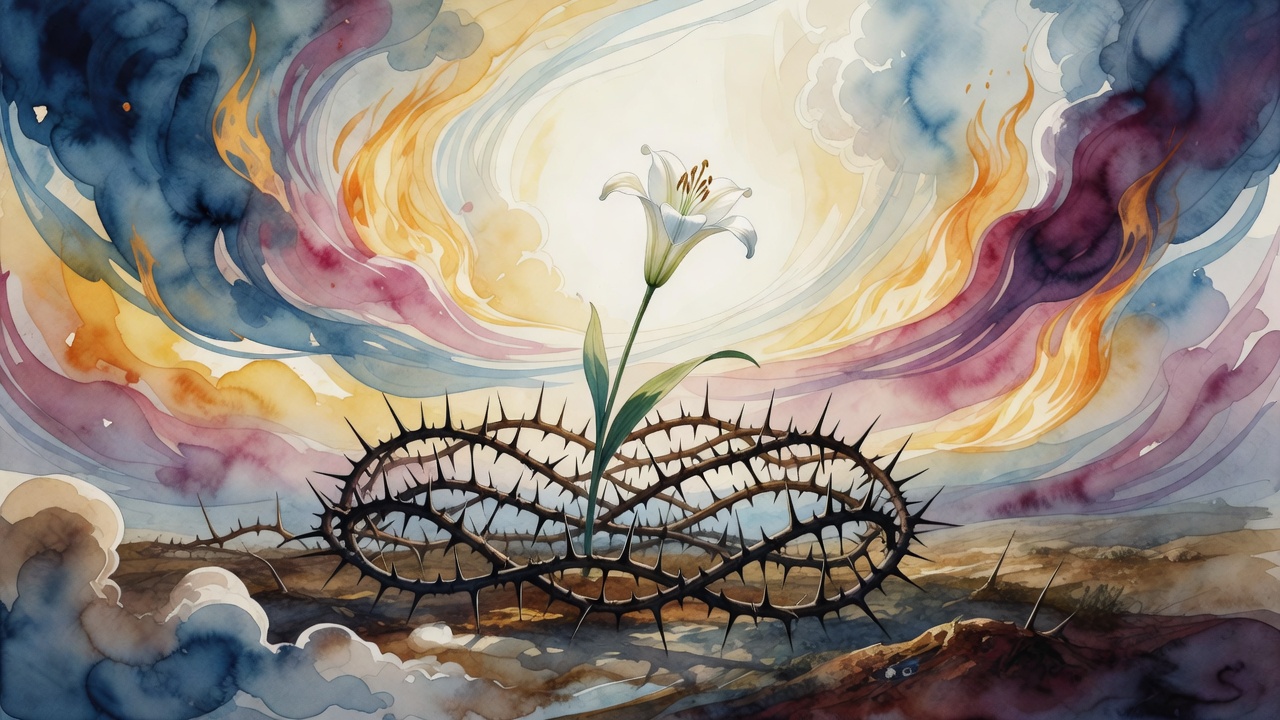
A lily stood among thorns. The north wind came hard and tilted the flower until the thorns bit its stem. The stalk did not flop into the dirt. It kept aiming up, even while pierced.

Rabbi Huna looked at Israel in exile and saw that plant. Taxes pressed. Neighbors scraped. Still the heart pointed toward the Father in Heaven. My eyes are always toward God (Psalm 25:15). Pain was real. Direction stayed stubborn.

The nations were not a gentle garden border. They were a ring of points.

Fire for a Hard Harvest

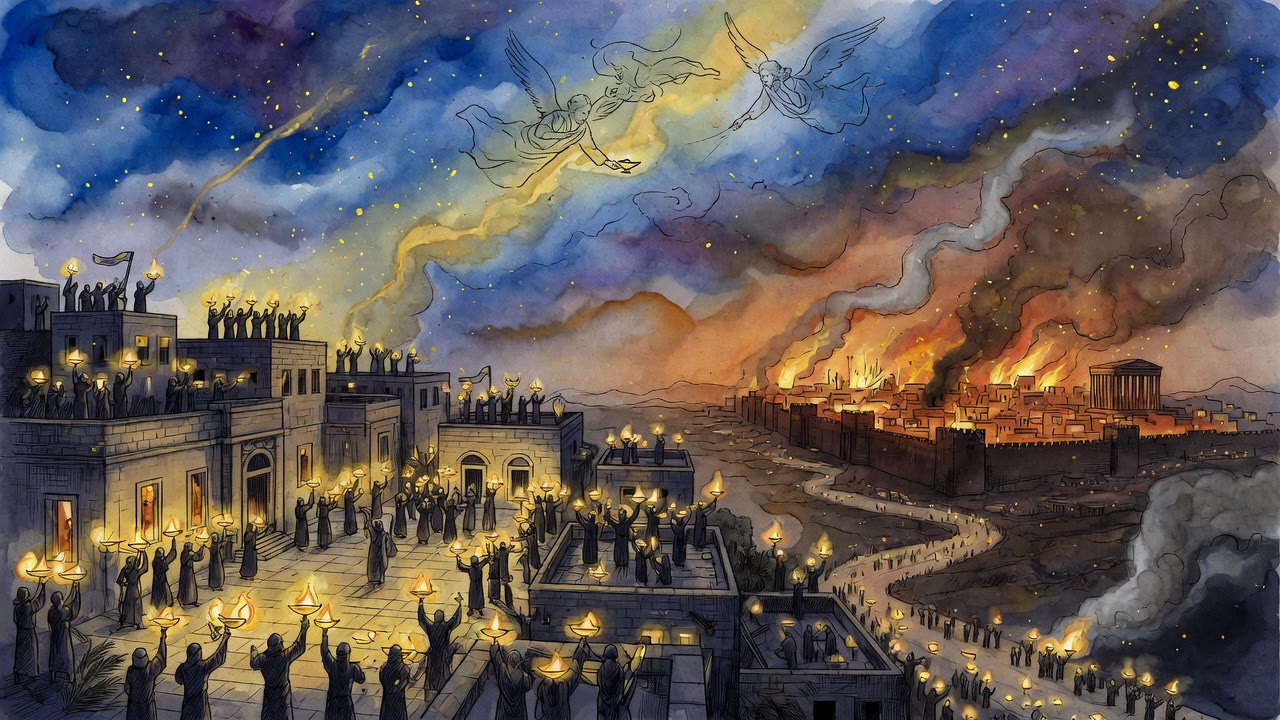
Rabbi Aivu took the same lily and turned it toward the end of days. A lily among thorns is hard to pluck. Reach in and the hand bleeds. So the owner brings fire, burns the thorns, and only then gathers the flower.

Scripture had already named the ring. The Lord has commanded concerning Jacob that those around him should be his adversaries (Lamentations 1:17). Cities faced cities. Ḥalamish against Naveh. Jericho against No'aron. Susitan against Tiberias. Kastra against Haifa. Lod against Ono. This is Jerusalem. I have set her in the midst of the nations (Ezekiel 5:5).

Isaiah saw peoples as burnings of lime, thorns cut and set alight (Isaiah 33:12). After the fire, the Lord alone would lead, with no foreign god beside Him (Deuteronomy 32:12). The midrash is fierce. It does not pretend the thorns are friends. It promises they will not have the last grip on the stalk.

Vineyard, Cedars, and the Hedge Left Standing

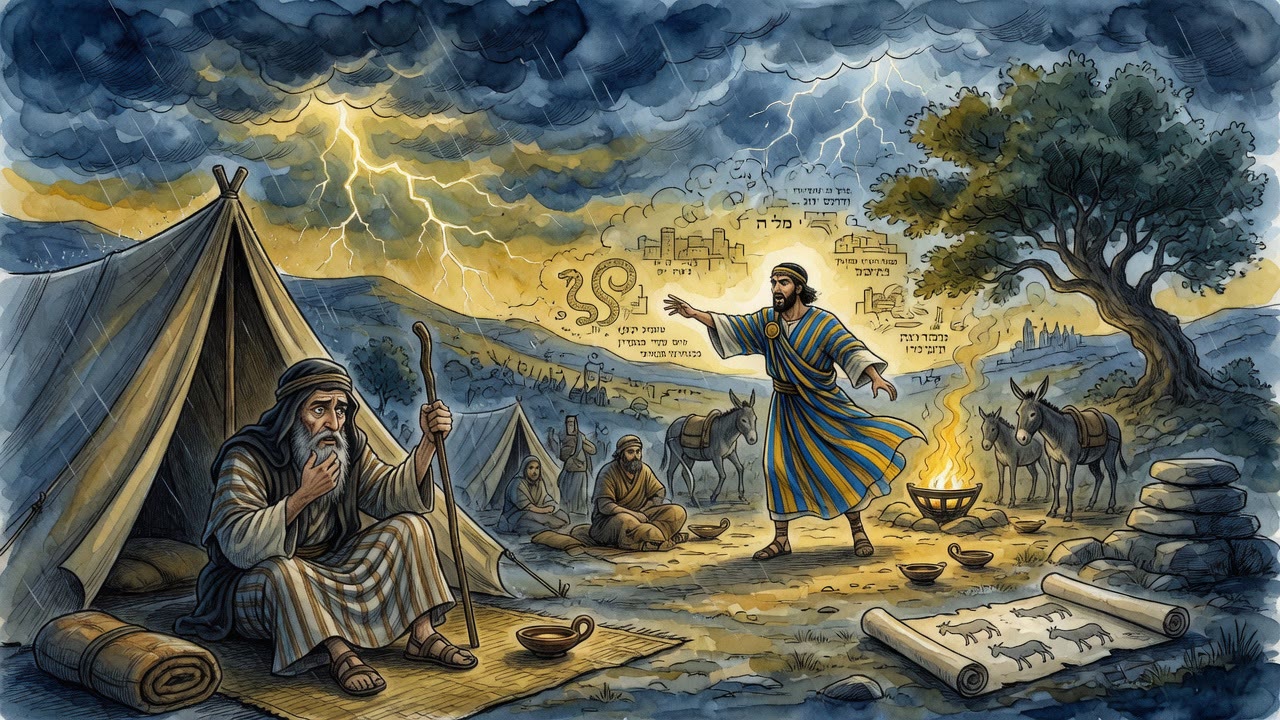
Another parable opens when the Lord your God cuts off the nations (Deuteronomy 12:29). A king planted a vineyard. Among the vines rose towering cedars and tangled thorns. He felled the cedars and left the thorns. His servants protested. You kept the things that snag our cloaks and cut the tall beauty!

The king answered. If I left the cedars and cut the thorns, with what would I fence my vineyard? Israel is that vineyard. The vineyard of the Lord of hosts is the house of Israel (Isaiah 5:7). When Israel entered the land, God cut down the Amorite cedars whose height was like cedars. Lesser nations He left as hedge, so the vines would be tested and keep Torah under pressure.

Even at the sea, when Pharaoh's multitudes thundered, Heaven reckoned them as a single horse and drowned them with a breath of wind. The hedge is not stronger than the Owner. It is a tool in His hand.

Borders Drawn in a Dream

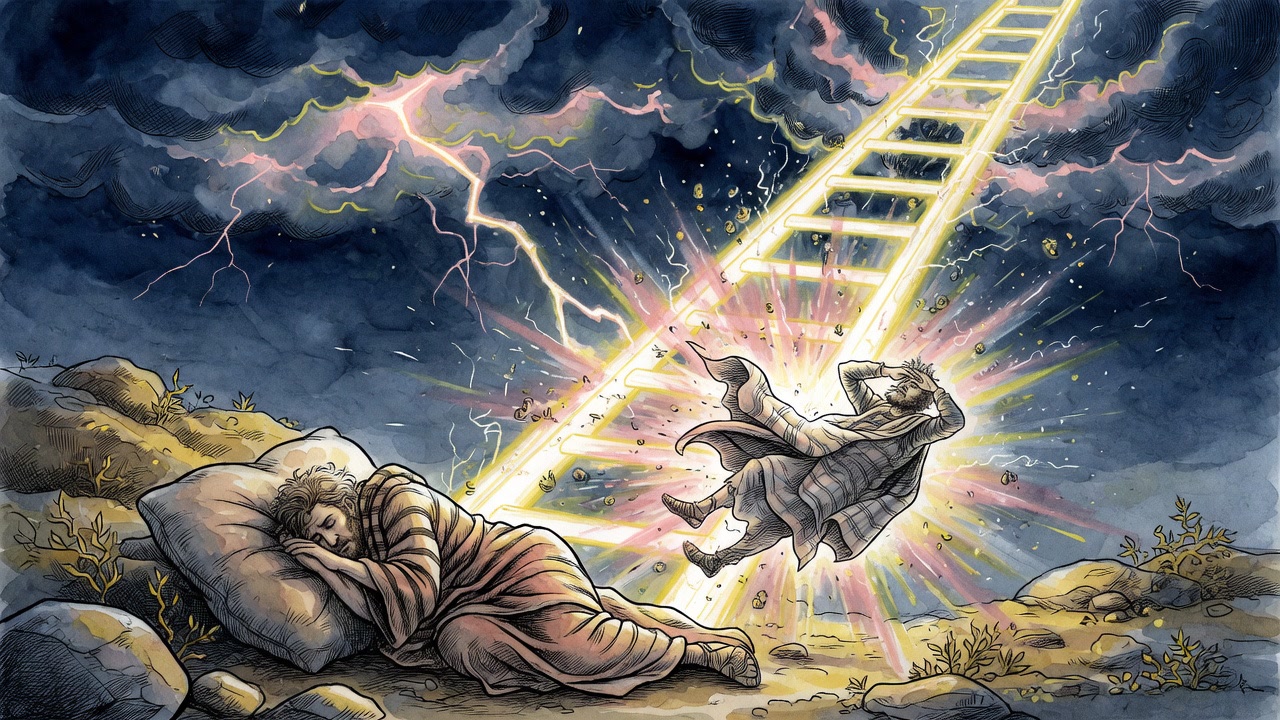
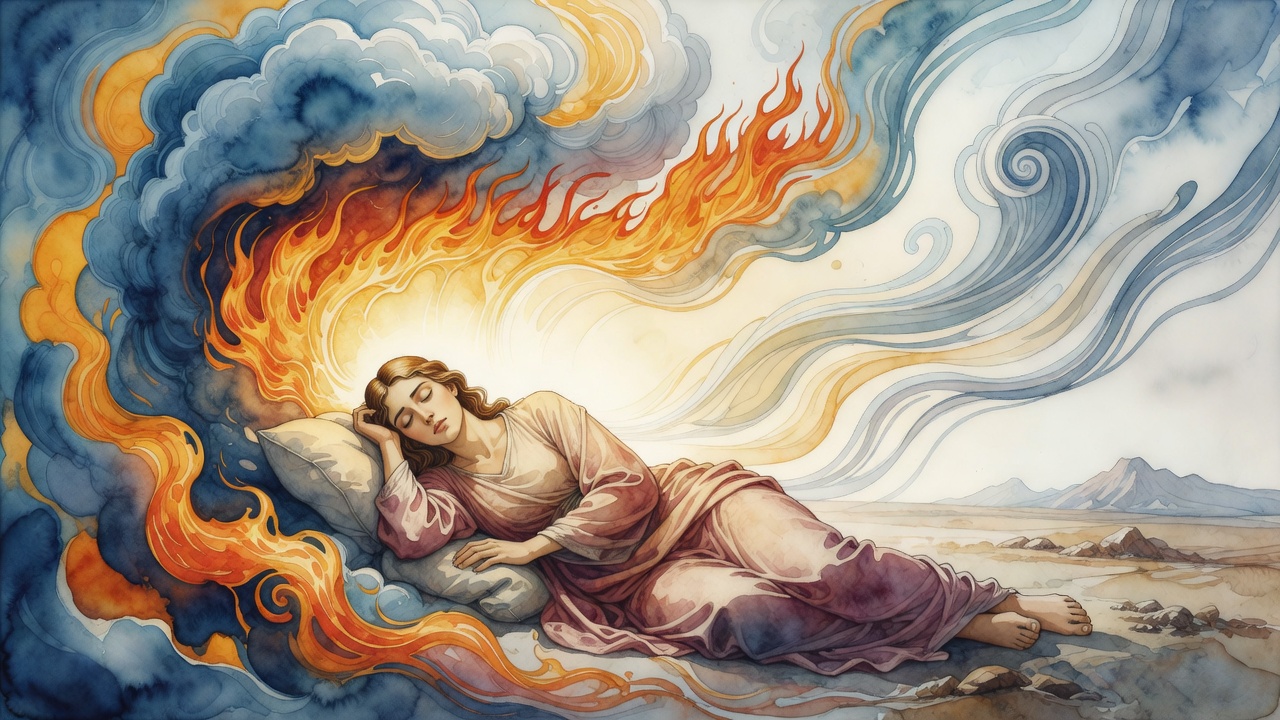
At Beth El, Jacob slept and received borders. Spread out west, east, north, and south (Genesis 28:14). The midrash notices a quiet edge. Egypt sat outside the promise, the land that would enslave his children excluded even as the gift was spoken. Inheritance can have a border that remembers future pain.

Then the larger claim. All the families of the earth shall bless themselves by you and your seed. The sages refuse to hear a polite flourish. Creation continues. Rain and dew fall. Fields yield. All of it, they say, is sustained by the merit of Israel. Nations drink from a channel they do not name. The sleeping man's dream becomes weather for strangers.

Upward While Fenced

Lily, vineyard, dream. Three pictures of one pressure. Surrounded, fenced, still the stalk aims up. Cut free of the tallest threats, still living beside smaller ones that scrape. Blessed as the hidden support of other peoples' harvests, still waiting for fire that clears a path to gathering.

Jacob's children walk through markets that do not love them and still recite toward Heaven. The thorns remain sharp. The Owner remains closer than the hedge.

On some days the only victory is the angle of the stem.

On a tax day the lily image stops being poetry. A collector's knock tilts the neck. Thorns find the stem. The midrash's stubborn gift is permission to keep the face upward without pretending the neck does not hurt.

The vineyard parable adds political realism the lily alone might sweeten. Not every neighboring power is felled. Some remain as fence, irritating, useful to Providence, never identical with the vines. Israel is warned not to confuse the hedge with the Owner, and not to envy the cedar's height that was already cut.

Jacob's dream supplies the cosmic twist. The fenced people are also the hidden irrigation of other families' fields. Merit travels farther than borders. A nation can be pressed locally and still, in the sages' accounting, underwrite rain on distant roofs.

None of this cancels the future fire Rabbi Aivu saw. Thorns that educate can still be cleared when the plucking time comes. Until then the work is angle. Stem up. Eyes toward God. Roots in a promise drawn while a man slept on stone.


← All myths

From the tradition

Sources

3 sources

The texts behind this telling. Some cards carry a translation of the source; others are our own retelling of it, and each card says which. Every card links out to the original.

Shir HaShirim Rabbah 2:5Shir HaShirim Rabbah

Retold in our words. Read the original at the link below.The Sefaria Midrash Rabbah, 2022 · CC-BY

That image, that feeling, is captured beautifully in the ancient interpretations of the Shir HaShirim, the Song of Songs.

Rabbi Huna uses the image of a lily among thorns to describe the Jewish people scattered in exile. A harsh north wind blows, tilting the lily, and the thorns pierce it. Yet, even in that painful position, the lily’s stalk remains directed upwards. Rabbi Huna says, that's us! Even when weighed down by taxes and hardship, our hearts are directed towards our Father in Heaven. “My eyes are always toward God,” as it says in Psalms (25:15).

What about the future? What about the ultimate redemption? Rabbi Aivu takes the same lily image and spins it in a new, hopeful direction. He says, just as this lily among thorns is difficult to pluck, so too is Israel. The owner can't just reach in and grab it without getting hurt. So, what does he do? He brings fire and burns away the thorns surrounding it, and then he plucks the lily.

This, Rabbi Aivu suggests, is a metaphor for the future redemption. "The Lord has commanded concerning Jacob that those that surround him should be his adversaries" (Lamentations 1:17). The commentary mentions specific cities as examples: Ḥalamish to Naveh, Jericho to No’aron, Susitan to Tiberias, Kastra to Haifa, Lod to Ono. These were all gentile cities bordering Jewish cities. As Ezekiel (5:5) puts it, “This is Jerusalem, in the midst of the nations I have situated it.”

So, what happens in the future, when the end of days arrives? The Holy One, blessed be He, will bring fire and burn away what surrounds Jerusalem. As Isaiah (33:12) says, “Peoples will be burnings of lime, [cut thorns ignited with fire].” And what follows that fiery purification? "The Lord alone will lead him [and there is no foreign god with Him]" (Deuteronomy 32:12). The great Onkelos, who famously translated the Torah into Aramaic, explains that this means there will no longer be peoples who engage in idol worship.

It’s a powerful and, admittedly, a bit intense vision. The image of fire cleansing the way for redemption is a recurring theme in Jewish thought.

Perhaps it's this: even when surrounded by difficulties, even when pierced by the "thorns" of life, we can still direct our hearts upward. And perhaps, just perhaps, that persistent upward gaze will eventually clear the way for a brighter future, a future where the thorns are burned away, and the lily – representing the Jewish people – can be gently and safely gathered.

Full source
Midrash Tanchuma Buber, Re'eh 3:1Midrash Tanchuma Buber, Re'eh

Translation of the source text.Midrash Tanchuma (Buber), Public Domain, on Sefaria · CC-BY-SA

(Deuteronomy 12:29:) "When the LORD your God cuts off the nations." A parable: To what is the matter comparable? To a king who planted a vineyard in the midst of his field, and within it were great cedars and thorns. The king went and cut down the cedars and left the thorns. His servants said to him: Our lord the king, you have left the thorns, which catch in our garments, but you have cut down the cedars! He said to them: If I had left the cedars and cut down the thorns, with what would I have fenced in my vineyard?

And so too Israel is the vineyard of the Holy One, blessed be He, as it is said (Isaiah 5:7): "For the vineyard of the LORD of hosts is the house of Israel." He brought Israel into the land and cut down the cedars that were in it, as it is said (Amos 2:9): "Yet I destroyed the Amorite before them, whose height was like the height of the cedars." But He left their children and their children's children, so that Israel would keep the Torah, as it is said (Judges 3:1): "Now these are the nations which the LORD left, to test Israel by them."

And when the vineyard stands in its place in the keeping of the Torah, then (Isaiah 33:12): "And the peoples shall be as the burnings of lime, as thorns cut down, [that are burned in the fire]." And it is written (Isaiah 40:17): "All the nations are as nothing before Him." See how many multitudes Pharaoh sent out after Israel! When Israel saw them, they were terrified before them and said: Who can stand against these? The Holy One, blessed be He, said to them: By your lives, all of these are accounted before Me as nothing [but] a single horse, as it is said (Exodus 15:19): "For the horse of Pharaoh came." And they all died with a single breath, as it is said (Exodus 15:10): "You blew with Your wind."

So too, Gog and Magog are destined to come against Israel, and against him the Holy One, blessed be He, will execute His judgments, as it is said (Ezekiel 38:22): "And I will enter into judgment with him with pestilence and with blood." At that hour (Ezekiel 38:23): "Thus will I magnify Myself, and sanctify Myself, [and make Myself known] in the eyes of many nations, and they shall know that I am the LORD."

Full source
Midrash Aggadah, Genesis 28:14Midrash Aggadah

Retold in our words. Read the original at the link below.Sefaria Community Translation · CC0

God laid out the borders of the promised land for Jacob as he slept at Beth El: spread out to the west, to the east, to the north and the south (Genesis 28:14). The midrash notices a quiet boundary inside the promise. The Holy One drew the lines deliberately, and in drawing them left Egypt outside. The blessing had an edge, and Egypt sat beyond it, the land that would one day enslave Jacob's children excluded from the inheritance even as the inheritance was being granted.

Then comes the larger claim. The verse continues, "All the families of the earth shall bless themselves by you and your descendants." The Sages read this not as a polite flourish but as a statement about how the world is held together. Creation continues to exist, and the rains and the dew that make the fields yield their produce come down, all of it sustained by the merit of Israel. Every nation, knowingly or not, drinks from blessing that descends on Israel's account.

This reflects a recurring conviction of the midrashic sages: that the covenant with the patriarchs is not a private benefit but the hidden support of the whole created order. The promise to one sleeping man at Beth El turns out to be the reason the rain falls everywhere and the earth keeps living. The families of the earth bless themselves by Jacob because, in the rabbis' reading, their very sustenance flows through the channel of his descendants' merit.

Full source