5 min read

Beitar Kindled Lamps Over the Temple's Fall

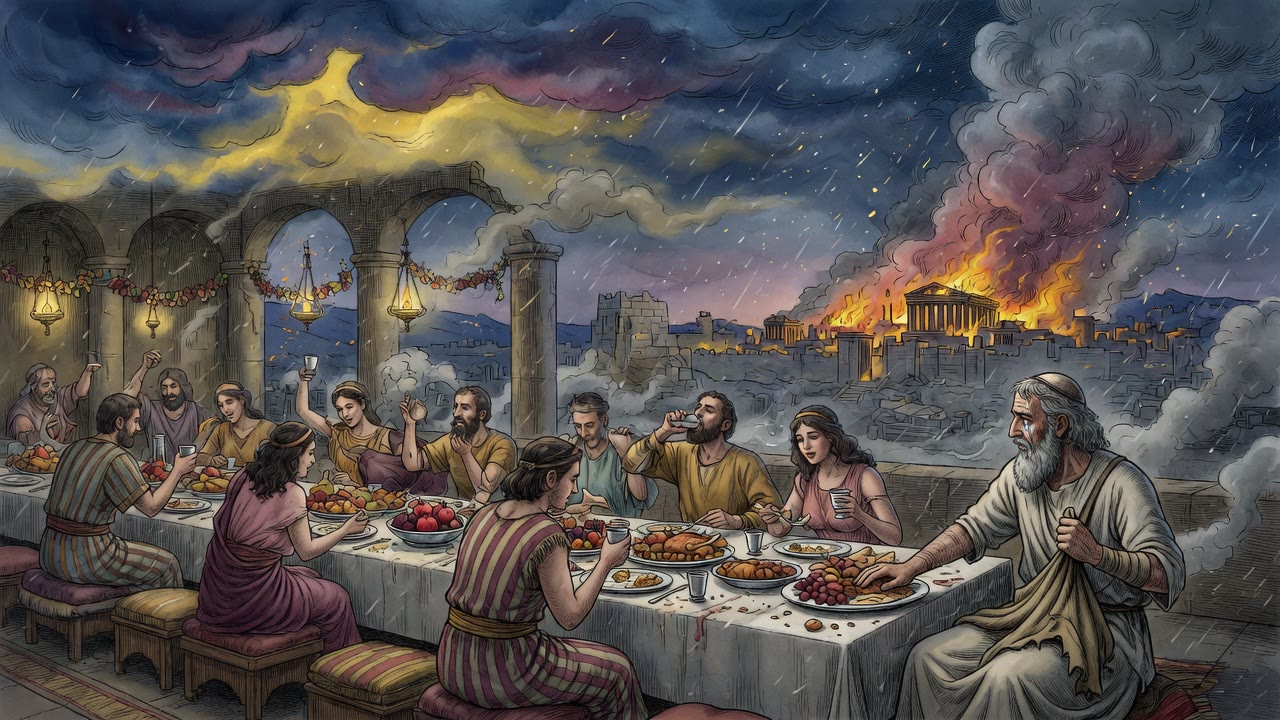
Beitar celebrated while Jerusalem burned. Fifty-two years later the city that lit lamps for ruin met its own end in the squares.

Curated by Arthur · Told by Maggid ·
Table of Contents
  1. One Who Rejoices at Calamity
  2. The Ark in the Square
  3. Humble First, Then Adorn Others
  4. The Man Who Died Waiting
  5. Roads That Hunt Back

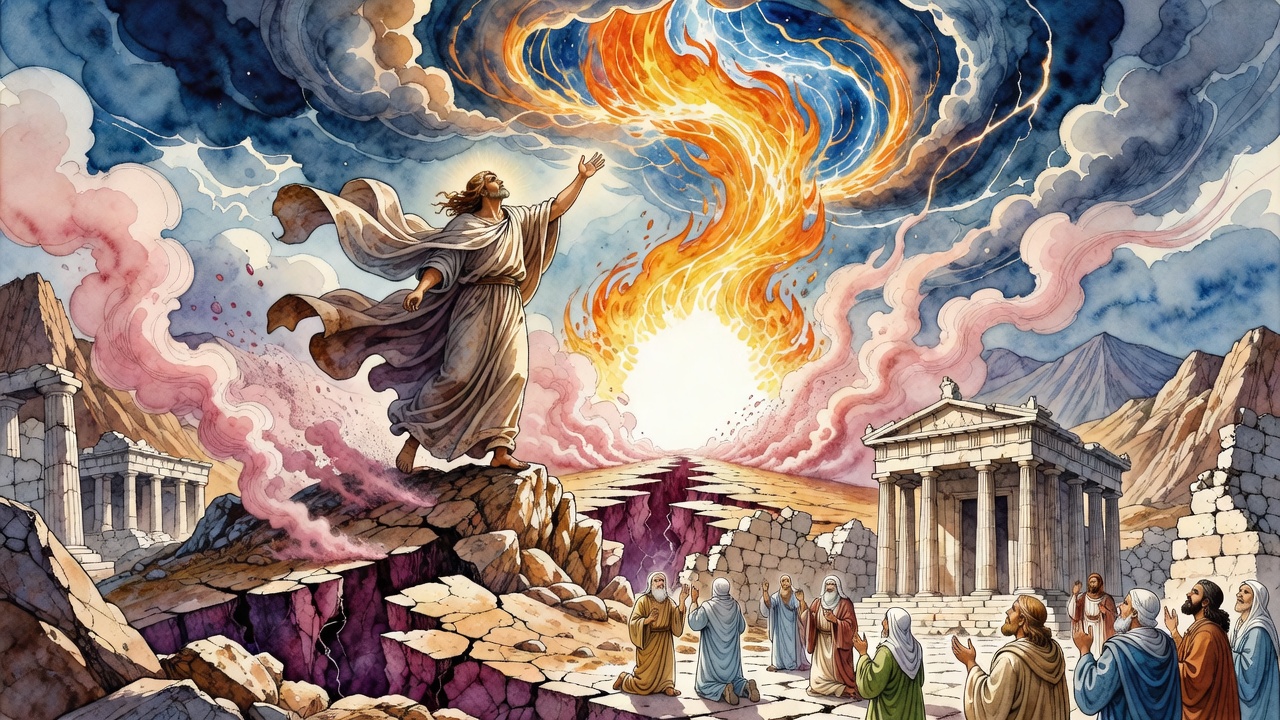
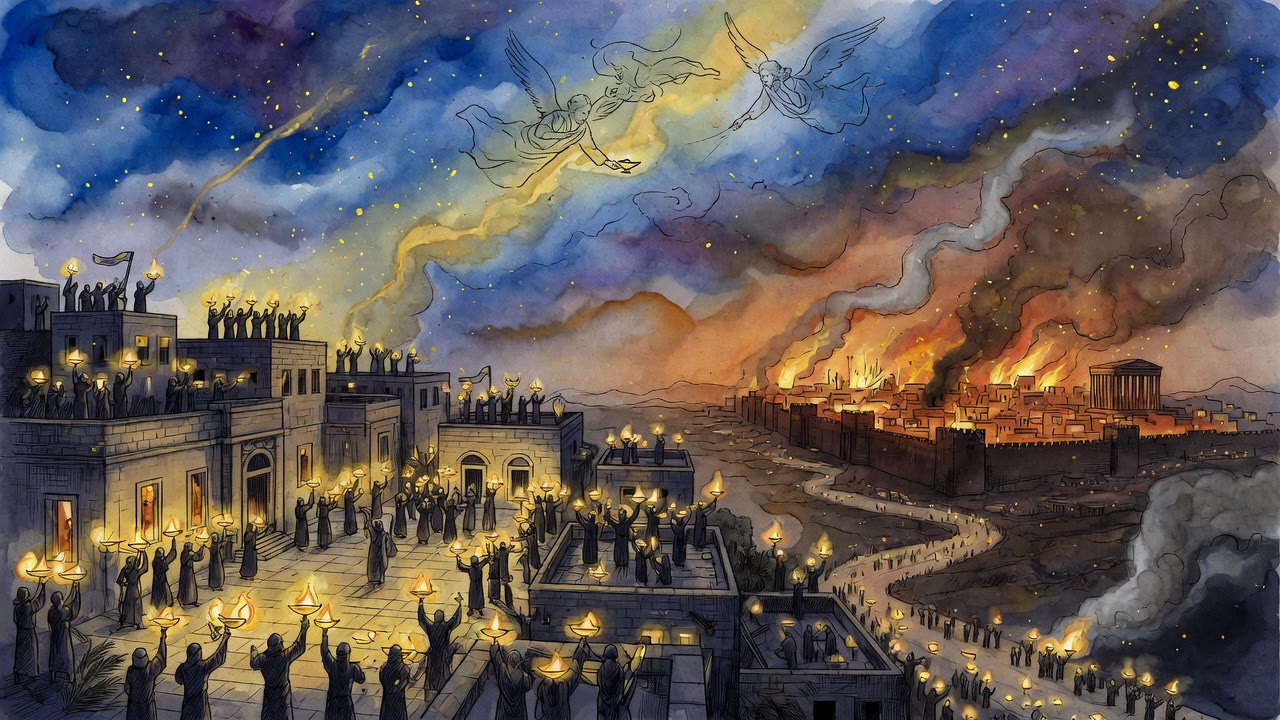
Beitar kept its lamps burning for fifty-two years after the Temple fell. Not lamps of mourning. Lamps of relief. While Jerusalem's aristocracy had still ruled the plazas, a man from Beitar who climbed to pray would be stopped in the street. Did he want a seat among the rulers? No. A local governorship? No. Would he sell his estate? No. Then a false bill of sale went out anyway, and when he came home the gate was closed against him as if he had signed with his own hand.
Beitar Kindled Lamps Over the Temple's Fall Click for full size

So the people of Beitar learned to hate the road up to the holy city. "If only that man's leg had broken," the robbed man would say, "and he had never climbed that corner." When the Temple finally burned, Beitar kindled lights. They hunted, in their hearts, the steps of those who walked the squares. They hoped the roads would go empty. They hoped the days of that Temple were filled and finished (Lamentations 4:18).

One Who Rejoices at Calamity

Their good did not last. "One who rejoices at calamity will not be absolved" (Proverbs 17:5). The midrash sets the verse like a seal on Beitar's story. A city that lit lamps for another city's ruin would meet hunters of its own steps. The end that they cheered for Jerusalem came walking toward their gates on a later calendar, with Roman iron and the memory of false documents still wet in the soil.

Lamentations is not only poetry of ash. It is a ledger of how communities treat one another when power sits in the center and estates sit on the edge. Beitar remembered the stolen fields. Heaven remembered the lamps.

The Ark in the Square

In another generation of grief, three sages went out for a fast: Rabbi Beiva bar Zavdai, Rabbi Tanhum bar Hanilai, and Rabbi Yoshiya. On fast days the congregation took the ark into the city square and prayed there under open sky, wood and parchment in the dust where markets usually shouted. Rabbi Beiva opened Lamentations: "Let us lift up our heart with our hands to God in the heavens" (Lamentations 3:40-41). Is a heart lifted out of a chest and returned? No. Focus the heart on the hands first. Make sure those hands have not held another person's property. Only then lift them toward heaven.

If a person holds a swarming creature and immerses in all the primordial waters, the immersion fails. Cast the creature away, and forty se'ah will clean. The teaching is brutal in its simplicity. Prayer with stolen goods still in the fist is theater. Beitar's aristocrat-victims would have recognized the point. So would Beitar's celebrants, if they had looked at their own lamps instead of the smoke over Jerusalem.

Humble First, Then Adorn Others

Rabbi Yoshiya pressed further from Zephaniah: gather yourselves, adorn yourselves, and only thereafter adorn others. He said there was a person present who had slandered him before Rabbi Yohanan. Let the whole people stand for judgment. Some rose and walked out. The midrash leaves their motives tangled: guilt, or mercy for the guilty, or refusal of public shame. The demand remains. Do not preach return with a private knife still warm.

Humbling, not the hunger of the fast alone, is what heaven noticed in the days of Shishak. "When the Lord saw that they had humbled themselves," not "when the Lord saw that they had fasted." Beitar had kindled pride in the form of light. The square fast asks for the opposite fire: confession before spectacle, clean hands before lifted hearts.

The Man Who Died Waiting

Charity has its own traps of delay. Rabbi Yohanan and Reish Lakish walked toward a bathhouse in Tiberias. A poor man met them: gain through me. They told him they would give when they came out, steam and clean water first, coins second. When they emerged, he was dead. They prepared his body and found six hundred dinars hidden at his neck. Blessed is the One who chose the sages and their words, they said, remembering the teaching to be grateful even for deceivers among the poor, because without them the refusal of true need would burn hotter still.

The shock does not cancel the first failure. They meant to give and postponed. Intention without the open hand arrived too late for a living mouth. Beitar postponed grief and chose lamps. The bathhouse sages postponed coins and met a corpse. Both stories punish the gap between knowing and doing while the hour is still soft.

Roads That Hunt Back

"They hunted our steps from walking in our squares; our end approaches." Beitar wanted the roads to Jerusalem empty. The midrash answers that emptied roads come home. A people that cheers the fall of the place it once needed for prayer will not keep its own plazas forever.

Lift the heart with the hands. Empty the hands of what is not yours. Do not light a lamp for someone else's ruin. The square remembers. So does heaven. Fifty-two years is a long celebration. It is a short mercy.


← All myths
From the tradition

Sources

3 sources

The texts behind this telling. Some cards carry a translation of the source; others are our own retelling of it, and each card says which. Every card links out to the original.

Eikhah Rabbah 4:21Eikhah Rabbah

Retold in our words. Read the original at the link below.The Sefaria Midrash Rabbah, 2022 · CC-BY

“They hunted our steps from walking in our squares; our end approaches, our days are filled, as our end has come” (Lamentations 4:18).“They hunted our steps from walking in our squares…” Beitar existed for fifty-two years after the destruction of the Temple. Why was it destroyed? Because they kindled lamps over the destruction of the Temple.47This was a sign of celebration. Why did they kindle them? They said: The ruling aristocracy of Jerusalem would sit in the center of the city, and when one of them would ascend to pray,48When a resident of Beitar would ascend to Jerusalem to pray at the Temple. they would say to him: ‘Do you wish to become a member of the ruling aristocracy?’ He would say to them: ‘No.’ ‘Do you wish to become a local governor?’ He would say to them: ‘No.’ They would say to him: ‘I heard that you have an estate; do you wish to sell it to me?’ He would say to them: ‘I do not intend to do so.’ [An aristocrat] would write and send his bill of sale to a member of his household: ‘If so and so comes, do not allow him to enter the estate because he sold it to me.’49After offering the resident of Beitar an elevated status or a position of authority so that he would agree to sell his estate, and nonetheless being rebuffed, the corrupt aristocrats would take matters into their own hands and write false documents of sale on behalf of the Beitar resident. That man would say: ‘If only that man’s leg would have been broken and he would not have ascended to that corner.’50The resident of Beitar whose estate was taken would say: ‘If only I had not come to pray at the Temple.’ That is what is written: “They hunted [tzadu] our steps [from walking in our squares]” (Lamentations 4:18); may the roads be desolate [tzadya] of [people] walking to those plazas.51The people of Beitar hoped that people would stop traveling to the Temple. “Our end approaches” (Lamentations 4:18); the end of that Temple,52They hoped that the Temple would be destroyed. “our days are filled” (Lamentations 4:18); the days of that Temple. They, too, their good did not last, as it is written: “One who rejoices at calamity will not be absolved” (Proverbs 17:5).

Full source
Eikhah Rabbah 3:14Eikhah Rabbah

Retold in our words. Read the original at the link below.The Sefaria Midrash Rabbah, 2022 · CC-BY

“Let us search and examine our ways, and return to the Lord. Let us lift up our heart with our hands to God in the heavens” (Lamentations 3:40–41).“Let us search and examine our ways, and return to the Lord. Let us lift up our heart with our hands to God in the heavens” – Rabbi Beiva bar Zavdai, Rabbi Tanḥum bar Ḥanilai, and Rabbi Yoshiya went out for a fast.65On fast days, the congregation would take the ark out to the city square and pray there. See Mishna Taanit 2:1. Rabbi Beiva bar Zavdai expounded and said: Is it possible that a person’s heart is taken from him and returns to him?66What, then, is the meaning of the verse “Let us lift up our heart with our hands”? Rather, we should focus our hearts on our hands,67We must ensure that our hands have not engaged in malfeasance with another’s property. and only thereafter to God in the heavens. If there is a swarming creature in a person’s hand, even if he immerses himself in all of the primordial waters, he will never be purified. If he casts the swarming creature from his hand, his immersion is effective for him [even] in forty se’a.Rabbi Tanḥuma expounded: “The princes of Israel and the king humbled themselves and said: The Lord is righteous” (II Chronicles 12:6). And it is written: “When the Lord saw that they had humbled themselves, the word of the Lord was with Shemaya, saying: They have humbled themselves; I will not destroy them, and I will grant them a small measure of deliverance, and My wrath will not be poured upon Jerusalem by means of Shishak” (II Chronicles 12:7). It is not written here, “when the Lord saw that they had fasted,” but rather, “that they had humbled themselves.”Rabbi Yoshiya expounded: “Gather yourselves, gather [hitkosheshu vakoshu]” (Zephaniah 2:1) – let us adorn [nekashet] ourselves and thereafter adorn others. Because there is a person who is here who slandered me before Rabbi Yoḥanan; let the entire people stand for judgment.68He demanded that the individual who had slandered him repent before exhorting others to do so, and so too that each person repent from his sins. They said: Rabbi Ḥiyya, Rabbi Ami, and Rabbi Yosei were there. They stood and went out.69Some explain that it is because they were the guilty parties and they were angry that he had called them out (Yefe Anaf). Others explain that they sought to spare the guilty party the public shame (Matnot Kehuna).“We have transgressed and defied; You have not forgiven” (Lamentations 3:42).“We have transgressed and defied [umarinu]” – the Rabbis there70In Babylon said: When the endives are bitter [meriran], the vinegar is sour.71This translation is based on the interpretation of Rabbi David Luria. He explains that the endives are dipped in the vinegar. The point is that Israel sinned, and so too God was strict in exercising judgment. There are alternate interpretations of this line in the midrash (rabbinic interpretive commentary); see, e.g., Matnot Kehuna. The Rabbis here72In the Land of Israel said: If actions are evil, they are harsh for the one who performs them. Rabbi Huna said in the name of Rav Yosef: “We have transgressed and defied” – as is our wont. “You have not forgiven” – is that Your wont? Rabbi Levi said: “We have transgressed and defied” – and You destroyed Your Temple.73As “You have not forgiven.”

Full source
Vayikra Rabbah 34:10Vayikra Rabbah

Retold in our words. Read the original at the link below.The Sefaria Midrash Rabbah, 2022 · CC-BY

Sometimes, the answers we find are… well, unexpected. to a fascinating, and slightly unsettling, story from Vayikra Rabbah, a collection of rabbinic homilies on the Book of Leviticus. It all starts with a startling statement: "We must be grateful to the deceivers among them." Wait, what? Grateful to deceivers? It sounds crazy. But hold on, there's a reason.

Rabbi Abahu, quoting Rabbi Eliezer, explains the rationale. Harsh, I know! The logic comes from two verses: (Deuteronomy 15:9), which warns that if you refuse a poor person, "He will cry out to the Lord against you, and it will be a sin for you," and (Ezekiel 18:20), stating, "The soul that sins, it will die." Put them together, and you get a very high-stakes situation.

The idea is that without those who falsely claim poverty, those who truly need assistance would put you in a potentially life-threatening situation if you refused them. Deceivers, in this twisted logic, provide a buffer. They lower the stakes.

The story doesn't end there. It gets even more complicated.

Rabbi Yoḥanan and Reish Lakish, two prominent sages, were on their way to bathe in a bathhouse in Tiberias. A poor man approached them, begging for charity, saying "Gain through me." It was a common way to ask for alms – give to me, and you will gain merit. The Rabbis, in a moment of perhaps misguided prudence, told him they would give him something when they came out.

Tragically, when they emerged, they found the man dead. Overcome with guilt, they lamented, "Since we did not tend to him in his lifetime, we will tend to him in his death.” They took it upon themselves to prepare his body for burial.

And then came the shock.

While washing the body, they discovered a purse containing six hundred dinars (a significant sum of money) hidden around his neck! Talk about a plot twist.

The Rabbis, stunned, exclaimed, "Blessed is He who chose the Sages and their words!" They immediately recalled Rabbi Abahu’s teaching about being grateful for deceivers. As the story seems to suggest, this man may not have been as impoverished as he appeared.

So, what are we to make of this perplexing tale? It's easy to get caught up in the strangeness of praising deception. But perhaps the story points to something deeper about the complexities of charity and judgment.

We're constantly faced with incomplete information. We can't always know who is truly in need and who is trying to take advantage. Maybe the story isn’t really about praising deceit. Maybe it's about acknowledging the limitations of our judgment and the importance of erring on the side of generosity. Perhaps it's a reminder that even in the face of uncertainty, the act of giving, the intention behind it, still holds value.

It also serves as a stark reminder of the consequences of delay. The Rabbis intended to give, but their procrastination had tragic results.

This passage from Vayikra Rabbah leaves us with more questions than answers. It challenges us to think critically about our assumptions, the nature of poverty, and our responsibilities to one another.

Full source