Jacob Feared the Amorite Kings, Then Judah Spoke of Noah
Seven Amorite kings march on Jacob's tents after Shechem burns, and only Judah's words about Noah stand between the family and the swords.
Table of Contents
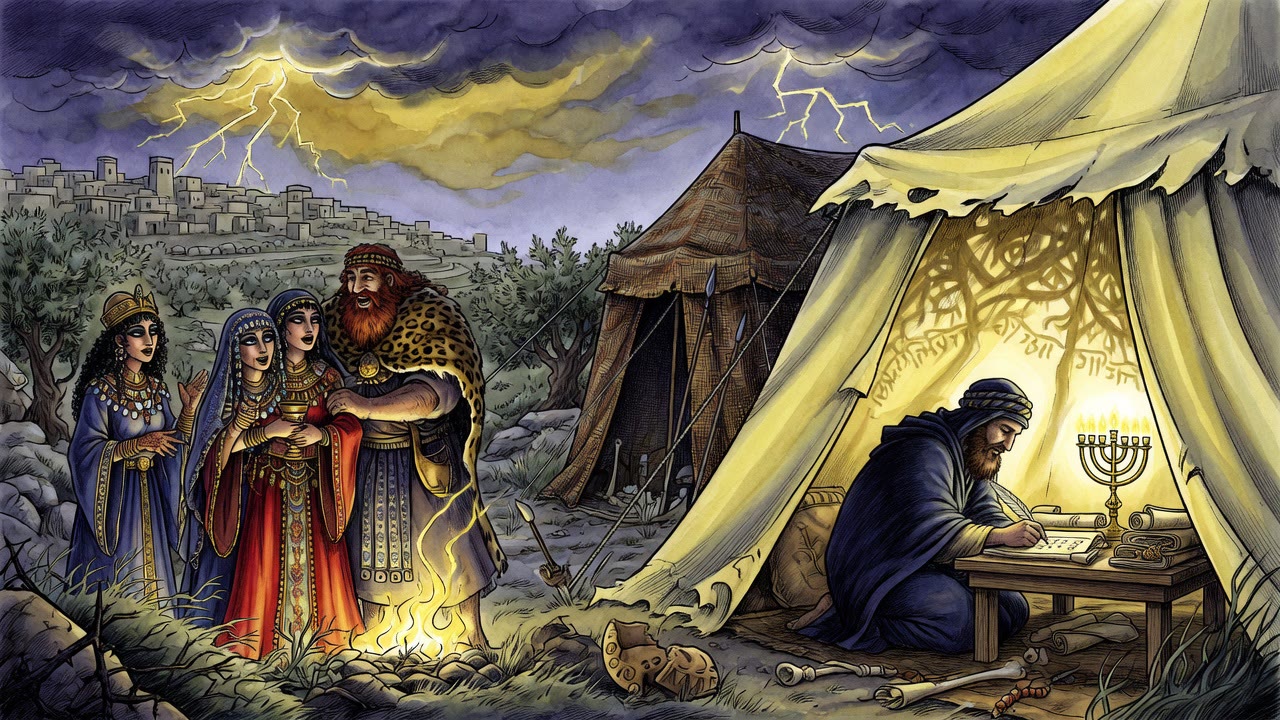
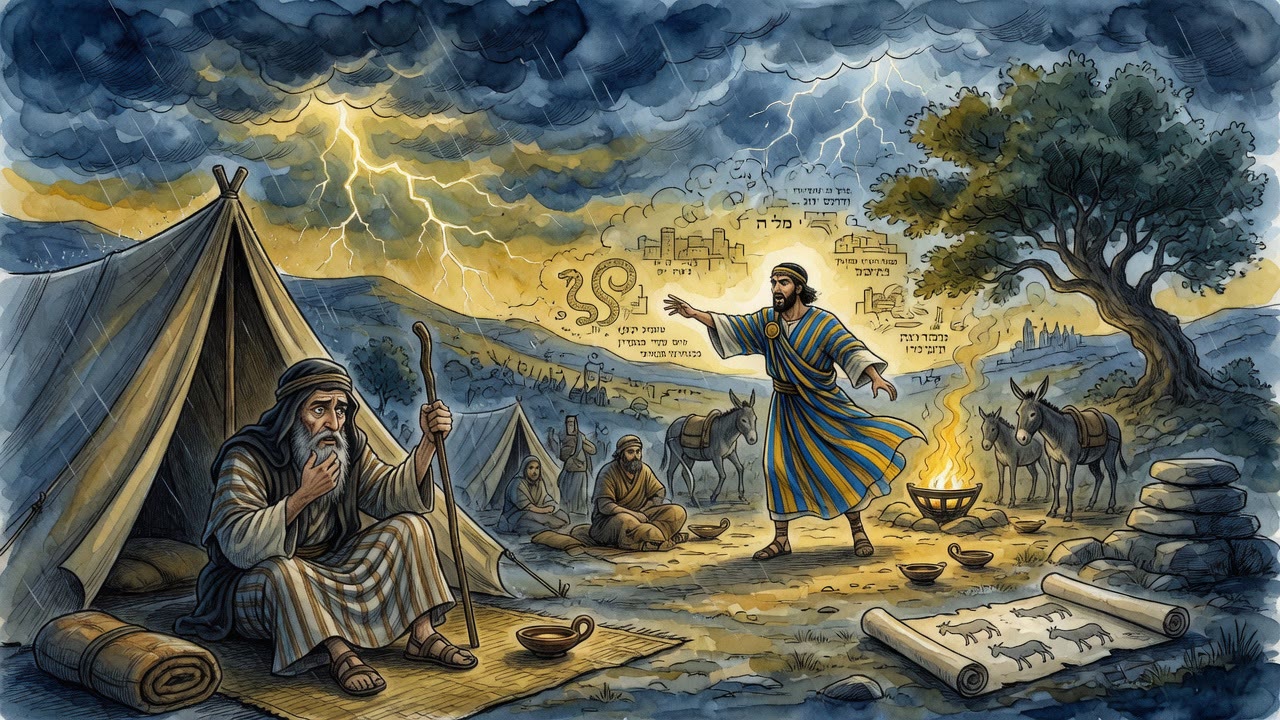
The smoke over Shechem had not yet cleared when the runners came in low across the fields, breathing hard, and said the word that empties a man's chest. Kings. Seven of them, banners and dust, ten thousand swords behind them, and all of it pointed at the cluster of tents where Jacob stood counting his household by the light of the cookfires. He counted his sons. He counted his servants. He counted the children and the flocks and the women, and the arithmetic came out the same way every time he tried it, which was to say it came out as a grave.
 Click for full size
The Old Man Counts His Dead Before They Die
Jacob did not turn first to the enemy. He turned to his sons, and his voice cracked when he found the two he was looking for. Simeon stood with the dust of the ruined city still on his sleeves. Levi stood beside him, jaw set, refusing to look away. They had gone in for their sister's sake, for Dinah, and they had not stopped at one man or two. They had taken the whole city apart, every gate and every house, and left their father's name burning across Canaan like a brand thrown into dry grass.
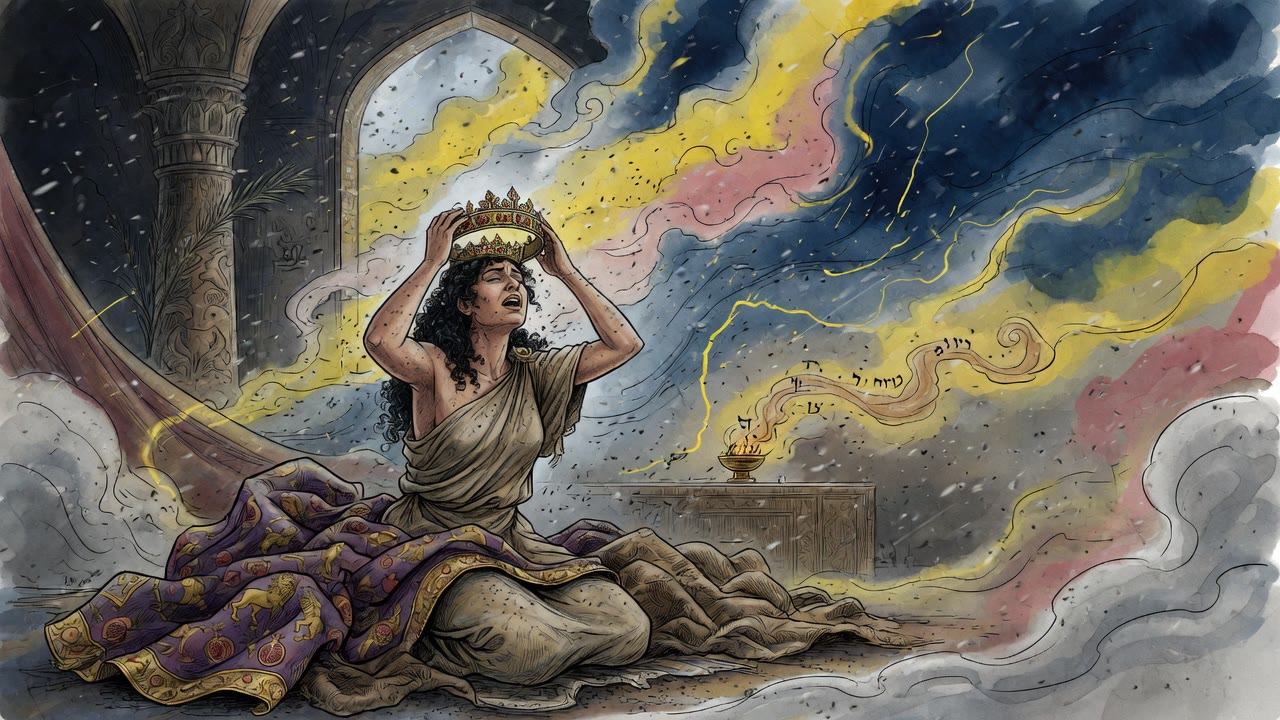
"Why have you brought such evil upon me?" Jacob cried. The words came out of him ragged. "I was at rest. I was at rest, and you provoked the inhabitants of the land against me by your acts." He pressed the heels of his hands against his eyes. He had spent his whole life learning to live quietly in places that did not want him, bowing low to Esau, digging wells and giving them up, and now his own children had set the world against him in a single afternoon. He saw the tents trampled. He saw the small ones speared. He saw nothing in front of him but the end of the promise.
Judah Steps Out of the Circle of Brothers
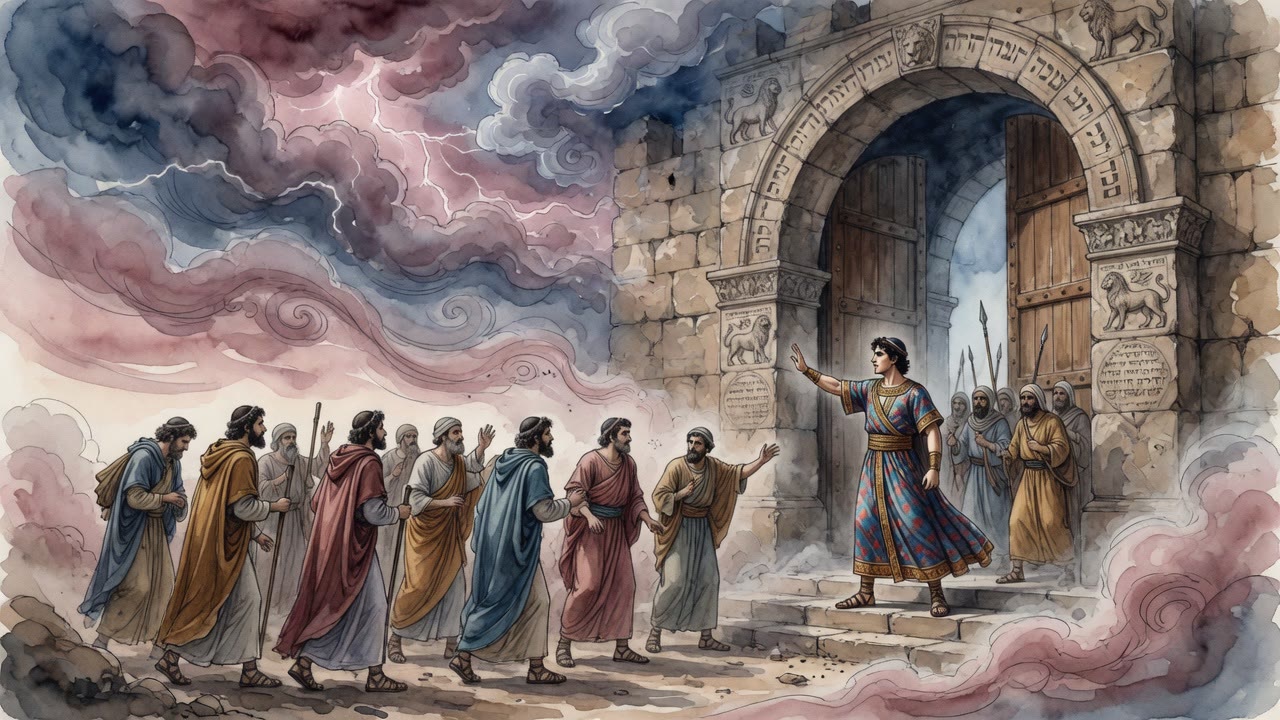
Then one of the sons moved. Judah stepped out of the dark ring of his brothers and into the firelight, and there was a strength in the way he came forward that startled the men around him, because it was aimed not at the kings on the horizon but at his own grieving father.
"Was it for naught that Simeon and Levi killed the inhabitants of Shechem?" Judah said. He did not raise his voice. He did not need to. "It was because Shechem dishonored our sister. He transgressed the command our God gave to Noah and to his children. And not one of the inhabitants of the city interfered in the matter. Not one of them lifted a hand to stop it."
The fire popped. Jacob looked at his son and said nothing, because Judah had reached past the fear and put his finger on something older than the seven kings. Long before there was an Israel, before there was a Jacob, there had been a word spoken over Noah and over every child of his that would ever walk the earth: that a man does not seize a daughter, and that a city which watches and shrugs has already chosen its side. Shechem had broken that word. The city had stood and watched it break and called the silence peace. Judah was not asking his father to celebrate the blood. He was asking him to see that the blood had a reason, and that the reason was not Simeon's rage but a law that bound the nations whether the nations remembered it or not.
A Dread Falls on the Marching Kings
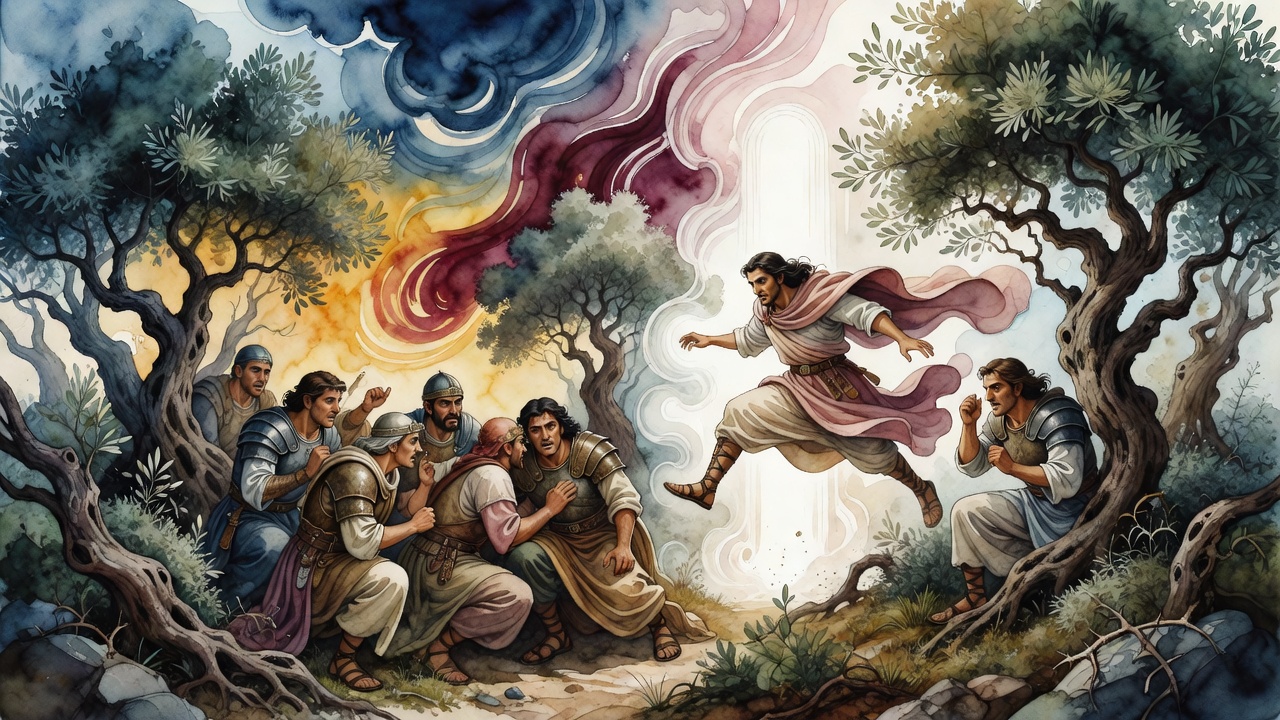
It would have meant nothing, all of it, if the swords had reached the tents. Judah's words could justify the deed, but words do not stop ten thousand men. And the men were coming. The dust rose higher. You could hear them now, the low grinding sound an army makes when it moves, the thing that gets into the soles of your feet before it reaches your ears.
Then the army stopped.
It stopped without a horn and without a command. A terror came down over the seven kings where they marched, a dread that had nothing to do with Jacob's numbers, because Jacob had no numbers. It was the fear of God, the same heavy thing that falls on a man's heart when something larger than the man has decided the matter (Genesis 35:5). The kings felt their hands go cold on their reins. The horses balked. The line that had been a wall of iron sagged and broke and began, king by king, to turn back toward the cities they had come from, taking their banners and their dust with them. No one in Jacob's camp drew a sword. No one had to.
Jacob Learns the Word for What Just Happened
Jacob stood in the sudden quiet and understood that he had been saved by nothing he had done. Not by his cunning, which had always saved him before. Not by his sons' swords, which he had cursed an hour ago. The thing that had turned the kings was the same thing that had spoken over Noah, the same God whose command a city had trampled. And a man who has been pulled back from his own grave does not stay silent. He opens his mouth.
That is the shape the old singers gave to the strange short psalm, the two-line one that calls out across every border: "Praise the Lord, all nations" (Psalm 117:1). They heard it not as a flat order but as a thing said back and forth, a call thrown out and an answer thrown back. Israel turns to the nations and says, praise Him. And God turns to Israel and says it back to them, praise Him. It runs between a groom and his bride, the one saying it and the other answering, until the saying and the answering are the same motion. A camp that should have been ash by morning instead lifts the words up.
The Nations the Swords Could Not Reach
And the singers carried it further than that night outside Shechem. They said that the very nations who had marched, the kings whose terror had saved a family they meant to destroy, would not stay enemies forever. In the time of the redemption that has not yet come, those same nations would stop at the edge of the tents not in dread but in welcome, and they would open their mouths too. The chorus that began with one shaken old man finding his voice would widen until everyone who once carried a sword toward the camp was carrying a song into it instead.
Jacob had counted his household and found a grave. He walked away from the fire that night having counted again and found, against every number he knew, a choir.
← All myths