Translation of the source text.Torat Emet (Yalkut Shimoni) · CC-BY-NC
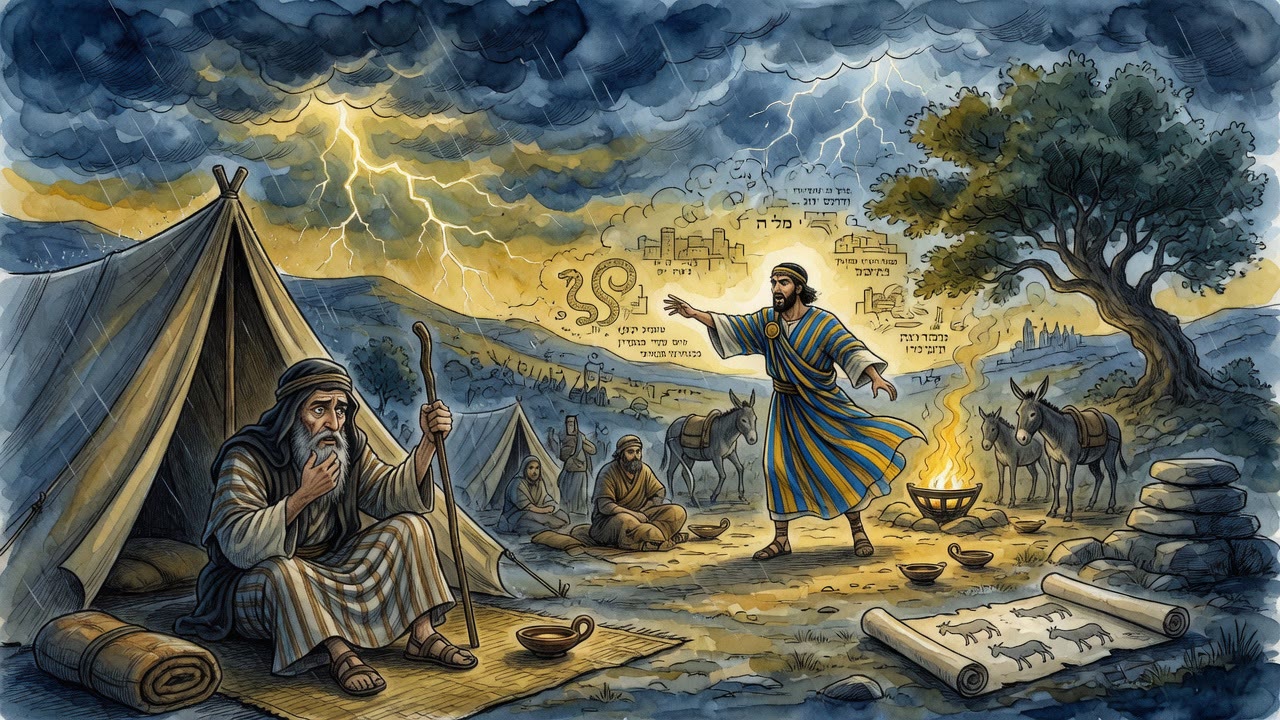
"And he set up there an altar, and called it El, God of Israel" (Genesis 33:20). He said to Him: I am a god in the upper realms, and You are in the lower realms. The Holy One, blessed be He, said to him: Even a hazzan [of the synagogue] does not take authority for himself, and you take authority for yourself? Tomorrow your daughter will go out and be afflicted. This is what is written: "And Dinah the daughter of Leah went out" (Genesis 34:1).
"And they journeyed, and the terror of God was" (Genesis 35:5). In three places the nations of the world gathered to make war with the sons of Jacob, and the Holy One, blessed be He, did not permit them. As it is said: "And they journeyed, and the terror of God was." A second time was in the days of Jonathan, as it is said: "And the earth quaked, and it became a terror of God" (1 Samuel 14:15), with the added fragment, "and it increased in the forest to consume." A third time was in the days of Joshua. Rabbi Eleazar said: They sought to pursue, but the Holy One, blessed be He, did not permit them. Where did they gather? At Hazor. This is what is written: "all the cities that stood on their mounds," and so on (Joshua 11:13). In the tradition, He burned it. The Holy One, blessed be He, said it to Moses, and Moses said it to Joshua.
"And they journeyed, and the terror of God was" (Genesis 35:5). They said: If two sons of Jacob did this great thing, if all of them gathered, they could destroy the world. The fear of the Holy One, blessed be He, fell upon them, and therefore they did not pursue the sons of Jacob.
But our Rabbis said: Even though they did not pursue them at that time, after seven years they did pursue. All the kings of the Amorites gathered against the sons of Jacob and sought to kill them in the valley of Shechem, because afterward Jacob and his sons returned to Shechem, stood there, and settled there. They said: Is it not enough for them that they killed all the men of Shechem? Now they inherit their land. All of them gathered and came against them to kill them.
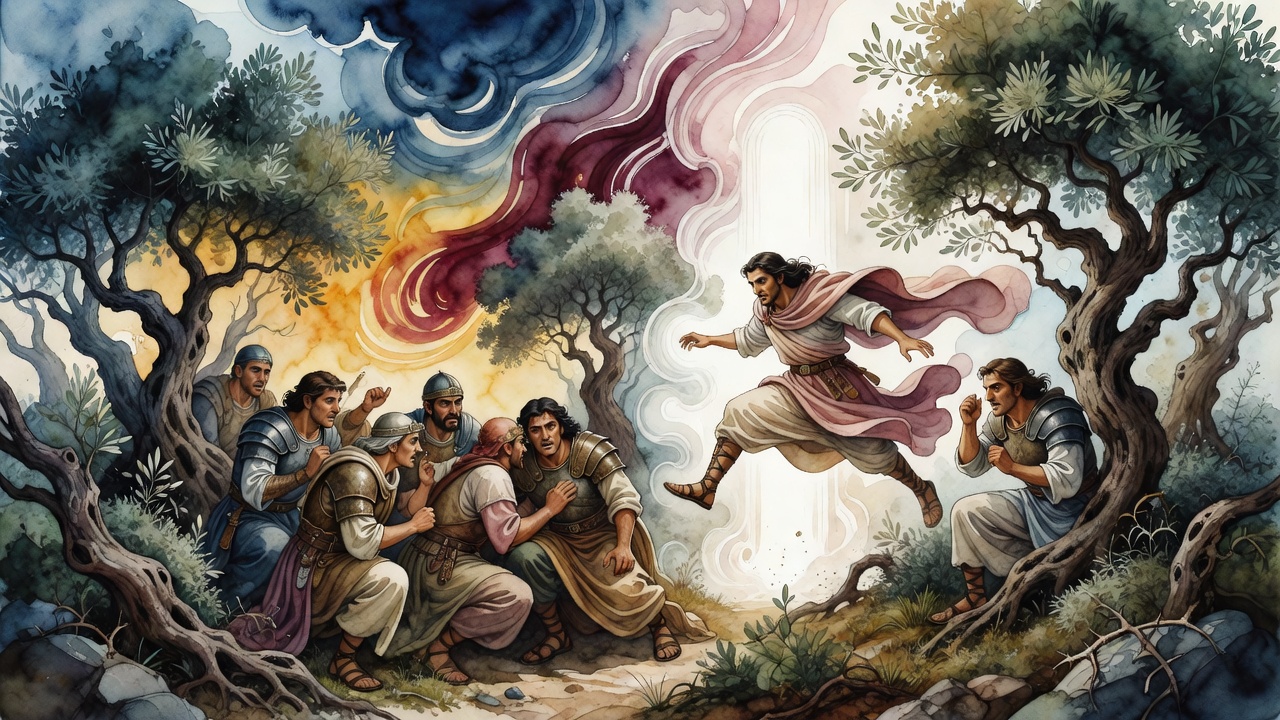
When Judah saw this, he leaped into the battle line of the foot soldiers who were fighting against them. First he killed Yashuv king of Tappuah, who was covered from his head to his feet in iron and bronze. He was riding on a horse and hurling spears with both hands from upon the horse, in front of him and behind him, and he would not miss any place at which he threw, for he had great strength to shoot with both hands. When Judah saw him, he was not afraid of him or of his strength. He leaped and ran toward him. He took a stone from the ground, whose (weighing) [weight] was sixty sela'im, and threw it at him. Yashuv was two parts of a ris away from him, which is one hundred seventy-seven and one-third cubits, and he was coming toward Judah adorned in iron weapons and hurling spears. Judah struck him with that stone upon his shield and knocked him from the horse.
When Yashuv wanted to rise, Judah ran and sought to kill him before he got up from the ground. But Yashuv hurried and stood on his feet opposite Judah, set battle against him shield against shield, drew his lance, and sought to cut off Judah's head. Judah raised his shield against the lance and received the blow of the lance, and it split the shield in two. What did Judah do? He seized the lance, struck Yashuv with his own lance, and cut off both his legs above the ankles. Then Yashuv fell to the ground, his lance fell from his hand, and Judah leaped and cut off his head.
While Judah was removing his armor, nine of Yashuv's companions came against him. The first one who reached him, Judah took a stone and struck him on the head, and his shield fell from his hand. Judah took it and stood against the eight. Levi his brother arrived, came, and stood beside him, and he shot a stone and killed Eilon king of Gaash. Judah killed all eight, and Jacob his father came near and killed Zeruri king of Shiloh. None of them rose against the sons of Jacob, and they no longer had the heart to stand, but only to flee. The sons of Jacob pursued them, and Judah killed a thousand of them that day before the sun set.
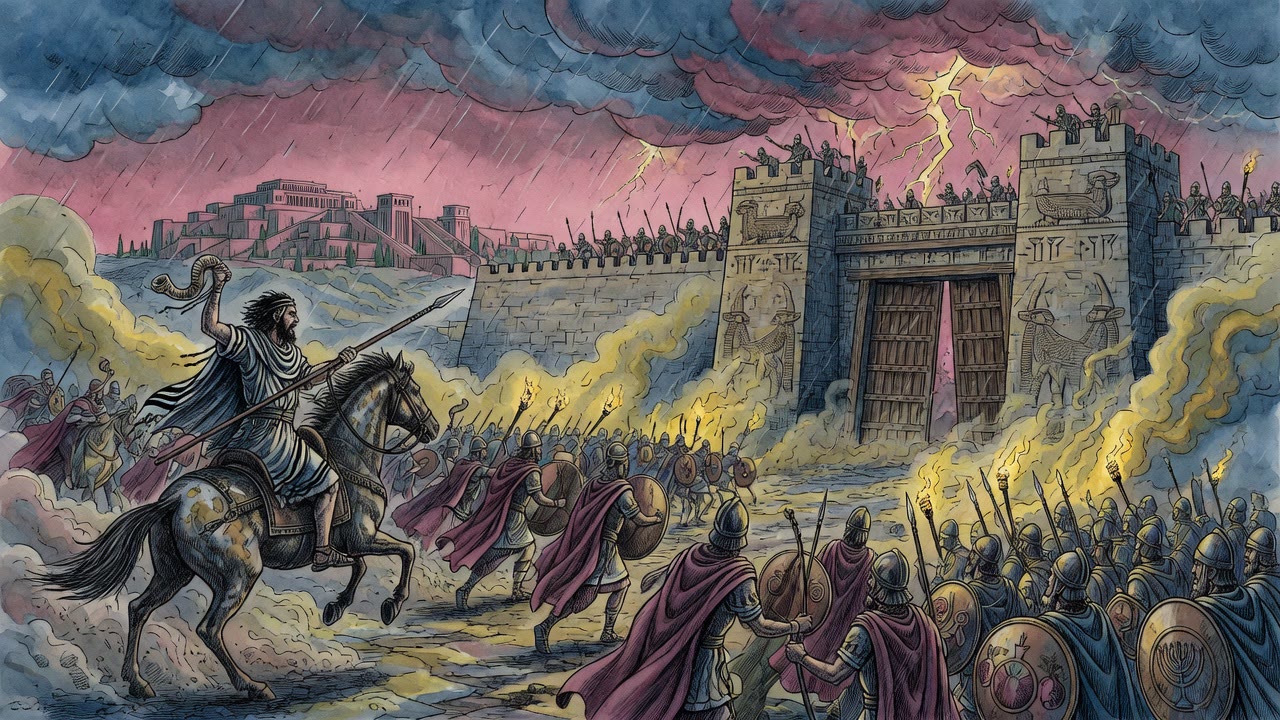
The rest of the sons of Jacob went out from the mound of Shechem, from the place where they had been standing beside it, and pursued them in the mountain until they came out to Hazor the city. Before Hazor the city, they had a battle heavier than the battle they had fought with them in the valley of Shechem. Jacob shot arrows and killed Pirathon king of Hazor, Passusi king of Sartan, Laban king of Aram, and Sheber king of Mahanhi. Judah was first and climbed the wall of Hazor. Four warriors set battle against Judah before Naphtali, who was climbing after him, reached him. Before Naphtali climbed up, Judah killed those four warriors, and Naphtali leaped and climbed after him. Judah stood to the right of the wall and Naphtali to the left of the wall, and they began to kill among them. The rest of the sons of Jacob leaped and climbed after them, broke them that day, and captured Hazor. They killed all the warriors, did not leave a man unkilled, and took all the captives.
On the second day they went to Sartan, and there too they had a heavy battle. It was a high city, and its mound was high, and it crushed anyone who came near it. There was no place to approach the wall, because the wall was strong and very high, and there was no place from which to capture it. That day they conquered it and climbed the wall. Judah came first and climbed first from the east. Gad climbed from the west. Simeon and Levi climbed from the north. Reuben and Dan climbed from the south. Naphtali and Issachar came near and set fire to the hinges of the gates. On the wall they had a heavy battle until the company of their companions climbed there. They stood against them on the tower before Judah captured the tower. Afterward Judah climbed to the top of the tower and killed two hundred men on the roof of the tower before all the men of the city came down from it. They captured and killed all the people and did not keep any man alive, because the men were strong and hard in battle. They brought all the captives out from there and turned back and went to Tappuah, because the men of Tappuah had gone out to rescue from their hand the captives they had taken from Hazor the city. They went from there to Arbel and killed those men who had gone out to rescue the captives.
On the third day they went to Tappuah in the morning. As they were gathering the captives, the men of Shiloh came to them to make war. Then they armed themselves, went out after them, and killed all of them before midday. They entered Shiloh after the women and did not give them a hand to stand. That same day they captured the city and brought all the captives out to the company of their companions whom they had left at Tappuah. They came to them with the spoil of Tappuah.
On the fourth day they were passing opposite the camp of Shebir. They too went out to rescue the captives, and the sons of Jacob descended from them into the valley, gathered, went up after them, and killed them before they ascended the rise. That same day men came out from the camp of Shebir against them, throwing stones at them. That same day they captured them, killed all the warriors, rescued all the captives, and joined them to the captives that were already with them.
On the fifth day they went to Gaash, because they heard that a great people from the Amorites had gathered there, and they were saying that they would come against them. Gaash was a strong city, one of the cities of the kings of the Amorites. They went there and set battle against the city until midday, but they could not capture it, because it had three walls, one wall within another wall. The people began to trouble them and insult them. At that time Judah's anger rose, and the spirit of a warrior's zeal entered him. He leaped with all his strength and climbed first onto the wall. There Judah came near to death. If Jacob his father had not been there, he would have been killed, for Jacob drew his bow and killed on the right and on the left. On the right they were throwing stones at Judah; on the left and in front of him they were standing for battle, and all of them sought to drive him from the wall.
When Dan his brother climbed, they drove them a little from the wall, and Naphtali was third after them. Simeon and Levi conquered and climbed on the west. The five of them held them back and did not give them a hand to stand, and they killed many of them, until a stream of blood from their blood was running. They captured the city when the sun inclined toward the west, killed all the warriors that day, brought out the captives, and went and rested outside the city because they were weary.
On the sixth day all the Amorites gathered and came to them without weapons of war, bowing to them and asking them to make peace. Then they made peace with them, and they gave them a gift, and to all the nobles of its land. Then Jacob made peace with them. They sent to the sons of Jacob all the flocks that they had captured from them, two for one. They gave them tribute and returned to them all the captives. Jacob turned toward Timnah, and Judah toward Arbel. From then onward, they remained at peace from the Amorites.
"And he went to a land away from Jacob his brother" (Genesis 36:6): because of the debt bond. And some say: because of the shame. For our Rabbis said that certainly, because Esau cleared out his goods before Jacob and went away, it was not that he removed jealousy from his heart, but rather: "his anger tore perpetually, and he kept his wrath forever" (Amos 1:11). Even though he went away at that time, after some time he came against Jacob for war. It was the year Leah died, and Jacob and his sons were sitting in mourning, and some of his sons were being comforted.
Esau came against them with a great force, battle formations wearing armor of iron and bronze. All of them were armed with shields, bows, and lances. There were four thousand warriors, and they surrounded one fortress where Jacob and his sons were encamped, they and their servants and their children and all that belonged to them, because all of them had gathered there to comfort Jacob over the mourning for Leah. They were sitting in quiet and it did not enter their minds that any person would come against them to fight with them. They did not know until the whole force clung to that fortress. Only Jacob and his sons were there, with two hundred of their servants.
When Jacob saw Esau, that he had brazenly come against them for war to kill them inside the fortress and was shooting arrows at them, Jacob stood at that moment on the wall of the fortress and spoke with Esau his brother words of peace, friendship, and brotherhood. Esau did not accept them from him. Immediately Judah answered Jacob his father: How long will you prolong words of peace and love with him, when he comes against us as an enemy, clothed in armor, to kill us? When Jacob heard this, he drew his bow and killed Adoram the Edomite. He drew his bow again and struck Esau on the right side, in the seat, with an editorial correction that it should read flank, and Esau became ill from the arrow. His sons carried him, mounted him on the donkey, and he went and died there in Adurin. And some say: he did not die there, and so on.
Then Judah went out first, and Naphtali and Gad with him, to the south of the fortress, with fifty servants from the servants of Jacob their father. Levi, Dan, and Asher went out to the east of the fortress, with fifty servants with them. Reuben, Issachar, and Zebulun went out to the north of the fortress, with fifty servants with them. Simeon, Benjamin, and Hanoch son of Reuben went out to the west of the fortress, with fifty servants with them. Joseph was not there, for he had already been sold.
At that time Judah took hold of the battle. He entered into the force, he with Naphtali and Gad, and they captured that iron tower. With their shields they received the stones that were being slung at them. The sun grew dark over them because of the slinging of stones, the shooting of arrows, and the ballistae that were being thrown at them. Judah entered first into the force and killed six warriors from among them. Naphtali and Gad went with him, one on his right and one on his left, and they were guarding him so that the force would not kill him. They too killed four warriors in the force, each one killing two. The fifty servants who were with them also helped them, came near with them to fight them, and each man killed his man, fifty warriors. Despite all this, Judah, Naphtali, and Gad could not drive the force away from the south of the fortress and could not move them from their place.
Then they strengthened themselves for battle. They all gathered and fought against it, and each killed his man from among them. Despite all this, they did not make them flee from their place, but the force stood opposite them, arranged for battle on their feet. Then Judah and his brothers and their servants strengthened themselves, gathered together, fought against them, and each man killed two from the force. When Judah saw that the force remained standing in its place [and] they could not move them, they girded themselves with strength, and the counsel of might clothed him. Judah, Naphtali, and Gad joined together and entered into the midst of the men of war, and Judah killed ten warriors among them, while Naphtali and Gad killed eight warriors among them.
When their servants saw that Judah and his brothers had strengthened themselves and entered into the depth of the battle, they too strengthened themselves to stand with them and fight against them. Judah struck the force on his right and on his left, one hundred warriors, and Naphtali and Gad killed them after him, until they drove the whole force from the south of the fortress by the measure of one ris. When the force that had been opposite Judah saw that they had been broken before Judah and his brothers, they trembled. All of them gathered for battle, set battle against Judah and his brothers, and stood in their place to fight them with the arm of force. So too Levi and those with him, Reuben and those with him, and Simeon and those with him. Those who stood opposite them also stood for battle and gave themselves over to fight them strongly.
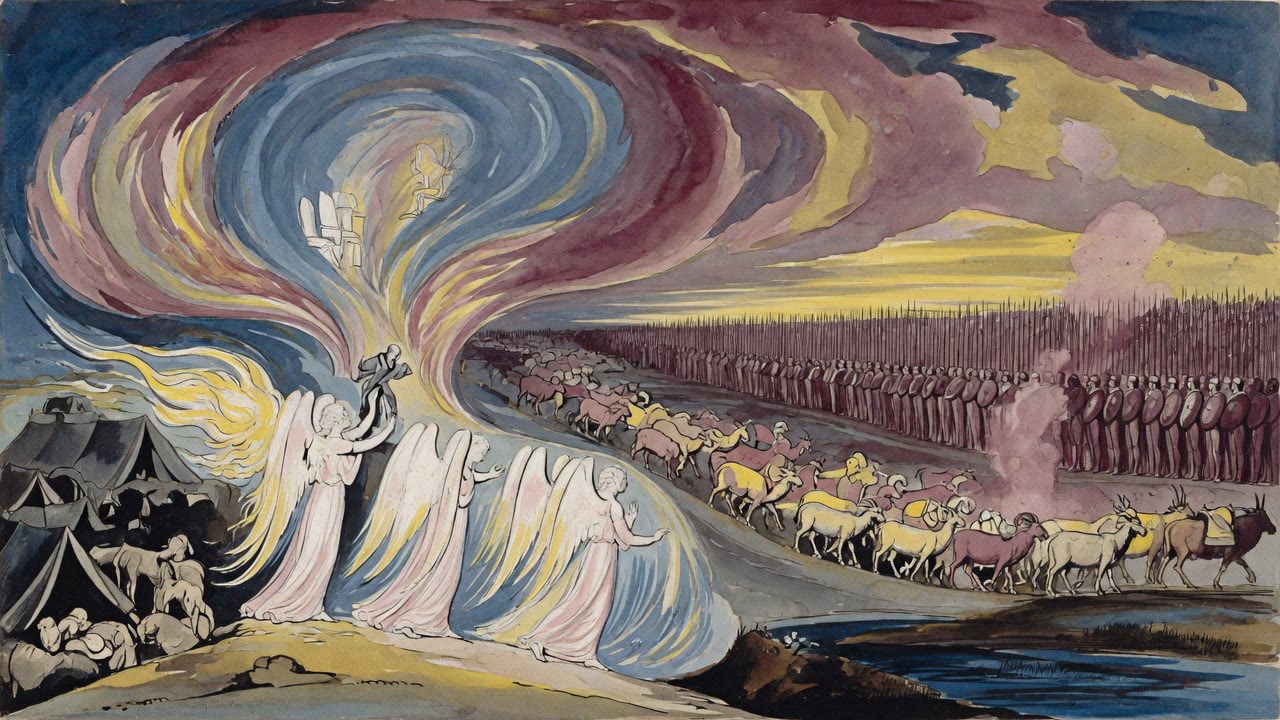
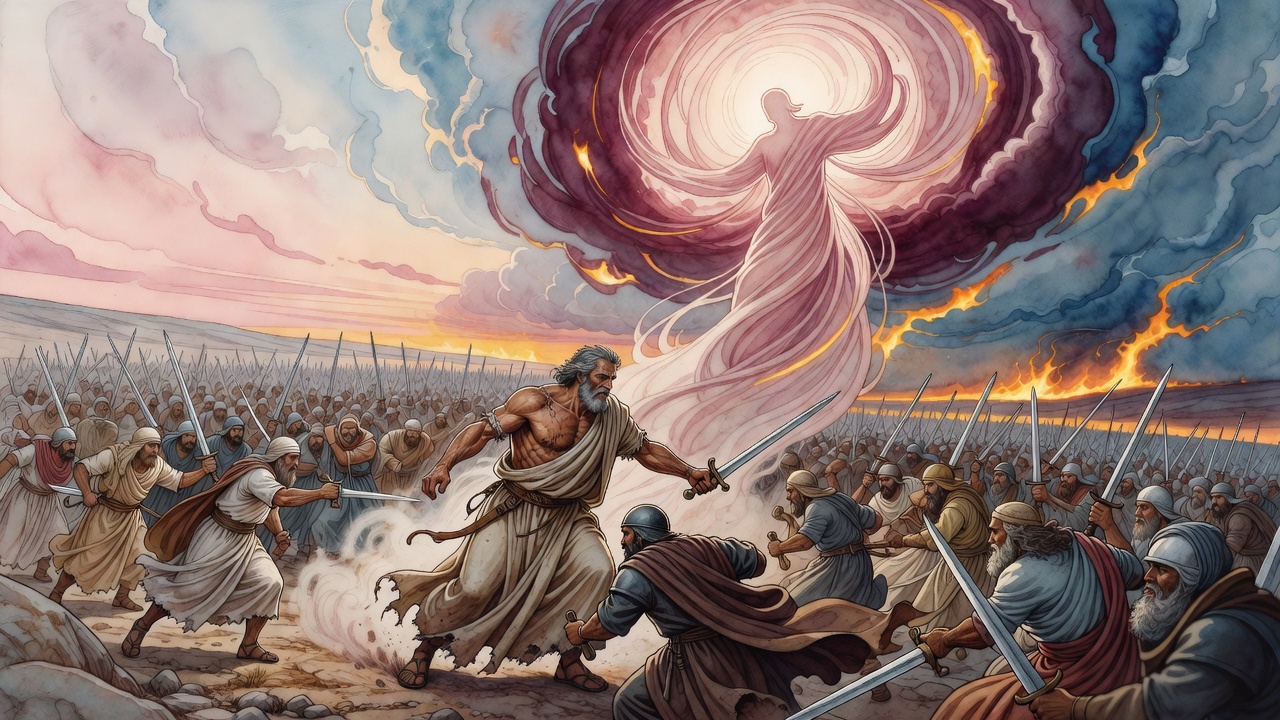
When Judah saw that the whole force had strengthened itself and gathered for battle, that they had made one way to fight them and stood in their place to set battle against them, he lifted his eyes to the Holy One, blessed be He, to help them, because they were weary from the weight of the battle and could not fight them. At that moment the Holy One, blessed be He, accepted their prayer, saw their distress, and helped them. He brought out a storm wind from His treasuries, and it blew against the faces of their enemies and filled all their eyes with darkness and gloom, so that they could not see to fight. But the eyes of Judah and his brothers were shining, because the wind came to them from behind. Judah and his brothers began to kill among them, and the slain fell to the ground as a reaper casts down his harvest and the sheaves of his bundles and makes them into stacks. They killed the whole force that came before them to the south of the fortress.
Reuben, Simeon, Levi, and those with them stood for battle against the force that was before them. After Judah and his brothers had killed all the men of the force who were opposite them, they went to their brothers to help them, with the storm wind filling the eyes of their enemies with darkness. Reuben, Simeon, Levi, and all who were with them fell upon them, killed among them, and threw them to the ground, stacks upon stacks, until they killed all the soldiers who were opposite them. From those before Reuben and Levi, who were opposite Simeon, four hundred fighting warriors fell, and the six hundred remaining warriors fled, they and the four sons of Esau: Reuel, Jeush, Jalam, and Korah. Eliphaz did not want to go with them, because Jacob our father had been his teacher.
The sons of Jacob pursued them as far as the city of Arudin. They left their father Esau lying dead in Arudin, and they fled to Mount Seir, to Maaleh Akrabbim. The sons of Jacob entered and rested there that night, and they found Esau lying dead. They buried him because of the honor of their father. And some say: he did not die there, but came out of Arudin sick and fled with his sons to Mount Seir. The next day the sons of Jacob armed themselves and pursued them. They went and besieged them on Mount Seir at Maaleh Akrabbim. The sons of Esau and all those men who had fled came out, fell before the sons of Jacob, prostrated themselves before them, and pleaded with them, until they made peace with them and placed them under labor tribute.

 Click for full size