Parshat Pekudei5 min read

God Called Israel Daughter, Sister, Then Mother

Love climbed past every title. God named Israel daughter, then sister, then mother, while Israel's heart stayed awake in exile's sleep.

Curated by Arthur · Told by Maggid ·
Table of Contents
  1. The Crown No Verse Could Find
  2. Daughter, Sister, Mother
  3. Asleep, and the Heart Awake
  4. Gifts for a Dwelling
  5. Enough for a Lifetime
God Called Israel Daughter, Sister, Then Mother Click for full size

The Crown No Verse Could Find

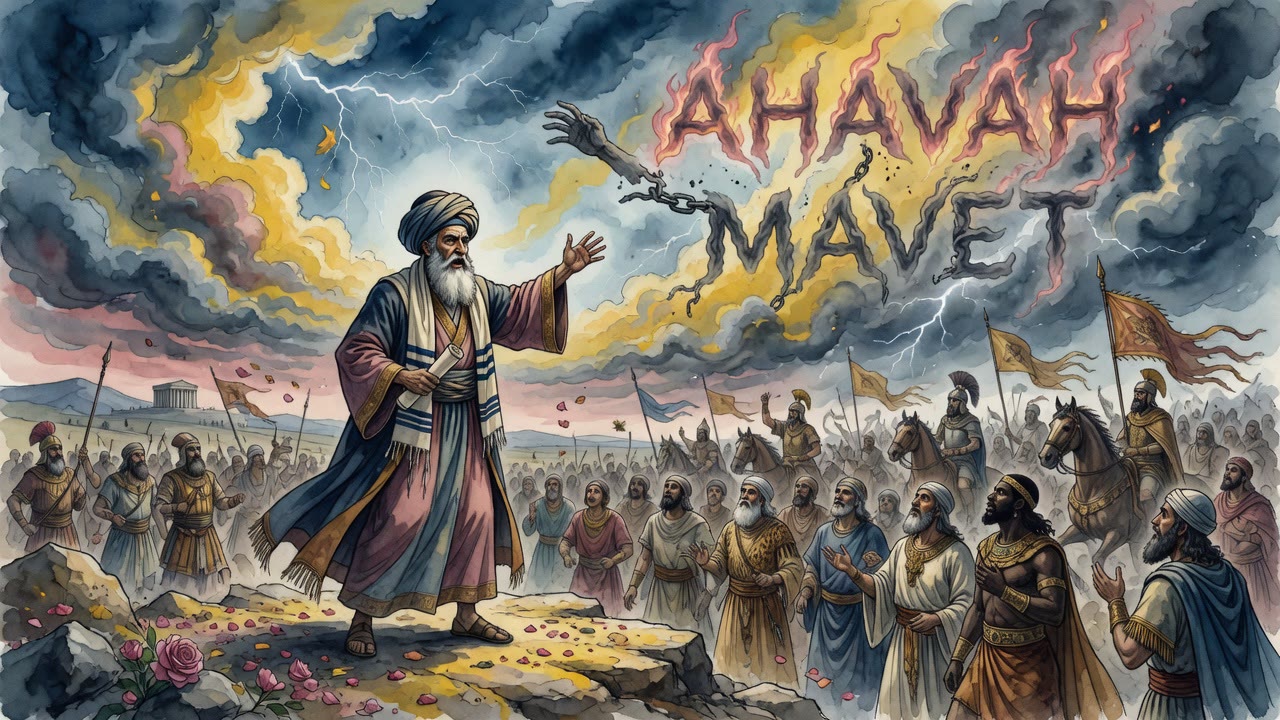
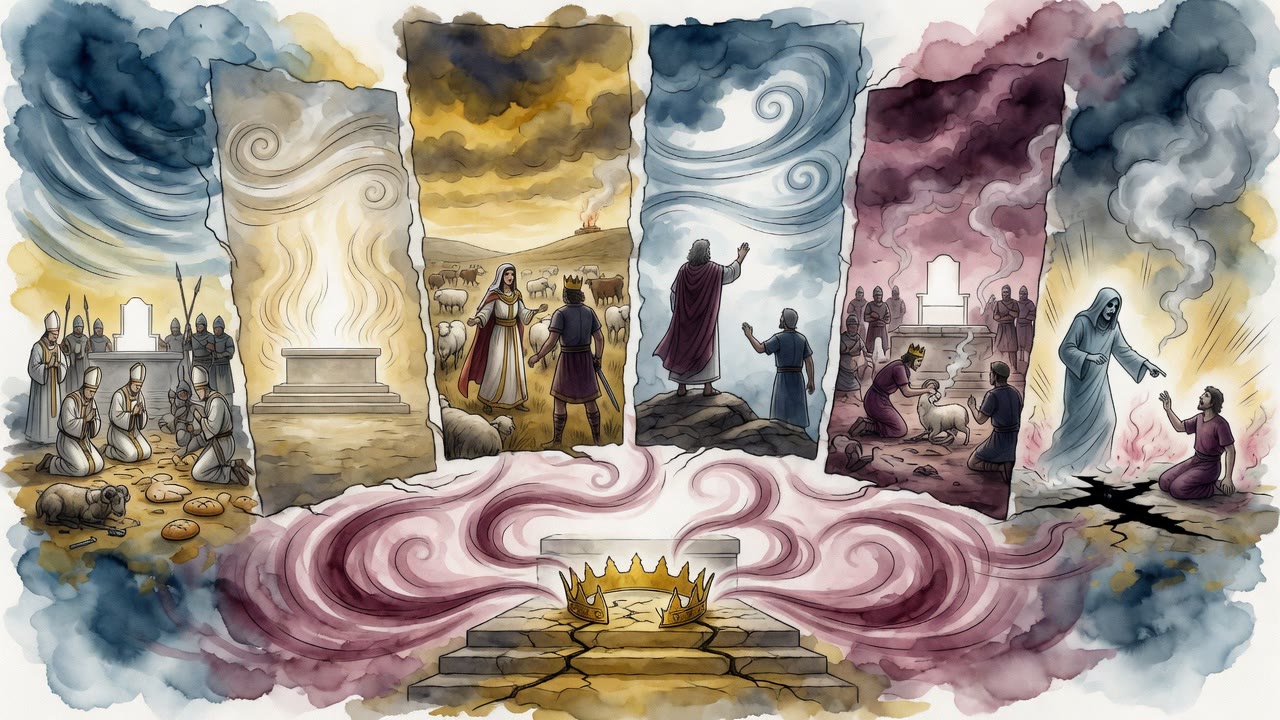
Turn the line over: "the crown with which his mother crowned him" (Song of Songs 3:11). Rabbi Isaac combed Scripture and could not find Bathsheba setting a crown on Solomon. The crowning was hidden, waiting for a wiser ear.

Rabbi Shimon ben Yochai came to Rabbi Eleazar bar Yose and asked whether his father had left the secret of the verse. Rabbi Eleazar answered in his father's voice, in the voice of Rabbi Yose ben Halafta.

Daughter, Sister, Mother

Picture a king with one daughter, an only daughter, and he loved her past all measure. His love climbed higher than language could hold. First he called her "my daughter." Then, unable to stop, "my sister." And still his love rose, until at last he called her "my mother."

So did the Holy One love Israel. He called them daughter: "Hear, O daughter, and see." Then sister: "My sister, my beloved." Then, climbing past every name, mother: "Hearken to Me, My people, and My mother," for so the word is written in Isaiah, hidden inside the letters.

Hearing this, Rabbi Shimon ben Yochai rose, kissed him on the head, and said: had I come into this whole world only to hear this one thing, it would have been enough for me.

Asleep, and the Heart Awake

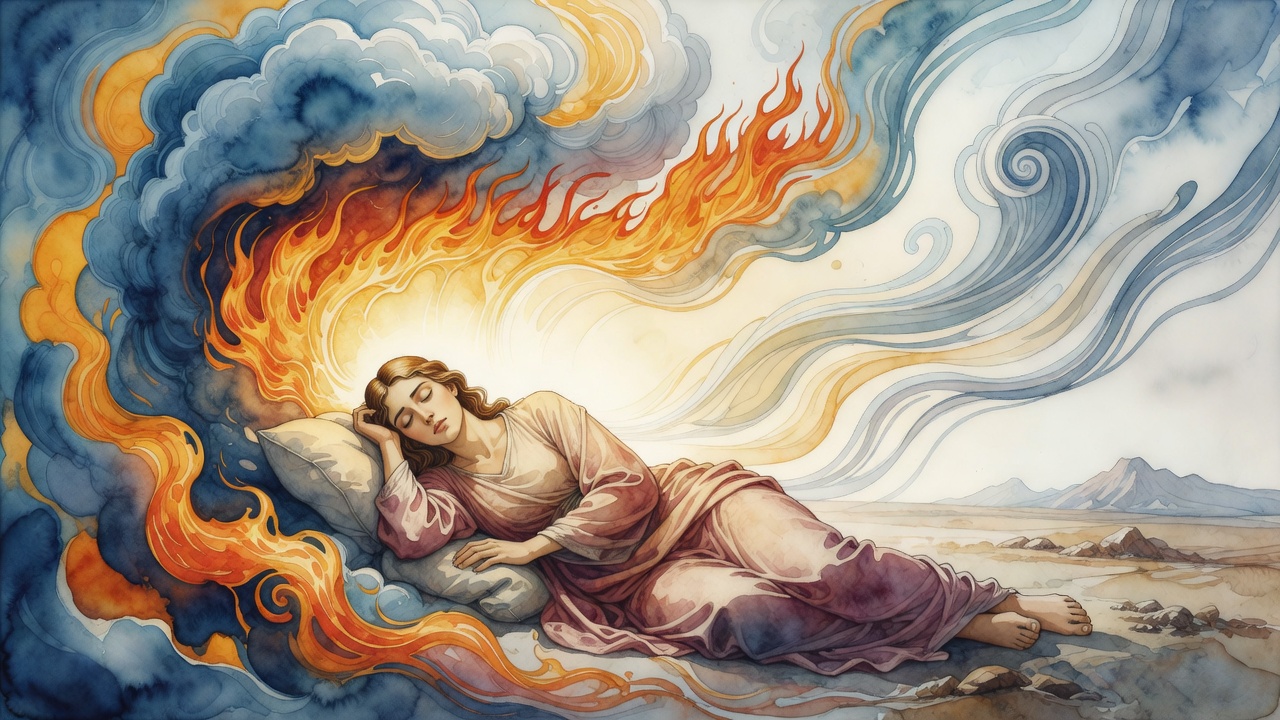
In another chamber of the same love, Israel speaks from exile. "I am asleep, but my heart is awake" (Song of Songs 5:2). The congregation grows weary of waiting for the end of days. Hope drowses. Commandments slip. The calf's old shame still glints at the edge of memory.

But the heart stays awake. The merit of the patriarchs stands. The Holy One remains the Rock of the heart and the portion forever (Psalms 73:26). He is vigilant when the people nod. He knocks as a lover: Open for me, my sister, my love. How long must I wait outside while the house sleeps?

Israel answers from the half-dream. I sleep from the mitzvot (commandments), but my heart is awake. I sleep because of the golden calf, but my heart is awake, and the Holy One still cleaves to me. The names daughter and sister still fit a people who cannot fully rise, and the name mother still presses forward in the hidden reading of Isaiah.

Gifts for a Dwelling

That same love asks for gifts. "They shall take Me a gift" (Exodus 25:2). Not because Heaven lacks gold. Because a lover wants a room prepared. The Tabernacle is the answer to a knock that never stops. While Israel dozes in exile's long night, the midrash still hears the request for a dwelling, as if the Presence refuses to accept permanent distance.

The crown Solomon's "mother" placed on him is Israel's love returned, the people crowning their king with devotion Heaven itself taught them how to name. The ladder of titles is not flattery. It is the record of a love that will not stay at a safe distance.

Enough for a Lifetime

Rabbi Shimon's kiss ends the teaching, but not the climb. Daughter is nearness with protection. Sister is nearness with partnership. Mother is nearness so complete that the Holy One speaks as one who receives life from the beloved's breath. A people asleep can still be called by all three names, if the heart has not gone dark.

The crown remains. The knock remains. The heart, against the weight of years, remains awake.

Rabbi Isaac's failed search for Bathsheba's crown becomes, after the parable, a different kind of success. The mother who crowns is not only a woman in the palace of David. She is the people whose love has been taught to climb. Israel crowns the king with devotion learned from the Holy One's own rising names. The verse that hid from a flat reading opens when love is allowed to change its address.

In exile the names still work. Daughter when protection is needed. Sister when partnership is possible. Mother when the bond is so complete that Heaven speaks as one nourished by the beloved's faithfulness. The sleep of the long night does not erase the ladder. It only makes the awake heart more precious, a coal that refuses to go out under ash.

Open for me, the knock says again. The gifts for the Tabernacle, the Song's sister and love, the crown on Solomon's head, all answer from different centuries with the same motion. Draw near. Build a room. Call Me closer than the last name you dared.

I sleep from the mitzvot, but the merit of the patriarchs stands for me. That line from the Song midrash keeps the awake heart from becoming a boast. The heart is awake partly because ancestors still argue for the sleepers. Love's ladder has rungs built by the dead as well as by the living.


← All myths
From the tradition

Sources

2 sources

The texts behind this telling. Some cards carry a translation of the source; others are our own retelling of it, and each card says which. Every card links out to the original.

Midrash Tanchuma Buber, Pekudei 8:2Midrash Tanchuma Buber, Pekudei

Translation of the source text.Midrash Tanchuma (Buber), Public Domain, on Sefaria · CC-BY-SA

"In the crown with which his mother crowned him" (Song of Songs 3:11). Rabbi Isaac said: I went through the whole of Scripture in its entirety, and I did not find that Bathsheba made a crown for Solomon her son, yet it says, "In the crown with which his mother crowned him."

Rabbi Shimon ben Yochai asked Rabbi Eleazar bar Yose. He said to him: Is it possible that you heard from your father what is the meaning of "In the crown with which his mother crowned him"? He said to him: Thus said Abba (my father): A parable of a king who had an only daughter, and he loved her exceedingly. He did not cease showing her affection until he called her ["my sister; he did not cease showing her affection until he called her] my mother." So too the Holy One, blessed be He, showed affection to Israel and called them "my daughter," as it is said, "Hear, O daughter, and see" (Psalms 45:11). And He did not cease until He called them "my sister," as it is said, "My sister, my beloved" (Song of Songs 5:2). He did not cease until He called them "my mother," "Hearken to Me, My people, and My nation [u-le'umi]" (Isaiah 51:4), and "my mother" [u-le'imi] is what is written.

Rabbi Shimon ben Yochai arose and kissed him upon his head and said: Had I come into the world for nothing other than to hear this teaching, it would have been enough for me.

Full source
Shemot Rabbah 33:3Shemot Rabbah

Retold in our words. Read the original at the link below.The Sefaria Midrash Rabbah, 2022 · CC-BY

The congregation of Israel itself has felt that way!

Our passage opens with a fascinating connection between the verse "They shall take Me a gift" (Exodus 25:2), which refers to the contributions for building the Mishkan, the Tabernacle, and a verse from the Song of Songs: "I am asleep, but my heart is awake" (Song of Songs 5:2). What’s the link?

Shemot Rabbah uses this verse from Song of Songs to explore the relationship between God and the people of Israel, particularly during times of hardship. It paints a picture of the Jewish people in exile, weary and almost losing hope for redemption. They say, "I went to sleep regarding the end of days," meaning the long wait for the messianic era has made them spiritually drowsy. But, praise God, the Holy One, blessed be He, remains awake, as it says, “God is the Rock of my heart and my portion forever” (Psalms 73:26). He is eternally vigilant, always anticipating their return.

Even when we falter, when our faith feels weak, God's commitment to us remains steadfast. As the Matnot Kehuna commentary highlights, even though the congregation of Israel may have diverted its attention from hoping for redemption due to the length and difficulty of the exile, God is still awaiting their redemption.

The Midrash (rabbinic interpretive commentary) goes on: "I am asleep' from the mitzvot (commandments), but the merit of my patriarchs stands for me, and 'my heart is awake.'" It suggests that even when we fail to fully observe the commandments, the legacy of our ancestors, their devotion and righteousness, continues to advocate for us. "I am asleep' due to the act of the Golden Calf," the Midrash continues, referring to the grave sin committed shortly after the revelation at Sinai, "but my heart is awake,' and the Holy One blessed be He cleaves to me." Despite our mistakes, our betrayals even, God still desires connection.

So, what does this have to do with building the Mishkan? The people cry out, echoing the Song of Songs: "'Open for me, my sister, my love' – until when will I be proceeding without a house, for my head is filled with dew?" God's response is: "Craft a sanctuary for Me, so I will not be outside." The building of the Mishkan, the Tabernacle, becomes an act of profound intimacy. It's an invitation for God to dwell among the people, to end His "homelessness," so to speak. It bridges the distance created by the people's spiritual slumber.

The Mishkan wasn't just about constructing a physical space; it was about creating a space for reconnection, a space where God's presence could be felt, even when faith felt distant. It was about waking up the heart.

Maybe that sanctuary is a physical space. Maybe it’s an act of kindness, a renewed commitment to prayer, or simply a moment of quiet reflection. Whatever form it takes, it’s an invitation for God to come in from the cold.

Full source