6 min read

Rabbi Akiva Answers the Nations With a Love Above Death

The nations asked Rabbi Akiva why a beautiful, strong people would die for an invisible Beloved. He answered from a love poem, reading one word as above death.

Curated by Arthur · Told by Maggid ·
Table of Contents
  1. The Nations Lean In With an Open Hand
  2. A Word That Cannot Be Set on a Table
  3. He Lists the Beloved Limb by Limb
  4. The Hinge Inside a Single Word
  5. The Recruiters Go Home Empty

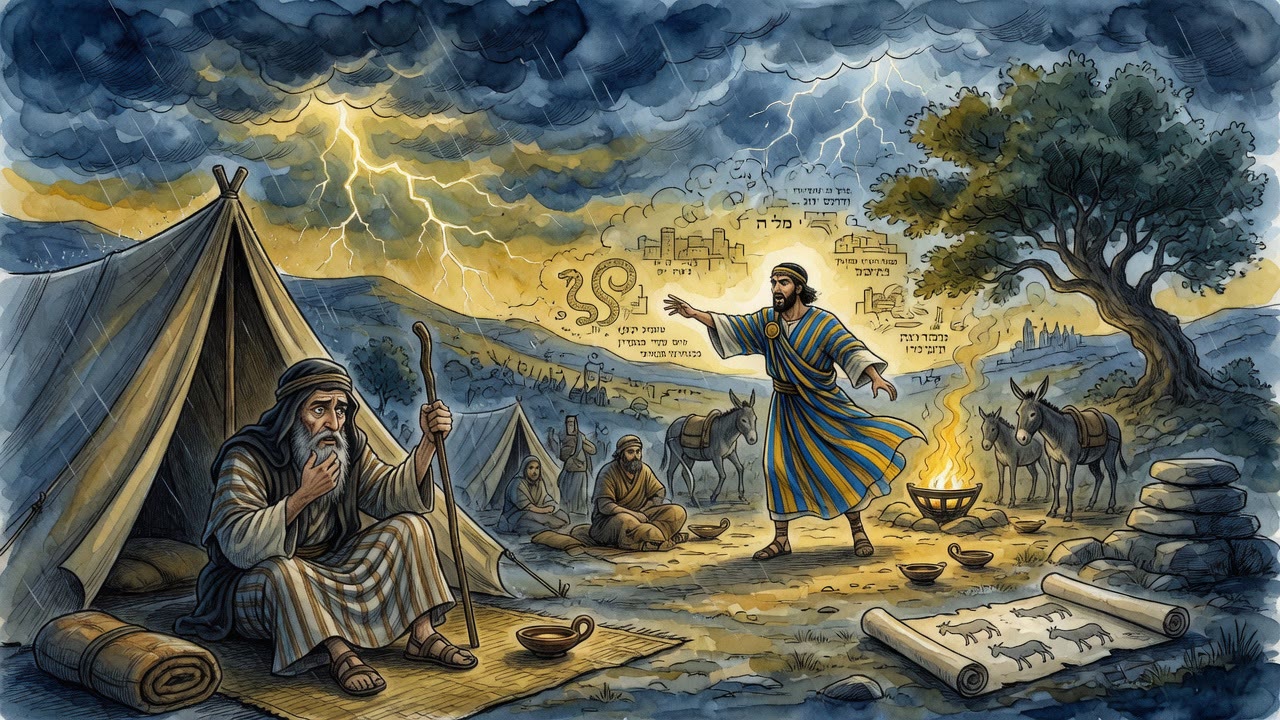
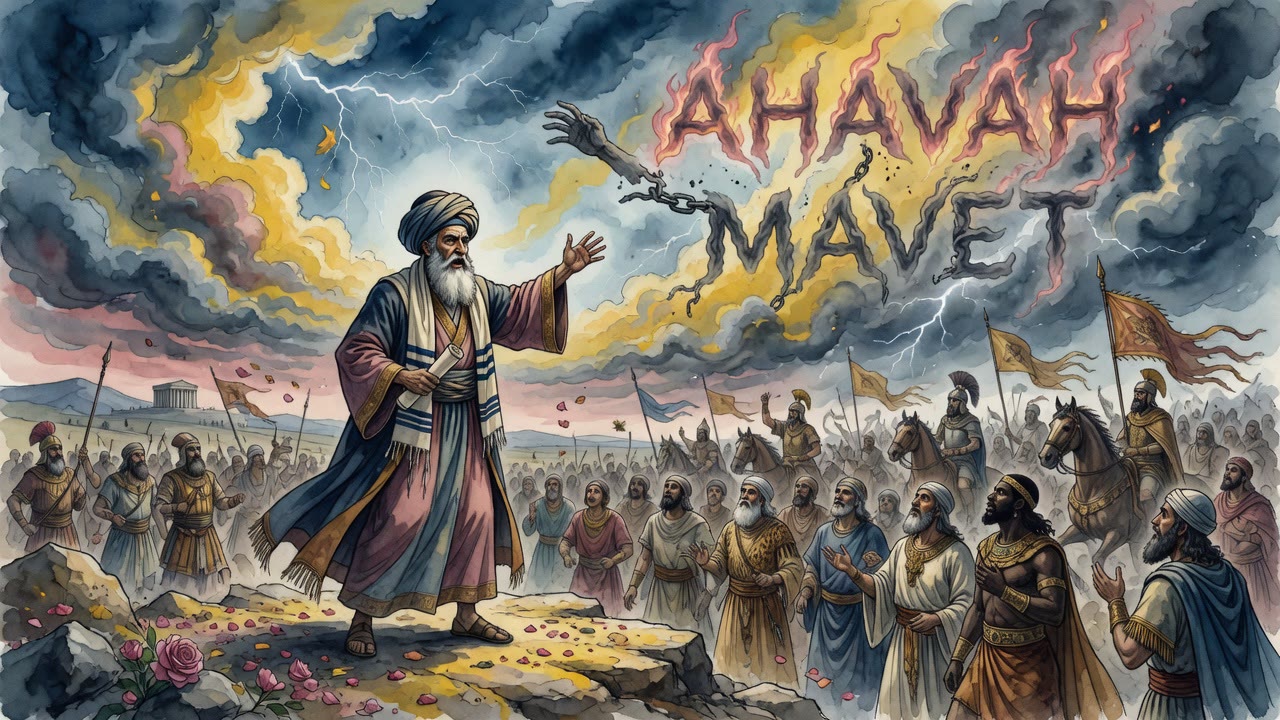
They came not with swords but with open hands, and that was the harder thing to refuse. The nations of the world stood close to Israel, looking the small people up and down the way a man appraises a stranger he has decided to like. They saw the beauty in the faces. They saw the strength in the bound shoulders. And they could not understand why such a people spent itself on graves.
The Nations Lean In With an Open Hand

"How is your Beloved different from any other beloved," they asked, the words borrowed from a song everyone knew, "that you so adjure us?" (Song of Songs 5:9). The question hung in the air, gentle on its surface, with a blade folded inside it. They had watched Israel bury its dead. They had counted the murdered. They had seen a people choose the rope and the fire over a single word of denial, and they wanted to know what could possibly be worth that.

"Come with us," they said, and they meant it kindly. "You are beautiful. You are strong. The whole wide world is open. Why pour all of that into loving someone no one can see? Show us this Beloved. Set Him before us so we can judge. A face, a form, a name we can carry to market. What is He, that you die for Him and let yourselves be murdered for Him?"

A Word That Cannot Be Set on a Table

The crowd waited for a defense. They expected a lawyer's reasons, a string of proofs, the kind of argument that ends with both sides counting points. Rabbi Akiva gave them none of it. He had spent his life inside the cadences of a love poem the people sang as the speech between God and Israel, and he answered from inside that poem, as a lover answers a man who has just called his beloved plain.

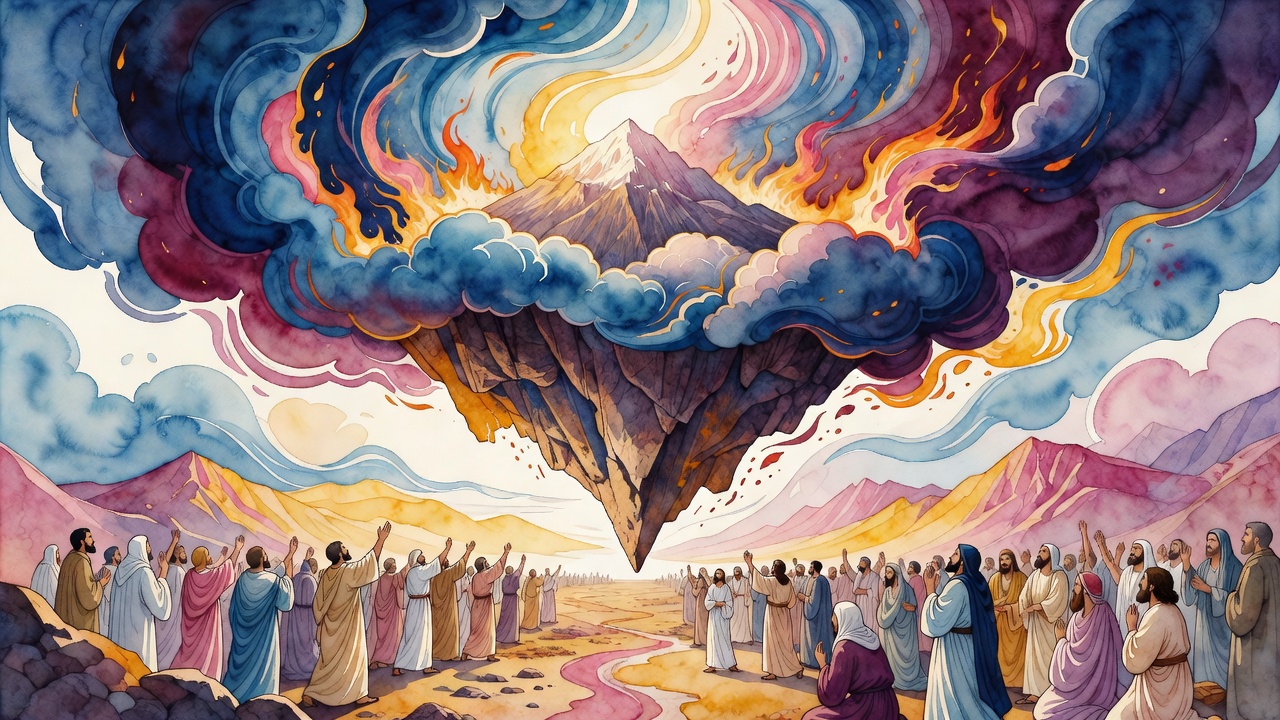
He did not produce a statue. He did not unroll a map of the heavens. He began, instead, where his people had begun at the edge of the split sea, with the cry that broke out of them when the water stood up like walls. "This is my God, and I will beautify Him" (Exodus 15:2). He turned the verse over so the gathered nations could hear what was packed into it. To beautify, Akiva said, is to speak of His beauty and His praise before all of you. The One who spoke and the world came into being. The One who needs no face because He made every face that ever asked Him for one.

He Lists the Beloved Limb by Limb

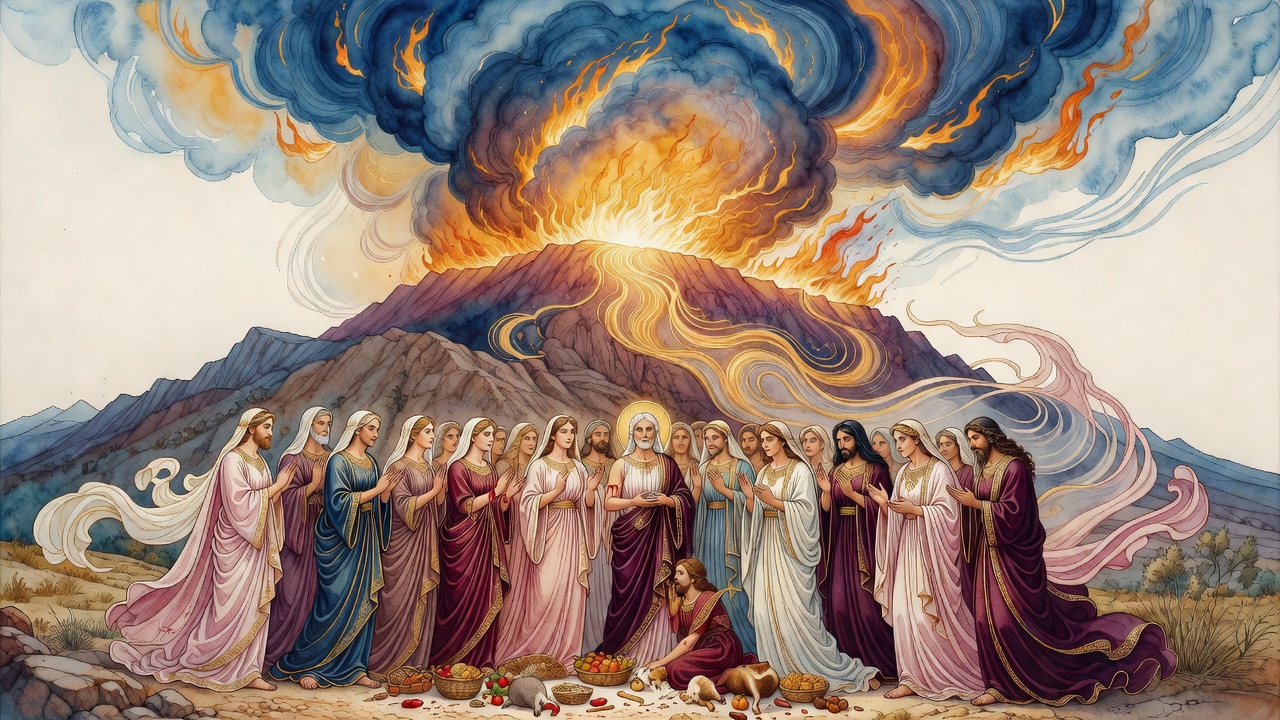
So Akiva answered the way the song itself answers when one woman asks another what her lover is like. He described the Beloved. He spoke of a brightness like fine gold, of a voice, of a hand, of a presence that towered over thousands, the way the poem heaps image on image until the listener understands that no single picture will hold the thing being praised. The nations had asked for one face to look at. Akiva handed them a whole flood of faces and let it overwhelm the small bowl they had brought to catch it.

And the listening crowd, the strong and beautiful peoples who had come to recruit, found themselves leaning in despite everything. "If your Beloved is like that," they said, the words again lifted from the song, "then let us seek Him with you." The recruiters had become the recruited. The hand that had reached out to pull Israel away was now reaching toward the very thing it had come to mock.

The Hinge Inside a Single Word

That left the hardest part of their question untouched, the part with the blade. Beauty no one denied. But why the dying? Why the rope, the fire, the bodies? A beautiful Beloved still did not explain a people content to be murdered rather than walk away.

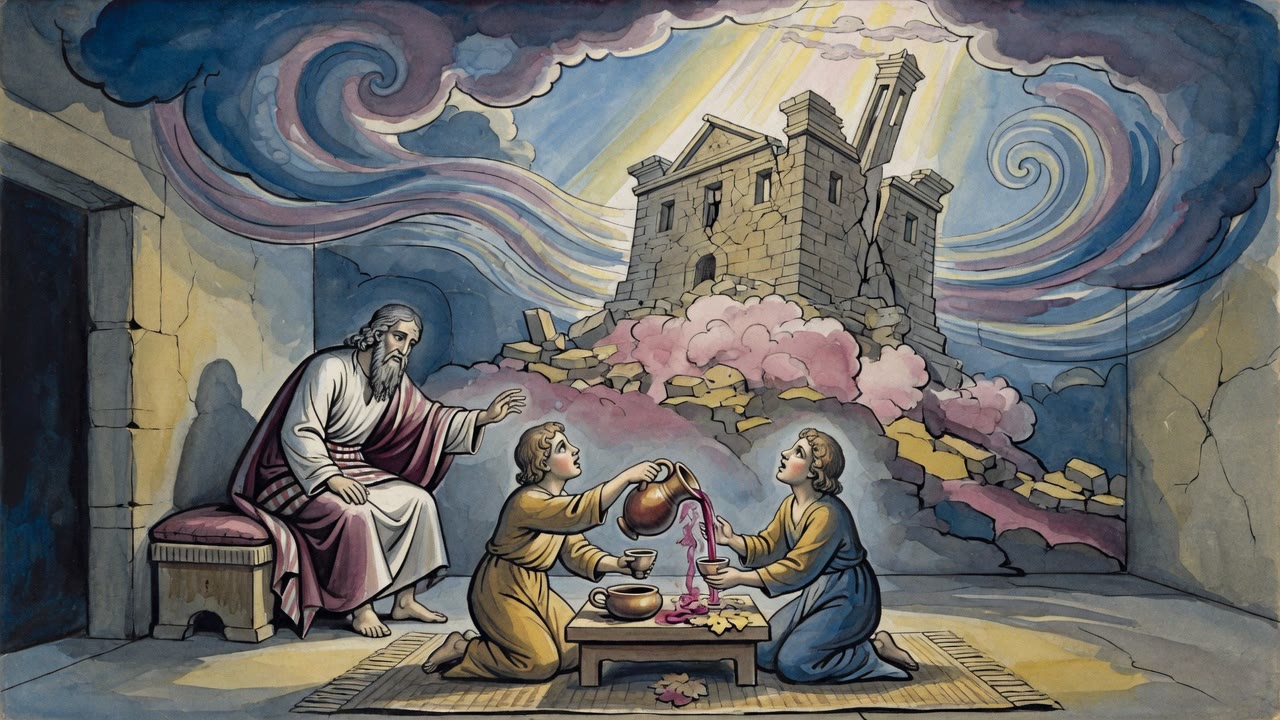
Here Akiva did the thing only he could do. He took one ordinary word from the same poem and split it open. The song speaks of young women who love the Beloved, alamoth, a plain word for maidens (Song of Songs 1:3). Akiva refused to let it stay plain. He pulled the letters apart and reset them, and out of alamoth he drew al maveth, "above death." The maidens who love Him are those who love Him above death, past it, on the far side of it, where the rope and the fire cannot reach.

That was the answer the nations had asked for and had not expected. The dying was not the price of the love. The dying was the proof of how high the love climbed. A love you would abandon at the edge of the grave was a small love, a market love, the kind the nations were offering. The love Akiva spoke of began where their offer ran out of road.

The Recruiters Go Home Empty

The nations had come to make a generous trade, a living people for a dead attachment, and they went away holding nothing. They had counted Israel's graves and read them as defeat. Akiva had read the same graves and found in them the only thing he considered worth describing, a people whose love for an unseen Beloved did not stop at the place where every other love stops. They had brought a question shaped like pity. He sent them home with an answer shaped like a vow, and the vow had no edge at which it ended.


← All myths
From the tradition

Sources

2 sources

The texts this telling draws on, in full. Open a card to read inline, or expand it for a wider, quieter read.

Mekhilta Tractate Shirah 3:13Mekhilta DeRabbi Yishmael

This teaching from the Mekhilta DeRabbi Yishmael belongs to Tractate Shirah, the section expounding the Song at the Sea. R. Akiva, the great sage of the second century and master of so many of the tannaim, reads the words of the Song, "This is my God and I will beautify Him" (Exodus 15:2), as a vow to speak of the beauty and praise of the Holy One Blessed be He, who spoke and brought the world into being. He then frames Israel's devotion through the language of Song of Songs, read as a love-dialogue between God and His people.

The peoples of the world challenge Israel with the verse, "How is your Beloved different from any other beloved, that you so adjure us?" (Song of Songs 5:9). Their question is sharpened by the suffering they witness: why do you die for Him and let yourselves be murdered for Him? R. Akiva answers from within the same book. The word in Song of Songs (1:3) usually rendered "maidens" (alamoth) he reads as al maveth, "above death," so the verse teaches that Israel has loved God above death itself. He joins to it Psalms (44:23), "For over You we are slain all the day," the cry of those martyred for the divine name. The nations then say, "You are comely, you are strong, come and join us," inviting Israel to abandon her Beloved. The stake of the passage is the meaning of martyrdom, a theme R. Akiva would himself embody, declaring that love of God reaches its fullness in giving one's very life.

Full source
Da'at Tevunot 61:1Da'at Tevunot

That feeling takes over when I explore Jewish mystical thought. The source turns to our toes into some deep waters, guided by a little fragment from the text Da'at (Knowledge) Tevunot. Just a tiny sentence, but boy, does it pack a punch.

"Said the Soul - Even here there will be much to explain:"

That's it. That's the line. Simple. But what does it MEAN?

Well, first, the tradition turns to Da'at Tevunot, which translates roughly to “Knowledge of Understanding," is a Kabbalistic text. Kabbalah (קבלה) itself is Jewish mysticism. It explores the secrets of the universe, the nature of God, and the inner workings of creation. It's heady stuff, full of symbolism and hidden meanings.

So, who is this “Soul” speaking? In many Kabbalistic texts, the soul is often seen as an intermediary, a bridge between the human and the divine. It’s the part of us that yearns for connection, for understanding, for something more. It is our neshama.

And where is “here”? That’s the million-dollar question, isn’t it? "Here" could refer to any number of spiritual realms or states of consciousness. It could be a specific point on the Sefirot, the Kabbalistic Tree of Life, a map of divine emanations. Or perhaps it refers to a stage in the soul's journey after death, a realm of pure intellect and spiritual understanding. Wherever "here" is, the soul is telling us that even in this advanced spiritual place, there will STILL be much to explain. Even when we reach what we think is enlightenment, even when we feel like we've grasped some fundamental truth, there's always more to learn. There are always deeper layers to peel back. The universe is constantly unfolding, and so is our understanding of it.

It reminds me of a story I heard about the great sage, Rabbi Akiva. (You know, the one who started learning Torah when he was 40!) According to tradition, he and some other great rabbis ascended to the Pardes, the Orchard, a metaphor for mystical experience. Only Akiva emerged unscathed. The others, overwhelmed by the intensity of the experience, suffered greatly. Even for someone as spiritually advanced as Rabbi Akiva, there were limits to human comprehension.

This idea resonates deeply within Jewish thought. The emphasis on lifelong learning is not just about accumulating knowledge, but about cultivating a constant state of humility and openness. We are always students, always seekers. Even in the highest realms of spiritual understanding, there's still "much to explain."

The Zohar, the foundational text of Kabbalah, is filled with these kinds of mysteries. It’s not meant to be taken literally, but rather as a guide to unlocking hidden meanings. It uses allegory and symbolism to point us towards deeper truths that are beyond our rational minds.

So, what do we take away from this little sentence from Da'at Tevunot? Perhaps it's a reminder to stay humble on our spiritual journey. To embrace the unknown, to acknowledge the limits of our understanding, and to remain open to new possibilities. Even when we think we've arrived, even when we feel like we've figured it all out, there's always more to explore.

The soul is telling us: don't get complacent. Keep seeking, keep questioning, keep learning. The journey is the destination. And the universe is waiting to unfold its secrets, one layer at a time. Even here, wherever "here" may be, there will be much to explain. And isn't that exciting?

Full source