Parshat Yitro6 min read

Israel Became One in Peace Before Sinai Spoke

Quarrel followed them from Egypt to every campsite. Only when the nation camped as one body did Heaven open the wedding of Torah.

Curated by Arthur · Told by Maggid ·
Table of Contents
  1. Traveling in Argument
  2. One Body at the Mountain
  3. The King Fixes the Date
  4. Healed for the Ceremony
  5. Peace as the Door
  6. What the Quarrel Cost
Israel Became One in Peace Before Sinai Spoke Click for full size

Traveling in Argument

God had wanted to give the Torah the moment Israel left Egypt. The people were not ready. They quarreled on the road. They muttered about a new leader and a return to slavery. The verbs of the journey tell on them. They traveled in argument and stopped in argument, camp after camp wearing the same sour face.

Proverbs says of Torah that her ways are ways of pleasantness and all her paths are peace. The rabbis heard a reason for delay in that line. A teaching of peace cannot be handed to a nation still sharpening words against itself.

The gift waited in heaven's treasury while sand filled sandals and tempers.

One Body at the Mountain

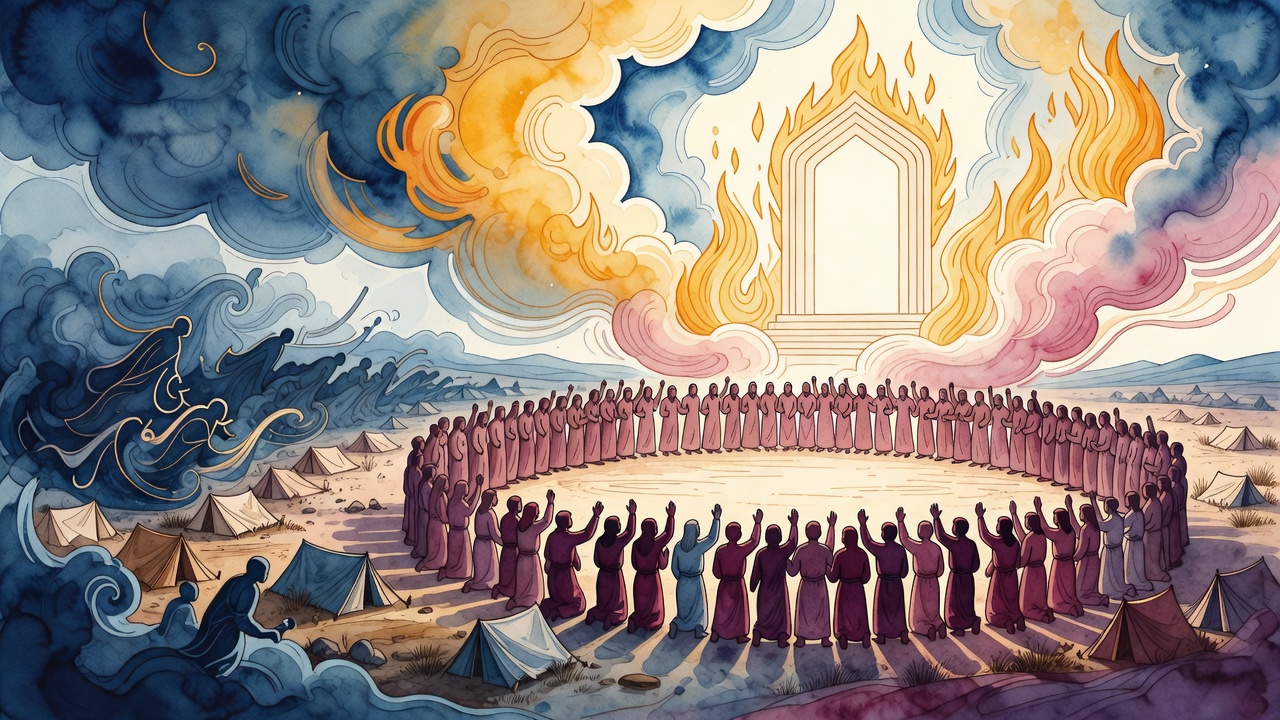
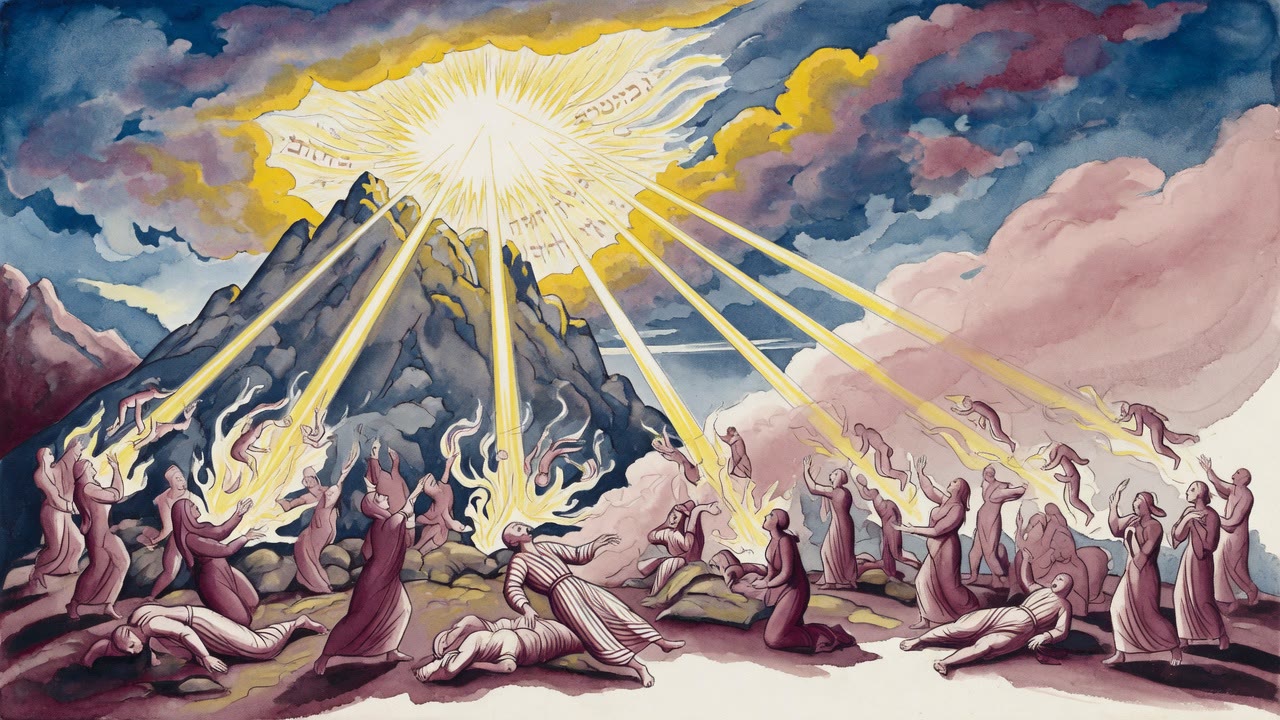
Something changed near Rephidim. The whole people drew level with one another and fused into a single band. When Israel arrived at the mountain, the verse does not use the plural "they camped." It uses a singular form, as if the entire nation "camped" as one body, opposite the mountain, of one heart.

The Torah of peace could only be given to a people who had finally become one in peace. God reasoned simply. The whole Torah is peace from beginning to end, so to whom should it be entrusted? Only to a nation that holds fast to peace.

Singular grammar became wedding clothes.

The King Fixes the Date

The phrase "in the third month" sets off royal parables. A king betroths a noblewoman and fixes the date. When the day comes, everyone declares it is finally time to bring her under the canopy. So with the Torah. When the appointed hour came, all of heaven said, now is the moment to give it to Israel.

Other sages count the years differently. One says God told Israel to date their calendar from the exodus, like a king who redeemed his captive son and dated everything from the rescue. Another says to count from the giving of the Torah, like a king who measured time from his daughter's wedding. The covenant is told again and again as a marriage.

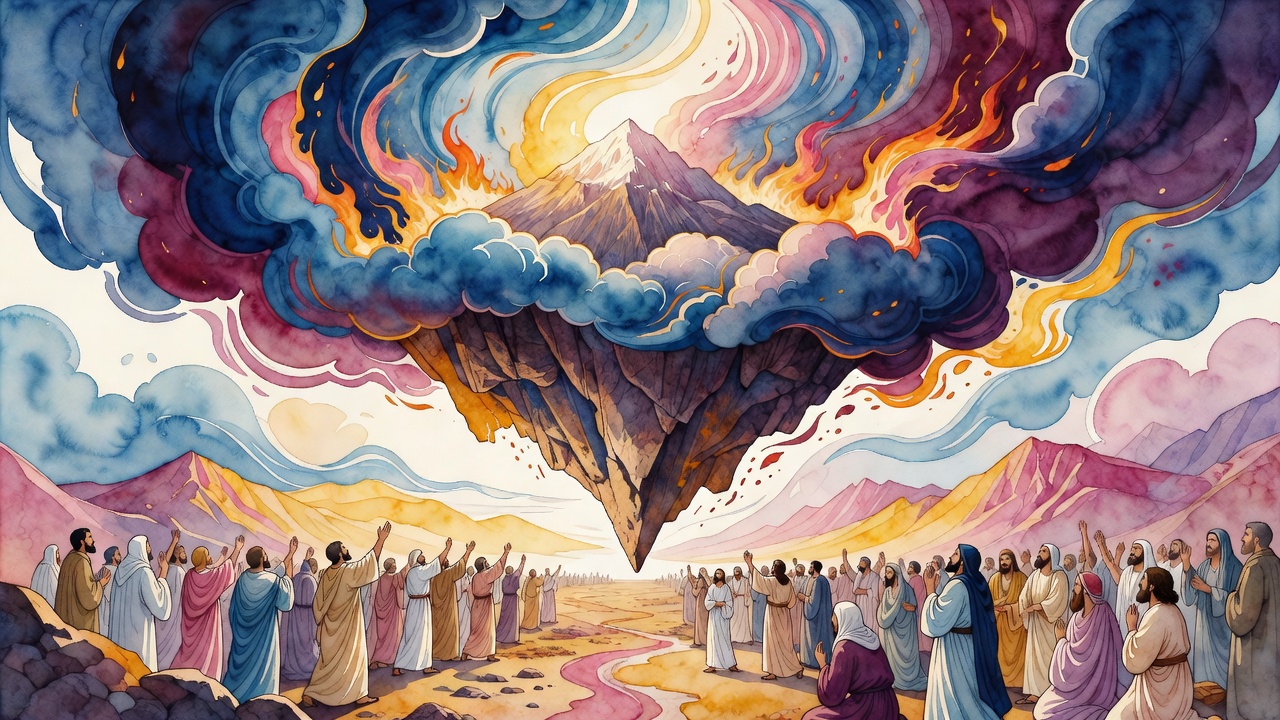
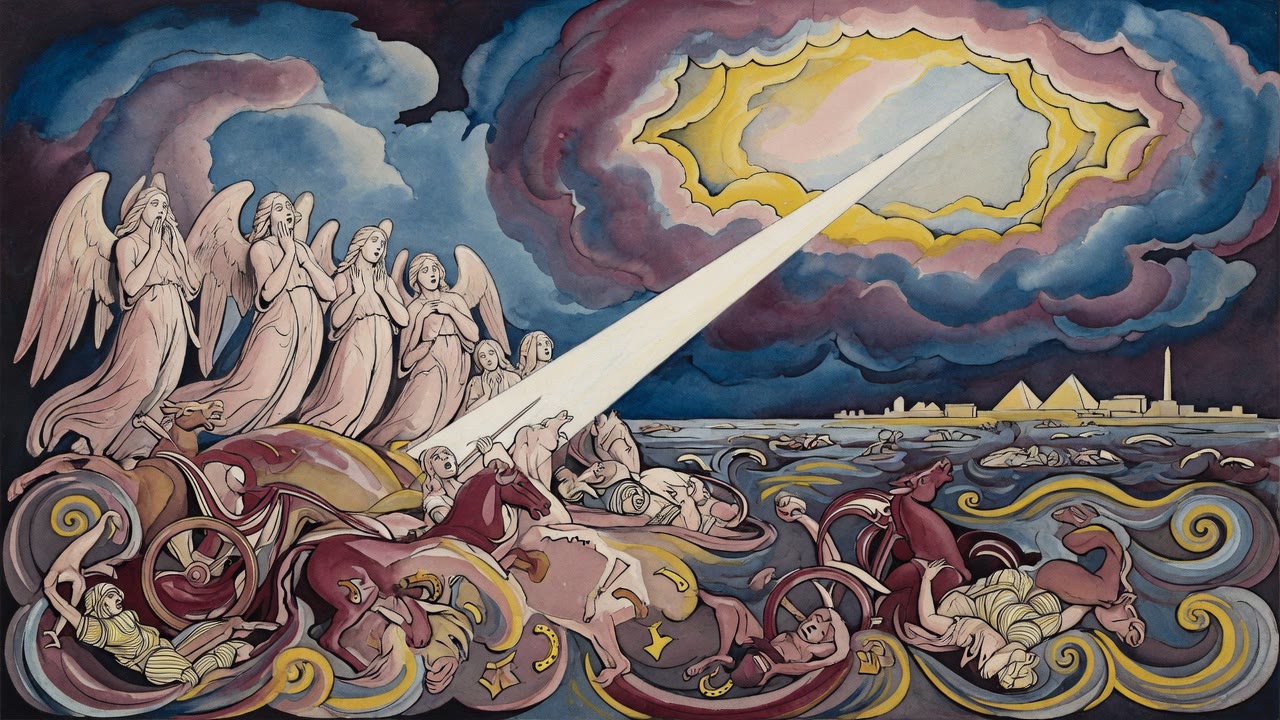
A king courts patiently before he presses any claim. He clothes the bride, carries her across the sea, rescues her from raiders. He fills her arms with bread from heaven, the singing well, quail from the sea, and honey from the rock. Rabbi Abba bar Yudan pictures a barrier in the sea dividing heaven and earth that the King lifts only at the wedding. Before Sinai, the realms were sealed apart. After it, Moses went up to God and the Lord came down upon the mountain, and the two met.

Healed for the Ceremony

Scripture could have used a poetic word for the moon-month. Instead it says chodesh, from a root that means new. Rabbi Yehudah son of Rabbi Simon hears God declaring, I am renewing you.

A king's son comes of age and is ready to marry, but the bridal furnishings on hand are old. The king refuses to delay his son's joy while new ones are built. He calls smiths and woodworkers to polish what he already has until the old looks new, and the wedding goes forward on time.

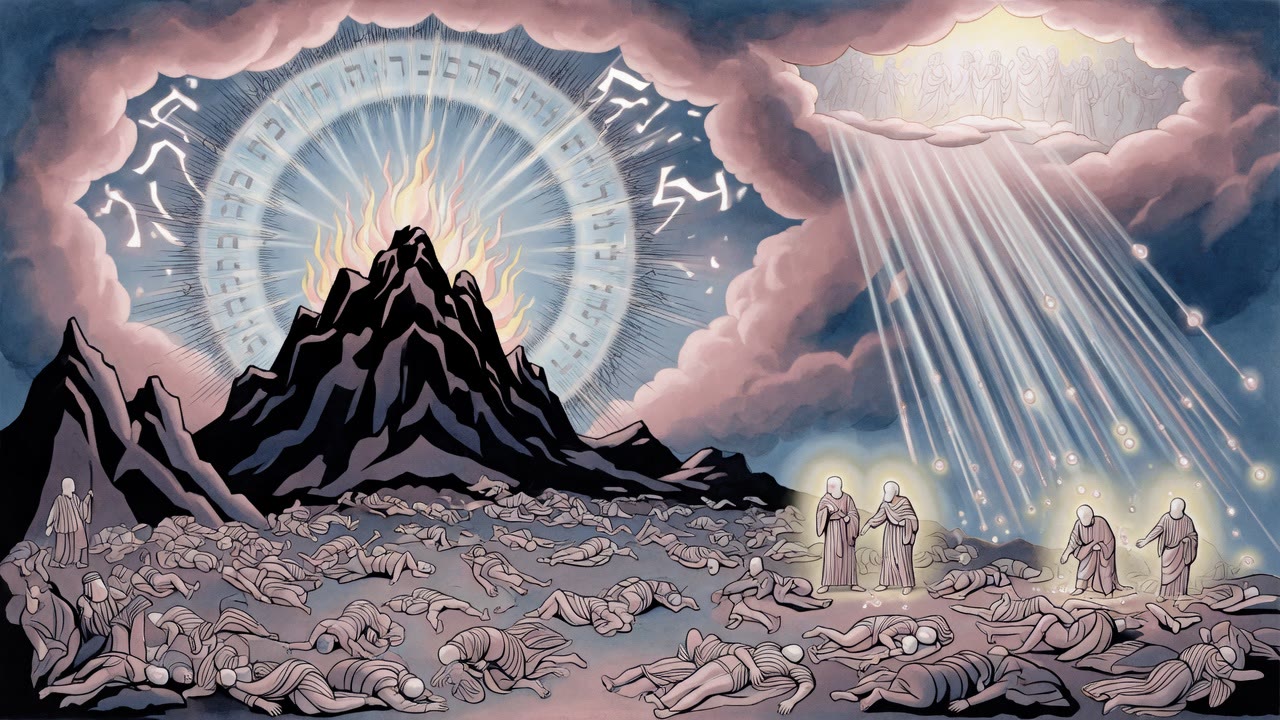
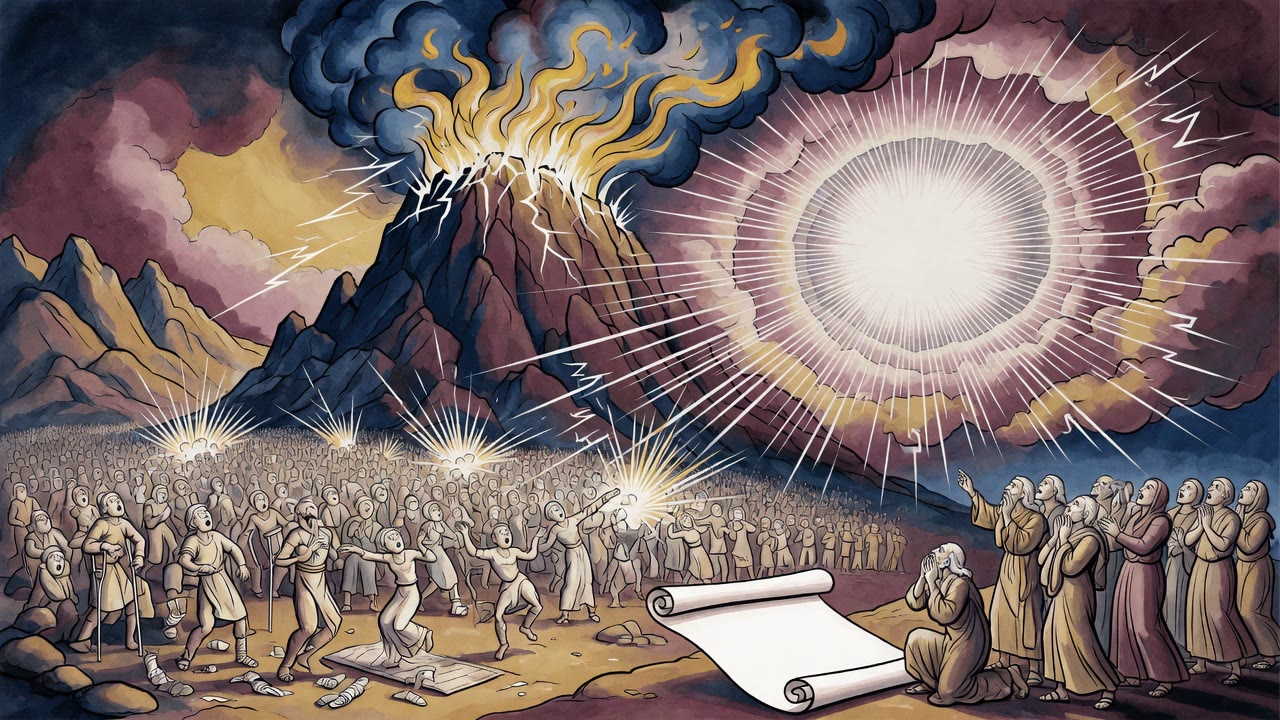
So with Israel. Among them were the blind, the deaf, and the lame, and the Torah of the LORD is perfect, fit for a whole people. Waiting for a flawless next generation would postpone the wedding. So God healed them. The blind saw the thunder. The deaf heard and answered, we will do and we will hear. The lame stood firm at the foot of Sinai. The healing was a foretaste of the world to come, when eyes open, ears unstop, the lame leap, and the mute tongue sings.

Peace as the Door

Without peace, no mountain. Without healing, no perfect Torah for an imperfect camp. Without the third month's fixed date, no canopy. The midrash will not let Sinai be only fire and voice. It is also a people that stopped fighting itself long enough to stand as one noun.

Quarrel had followed them from the brick yards. Unity arrived like weather that finally breaks. Heaven, which had held the gift ready since the sea, opened the treasury only when the grammar of the camp turned singular.

The bride stood healed. The King came down. The paths of peace received a people who had, for one charged hour, walked them.

What the Quarrel Cost

Every campsite of argument pushed the wedding later. Heaven's treasury was ready. The bride was not. Pleasantness and peace are not decorations on Torah. They are the conditions of its gift. A people muttering about Egypt cannot yet receive a teaching whose paths are peace.

The singular camp at the mountain is therefore not a poetic flourish. It is the first time the grammar of Israel matched the grammar of the gift. One heart. One body opposite the mountain. The King who had clothed, carried, fed, and rescued could finally fix the date without marrying a household still at war with itself.

Healing the blind, deaf, and lame keeps the same logic. A perfect Torah meeting a broken camp would have left some of the people outside the ceremony by body if not by will. God refurbished the old furnishings rather than delay the son's joy. The world to come peeks through those opened eyes and unstopped ears, a preview inside history.

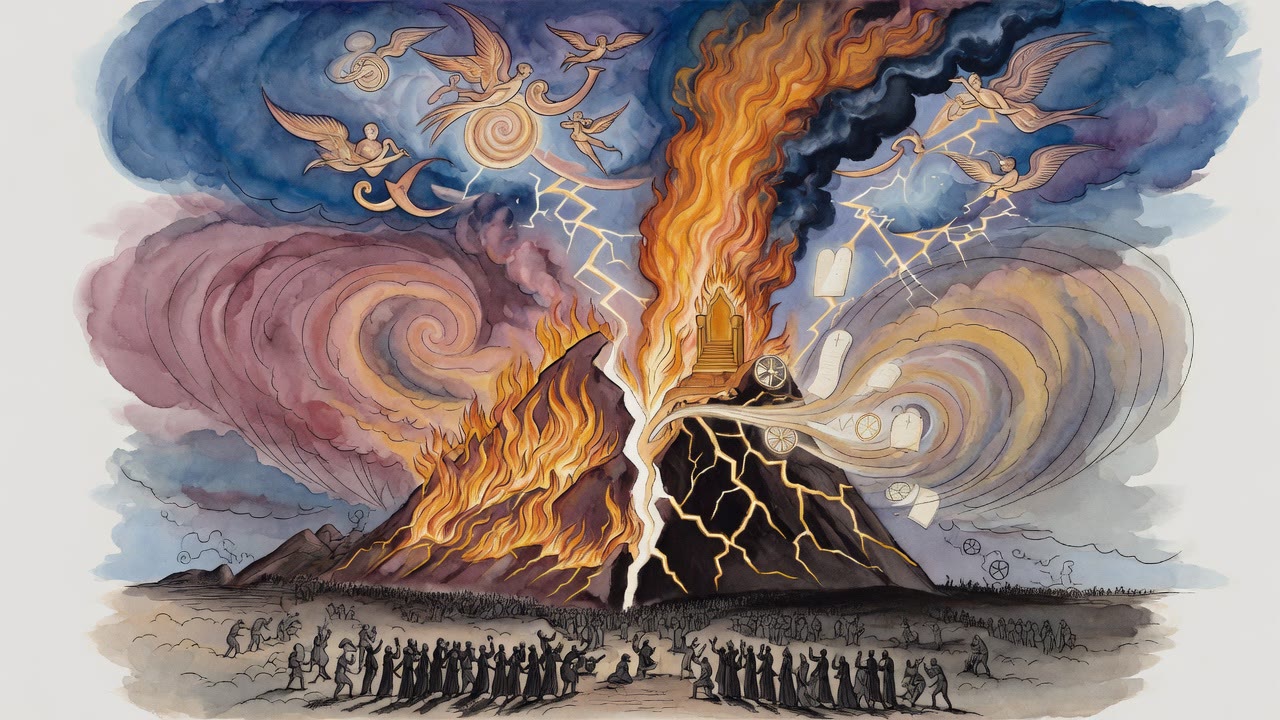
When Moses went up and the Lord came down, the barrier between realms lifted because the barrier inside the camp had already fallen. Fire and voice still terrify. They arrive, in this telling, only after peace and after healing. The midrash will not let thunder be the whole story. The story begins with a nation that stopped fighting long enough to become a single word in a single verse.


← All myths
From the tradition

Sources

3 sources

The texts behind this telling. Some cards carry a translation of the source; others are our own retelling of it, and each card says which. Every card links out to the original.

Pesikta DeRav Kahana 12:14Pesikta de-Rav Kahana

Translation of the source text.Pesikta de Rav Kahana according to an Oxford manuscript, Dov Mandelbaum ed., N.Y. 1987 · CC-BY

This is what Scripture says, "Her ways are ways of pleasantness, and all her paths are peace" (Proverbs 3:17). "Her ways are ways of pleasantness." The Holy One, blessed be He, sought to give His Torah to Israel at the time when Israel went out from Egypt, but they were quarreling with one another, and they were saying, "Let us appoint a leader and return to Egypt" (Numbers 14:4). What is written? "And they journeyed from Succoth and camped at Etham" (Exodus 13:20). They were journeying in strife and camping in strife. He did not act until they came to Rephidim, and they all became equal and were made into a single band, as it says, "And they journeyed from Rephidim and came to the wilderness of Sinai" (Exodus 19:2). And from where do we know that they all became equal and were made one band? Because it is not written here "and Israel camped there" [plural], but rather "and Israel camped there [singular] opposite the mountain" (Exodus 19:2). The Holy One, blessed be He, said: the whole Torah is peace; to whom shall I give it? To a nation that holds fast to peace, as it is written, "and all her paths are peace" (Proverbs 3:17).

Full source
Pesikta DeRav Kahana 12:11Pesikta de-Rav Kahana

Translation of the source text.Pesikta de Rav Kahana according to an Oxford manuscript, Dov Mandelbaum ed., N.Y. 1987 · CC-BY

"In the third month" (Exodus 19:1), the third month arrived. This is like a king who betrothed a noblewoman and set for her an appointed date, and when the appointed date arrived they said: now is the hour for her to enter the bridal canopy. So when the time arrived for the Torah to be given, they said: now is the hour for the Torah to be given to Israel. Rabbi Levi in the name of Rabbi Shmuel ben Chalafta: like a king whose son was taken captive, and the king clothed himself in vengeance and went and redeemed his son, and said, count the years from the redemption of my son. So said the Holy One, blessed be He: count the years from the exodus from Egypt. Rabbi Chama bar Chanina: like a king who is marrying off his daughter and said, count the years from my daughter's wedding. So said the Holy One, blessed be He: count the years from the giving of the Torah. "On this day they came to the wilderness of Sinai" (Exodus 19:1). Rabbi Yehoshua ben Levi: like a prince who was strolling in the marketplace, and a friend of the king met him and filled his lap with precious stones and pearls. The king said: open my treasuries for me, so that my son will not say, were it not for my father's friend he would have had nothing to give me. So said the Holy One, blessed be He, to Moses: so that Israel will not say, were it not that Jethro came and taught you the ordinances, He would have had nothing to give us. Rather, behold I give them the whole Torah, full of ordinances, "and these are the ordinances that you shall set before them" (Exodus 21:1). Rabbi Levi said: like a king who wished to take as wife a woman of good and noble family, and he said, I will not press my claim upon her, for after I have done many kindnesses for her, then I will press my claim. He saw her naked and clothed her, "and I clothed you with embroidered cloth" (Ezekiel 16:10). At the sea He brought her across, "and the children of Israel walked on dry land in the midst of the sea" (Exodus 14:29). When pirates came against her He rescued her, these are the Amalekites. Rabbi Eleazar said: like a king who wished to take as wife a woman of good and noble family, and he said, I will not press my claim upon her, for after I have done many kindnesses for her, then I will press my claim. He brought her to the baker and filled her lap with fine loaves, to the shopkeeper and gave her spiced wine to drink, to the fattener and filled her lap with delicacies, to the orchard-keeper and filled her lap with fruits. To the baker and filled her lap with fine loaves, "behold, I will rain down bread from heaven for you" (Exodus 16:4). To the shopkeeper and gave her spiced wine to drink, "then Israel sang this song, rise up O well, sing to it" (Numbers 21:17). To the fattener and filled her lap with delicacies, "and a wind brought quail from the sea" (Numbers 11:31). To the orchard-keeper and filled her lap with fruits, "and He made him suck honey from the rock, and oil from the flinty stone" (Deuteronomy 32:13). Rabbi Abba bar Yudan said: like a king who was marrying off his daughter and set up a barrier in the sea and said, the people of Rome shall not go down to Syria, and the people of Syria shall not go up to Rome. And once he had married off his daughter he removed the barrier. So before the Torah was given, "the heavens are the heavens of the LORD, but the earth He has given to mankind" (Psalms 115:16), but once the Torah was given from heaven, "and Moses went up to God" (Exodus 19:3), "and the LORD came down upon Mount Sinai" (Exodus 19:20).

Full source
Pesikta DeRav Kahana 12:19Pesikta de-Rav Kahana

Translation of the source text.Pesikta de Rav Kahana according to an Oxford manuscript, Dov Mandelbaum ed., N.Y. 1987 · CC-BY

It does not say "in the third moon" the way Scripture names other months, "in the moon of Ziv" (1 Kings 6:37), "in the moon of Bul" (ibid. 38), "in the moon of Ethanim" (ibid. 8:2), but rather "in the third month [chodesh, from a root meaning new]." Rabbi Yehudah son of Rabbi Simon said: The Holy One, blessed be He, said to them, I am making a renewal of things and renewing you. This is like a king who had a son, and the son reached the age of maturity, and the king wished to marry him off, but he had no new bridal furnishings. The king said, it is not fitting for my son's honor that we wait until new furnishings are made, I would delay my son's joy. What did the king do? He brought smiths and craftsmen, and they polished the copper vessels, and he brought woodworkers, and they refurbished the wooden vessels; so the king married off his son upon old furnishings that looked new. So too the Holy One, blessed be He: when Israel went out of Egypt He wished to give them the Torah, and among them were blind, lame, and deaf. The Holy One, blessed be He, said, the Torah is wholly perfect, as it says, "The Torah of the LORD is perfect" (Psalms 19:8), shall I give it to this generation, which has people with blemishes in it? And if I wait until their children arise, I would delay the joy of the Torah. What did the Holy One, blessed be He, do? He healed them, and afterward gave them the Torah. And from where do we know that He healed them? Whoever was blind became seeing, as it says, "And all the people saw the thunderings" (Exodus 20:15). And whoever was deaf became hearing, as it says, "all that the LORD has spoken we will do and we will hear" (ibid. 24:7). And whoever was lame became whole, as it says, "and they stood at the foot of the mountain" (ibid. 19:17). Thus: I am renewing a renewal of things in you and doing in you something like an example of the World to Come. Just as in the time to come, "then the eyes of the blind shall be opened" (Isaiah 35:5), so too here, "and all the people saw" (Exodus 20:15). Just as in the time to come, "and the ears of the deaf shall be unstopped" (Isaiah ibid.), so too here, "and they said, all that the LORD has spoken we will do and we will hear" (Exodus 24:7). Just as in the time to come, "then the lame shall leap like a deer" (Isaiah ibid.), so too here, "and Moses brought the people out toward God, and they stood at the foot of the mountain" (Exodus 19:17). Just as in the time to come, "and the tongue of the mute shall sing" (Isaiah ibid.), so too here, "and all the people answered together and said" (Exodus 19:8).

Full source