Moses Wrote the Plural Word, Then Prayed for Mercy
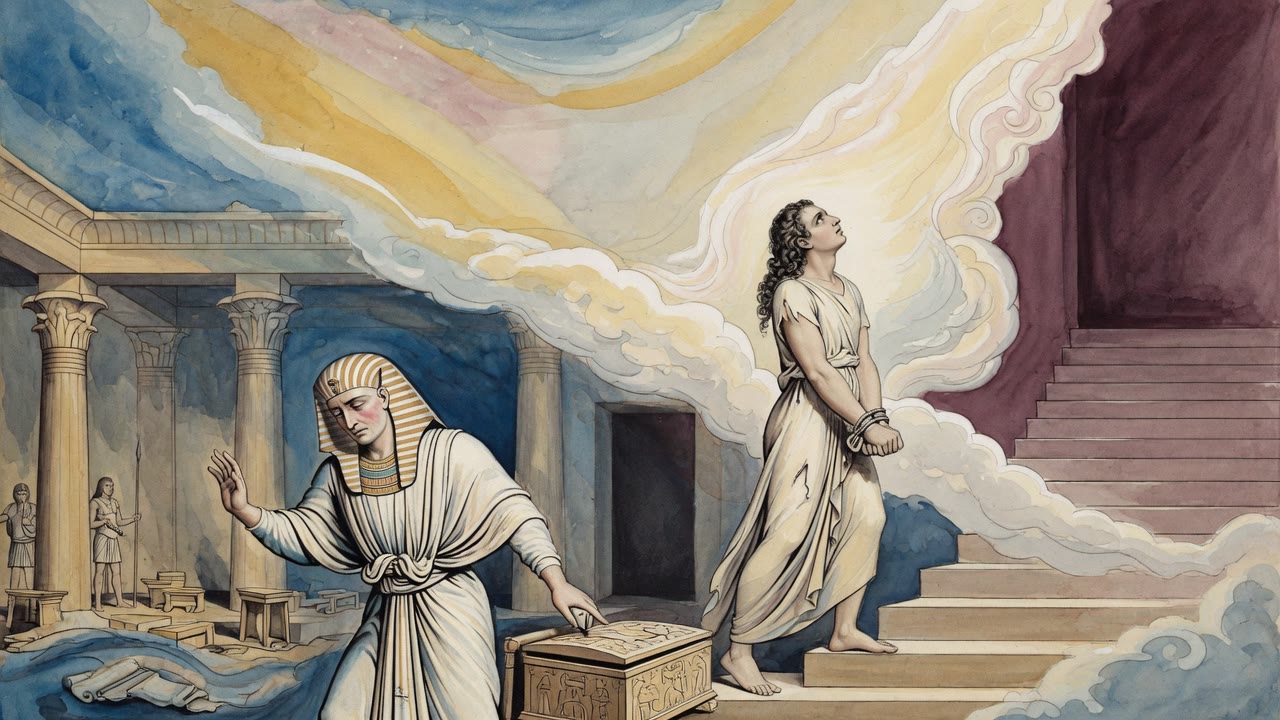
The quill stopped at Let us make. Below the mountain a calf had gone quiet. Moses shook, then asked whose people these were.
Table of Contents
 Click for full size
The Quill Stopped
Moses sat with the Torah still unfinished. Day by day he had written what God spoke. Light. Water. Earth. Lights again. Swarming things. Cattle. The days stacked. The page filled. Then the sentence arrived that did not sound like one God.
"Let us make man in our image, after our likeness" (Genesis 1:26).
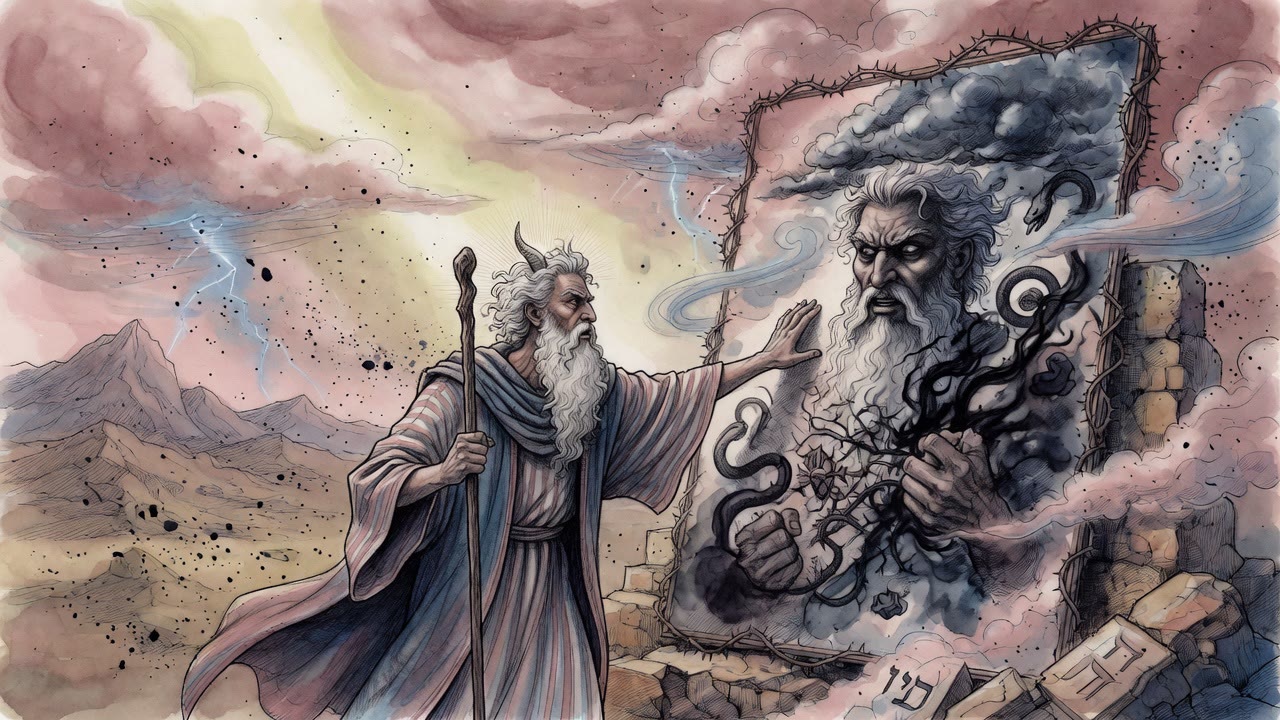
The quill froze. Ink hung at the tip and would not drop. Moses's hand, which had been moving with the days, went still. "Master of the Universe," he said, "why open a mouth for those who want to divide heaven?" One throne. One Creator. The line on the page looked like a crack someone could put a whole other god through.
Write It Anyway
God did not sand the plural off. "Write," God said, "and whoever wants to err may err."
Then the harder answer. From this human being would come great and small. When a great one refuses to ask a lesser one, the lesser can point upward. Learn from your Creator. Before making the human, God took counsel with the ministering angels.
Moses heard it and still did not like the look of the words. He lowered the quill. He wrote them. The door stayed open. The humility stayed in the sentence with it. A king who asks advice is still the king. A God who says us is still One.
The King and the Unused Glass
A king walked near the gate of his palace and found a piece of fine glass lying unused in the dust. He stopped. Some attendants said, make public baths of it. Others said, private rooms. They argued in the doorway while the king turned the glass in his hand. Then he spoke.
"I will make a statue from it. Who can stop me?"
The counsel did not weaken him. It showed him. The angels could speak. The King still made the human being. Moses set the plural on the page the way that king set his will on the glass. Advice in the room. One hand doing the making.
The Camp Smelled of Gold Dust
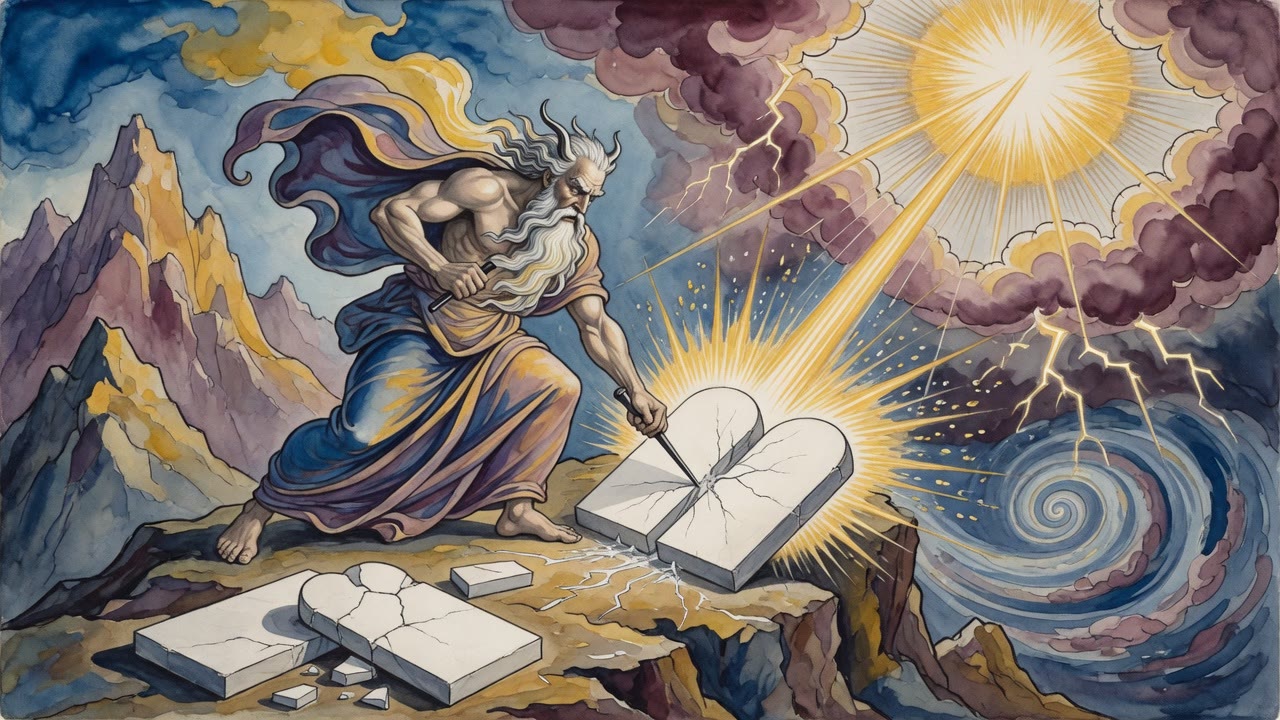
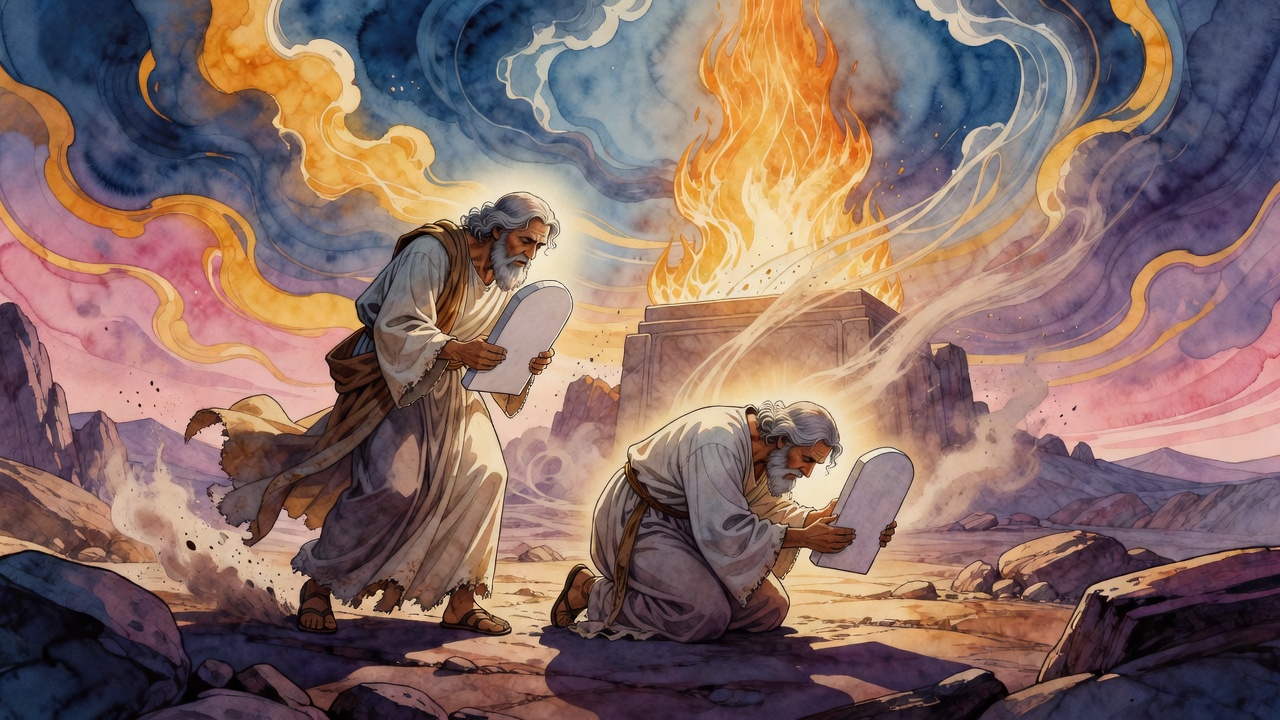
Later, below the mountain, Israel smelled of smoke and gold. The calf had been ground down. The dancing had stopped. Dust of the thing they had worshipped stuck to sandals and hair. God had a new name for the people. Not Mine. Yours. Let them be consumed, and a greater nation will come from you.
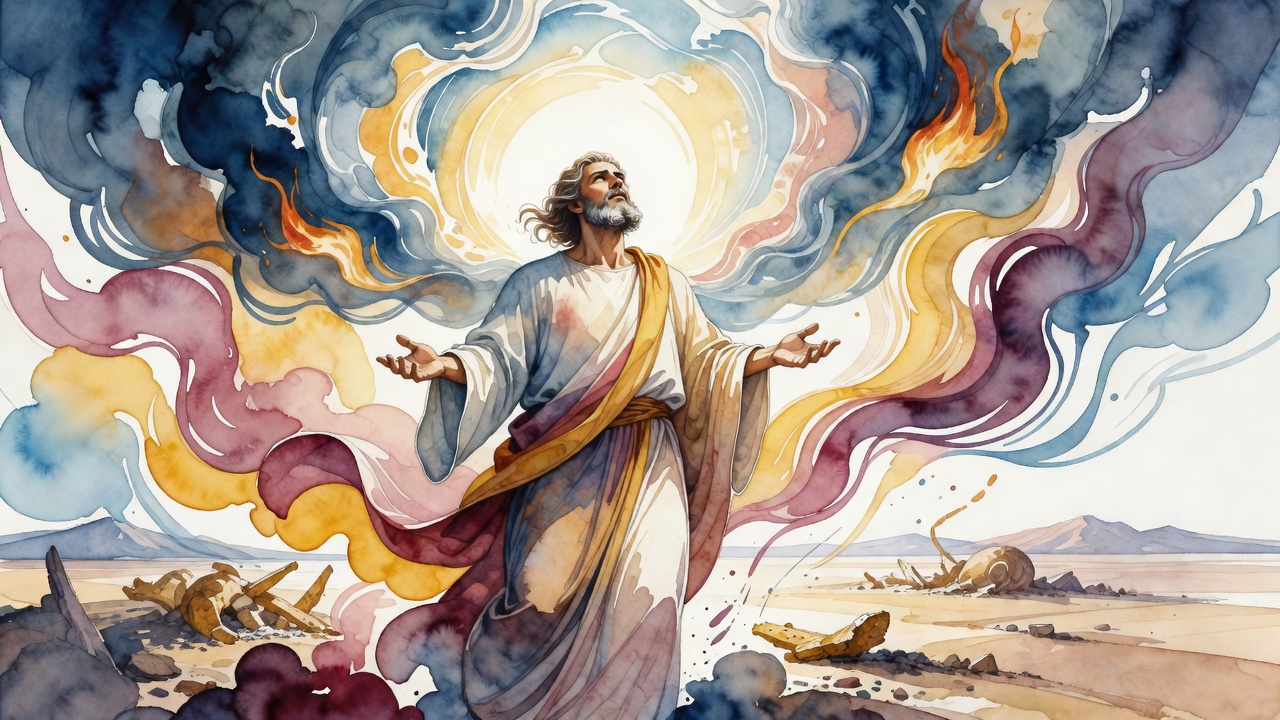
Moses did not stand taller. His knees knew first. The mountain held a sentence over the camp, and the offer sat in the air beside it, a crown made out of other people's deaths. He was shaken with fear, and he began to pray. The man who had been told to write a dangerous word now had to speak a dangerous prayer. He did not take the nation. He asked for mercy instead.
Your People
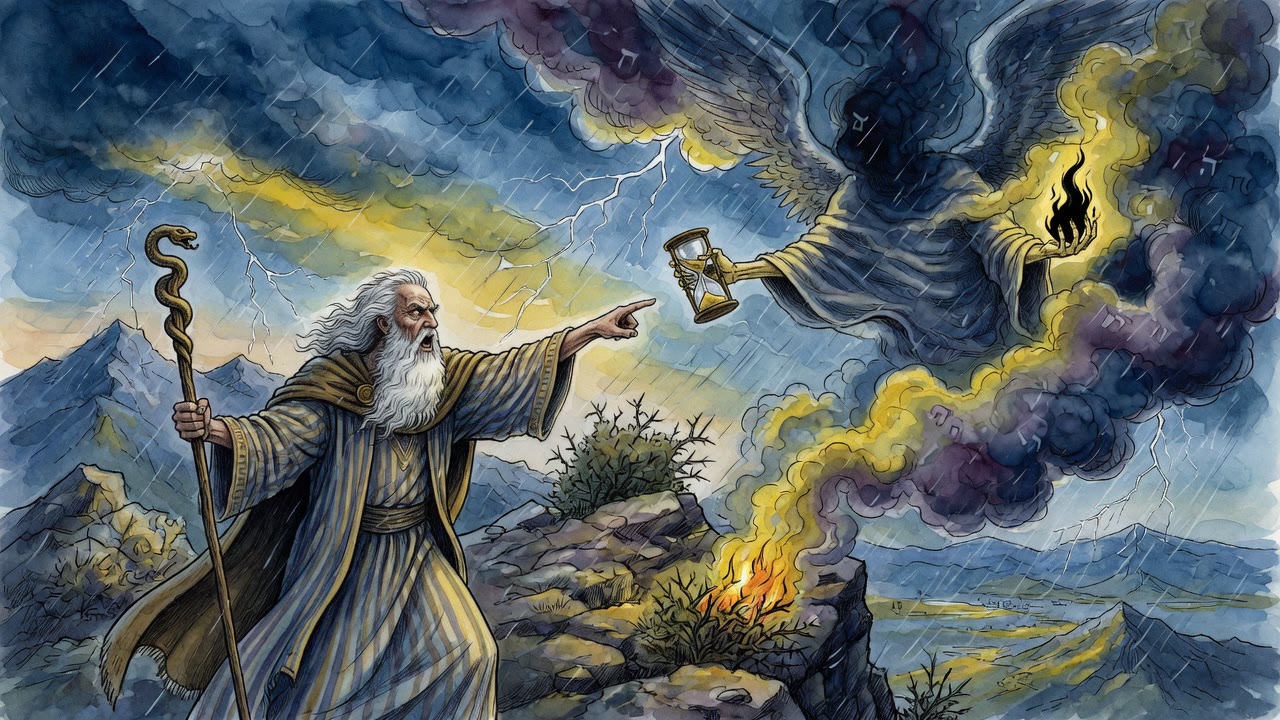
"Why should Your wrath prevail against Your people," he said, "whom You brought up from the land of Egypt with great power and with a mighty hand?" (Exodus 32:11).
God had handed Israel to Moses with a pronoun. Moses handed them back with the same word. If wrath was going to eat them, it would have to walk through Egypt first, through the sea, through the hand that had already claimed them. He prayed it while his voice still shook. He did not wait to be calm. Calm would have been a lie.
He had learned both labors in one life. Write the difficult word exactly. Pray the merciful words while still shaking. Below, the camp had no defense that would hold. Above, a trembling man would not let God call the rescued people by any name except Yours.
← All myths