Translation of the source text.Pesikta Rabbati, ed. Meir Friedmann (Ish-Shalom), Vienna 1880 · Public Domain
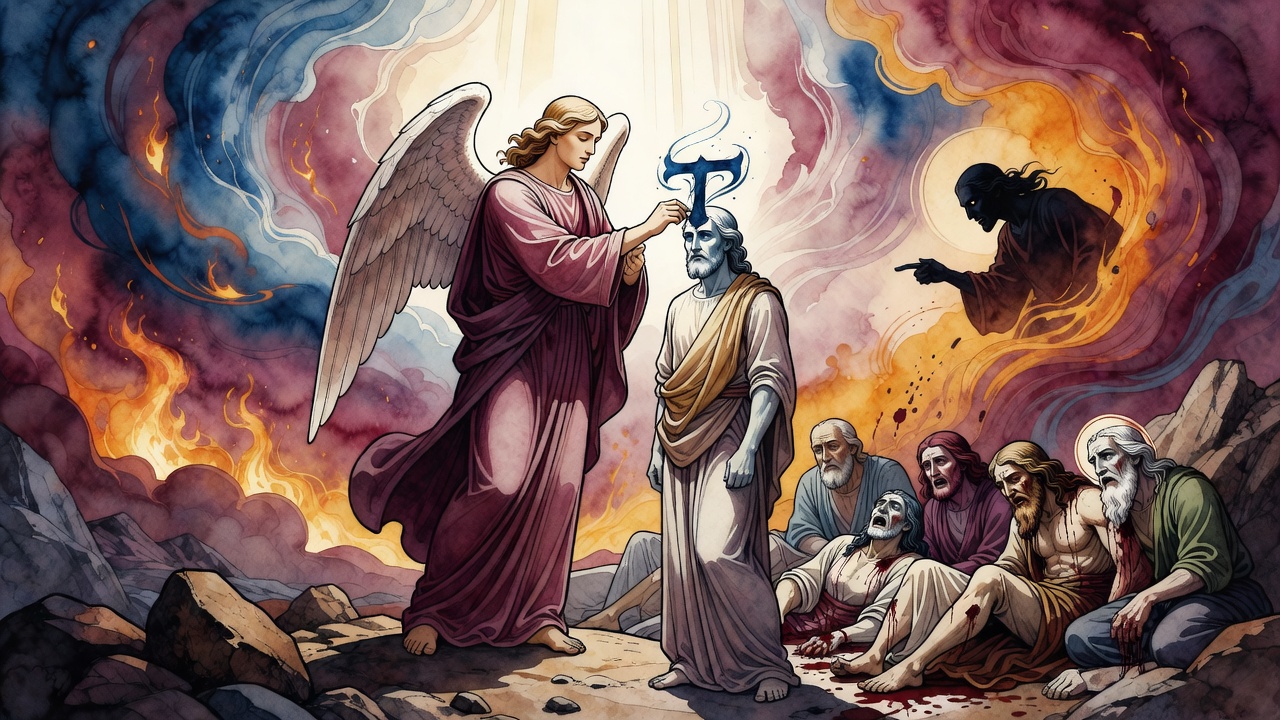
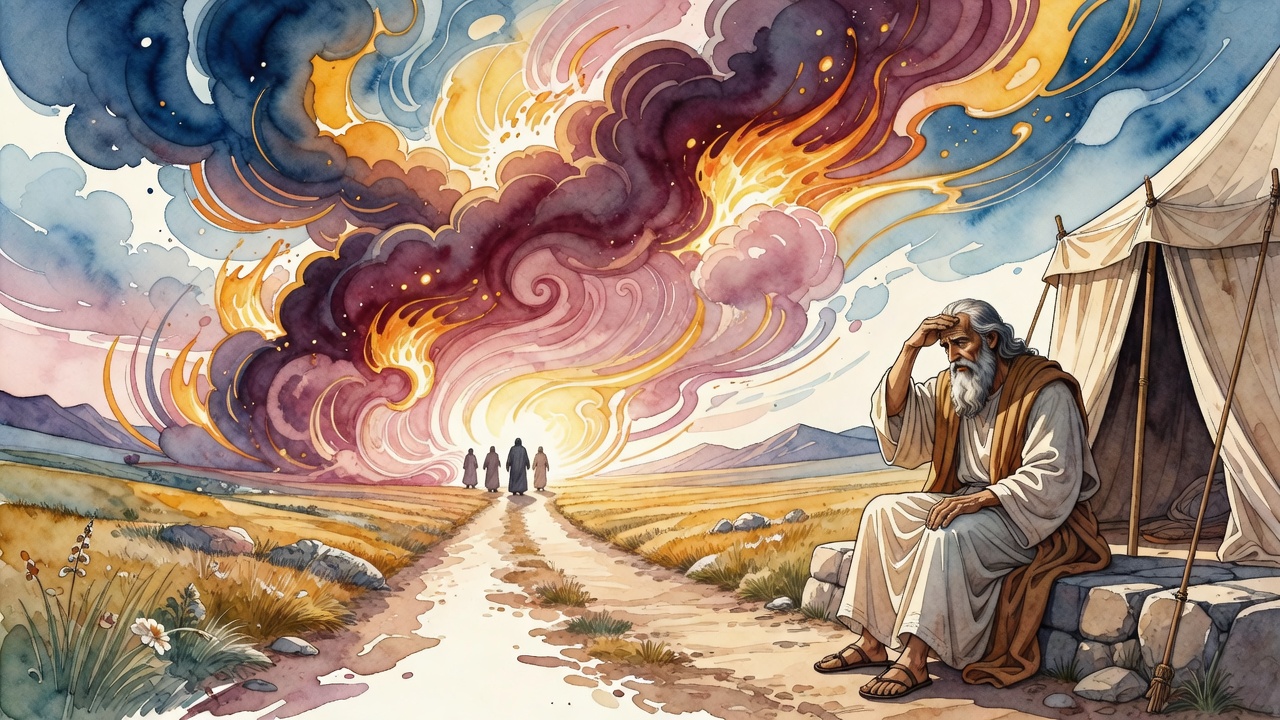
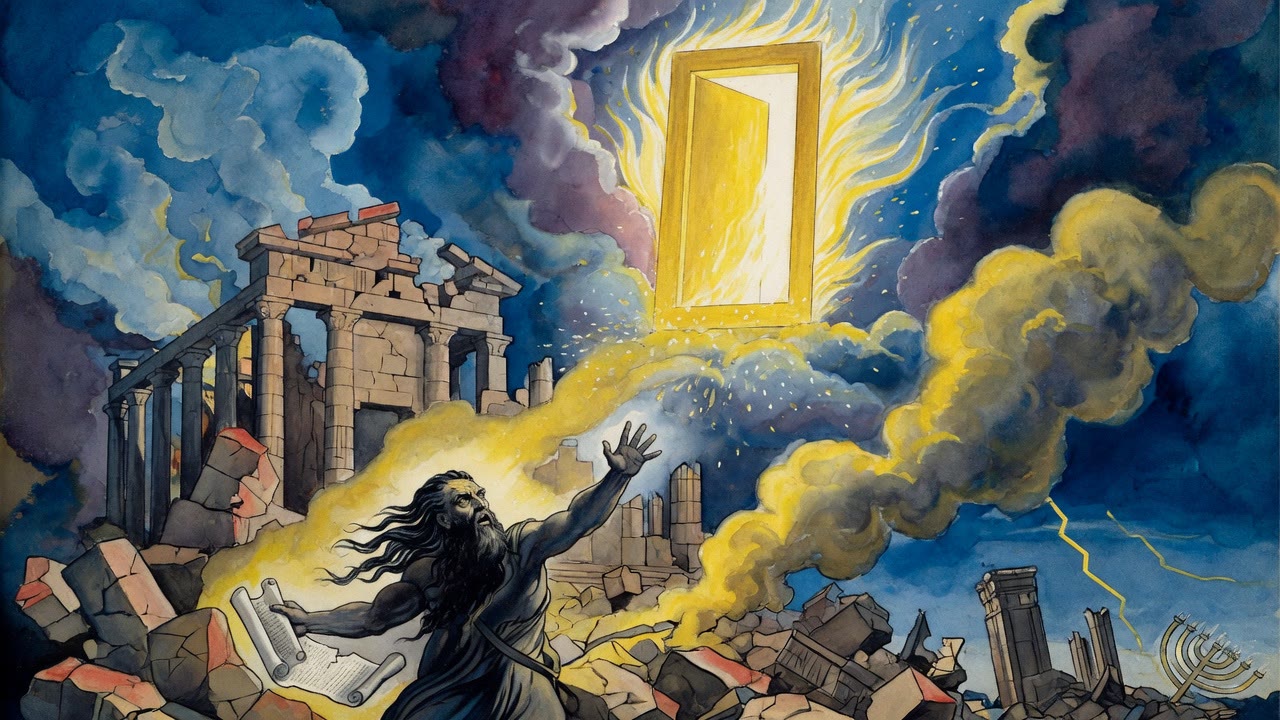
"I, I am He who comforts you; who are you that you should fear man who dies, or the son of man who is given over like grass" (Isaiah 51:12). Let our master teach us: where should one who prays direct his heart? Our masters taught: a person should direct his heart toward the Holy of Holies (Berakhot 4:5). Rabbi Eliezer ben Yaakov said: if he is praying outside the Land, he directs his heart toward the Land of Israel; if in the Land, toward Jerusalem; if in Jerusalem, toward the Temple; if in the Temple, toward the Holy of Holies. Rabbi Avin the Levite said in the name of Rabbi: "Your neck is like the tower of David, built for an armory [letalpiyot]" (Song of Songs 4:4). What is letalpiyot? A hill [tel] toward which all mouths [piyot], all faces, turn. After all this praise, Scripture writes, "Open your doors, O Lebanon, that fire may devour your cedars" (Zechariah 11:1), and it says, "He sent fire into my bones" (Lamentations 1:13). Israel said before Him: Master of the worlds, how long will it be like this? Did You not write in Your Torah, "He who kindles the blaze shall surely make restitution" (Exodus 22:5)? You are the One who kindled it, as it says, "From on high He sent fire into my bones" (Lamentations 1:13). You must rebuild it and comfort us, not by an angel, but You in Your own glory. The Holy One, blessed be He, says to them: by your lives, so I do, as it says, "The LORD builds Jerusalem; He gathers the dispersed of Israel" (Psalms 147:2), and I am the One who comforts you. From where is this known? From what the prophet read in this matter: "I, I am He who comforts you." Rabbi Tanchuma bar Rabbi opened: this is what the holy spirit said through Job, "I broke the jaws of the wicked, and plucked the prey from his teeth" (Job 29:17). Job was great and wealthy, and a wealthy man might ignore the judgment of the poor. Job was not like that. He gave himself over to judgments. More than that, he was judge and officer together, for the Torah says, "Judges and officers you shall appoint for yourself in all your gates" (Deuteronomy 16:18). Rabbi Elazar said: if there is no officer, there is no judge. The judge gives judgment, and the officer enforces it. Rabbi Shabbatai said: the judge must be suited to the rod and the strap, and neither the rod nor the strap may be suspect, but fit. Job said: the Torah warned the judge to render judgment and the officer to extract robbery. I did not wait for the officer. When I had judged the case, I stood over the robber and broke his teeth to draw the stolen thing out of them. This is, "I broke the jaws of the wicked, and plucked the prey from his teeth." "I chose their way and sat as chief" (Job 29:25): he seated the judges, told each one his path, and sat at the head of them all like a king. Another interpretation: when law and deed stood clear before me, I brought it out; when the case was dull, I asked and clarified it. "I dwelt like a king among the troop" means that when I found the wicked guilty and obligated the liable, I sat while crowds stood before me. If the guilty man wanted to refuse the judgment, he feared the troop standing over me and fulfilled the judgment. And if the evil impulse came to mislead me, saying that a great man should not go console mourners, I did not listen. I said: am I better than my Creator? No creature in the world lives and endures as He does, and no king is as great as He is, yet He in His own glory consoles Israel, as it says, "I, I am He who comforts you." Another interpretation: Rabbi Tanchuma bar Rabbi opened with the verse spoken by the holy spirit through David king of Israel, "You loved righteousness and hated wickedness; therefore God, your God, anointed you with the oil of gladness above your fellows" (Psalms 45:8). "You loved righteousness" is Abraham our father, for the verse is expounded about Abraham, Aaron, and Isaiah. Abraham saw all those generations serving idols, separated from them, and did not become equal to them. They were all idolaters, but Abraham reasoned on his own and served the Holy One, blessed be He. Therefore Scripture says, "Abram the Hebrew" (Genesis 14:13). Why "the Hebrew"? Because the whole world stood on one side, and he stood on the other side. He loved the Holy One and served Him, so the Holy One called him Hebrew and beloved. The Holy One said: you loved righteousness and commanded your children to do righteousness, as it says, "For I have known him, that he will command his children and his household after him, and they shall keep the way of the LORD, to do righteousness and justice" (Genesis 18:19). You hated the wickedness of your generations, who worshiped idols. Did you lose anything? Ten righteous heads of generations came before you, and not one of them merited elevation in the world as you did. Therefore, "God anointed you with the oil of gladness above your fellows." Another interpretation: this is Aaron, who grasped truth, as it says, "The Torah of truth was in his mouth, and injustice was not found on his lips; he walked with Me in peace and uprightness, and turned many back from iniquity" (Malachi 2:6). "You hated wickedness": when Israel made that deed, the tribe of Levi was not with them. They hated the wickedness. The Holy One said to Aaron: did you lose anything? All Israel stands before the Tabernacle, and eleven tribes surround it with Levi's families, Gershon, Amram, Izhar, and Kehat. By your life, I will not tell Moses to choose from all of them, but only you and your sons: "Take Aaron and his sons with him" (Leviticus 8:2). Now to the matter of Isaiah. When Isaiah heard the cry, "Whom shall I send?" (Isaiah 6:8), our masters said that the Holy One, as it were, cried and wailed to Himself: whom shall I send? Who now accepts My mission? I sent Micaiah and they struck him, as it says, "Zedekiah son of Chenaanah came near and struck Micaiah" (1 Kings 22:24). I sent Zechariah and they killed him. I sent Jeremiah and they cast him into the pit. Whom shall I send? Isaiah answered: here I am before You, "Here am I; send me" (Isaiah 6:8). When he saw the ministering angels praising the Holy One and had not joined his praise with theirs, he was distressed and said, "Woe is me, for I am undone" (Isaiah 6:5). I saw things impossible to see and live, he thought, and I did not die. If only I had joined my praise to theirs, I would live forever like them. Then, while standing stunned, he added an extra word against Israel: "For I am a man of unclean lips, and I dwell among a people of unclean lips" (Isaiah 6:5). The Holy One said to him: when you said, "I am a man of unclean lips," that was permitted, for you had authority over yourself. But did you have authority over My children, to say, "I dwell among a people of unclean lips"? Immediately he received his own due: "Then one of the seraphim flew to me, with a live coal in his hand, which he had taken with tongs from upon the altar" (Isaiah 6:6). Scripture does not write "coal" but ritzpah. Rabbi Shmuel bar Nachman read it as ratz peh, the mouth ran to speak slander about My children. Why "with tongs"? To teach the power of the righteous. The Holy One told the angel to take a coal from the altar and place it on Isaiah's mouth. The angel took the coal with one tong from the heavenly altar, but it burned him; he threw it away, took another tong, held the coal with both, and carried it to Isaiah's lips. He said, "Behold, this has touched your lips; your iniquity is removed and your sin atoned" (Isaiah 6:7). The angel is fire, yet when he took the coal with one tong it burned him until he took another. Isaiah took the coal on his mouth and did not feel it. When Isaiah saw this, he began to justify Israel and teach merit for them. At the end of his prophecy he says, "The Lord GOD has given me the tongue of the taught, to know how to sustain the weary with a word; morning by morning He awakens my ear to hear like the taught" (Isaiah 50:4). Rabbi Yitzchak the priest son of Chama said in the name of Rabbi Chelkiah, in the name of Rabbi Simon: "the tongue of the taught" means that He opened for me a trained tongue to teach merit for them. "The Lord GOD opened my ear" (Isaiah 50:5): He opened my ear to hear His voice when He said, "Whom shall I send?" and gave me knowledge to say, "Here am I; send me." Therefore, "I was not rebellious; I did not turn backward" (Isaiah 50:5): I was not made backward in prophecy but prophesied more than all the prophets. Isaiah prophesied many prophecies, more than all the prophets, and he prophesied over all the nations: "The burden of Arabia" (Isaiah 21:13), "The burden of Moab" (Isaiah 15:1), "The burden of Dumah" (Isaiah 21:11). What brought Isaiah to all this praise and honor? He justified Israel and taught merit for them. David said, "You loved righteousness," you loved to justify His creatures, "and hated wickedness," you hated the wicked; "therefore God, your God, anointed you with the oil of gladness above your fellows" (Psalms 45:8), as Isaiah says, "The spirit of the Lord GOD is upon me, because the LORD has anointed me" (Isaiah 61:1). He merited prophecy more than all the prophets, and consolation more than all the prophets. His prophecies of consolation are doubled: "Awake, awake" (Isaiah 51:9), "Rouse yourself, rouse yourself" (Isaiah 51:17), "I will greatly rejoice" (Isaiah 61:10), "Comfort, comfort My people" (Isaiah 40:1), and "I, I am He who comforts you." Why twice, "I, I"? Because at Sinai Israel received two "I am" declarations: "I am the LORD your God" (Exodus 20:2), and "For I the LORD your God am a jealous God" (Exodus 20:5). Therefore the Holy One comforts them with two "I am" declarations. Another interpretation: "Who are you that you fear man who dies?" Why do you fear? Do you not know who you are? Are you not the daughter of Abraham, the daughter of Isaac, and the daughter of Jacob, the daughter of three mountains of the world? You fear a creature, a mortal man who is alive today and dead tomorrow. Do you not know what I did to everyone who attacked them? Amraphel first attacked Abraham, to throw him into the fiery furnace. Did I not save Abraham and turn Amraphel into his hand? The Philistines and Abimelech attacked Isaac and sent him from their place, saying, "Go from us, for you are much mightier than we" (Genesis 26:16). Did they not return before him and say, "We saw clearly that the LORD was with you" (Genesis 26:28)? Esau attacked your father Jacob, and Jacob fled before him. Did Esau not return and fall into his hand, then clear out before him, as it says, "He went to another land because of Jacob his brother" (Genesis 36:6)? You are the daughter of those fathers. Everyone who attacked them fell before them, and everyone who comes to attack you will fall before you. Another interpretation: Rabbi Yehudah bar Rabbi Simon compared it to one who saw something glowing at night and feared it as a burning coal. People said to him: are you afraid of this? At night it looks like a coal and burns; let morning come, and you will see that it is only a worm. So the Holy One said: do you fear mortal man? He is a worm, as it says, "How much less man, who is a maggot, and the son of man, who is a worm" (Job 25:6). Israel said before Him: Master of the world, the yoke of the kingdoms is hard. He said to them: because this world is night and they rule in it. Let morning come, and you will see they are only a worm. Which morning? Isaiah says, "Watchman, what of the night? The watchman said, morning comes, and also night" (Isaiah 21:11-12). "And you forget the LORD your Maker" speaks of Haman's trouble, for they feared for one hour and despaired of redemption. Rabbi Shmuel bar Nachman said: Israel deserved not to be redeemed from Haman's trouble because they despaired of redemption, except that they agreed with the mind of Jacob their father. Jacob heard from the divine speech, "Behold, I am with you" (Genesis 28:15), and still feared Esau, as it says, "Jacob was greatly afraid and distressed" (Genesis 32:7). Another interpretation: "And you forget the LORD your Maker, who stretched out the heavens and founded the earth" (Isaiah 51:13). Why are these joined? Israel was afraid because they were taken for death and slaughter, and they despaired of redemption. He said to them: have you forgotten what I said to Jeremiah? "Thus says the LORD: if heaven above can be measured, and the foundations of the earth searched out beneath, then I also will reject all the seed of Israel" (Jeremiah 31:37). You see the heavens in their place and the earth in its place, and still you fear. "And you fear continually all the day because of the fury of the oppressor, as he made ready to destroy; and where is the fury of the oppressor?" (Isaiah 51:13). Haman's decree was spread from day to day and month to month (Esther 3:7), and they were frightened every day by the fury of the oppressor, Haman, that narrow man and enemy. "He who is bowed down hastens to be released, that he should not die in the pit, nor lack his bread" (Isaiah 51:14). This is a person who hurries his steps to be opened, so that he will not die, running here and there so that his bread not be lacking. Rabbi Pinchas the priest son of Chama said in the name of Rabbi Chelkiah, in the name of Rabbi Simon: what is "that he should not die in the pit, nor lack his bread"? If a man lacks bread, he dies, for when he does not eat he dies. If he does not lack bread, he can still die, for if he eats and is not opened, the first food is ruined within him and he dies. The sign in a sick person is that when he is opened, he does not die. Rabbi Chaggai said in the name of Rabbi Chama bar Abba: when does he not die? When his bread is not lacking; but if he is opened and lacks bread, he dies. Isaiah then recalls the exodus from Egypt. Just as the exodus from Egypt came with trials, signs, and wonders, so does the morsel of bread. Rabbi Yehoshua ben Levi said: know this from the Great Hallel. It says, "To Him who divided the Red Sea into parts" (Psalms 136:13), "and brought Israel out from among them" (Psalms 136:11), and "Who gives bread to all flesh" (Psalms 136:25). Scripture compares the morsel to the splitting of the Red Sea and the exodus from Egypt, and the morsel is weighed against both. Why does Scripture place the exodus next to bread? Just as the Holy One did many miracles to redeem Israel from Egypt, so He does with this morsel that a person puts into his mouth, and just as its entrance is wondrous, so is its exit. Rabbi Shmuel bar Nachman said: if you want to know the power of this morsel that a person puts into his mouth, that it is harder than redemption, look to Jacob. When Joseph brought his sons before his father for blessing, Jacob attached redemption to an angel: "The angel who redeemed me from all evil" (Genesis 48:16). But when he came to bread, what did he say? "The God who has shepherded me" (Genesis 48:15). Thus Isaiah said well, "He will not die in the pit, nor lack his bread. I am the LORD your God, who stirs the sea." Another interpretation: "I, I am He who comforts you" is what Scripture says, "You who have shown me many and evil troubles, You will revive me again, and from the depths of the earth You will bring me up again" (Psalms 71:20). You find that from the beginning of the world's creation, the King Messiah was born in thought before the world was created. So it says, "A shoot shall come out from the stump of Jesse" (Isaiah 11:1). It does not say here merely "a shoot came" but "shall come out." In the creation of the world, Scripture already mentions the subjection to the kingdoms and the redeemer, the King Messiah: "In the beginning God created... and the earth was chaos and void, and darkness was upon the face of the deep, and the spirit of God hovered upon the face of the waters" (Genesis 1:1-2). "Chaos" is the kingdom of Babylon, as it says, "I beheld the earth, and behold, it was chaos" (Jeremiah 4:23). "Void" is the kingdom of Media, as it says, "They hurried to bring Haman" (Esther 6:14). "Darkness" is the kingdom of Greece, whose decrees were harsh, saying, write on the horn of the ox that you have no share in the God of Israel. "Upon the face of the deep" is the wicked kingdom of Edom. David saw all four coming in power and subjugating Israel, and he wondered over them: "You have shown me many and evil troubles" (Psalms 71:20). "Many" means two, Media and Edom. "You will revive me again" from the first, the subjection of Babylon; again from the second, the subjection of Media; "You will bring me up" from the third, the subjection of Greece; "from the depths of the earth You will bring me up again" from wicked Edom. From where do you say that the King Messiah existed from the beginning of the world's creation? "The spirit of God hovered" means the King Messiah, as it says, "The spirit of the LORD shall rest upon him" (Isaiah 11:2). And when does he hover over the face of the waters? When you pour out your heart like water before the face of the LORD. Another interpretation: "I, I am He who comforts you" is what Scripture says, "For He has torn, and He will heal us; He has struck, and He will bind us up" (Hosea 6:1). It is like a person whose wound rises and the physician cuts it open. When he sees that the wound does not heal, he goes around to other physicians, but they do not find a cure because they do not know what the wound was like. They say to him: you go to many physicians and they have no way to heal you, for they do not know the mark of the wound. If you wish to be healed, go to the one who cut you; he will heal you. So the prophet said: as long as you keep your mind far from the end, the consolations are far from you. Repent, and the Holy One will redeem you from the subjection of the kingdoms, for He is the One who struck and He is the One who heals. "Come, let us return to the LORD; for He has torn, and He will heal us; He has struck, and He will bind us up" (Hosea 6:1). The Holy One said: I am the One who struck, and I am the One who heals. I am the One who struck, as it says, "From on high He sent fire into my bones" (Lamentations 1:13), and I am the One who heals: "I, I am He who comforts you." Another interpretation: with "I" I created the upper worlds; with "I" I created the lower worlds, as it says, "I am the LORD who makes all things, who stretched out the heavens alone, who spread out the earth by Myself" (Isaiah 44:24). With "I" I created the first Adam, as it says, "I made the earth and created man upon it" (Isaiah 45:12). With "I" I spoke with Abraham, as it says, "I am your shield" (Genesis 15:1). With "I" I spoke with Isaac, as it says, "I am the God of Abraham your father" (Genesis 26:24). When He revealed Himself to Jacob, He did not first reveal Himself with anokhi but with ani, as it says, "I am the LORD, the God of Abraham your father" (Genesis 28:13). Therefore Jacob feared. Why did he fear? He said: to my fathers He was not revealed with this language, ani, but with anokhi. Perhaps some sin has happened to me, that He did not speak with me in the language with which He spoke to my fathers. When the Holy One saw that Jacob was distressed over the matter, He immediately began speaking with him with anokhi: "And behold, I am with you" (Genesis 28:15). With anokhi I descended with him to Egypt: "I will go down with you to Egypt" (Genesis 46:4). With anokhi I brought him up from there: "and I will also surely bring you up" (Genesis 46:4). With anokhi I revealed Myself to the redeemer: "I am the God of your father" (Exodus 3:6). With anokhi I created speech and placed it in Moses' mouth: "I will be with your mouth" (Exodus 4:15). Rabbi Chama bar Chanina said: the carving of the lips is a hard thing, equal to the creation of the world. Of the creation of the world and its fullness Scripture writes, "These are the generations of heaven and earth when they were created" (Genesis 2:4), and of the carving of the lips it writes, "creating the fruit of the lips" (Isaiah 57:19). Rabbi Shmuel bar Nachman said: if you want to know the power of speech, see what the Holy One created with this tongue. Sometimes a person speaks one thing and turns his tongue, and in one word eleven articulations serve. With anokhi I gave the commandments: "I am the LORD your God" (Exodus 20:2). With anokhi I lead them in the wilderness: "Therefore, behold, I will entice her and lead her into the wilderness" (Hosea 2:16). With anokhi I build Zion: "Behold, I will lay your stones with fair colors" (Isaiah 54:11). With anokhi I bring the redeemer: "Behold, I send you Elijah the prophet" (Malachi 3:23). With anokhi I comfort you: "I, I am He who comforts you."
Another interpretation: Rabbi Tanchuma bar Rabbi opened with, "What shall I testify to you, what shall I compare to you, O daughter Jerusalem?" (Lamentations 2:13). The Holy One said to them: what testimonies did I not testify to you by the hand of the prophets? Rabbi Yaakov of Kefar Chanin said: for ninety years the Holy One kept sending and testifying to Israel. From where? "The LORD testified against Israel and against Judah by the hand of every prophet, every seer" (2 Kings 17:13). Count the letters of vaye'ed, "He testified": vav is six, yod is ten, ayin is seventy, dalet is four. That is ninety. Thus for ninety years the Holy One testified. So the Holy One said to them: how many messengers did I send to you, and you did not listen, as it is written, "I sent to you all My servants the prophets, daily rising early and sending" (Jeremiah 7:25), saying, "Turn now from your evil ways" (2 Kings 17:13). How many prophets did the Holy One send to Israel each day to testify against them? The minimum of "prophets" is two, one in the morning and one at afternoon prayer. Another sage says: the Holy One renewed one prophet for them each day to go and testify against them, and Jeremiah came with him twice each day, morning and evening, and testified with them against Israel. From where? "I spoke to you, rising early and speaking, but you did not listen" (Jeremiah 7:13). Rabbi Pinchas the priest son of Rabbi Chama and Rabbi Chelkiah said in the name of Rabbi Simon that Rabbi Yaakov of Kefar Chananiah said: Hosea testified to Israel for ninety years by himself. Scripture says, "The word of the LORD that came to Hosea son of Beeri in the days of Uzziah, Jotham, Ahaz, and Hezekiah" and then "the beginning of the word of the LORD with Hosea" (Hosea 1:1-2). Begin with Uzziah's reign. Uzziah reigned fifty-two years, Jotham sixteen years, and Ahaz sixteen years. That is eighty-four. In the sixth year of Hezekiah the ten tribes were exiled, as Scripture says that Tiglath-pileser king of Assyria exiled them (1 Chronicles 5:6). Thus the Holy One testified to Israel through Hosea for ninety years and they did not repent. Therefore He says through Jeremiah, "What shall I testify to you?" (Lamentations 2:13). Another interpretation: "What shall I adorn you with?" The language of a'idakh is the language of jewelry, as it says, "Now therefore remove your ornaments from upon you" and "the children of Israel stripped themselves of their ornaments from Mount Horeb" (Exodus 33:5-6). Rabbi Tanchuma bar Rabbi said: when Israel left Egypt, came to the wilderness of Sinai, and received the Torah, the Holy One adorned them with thirteen ornaments. Ezekiel explains them. "I washed you with water" (Ezekiel 16:9): from the filth of idolatry. "I washed away your blood from upon you" (Ezekiel 16:9): the blood of circumcision and the blood of Passover. "I anointed you with oil" (Ezekiel 16:9): the anointing oil. "I clothed you with embroidered work" (Ezekiel 16:10): Rabbi Yochanan said that when Israel stood before Mount Sinai and said, "All that the LORD has spoken we will do and we will hear" (Exodus 24:7), immediately six hundred thousand ministering angels descended, crowns in their hands, and placed a crown on each Israelite. Rabbi Abba bar Kahana said in the name of Rabbi Yochanan: one million two hundred thousand ministering angels descended with the Holy One, six hundred thousand tying crowns and six hundred thousand girding them with belts. Rabbi Shimon bar Yochai said they gave weapons to them, with the explicit Name engraved on them. Rabbi Chanina bar Natan of Tzipporin said they gave belts to them. Rabbi Shimon said they dressed them in purple garments. Another interpretation: "I clothed you with embroidered work" refers to the work of the Tabernacle, which was embroidered, as it says, "He made the veil of blue, purple, crimson, and fine twined linen, with cherubim; he made it the work of an embroiderer" (Exodus 36:35-37). "I shod you with tachash" (Ezekiel 16:10): these are the skins of the Tabernacle, as it says, "You shall make a covering for the tent of red-dyed ram skins and a covering of tachash skins above" (Exodus 26:14). Rabbi Yehudah says the tachash was a kind of animal called mainon; Rabbi Nechemiah says it was a pure animal that grew in the wilderness. Rabbi Elazar son of Rabbi Yose and Rabbi Abbahu said in the name of Rabbi Shimon ben Lakish, in the name of Rabbi Meir: it was created for that hour and hidden away. So too with algum trees: Scripture says, "Send me cedar, cypress, and algum trees" (2 Chronicles 2:7), and elsewhere, "The king made of the algum trees... no such algum trees came nor were seen until this day" (1 Kings 10:12). Rabbi Abba said: they were raw blocks, and when they were shown to the shamir they became like this softened substance. Another interpretation: Rabbi Chuniya the priest son of Avin said in the name of Rabbi Yosef that they too were created for their hour and hidden. "I wrapped you in fine linen" (Ezekiel 16:10): these are the eight garments of the high priest, which contained linen, as it says, "the linen turban and the linen ornamented caps" (Exodus 39:28). "I covered you with silk" (Ezekiel 16:10): the Holy One said to Israel, I made you substantial in the world. I said, "You are gods" (Psalms 82:6). So Rabbi Aivu expounded. Rabbi Yehudah bar Rabbi Simon said: this refers to the clouds of glory that surrounded them in the wilderness, as it says, "The pillar of cloud did not depart by day" (Exodus 13:22). "I adorned you with ornaments" (Ezekiel 16:11): the Holy One adorned them with every kind of ornament. "I put bracelets upon your hands" (Ezekiel 16:11): these are the two tablets of the covenant. "And a chain on your neck" (Ezekiel 16:11): this is the Torah scroll, as it says, "This book of the Torah shall not depart from your mouth, but you shall meditate in it day and night" (Joshua 1:8). "I put a ring on your nose" (Ezekiel 16:12): "Your nose is like the tower of Lebanon" (Song of Songs 7:5). "And earrings in your ears" (Ezekiel 16:12): this is the Sanhedrin, for our masters taught that the Sanhedrin sat like half of a round threshing floor (Sanhedrin 4:5). Another interpretation: "earrings in your ears" are the commandments. When the word sought to go out, the herald went out before it and said to the curtains of fire: remove yourselves from before the word, lest it go out and burn you. Immediately the angels of fire and the holy creatures removed themselves so they would not be burned by the breath of the word. The fire of the word was stronger than the fire of the angels, for the angels are only from the fire beneath the Throne of Glory, from the river Daniel saw, "A river of fire issued and came forth from before Him" (Daniel 7:10), from which they are created. But the fire of the word came from the right hand of the Holy One, as it is written, "From His right hand, a fiery law for them" (Deuteronomy 33:2). The word went out from the mouth of the Holy One, came and sat upon Israel's ear, and curved around it. This is, "earrings in your ears." "And a crown of splendor on your head" (Ezekiel 16:12): this is the Shekhinah, as it says, "Their king passed before them, and the LORD at their head" (Micah 2:13). With all these ornaments, the Holy One was saying to them: how many more ornaments are there with which I could adorn you? That is, "What shall I adorn you with?" Another interpretation: "What shall I testify to you, what shall I compare to you?" The Holy One said: how many meeting-times did I appoint with you in the cloud, as it says, "There I will meet with the children of Israel" (Exodus 29:43), at the sea, at Sinai, in the wilderness, and in the Tabernacle. "What shall I compare to you?" How many likenesses did I take on for you? At the sea I appeared to you like a warrior making war, as it says, "The LORD is a man of war" (Exodus 15:3). At Sinai I appeared like an elder teaching Torah, for Torah is fitting when it comes from the mouth of elders. In the Tabernacle I appeared to you like a bridegroom entering his bridal chamber. The Holy One said to Israel: did I not appear to the prophets in many likenesses, when they told you, "Return, return"? As it is written, "I multiplied visions, and by the hand of the prophets I was compared" (Hosea 12:11). Did Isaiah not see seraphim with six wings, as it says, "Seraphim stood above Him, each one with six wings" (Isaiah 6:2), while Ezekiel saw them with four, as it says, "I saw visions of God... and from within it came the likeness of four living creatures... and each one had four wings" (Ezekiel 1:1-6)? The Holy One said: lest you ask why Isaiah saw six and Ezekiel four, He says to you that after the Temple was destroyed, those with which they fly below were nullified. Since the destruction diminished those below, those above were also diminished. Rabbi Yaakov of Kefar Chanin said: and everything is from you. See what is written: "Therefore my loins are filled with trembling" (Isaiah 21:3). Did I not appear sitting and weeping, as it says, "If you will not hear it, My soul shall weep in secret because of pride; My eye shall weep sore and run down with tears" (Jeremiah 13:17)? Did I not send and say to you: if you wish to repent, then even for My sake do it, as it says, "Give glory to the LORD your God before He causes darkness" (Jeremiah 13:16)? The Holy One said: I was strong as a rock, and you made Me like a woman sitting on the birth-stool, as it says, "You have weakened the Rock who bore you" (Deuteronomy 32:18). "What shall I equal to you?" The Holy One said to them: what nation have I raised like you, that I could comfort you by comparing you to it? Rabbi Abbahu said: the Holy One does not stretch out His hand and make nations into snares, but if He brings fracture upon them, He consoles them by one another. When Egypt and Pharaoh fell, they were comforted by Assyria, as it says, "Son of man, I have broken the arm of Pharaoh king of Egypt" (Ezekiel 30:21), and then, "To whom are you like?... Behold, Assyria was a cedar in Lebanon" (Ezekiel 31:2-3), a king in the world, beautiful of branch, a son of ancestors, a shading forest, ancestral merit standing for him, and high in stature. When the whole world became one braid to provoke the Holy One, Assyria left their counsel, as it says, "From that land Assyria went out" (Genesis 10:11). Rabbi Shimon ben Lakish said: from that counsel Assyria went out. "The waters made him grow" (Ezekiel 31:4): the people of Nineveh were raised in the world by water, for it is written, "Let neither man nor beast, herd nor flock, taste anything; let them not feed nor drink water" (Jonah 3:7). By whom was Assyria lifted in the world? By Jonah, who rose from the deep, as it says, "The deep made him high" (Ezekiel 31:4), and, "The word reached the king of Nineveh" (Jonah 3:6). So Pharaoh and Egypt were comforted by Assyria. When Assyria fell, he was comforted by Egypt, as it says, "Are you better than No-Amon?" (Nahum 3:8). No-Amon is Alexandria, the nurse of the whole world. Another interpretation: Amon means the nurse of its children. The Holy One said to Israel: when the nations fall, I comfort them with one another. But you, to what nation have I compared you, that I should comfort you by it? This is, "What shall I equal to you and comfort you?" To what nation did I make an ark, cover, cherubim, altar, and table? Another interpretation: why were the ten tribes exiled in one direction and the tribe of Judah in another? So that these would be comforted by those, and those by these. The Holy One says to them, "Comfort, comfort My people" (Isaiah 40:1), twice. Rabbi Tanchuma would open this with "Comfort, comfort My people," asking: where is this harm? "For great as the sea is your fracture; who can heal you?" (Lamentations 2:13). Rabbi Chilfa of the south said: had it said, "great as death is your fracture," Israel would have no rising. But it says, "great as the sea is your fracture." Just as the sea waits for healing, so Israel waits for healing when the Temple is rebuilt and waters go out from under the Temple, as it says, "On that day living waters shall go out from Jerusalem, half of them to the eastern sea and half of them to the western sea" (Zechariah 14:8). They enter the ocean and sweeten it, as it is written, "For these waters have come there, and it shall be healed" (Ezekiel 47:9). The ocean goes out to the sea and heals it. Therefore, "who can heal you?" The One who heals the wound of the sea heals your wound. Another interpretation: "What shall I equal to you and comfort you?" When I make Myself equal to you, as it is written, "I will walk among you" (Leviticus 26:12), at that hour "I will comfort you." I in My own glory come and comfort you: "I, I am He who comforts you."
Another interpretation: "I, I am He who comforts you." The Holy One said: this is My craft. With the very thing by which I strike, I heal. A man strikes with a lancet and heals with a bandage. My craft is not so. With the thing by which I strike, with that thing I heal, as it says, "For I will restore health to you, and I will heal you of your wounds, says the LORD" (Jeremiah 30:17). How so? Come and see. Israel sinned by streams, as it says, "Who inflame yourselves among the terebinths, under every green tree, who slaughter the children in the streams under the clefts of the rocks" (Isaiah 57:5); they were struck at a stream, as it says, "Elijah brought them down to the Wadi Kishon and slaughtered them there" (1 Kings 18:40); and they are comforted by streams, as it says, "By the stream, upon its bank, on this side and on that, shall grow every tree for food" (Ezekiel 47:12). They sinned with rivers, as it says, "What have you to do with the way to Egypt, to drink the waters of the Nile?" (Jeremiah 2:18); they were struck with rivers, "By the rivers of Babylon, there we sat" (Psalms 137:1); and they are comforted with rivers, "Behold, I extend peace to her like a river" (Isaiah 66:12). They sinned on mountains, "Upon the tops of the mountains they sacrifice" (Hosea 4:13); they were struck on mountains, "Before your feet stumble upon the mountains of twilight" (Jeremiah 13:16); and they are healed on mountains, "How beautiful upon the mountains are the feet of the herald" (Isaiah 52:7), and "On that day the mountains shall drip sweet wine" (Joel 4:18). They sinned in the land, "The house of Israel dwelt upon their land and defiled it" (Ezekiel 36:17); they were struck in the land, "Your land is desolate" (Isaiah 1:7); and they are comforted in the land, "Your land shall be married" (Isaiah 62:5). They sinned with seed, "a seed of evildoers" (Isaiah 1:4); they were struck with seed, "You shall carry much seed out to the field, but gather little in" (Deuteronomy 28:38); and they are comforted with seed, "the holy seed is its stump" (Isaiah 6:13). They sinned with wood, saying to wood, "You are my father" (Jeremiah 2:27); they were struck with wood, "young men stumbled under the wood" (Lamentations 5:13); and they are comforted with wood, "as the days of a tree shall the days of My people be" (Isaiah 65:22). They sinned with grapes, "their grapes are grapes of poison" (Deuteronomy 32:32); they were struck with grapes, "there are no grapes on the vine" (Jeremiah 8:13); and they are comforted with grapes, "you shall drink the blood of grapes, wine" (Deuteronomy 32:14). They sinned with figs, "like the first fruit on the fig tree" (Hosea 9:10); they were struck with figs, "there are no figs" (Jeremiah 8:13); and they are comforted with figs, "the fig tree puts forth her green figs" (Song of Songs 2:13). They sinned with serpents, "their poison is like the poison of a serpent" (Psalms 58:5); they were struck with serpents, "Behold, I send among you serpents, adders" (Jeremiah 8:17); and they are comforted with serpents, "The nursing child shall play over the hole of the cobra" (Isaiah 11:8). They sinned with lions, "her princes within her are roaring lions" (Zephaniah 3:3); they were struck with lions, "a lion has gone up from his thicket" (Jeremiah 4:7); and they are comforted with lions, "the lion shall eat straw like the ox" (Isaiah 11:7). They sinned with wolves, "her judges are evening wolves" (Zephaniah 3:3); they were struck with a wolf, "a wolf of the deserts shall spoil them" (Jeremiah 5:6); and they are comforted with a wolf, "the wolf and the lamb shall feed together" (Isaiah 65:25). They sinned with a calf at Horeb; they were struck with a calf, "Ephraim is a trained heifer that loves to thresh" (Hosea 10:11); and they are comforted with a calf, "you shall go out and leap like calves of the stall" (Malachi 3:20). They sinned with a virgin, "Lament like a virgin girded with sackcloth for the husband of her youth" (Joel 1:8); they were struck with virgins, "women in Zion they afflicted, virgins in the cities of Judah" (Lamentations 5:11); and they are comforted with a virgin, "Return, return, virgin of Israel, to these your cities" (Jeremiah 31:21). They sinned with a bride, "Can a virgin forget her ornaments, or a bride her attire?" (Jeremiah 2:32); they were struck with a bride, "I will cause to cease from the cities of Judah... the voice of joy and gladness, the voice of bridegroom and bride" (Jeremiah 7:34); and they are comforted with a bride, "as the bridegroom rejoices over the bride" (Isaiah 62:5). They sinned with elders, "seventy men of the elders of Israel, and Jaazaniah son of Shaphan" (Ezekiel 8:11); they were struck with elders, "the elders of the daughter of Zion sit upon the ground and are silent" (Lamentations 2:10); and they are comforted with elders, "old men and old women shall yet sit" (Zechariah 8:4). They sinned with priests, "because of the sins of her prophets, the iniquities of her priests" (Lamentations 4:13); they were struck with priests, "my priests and my elders perished in the city" (Lamentations 1:19); and they are comforted with priests, "You shall be called priests of the LORD, ministers of our God" (Isaiah 61:6). They sinned with kings, "Set a king over us to judge us like all the nations" (1 Samuel 8:5); they were struck with kings, "I gave you a king in My anger and took him away in My wrath" (Hosea 13:11); and they are comforted with kings, "Their king passed before them, and the LORD at their head" (Micah 2:13). They sinned with the head, "her heads judge for a bribe" (Micah 3:11); they were struck in the head, "the whole head is sick" (Isaiah 1:5); and they are comforted in the head, "and the LORD at their head" (Micah 2:13). They sinned with the forehead, "all the house of Israel are hard of forehead" (Ezekiel 3:7); they were struck in the forehead, "the leprosy broke out in his forehead" (2 Chronicles 26:19); and they are comforted in the forehead, "it shall be upon Aaron's forehead" (Exodus 28:38). They sinned with the eye, "wanton eyes" (Isaiah 3:16); they were struck in the eyes, "He shut their eyes" (Isaiah 29:10); and they are comforted in the eye, "eye to eye they shall see when the LORD returns to Zion" (Isaiah 52:8). They sinned with ears, "they made their ears heavy from hearing" (Zechariah 7:11); they were struck in the ear, "Hear, you deaf" (Isaiah 42:18); and they are comforted in the ear, "The children of your bereavement shall yet say in your ears" (Isaiah 49:20). They sinned with the nose, "they put the branch to their nose" (Ezekiel 8:17); they were struck in the nose, "because of My anger and My fury this city has been to Me" (Jeremiah 32:31); and they are comforted in the nose, "Your nose is like the tower of Lebanon" (Song of Songs 7:5). They sinned with lips, "your lips have spoken lies" (Isaiah 59:3); they were struck in lips, "May the LORD cut off all flattering lips" (Psalms 12:4); and they are comforted in lips, "your lips are like a thread of scarlet" (Song of Songs 4:3). They sinned with teeth, "who bite with their teeth" (Micah 3:5); they were struck in teeth, "He has broken my teeth with gravel" (Lamentations 3:16); and they are comforted in teeth, "his teeth white with milk" (Genesis 49:12). They sinned with the mouth, "they set their mouth against heaven" (Psalms 73:9); they were struck in the mouth, "they shall devour Israel with open mouth" (Isaiah 9:11); and they are comforted in the mouth, "the glory of the LORD shall be revealed, and all flesh shall see it together, for the mouth of the LORD has spoken" (Isaiah 40:5). They sinned with the throat, "they walked with stretched-out necks" (Isaiah 3:16); they were struck in the throat, "Cry with the throat, do not hold back" (Isaiah 58:1); and they are comforted in the throat, "the exaltations of God are in their throat" (Psalms 149:6). They sinned with the heart, "they made their heart like adamant" (Zechariah 7:12); they were struck in the heart, "my sighs are many, and my heart is faint" (Lamentations 1:22); and they are comforted in the heart, "Speak to the heart of Jerusalem" (Isaiah 40:2). They sinned with hands, "your hands are full of blood" (Isaiah 1:15); they were struck in hands, "she has received from the LORD's hand double for all her sins" (Isaiah 40:2); and they are comforted in hands, "the LORD shall set His hand again the second time to recover the remnant of His people" (Isaiah 11:11). They sinned with the belly, "their belly prepares deceit" (Job 15:35); they were struck in the belly, "My belly, my belly, I writhe" (Jeremiah 4:19); and they are comforted in the belly, "your belly is a heap of wheat" (Song of Songs 7:3). They sinned with feet, "their feet run to evil" (Proverbs 1:16); they were struck in feet, "from the sole of the foot even to the head there is no soundness" (Isaiah 1:6); and they are comforted in feet, "Behold upon the mountains the feet of the herald who announces peace" (Nahum 2:1). They sinned with wings or corners, "also on your skirts were found the blood of innocent poor souls" (Jeremiah 2:34); they were struck with the corners, "to seize the corners of the earth" (Job 38:13); and they are comforted with the corners, "from the corner of the earth we have heard songs" (Isaiah 24:16). They sinned with "He," as it is written, "They denied the LORD and said, It is not He" (Jeremiah 5:12); they were struck with "He," "they rebelled and grieved His holy spirit, and He turned to be their enemy; He fought against them" (Isaiah 63:10); and they are comforted with "He": "I, I am He who comforts you." Thus Rabbi Tanchuma expounded. Amen, amen, selah, and so may it be His will.

 Click for full size