5 min read

Eli Sat at the Doorpost While His House Rotted

Hannah prayed at the sanctuary door, lips moving and no sound, and Eli decided she was drunk. Years later a runner's news knocked him backward off that chair.

Curated by Arthur · Told by Maggid ·
Table of Contents
  1. The Man at the Doorpost
  2. The Mouth He Could Not Hear
  3. What His Sons Took
  4. The Runner
  5. Seven Months in a Philistine Field
Eli Sat at the Doorpost While His House Rotted Click for full size

The Man at the Doorpost

Eli sat at the doorpost of the sanctuary the way other men keep a shop, from early until the light went, every day, for years. He had a verse for it. Fortunate is the man who listens to me, watching daily at my gates, waiting at the posts of my doors (Proverbs 8:34). He took that verse and made a chair out of it, and the chair was where people found him, so they stopped expecting to find him anywhere else.

It worked on them. A seated old man at a gate reads as steadiness, and pilgrims coming up to Shiloh with a sack of grain and a question wanted exactly that. Because he was always there, they took his being there for the whole of the job.

The Mouth He Could Not Hear

A woman came up to that doorpost with her lips moving and no sound coming out of her.

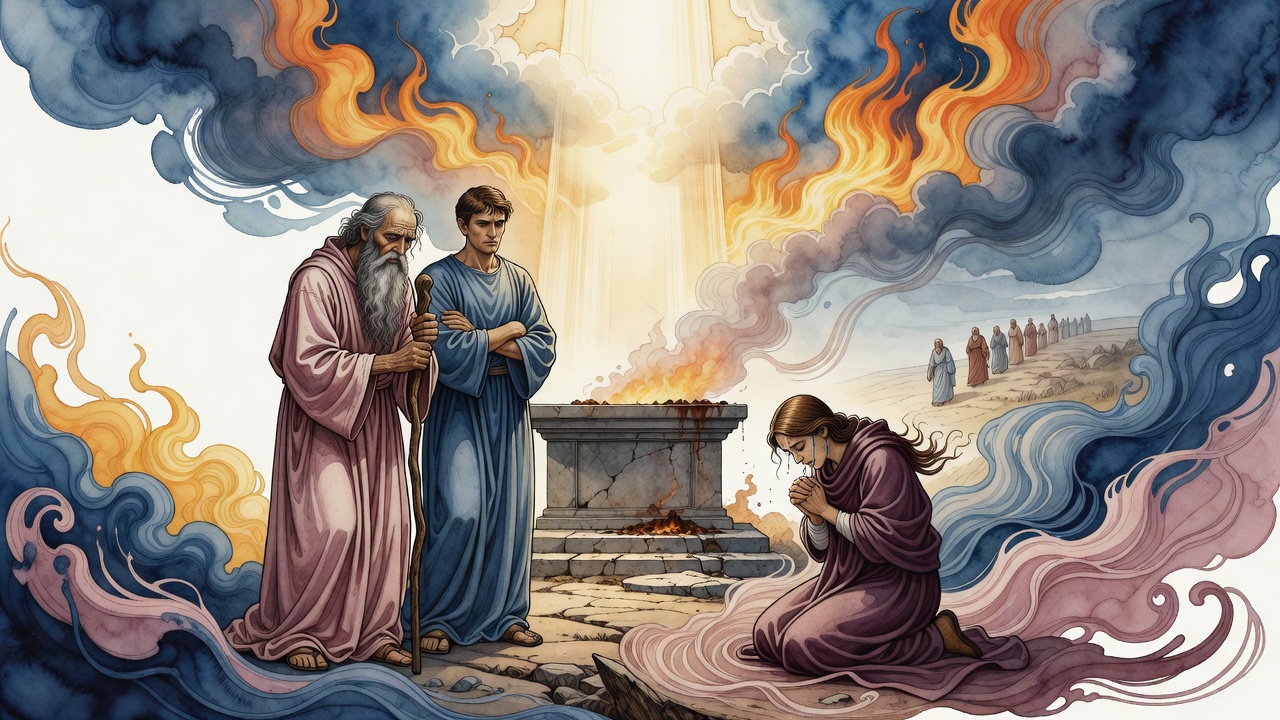
From where he sat it looked like one thing only. A mouth working, a body swaying slightly, no words: he had seen it at every festival since he was young, and he did not have to get up to know what it was. So he leaned forward in the chair and told her to put away her wine. He could have crossed three paces of floor and stood close enough to hear her, but standing was not what the chair was for.

She answered him. She was not drunk, she said, she was a woman of a sorrowful spirit, and she had been pouring out her soul before the Lord. So Eli blessed her instead, and the blessing held, and the son she was asking for was born and brought back to that same doorway to be handed over. Samuel came out of a mistake Eli made without getting up.

What His Sons Took

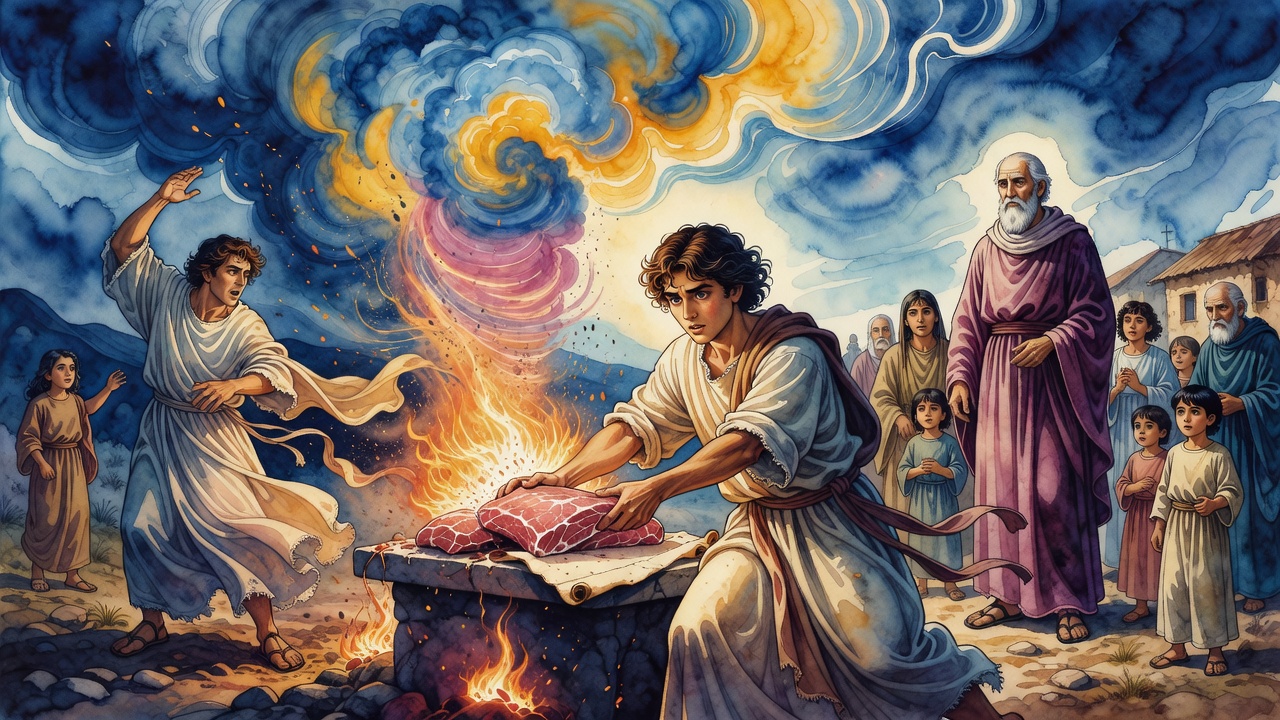
Hophni and Phinehas took the meat off the offerings by force, before the fat was burned, with a fork and an argument ready for anyone who objected. They took the women who served at the entrance of the Tent of Meeting. None of it was done quietly, because there was no reason for them to be quiet.

The reports came to Eli in the chair. He heard them in the same seat where he had blessed Hannah, from people who had walked a long way to say it to his face. And he did speak to his sons about it. He rebuked them mildly, and then he sat back down, and nothing else happened to them. No ban, no removal from the altar, no public break, no day when the priests of Shiloh watched the high priest put his own children out.

So they learned the exact price of what they were doing, which was one uncomfortable conversation with their father, payable once. Both of them went back to work the next morning. He who sins against me wrongs his own soul (Proverbs 8:36) lands on the sons first, and then it rolls backward down the years onto the man who taught the verse and would not enforce it in his own house.

The Runner

War came, and Israel lost the first day of it, so the elders sent to Shiloh for the ark and carried it down to the camp as if it were a weapon a man could aim.

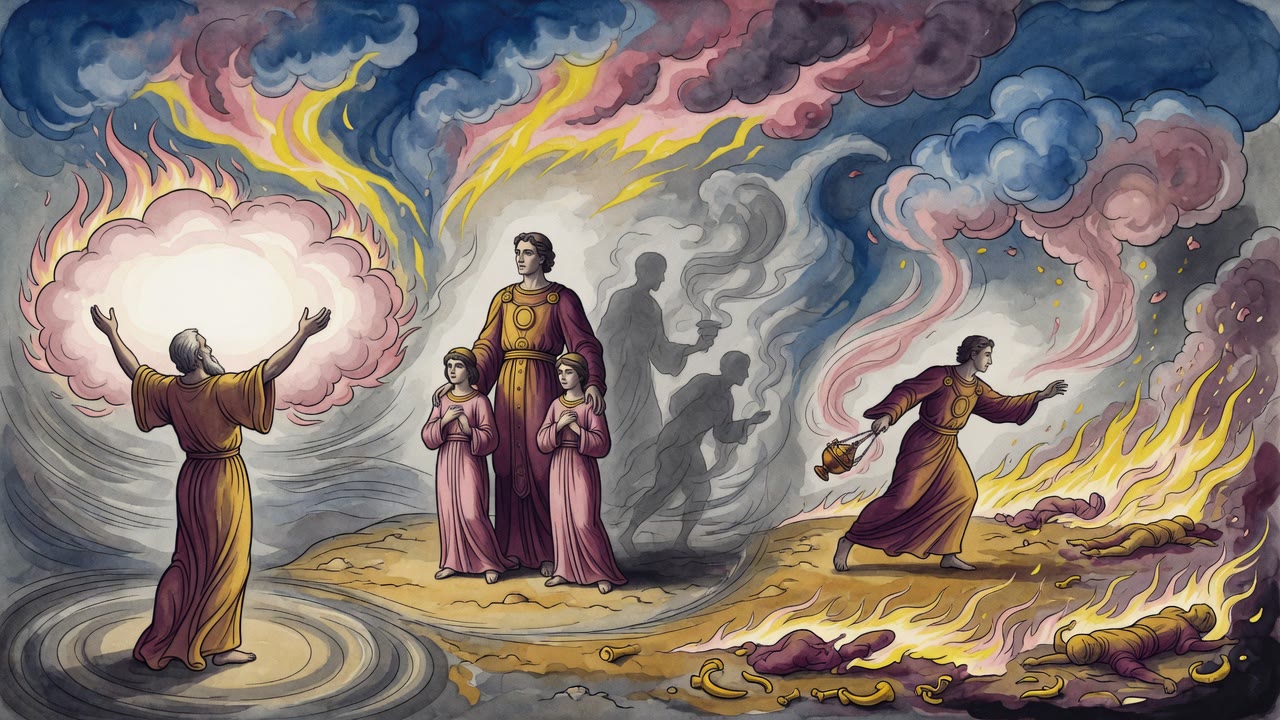
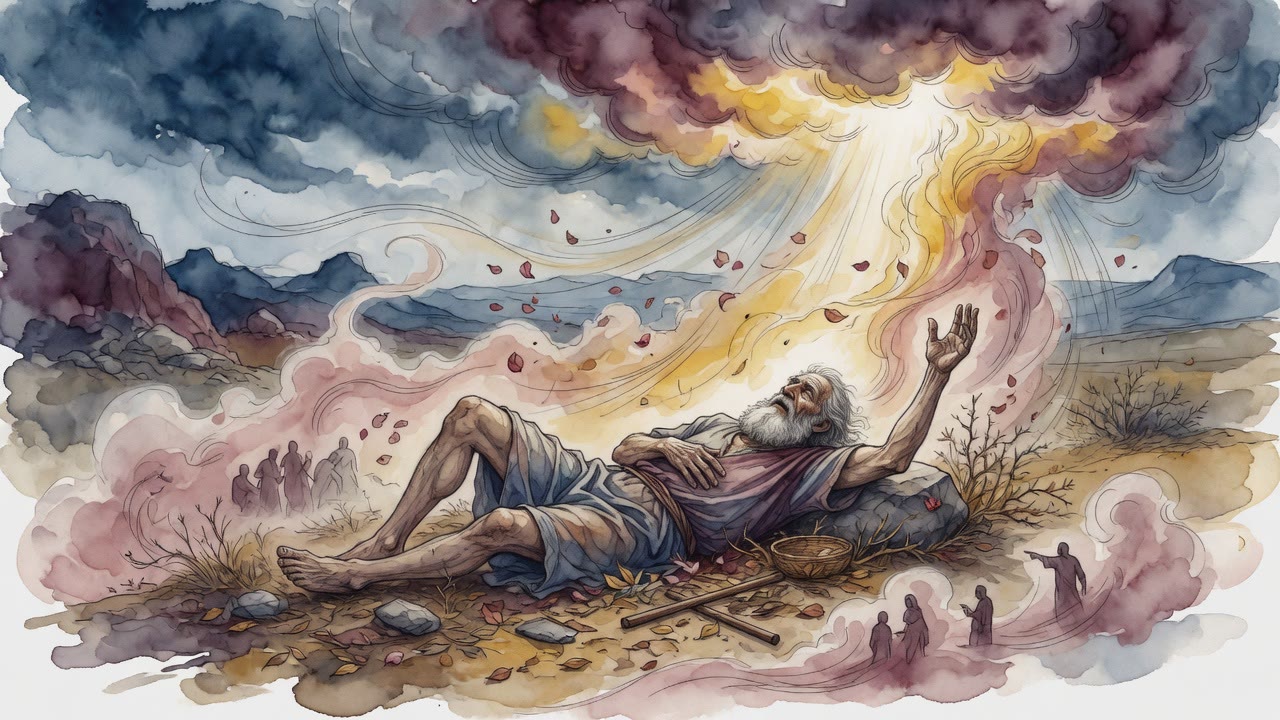
Eli was ninety-eight by then and could not see much. He sat by the road on his seat and waited, because his heart trembled for the ark. Then a man came up from the line with his clothes torn and earth on his head, and gave the news in the order a runner gives it. Israel had run. There had been a great slaughter. Both his sons were dead, Hophni and Phinehas, in one day.

Eli stayed in the chair through all of that. Then the runner said the ark of God was taken, and the old man went over backward off the seat by the gate, and the fall broke his neck, because he was old and he was heavy. He had judged Israel forty years.

Seven Months in a Philistine Field

The day he died he forsook his tabernacle. He rejected the tent of Joseph, the psalm says, and gave His strength into captivity (Psalm 78:67; 78:61).

After that the years got counted in the only unit anyone cared about, which was where the ark was sitting. Seven months for the ark in the fields of the Philistines. Then the men of Kiriath-Jearim came up and took it, and twenty years passed with it sitting there while the tabernacle went to Nob, where they offered for thirteen years, and then to Gibeon for seven. Then three months in the house of Obed-Edom the Gittite, who got rich for no reason anyone could name except the box under his roof.

In the middle of those years a boy who had been handed over at that doorway woke in the dark, because someone was saying his name, and got up to answer it. The doorpost at Shiloh stayed where it had always been. The seat in front of it stayed empty.


← All myths
From the tradition

Sources

2 sources

The texts behind this telling. Some cards carry a translation of the source; others are our own retelling of it, and each card says which. Every card links out to the original.

Aggadat Bereshit 40Aggadat Bereshit

Retold in our words. Read the original at the link below.Sefaria Community Translation · CC0

What made Eli the priest live so long? The midrash gives a simple answer: Torah study. "Fortunate is the man who listens to me, watching daily at my gates, waiting at the posts of my doors" (Proverbs 8:34). Eli was sitting at the doorpost of the Temple when Hannah came to pray (1 Samuel 1:9). The verse uses "sitting" not as a passive description but as a spiritual posture, the man who has stationed himself at the gate of wisdom and refuses to leave.

The same passage asks the harder question. Eli's sons, Hophni and Phinehas, were corrupt, they stole from the offerings and slept with the women who served at the entrance of the Tent of Meeting. Eli knew. He rebuked them, mildly, and then did nothing. The midrash is harsh: "He who sins against me wrongs his own soul" (Proverbs 8:36) applies to Eli's sons directly. But it also reaches backward to Eli, a father who taught Torah all his life and failed to enforce it in his own house.

The contrast between Eli's long life and his catastrophic end, the ark captured, his sons killed in one day, Eli himself dying when he heard the news, is the midrash's way of saying that Torah study alone is not enough. Knowledge without action curdles. Eli sat at the gate of wisdom for ninety-eight years. He never got up to stop his sons. God gave him long life and then demonstrated that length of days is not the same thing as a life well-lived.

Full source
Seder Olam Rabbah 13Seder Olam Rabbah

Translation of the source text.Seder Olam, Warsaw 1904 + Sefaria Community Translation · Public Domain

Eli led Israel for forty years, and the day Eli died, he forsook his tabernacle, as it is said, “He rejected the tent of Joseph” (Psalm 78:67), and “He gave His strength into captivity” (Psalm 78:61). And the Ark of the Lord was in the field of the Philistines for seven months. The Philistines called and said (1 Samuel 6:1-2). The men of Kiriath-Jearim came and took it, and it was from the day the Ark rested (1 Samuel 7:2). Subtract from these seven years the time David reigned in Hebron over Judah, which remained there for thirteen years, and subtract eleven years for Samuel himself and two years for Samuel and Saul. It was from the day the Ark rested (1 Samuel 7:2). At the beginning of these twenty years, the Tabernacle was brought to Nob. Although the Ark of the Lord was in Kiriath-Jearim, in Nob they offered sacrifices for thirteen years and for seven years in Gibeon. At the end of twenty years, David moved the Ark of the Lord from Kiriath-Jearim to the house of Obed-Edom the Gittite, and the Ark of the Lord stayed in the house of Obed-Edom the Gittite for three months (2 Samuel 6:11). From this, we learn that Obed-Edom was blessed only because of the Ark of God.
Saul was one year into his reign (1 Samuel 13:1). Samuel said to Saul at the time of his anointing, “You will go down before me to Gilgal” (1 Samuel 10:8). Saul went down in the first year and struck the Ammonite king, and the Israelites anointed him. In the second year, he went down and did not keep his promise. Samuel said to Saul, “You have acted foolishly; you have not kept the commandment of the Lord” (1 Samuel 13:13). In that chapter, David was anointed, as it is said, “And the Lord said to Samuel, ‘How long will you mourn for Saul?’” (1 Samuel 16:1). Then Samuel took the horn of oil (1 Samuel 16:13), and he was twenty-nine years old. And Saul was hostile towards David (1 Samuel 18:9), and it is said, “The Spirit of the Lord departed from Saul” (1 Samuel 16:14). In that chapter, Nob was destroyed, and they came to Gibeon.
All the days of Samuel the Seer were only fifty-two years. It is also said, “Eli the priest sat on the seat” (1 Samuel 1:9), and she was bitter in soul (1 Samuel 1:10). In that chapter, he was appointed as a judge, and it is said, “And he judged Israel forty years” (1 Samuel 4:18). Thirteen years remained. Subtract one year for the intercalation, eleven years for Samuel, and one year for Saul. Thus, fifty-two years. Samuel died about four months before Saul's death, as it is said, “And the number of days that David stayed in the field of the Philistines was days and four months” (1 Samuel 27:7). And afterward, David inquired of the Lord, saying (1 Samuel 30:8). Ish-bosheth, the son of Saul, was forty years old when he began to reign (2 Samuel 2:10), and he reigned for two years in Jerusalem. The kingdom of Israel was therefore nullified for five and a half years. All the elders of Israel came to King Hebron (2 Samuel 5:3). In that chapter, David was anointed again, being thirty years old at his anointing (2 Samuel 5:4), and he reigned for forty years.

Full source