Eli's Lads Seized the Meat Before the Fat Burned
At Shiloh the priest's lad demands raw meat before the fat can rise. Force answers the worshipper. Later Rabbi Meir finds a village with no gray hair.
Table of Contents
 Click for full size
Before the Fat Could Rise
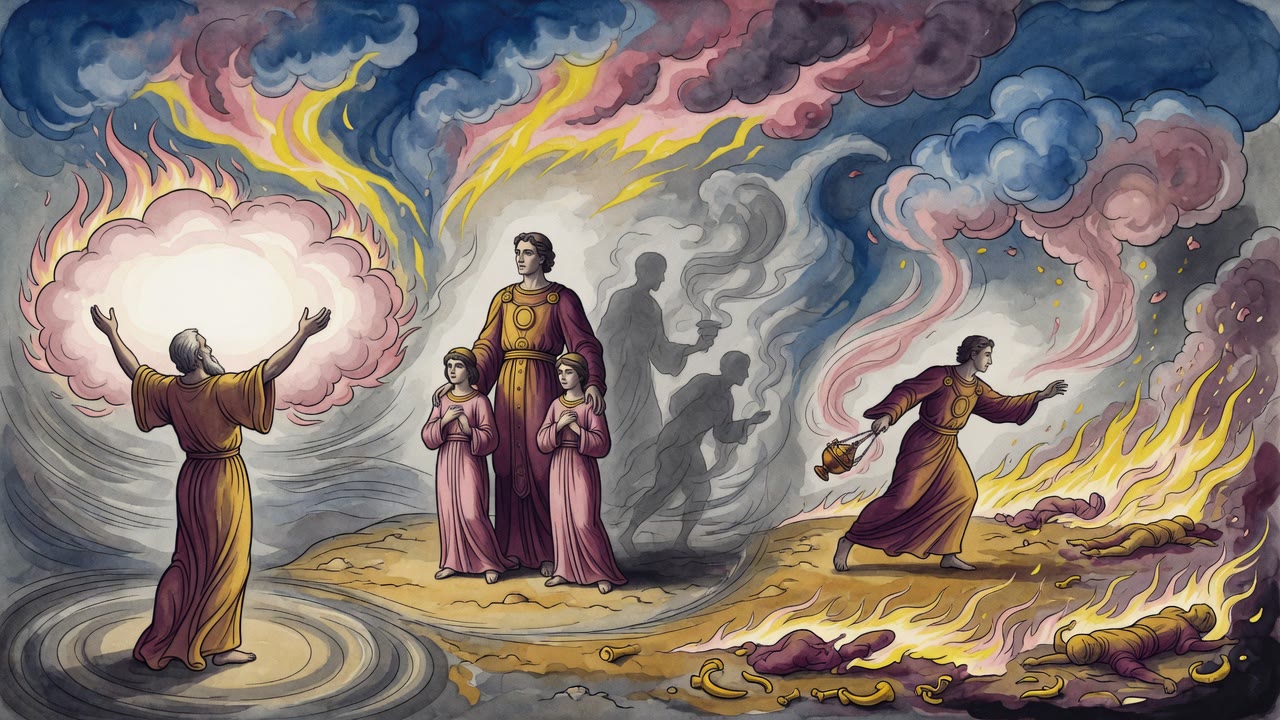
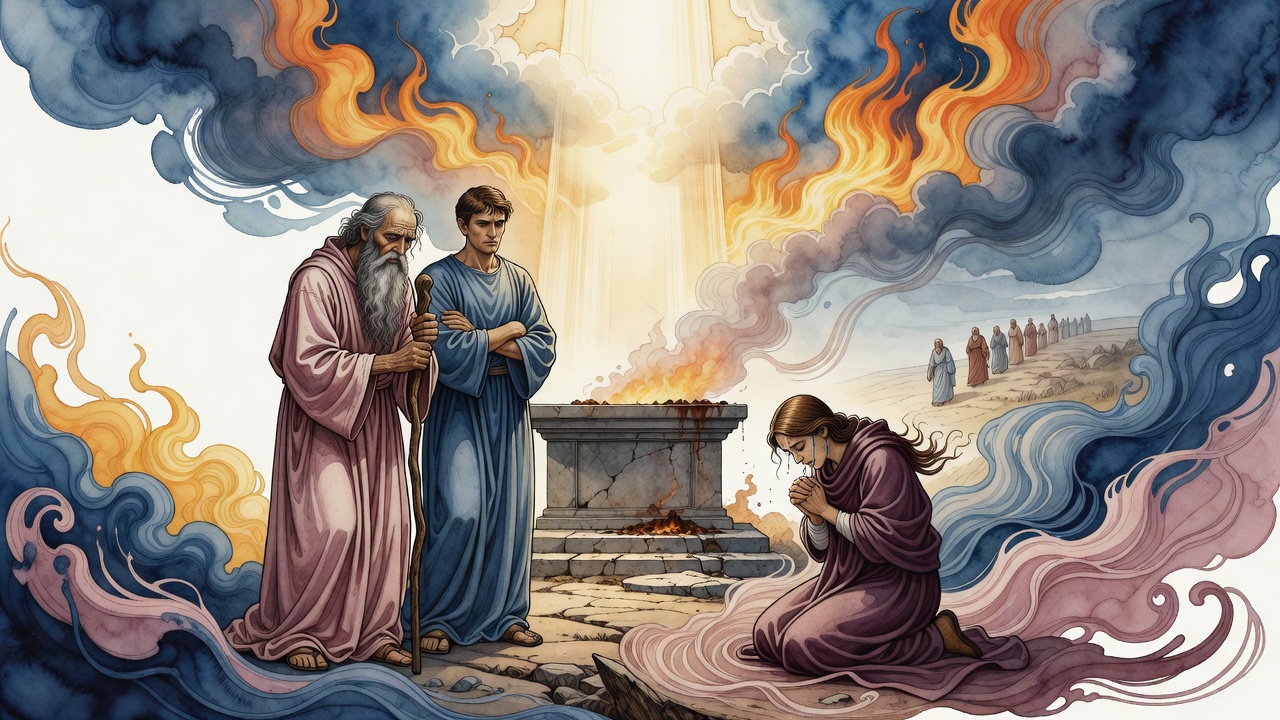
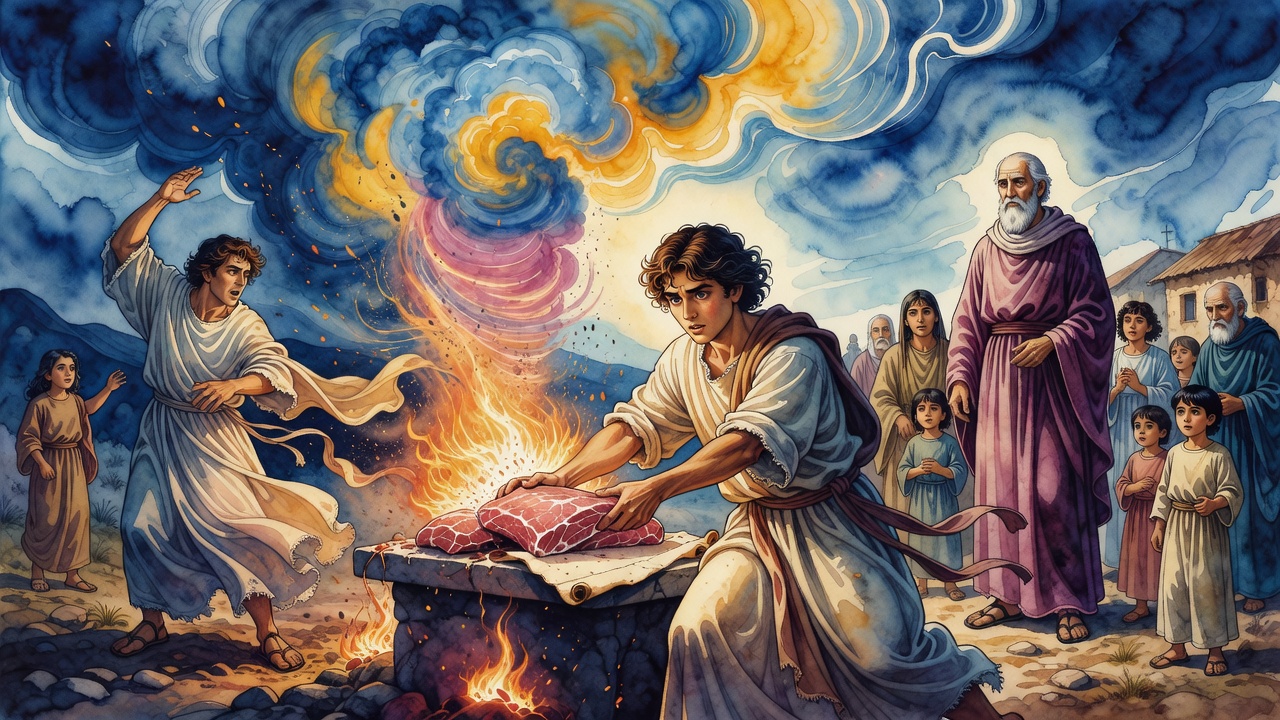
At Shiloh, before the fat of an offering could be burned to Heaven, the lad of the priest arrived and demanded meat for roasting. He would not accept boiled meat. Only raw. He would not wait for the fire to take what belonged to the fire. When the worshipper pleaded, "Let the fat be burned first, then take whatever you wish," the lad answered, "No. Give it now, or I will seize it by force."
The altar waited while a boy's appetite rewrote the order of service. Blood that should have been dashed stayed undashed. Fats that should have risen stayed in the sun until the heat did what the priest would not. Flies found what Heaven was denied, and the smell of spoiled holy portions became its own accusation.
Sons of Belial at the Sanctuary Door
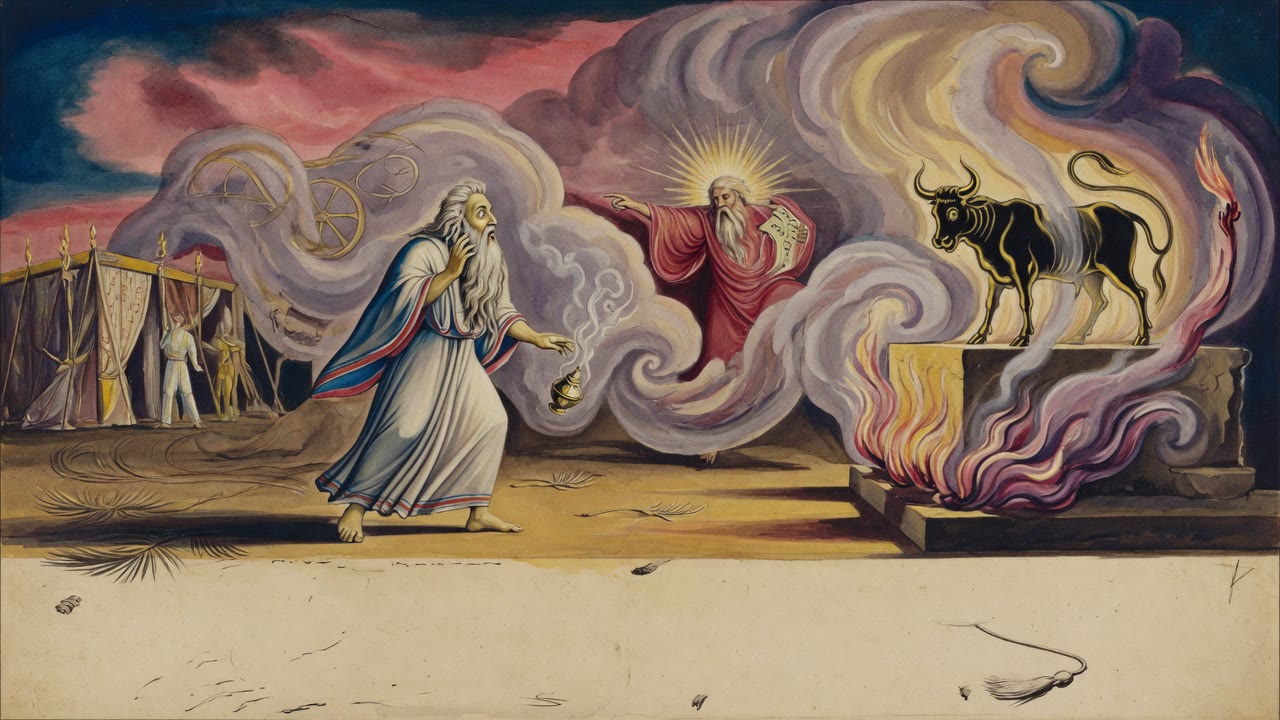
Israel protested the plain sequence. Let the priest first dash the blood and burn the fats, and only afterward take his portion. The answer came back harder from mouths trained in force. The blood I will not dash. The fats I will not burn. Give me meat to roast, and if not, I have taken it by force. Scripture renders its verdict without soft edges. The sons of Eli were sons of belial, worthless men who threw off the yoke of Heaven and dared to live as if there were no kingship above the fork and the spit.
The same word "belial" marks those who go out to lead Israel astray. Theft at the altar is not a small clerical abuse. It is a public claim that appetite outranks the King, and that a sanctuary can be run like a kitchen under the control of the hungriest boy with a title.
A Decree Against Gray Hair
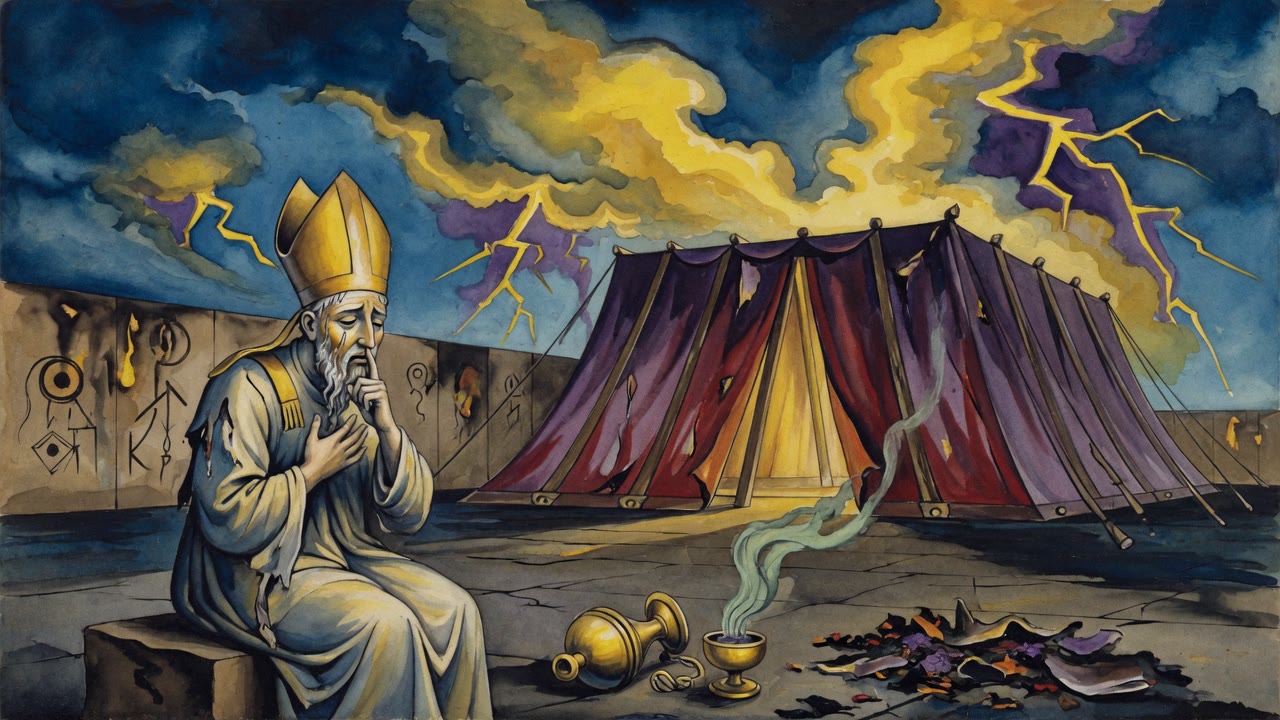
Against the house of Eli a terrible thing was spoken. All the increase of your house shall die as men, struck down in their prime, never to wear gray hair. The curse did not only name death. It named the missing crown of age. A lineage that robbed the altar would not live long enough to grow white. Youth itself became a warning sign if it never left.
Years later Rabbi Meir came up to a place called Mamla. He looked upon the men and saw that every head was black. Not a strand of white among them. None who had grown old. A chill of recognition moved through him, the way a physician recognizes a family illness by a pattern no one in the room wants to name. Tell me, he said, could it be that you are descended from the family of Eli? For upon that house the curse was spoken, that its sons should die as men, before their time.
Occupy Yourselves With Charity
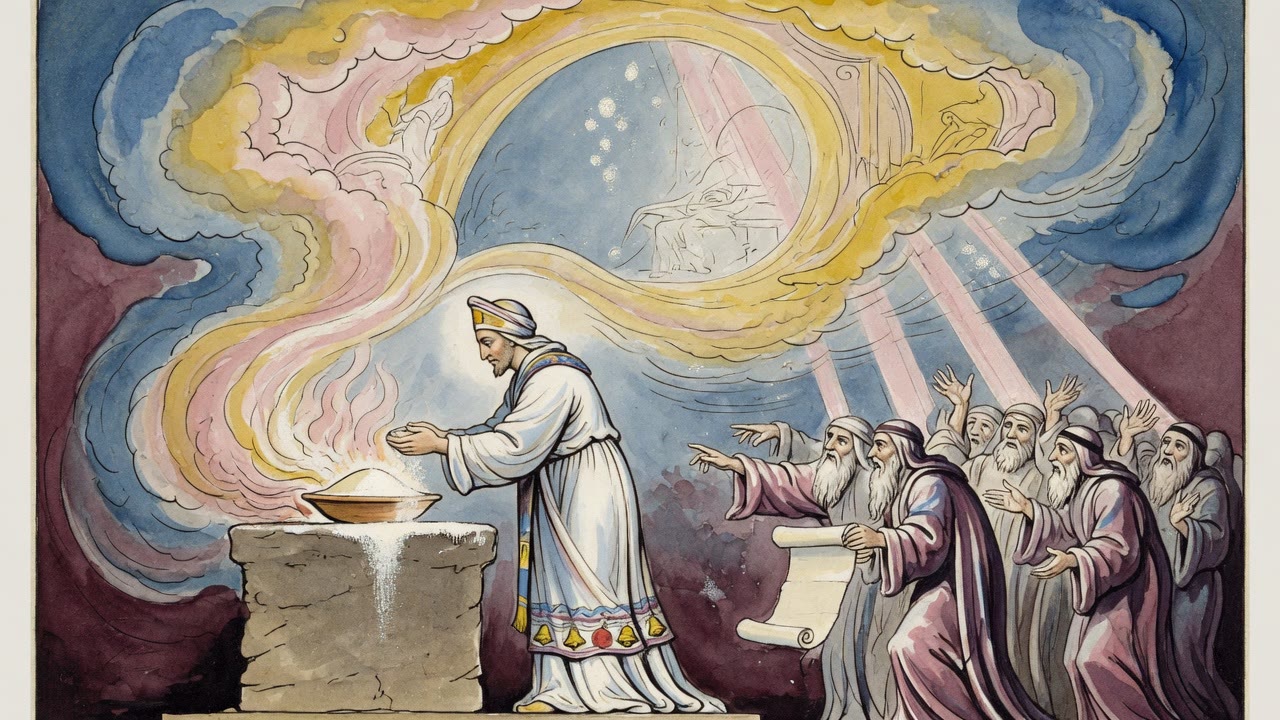
The men were frightened. They pleaded for prayer the way drowning men plead for rope. Rabbi Meir did not simply pray and leave them passive under a decree. He handed them a remedy they could carry in their own hands. Occupy yourselves with charity, he told them, and you will lengthen your days. Then he opened Scripture before them. A crown of glory is the hoary head. And where is that crown of white hair found? In the way of charity it is found. Give, and you may yet grow old.
The house that had seized meat before Heaven received its share was told to reverse the motion of the hand. Take less. Give more. The curse had been spoken against men who ate first. The cure was spoken toward men who would put another first, coin by coin, until white hair could dare to appear again on a head that had learned a different hunger.
Two Generations, One Hunger
At Shiloh the hunger was literal. Raw flesh in a lad's fist while fat blackened under the sun and a worshipper stood empty-handed before a God he had come to honor. At Mamla the hunger was for years the curse had stolen in advance, for a future that never arrived, for the dignity of aging that other families took for granted. Rabbi Meir did not deny the decree. He taught a path through it that cost something real.
The sanctuary remembers both scenes. One is force at the altar. One is black hair in a village that suddenly fears its own youth. Between them runs a single thread. What you seize from the holy returns as a shortened life. What you give toward the living may yet buy the years your fathers burned for meat. A crown of glory is not stolen from the spit. It is found on the road of charity, one open hand at a time.
A worshipper who came with an offering left with a story of robbery dressed as priesthood. Children watching learned that holy titles can hide open hands. That lesson is why the later curse on gray hair feels less like random fate and more like a body keeping score. Years stolen from a lineage match portions stolen from an altar, and the ledger stays open until charity starts writing a different column.
← All myths