5 min read

Eli's House Lost the Priesthood Because Phinehas Never Stopped Hophni

Phinehas was the worthier son, but silence about Hophni cost Eli's house the altar. Hannah prayed enemies into mercy while the line of Zadok rose.

Curated by Arthur · Told by Maggid ·
Table of Contents
  1. The Worthier Brother Who Would Not Correct
  2. The Decree That Split in Two
  3. Hannah's Rival and the Arithmetic of Birth
  4. Three Crowns on One Head
  5. What Silence Cost at Shiloh
Eli's House Lost the Priesthood Because Phinehas Never Stopped Hophni Click for full size

The Worthier Brother Who Would Not Correct

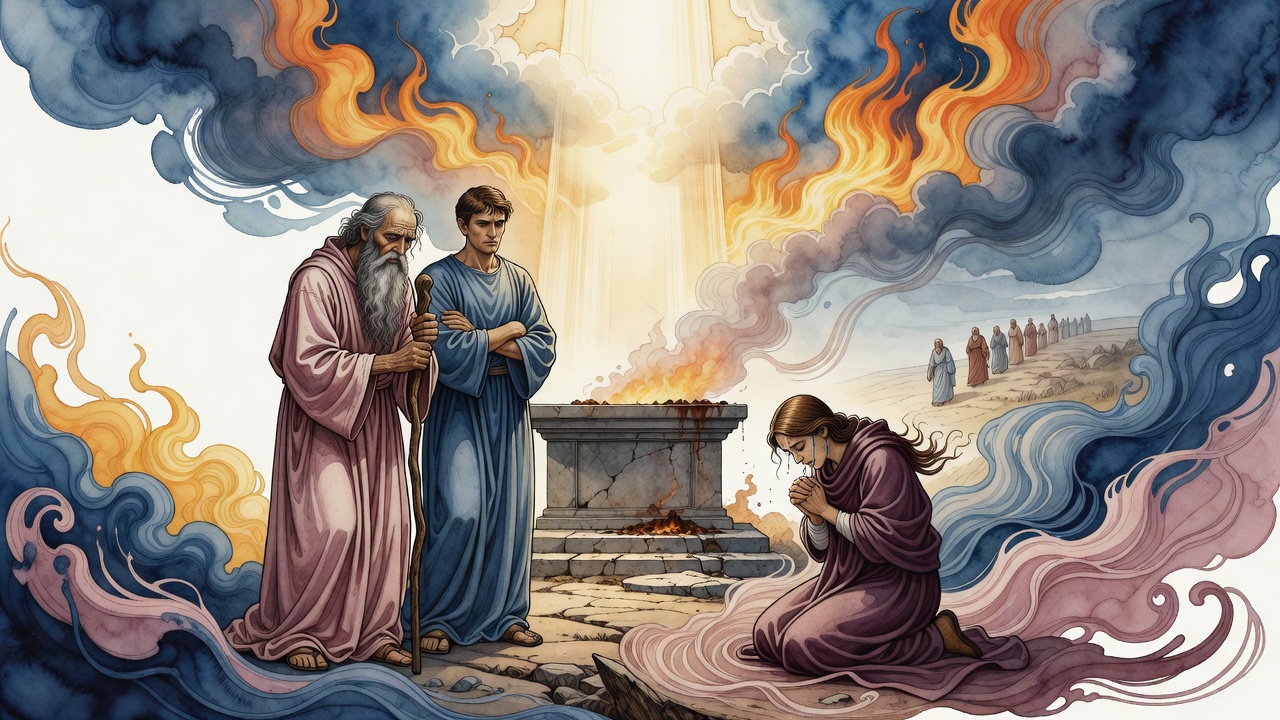
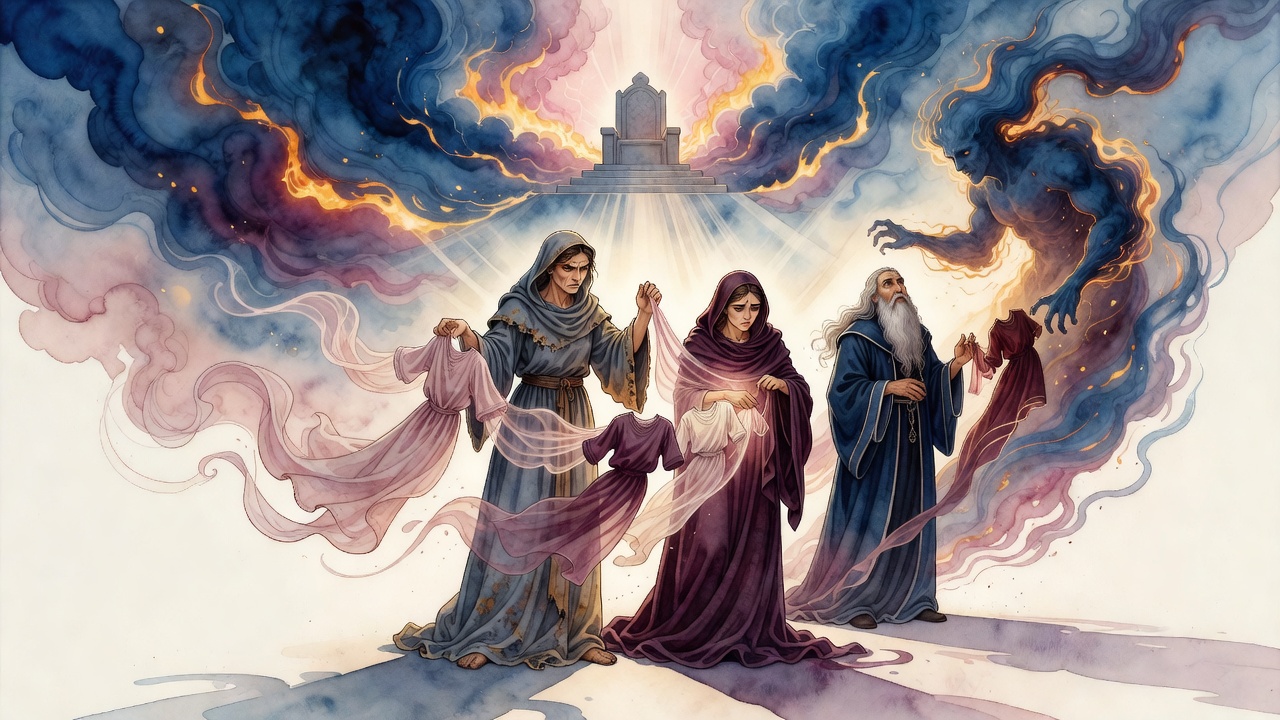
Eli had two sons, Hophni and Phinehas. The younger Phinehas, not to be confused with later men of that name, was counted the worthier. He even served as High Priest in his father's lifetime. The charge against him was not theft at the pot or violence at the door. The charge was quieter and heavier. He did not push hard enough to stop his brother.

Righteousness that stays private while a sibling desecrates the sanctuary is, in this ledger, a form of guilt. The altar does not only ask for clean hands on the offering. It asks for a mouth willing to confront the other pair of hands in the same house. Phinehas kept his own service cleaner than Hophni's. Heaven still read the silence as partnership. A worthier name without a hard conversation is only half a priest.

The Decree That Split in Two

A man of God named Elkanah brought Eli the sentence. The high-priestly dignity would leave his line and return to the line of Eleazar. All of Eli's descendants would die young. The second clause, the early deaths, could still be bent by good deeds, prayer, and Torah study. Lives could be lengthened. The office itself would not come back.

The house had forfeited the miter. Teshuvah (repentant return to God) could soften the grave's haste. It could not reopen the gate to the High Priesthood. That key was already cut for another family. Mercy and judgment arrived in the same message, sorted into two drawers.

Generations later Abiathar, last of Ithamar's line on the throne of the altar, watched David hand the priesthood to Zadok. The transfer stuck. Zadok's house kept the dignity forever after. The prophecy walked into history on two feet and did not limp back.

Hannah's Rival and the Arithmetic of Birth

In the same era Hannah suffered under Peninnah, the co-wife who taunted her barrenness. The legends keep a cruel symmetry. Each time Hannah bore a child, Peninnah lost two of hers. Eight of Peninnah's ten children died. The last two stood on the edge of the same cliff.

Hannah, who had been the target, prayed for the woman who had mocked her. Mercy from the wounded side of the tent. The prayer held. Peninnah did not lose the rest. The woman who once weaponized fertility lived to see that heaven's answer to cruelty can be both judgment and, after intercession, a stay of total ruin.

Hannah also lived to see her son rise. The rival's fall and the prophet's rise shared one household clock. Shiloh heard both the taunt and the prayer that outlasted it.

Three Crowns on One Head

Eli himself held three offices at once: High Priest, head of the Sanhedrin, and political ruler of Israel. He was pious and long-lived, a man who succeeded an earlier Phinehas after that Phinehas lost dignity through arrogance toward Jephthah. The line of Ithamar rose under Eli. The line of Eleazar waited in the wings of memory.

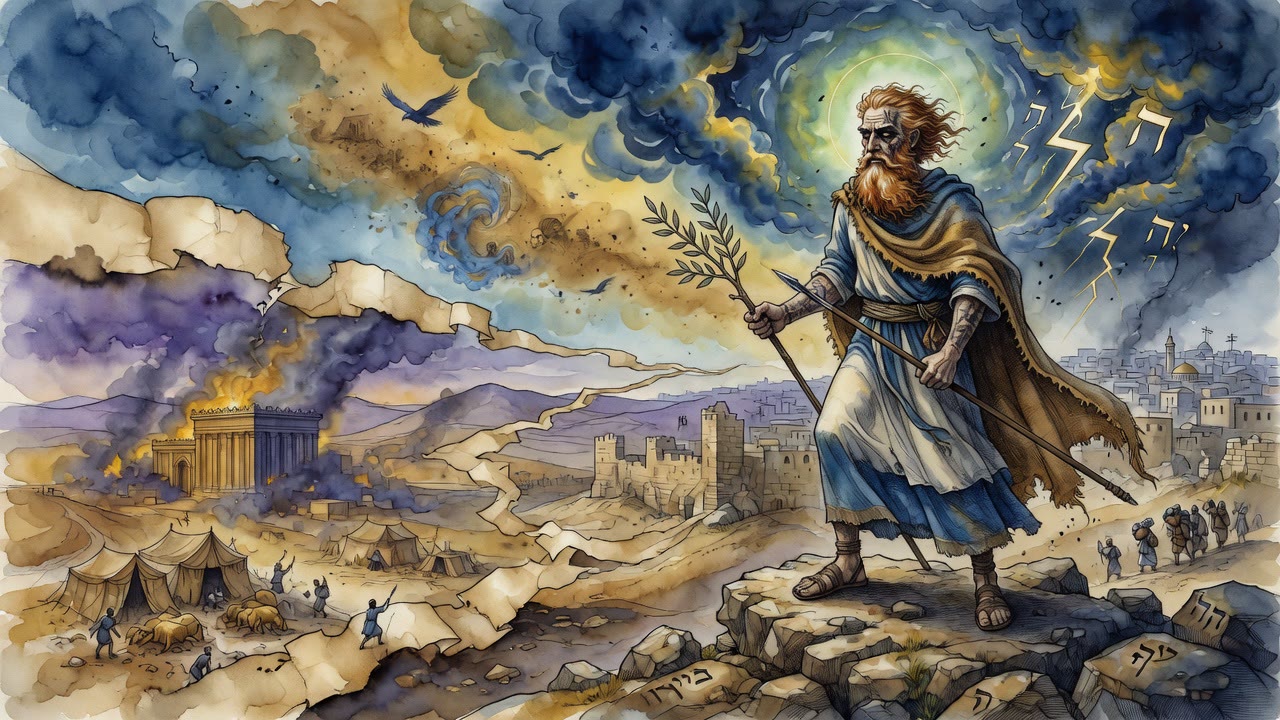
Power piled on a scholar's shoulders does not guarantee sons who fear the sanctuary. Hophni and the younger Phinehas of Eli's house brought misfortune down on the whole family. Some traditions soften the worst scriptural charges into milder sins, but the outcome does not soften. The house fell. The Ark's capture and the old man's broken neck sit downstream of uncorrected brotherhood.

Three crowns could not buy one hard conversation early enough. Study lengthened Eli's own years. It did not teach his sons to tremble at the threshold of the holy.

What Silence Cost at Shiloh

Set the two houses side by side. Eli's worthier son fails to restrain the worse, and the priesthood migrates to Zadok for good. Hannah, once barren and mocked, both births a prophet and prays her rival back from total bereavement. One story is about a man who would not police his brother at the altar. The other is about a woman who would pray even for the mouth that had cut her.

Shiloh held both dramas under one roof of smoke and sacrifice. The High Priest who judged Israel could not, or would not, judge his own sons into repentance in time. The barren wife who barely had a voice in the household spoke a prayer that rearranged a rival's fate. Authority without correction empties the miter. Suffering with mercy fills the next generation with a prophet.

When Zadok finally stood where Eli's line had stood, the silence of Phinehas about Hophni had already finished its long work. The incense still rose. The family name over the service had changed. Hannah's child would anoint kings. Eli's grandsons would die young unless prayer and study bent that second decree. The first decree, the lost priesthood, stayed shut.

In the end Shiloh kept two ledgers. One listed offices lost because a worthier brother would not restrain a worse one. The other listed children born and children spared because a once-mocked woman chose prayer over revenge. Eli's three crowns could not rewrite the first ledger. Hannah's whispered mouth rewrote the second. Between them the sanctuary learned that silence is also a deed, and mercy is also a form of power.


← All myths

From the tradition

Sources

2 sources

The texts behind this telling. Some cards carry a translation of the source; others are our own retelling of it, and each card says which. Every card links out to the original.

Legends of the Jews 3:13Legends of the Jews

Retold in our words. Read the original at the link below.The Legends of the Jews by Louis Ginzberg (1909) · Public Domain

Eli, as the story goes, had two sons, Hophni and Phinehas. Now, Phinehas – not to be confused with Eli's grandson of the same name – was the younger, and, well, let's just say he was considered the "worthier" of the two. This younger Phinehas actually served as High Priest during Eli's lifetime. But here's the rub: the only real criticism leveled against him was that he didn't try hard enough to correct his brother's behavior. for a second. To not just live righteously yourself, but to actively guide those closest to you? The stakes were incredibly high.

The real hammer blow, though, came in the form of a divine decree. Elkanah, described as a "man of God," brought the grim news to Eli. The high-priestly dignity, the very core of Eli's family legacy, would be taken away. It would be returned to the line of Eleazar. Not only that, but Elkanah foretold that all of Eli's descendants would die young.

Ouch.

Here’s a fascinating point. This prophecy about dying young wasn't entirely inescapable. Good deeds, fervent prayer, and dedicated Torah study could potentially avert that particular doom. readers often find this theme woven through Jewish thought – the power of teshuvah (repentance) and righteous action to alter even seemingly fixed destinies. These practices were often successful at prolonging life.

But the loss of the high priest's office? That was irrevocable. The house of Eli had forfeited it, plain and simple. No amount of good deeds could change that.

The final act in this drama played out with Abiathar, the great-grandson of Eli's son Phinehas. Abiathar, the last High Priest from the line of Ithamar, had to witness David transfer the high priesthood to Zadok. And, as the text emphasizes, the high priesthood remained in Zadok's family forever after that.

A reminder that even those in positions of great authority and spiritual leadership are held accountable. That choices have consequences, not just for individuals, but for entire lineages. What does it tell us about legacy, about responsibility, and about the enduring power of choices, both good and bad? Perhaps, that we are all connected, and our actions echo far beyond ourselves.

Full source
Legends of the Jews 3:11Legends of the Jews

Retold in our words. Read the original at the link below.The Legends of the Jews by Louis Ginzberg (1909) · Public Domain

It’s a powerful story of faith rewarded, but there's more to it than just that. The legends tell us that Hannah lived to see not only her son's rise to greatness, but also the downfall of her rival, Peninnah.

Remember Peninnah, the other wife of Elkanah, who taunted Hannah for being barren? The tables turned in a dramatic way. The Legends of the Jews recounts a fascinating detail: every time Hannah gave birth, Peninnah lost two of her children. The joy of one woman directly tied to the grief of the other.

The story continues that eventually, eight of Peninnah’s ten children died. She stood to lose them all. It was Hannah, of all people, who interceded on Peninnah's behalf with prayer. The woman who was once the target of so much cruelty now offers compassion and mercy. It's a powerful evidence of the transformative power of faith and forgiveness.

Let's shift our focus to Eli, the High Priest, a central figure in Samuel’s early life. He wasn’t just any priest. According to the Legends of the Jews, Eli held the three highest offices in the land: High Priest, President of the Sanhedrin (the Jewish high court), and ruler over the political affairs of Israel. A real powerhouse!

Eli was a pious man, devoted to studying the Torah, and because of this, he lived a long and respected life. He actually succeeded Phinehas as High Priest – that's quite a lineage! We're told that Phinehas lost his high-priestly dignity because he acted haughtily toward Jephthah. With Eli, the line of Ithamar rose to prominence, taking the place of the line of Eleazar.

But here's where the story takes a darker turn. Eli's sons, Hophni and Phinehas (yes, another Phinehas!), were far from righteous. Their wicked deeds ultimately brought misfortune upon Eli and his entire family. Now, the Scriptural account of their conduct might not be literally true, according to some interpretations.

The Legends of the Jews, drawing from rabbinic sources, offers a slightly different perspective. The Legends state that the sons of Eli weren’t necessarily committing the egregious sins that are sometimes imagined. Instead, their transgression, according to some accounts, was that they would delay the women who came to the sanctuary to bring their purification offerings, thus delaying their return home to their families. It might seem minor, but it was a serious offense for priests of God.

As we find in Midrash Rabbah, even these seemingly small misdeeds had severe consequences, especially for men in their position. And their father, Eli? He didn’t rebuke them strictly enough. He didn't hold them accountable. As a result, Eli was punished. He aged prematurely and had to give up his offices.

The story of Eli and his sons serves as a powerful reminder that even the most pious individuals can be affected by the actions of those around them, especially their own children. It highlights the importance of holding ourselves and our loved ones accountable for our actions, and the devastating consequences that can arise when we fail to do so. It also shows us the ripple effects of both righteousness and wrongdoing, impacting not only individuals, but entire families and communities.

Full source