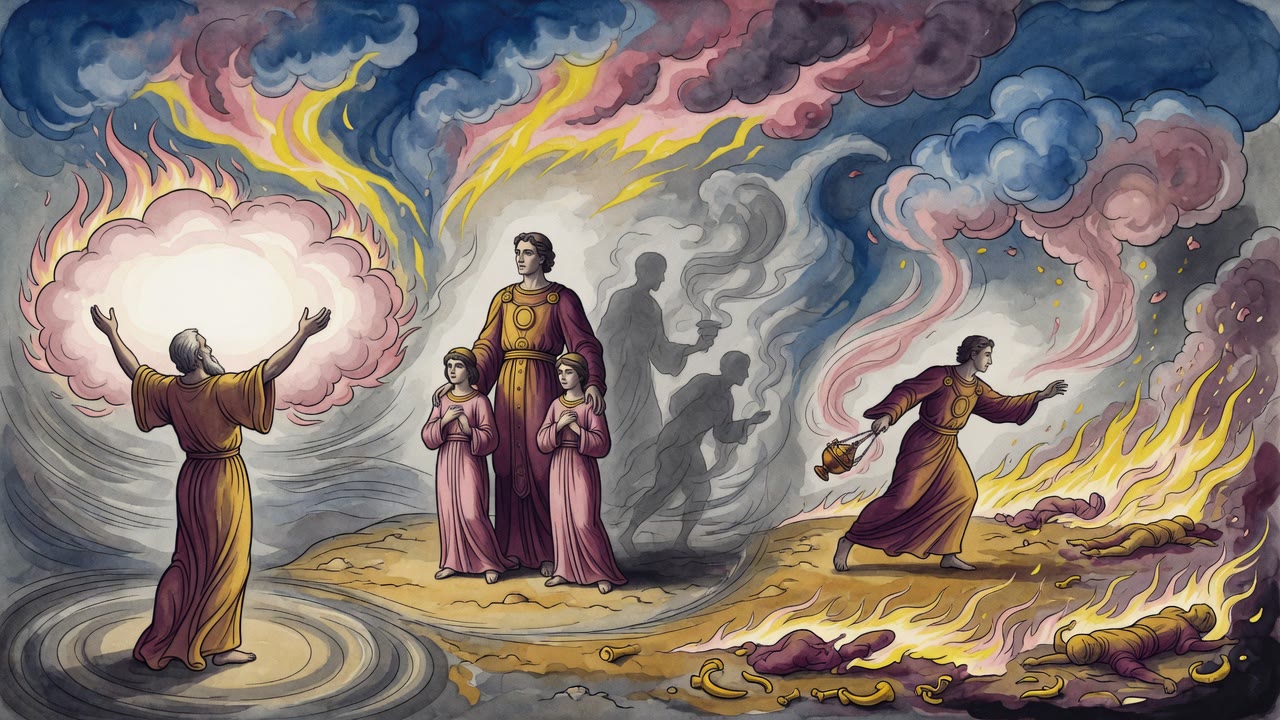
Hannah Hardens Her Spirit Before Eli at Shiloh
At Shiloh a barren woman moves her lips without sound. Eli calls her drunk. She answers that she is a woman of hardened spirit and bargains Heaven for a son.
Table of Contents
 Click for full size
Lips Moving Without Sound
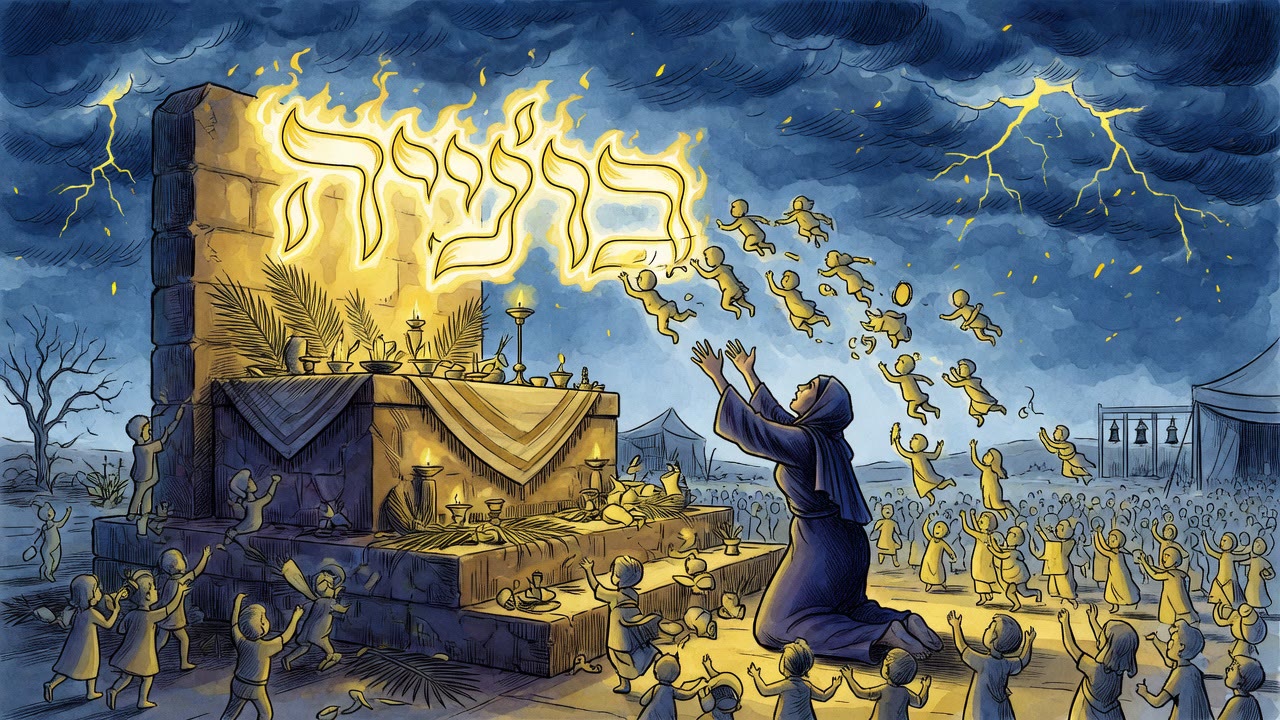
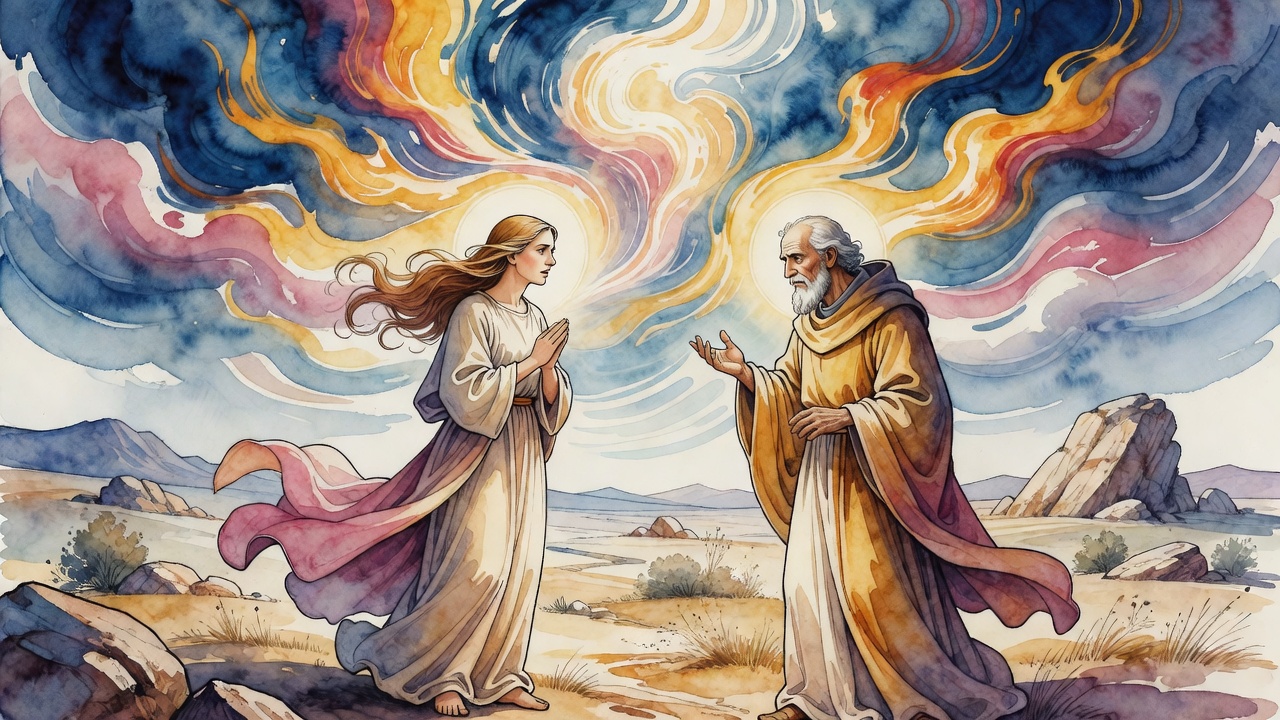
Hannah stood at Shiloh with her mouth working and no voice coming out. Festival crowds filled the courts. Pilgrims pressed toward the sanctuary with baskets and vows. She had come up with Elkanah year after year, and year after year her rival's children climbed her husband's knees while her own arms stayed empty. On this day her spirit did not soften into private weeping. It hardened into a claim.
Eli the priest watched the trembling mouth and reached for the easy charge. Drunkenness. He had seen wine loosen too many pilgrims at festival time. He had not seen a woman pour her soul through closed lips until the body shook and the sanctuary itself became a courtroom.
A Woman of Hardened Spirit
"No, my lord," she answered without flinching. "I am a woman of hardened spirit." Neither new wine nor aged wine had passed her lips. She had poured out not drink but her very soul before the Lord. Do not count me a daughter of worthlessness, she said. Do not trample me underfoot like standing grain ready for the harvest. Out of the fullness of her grief and vexation she had spoken until now, and the fullness had left her almost voiceless.
The hardness was not cruelty. It was a spine braced against the daily taunt of a rival who measured fertility like a market stall. There are women, the tradition later places her among them, who must knock and weep and wait at the gates of Heaven before a womb opens. Sarah belonged to that company. Hannah counted herself in the same line and would not let a priest's mistake write her out of it.
Remember Me as One of the Multitude
She argued with her own nature first. If I belonged to the upper beings, the angels, then I would not die. But I am flesh of the lower world. Let me at least be fruitful and multiply like every creature below that fills a nest without being asked. Then she turned the camera on the festival itself. Master of all worlds, of all these multitudes before You, will You not remember me as one of them?
How many nests of swarming and creeping things You sustain, and me You will not remember as even one of them? A poor man once passed a rich table and was invited to take merit by eating. Go on, the beggar answered, and you shall come to me. Hannah pressed the claim of the poor one at the King's table. Of all Your multitudes, do not pass me by. The festival that made her invisible became the proof that she should be seen.
A Seed of Men, Not a Soft Request
Her vow did not ask for a child in general. "You will remember me," she said, and the words carried sons. "Do not forget Your maidservant," and the words carried daughters. Then the final plea cut sharper. "Give Your maidservant a seed of men." Not a face unlike a man. Not a eunuch's future. Men who were understanding, as Moses sought wise and understanding men. Men who were prophets. Men who were great. Men who were righteous enough to stand in a public reckoning.
Why ask for sons so wise, so great, so holy? Because they are for the sake of the Holy One, she answered. A craftsman sits fashioning a crown for the king. A passerby urges him to set every precious stone into it, for it will rest upon the king's head. Hannah sought a son the way a crown-maker seeks gems. The child was never meant to decorate her own table alone. He was meant to wear a weight that belonged to Heaven first.
Eli Turns From Charge to Blessing
The old priest heard the answer and the charge fell out of his mouth like a tool he should never have picked up. Go in peace, and may the God of Israel grant the petition you have asked of Him. Hannah left the sanctuary no longer as a defendant. She left as a woman who had stood her ground against both a rival's mockery and a priest's mistake, and who had forced the language of prayer into a vow Heaven would have to answer in public time.
She would wean the boy and bring him back to the very courts where she had been misread. She would name him for the asking itself. For now the hardened spirit had done its work. It had refused wine's easy label, refused silence's erasure, and refused a small request when only a large one matched the King she served. Shiloh had heard a quiet mouth rewrite the terms of hope.
← All myths