5 min read

Hannah Prayed With a Heavy Head in Shiloh

In the sanctuary at Shiloh, Hannah's lips move without sound while her bitterness rises, teaching Israel how a heavy head opens heaven.

Curated by Arthur · Told by Maggid ·
Table of Contents
  1. Before the Word Is Born
  2. David Turns a Private Cry Into a Nation's
  3. Challoti Means Entreaty, Not Collapse
  4. What a Heavy Head Looks Like

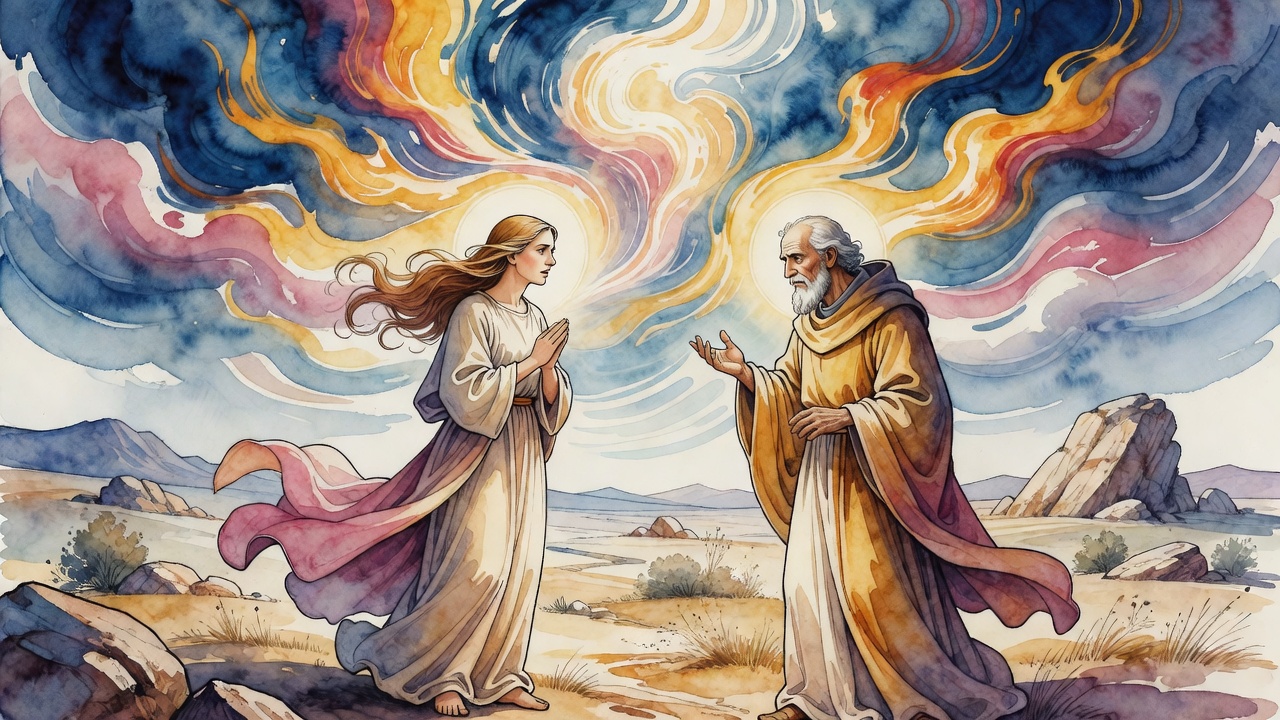
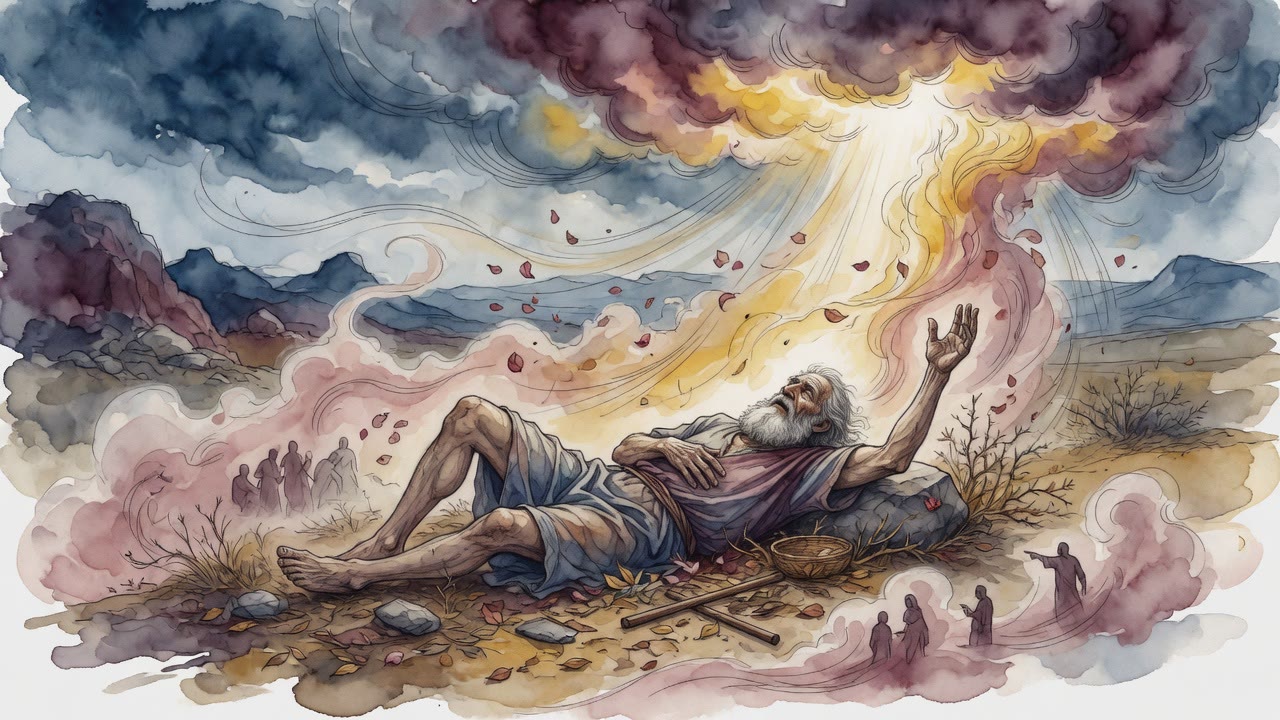
Hannah stood in Shiloh with her lips moving and no voice coming out, and Eli watched her the way a man watches something he does not yet understand.

Hannah Prayed With a Heavy Head in Shiloh Click for full size

Bitterness had filled her years. Peninnah's children filled the house with noise and barbs. Hannah's arms stayed empty. She came to the sanctuary not with a polished speech but with a heavy head, the weight the sages later named as the first law of prayer. Prayer demands gravity. A light mind scatters. A heavy mind presses wordless need through the mouth until heaven hears what the throat cannot voice. Her shoulders curved. Her lips shaped words she would not spend on the air. The priest saw only the motion and guessed wine.

Before the Word Is Born

Later Hannah sang, "There is none holy as the LORD, for there is none beside You." The sages bent their ears to that final word and heard within it that there is no wearing-away of God, no thought that escapes Him before it is ever born. Rabbi Yochanan, in the name of Rabbi Shimon ben Yehotzadak, taught that before a single thought takes shape in a person's heart, it is already revealed before God. And in the name of Rabbi Yirmeyah he closed with the Psalmist: "For there is not a word in my tongue, but lo, O LORD, You know it altogether."

Hannah's silent lips fit that teaching exactly. She did not need to finish a sentence for the sentence to be known. The prayer was read above while it was still forming below. Eli misread her for a drunk. Heaven did not misread her at all. The distance between a priest's eye and God's knowledge is the width of a sanctuary and the height of a mistake.

David Turns a Private Cry Into a Nation's

King David poured his heart into the Psalms until the rabbis could say that everything he spoke, he spoke about himself and about all Israel. "When I call, answer me, O my righteous God" becomes more than one man's night. It becomes the congregation saying, vindicate me; if I am without merit, do it for the sake of Your charity with me.

David knows the line of Judah is heard. He also knows a person may still need to plead as if empty of claim. Stringed instruments carry the cry, but the midrash hears more than music. It hears a king refusing to keep agony private when a people will later need the words. Hannah's model and David's model meet: personal pain that opens into a grammar other mouths can use. A barren woman's whisper and a king's song teach the same posture, head bowed under real weight, not under theater. One stands in Shiloh. One writes for generations. Both refuse a light head.

Challoti Means Entreaty, Not Collapse

When the verse cries "Challoti hi," "This is my entreaty" (Psalms 77:11), Rabbi Alexandri seizes the word and turns it toward prayer. All the calamities that fell upon us, he taught, came because we did not entreat the Holy One. Challoti is not idle complaint. It is the language of supplication, the same root that commands, "And now, entreat the favor of God" (Malachi 1:9). Softening the divine face is work, not decoration.

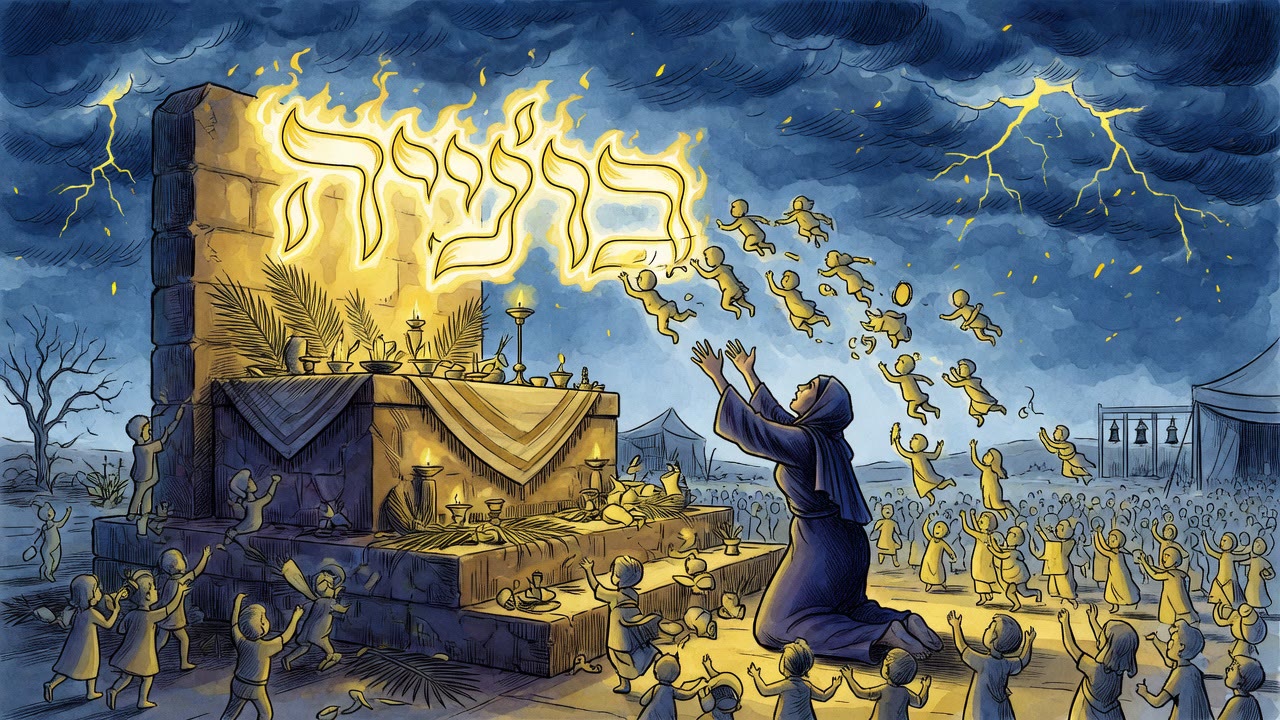
Will the Lord reject forever? Alexandri answers with a memory of Moses. When Moses burned with anger against Israel, it was God who placated him and drew him back toward the camp. If God Himself stooped to calm His prophet, He will not reject His people forever. The door of entreaty stands open. Hannah already knew how to knock without raising her voice. Disaster, in this reading, is sometimes the bill for prayers never offered. Entreaty is the refusal to leave that bill unpaid.

What a Heavy Head Looks Like

It looks like a woman accused of drunkenness while she is negotiating for a child. It looks like a king writing songs that refuse to stay private. It looks like a people learning that calamity can follow unoffered prayer. It looks like God reading thoughts still wet in the mind, unfinished, unpretty, and still accepted as speech. It looks like lips that move while pride stays silent and need does not.

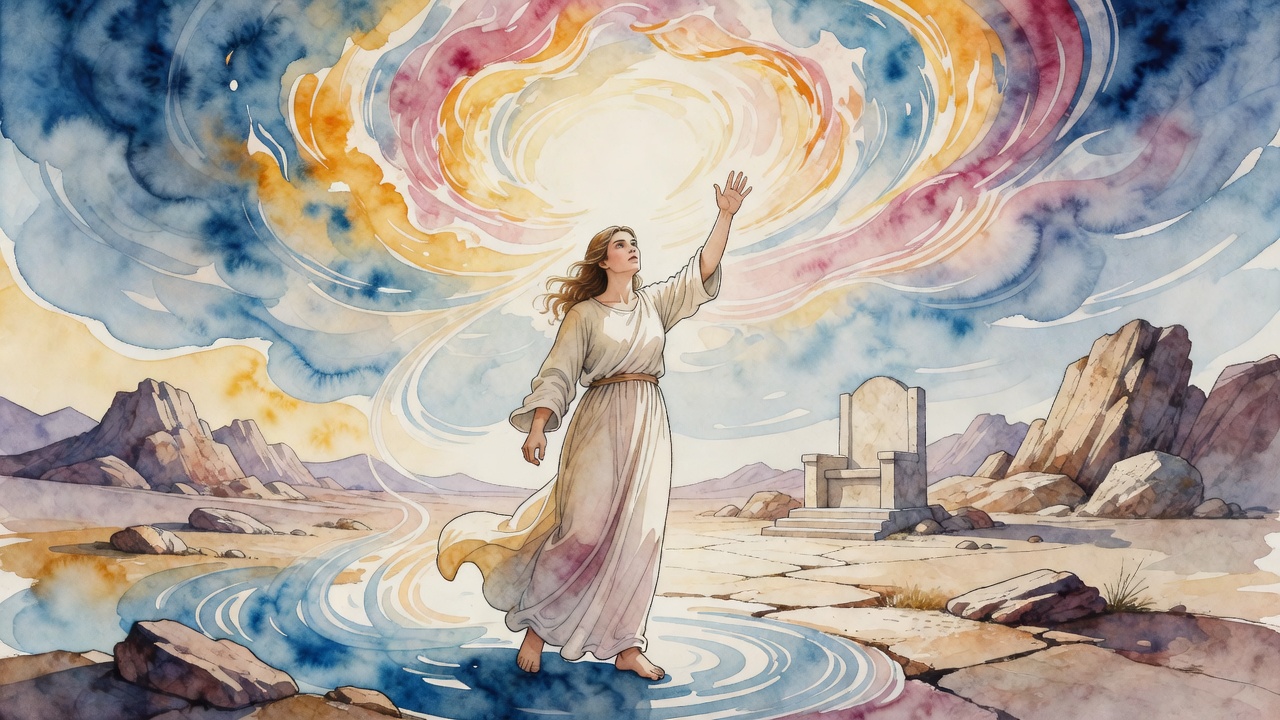
The sanctuary at Shiloh does not reward cleverness. It rewards weight. Hannah leaves with a promise taking root, a son who will sleep near the ark and hear a call in the night. Israel inherits her method: stand, move the lips, keep the head heavy, and trust that the One who knows the word before the tongue seizes it will also know the need that never found a perfect sentence. When later generations open a siddur, they are still borrowing the gravity of that first misunderstood woman in the doorway of the shrine.


← All myths
From the tradition

Sources

4 sources

The texts behind this telling. Some cards carry a translation of the source; others are our own retelling of it, and each card says which. Every card links out to the original.

Yalkut Shimoni on Nach 78:2Yalkut Shimoni on Nach

Translation of the source text.Yalkut Shimoni on Nach (Sefaria) · CC-BY-NC

"And she was bitter of soul" (1 Samuel 1:10). Our Rabbis taught: One stands to pray only out of gravity of head [a settled, sober frame of mind]. From where do we know these words? Rabbi Elazar said: For Scripture states, "And she was bitter of soul, and she prayed" (1 Samuel 1:10). But from what is this proven? Perhaps Hannah is different, for her heart was exceedingly bitter. Rather, Rabbi Yose bar Hanina said: From here, "But as for me, through Your abundant kindness I will enter Your house; I will bow toward Your holy sanctuary in the fear of You" (Psalms 5:8). From what is this proven? Perhaps David is different, for he afflicted himself greatly in seeking mercy. Rather, Rabbi Yehoshua ben Levi said: From here, "Bow down to the LORD in the beauty of holiness" (Psalms 29:2). Do not read "in the beauty [hadrat] of holiness" but "in the trembling [ḥerdat] of holiness." From what is this proven? Perhaps, I might say to you, it really means actual beauty, as in the case of Rav Yehuda, who would adorn himself and then pray. Rather, Rav Nahman bar Yitzhak said: From here, "Serve the LORD with fear, and rejoice with trembling" (Psalms 2:11). What is "and rejoice with trembling"? Rabbi Adda bar Ahava said in the name of Rav: In the place of rejoicing, there shall be trembling.

Full source
Midrash Shmuel 5:5Midrash Shmuel

Translation of the source text.Midrash Shmuel, Krakow 1893, Public Domain, on Sefaria · CC-BY-SA

Rabbi Yochanan in the name of Rabbi Shimon ben Yochai says: "Ah, Lord GOD! Behold, You have made, etc. [nothing is too hard for You]" (Jeremiah 32:17).

Rabbi Berechiah in the name of Rabbi Yitzchak said: "And you, Solomon my son, know the God of your father [and serve Him] with a whole heart and a willing soul, for the LORD searches all hearts and understands every imagination of the thoughts" (1 Chronicles 28:9). Before the thing formed has been formed, its thought is revealed before Him.

Rabbi Yudan in the name of Rabbi Yitzchak: Before a thought has been formed in the heart of a person, it is revealed before You.

Rabbi Yudan in the name of Rabbi Yirmeyah: "For there is not a word in my tongue, but lo, O LORD, You know it altogether" (Psalms 139:4). Before my tongue has taken possession of speech, lo, O LORD, You know it altogether. ("There is none holy as the LORD, for there is none beside You", for there is no wearing-out of You.)

Full source
Midrash Tehillim 4:1Midrash Tehillim

Retold in our words. Read the original at the link below.Rabbi Mike Feuer, Jerusalem Anthology · CC-BY

King David knew that feeling. He poured his heart into the Psalms, and within those verses, the ancient rabbis found layers upon layers of meaning – not just for David, but for all of us. to Midrash Tehillim, a collection of rabbinic interpretations on the Book of Psalms. Specifically, The verse begins, "To the conductor, with stringed instruments. A psalm of David. When I call, answer me, O my righteous God." But what does it really mean?

Rabbi Yitzchak offers a profound insight: "Everything that David said, he said about himself and about all Israel." It's a powerful idea – David’s personal struggles become a mirror reflecting the collective experiences of the entire Jewish people. So, when David cries out, it's not just one man's voice, it's the echo of a nation.

He continues, "My God, my righteousness, on You I rely; vindicate me!" And then comes a question: "Why is it that I, from the tribe of Judah, call to You, when You hear the prayer of the tribe of Judah, as it says (Deuteronomy 33:7), 'Hear, O Lord, the voice of Judah.'" It's almost as if David is acknowledging a special connection, a direct line to the Divine. He recognizes the blessing given to his tribe.

The rabbis don’t stop there. They dig deeper.

They suggest that the congregation of Israel, the Knesset Yisrael, says in "When I call," "Vindicate me; if I am without merit, do it for the sake of charity with me." Isn’t that a powerful admission? Acknowledging our imperfections, our shortcomings, and still asking for divine favor, not because we deserve it, but because of God’s boundless mercy and tzedakah, or righteousness. We are asking for grace.

And then Rabbi Yehoshua ben Levi adds another layer. He says, "Since David said, 'When I call, answer me,' I only have a response when the Temple is built." This is fascinating. Where does he get this idea? From the phrase, "When I call," which implies, "Whenever I call." It suggests that the presence of the Beit Hamikdash, the Temple, amplified the connection between humanity and the Divine, that our prayers had a more direct route when offered in that sacred space.

This idea is a reminder of the longing for connection with God, a connection that felt particularly strong when the Temple stood. It speaks to the power of place, the importance of sacred spaces, and the yearning for a time when communication with the Divine felt immediate and tangible.

So, when we read Psalm 4, we’re not just reading words on a page. We're tapping into a deep well of Jewish experience, connecting with David's personal plea, the collective cry of Israel, and the enduring hope for divine connection. It asks us: What does it mean to call out to God? What does it mean to ask for vindication, even when we feel unworthy?

Full source
Midrash Tanchuma Buber, Ki Tisa 14:2Midrash Tanchuma Buber, Ki Tisa

Translation of the source text.Midrash Tanchuma (Buber), Public Domain, on Sefaria · CC-BY-SA

Another interpretation: "Challoti hi" (This is my entreaty, Psalms 77:11). Rabbi Alexandri said: All these things that came upon us came about because we did not entreat the Holy One, blessed be He. And this expression is nothing other than an expression of prayer, as it is said, "And now, entreat the favor of God" (Malachi 1:9). "Will the Lord reject forever, and never again be favorable?" (Psalms 77:8). In the past, when Moses was angry with Israel, the Holy One, blessed be He, would placate him, as it is said, "And he would return to the camp..." (Exodus 33:11).

Full source