Elkanah Drew Israel Up the Roads to Shiloh
They camped in the town square and asked neighbors to walk to Shiloh. Five houses followed. Next year ten. Heaven paid him with Samuel.
Table of Contents
 Click for full size
The Camp in the Square
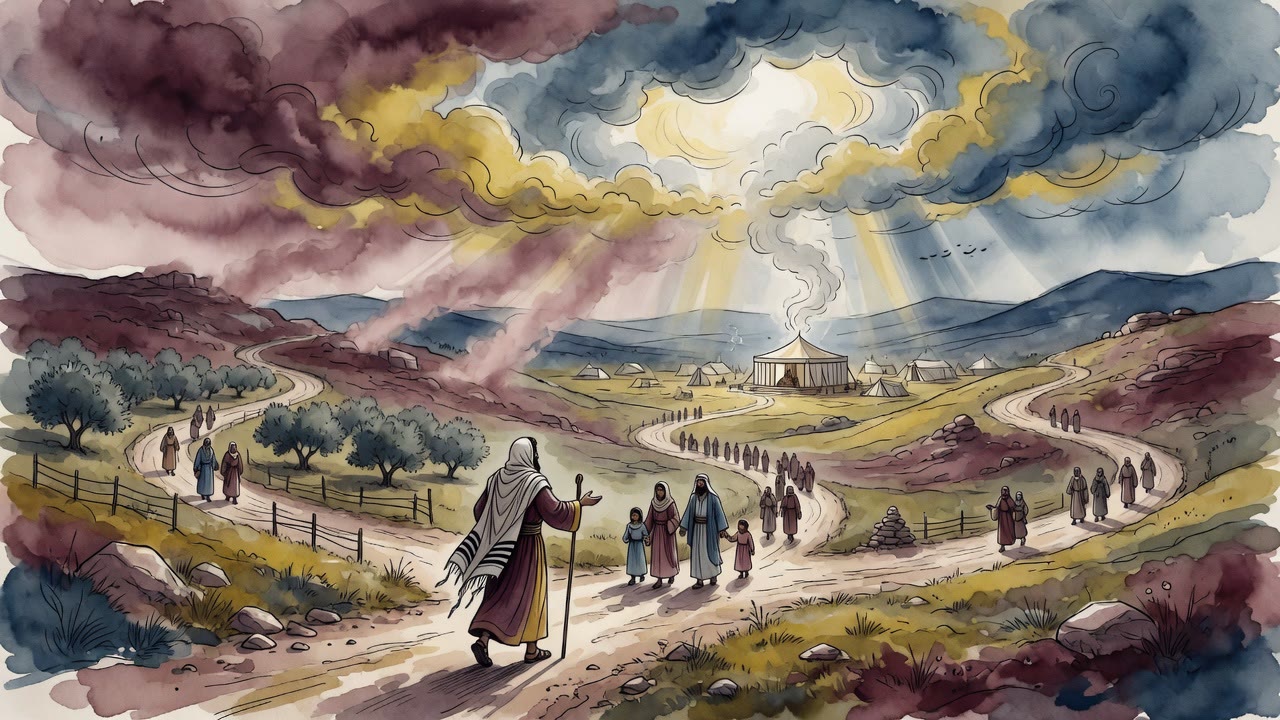
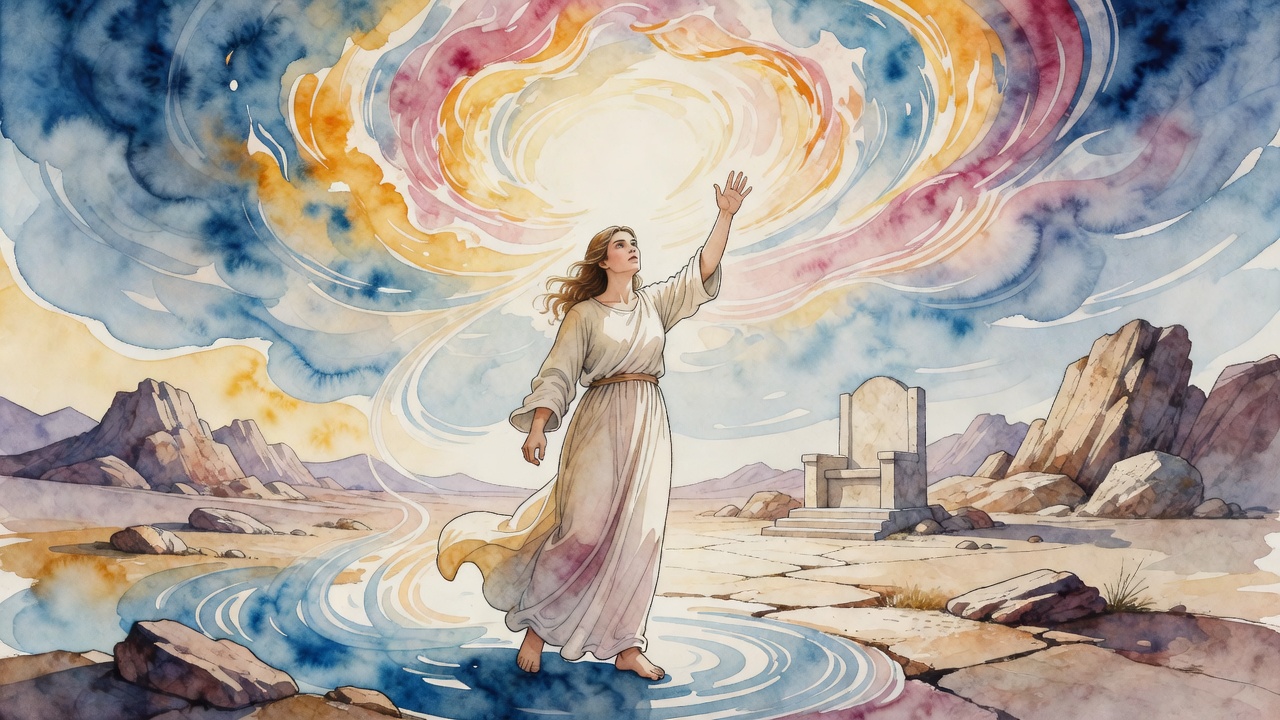
Elkanah did not slip along the road as a private errand. When the festival called him to Shiloh, he brought his wife, his children, his sisters, and the rest of the household, and they dumped their packs in the open square of whatever town they reached by dusk.
Locals came out because a caravan that large is a noise. Where were they headed? To the House of the Lord in Shiloh, they answered, the place from which Torah and the commandments go forth. Why not come along? Neighbors wept and joined. One year five households followed. The next year ten.
Elkanah paid for the extra mouths from his own purse. He did not wait for a public fund to make the invitation look official. Greatness, if it came, would come at his own expense.
A Different Road Each Year
He changed the route each season so that every road in the land would eventually see the pilgrimage pass. A town that had watched him walk by last year watched a different family camp this year, same question, same square. Curiosity turned into company. Company turned into habit.
Children who had never seen Shiloh learned the way by walking it beside people who already knew the songs. A man who had meant to stay home found himself tying a pack because his neighbor had already tied one. Elkanah did not argue doctrine in the square. He made the road look livable.
God took note. "You have tipped Israel toward merit and trained them in the commandments," He told him, "so I will give you a son who will do the same."
Heaven Paid Him With a Son
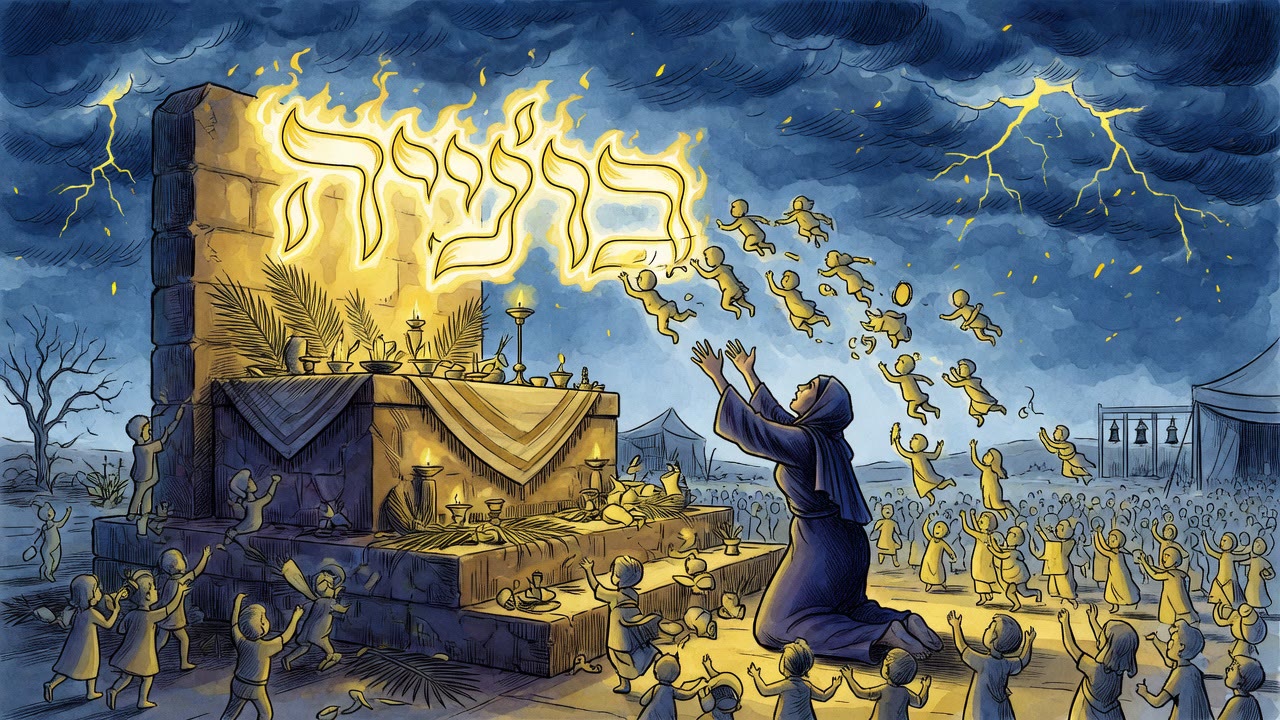
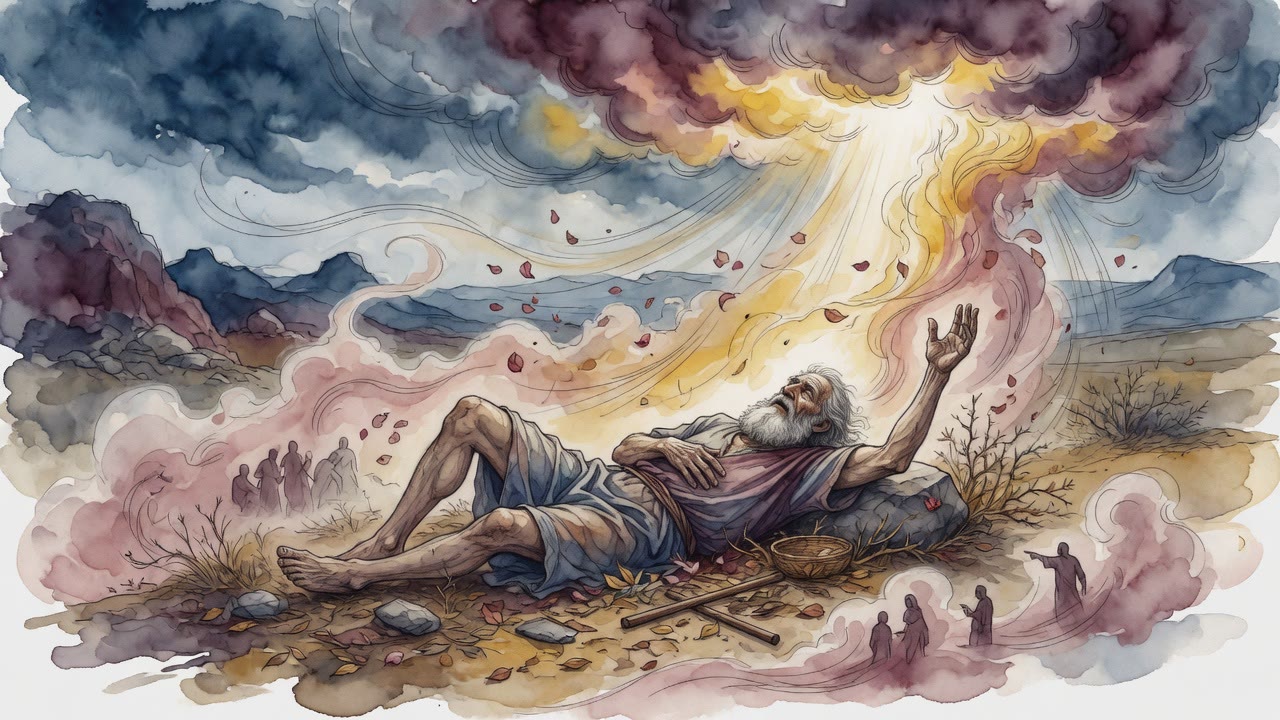
That son was Samuel. He was Hannah's miracle, asked for in bitterness and lent back for life. He was also the dividend on years of Elkanah spending himself so other people could learn the way up.
Samuel grew into the work his father had begun in a different key. Where Elkanah gathered households, Samuel gathered a people under judgment and mercy. He walked circuits. He named kings. The roads that had once carried picnic packs now carried a prophet who would not let Israel treat the sanctuary as a private family shrine.
Elkanah had drawn Israel up. Samuel kept them from sliding back down.
A Servant Describes the Shepherd
Years later Saul needed a man who could settle a troubled spirit. One of his young men spoke of David son of Jesse. "Skilled in playing," said the servant (1 Samuel 16:18). He meant more than a harp. He meant a man who knew Scripture the way a musician knows strings.
"A mighty man of valor" named strength in Mishnah. "A man of war" named the sharp fights of Talmud, where a ruling is won and lost in the give-and-take. "Prudent in speech" meant the doing of good deeds. "A handsome man" was not face alone. David lit faces in the law, so that a chamber that had been dark became usable.
The seal of it: "and the LORD is with him." What does it mean that God is with a man? It means the law is decided according to his words. The servant thought he was recommending a shepherd with a lyre. He drew the portrait of a scholar-king, because a throne that cannot hold Torah cannot finish what Elkanah began on the roads.
Rest Before the House
Three duties waited for Israel the moment they entered the land. Set a king. Cut off the seed of Amalek. Build the Temple, the Chosen House where God's name would rest. David lived the order in his own body. He sat as king. He fought until rest came on every side. Only then did he turn to Nathan and say he lived in cedar while the Ark of God sat behind a curtain (2 Samuel 7:1-2).
He could not build while the enemies still pressed. He could not press the enemies until a king sat. Elkanah's squares were the first climb of that same rope: get a people walking toward the place Torah goes forth. Samuel's circuits were the middle. David's rest was the last landing before stones could rise.
None of them began with a finished capital. They began with a habit. Bring people. Learn deeply. Settle the throne before you settle the enemy. Settle the enemy before you settle the House. In a town square a pack hit the dust, and a neighbor asked where they were going. That question is how a nation starts up the road.
← All myths