Hananya Nearly Split Israel by the Calendar
From Babylon Hananya declared festivals on his own reckoning until messengers from the land of Israel forced him to stop.
Table of Contents
Hananya, nephew of Rabbi Joshua, stood in a Babylonian study house and named a month. Students wrote the date. Merchants adjusted their ledgers. Somewhere in the land of Israel the Sanhedrin (the supreme rabbinic court) had not yet spoken, and already the diaspora was living on a different clock.
 Click for full size
That single naming nearly tore the people in two.
Why a Date Is Not a Convenience
Festivals are not decorations on a wall. Passover, the Day of Atonement, the booths of Sukkot, all of them rise and fall with the moon as the court in the land declares it. If Babylon keeps one count and Jerusalem another, brothers break matzah on different nights. Fasts fall on different dawns. The unity that exile already strains snaps at the level of the calendar.
Authority to intercalate years and proclaim months belonged to the sages of the land. Distance did not transfer the right. Learning did not transfer the right. Hananya's Babylon was full of scholars and full of confidence. Confidence is not jurisdiction.
Messengers with Sealed Letters
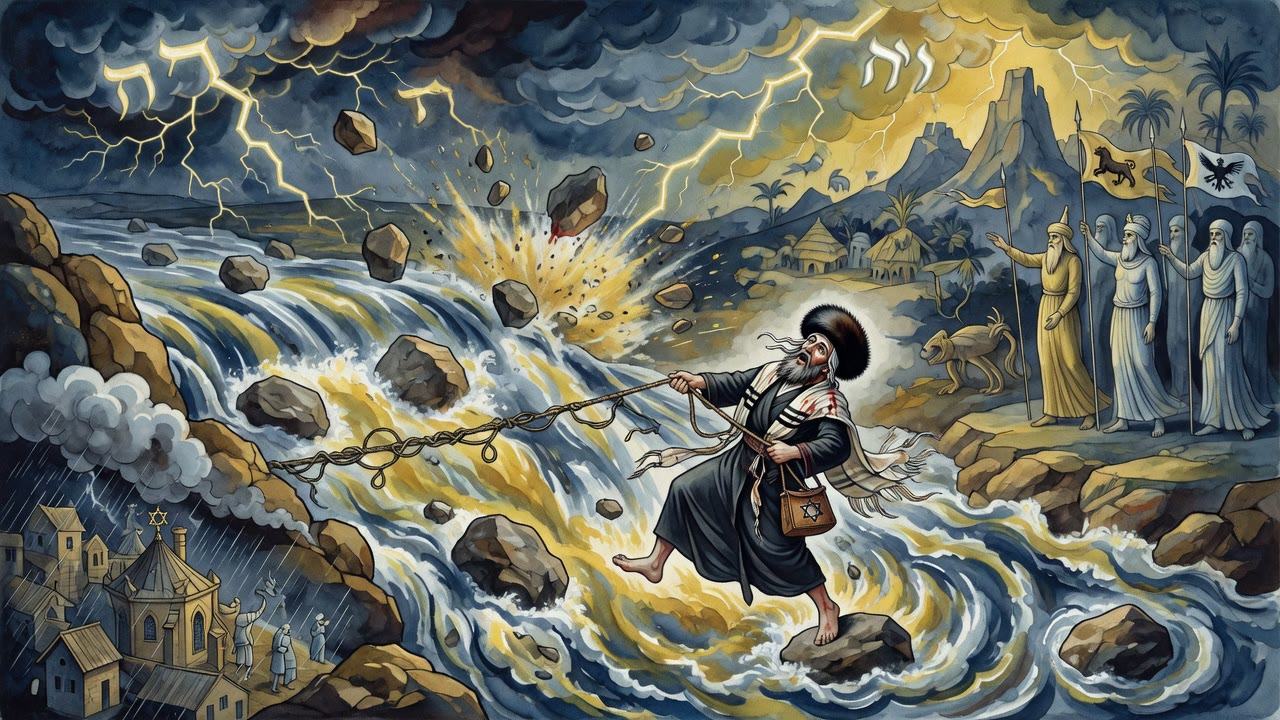
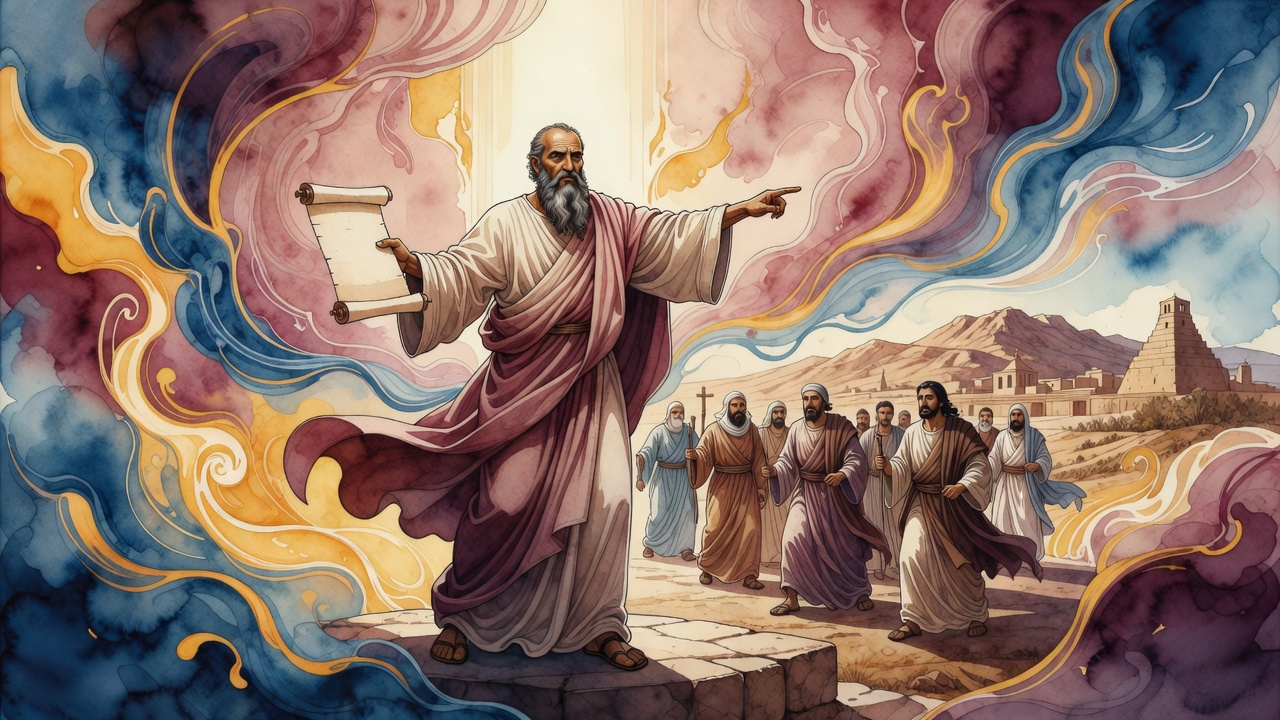
When word reached Palestine, the reaction was not polite debate. Two messengers rode east with language that left no soft landing. Stop, or be counted a rebel against the authority of the land of Israel. The letters were blunt because the danger was blunt. A people that cannot share a calendar cannot share a peoplehood.
Hananya received them in a room that still smelled of the ink he had used to set dates. The messengers did not flatter his scholarship. They named the fracture he was about to make permanent. Jews in different lands would call the same night holy and ordinary. That was not diversity. That was two Israels pretending to be one.
The Long Memory of Sacred Time
The tradition that counts the years of judges and kings knows how fragile sacred time can be. When Eli died, the tabernacle's story bent. The Ark went into Philistine fields for seven months. Later it rested in Kiriath-Jearim for a stretch of years that the chronographers measure with hard arithmetic, subtracting reigns and co-reigns until the map of holiness becomes a ledger of months.
Those ledgers exist because the nation cannot afford a vague past. If the past must be counted carefully, the present festivals must be counted carefully too. Hananya's independent calendar threatened to make the future as fragmented as exile already made geography.
The Backing Down
He backed down. The story does not paint him as a villain who loved schism. It paints him as a man who mistook local capacity for global license. Babylon was strong. Babylon was not the Sanhedrin. The festivals returned to one reckoning. The letters were put away. The people remained able to say "this night" and mean the same night from the Euphrates to the Judean hills.
Centuries later a fixed calendar would be published so that no single court session would be required for every moon. Even that fixed system descends from the principle Hananya was forced to honor: time for Israel is shared time, not provincial invention.
What the Students Learned
The students who had written Hananya's dates erased and rewrote. Some were angry. Some were relieved. All of them had felt, for a few weeks, how easy it is to break a people with nothing sharper than a wrong number on a page.
In the market a woman asked which day would be the feast. The answer that came back was the answer from the land, not from the local sage's first impulse. She went home and told her children to wait for the same moon their cousins under different skies would wait for. That ordinary sentence was the victory the messengers had ridden east to win.
Hananya kept teaching. The calendar stayed west until the later fixed count. The warning stayed in the story: exile multiplies synagogues, but it does not multiply supreme courts of time.
In the weeks before the messengers arrived, Babylonian markets had already begun to shift. A baker asked which night to reserve flour for the feast. A mother calculated when to start a child's counting of days. Hananya's students answered from their teacher's table as if Palestine were a rumor. That is how schism starts: not with a declaration of two religions, but with two answers to the same ordinary question about tomorrow.
One messenger later described the room where Hananya read the letters. The sage's face did not show theatrical shame. It showed the calculation of a man who had believed the diaspora had grown adult enough to keep its own time. Adulthood without authority is just another name for fracture. The letters named that fracture before it hardened.
After he yielded, Hananya ordered the erased dates recopied from the land's count. Some students muttered that Palestine was clinging to power. Older men answered that power over the moon is the last power exile should invent for itself. A people scattered across empires can survive different accents. It cannot survive different Passovers.
Years afterward, travelers from the land still told the story when they heard diaspora sages speak too casually about intercalation. The warning was not anti-Babylon. Babylon would one day host the greatest Talmud. The warning was anti-two-clocks. Sacred time is a shared body. Cut it and both halves bleed.
← All myths