Belshazzar Miscounted the Seventy Years at Passover
He added twenty-five years, then twenty-three, then five, and smiled. The cups from Jerusalem came out on the second night of Passover.
Table of Contents
 Click for full size
The King Closed Jeremiah's Clock
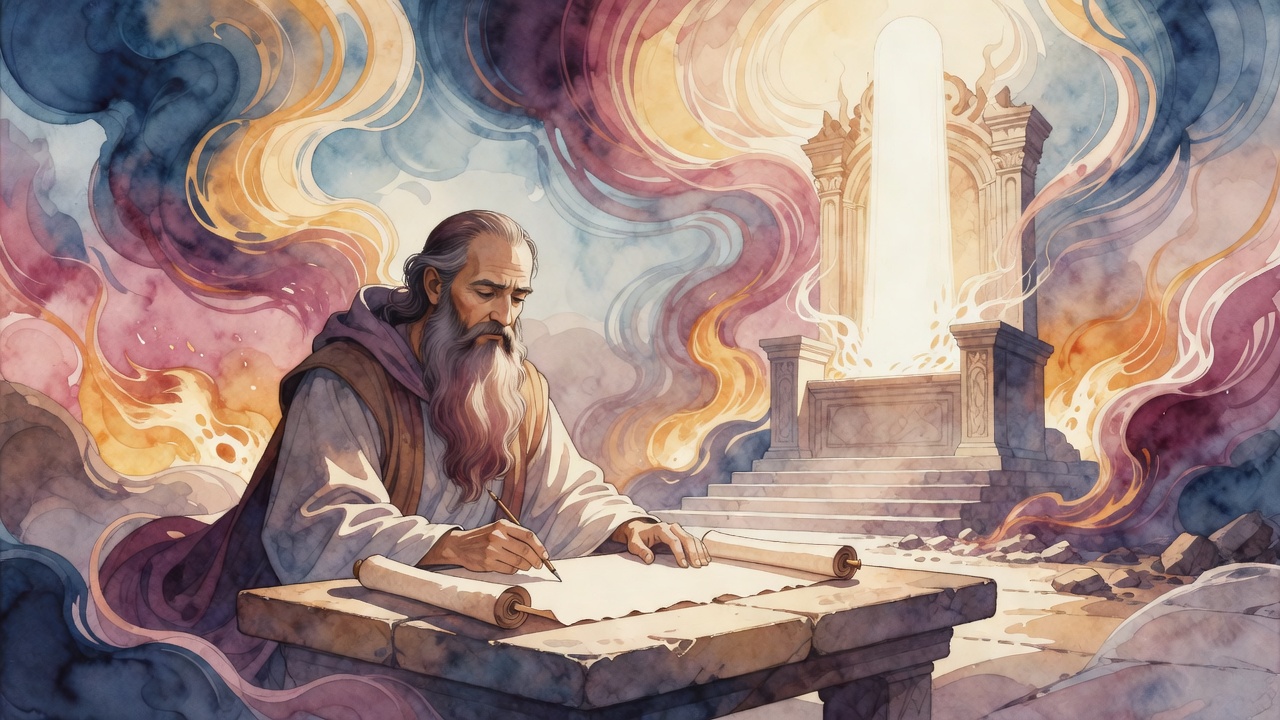
Belshazzar sat with a stylus and a ledger of kings. Twenty-five years under Nebuchadnezzar. Twenty-three under Evil-merodach. Five under his own hand. Seventy years of Babylon over Judah, and the ledger said the debt was paid.
Outside the palace the Medes and Persians pressed the walls again. Inside, the king smiled. If Jeremiah's word was true, the exile should already have broken. It had not. He ordered the gold and silver cups taken from the Temple in Jerusalem and set for wine.
It was the second day of Passover. Fine flour went into the pastry, finer than the flour of the Omer (עומר), the barley measure Israel used to bring on that day. Servants poured into vessels that had once held the blood of offerings. The hall filled with officers and wives. Belshazzar raised a cup that had known the sanctuary and drank as if the prophecy were a joke that had gone stale. Torchlight jumped on the metal. Someone cheered when the king drained it dry.
Neighbors Who Ran to Babylon
Years earlier, the road to that banquet had been paved by neighbors. When a prophet named Jerusalem for fire, the Ammonites, Moabites, Edomites, and the desert Arabs did not send bread. They ran to Nebuchadnezzar and urged the siege. Kinship with Israel did not soften them. It sharpened the knife. Messengers arrived dusty and eager, voices overlapping in the Babylonian court, each one hungry to be first to name the city ripe for ruin.
Nebuchadnezzar still feared God. He listed reasons not to strike. The neighbors answered each reason and would not leave the court until the army marched. Scribes wrote orders. Horses stamped in the yards. When Jerusalem fell, other nations raced for silver. Ammon and Moab raced for the scroll of the Law. On that scroll stood the hard word that barred their line from the assembly of the Lord to the tenth generation. They wanted the clause silenced under Babylonian boots.
They tore the cherubim from the Holy of Holies and dragged the carved forms through the streets, shouting that Israel, who claimed no idols, had kept sacred shapes in the dark. Children watched. Stones cut the wood. Humiliation walked the alleys while the sanctuary emptied. The exile began under that mockery. Belshazzar's later feast only finished what those neighbors had started. Temple vessels treated as tableware. Holiness made a punchline at a table that smelled of roasted meat and pride.
Pastry Finer Than the Offering
Belshazzar did not invent the theft. He inherited the cups and the arrogance. He refined both into a calculation. Seventy years meant seventy years. His predecessors had used most of the span. His fifth year should have been the edge of return. No caravan of free Jews poured home. No heavenly court answered his count. So he filled the stolen cups and let the wine prove that numbers could bind Heaven.
The officers laughed with him. The pastry steamed, finer than the Omer Israel could not bring that year because there was no Temple left to bring it to. Someone sang a victory song that had nothing to do with Egypt or the Reed Sea. Far from the lamps, Cyrus and Darius gathered the Medes and Persians for a second push. The first assault had failed. The second would not. Scouts counted gates. Engineers studied the river works. Babylonia was no longer a rumor of war. It was a city about to change hands while its king celebrated a prophecy he thought he had outlived.
A Hand on the Plaster
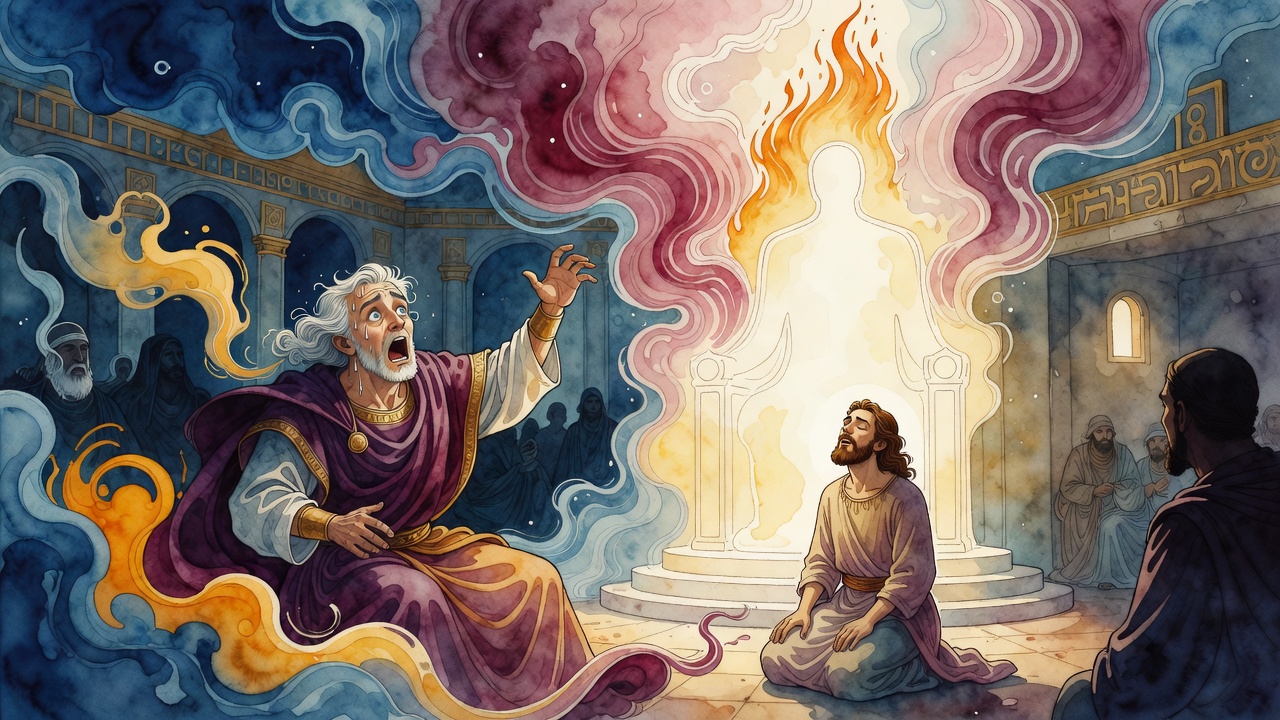
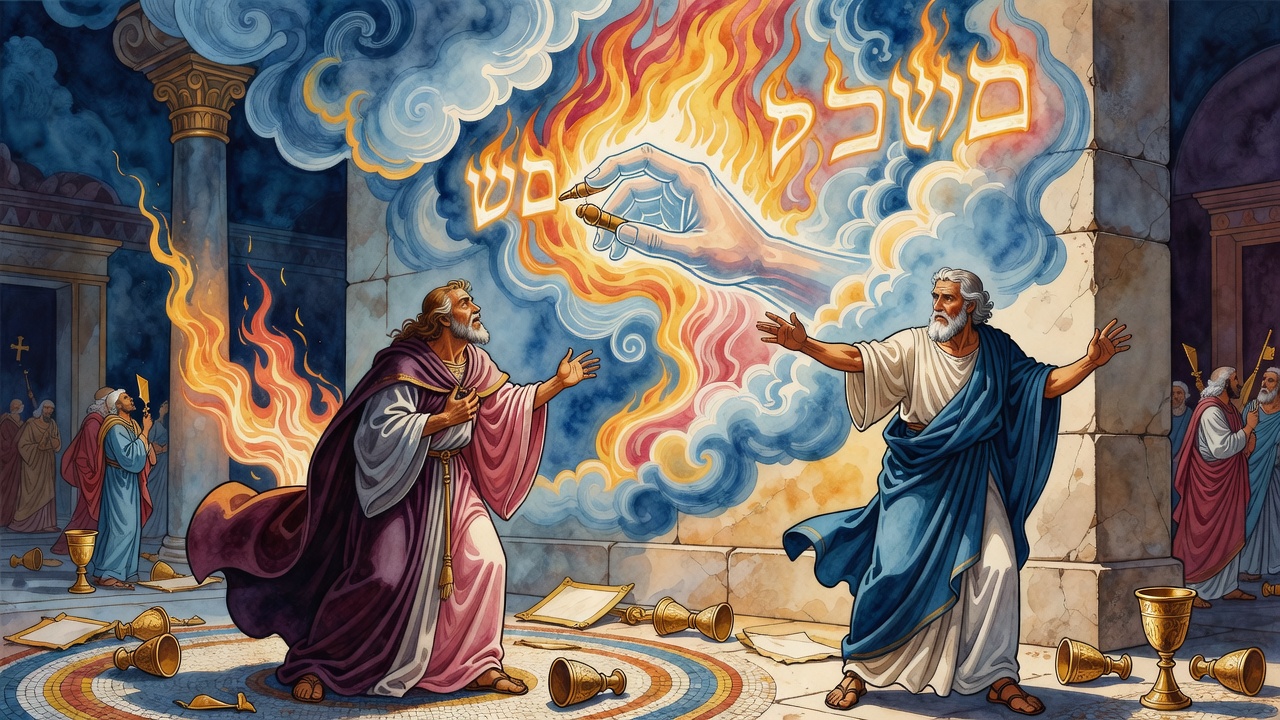
In the middle of the banquet a hand wrote on the plaster of the wall. Belshazzar's face went white. His knees knocked against the table edge. The music died mid-phrase. Court sages failed to read the letters. Fingers traced the marks and came away empty of meaning. Only a man from the exile, trained under the God of Jerusalem, could name what the writing held. Weighed. Divided. Finished.
The king who had counted seventy years as if God kept a human ledger learned that the ledger was not his to close. The cup was still in his hand when the meaning arrived. Wine shook in the gold. He had wanted Jeremiah's clock proven wrong with pastry and sanctuary metal. The wall answered him in a script his own wise men could not speak.
The City Changed Hands Before Morning
That night the city opened. The Medes and Persians took Babylon whole. Young and old met the edge of conquest in streets that had been singing hours before. Spoils split between the two victors. Darius held Babylon and Media. Cyrus took Chaldea, Persia, and Assyria. The banquet cups returned to silence in a palace that no longer belonged to the man who had raised them. Wine stains dried on linen no servant would wash for him again.
Ammon and Moab had wanted the Law scroll buried under ruin. Belshazzar had wanted the seventy years closed with a toast. Both got a short night. Neither kept the city. The cherubim dragged through the streets did not erase the covenant. The Passover feast with stolen flour did not cancel the count. It only made the fall sharper, timed to the feast of freedom while a free people still sat in exile and a king drank from their sanctuary.
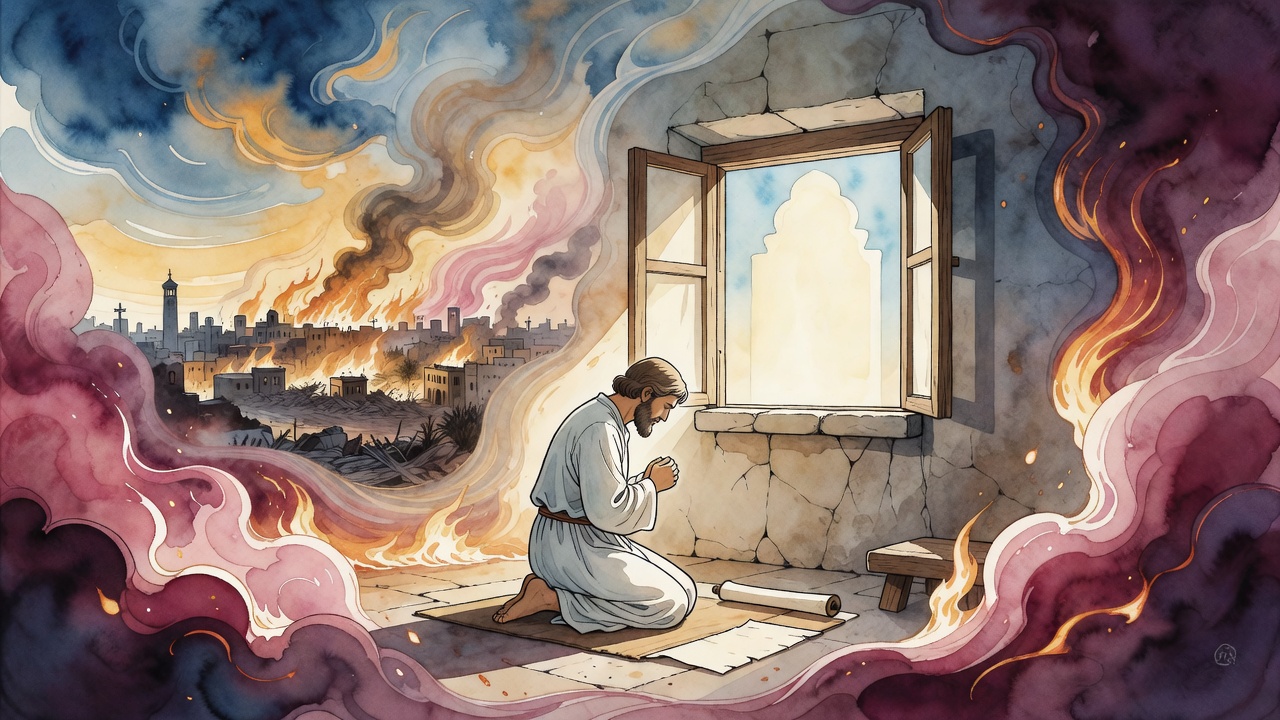
Outside the broken walls, the road home still waited for the word Belshazzar had mocked. Inside, the cups sat empty in a conquered hall. The stylus lay beside the ledger of kings. The arithmetic of the palace had run out. Somewhere beyond the Euphrates, the same God who had watched neighbors tear the cherubim from the dark still counted years by a measure no stylus in Babylon could fix.
← All myths