Nebuchadnezzar Who Wanted a Cloud for a Throne
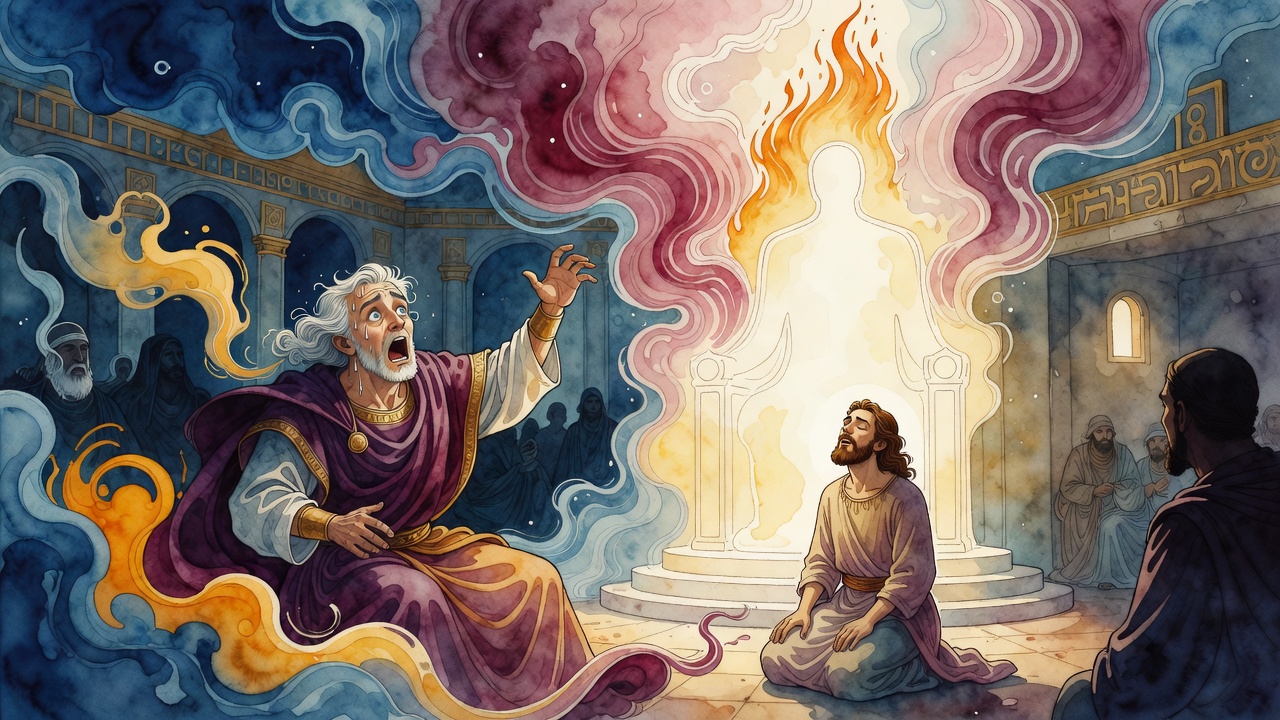
The king of Babylon planned to live inside a cloud above every nation. God answered by driving him down to grass, dew, and the company of beasts.
Table of Contents
Nebuchadnezzar said it in his heart first, which is where a man says a thing he has not worked out how to order yet. "I will climb to the heavens."
 Click for full size
He was on the palace roof when he said it. Babylon lay under him in the evening, brick and water and lamplight, the canals going out straight as ruled lines and the barges on them carrying his grain to his cities. It was not a small thing to own, but he had not stopped wanting, and what he wanted more of was not land.
The Room With No Door
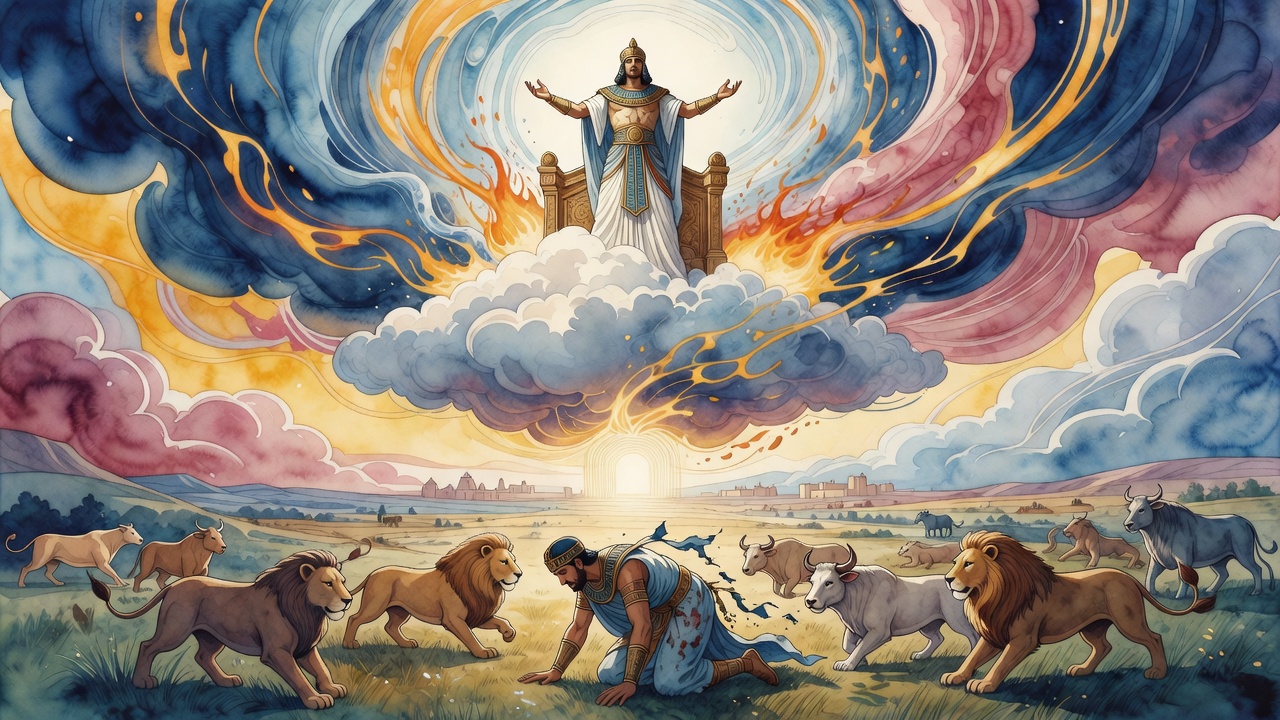
He wanted a cloud. Not the sky in general, a cloud, a small one, made for him and holding him, hanging in the space between the ground and heaven where nothing else lives. He had the sentence for it already, though he had not yet said it anywhere a scribe could write it down. "I will mount the heights of a cloud," he said, and he meant it as an address, not as a boast about weather.
The appeal of it was the quiet. Down here a man was always being reached. Governors reached him with grain figures. Officers reached him with the state of the eastern roads. Astrologers reached him with dreams he had not asked for and could not stop having, and priests reached him with the cost of the temples, and every one of them came in through a door, so as long as there were doors there were people on the other side of them. Up in the cloud there would be no door. No minister would knock, since knocking requires something to knock on. He would be visible to everybody and reachable by nobody, wrapped in the sky the way the God of the captives was said to be wrapped in it, and no court on earth or above it would have standing to summon him.
The answer came back in his own terms. "You wished to separate yourself from men," God said. "In the end, they will separate themselves from you."
The Day They Stepped Back
It began while he was still walking on the roof, and it did not begin in the sky.
He said something to the man nearest him, an ordinary instruction about the morning, and the man did not take it. He looked at the king and went back one pace, and then another, because whatever was in that face was no longer the thing he had been taking orders from all his life, and his hand came up between them the way a hand comes up in front of a dog nobody knows. Down the length of the roof the rest of them were doing the same thing, opening a space around him without any of them giving the order, and the king stood in the middle of that new space and found that he could not close it. Every direction he moved, it moved with him.
They drove him out of the city. He was made to eat grass in the field like an ox, and the dew of heaven wet him every night until his hair grew long and coarse like eagles' feathers and his nails came in curved and thick like the claws of a bird. The empire went on without him, since a machine that size does not need a king inside it every day. The walls held, the canals ran, the barges went down to the cities with the grain, and the crown lay on a cushion in a room he could not have found.
Wet Grass and Low Ground
The field they put him in ran down to water, because in that country everything runs down to water eventually, a canal or a river or one of the ditches cut off a river.
Cattle share ground with whatever is on it. They shifted away from him at first, but within a season they stopped bothering. He learned where the grass was thick and where it had been cropped down, which is knowledge, of a kind. Rain found him with nothing over his head, and the sun after the rain, because a man in a field has no roof unless he builds one. The cloud he had wanted would have been dry and high and empty of other bodies, and what he got was low and wet and crowded with animals that did not know he had ever been anything.
The Word That Came to Other Men by Water
God did speak in that country. He spoke to the exiles who had been dragged there, but not just anywhere, and not to just anyone, and never as a thing the empire could arrange.
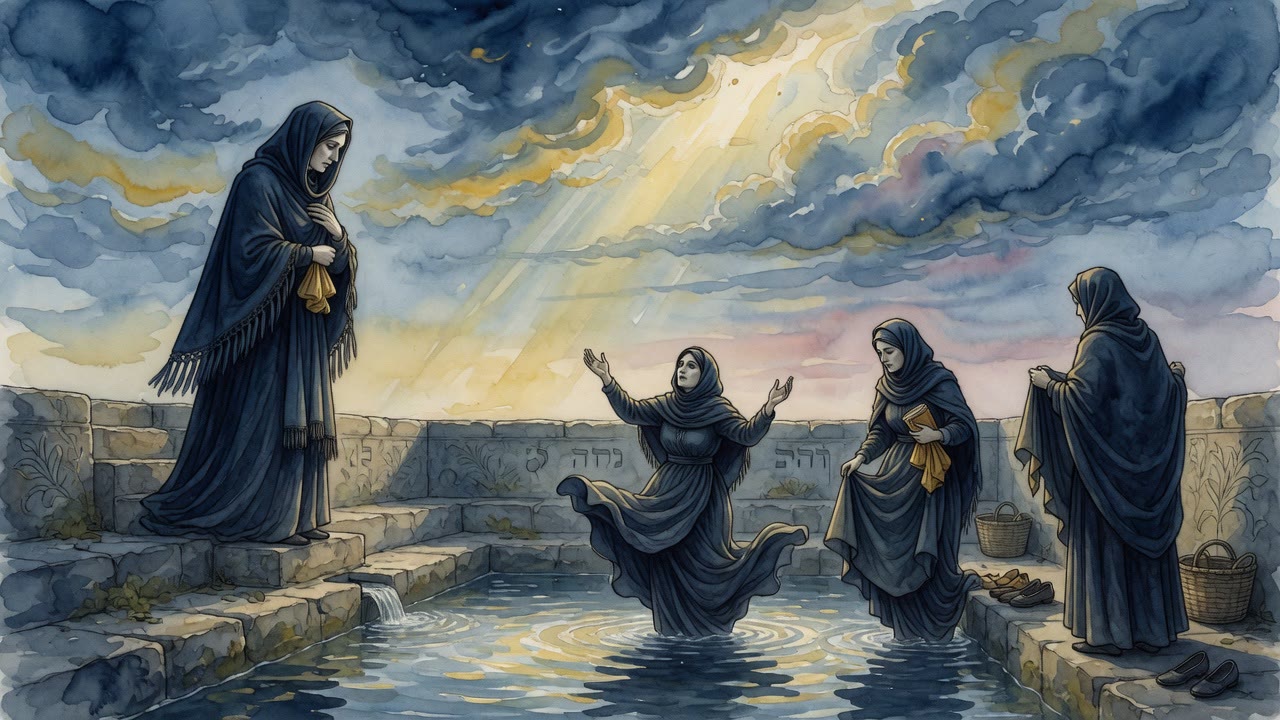
Daniel stood on the bank of the Ulai and the word came. He stood by the great river, the Tigris, and it came again. Far off in the same empire, Ezekiel was on the bank of the Kevar canal when the heavens opened over him. Outside the land, prophecy came only in a clean place beside moving water, and only ever in the merit of Abraham, Isaac, and Jacob, three shepherds who had been dead for centuries and whose descendants Nebuchadnezzar had marched into Babylon in ropes.
He had the water. Night after night he lay in the wet grass a few paces from a current that had been carrying barges past him his whole life, in the exact conditions where the word came to captives, and it did not come to him. The river went on moving and washing and refusing to stand still, the way it did for everyone. Somewhere upstream a man from Judah was standing on a bank in the dark with his sandals in the mud, listening to the same water, and being spoken to.
← All myths