Elijah Shows a Boy the Bird That Guards the Heavens
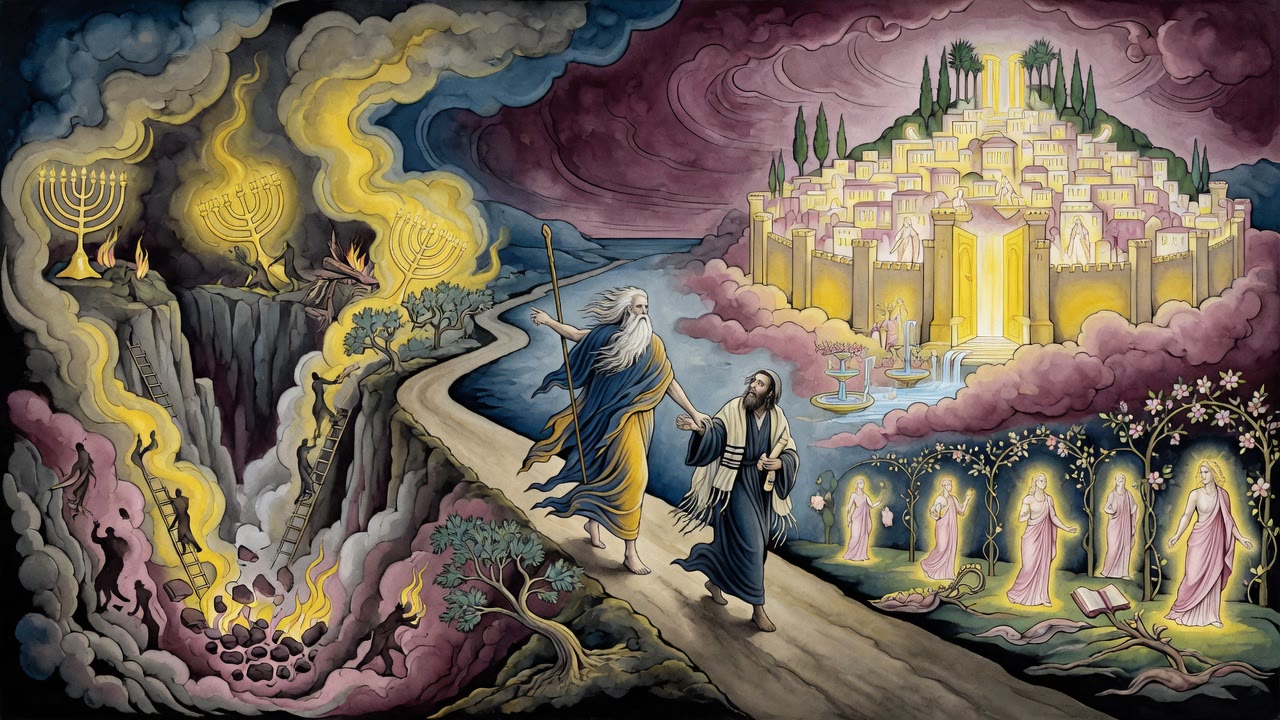
A boy on a slow boat sits beside a quiet stranger who lifts the lid of the sky and shows him the winged giant that keeps the world from burning.
Table of Contents
The boy sat at a low gap in the boat's side where the water slapped through and wet his ankles. He was small enough that the sailors forgot him. A sack hung at his hip, an errand he had been sent on, and he watched the coast slide backward until there was no coast, only the gray seam where the sea touched the sky.
 Click for full size
A man sat down beside him. An ordinary man. Plain robe, plain sandals, a face you would not turn to look at twice. He did not introduce himself. He looked at the seam between sea and sky the way the boy had been looking at it.
"You are measuring it," the man said. "How far up."
The boy admitted that he had been wondering.
The Stranger Counts the Distance to the First Heaven
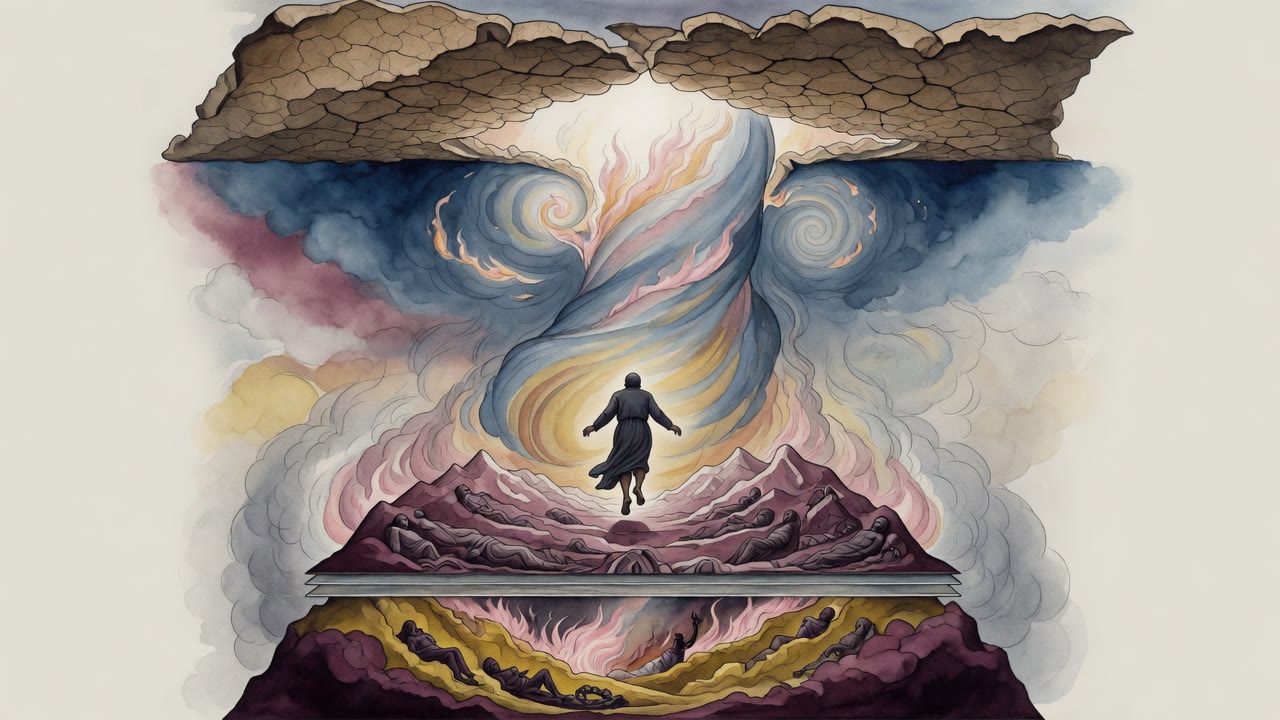
"Walk," the man said. "On foot, the way a person walks, never stopping. From the dirt under this boat to the floor of the first heaven is five hundred years." He let that sit. "And the first heaven is not thin. To cross it, edge to edge, is another five hundred years. Then the climb to the second heaven. Five hundred more. The sky is not a roof, boy. It is a country, stacked on a country, stacked on a country."
The boy tried to hold the number and could not. Five hundred years to the first floor. His grandfather had been old, and his whole life would not have spanned a single one of those distances.
"Now look down," the man said. "At your own world." He nodded at the water. "Of all of it, only a third has people on it. The rest is split in two. Half is sea, this, what we float on. Half is wilderness where nothing grows, only serpents and scorpions in the dust, and beyond that the steppes run on with no end."
The boy gripped the wet edge of the boat. It felt very small under him now.
What Waits at the Four Corners of the World
The man pointed east, though there was only water there.
"Past the last inhabited land to the east is Gan Eden (the Garden of Eden), the garden, in seven walled sections. The righteous are sorted into it by degree. The holiest are set highest, each according to what their lives were worth." He turned his hand west. "That way, past the great ocean, islands beyond counting, peoples beyond counting, and then the barren steppe again, serpents and no green thing."
"And north?" the boy asked, because the wind that moment had turned cold.
"North is the cold storehouse," the man said. "Snow, hail, smoke, ice, blackness, and storms that do not stop. The demons keep their houses there. Their land alone is five hundred years wide, and you walk all of it before you even reach the gate of Gehinnom (the fiery place of punishment for the wicked)."
The boy waited. He could feel the other direction coming.
The Bird That Holds Back the South Wind
"South," the man said, "is the furnace. A cave of heat. A forge of blasts and hurricanes. The wind that comes off the south carries fire in it. If that wind ever blew straight across the earth, unbroken, the whole world would catch and burn to ash. Crops, cities, seas, you. Gone in an afternoon."
The boy's mouth was dry. "Then why hasn't it?"
The man smiled for the first time. "Because of the bird."
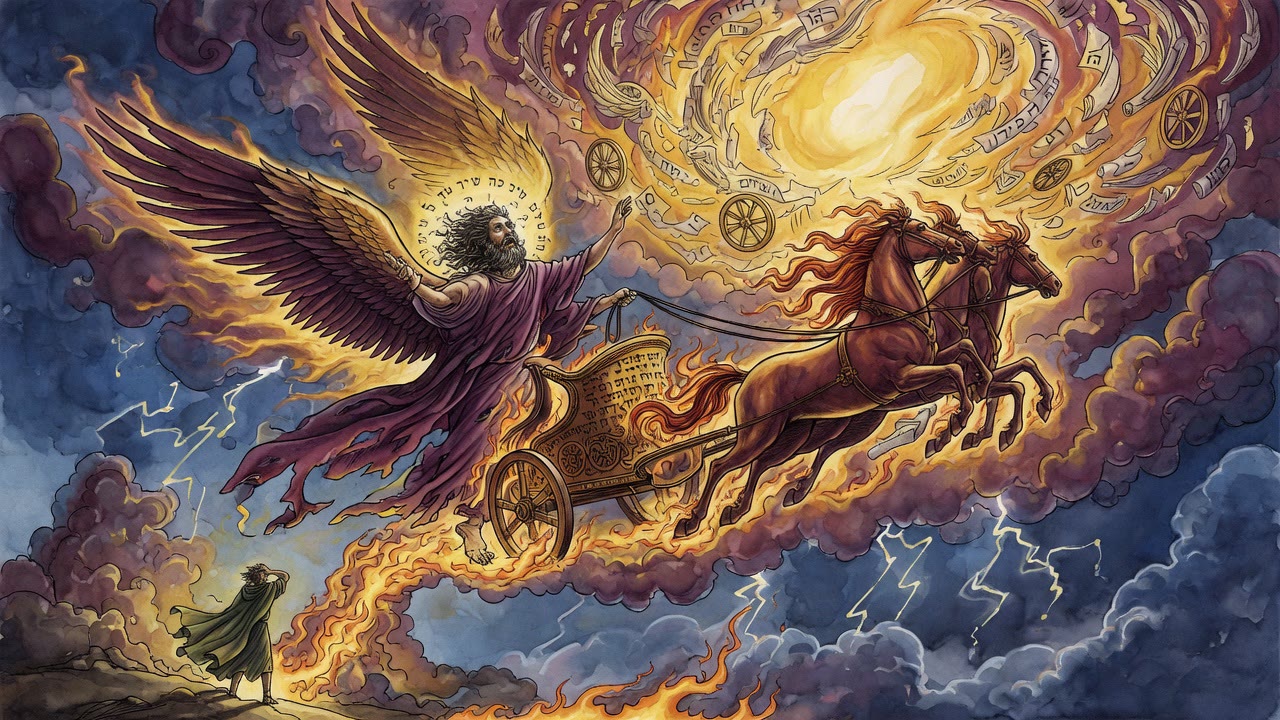
He said the name the way you say the name of someone you have stood next to. "Ben Nez. The Winged. He stands in the south with his wings spread, and he holds the burning wind back with his pinions the way a man leans his whole body against a door that something is pushing from the other side. Every hour. Without rest. He does not let it through."
The boy looked up, but the sky was only sky.
"You cannot see him from here," the man said. "But he is there. And the north wind helps him. Whatever else blows, the cold from the north meets the heat from the south and cuts its fury in half. The world is kept at a temperature, boy. Someone set it. Someone holds it."
The Stranger Opens His Hand
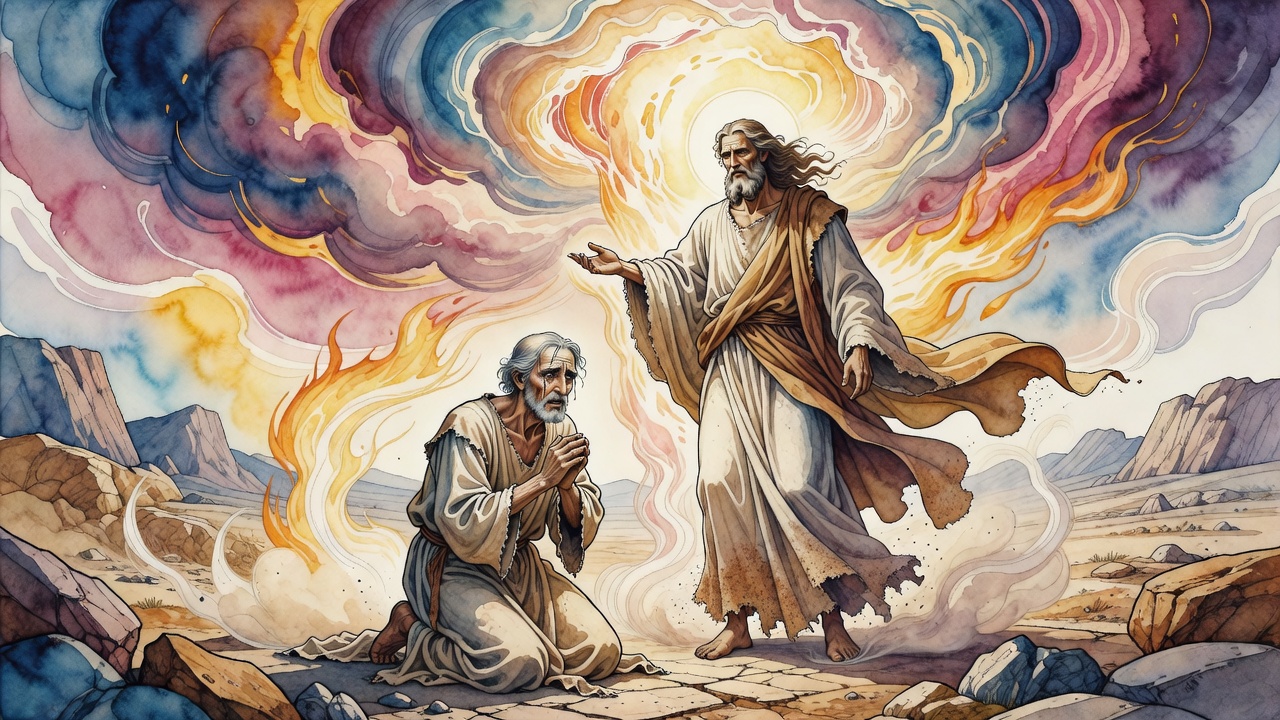
Then the man turned his palm up, and in it lay stones. Carbuncles, the boy would later learn they were called. They glowed. Not in sunlight, with their own light, a deep wet red like coals that would never go out, light pouring up out of the man's bare hand into the gray afternoon.
No living person had seen such stones. The boy knew it the way you know a thing in your chest before your head agrees.
"Take them," the man said, folding them into the boy's small fingers. "Carry them to Rabbi Yehoshua ben Levi, in Lod. Do not lose them. Do not stop."
The boy looked from the stones to the man's plain, unremarkable face, and understood, late, who had been sitting beside him.
What the Cavern Swallowed Three Miles from Lod
The boat reached land. The boy walked. He walked faithfully, through towns and along the dusty roads, the stones glowing through the cloth at his hip so that he kept his hand over them and his head down.
Three miles short of Lod, he passed a cavern at the road's edge, a black mouth in the rock. He never decided to do what he did next. His hand opened. The stones fell into the dark.
They did not clatter down. They vanished, swallowed, as if the earth had been waiting for them and closed over them the instant they touched it. He went to his knees and stared into the cavern. No red glow in the dark. Nothing. The light that no one had ever seen was gone, three miles from where it was going, into the ground.
The boy sat in the road a long time. Somewhere south, a bird the size of the sky leaned into a wall of fire and did not let it through. Somewhere ahead, a sage in Lod waited for a gift that would not come, not yet, not in this age. The boy had glimpsed the upper world for one afternoon, the measuring of it and the holding of it, and now he was a boy on a road again, with empty hands and a story too large for anyone to believe.
← All myths