5 min read

Elisha Ordered the Fruit Trees of Moab Cut Down

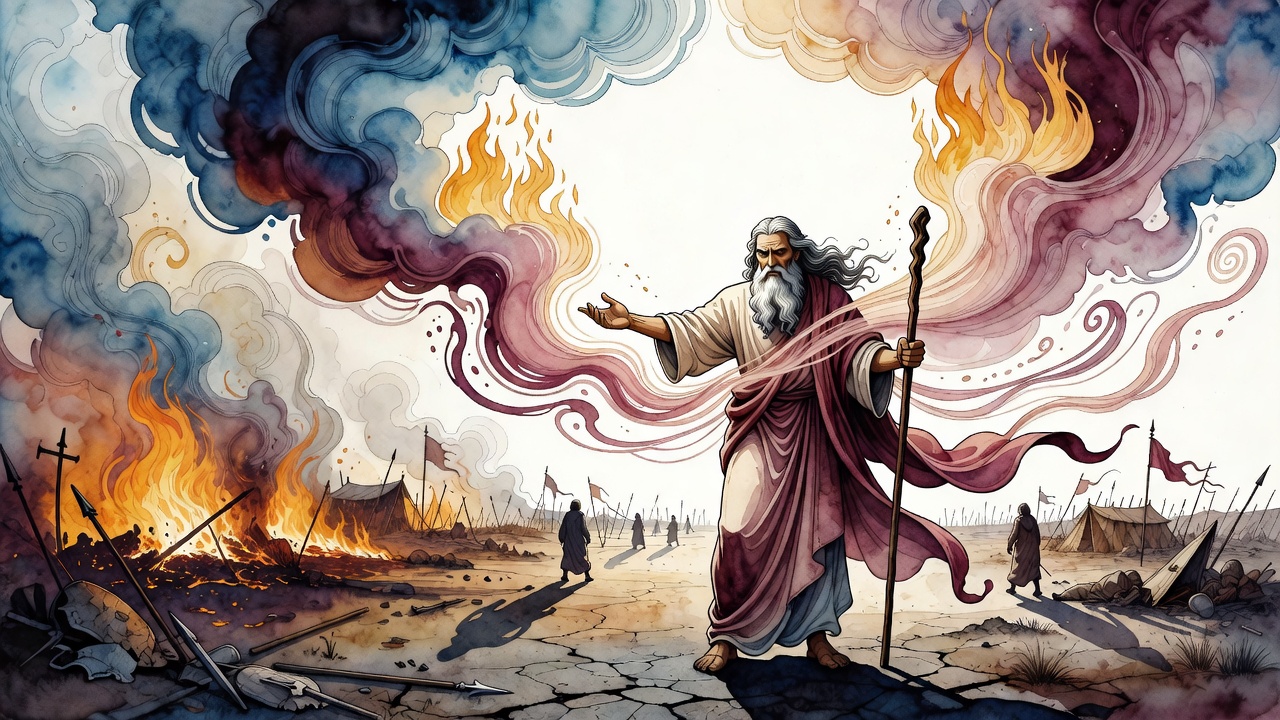
Three kings ran out of water and found Elisha. He promised a dry valley full of pools, then told them to fell every good tree in Moab without mercy.

Curated by Arthur · Told by Maggid ·
Table of Contents
  1. The Prophet Who Would Not Bow to Joram
  2. Fell Every Good Tree
  3. Trumpets of Vengeance
  4. Water First, Then the Axe

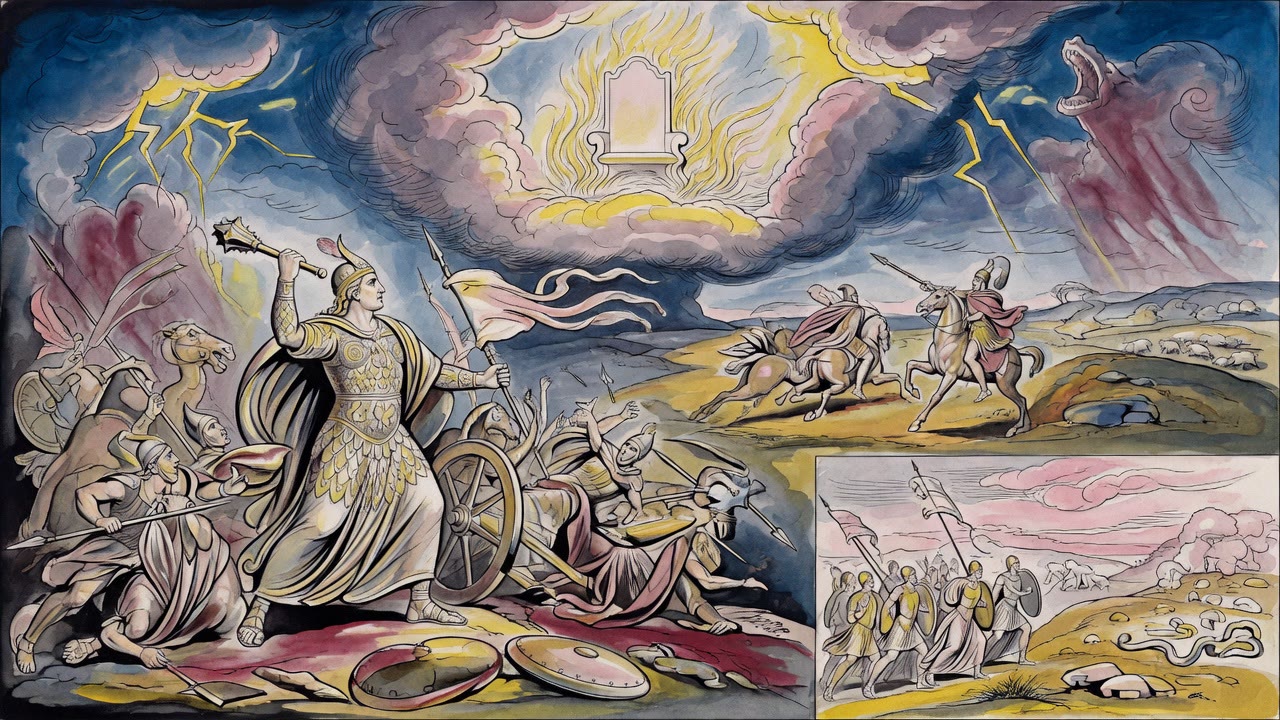
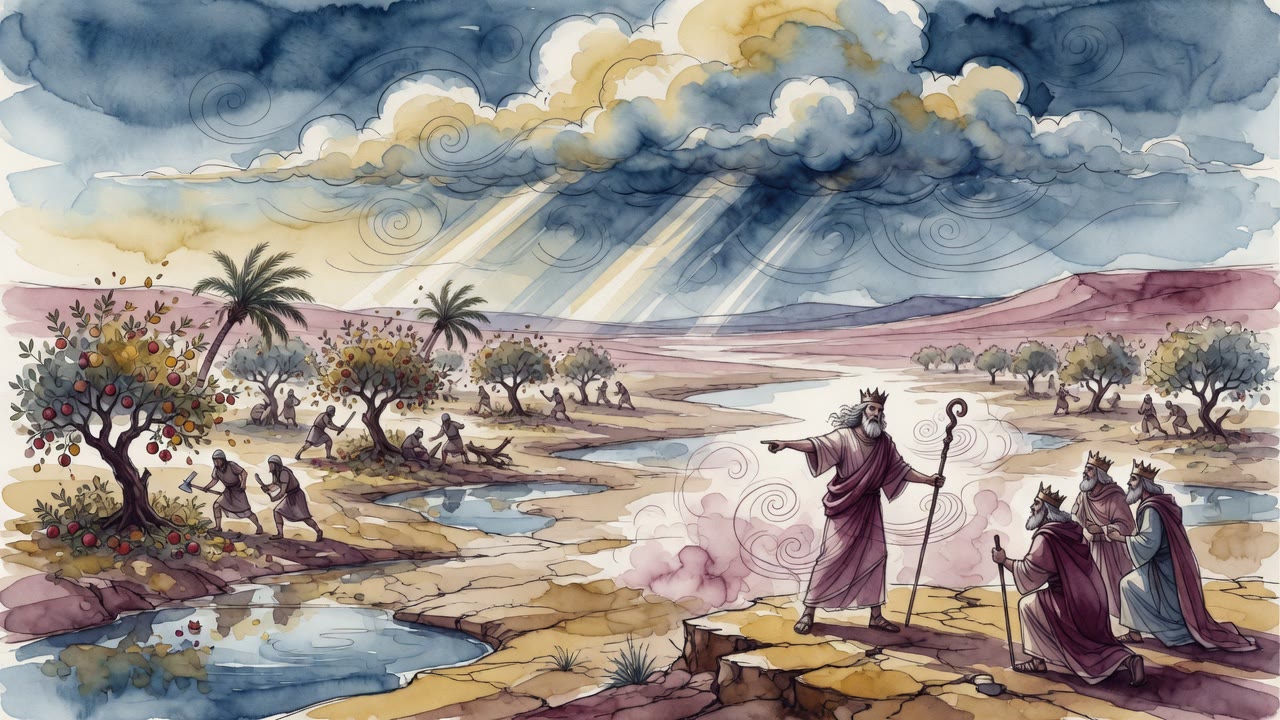
Three kings marched on Moab and the water ran out. Joram of Israel, righteous Jehoshaphat of Judah, and the king of Edom circled a desert road for seven days until the camp and the animals at their feet had nothing left to drink. They began to weep. Joram cried that the Lord had called three kings only to give them into Moab's hand.
Elisha Ordered the Fruit Trees of Moab Cut Down Click for full size

Jehoshaphat asked the only useful question in the heat: "Is there no prophet of the Lord here?" Someone named Elisha son of Shaphat, who had poured water on Elijah's hands. They went down to him with dust on their tongues and fear in their ranks.

The Prophet Who Would Not Bow to Joram

Elisha looked at the king of Israel and said, "What have I to do with you? Go to the prophets of your father." Joram begged. Elisha answered with an oath: "As the Lord of hosts lives, before whom I stand, were it not that I regard the presence of Jehoshaphat king of Judah, I would not look at you or see you."

The midrash notes that when the three went down, Scripture does not call Jehoshaphat "king" in that line, to show the humility of the righteous man who would not approach the prophet in royal clothes, but as a commoner. Some say a decree already hung over him from the house of Ahab, and the text began counting his son from that hour. Either way, the miracle would ride on his merit, not on Joram's crown.

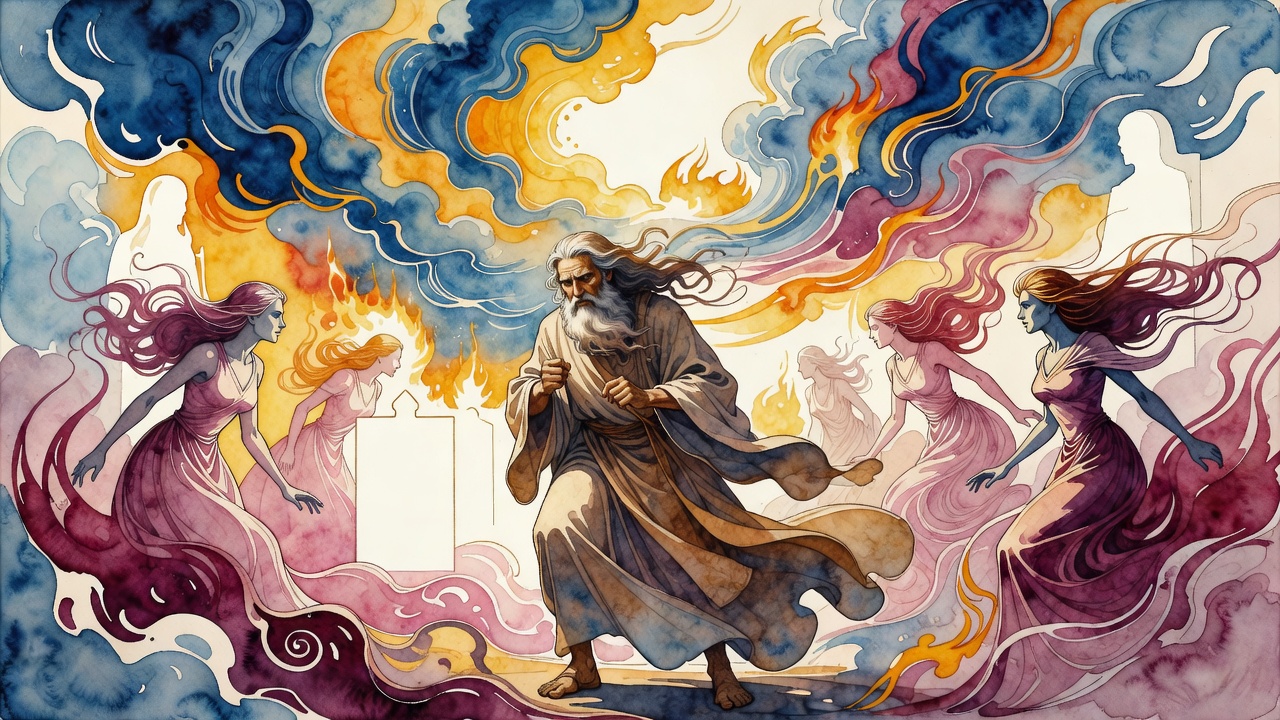
"Now bring me a musician." As the music played, the hand of the Lord came upon Elisha. Music opened the channel that Joram's presence had nearly closed. He promised they would not see wind or rain, yet the valley would fill with water for them and their beasts. And Moab would be given into their hand.

Fell Every Good Tree

Then the harder word: strike every fortified city, fell every good tree, stop up every spring of water. The camp answered with Torah in their mouths. "Is it not written, 'You shall not destroy its trees'?" (Deuteronomy 20:19). How can a prophet order what the book forbids in a siege of a city that is not of these nations of the land?

Elisha answered that the ban on destroying fruit trees was given for other nations in ordinary war. Moab was different, light and despised in this campaign. "This is but a light thing in the eyes of the Lord," and again, "You shall not seek their peace or their good." The good trees of Moab counted as the "good" Israel was told not to seek. Mercy has a border. On this side of it, the orchard falls.

The same midrash opens from "Harass the Midianites." Because for a worthy enemy you spare the fruit trees, but for these, never. The axe is not a loss of law. It is law applied to an enemy the book itself has already stripped of ordinary protections.

Trumpets of Vengeance

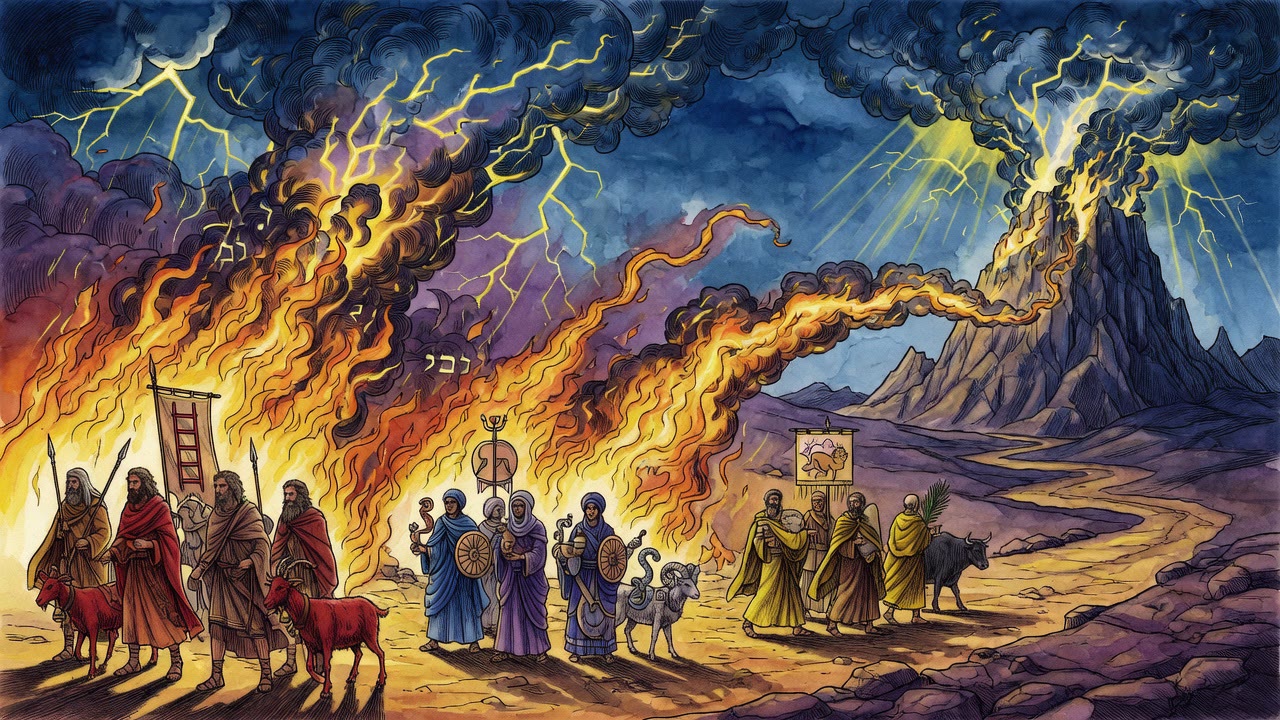
When Israel went out against Midian, they did not go with private rage alone. They went with the vessels of the sanctuary and the trumpets for alarm in the hand of the priest. Three sustained blasts on the eve of Sabbath pull a city out of labor. The far workers leave their tools. The near workers enter the walls. The third blast sets the warm food and the lights. Short blasts move the camp. Alarm blasts answer an oppressor in the land.

War against Midian was sounded on the same instruments that sanctify time. Vengeance, in this telling, is not a street brawl. It is liturgy with edges. The trumpets that end work before sundown are the trumpets that begin a campaign heaven has named. Sacred sound and commanded severity share one breath.

Water First, Then the Axe

The valley filled without rain. Moab saw the morning light on the water and misread it as blood, rushed in, and broke. The trees fell after the miracle, not before. First the gift that keeps the army alive. Then the judgment that strips the enemy's future shade and fruit.

Elisha stood between a wicked king he would not honor and a righteous king whose face he would lift, and he spoke a war that Torah itself had already limited and then, for this enemy, unlocked. The musician's strings were still in the air when the order to cut was given. Mercy for Judah's king. No mercy for Moab's orchards.

When the axes bit, the camp was no longer thirsty. That order of operations is the story's spine. Heaven feeds the army that will obey a hard command, and the hard command is not harder than the book that first taught when to spare a tree and when to fell it.


← All myths
From the tradition

Sources

2 sources

The texts behind this telling. Some cards carry a translation of the source; others are our own retelling of it, and each card says which. Every card links out to the original.

Midrash Tanchuma Buber, Pinchas 5:2Midrash Tanchuma Buber, Pinchas

Translation of the source text.Midrash Tanchuma (Buber), Public Domain, on Sefaria · CC-BY-SA

Another interpretation of "Harass the Midianites" (Numbers 25:17): Since I wrote, "When you besiege a city... you shall not destroy its trees" (Deuteronomy 20:19), to these you shall not do so; rather, lay waste to their trees. And so you find when Joram king of Israel and Jehoshaphat king of Judah and the king of Edom went to fight against Moab, "and they made a circuit of seven days' journey, and there was no water for the camp, and for the cattle that followed them" (II Kings 3:9). They began to weep. "And the king of Israel said, Alas! for the LORD has called these three kings together to deliver them into the hand of Moab" (II Kings 3:10). Jehoshaphat answered, "Is there not here a prophet of the LORD..." (II Kings 3:11), "And one said, Here is Elisha the son of Shaphat, who poured water on the hands of Elijah" (ibid.), to make known the wickedness of Joram, that he did not acknowledge him. "And Jehoshaphat said, The word of the LORD is with him. So the king of Israel and Jehoshaphat and the king of Edom went down to him" (II Kings 3:12). Why is Jehoshaphat not called "king" here? To make known the humility of that righteous man, who did not wish to go down before the prophet in royal garments, but as a commoner. And some say: because a decree had been decreed that he would be slain with Ahab, and Scripture counts to his son from that hour; therefore "king" was not written. And as a reward for going down before the prophet, they merited to see all those miracles. "And Elisha said to the king of Israel, What have I to do with you? Go to the prophets of your father..." (II Kings 3:13). He began to plead before him; he said to him, "Nay; for the LORD has called..." (ibid.). "And Elisha said, As the LORD of hosts lives, before whom I stand, surely, were it not that I regard the presence of Jehoshaphat king of Judah..." (II Kings 3:14). "And now bring me a musician..." For thus says the LORD: "You shall not see wind, neither shall you see rain; yet that valley shall be filled with water..." (II Kings 3:15-17), that which they needed. And further he said to them, "And he will deliver Moab into your hand. And you shall smite every fortified city and every choice city, and shall fell every good tree, and stop all wells of water" (II Kings 3:18-19). They said to him: But it is written, "You shall not destroy its trees" (Deuteronomy 20:19), and you say this? He said to them: He commanded concerning the other nations, but this one is despised and contemptible, as it is said, "And this is but a light thing in the eyes of the LORD: he will deliver Moab also into your hand" (II Kings 3:18); and it is written, "You shall not seek their peace nor their prosperity" (Deuteronomy 23:7), these are the good trees. Therefore it is said, "Harass the Midianites" (Numbers 25:17).

Full source
Midrash Tanchuma, Matot 2Midrash Tanchuma

Retold in our words. Read the original at the link below.Townsend 1989 translation of Midrash Tanhuma, S. Buber Recension · CC-BY

(Numb. 31:1-2:) “Then the Lord spoke, ‘Exact vengeance for the Children of Israel [on the Midianites].” Let our master instruct us: How many sustained blasts (teqi'ot) does one blow on the eve of the Sabbath to disengage the people from labor? Thus have our masters taught (in Suk. 5:5): One blows three sustained blasts to have the people cease from labor. How? The hazzan of the congregation takes the trumpets and goes up to the roof at the highest point in the city and blows. [Thereupon] whoever is far from the city leaves his work. Then [the hazzan] comes again and blows a second time. [Thereupon] those who are nearer enter the city. When he blows a third time, they place the hammin in the oven and light the [Sabbath] lights. [If] he has finished blowing [while] the pot was on the stove, they set it on the ground. If there was a light in a woman's hand, she sets it on the ground. The Sabbath is sanctified with trumpets; and so also are new moons and festivals, as stated (in Numb. 10:10), “When you have a day of rejoicing, at your fixed festivals, and on your new moons, you shall blow the trumpets.” Moreover, when they moved out [from camp], they blew the trumpets to move out, as stated (in Numb. 10:5), “Then you shall blow a short blast (teru'ah) and the camps shall move out.” Also when [the congregation] gathered in, they blew the trumpets, as stated (in vs. 7), “When the congregation assembles, you shall blow sustained blasts and not short ones.” And when an enemy oppresses you, you shall blow the trumpets, as stated (in vs. 9), “And when you go to war [in your land against an enemy who oppresses you, you shall blow the trumpets].” And when they went to make war against Midian, they carried out their vengeance with trumpets, as stated (in Numb. 31:6), “with the vessels of the sanctuary and the trumpets for sounding the alarm (teru'ah) in his hand.”

Full source