5 min read

Midian Sent Daughters Sharper Than Swords

Moses heard the order to harass Midian and felt the old wound reopen. Swords had failed Israel less than beauty set as a trap.

Curated by Arthur · Told by Maggid ·
Table of Contents
  1. The Order That Sounded Like Revenge
  2. Two Nations With Swords
  3. Two Nations With Snares
  4. The Partridge on Stolen Eggs
  5. Rise Earlier
Midian Sent Daughters Sharper Than Swords Click for full size

The Order That Sounded Like Revenge

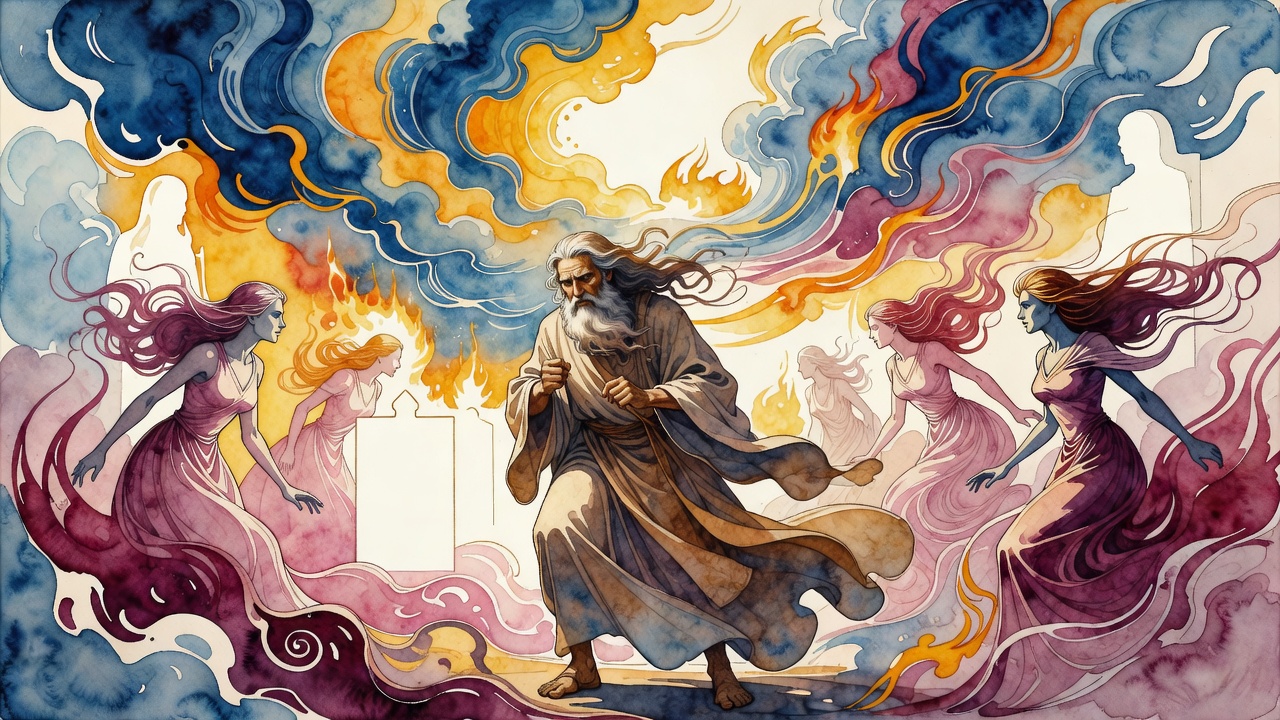
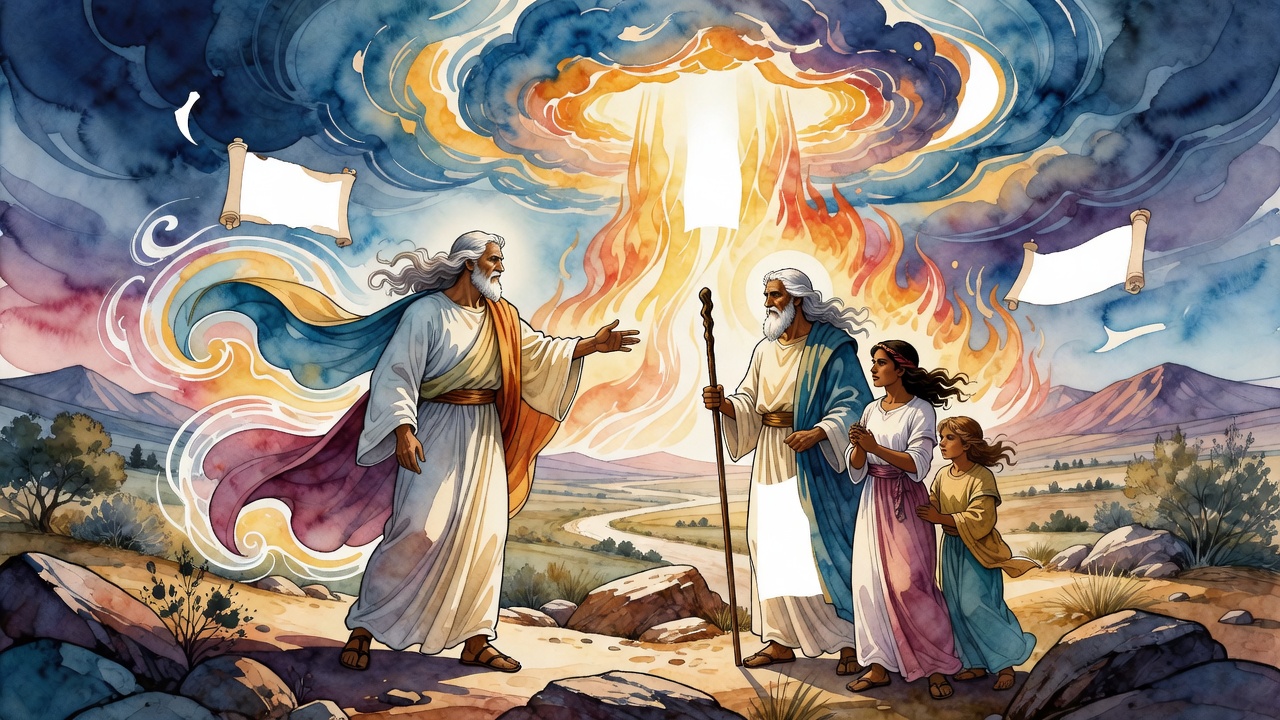
Moses stood in the heat and heard the word again. Harass the Midianites, for they harass you. The camp still smelled of the last disaster. Bodies had fallen for a sin that did not begin with a blade. It began with an invitation, a smile, a door left open toward another altar.

Men who loved simple war wanted steel. Steel ends a fight you can see. Midian had offered a fight you swallow.

A swordsman takes this world from you. A seducer tries to take the next world too. One death is a grave. The other is a grave with the name scraped off the stone.

He walked past young men oiling spearheads and did not bless the oil. He wanted them angry at the right enemy. Anger aimed only at flesh would miss the snare that had already entered the camp like perfume.

Two Nations With Swords

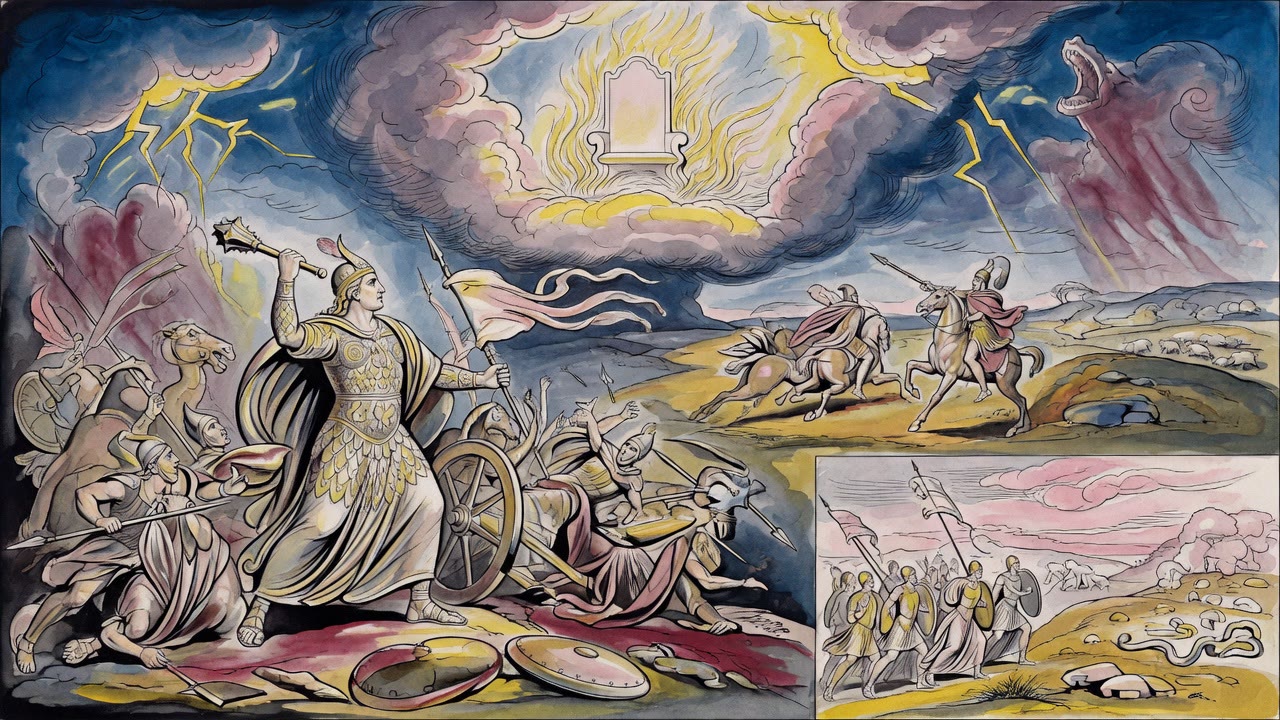
Count the nations that raised iron. Egypt once boasted in the chase: I will pursue, I will overtake, I will divide the spoil. The boast died in water, yet the Torah later refused a permanent abhorrence of the Egyptian. Memory of the sword stayed. Hatred without limit did not.

Edom threatened to come out with the sword. Blood kinship sat under the threat, Esau's line facing Jacob's line with old heat. Still the command would run: you shall not abhor an Edomite. The enemy who meets you in open violence remains an enemy you may one day sit near without a curse welded to his name forever.

Moses knew those swords. He had seen chariots. He had seen the edge of a brother's country. Iron is honest in its cruelty. It announces what it is.

That honesty made the other kind of war look worse. When a nation chooses the snare, it chooses a weapon that pretends to be hospitality. Moses made the officers say Egypt and Edom out loud before they said Midian, so their mouths would feel the difference between steel and seduction.

Two Nations With Snares

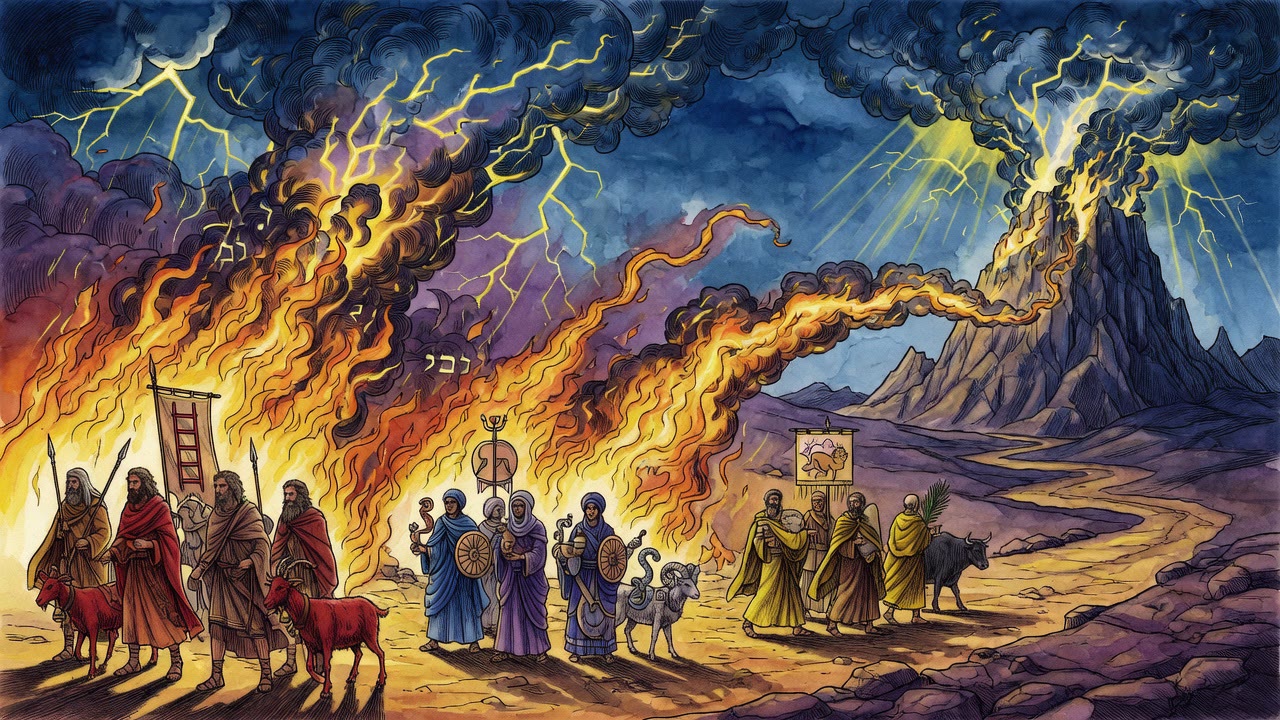
Moab and Ammon came differently. They came with transgression dressed as welcome. The Midianite pattern rhymed with theirs: daughters as snares, bodies as weapons that leave no clean wound on the skin and a deep wound on the soul.

The Torah's reverse judgment still shocks a man who only measures harm by blood. Of the swordsmen: do not abhor forever. Of the seducers: no Ammonite or Moabite shall enter the assembly of the Lord. Steel wounds the body. Sin reaches past the body.

In the camp, a father who buried a son for idolatry understood the decree in his bones. A soldier who only counted corpses did not. Moses had to hold both men in one law.

Somewhere behind the human quarrel, darker orders mirrored the sefirot (divine emanations) of peace with ranks of destruction. Light and darkness both answer the same Maker who forms light and creates darkness. Samekh Mem is a coded mark for that organization, a way to speak of destroyers without feeding them a full name on every tongue.

The Partridge on Stolen Eggs

A parable walked the edge of the same wound. A partridge steals eggs she did not lay. She warms them. Chicks hatch. Feathers grow. Then the borrowed young climb her back and tear her plumage out. When she tries to fly, she cannot rise. A beast finds her on the ground.

So the nations that stretched hands against a throne of glory, that burned a sanctuary and drove Israel out, brood over a prize that was never theirs. The seized inheritance turns. Memory of Moab and Ammon runs toward blotting, while a remnant learns how to walk without swallowing the snare again.

Moses needed Israel to stop confusing a pretty danger with a soft one. Soft was the lie. Pretty was the edge.

He told the parable to officers who had been laughing too easily. The laughter died. One man looked at his hands as if they already held stolen eggs.

Rise Earlier

From the single word against Midian the sages would draw an iron rule: if a man rises to kill you, rise earlier and kill him first. Moses heard the rule as campaign orders and moral clarity at once. Harass those who harass. Do not wait for the smile to finish its work.

He sent the men. He also sent the memory of who dies twice. The sword would flash. The deeper war was older than the flash: a war over whether Israel would trade the Name for a night that ends in a foreign altar.

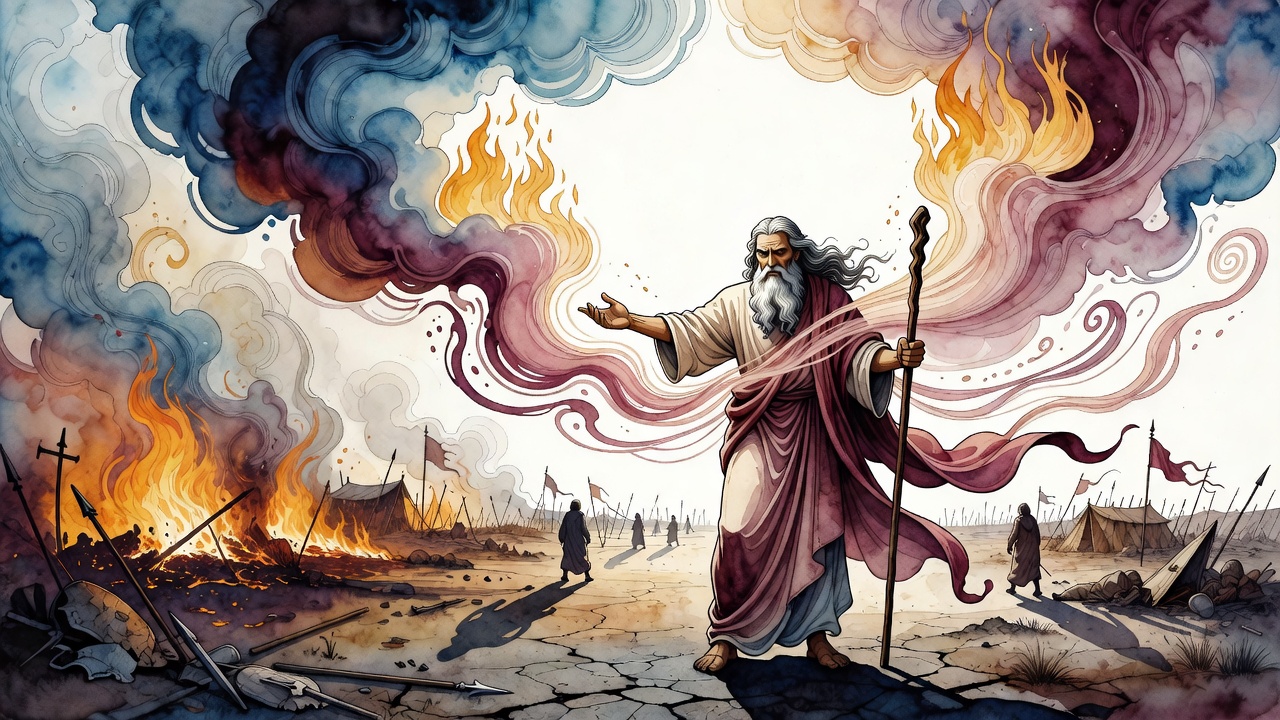
Dust rose over the first ranks. A horn sounded, thin in the heat. Midian would learn the cost of a trap. Israel would learn that the enemy who aims at the soul earns a harder door than the enemy who aims at the ribs.

Moses watched until the last spear left the camp gate, then turned toward the tent where harder sentences waited for boys too young for spears and already old enough for snares.


← All myths
From the tradition

Sources

3 sources

The texts behind this telling. Some cards carry a translation of the source; others are our own retelling of it, and each card says which. Every card links out to the original.

Midrash Tanchuma Buber, Pinchas 4:1Midrash Tanchuma Buber, Pinchas

Translation of the source text.Midrash Tanchuma (Buber), Public Domain, on Sefaria · CC-BY-SA

"And the Lord spoke to Moses, saying: Harass the Midianites" (Numbers 25:17). Why? "Because they are harassing you" (Numbers 25:18). From here the Sages said: If one comes to kill you, rise early to kill him.

[Rabbi Shimon says:] For whoever causes a person to sin is worse than one who kills him, since one who kills him kills him in this world, but he still has a portion in the world to come; whereas one who causes him to sin kills him in this world and for the world to come.

Two nations confronted Israel with the sword, the Egyptians and the Edomites, as it is said, "I will pursue, I will overtake, I will divide the spoil" (Exodus 15:9), and "And Edom said to him: You shall not pass through me, lest I come out against you with the sword" (Numbers 20:18). And two confronted them with transgression, Moab and the Ammonites. Concerning those who confronted them with the sword it is written, "You shall not abhor an Edomite... you shall not abhor an Egyptian" (Deuteronomy 23:8). And concerning those who confronted them with transgression, "No Ammonite or Moabite shall enter the assembly of the Lord" (Deuteronomy 23:4).

Full source
Midrash Tanchuma Buber, Ki Teitzei 3:1Midrash Tanchuma Buber, Ki Teitzei

Translation of the source text.Midrash Tanchuma (Buber), Public Domain, on Sefaria · CC-BY-SA

"You shall surely send away" (Deuteronomy 22:7). If you send it away, "according to deeds, accordingly will He repay" (Isaiah 59:18). See what is written: "The children of Israel are oppressed... they refused to send them away" (Jeremiah 50:33). And it says: "Their Redeemer is strong, the LORD of Hosts" (ibid., verse 34). And it says: "And it shall be like a wandering bird, a forsaken nest, the daughters of Moab shall be at the fords of the Arnon" (Isaiah 16:2). This is what Scripture says: "Like a partridge that broods over eggs it did not lay, so is one who makes wealth but not with justice" (Jeremiah 17:11). What is written after it? "A throne of glory, exalted from the beginning, is the place of our Sanctuary" (ibid., verse 12). What has this to do with that? He who says "Like a partridge that broods" says "a throne of glory", to teach you that this partridge brings eggs from other birds and sits upon them until they emerge from their shells and become fledglings; and they climb upon it and pluck out its feathers, and when it goes out to fly it cannot, for its feathers were plucked, and a beast or a creeping thing finds it and eats it. And what caused this to it? Because it raised eggs that were not its own. So shall it be with the nations of the world who stretched out their hands against "a throne of glory, exalted from the beginning, the place of our Sanctuary," and destroyed it, and burned its Temple, and exiled Israel. And as for Moab and Ammon, the Holy One, blessed be He, will destroy their memory, as it is said: "Therefore, as I live, says the LORD of Hosts, [the God of Israel,] surely Moab shall be like Sodom and the children of Ammon like Gomorrah... and a desolation forever; the remnant of My people shall plunder them..." (Zephaniah 2:9).

Full source
Asarah Perakim LeRamchal 9:2Asarah Perakim LeRamchal

Retold in our words. Read the original at the link below.Sefaria-hosted English translation · CC-BY

It's not a simple answer, of course, but Jewish mysticism offers some fascinating insights.

The Asarah Perakim LeRamchal, a key text, delves right into this. It begins by quoting (Isaiah 45:7): "I form the light and create darkness, I make peace and create evil." Heavy stuff. But what does it really mean?

The Ramchal, or Rabbi Moshe Chaim Luzzatto, unpacks this verse. "I form the light" refers to the right side, representing goodness and divine emanation. "And create darkness" – ah, that's the left side. The side of judgment, limitation, and… well, the source of what we perceive as evil. It's important to understand that "evil" here isn't necessarily some independent force, but rather an imbalance, a lack of the fullness of light.

Think of it like this: light reveals, darkness conceals. Too much light can be blinding, but too much darkness… well, we stumble.

The verse continues, "I make peace." Those are the angels of peace. And "create evil"? That’s attributed to the Samekh Mem. Now, Samekh Mem is a code, a euphemism. It's a way of referring to the forces of destruction and negativity without naming them directly. It’s like calling Voldemort “He Who Must Not Be Named.”

The text goes on to describe how these forces are structured. Just as the angels of peace are divided into ten categories, serving the ten Sefirot (the divine emanations) (the emanations of God) on the right, so too are the angels of destruction arranged in ten levels, mirroring the Sefirot on the left. It’s a cosmic symmetry, a divine balancing act.

It all circles back to (Ecclesiastes 7:14): "Even this opposite that God made them." HAELOKIM, God, made both sides. This isn't to say God is evil, but that God created the framework within which both good and evil can exist. The potential for both is woven into the very fabric of creation.

It's a challenging idea, no doubt. But it points to a profound truth: that duality, that tension between opposing forces, is fundamental to our existence. It's not about a simple battle between good and evil, but about how we work through the interplay of light and darkness within ourselves and in the world around us. What will we choose to illuminate? What shadows will we allow to linger?

Full source