Moses Finished the War With Midian and Then Let Go of His Life
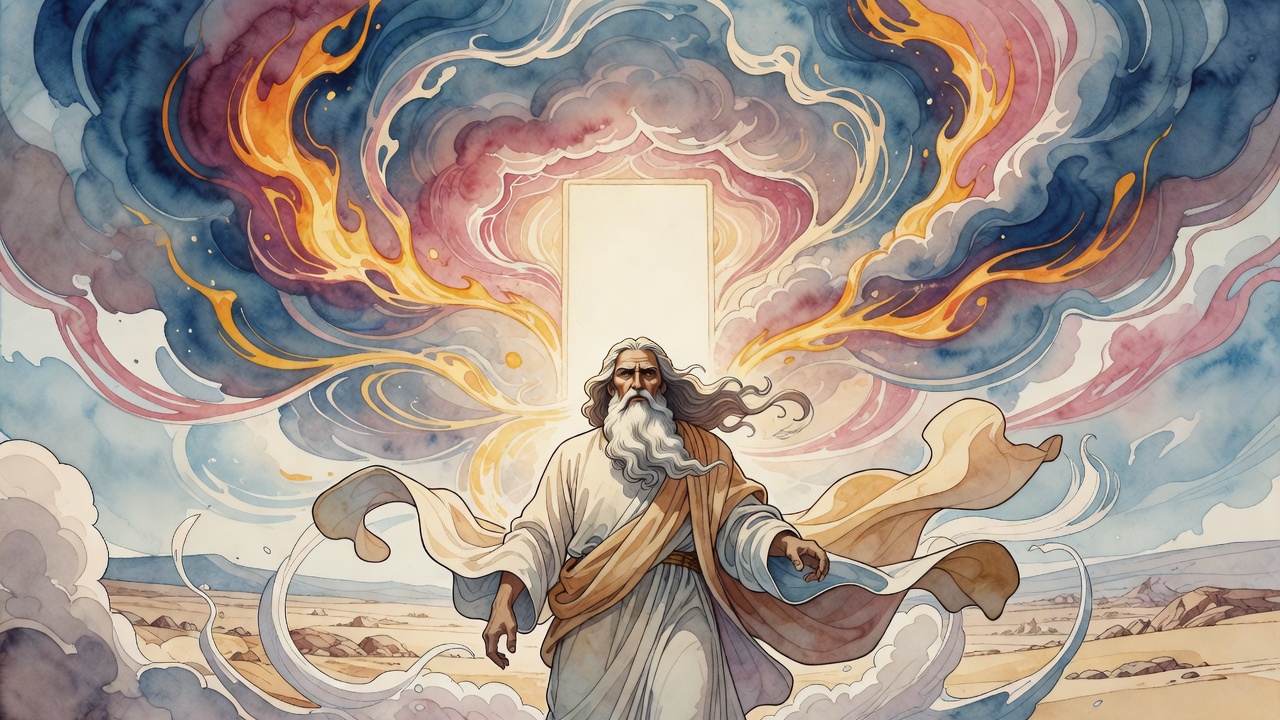
God named two clocks in one breath. Avenge Midian. Then Moses would be gathered. He heard both clauses and still called for the spears.
Table of Contents
Moses stood with both clauses still in his ears. "Avenge the children of Israel of the Midianites. Afterward shalt thou be gathered unto thy people." One breath. One war. Then the end of his life.
 Click for full size
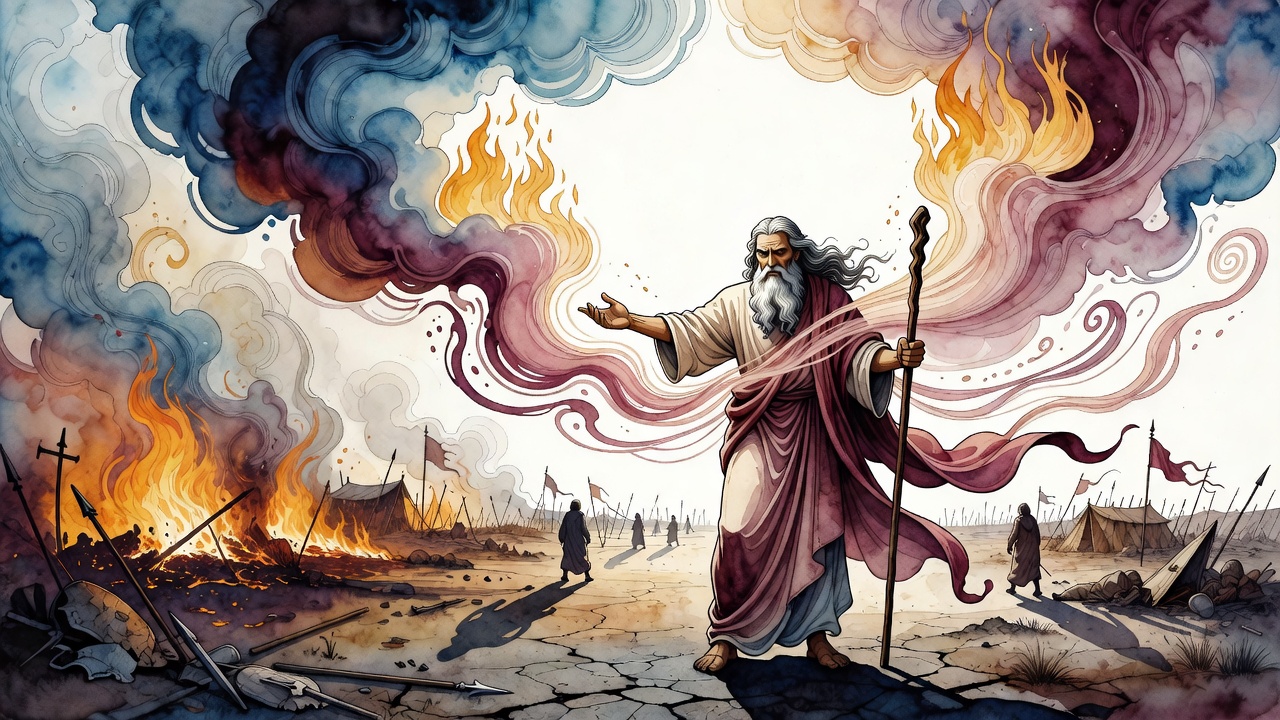
He knew what the camp would say if he rushed. They would say he wanted to die, since God had tied his remaining days to Midian's fall. Delay would stretch his breath. He called for the spears anyway.
Two Clauses in One Breath
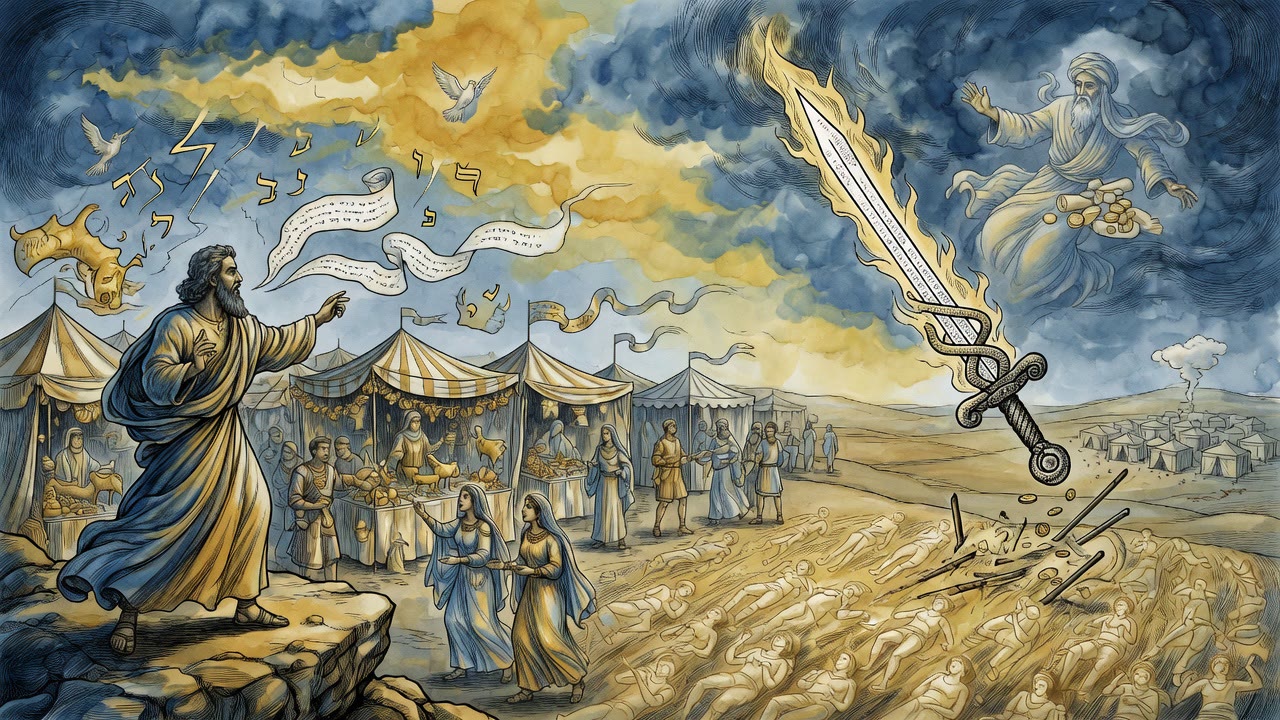
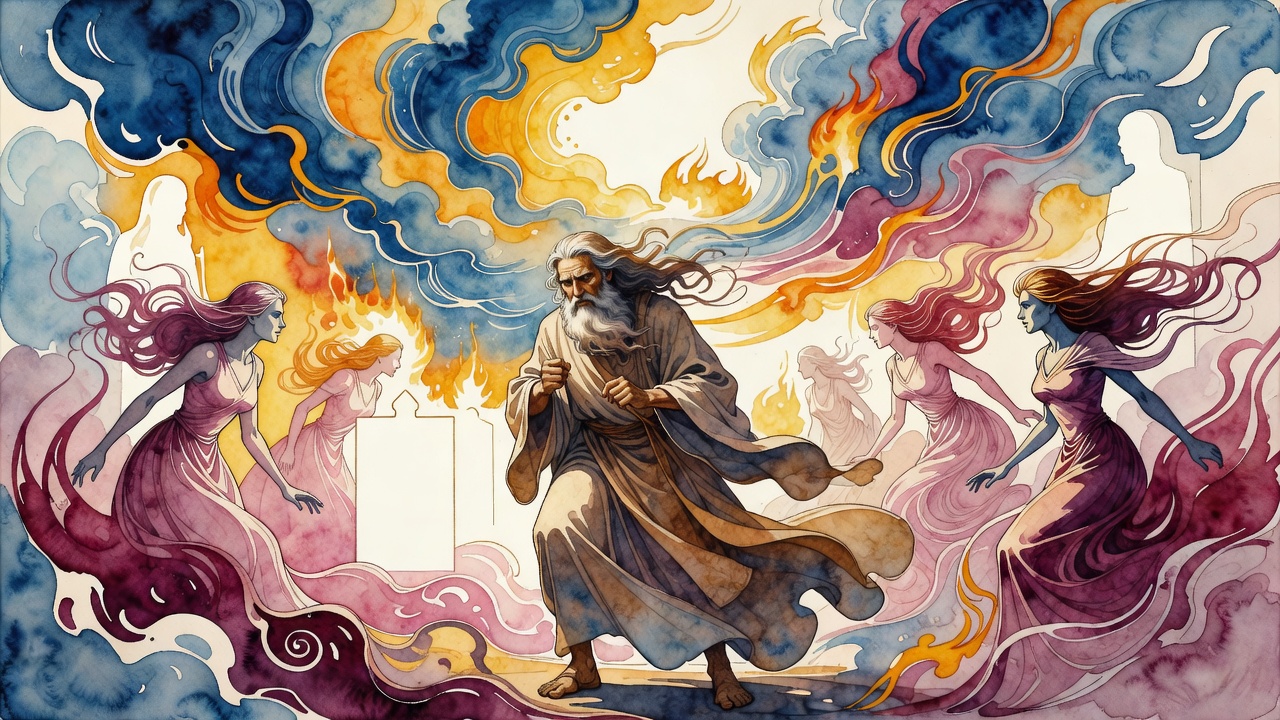
Shittim still sat in his chest. Balaam had opened his mouth to curse and had blessed instead. When words failed him as a weapon, counsel of bodies and idols did not. Midianite women walked into the camp. Israel fell into Baal Peor. Thousands died on a quieter knife than a sword. Moses, who could split the sea and send hail and make angels rise from their seats as he passed, could only weep.
God comforted him with a hard comfort. "As thou livest, thou shalt not depart out of this world until thou shalt have avenged those who tempted Israel to sin." The same sentence named his death. Moses heard the comfort and the cost together and did not put the cost first.
God also rebuked him. At the Golden Calf, when every tribe but Levi stood against him, he had found courage. At Shittim, when every tribe but Simeon stood with him, he had not been strong enough to hold the sinners back. The war would close what weeping had not.
Midian's Hour Came First
Israel received the command to fight Midian and Moab in the same season. Moses struck Midian at once. Moab he left. The camp was tired. Border nations can look alike from a dusty tent. Heaven's brief did not.
Moab's hatred had a root. Israel had not made war on them, but the people had pillaged the region and put fear into Moab's bones. Midian had no such claim. They joined the fight anyway and outdid Moab in hatred. Moab wanted Israel dead. Midian wanted Israel to sin, which is worse than death.
Moses asked God about the clash of orders. "Yesterday didst Thou say, Vex not Moab, and now Thou sayest, Avenge." God answered that Moab had been named for Lot's line, Abraham's kin. That claim was spent. They would be called Midianim, those who lost their claim. Still the sword stayed narrow in this hour. Ruth was still hidden in Moab, a valuable thing God had not yet found. "Wait yet a while in this matter of the war against the Moabites. I have lost something valuable among them. As soon as I have found it, ye shall avenge yourselves of them." David's time would finish that ledger. Moses' time was Midian.
The Comfort That Was a War
Balaam's prophecy had said Israel would not lie down until it ate of the prey and drank the blood of the slain. The words came due before Moses lay down to everlasting sleep. Shortly before his death it was granted him to see Balaam fall and the five Midianite kings fall with him.
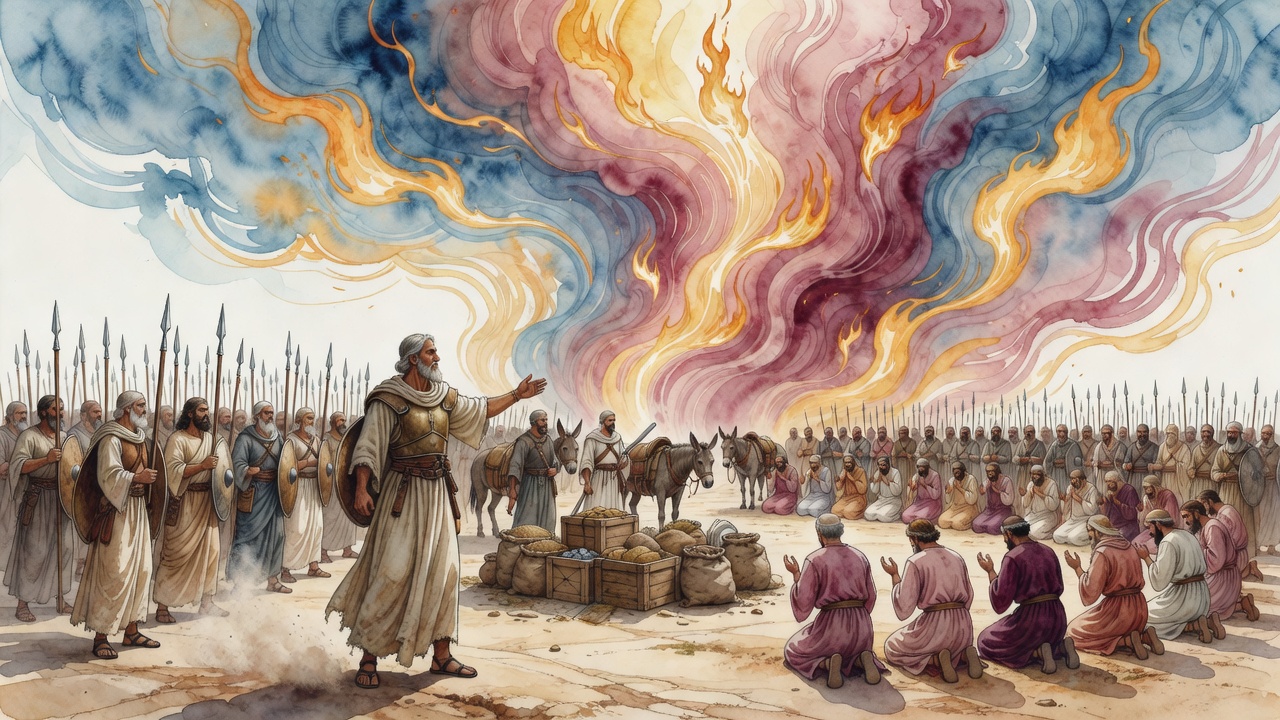
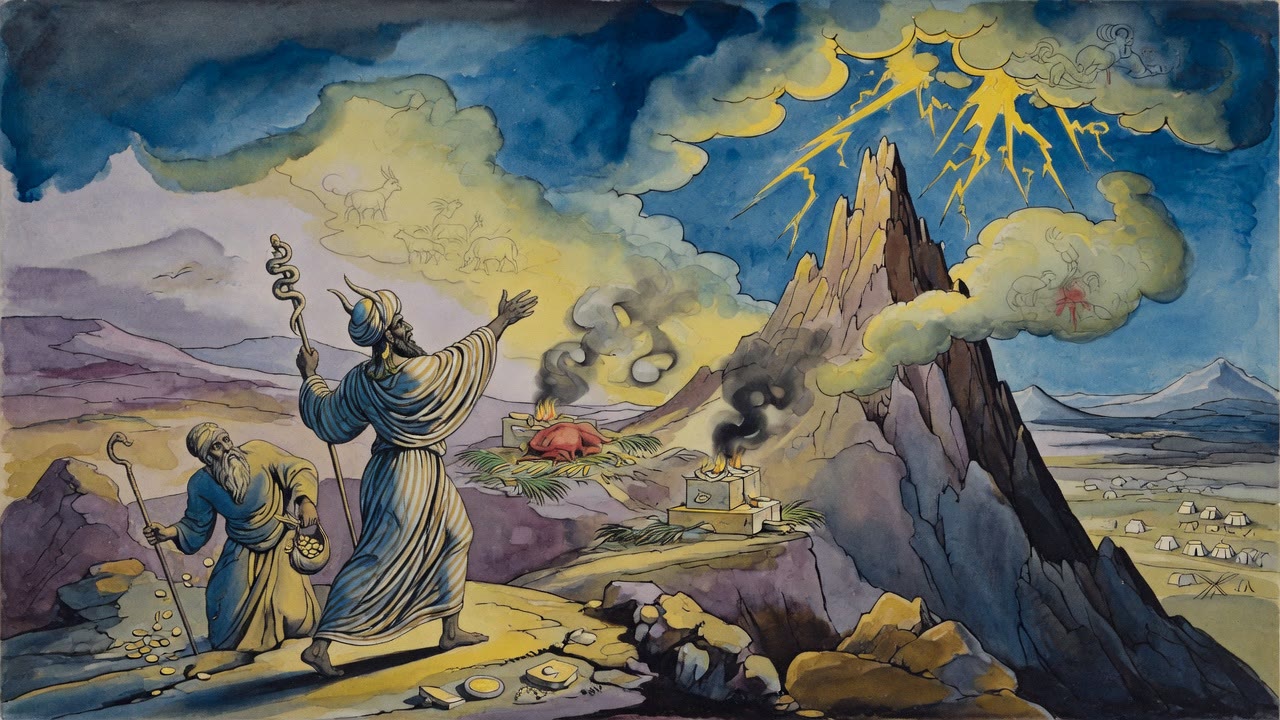
He sent Phinehas, whose spear was already bloody from the camp at Shittim. Soldiers marching against Midian carried more than weapons. They carried brothers lost to a softer knife. The field at last answered the grove and the invitation into idol tents. Purity of the camp and the death of the plotters shared one order from the same God who had refused to let a hired tongue damn the people.
A prophet for hire and a people hired into sin met a lawgiver who would not leave the wound open while he still breathed command. Balaam's long game of spiritual war met a short, hard campaign of ordinary war.
He Would Not Stretch His Days
Moses thought it through and did not let the thought rule him. "If I go now, they will say I wish for my own death. My life is assured me as long as I put this off." He went. Wherever a command of God or Israel's cause was concerned, he gave no thought to himself, even when the matter was his own breath.
Joshua later learned the opposite lesson and paid for it. When he came to Canaan he thought, "If I wage incessant war I will die as soon as I finish, the way Moses died after Midian." So he proceeded slowly, hoping to keep a long life. God's word prevailed over the many thoughts in a man's heart. Joshua had hoped to reach his master's age. He died at a hundred and ten, ten years before the span first allotted to him.
Moses chose the spending. Death delayed until duty finished is not the same as death denied. He knew the difference and marched inside it. The leader who once refused to go to Pharaoh without Aaron now refused to cling to office past the ordered fight.
After the Field Went Quiet
When the campaign closed, the man who had linked his pulse to Midian's fall opened his hand. Balaam's strategy met its answer. Moab's later fate would not be Moses' file. Joshua's generation would inherit a camp cleaner of that particular poison, and a memory of a lawgiver who spent his last command on other people's safety rather than on one more year of his own title.
Midian learned that hired sin is still sin. Israel learned that a leader can love life and still spend it on a battle he will not personally enjoy in the land of promise. Command that knows how to end is rarer than command that knows how to begin. Moses began at a bush. He ended, in this strand, with a campaign finished and a life unclenched, ready for the mountain where the last sight of Canaan would be enough.
He did not stall the war to stretch his days. He staffed it, sent Phinehas, and treated the campaign as the last work that must not be left messy for successors who had not seen Egypt's gates open. Letting go was part of the victory. The age of Moses prepared to end without leaving the Peor wound unbandaged.
← All myths