Balaam Told Midian to Build Booths, and the Sword Found Balaam
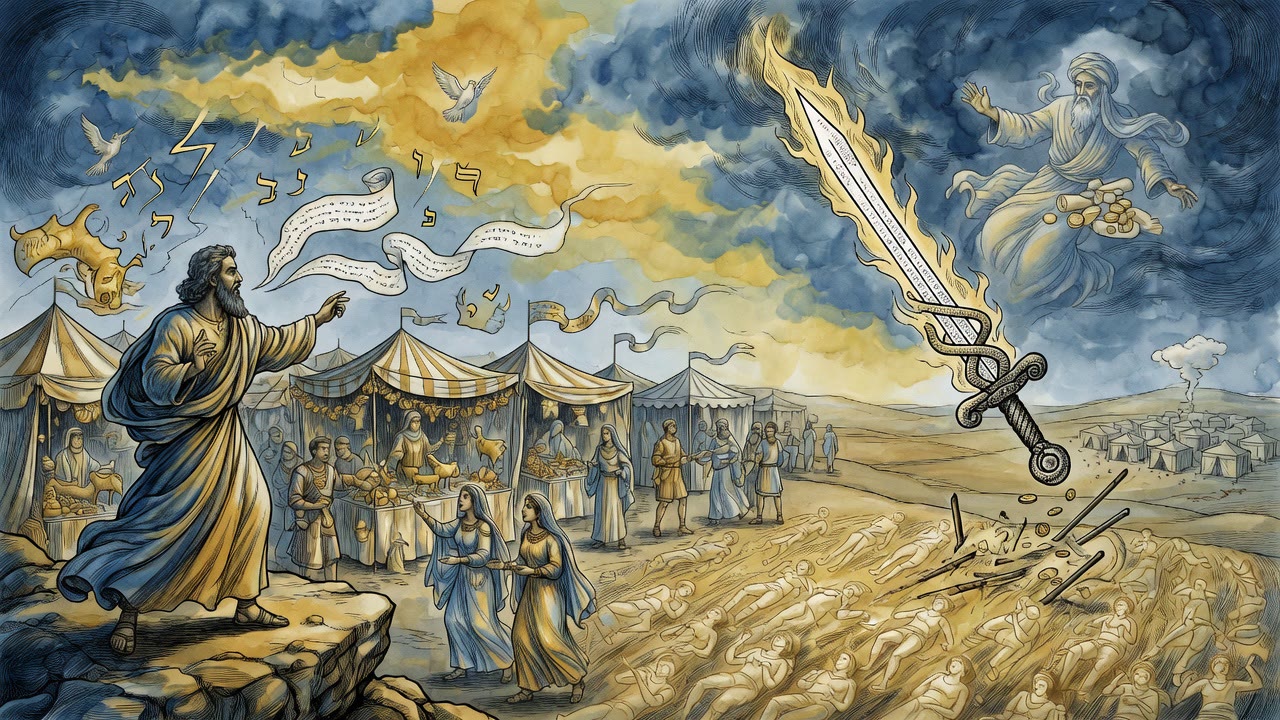
He could not curse them. So he told Midian to paint the daughters' eyes and set booths outside the camp. Twenty-four thousand fell.
Table of Contents
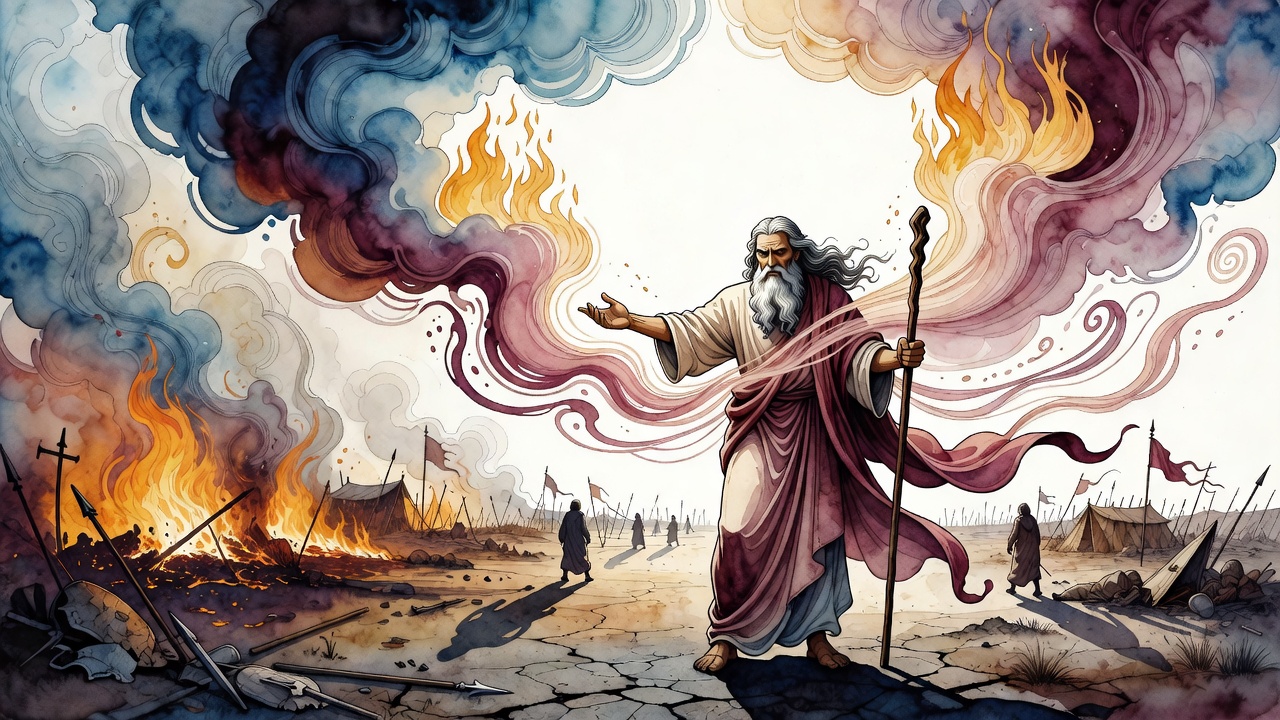
Balaam stood with Midian after heaven had shut his mouth. Curses would not leave it. Blessings had come out instead. He sold them a different weapon.
 Click for full size
"You will not prevail against this people unless they sin before their Creator," he said. "Their God detests lewdness. Build booths outside their camp. Stock them with merchandise. Paint the daughters' eyes. Let the young men walk past the line and buy what ruins them."
His rule was simple and cruel. While Israel does God's will, God wars for them. When they do not, God wars against them. Egypt's six hundred chariots had failed. Lust might succeed where iron failed.
Booths Outside the Camp
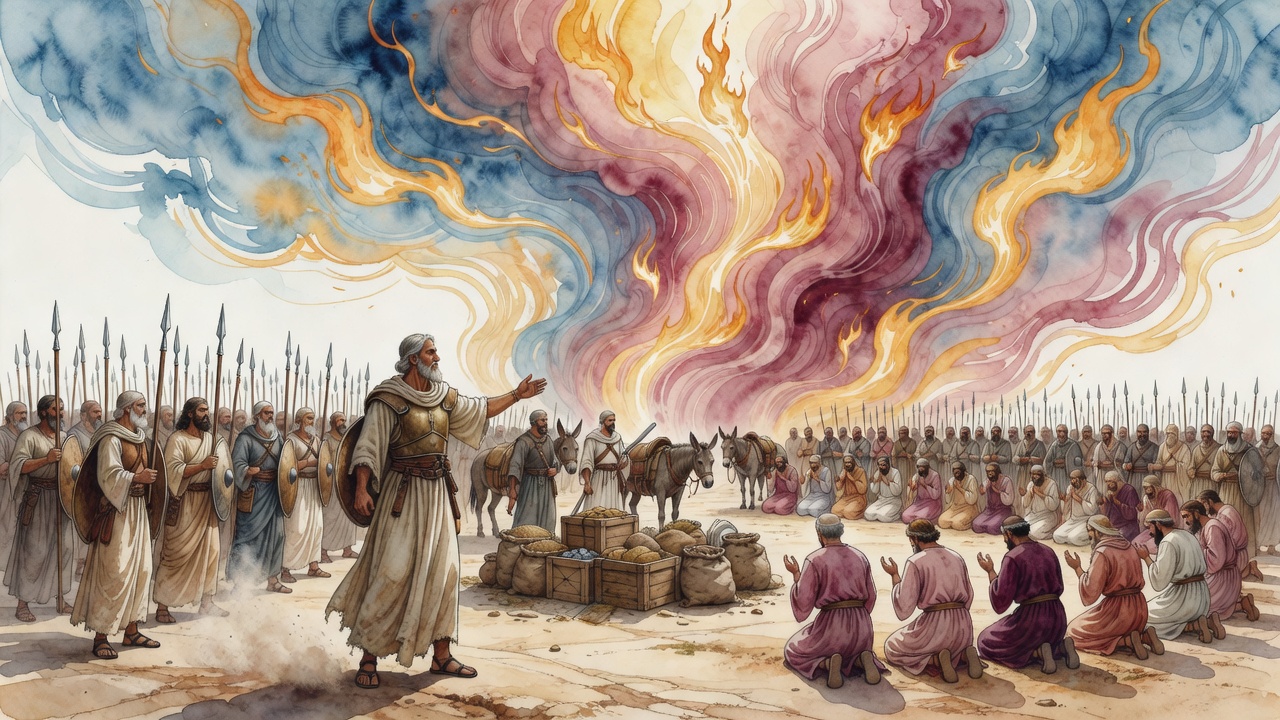
They built the stalls. Grain. Cloth. Perfume. The daughters of Midian sat in the shade with painted eyes and waited. At Shittim the young men of Israel walked out. A few hundred cubits past the boundary, the air turned sweet and wrong.
They had seen the sea split. They could not split themselves from a painted glance. Midian's daughters had been briefed. This was not romance. This was strategy spoken by a prophet-for-hire who knew Israel's weakness better than Israel's enemies usually did.
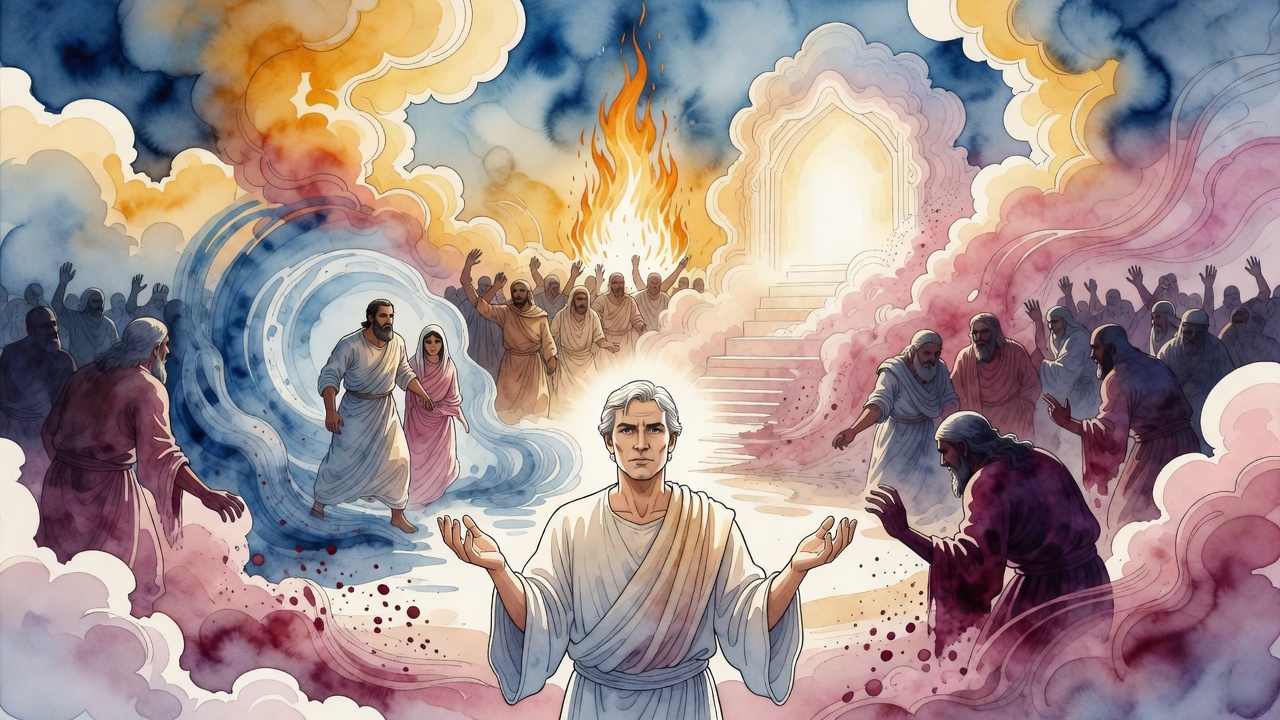
At every wilderness stop, Israel had already flirted with idols after meals. "And the people sat down to eat and to drink... and they rose up to play" (Exodus 32:6). At Shittim the play turned into whoredom with the daughters of Moab (Numbers 25:1). Twenty-four thousand fell. The counsel of the wicked sat close enough to smell perfume and grain.
Enemies Who Hated Each Other First
Moab and Midian had not lived as friends. They made peace the way two dogs stop fighting when a wolf nears the lamb. One helps the other or both die later. Elders of Moab and elders of Midian walked together when the target was Israel.
After the plague, God spoke to Moses. Take Israel's revenge from the Midianites. Leaders of Israel do not leave the world until they take Israel's revenge, which is also the revenge of the One who spoke the world into being. Moses would die soon. First he would finish this.
Why Midian if Moab started the talk? Shared counsel made shared liability. Five kings of Midian would be one in death as they had been one in scheme.
The Sword Found the Counselor
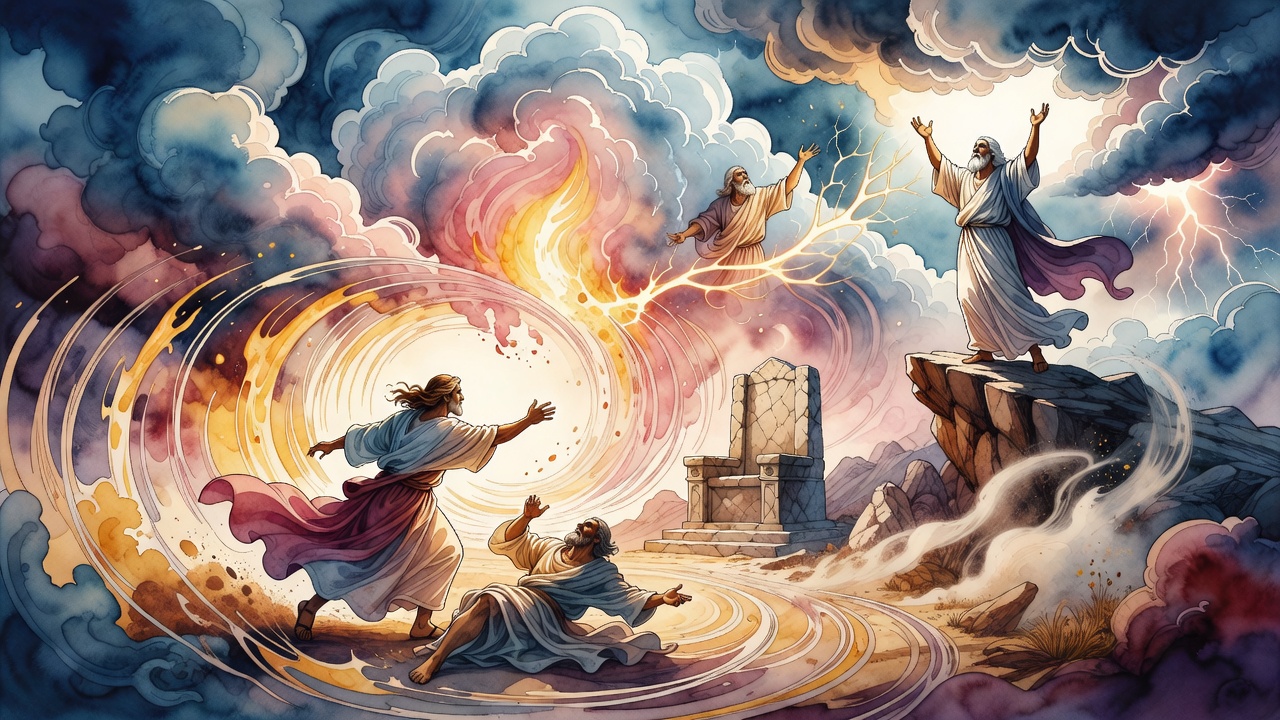
Israel warred against Midian and surrounded it. Rabbi Nathan said they left a fourth side open so the enemy could flee. Still the five kings fell together. "And Bilam the son of Beor they slew by the sword."
Israel did not stint his wages. When he had said that six hundred thousand could not be faced then, and asked how they would face Israel now, they paid him the full reward of a counselor of death. Rabbi Nathan adds the grim detail that they applied the four judicial death penalties to him. The sword was only the headline.
Balaam, who had wanted silver for curses, collected steel for counsel. The fourth open side of the siege could not open a road for the man who taught Midian how to make God into an enemy of Israel for a season. The sword closed that road.
The Women Who Were the Weapon
Spoil came back clean to Moses. Houses of idolatry burned. Posts of sentinels fell. Young men ran for loot until Moses and Elazar went out and Moses burned with anger at the commanders.
"Have you let all the females live?" Moses demanded. These were the women consigned against Israel by Balaam's word. The counselor's last product was not a blessing from a mountain. It was a market of bodies outside the camp.
Phinehas had already answered the crisis in the camp with a spear when the plague first rose. Now the war answered the booths. Vengeance was not a mood. It was a command timed before Moses' death so the leader would not leave with Midian's plot unfinished.
After the Sword
The wilderness still smelled of death and spice. Israel counted living and dead. Moses' anger at the commanders taught that the great ones bear the stigma when the people grab spoil like children. Phinehas answered that they had done as commanded in the fighting itself.
Balaam's body did not get a prophet's funeral. He got the payment he earned when he turned from forced blessings to voluntary corruption. The God who would not let him curse also would not let him outlive the war his booths required.
Shittim's name stayed bitter. Twenty-four thousand names stayed buried under it. When the dust settled, Moses still had to die on the far side of the Jordan without crossing. He had taken the revenge first. The booths were gone. The counselor was gone. The leader still had a mountain waiting, and a people who had learned that outside the camp is not only dust.
← All myths