Translation of the source text.Tanna debei Eliyahu Rabbah, Warsaw 1880 · Public Domain
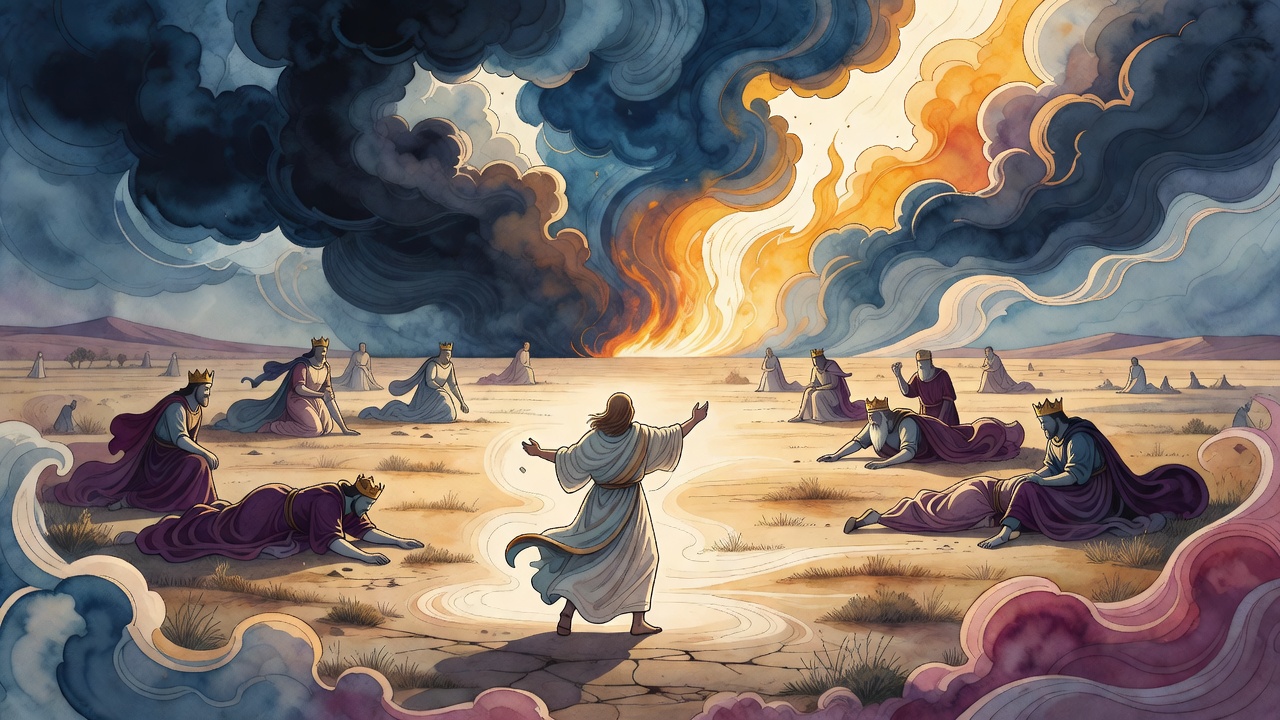
Scripture says, "Wisdom is better than weapons of war" (Ecclesiastes 9:18). Greater was the feast, the pistan, that Elisha made than all the wars that Joram son of Ahab made. When the king of Israel saw the Aramean force delivered into his hand, he said to Elisha, "Shall I strike them? Shall I strike them, my father?" Elisha said, "You shall not strike them." He prepared for them a great feast, and they ate and drank, and he sent them away. After that, "the bands of Aram came no more into the land of Israel" (2 Kings 6:21-23). From this you learn that the feast Elisha made was greater than all the wars Joram made. Therefore it is said, "Wisdom is better than weapons of war."
Similarly, King David said, "The beginning of Your word is truth" (Psalms 119:160). What did David see that made him praise the Holy One, blessed be He, with the language of truth? He judged within himself and said: just as the Holy One, blessed be He, is Himself called truth, as it is said, "But the LORD God is truth" (Jeremiah 10:10), and it says, "The LORD swore to David in truth" (Psalms 132:11), so I will praise Him only with the language of truth. Therefore it is said, "The beginning of Your word is truth."
Similarly, "The word of the LORD came to Gad the prophet, David's seer, saying... Three things I offer you; choose one of them" (2 Samuel 24:11-12; 1 Chronicles 21:9-10). David said to Gad, "I am in great distress. Let us fall now into the hand of the LORD, for His mercies are many" (2 Samuel 24:14). At that hour David said in his mind: If I say famine should come, Israel will say that I trust in my storehouses. Therefore I will not ask for famine. If I say the sword should come, Israel will say that I trust in my warriors. Therefore I will not ask for the sword. I will ask only for something in which all are equal, poor and rich, old and young. Immediately "the LORD sent a pestilence upon Israel" (2 Samuel 24:15). The angel stretched out his hand toward Jerusalem to destroy it, and as he destroyed, the LORD saw and relented.
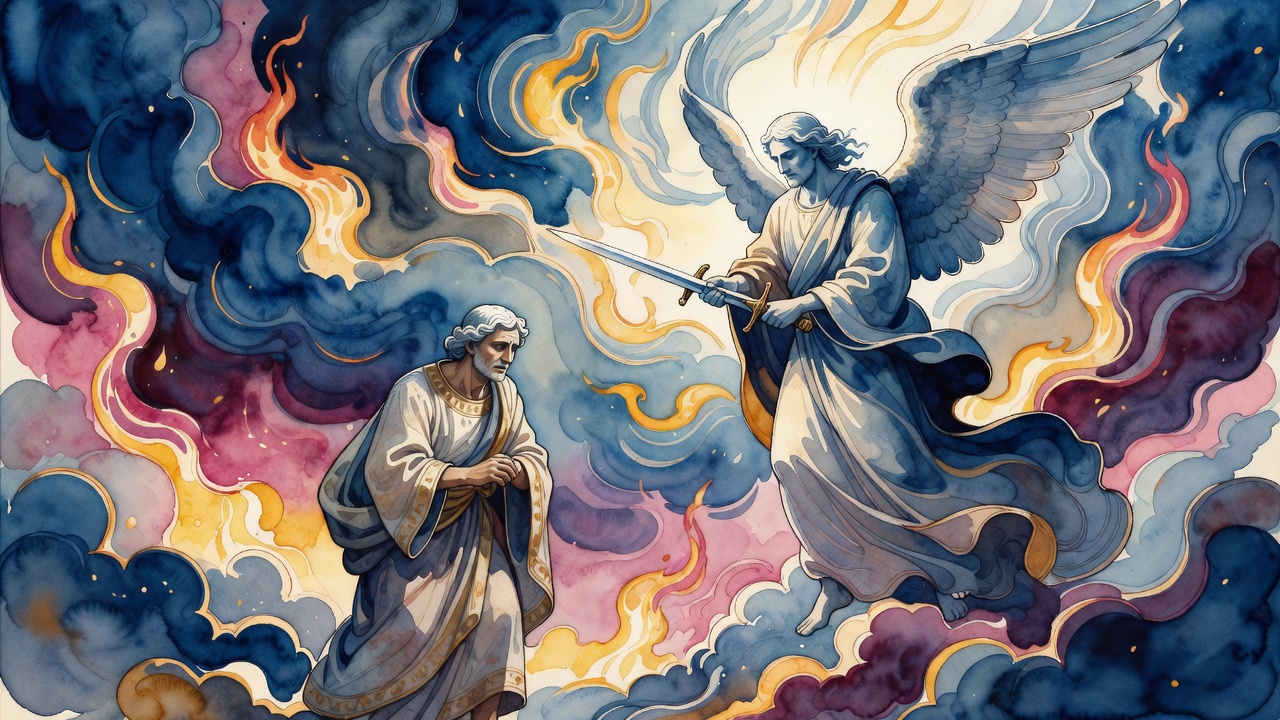
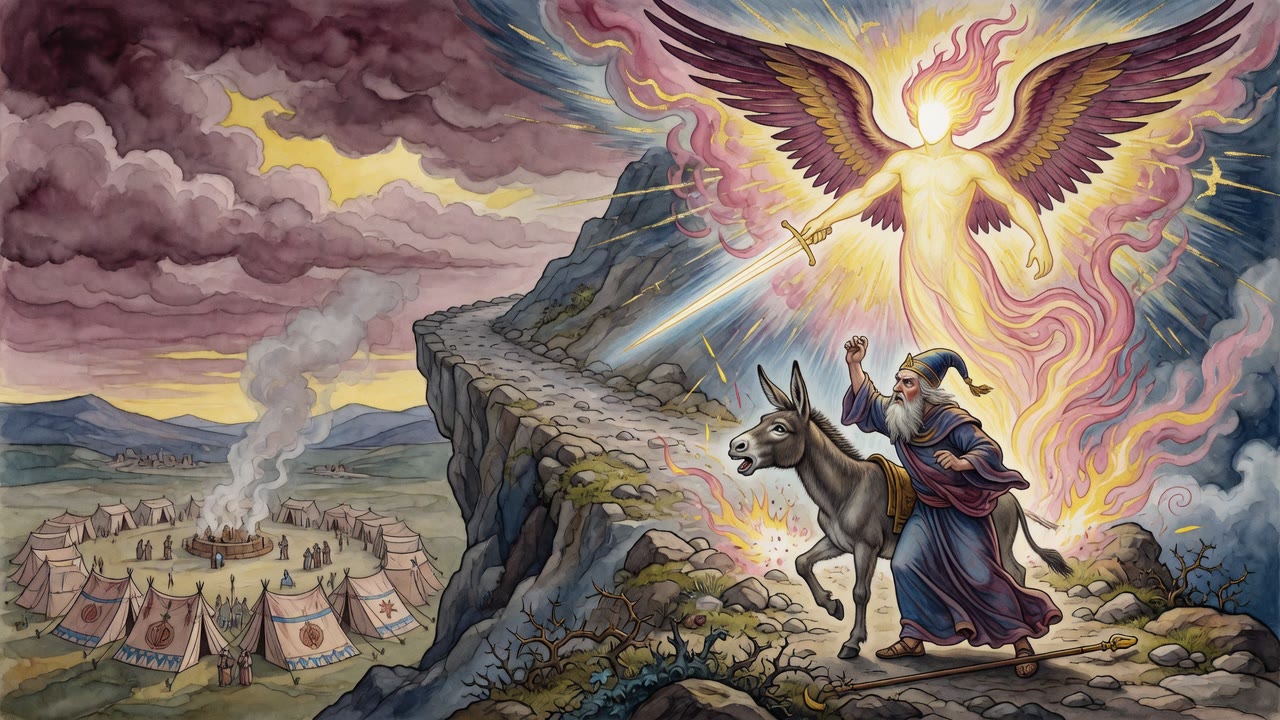
David lifted his eyes and saw the angel of the LORD standing between earth and heaven (1 Chronicles 21:16). At that hour David lifted his eyes and saw Israel's sins arranged in companies and heaps from earth to heaven. At that same hour an angel descended from the heights and killed Gad the seer, four of David's sons, and the elders who were with David. When David saw the sword of the Angel of Death, trembling entered him, and afterward he had no strength and no warmth, as it is said, "they covered him with clothes, but he could get no heat" (1 Kings 1:1). Scripture also says, "Your eyes saw my unformed substance, and in Your book all of them were written" (Psalms 139:16).
Blessed is the Omnipresent, blessed be He, who promised our ancestors and fulfilled the promise to their children. Just as the Holy One, blessed be He, may His great Name be blessed forever and ever, promised our ancestors that He rolls away and removes our sins, and does not keep jealousy and vengeance in His heart to execute judgment against all Israel in all their dwelling places, and does not withhold words of Torah from them, so He fulfills that promise. But the Holy One, blessed be He, keeps jealousy and vengeance in His heart in order to execute judgment against the wicked of the idolaters. From where do you know this? Go and learn from Pharaoh and all his camp. Just as they were jealous and vengeful against Israel, so the Holy One, blessed be He, was jealous and took vengeance against Pharaoh and all his camp.
From the day the world was created until that hour, He gives each one his reward, whether good or evil, as it is said, "Great in counsel and mighty in deed, whose eyes are open upon all the ways of the sons of men, to give each one according to his ways and according to the fruit of his deeds" (Jeremiah 32:19). And it says, "Far be it from God to do wickedness... for He pays a person according to his work" (Job 34:10-11). And it says, "The LORD is a jealous and avenging God... the LORD takes vengeance on His adversaries and keeps wrath for His enemies" (Nahum 1:2).
Why was Egypt different from all the other lands of the idolaters into which Israel entered? Because at that time the Egyptians ruled from one end of the world to the other. They were filthy with many transgressions, and there was no nation in the world more flooded with ugly and improper things, more suspected of sorcery, sexual corruption, and every evil deed, than Egypt alone. Therefore stumbling came upon Egypt through Israel, and the Holy One, blessed be He, sought to make satisfaction for His great Name through them in Egypt. A parable: a king sat watching, waiting, and expecting the thousands of camps that passed before him. The king passed before his camp, and they did not stand before him. He passed again after his camp, and they had no weapons, so he stood over them and killed them. So Scripture says, "The burden of Egypt. Behold, the LORD rides on a swift cloud and comes to Egypt; the idols of Egypt shall tremble at His presence, and the heart of Egypt shall melt within it" (Isaiah 19:1). It says, "They shall fight, every man against his brother" (Isaiah 19:2), and it says, "The princes of Zoan are fools" (Isaiah 19:11), and "the LORD has mingled within her a spirit of perverseness" (Isaiah 19:14), and "the LORD shall strike Egypt" (Isaiah 19:22). In the time to come, all the peoples will likewise stumble over Israel, as it is said, "On that day I will make Jerusalem a burdensome stone for all peoples" (Zechariah 12:3), and "I will strike every horse with bewilderment and its rider with madness" (Zechariah 12:4).
The Holy One, blessed be He, brought ten plagues upon the Egyptians, and all of them came upon them only because of the things they plotted to do to Israel. All the words of the Holy One, blessed be He, are truth, measure for measure. No evil measure goes out from before Him, only good measures; because of people's corrupted deeds, an evil measure goes out upon them. These are the plagues: blood, frogs, lice, swarms, pestilence, boils, hail, locusts, darkness, and the slaying of the firstborn.
Blood, why did it come upon them? Because they saw the Israelites immersing from their impurity and from marital relations, and the daughters of Israel immersing from menstruation and marital relations. What did the Egyptians do? They seized the waters against them, so they could not immerse, could not come to one another, and could not be fruitful and multiply. Therefore the Holy One, blessed be He, turned their waters to blood, as it is said, "He turned their waters into blood and killed their fish" (Psalms 105:29). The Egyptians would say to Israel, Give us water from yours. He gave him water, and it became blood. The Israelite would drink water. The Egyptian would say, Let me and you drink from one vessel, and the water in the vessel split, water for Israel and blood for the Egyptian, to fulfill what is said, "that you may tell in the ears of your son and your son's son what I did in Egypt" (Exodus 10:2). Then you will know that I am the LORD, faithful to pay good reward to the righteous and the law of punishment to the wicked.
Frogs, why did they come upon them? Because they would say to Israel: Go out and bring us creeping things and swarming creatures, and we will play with them as we wish. Therefore the Holy One, blessed be He, brought frogs upon them, until their voices were heard from inside the bellies of the Egyptians, saying kuku. Not only this, but when the Egyptians went to the privy, the frogs would come out and bite them in their openings, and there is no greater shame than this. Pharaoh said to Moses: You come against me with sorcery. I will call schoolchildren, and they too will do the same. Immediately Pharaoh called the sages and sorcerers, and they too made frogs. From then on, however, the whole world cannot create any creature smaller than a lentil.
One verse says, "the river shall swarm with frogs" (Exodus 7:28), and another says, "the frog came up" (Exodus 8:2). How can both verses stand? Rabbi Akiva says: there was one frog, and the Egyptians struck it, and frogs scattered from it until the whole land was filled with frogs. Rabbi Eliezer of Modiin said to him: What have you to do with aggadah? Withdraw from your words and go to plagues and tents. Rather, the Holy One, blessed be He, brought many kinds of frogs upon them. And what does "the frog came up" mean? Tzipor de'a, a knowing birdlike creature, which had da'at, understanding. When birds were thirsty and came to drink from the river and the pools, the frogs would call them and say: Come and drink; do not be afraid. Of them it says, "He sends the springs into the valleys... they give drink to every beast of the field... by them the birds of the heavens dwell" (Psalms 104:10-12).
Lice, why did He bring them upon them? Because they made Israel sweep roads, houses, fields, lanes, and streets. A man would sweep a woman's house, and a woman would sweep a man's house. Therefore the Holy One, blessed be He, turned the dust of Egypt into lice, as it is said, "Aaron stretched out his hand with his staff and struck the dust of the earth, and it became lice on man and beast; all the dust of the land became lice" (Exodus 8:13). This lasted until they could not find the dust of the land that Israel had swept. The Holy One, blessed be He, brought fourteen kinds of lice upon the Egyptians, and these are they: yerokanin, yarkovot, kefuyin, kefuchot, sefifin, water-ya'alei, field-ya'alei, nafkhedrin, ant, avi atzel, em kinim, akhshav, kivin de-chakhikhi, and biyuki bili.
Swarms, why did they come upon them? Because they would say to Israel: Go and bring us bears and lions, and bring them into our battle house, and we will make hunts with them as we wish. They did this so Israel would remain in the outer wilderness and not enter their homes, come to one another, and be fruitful and multiply. Therefore the Holy One, blessed be He, brought upon them all the evil beasts in the world, until they said, We have sinned, as it is said, "A grievous swarm came into the house of Pharaoh" (Exodus 8:20).
Pestilence, why did He bring it upon them? Because they made Israel herders of horses, herders of donkeys and camels, cattle and sheep, so that Israel would remain in the wilderness and not enter their homes and be fruitful and multiply. Therefore pestilence came upon them and killed everything Israel had been herding, as it is said, "Behold, the hand of the LORD is upon your cattle which are in the field, upon the horses, upon the donkeys, upon the camels, upon the cattle, and upon the sheep, a very severe pestilence" (Exodus 9:3), until they could not find an animal for Israel to herd.
Boils, why did He bring them upon them? Because they made Israel servants, to heat hot water for them and cool cold water for them. What would the Egyptians do at that hour? They would go and wash in water and enter their homes in joy. Therefore the Holy One, blessed be He, brought boils upon them, so that they could not touch water, neither hot nor cold, as it is said, "They took ashes of the furnace... and Moses scattered it toward heaven, and it became boils breaking out in blisters" (Exodus 9:10). Hail, why did it come upon them? Because they made Israel plant gardens and orchards and every kind of tree, so that Israel would not enter their homes and be fruitful and multiply. Therefore the Holy One, blessed be He, brought hail upon them and broke all the plantings Israel had planted, as it is said, "He destroyed their vines with hail" (Psalms 78:47), and "the hail struck throughout all the land of Egypt... and broke every tree of the field. Only in the land of Goshen, where the children of Israel were, there was no hail" (Exodus 9:25-26).
Locusts, why did they come upon them? Because they made Israel sow wheat, barley, beans, lentils, and every kind of legume, so that Israel would not enter their homes and be fruitful and multiply. Therefore the Holy One, blessed be He, brought locusts upon them, and they ate everything Israel had sown, as it is said, "The locusts went up over all the land of Egypt... and they ate every herb of the land" (Exodus 10:14-15). Darkness, why did it come upon them? Blessed is the Omnipresent, blessed be He, before whom there is no favoritism. There were wrongdoers in Israel who did not want to leave at that hour. When there was darkness for Egypt and light for Israel, those wicked ones died and were buried, so the Egyptians would not say: just as there was a plague among us, so there was a plague among them.
Their firstborn, why did they die? Because Pharaoh said, "When you deliver the Hebrew women... if it is a son, kill him" (Exodus 1:16). If not for the mercy of the Holy One, blessed be He, had Pharaoh said, If it is a daughter, kill her, and if it is a son, let him live, Israel's enemies would already have been diminished at that hour, because a man's way is to marry ten women and be fruitful and multiply from them, and his sons would be many. But a woman's way is not to be married to even two men at once, and she does not bear more from being married to two than from being married to one. The midwives did not do so, as it is said, "they did not do as the king of Egypt spoke to them" (Exodus 1:17). The Holy One, blessed be He, saw Pharaoh's thoughts and counted the matter to him as though it had been done. From here the sages said: idolaters are seized for an evil thought, but for a good thought only once they perform an action through it.
Why were the Egyptians drowned by Israel at the Sea of Reeds? Because it is said, "Pharaoh commanded all his people, saying: every son who is born you shall cast into the river" (Exodus 1:22). Command, tzav, means only a public proclamation, as it is said, "Moses commanded, and they caused a voice to pass through the camp" (Exodus 36:6). Command is said here and command is said there. Just as the command there means a public proclamation, so the command here means a public proclamation. What did the wicked Egyptian children do? They would go around the towns of Israel. When they heard the voice of a woman crying out in labor, they would go and tell their fathers, who would come, take the children of Israel, and throw them into the river.
About that hour it is said, "Catch us the foxes" (Song of Songs 2:15). These are the wicked Egyptians. "The little foxes" are the children of the Egyptians. "That spoil the vineyards" refers to the children of Israel, who are compared to a vineyard, as it is said, "For the vineyard of the LORD of hosts is the house of Israel" (Isaiah 5:7). From here Rabbi Eliezer the Great would say: the house of Israel is the vineyard of the Holy One, blessed be He. Do not peer into it. If you have peered into it, do not go down into it. If you have gone down into it, do not benefit from it. If you have benefited from it, do not eat of its fruit. And if you peered, descended, benefited, and ate of its fruit, that person's end is to be cut off from the world.
At that hour the Holy One, blessed be He, said to the ministering angels: from the hour I formed you, you have been prepared to save the children of Israel. Descend from before Me and see My beloved children, the children of Abraham, Isaac, and Jacob, whom they are throwing into the river. Immediately the angels descended from before Him in alarm. They stood in the water up to their knees, received the children of Israel, and placed them upon the faces of the rocks. The Holy One, blessed be He, brought out for them something like breasts from the rocks, and they nursed them, to fulfill what is said, "He made him suck honey out of the rock" (Deuteronomy 32:13).
The second decree Pharaoh decreed was that anyone who did not complete the quota of bricks would be built into the building beneath the row of bricks. The Holy One, blessed be He, made the voices of Israel heard inside Egypt, as they went out over the souls of Israel beneath the row of bricks, and the Holy One, blessed be He, saved them by making the building break so they came out from it like a bird rescued from a broken trap, as it is said, "As a bird that wanders from her nest, so is a man that wanders from his place" (Proverbs 27:8), and it says, "Our soul escaped like a bird from the snare of the fowlers; the snare is broken, and we escaped" (Psalms 124:7).
It was in the mind of the Holy One, blessed be He, that the Nile River should rise and destroy all Egypt after Israel left Egypt, because they threw the children of Israel into the Nile. Why, then, did He drown them in the Sea of Reeds? Blessed is the Omnipresent, blessed be He, before whom there is no favoritism. There were wrongdoers in Israel at that hour who were saying: we are fleeing in escape, the way people flee, and He has no strength to save. Immediately the Holy One, blessed be He, said to Moses, "Speak to the children of Israel, that they turn back and encamp before Pi-hahiroth" (Exodus 14:2). Pharaoh said of the children of Israel, "They are entangled in the land" (Exodus 14:3). Pi-hahiroth was on one side, Egypt on one side, Migdol on one side, Baal Zephon on one side, and Israel in the middle. The Holy One said: I will see them, whether I have strength in My hand to save them or not. Thus it is said, "Pharaoh drew near, and the children of Israel lifted their eyes, and behold, Egypt was marching after them, and they were very afraid and cried out" (Exodus 14:10).
At that hour the Holy One, blessed be He, said to Moses, "Why do you cry to Me? Speak to the children of Israel, that they travel" (Exodus 14:15). What was the thought of the Egyptians at that hour? We will pursue Israel, overtake them, lord ourselves over them, and throw them into the sea. Of that hour it says, "Then Moses sang... The LORD is my strength and song... The LORD is a man of war... Who is like You among the powers, O LORD?" (Exodus 15:1-11).
Similarly, you say this concerning Sennacherib king of Assyria. He was jealous and vengeful against Israel, and the Holy One, blessed be He, was jealous and vengeful against his camp, with jealousy, vengeance, stratagem, and majesty. Jealousy, from where? As it is said, "The LORD is a jealous and avenging God" (Nahum 1:2). Vengeance, from where? As it is said, "God of vengeance, LORD, God of vengeance, shine forth" (Psalms 94:1). Stratagem, from where? As it is said, "Great in counsel and mighty in stratagem, whose eyes are open upon all the ways of the sons of men, to give each according to his ways" (Jeremiah 32:19). Majesty, from where? As it is said, "I will sing to the LORD, for He has triumphed gloriously" (Exodus 15:1).
What was Sennacherib's thought? Wicked Sennacherib intended to take vengeance against Israel, and he said to his soldiers: go out, each of you bring me a handful of dust from Jerusalem's dust, and we will uproot its name from the world. Thus it is said, "From you came forth one who devises evil against the LORD, a wicked counselor" (Nahum 1:11). Was he devising evil against the Holy One, blessed be He? Rather, this teaches that anyone who counsels evil against Israel is considered as though he counseled evil against the Most High. Therefore it is said, "From you came forth one who devises evil against the LORD." The Holy One, blessed be He, who examines hearts and kidneys, said of Sennacherib: Fool of the world, would I destroy My children from the world? Would I destroy My flock, the flock of My inheritance? "What do you devise against the LORD?" (Nahum 1:9). Therefore it is said, "The LORD is a jealous and avenging God" (Nahum 1:2).
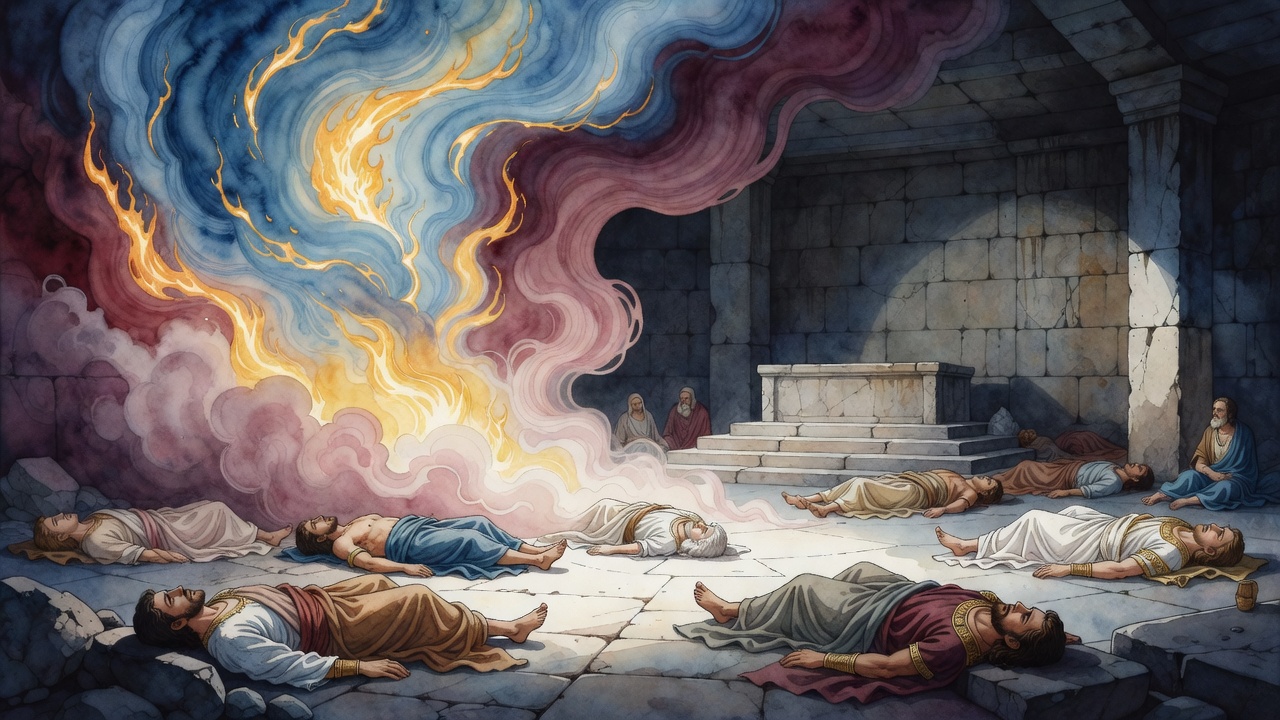
Blessed is the Omnipresent, blessed be He, who exacted payment from the enemies of Israel. Just as Sennacherib intended to uproot Israel from the world, so the Holy One, blessed be He, intended to uproot Sennacherib and his camp from the world, as it is said, "It came to pass that night, that the angel of the LORD went out and struck in the camp of Assyria one hundred eighty-five thousand" (2 Kings 19:35). Then "Adrammelech and Sharezer his sons struck him" (2 Kings 19:37). To this Scripture says, "For yet a little while, and the wicked one shall not be; you will look carefully at his place, and he will not be" (Psalms 37:10).
To what was the world in Sennacherib's hand compared? To a person who found a nest of eggs and chicks, all of them coming into his hand, as it is said, "My hand has found the wealth of the peoples like a nest; and as one gathers abandoned eggs, I have gathered all the earth" (Isaiah 10:14). No creature could turn back Sennacherib's face. How large was Sennacherib's camp? The sages said: his camp was two million six hundred thousand and five thousand less one. The first ones passed through water to the neck. The second ones passed upright. The middle ones passed through water to the waist. The last ones sought water and did not find it, as it is said, "Whom have you reproached and blasphemed?... I have dug and drunk water, and with the sole of my feet I dried all the rivers of Egypt" (Isaiah 37:23-25).
Why, then, does Scripture say one hundred eighty-five thousand? These were the officers, nobles, and warriors who were with him; Scripture does not need to mention all his soldiers. All of them died in one night, in one hour, in one moment, and only five people remained: Sennacherib, his two sons, Nebuchadnezzar, and Nebuzaradan. From these five, Sennacherib was later killed, as it is said, "Adrammelech and Sharezer his sons struck him with the sword" (2 Kings 19:37).
Therefore a person should keep matters in his heart, so that he not enter a partnership of words with idolaters and not cut a covenant with them. We find this with Abraham our father, who made a partnership with Abimelech, and the end of the matter was that he cut a covenant with him, as it is said, "Abraham took sheep and oxen and gave them to Abimelech, and the two of them cut a covenant" (Genesis 21:27). When he cut the covenant with him, the ministering angels gathered before the Holy One, blessed be He, and said: Why should Abraham cut a covenant with an idolater, the lone man whom You chose from seventy nations and languages?
The Holy One, blessed be He, said to them: The only son whom I gave him at one hundred years old, I will tell him to bring him up as a burnt offering. If he brings him up, good. Then you will know that his intention was for good, for the sake of peace. But if not, you have spoken well. Thus it is said, "It came to pass after these things that God tested Abraham" (Genesis 22:1), and "Abraham stretched out his hand and took the knife to slaughter his son" (Genesis 22:10). Even so, the Holy One, blessed be He, did not intend to slaughter him and sacrifice Isaac, but only to bring him up on the mountain to test him.
From here they said: there is no nation in the world that enslaves and afflicts Israel for more than several hundred years except because Abraham cut a covenant with an idolater. From here they said: anyone who makes a partnership of words with an idolater will in the end cut a covenant with him. If he is a Torah scholar, it is not enough that he cuts a covenant with him; he also demeans his Torah, demeans the Name of his Father, wastes his money, makes his wife a widow, does not fill out his days, hands his children over to the sword, exiles them from their land, hires them out to idolatry, and ties an evil name to himself, to his children, and to his children's children until the end of all generations.

 Click for full size