5 min read

The Angel Wiped the Sword Clean on David's Cloak, and David Trembled

The plague ran through streets that had sung his psalms. David confessed and blamed no one else. Among the dead was a teacher of Israel.

Curated by Arthur · Told by Maggid ·
Table of Contents
  1. The Confession
  2. The Sword on the Garment
  3. Beloved Afflictions
  4. As a Father Afflicts a Son
  5. After the Hand Stayed
The Angel Wiped the Sword Clean on David's Cloak, and David Trembled Click for full size

The Confession

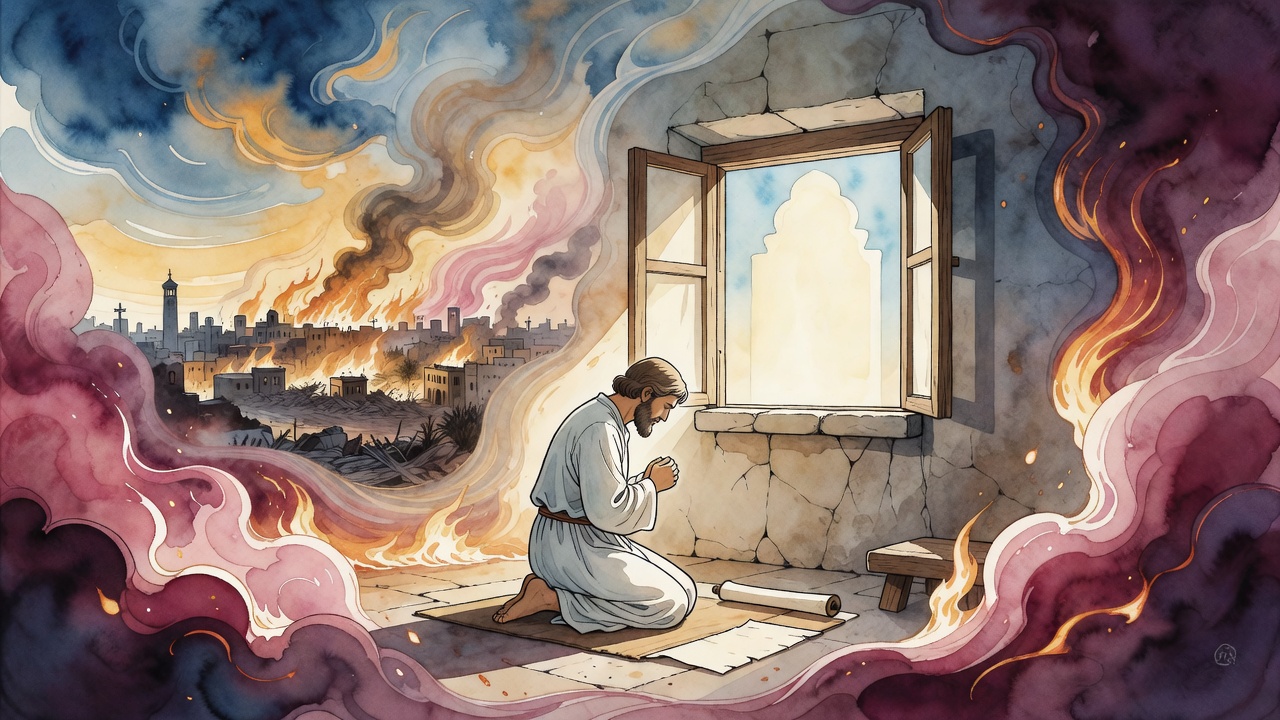
David found the words that stop an angel. The plague had already moved through Israel like a counted fire. Bodies fell in streets that had sung his psalms. The king who had numbered the people now numbered only his own guilt. He spoke without excuses, without census paperwork, without blaming Joab. "Sovereign of all worlds! It is I who have sinned; forgive me, I beseech Thee, my sin."

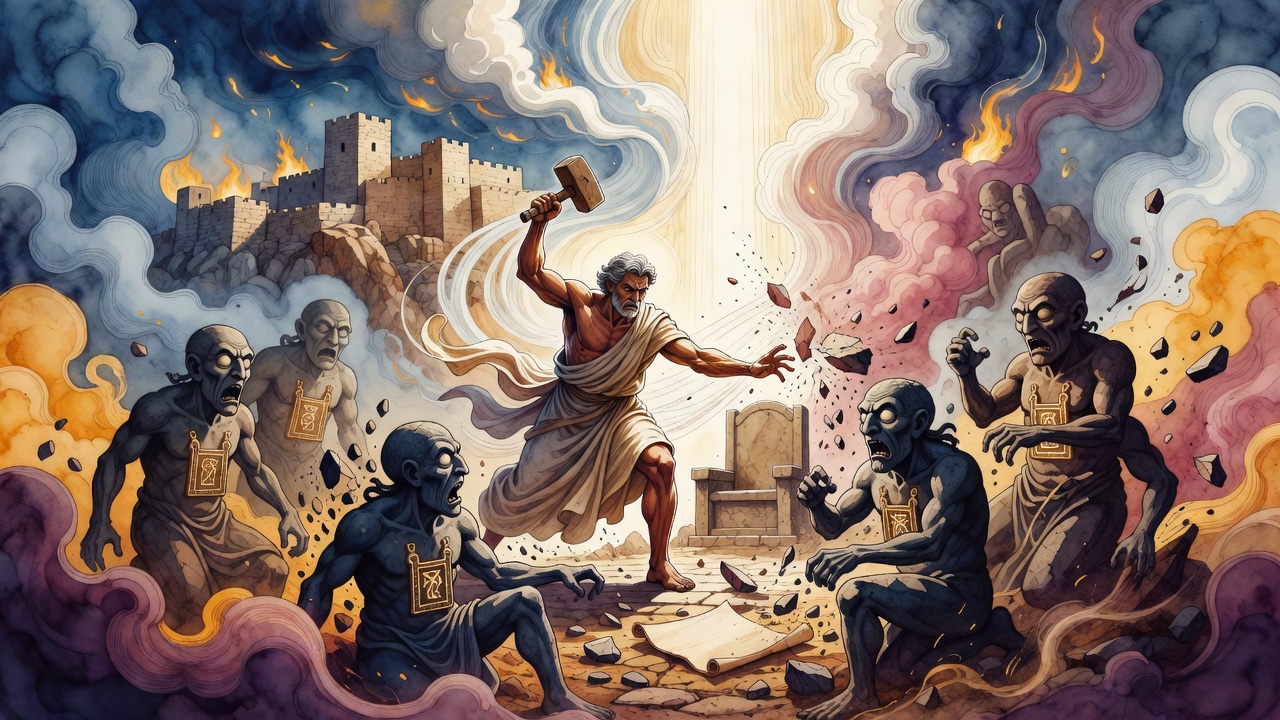
His repentance was accepted. God spoke to the angel who had already destroyed many among the people: "Stay thine hand" (1 Chronicles 21:15). The word rab, many, carried a second wound inside the first. A teacher had fallen in Israel. The plague was not only a body count for royal statistics. It was the loss of guidance, a rab cut down while the sword still moved through neighborhoods that needed wisdom more than they needed another dead hero.

David felt the acceptance as a door opening and a door closing at once. Mercy had heard him. Mercy had not erased what the angel had already done. The stayed hand was grace. The graves were still graves.

The Sword on the Garment

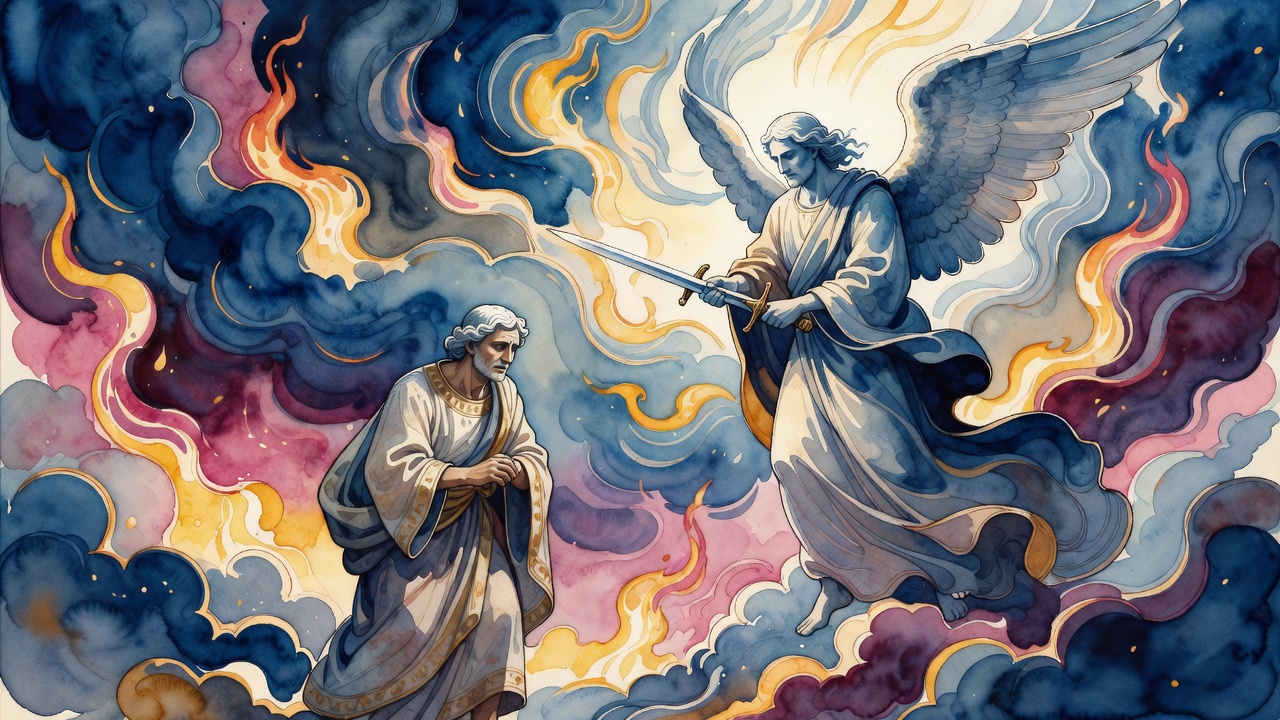
What did the angel do when ordered to stop mid-stroke? He took his sword and cleaned it on the garment of David. A heavenly executioner performing a domestic gesture. The blade that had emptied streets now wiped itself on royal cloth as if a workday were over and tools needed putting away.

David saw that sword and trembled in all his limbs until his death. He could not go before it to inquire of God as he once had, with the easy confidence of a man who had danced before the Ark. The cleaned weapon became a private terror. Mercy had halted the stroke. Mercy did not erase the memory of steel.

Courtiers saw a king who flinched at certain angles of light. Prophets saw a man who had met the edge of judgment and lived. David himself saw only the cloth that had held an angel's housekeeping, a stain of contact no fuller could wash. Every later prayer carried the glint of a blade that had paused an inch from finishing him.

Beloved Afflictions

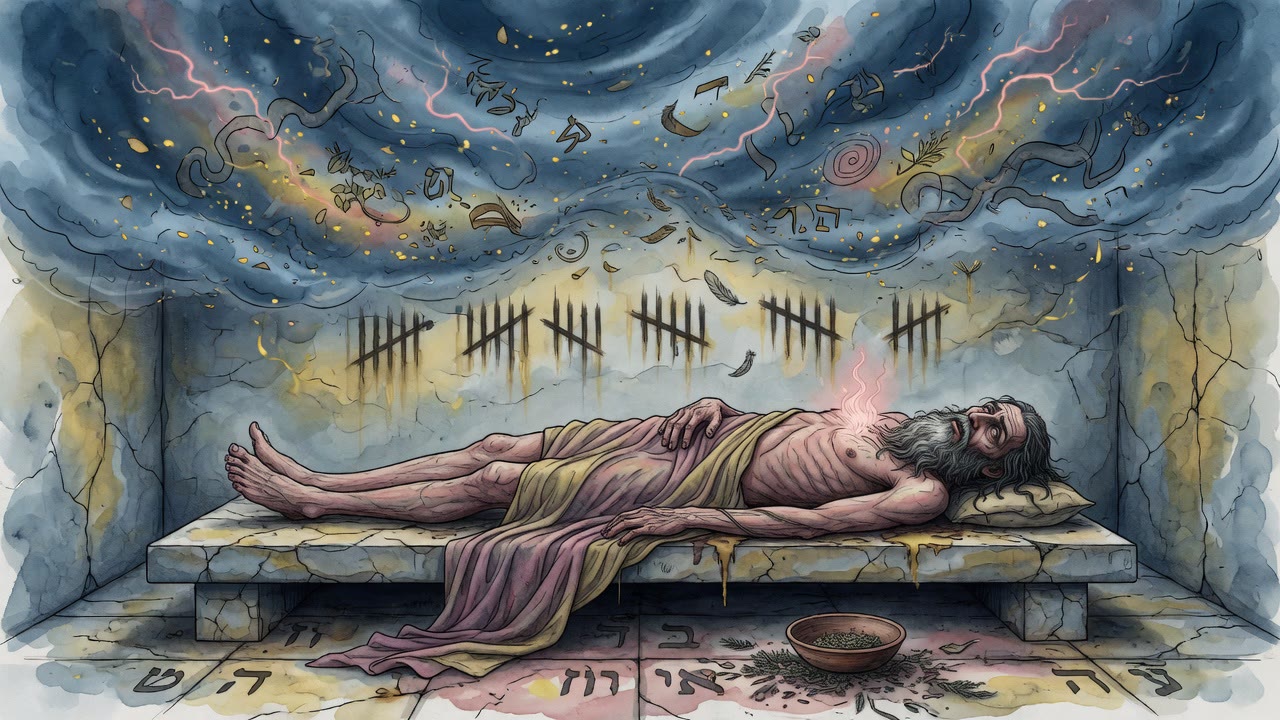
The sages dared a harder claim than soft comfort. Beloved are afflictions from the Lord, for the Name reposes upon the afflicted one. When a person is stripped of ease, the midrash says, the divine name finds a place to rest that prosperity often refuses. Rabbi Nathan bar Yosef paired the covenant with the land to a covenant with afflictions: the same God who brings Israel to a good land is the God who afflicts, and the path between them is not an accident of cruel weather.

Rabbi Shimon bar Yochai went further still. Three gifts coveted by the nations were given to Israel only through afflictions: Torah, the Land of Israel, and the world to come. The gifts do not cancel the pain. The pain is the door the gifts walked through. David's stopped plague sits inside that grammar. Forgiveness arrived as a halted sword, not as a soft speech that pretended numbers had not fallen.

To call affliction beloved is not to call it pleasant. It is to refuse the lie that suffering is ownerless chaos. The hand that stayed was the same hand that had sent.

As a Father Afflicts a Son

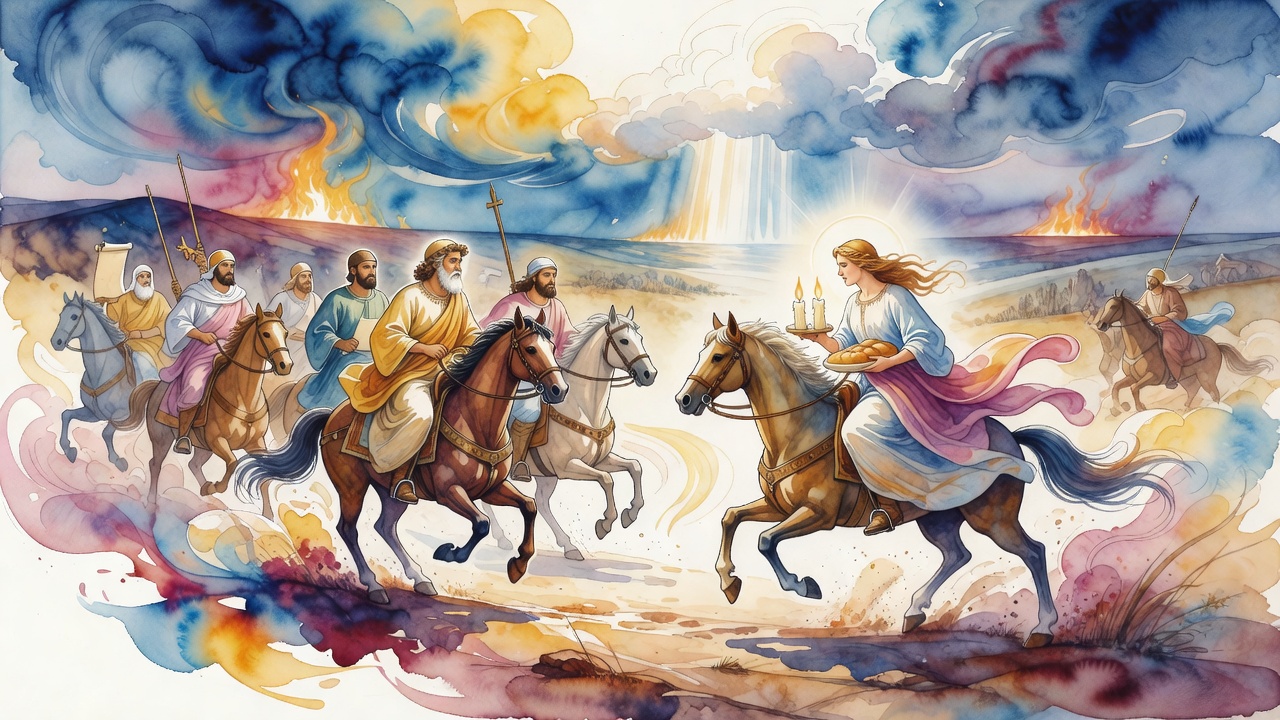
Rabbi Eliezer ben Yaakov heard Proverbs: "Whom the Lord loves, He chastises, as a father is reconciled with his son" (Proverbs 3:12). Reconciliation sometimes needs the hard conversation after the wound. Rabbi Meir pressed Deuteronomy: "as a father afflicts his son, the Lord your God afflicts you" (Deuteronomy 8:5). You and your heart know what you have done. The blow may still be lighter than the full measure of the act.

David's body kept the knowledge. He had asked for the sin to be his alone. Heaven agreed, then left him with a visual he could not unsee. The angel's housekeeping on his cloak was more intimate than any public sermon about royal failure. A fatherly chastisement can still make a grown king shake until his last breath.

He would buy the threshing floor. He would build an altar. He would sing again. The tremor would remain under the song.

After the Hand Stayed

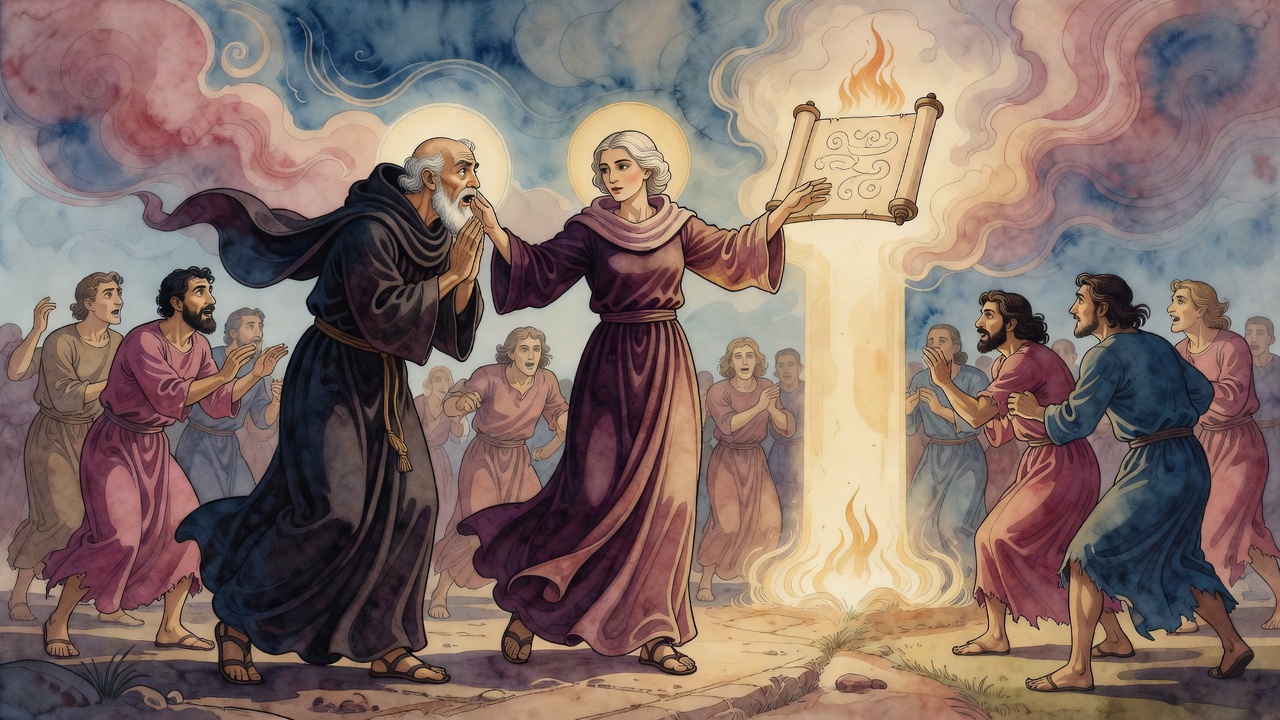
Jerusalem still stood. The teacher who had fallen could not be restored by decree. David lived the rest of his years as a man who had watched death wipe its knife on his own clothes and walk away under orders. That is what accepted repentance looked like in his bones: not a clean slate wiped of memory, but a stayed hand and a lifelong flinch that kept him honest.

The king who gave Israel so many psalms also carried a private image no choir could soften, an angel polishing steel on the fabric against his skin while the city counted its dead and learned that even mercy can leave a scar shaped like a sword.


← All myths
From the tradition

Sources

3 sources

The texts behind this telling. Some cards carry a translation of the source; others are our own retelling of it, and each card says which. Every card links out to the original.

Pirkei DeRabbi Eliezer 43:3Pirkei DeRabbi Eliezer

Retold in our words. Read the original at the link below.Pirke de Rabbi Eliezer, trans. Rabbi Gerald Friedlander, London (1916) · CC-BY

This story comes to us from Pirkei DeRabbi Eliezer, a fascinating text filled with tales and legends. – realized the gravity of their actions. It says, "He sought to do penitence, and spake before the Holy One, blessed be He: Sovereign of all worlds! It is I who have sinned; forgive me, I beseech Thee, my sin."

The absolute acknowledgement of wrongdoing? The plea for forgiveness?

Here's the astonishing part: "His repentance was accepted, and He said to the angel who had destroyed many (Rab) among the people: 'Stay thine hand' (1 Chron. 21:15)."

"Rab," in this context, doesn't just mean "many." It has a deeper significance. The text clarifies, "What is the meaning of || 'many' (Rab)? He said to him: Rab (the teacher) has fallen in Israel." A spiritual leader, a teacher, someone vital to the community had been lost. The destruction wasn't just about numbers; it was about the loss of wisdom and guidance.

What kind of sincerity, what depth of remorse, could possibly achieve that?

The story continues: "What did the angel do? He took his sword and cleaned it with the garment of David."

This image is striking. The angel, this powerful, fearsome being, is depicted performing such a mundane act. But it's far from meaningless. It signifies the cessation of the destruction, a pause in the divine wrath. But that sword, now cleaned, becomes a symbol of terror for David.

"David saw the sword of the angel, and he trembled in all his limbs until his death (as it is said,) 'But David could not go before it to inquire of God; for he was afraid because of the sword of the angel of the Lord' (1 Chron. 21:30)."

The sight of the angel's sword, even after the destruction was halted, leaves an indelible mark on David. The encounter instilled such fear that he could no longer approach God in the same way. The awareness of divine power, and the potential for divine retribution, remains with him until his final days.

What does this all mean? Perhaps it's a lesson about the profound power of sincere repentance. That even in the face of immense consequences, a genuine turning of the heart can alter the course of events. It shows us that even angels of destruction can be stayed. But it's also a reminder that even when forgiveness is granted, the consequences of our actions can linger, leaving a mark on us and those around us. It’s a potent reminder to choose our actions wisely, and to strive for genuine teshuvah (repentance), repentance, when we fall short.

Full source
Sifrei Devarim 32:13Sifrei Devarim

Retold in our words. Read the original at the link below.Sifrei by Rabbi Shraga Silverstein · CC-BY

Sifrei Devarim turns to Why Afflictions from God Are Called Beloved.

The Sifrei Devarim, a collection of early rabbinic legal interpretations on the Book of Deuteronomy, explores just this. And the rabbis don’t hold back.

R. Yossi b. R. Yehudah makes a rather startling claim: "Beloved are afflictions by the L-rd, for the name of the L-rd reposes upon the afflicted one, as it is written 'the L-rd your G-d afflicts you.'" Beloved? Afflictions? But consider the idea that in our moments of deepest vulnerability, when we are stripped bare, we become most receptive to the Divine presence. It's like the Divine embraces us in our brokenness.

R. Nathan b. Yosef builds on this, drawing a parallel between our relationship with the land and our relationship with suffering. "Just as a covenant is made with the land," he says, "a covenant is made with afflictions, as it is written 'the L-rd your G-d afflicts you' followed by (Ibid. 7) 'for the L-rd your G-d brings you to a good land.'" The connection is powerful: Affliction isn't the end of the story; it's often the prelude to something better, a necessary step on the path to a "good land." It’s a process, like planting seeds in the ground before they can bloom.

But perhaps the most striking perspective comes from R. Shimon b. Yochai. He proclaims, "Beloved are afflictions, three gifts having been given to Israel by the Holy One Blessed be He, which were coveted by the idolators, and which were given, through afflictions, only to Israel: Torah, Eretz Yisrael, and the world to come."

Three immense gifts: the Torah (teaching), Eretz Yisrael (the land of Israel), and Olam Ha-Ba (the world to come). He argues these were given through afflictions. That's a pretty bold statement! Are we to believe that suffering unlocks these treasures?

It's not that suffering is inherently good, of course. The point isn't to seek out pain for its own sake. Rather, it’s that the process of enduring and overcoming hardship can make us worthy vessels for receiving these profound gifts. Think of the Israelites wandering in the desert, facing countless trials before entering the Promised Land. Or the countless generations who have clung to the Torah through persecution and exile.

Consider this: the Torah is more than just a book; it's a way of life, a path to wisdom. Eretz Yisrael is more than just a piece of land; it's a symbol of hope and belonging. And Olam Ha-Ba, the world to come, represents ultimate fulfillment and redemption. These aren't just handed out; they're earned, understood, and appreciated through struggle.

See if you can find a glimmer of meaning, a hidden gift within the pain. It might just be the key to unlocking something truly extraordinary. Could it be that our greatest blessings are often wrapped in the most challenging experiences? It's a thought worth pondering.

Full source
Sifrei Devarim 32:10Sifrei Devarim

Retold in our words. Read the original at the link below.Sifrei by Rabbi Shraga Silverstein · CC-BY

Sifrei Devarim, a collection of legal and ethical teachings associated with the Book of Deuteronomy, tackles this very question head-on. It suggests something radical: we should actually rejoice more in affliction than in times of ease. Wait, what?

It sounds counterintuitive. Forgiveness, the text implies, often comes through facing hardship. It’s a powerful idea – that suffering can be a catalyst for spiritual growth and atonement.

Rabbi Eliezer ben Yaakov, a sage from the Mishnaic period, offers a beautiful analogy, drawing on (Proverbs 3:12): "Whom the L-rd loves, He chastises, as a father is reconciled with his son." What brings a father and son back together after a disagreement? Sometimes, it's the challenges they face together, the difficult conversations, the shared experience of overcoming adversity. Afflictions, Rabbi Eliezer suggests, can serve a similar purpose in our relationship with the Divine.

This isn’t to say G-d causes suffering arbitrarily. Instead, it suggests that suffering, when it comes, can be an opportunity for reconciliation, for deeper understanding, and for growth.

Rabbi Meir, another prominent sage, adds another layer to this understanding. He points to (Deuteronomy 8:5): "And you shall know within your heart that as a father afflicts his son, the L-rd your G-d afflicts you." Rabbi Meir emphasizes personal accountability. You and your heart know what you’ve done. The afflictions you face, even if they feel heavy, might actually be less severe than what your actions warrant.

This isn’t about self-flagellation or wallowing in guilt. It's about honest self-reflection. It's about recognizing that sometimes, the challenges we face are a consequence of our own choices, and that through those challenges, we have the opportunity to learn, to grow, and to become better versions of ourselves.

These teachings from Sifrei Devarim offer a complex view of suffering. They don’t sugarcoat the pain, but they do offer a framework for understanding it, for finding meaning in it, and for using it as a catalyst for personal and spiritual growth. Perhaps, within that challenge, lies an opportunity for reconciliation, for forgiveness, and for a deeper connection to something greater than yourself. Maybe, just maybe, that's why we should rejoice even in times of affliction.

Full source