Manasseh Prayed From Hooks and Returned to Zion
Hezekiah hired tutors for his son. Manasseh filled Jerusalem with idols anyway, and only Assyrian hooks in his flesh made him pray.
Table of Contents
 Click for full size
The Son Who Was Taught
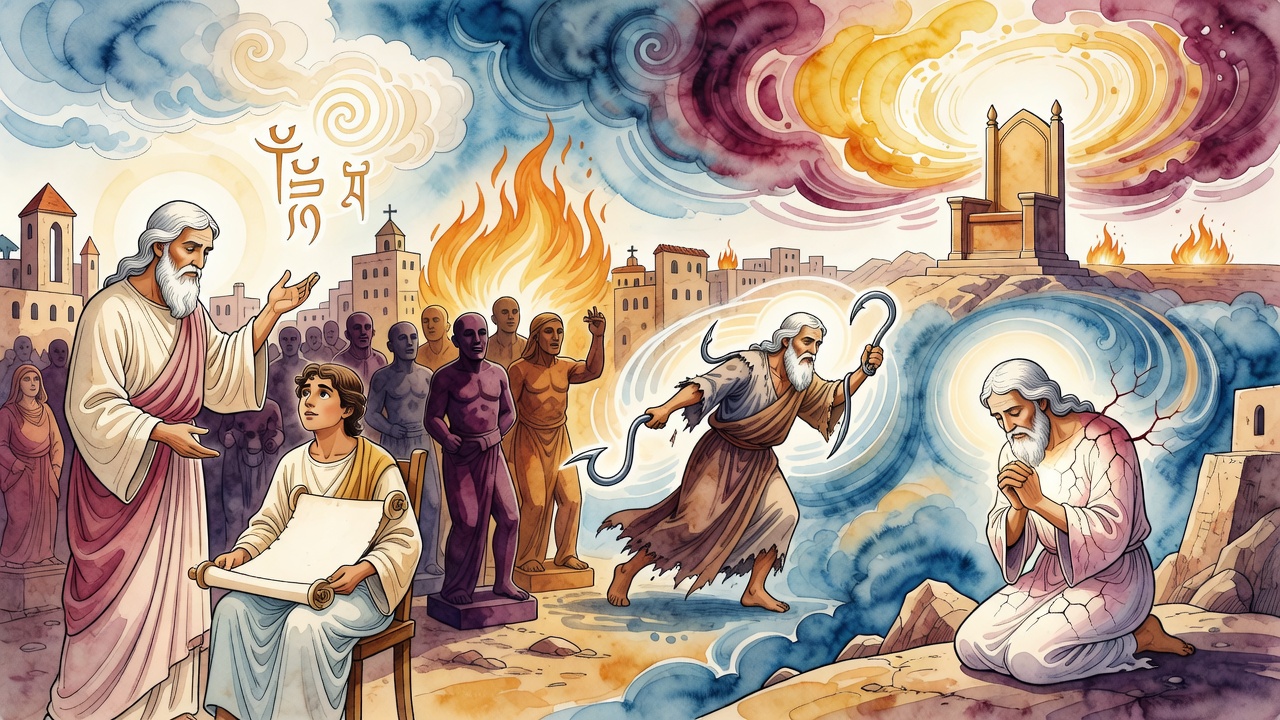
Manasseh climbed the throne at twelve and filled Jerusalem with altars his father had torn down. He reigned fifty-five years (2 Chronicles 33:1). His line ran through Hezekiah, a king whose servants copied the proverbs of Solomon so carefully that the work entered Scripture itself (Proverbs 25:1). Rabbi Akiva asked the question that still stings in every house of study: would a man so devoted to Torah neglect to teach his own son?
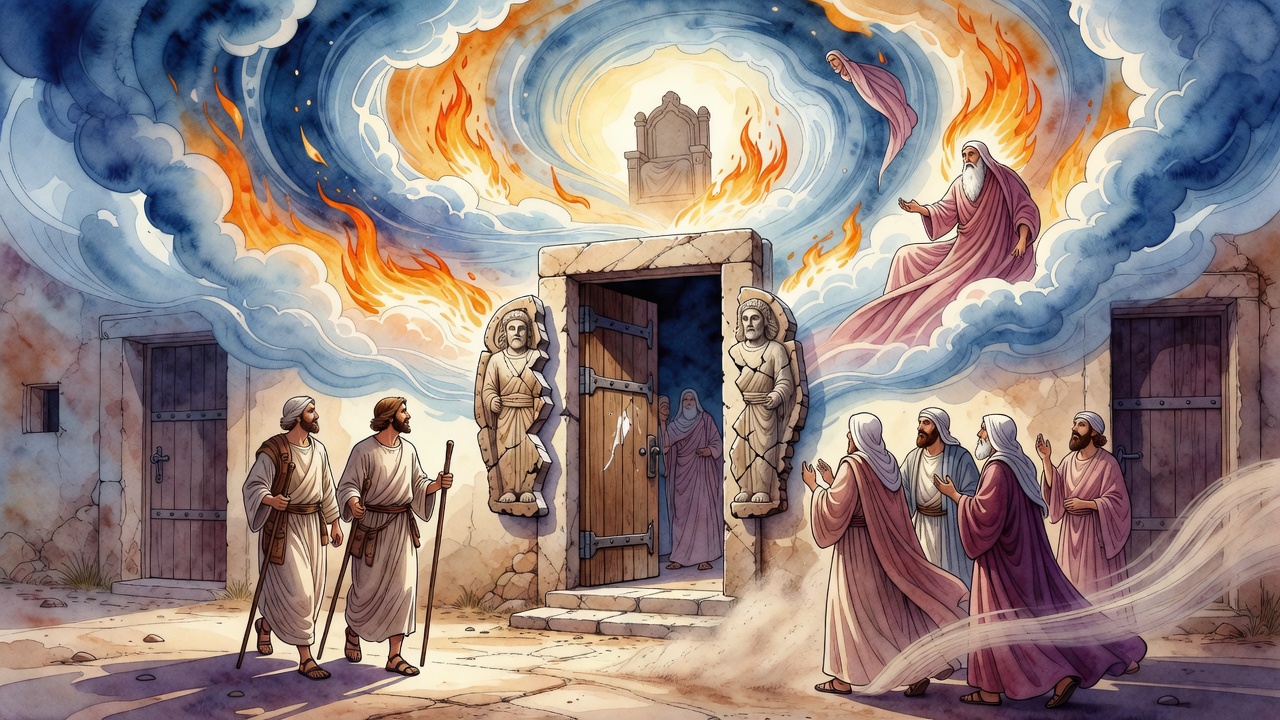
Hezekiah taught. The palace had parchment and discipline. Tutors came and went with scrolls under their arms. Morning lessons. Evening review. The effort seemed to come to nothing. Manasseh filled the city with what his father had torn down. Altars rose where altars had fallen. Asherah poles found new soil. The classroom lost to the throne room. Instruction without a willing heart is only noise against cedar walls.
Prophets spoke until their throats hurt. The people and their king did not listen. Fifty-five years is a long time to refuse a fathered lesson. The tutors aged. The idols stayed young. Jerusalem learned the wrong curriculum by heart.
Hooks and Chains
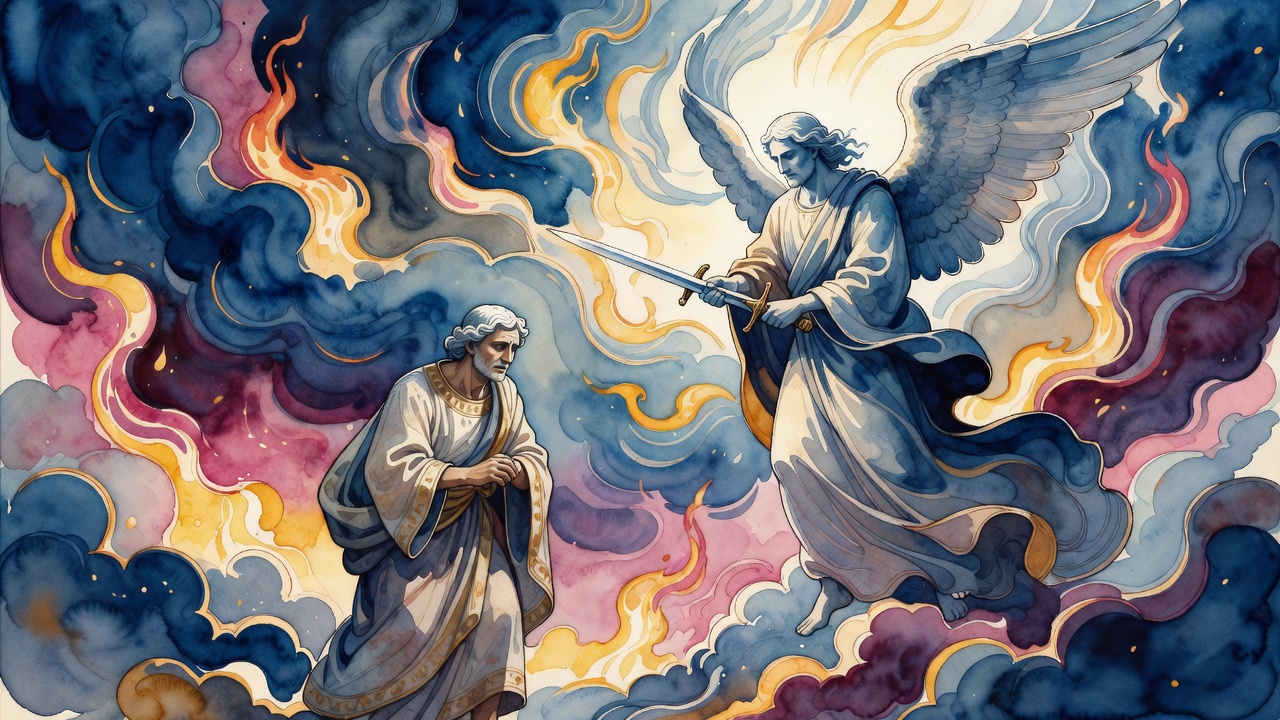
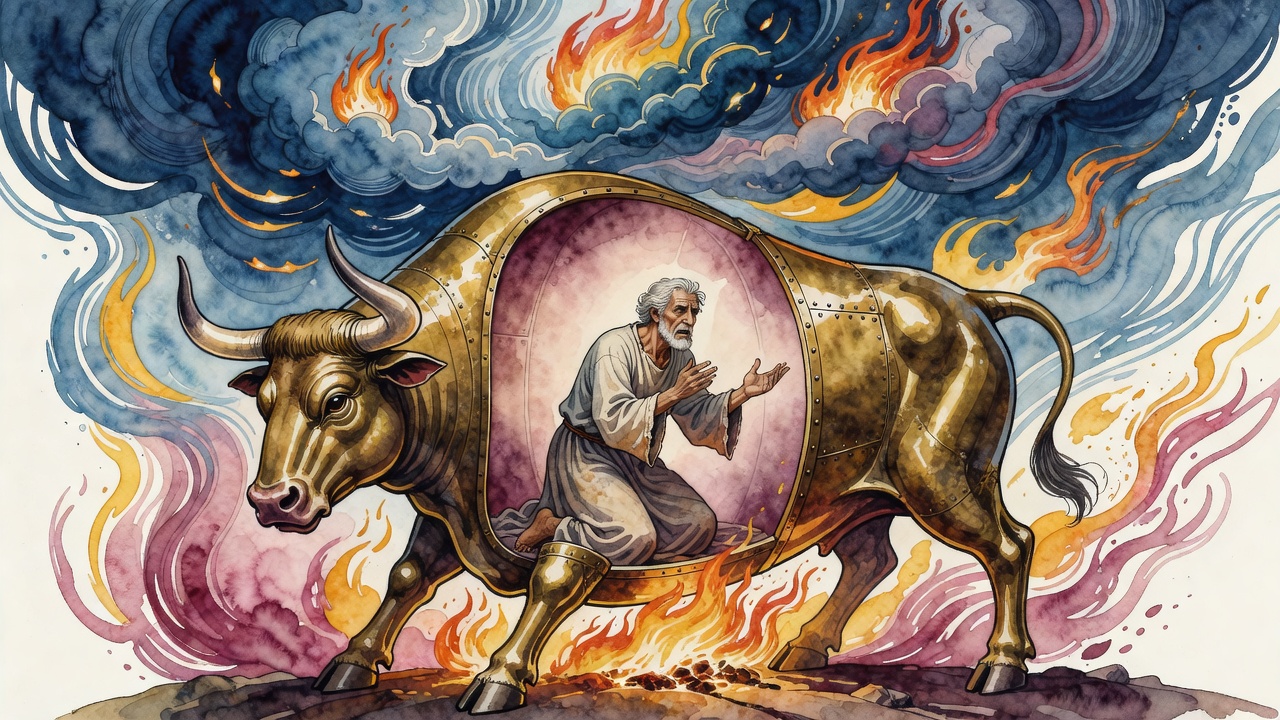
The Lord spoke to Manasseh and his people. Silence answered like a closed gate. Then the officers of the king of Assyria came with the patience of hunters who already know the animal's path. They caught Manasseh with hunting hooks, bound him in chains, and led him to Babylon (2 Chronicles 33:10-11). The boy-king who had defied prophets now walked as prey, metal in his flesh, dust of a foreign road in his mouth.
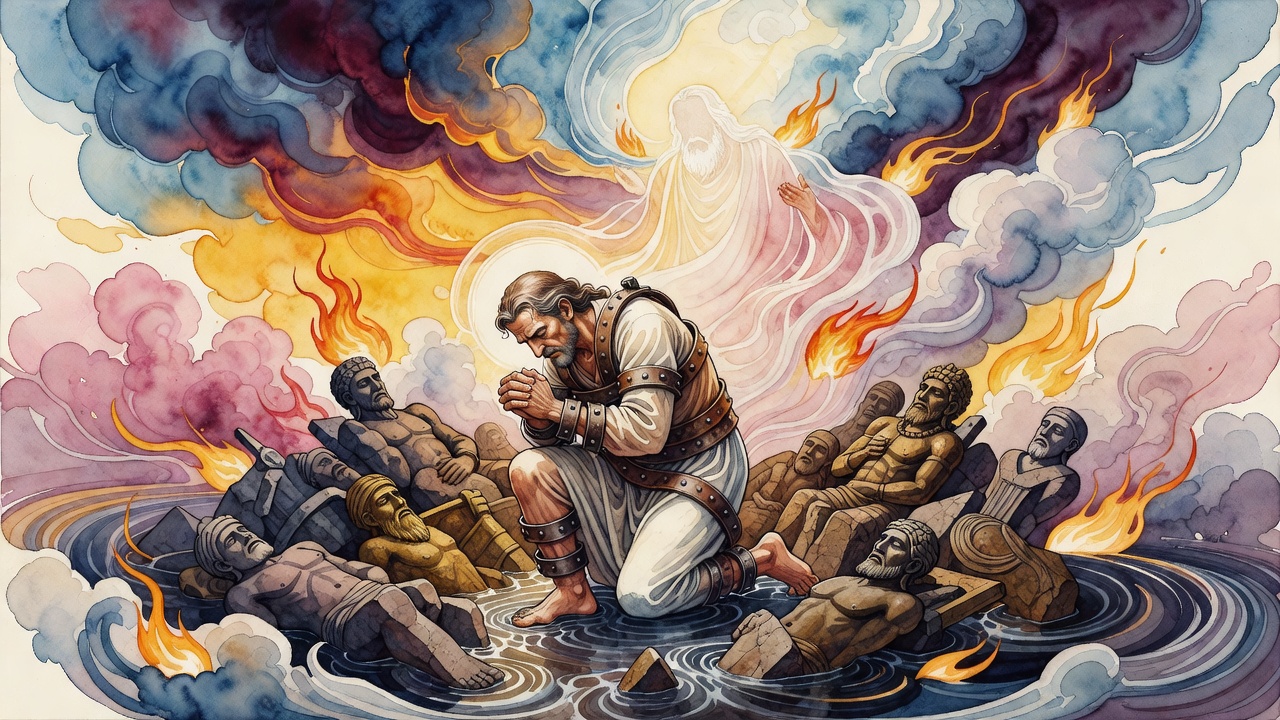
In his suffering he besought the Lord his God. He humbled himself greatly before the God of his fathers. The verbs are physical. Besought. Humbled. Prayed. Heaven was entreated. The same God who had allowed the hooks now heard the voice that came out of iron. Manasseh was returned to Jerusalem, to his kingdom, a man who had learned the geography of the pit and the sound of a door he had not earned by charm.
In Babylon the hooks taught Hebrew that the palace tutors never managed. Manasseh learned how small a king is when metal enters flesh. He learned how large a prayer is when no courtier can fake it for him. Courtiers who had flattered his idols watched a different king climb the steps of David. Some adjusted quickly. Some waited to see if the scars would outlast the prayer.
Why Affliction Was the Teacher
All of Hezekiah's careful tutoring had not opened him. The hooks did. The sages refuse to romanticize the pain, but they refuse also to pretend the pain was useless. Beloved are afflictions, said Rabbi Yossi bar Yehudah, for the Name reposes upon the afflicted one when ease has been stripped away. Rabbi Nathan bar Yosef set a covenant with afflictions beside the covenant with the land: the path to a good land can run through a hard hand.
Rabbi Shimon bar Yochai counted three gifts given through afflictions alone: Torah, the Land, and the world to come. Nations coveted those gifts. Israel received them on a road that included suffering. Manasseh's story is the political version of that claim. The gift of return arrived only after the king could no longer prop up his own name with idols, armies, and the applause of a court that feared him more than it feared heaven.
A father can teach for years. A hook can teach in a night. The midrash does not prefer the hook. It records which lesson the student finally accepted, and it refuses to call the acceptance cheap.
A Father's Chastisement
Rabbi Eliezer ben Yaakov heard the proverb of a father reconciled with his son through chastisement (Proverbs 3:12). The reconciliation is not the beating. It is the relationship that becomes possible again after honesty enters the room. Rabbi Meir heard Deuteronomy's line that the heart already knows the measure of its deeds (Deuteronomy 8:5). Manasseh's heart finally caught up to what the prophets had shouted in easier years when wine was plentiful and Assyria was only a rumor to the north.
He did not return as a boy who had never fallen. He returned as a man who had been hunted, chained, and answered. The throne looked the same from the street. The man on it did not. Prayer from Babylon had rearranged the furniture of his will. The high places still waited like unpaid debts.
Home Under a Different Sky
Jerusalem received a king who had prayed from a foreign prison. The high places he had raised would still need tearing down stone by stone. The people who had not listened with him would still need to decide whether his new humility was contagious or merely personal. The midrash leaves him on the far side of mercy, not on a pedestal of pure beginnings, because pure beginnings were never his story.
Hezekiah's teaching had not been wasted after all. It waited in the dark until suffering made room for it. The son who would not learn from a righteous father learned from hooks, and the prayer that rose from Babylon was the first true lesson he had ever taught himself. Zion took him back under a sky that looked the same and felt different. The iron had done what the tutors could not.
← All myths